Jasmine Milk Tea: Taiwan’s ‘Milk Green’ Boba-Shop Classic and the Tea History Behind It
Jasmine milk tea is the quiet favorite of every Taiwanese boba shop. It’s pale, creamy and floral, and it smells like a summer evening. While brown sugar and taro grab the photos, plenty of regulars order this one without even looking at the menu. In Taiwan, though, you’ll rarely see it called “jasmine milk tea.” On the menu board it’s 奶綠 (nǎi lǜ), or “milk green.” The tea in the cup also has a much older story than the drink. Jasmine-scented tea is how Taipei’s tea trade survived a crash in the 1870s.
This guide covers all of it. You’ll learn what the drink actually is and how Taiwan menus name their milk teas. You’ll get the 140-year Taipei backstory, an honest answer to the question every home brewer asks (which jasmine tea should I buy?), a recipe that tastes like the shop version, and a cheat sheet for ordering it in Taiwan.
What Is Jasmine Milk Tea? (茉香奶綠 and How Taiwan Menus Name Milk Teas)
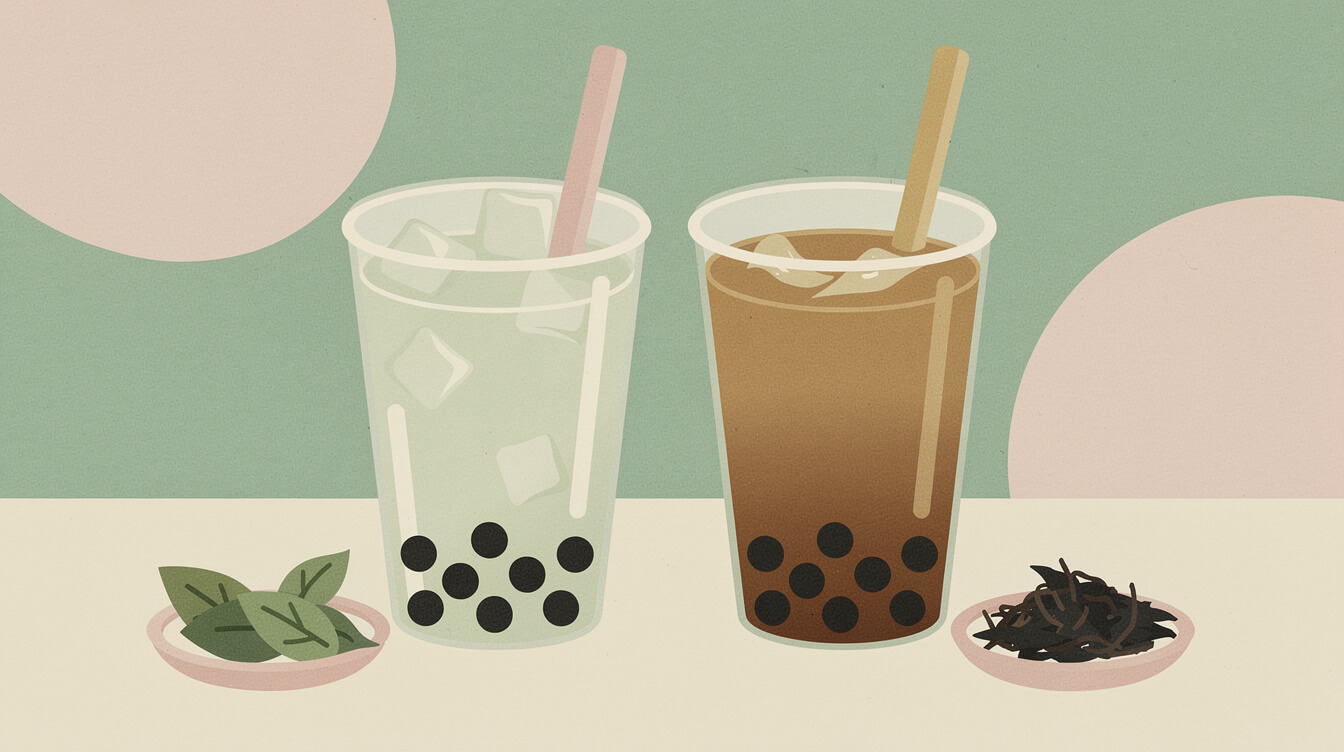
Jasmine milk tea is green tea scented with jasmine blossoms, brewed strong and mixed with milk or creamer, then sweetened and usually served over ice. Many people add tapioca pearls. It tastes lighter and more floral than classic black milk tea, with a soft, almost honeyed finish and much less of the malty bite.
The clearest way to understand it is to learn how Taiwan names its milk teas. Drink-shop menus follow a simple grammar, and once you know it you can read almost any board on the island.
The menu grammar: 茶 vs 綠 vs 青
- 奶茶 (nǎi chá, “milk tea”): black tea with milk. This is the default “boba milk tea.”
- 奶綠 (nǎi lǜ, “milk green”): green tea with milk. At many shops the green tea is already jasmine-scented, so a plain 奶綠 is the jasmine version. A 2023 menu review of the 50 Lan (50嵐) chain, for example, notes that its 奶綠 has a distinct jasmine aroma.
- 茉香奶綠 (mò xiāng nǎi lǜ, “jasmine-fragrance milk green”): the name shops use when they want to spell out the jasmine. CoCo (都可) sells a 茉香凍奶綠, which is jasmine milk green with jasmine tea jelly in the cup.
- 奶青 (nǎi qīng): a lightly oxidized oolong, usually Four Seasons (四季春), with milk. It’s a close cousin and just as floral, but the floral notes come from the leaf itself.
Then there’s the milk itself. In Taiwan, 奶 on its own often means non-dairy creamer (奶精), which gives the drink its rich, old-school drink-shop body. If you want real milk, look for 鮮奶 (xiān nǎi, “fresh milk”) or 拿鐵 (“latte”). At 50 Lan, the milk teas use creamer powder, while the “latte” line uses fresh milk. So a 鮮奶綠 or a 綠茶拿鐵 is the fresh-milk version of the same drink.
If you’ve read our guide to Taiwanese boba tea, this is the same system. Green tea just gets its own word.
What does it taste like?
Think fresh, floral and creamy, with a gentle green-tea grassiness under the milk. A good one smells of jasmine before you even take a sip. A bad one tastes like perfume or like bitter, over-steeped green tea. The flower should be the first thing you notice, not the only thing. Because it’s lighter than black milk tea, it pairs especially well with QQ (pleasantly chewy) toppings like pearls, coconut jelly and tea jelly.
The Taipei Tea Story: How Jasmine Scenting Built Taiwan’s Pouchong Trade
The jasmine in your cup has deep roots in Taipei. To see why, you have to go back to the riverside warehouses of Dadaocheng (大稻埕) in the nineteenth century, when Taiwan’s tea was one of the island’s biggest exports.
1873: the oolong crash
Through the 1860s, “Formosa Oolong” shipped out of northern Taiwan to buyers overseas. Then, in 1873, the international tea market turned. According to Taiwan’s National Cultural Memory Bank, run by the Ministry of Culture, changing demand and rising production costs left Taiwan’s oolong unsold. Merchants found a creative fix. They shipped the unsold leaf to Fuzhou on the mainland, where it was scented with flowers and sold as a new product: flower-scented pouchong (包種, bāozhǒng), also spelled Baozhong.
1881: bringing the scenting home
Sending tea across the strait to be perfumed and back again was expensive. In 1881, a merchant from Fujian opened a tea factory called Yuan Long Hao (源隆號) in Taipei and began refining scented pouchong locally. The Ministry of Culture’s records credit it as the start of refined pouchong production in Taiwan. (Historical records spell the founder’s name several different ways, so we’ll leave it there.)
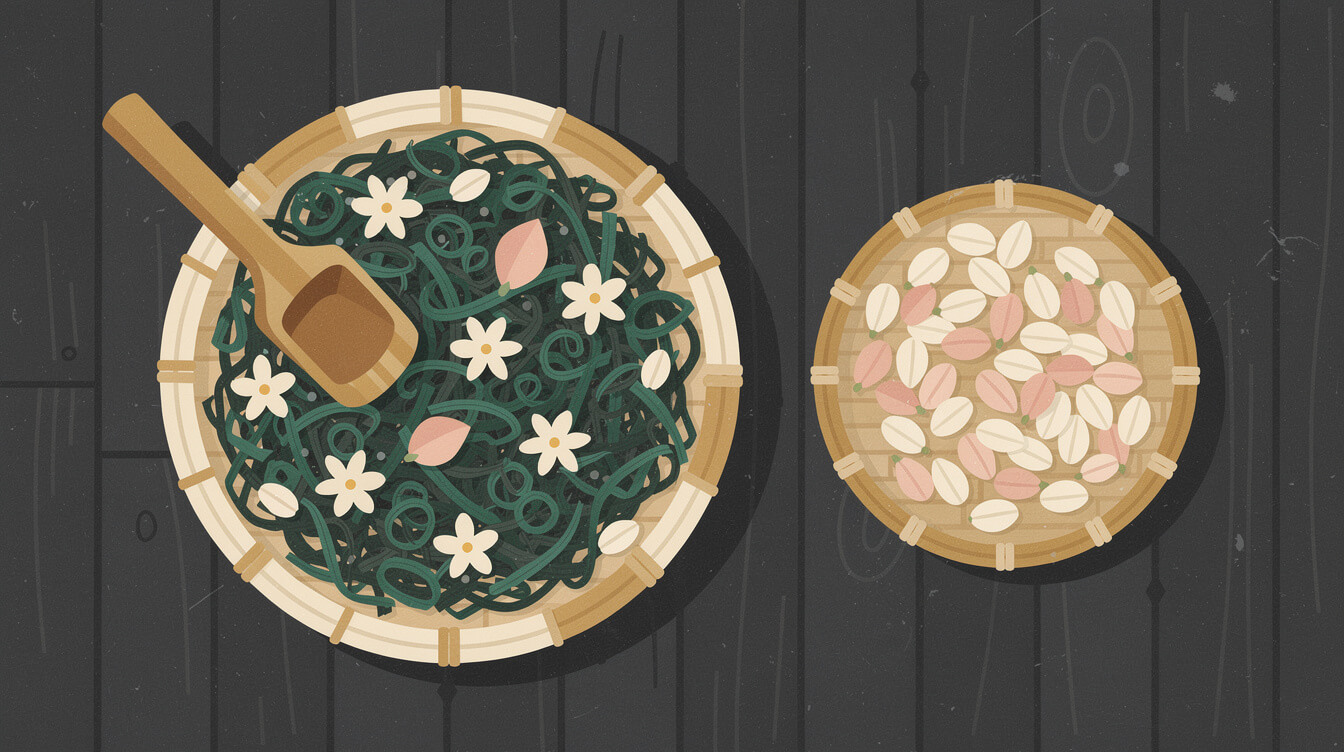
The method was simple and slow. Dried tea was mixed with fresh blossoms so the leaf could soak up their fragrance. One Ministry of Culture record gives a classic ratio of 100 catties of tea to 30 catties of fresh jasmine, left together for about 20 hours before the flowers were removed and the tea was dried again. Jasmine was the main flower, but gardenia, Chinese rice flower (樹蘭) and other fragrant blossoms were used too. The flowers were grown mostly in what’s now New Taipei City from the late 1870s until the end of World War II. In Taiwan, scented tea of this kind got its own name, 香片 (xiāngpiàn, “fragrant leaves”). Unless a label says otherwise, 香片 means jasmine tea. Much of it went to Southeast Asia, including Java.
The twist: pouchong that didn’t need flowers
In the early twentieth century, under Japanese rule, growers in the hills around Nangang (南港) developed a lighter way of processing pouchong. The leaf itself came out smelling floral, with no blossoms required. Two Anxi-born tea masters, Wei Jingshi (魏靜時) and Wang Shuijin (王水錦), appear in every account of this shift. They taught the method, and by the 1920s it was being promoted as the improved style. That unscented, naturally floral tea is the Wenshan Baozhong that tea lovers seek out in Pinglin today, which you can read more about in our Taiwan oolong buying guide.
So when a Taiwanese drink shop pours a jasmine green tea into milk, it’s working with a flavor that helped Taiwan’s tea trade survive its first big crisis. Not bad for an everyday drink-shop order. Our complete guide to Taiwanese tea covers how the rest of that story played out.
Where Taiwan’s jasmine grows now
Today the island’s jasmine capital is Huatan (花壇) in Changhua County. Changhua’s county tourism office says it leads Taiwan in jasmine production and calls it the island’s “jasmine hometown.” According to a 2024 PTS report, the flowers are picked from May to October, in the hottest months. The fields covered about 180 hectares at their mid-century peak and only a fraction of that today. The local farmers’ association runs a free jasmine museum in an 80-year-old converted granary, and it sells jasmine-scented oolong made with local flowers.
The Best Jasmine Tea for Jasmine Milk Tea (Green vs Pearls vs Scented Oolong)
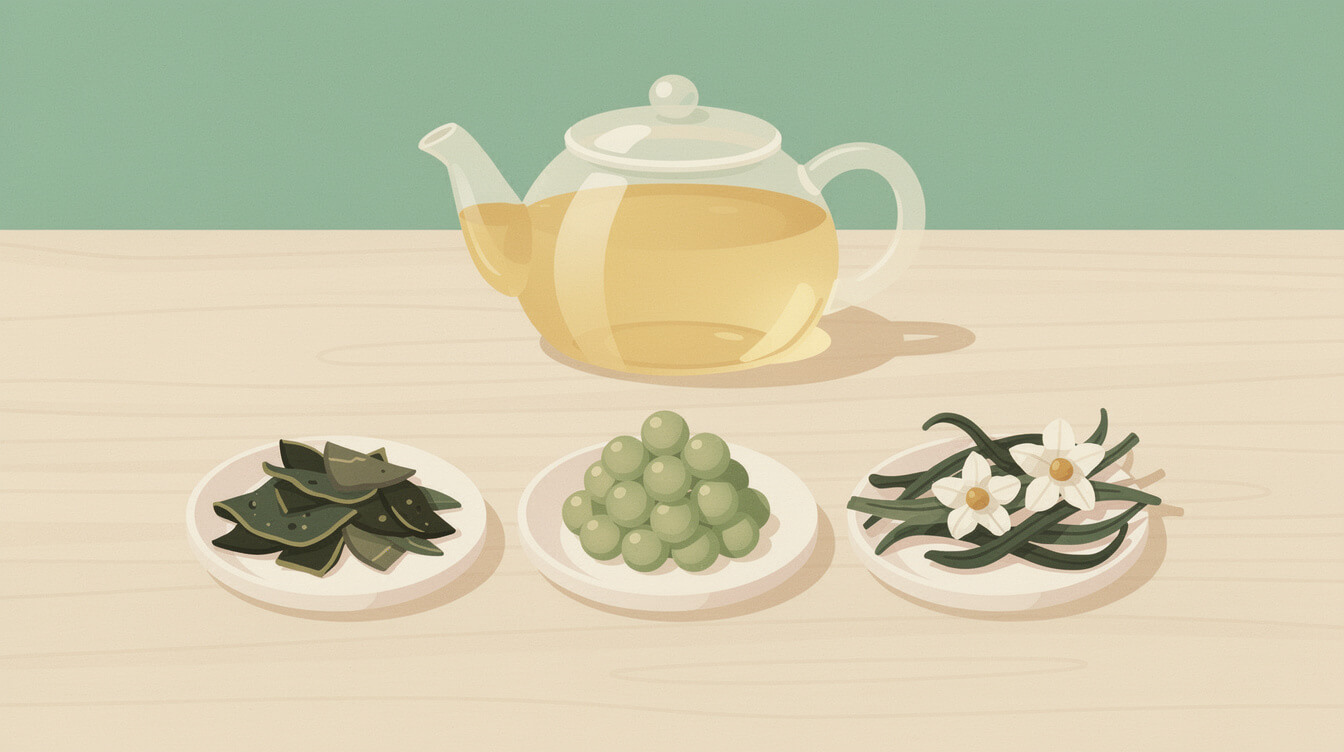
This is the question home brewers ask most, and most online answers dodge it with a list of brands. The better question is which type of jasmine tea holds up when you pour milk into it. Milk mutes delicate aromas and softens bitterness, so the right tea is one that’s bold enough to still taste like jasmine afterward.
1. Jasmine green tea (茉莉綠茶): the drink-shop standard
Loose jasmine green tea or good jasmine tea bags are the closest thing to what Taiwanese shops pour. It’s affordable, strongly scented and brews quickly. The tradeoff is that green tea goes bitter fast if the water’s too hot or you steep it too long, so watch the temperature (more on that in the recipe). Best for: iced drinks, boba, and anyone who wants the classic shop taste.
2. Jasmine pearls (茉莉龍珠): beautiful, but wasted on milk?
Jasmine pearls are young tea leaves rolled into little balls and often scented several times. They’re lovely brewed straight, and they unfurl in the cup. In milk tea, though, much of their subtlety disappears, and they cost a lot more. If you have them, use more leaf than you would for straight tea and steep a little longer. Best for: hot milk tea, where you’ll actually taste the difference.
3. Jasmine-scented oolong (茉莉烏龍): the Taiwanese wildcard
This is the option almost nobody recommends, and it’s the one that’s most connected to Taiwan’s tea history. A lightly oxidized oolong scented with jasmine has more body than green tea, forgives a few extra seconds of steeping, and gives a rounder, creamier result with milk. Huatan’s farmers’ association makes one from its own flowers. If you can’t find it, a Four Seasons oolong (四季春) gives you the 奶青 version of the drink. Best for: people who find green milk tea too thin, or too bitter.
How to read the label
- Real scented tea usually lists just tea, and sometimes jasmine flowers. The scent came from blossoms during processing.
- “Jasmine flavored” tea may list added flavoring. That’s not necessarily bad, but it often tastes perfumey once it’s in milk.
- Flowers in the bag are often decorative. Real jasmine tea is traditionally scented with fresh blossoms that are then removed, so a tea with no flowers in it can still be the real thing.
If you love floral teas, our Alishan oolong guide is a good next step.
How to Make Jasmine Milk Tea at Home
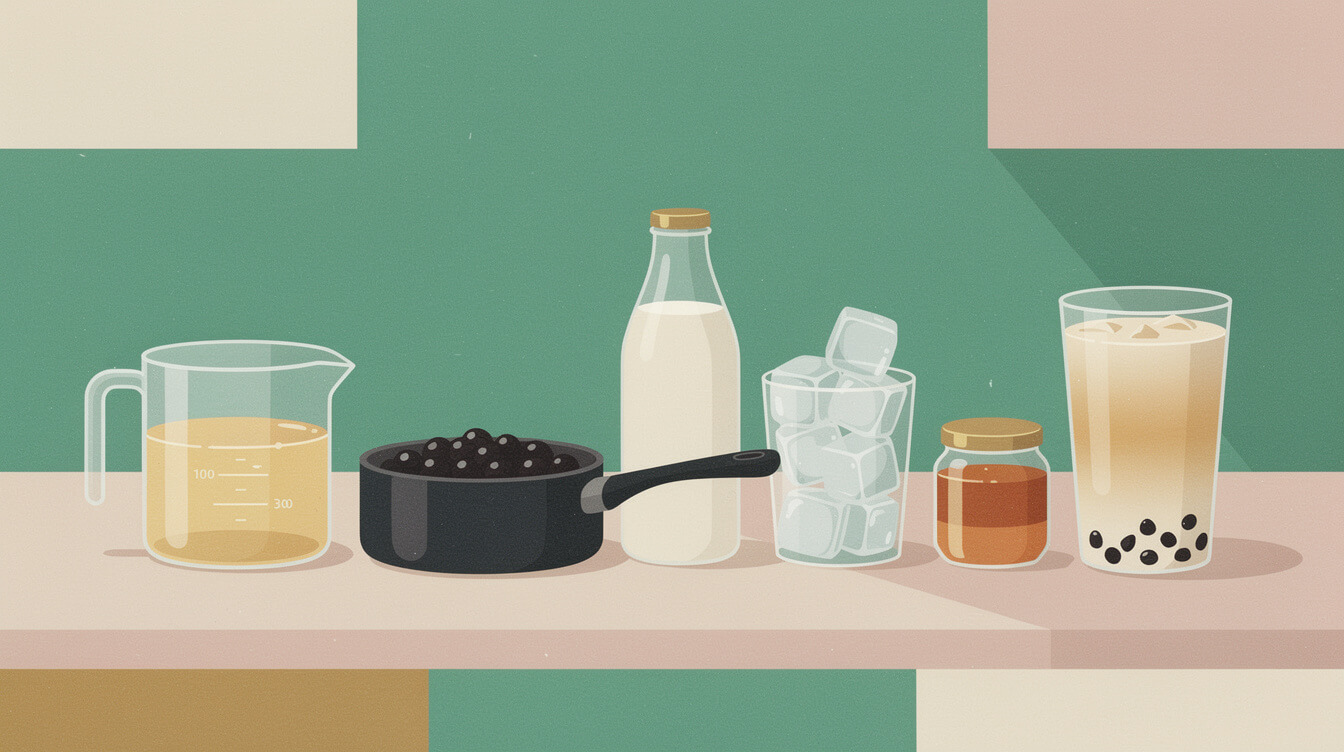
This recipe makes one large drink, about 500 ml (17 oz), close to a Taiwanese shop’s large cup. The secret is to brew the tea about twice as strong as you’d drink it plain, because milk and ice both dilute it.
Ingredients
- 2 tablespoons (about 6 g) loose jasmine green tea, or 3 jasmine tea bags
- 250 ml (1 cup) water at about 80°C (175°F)
- 120 to 150 ml (½ to ⅔ cup) whole milk, oat milk or fresh milk of your choice. For the old-school shop taste, use 2 tablespoons of non-dairy creamer dissolved in the hot tea instead
- 1 to 2 tablespoons simple syrup, or to taste
- ⅓ cup cooked tapioca pearls (optional)
- A big handful of ice
Instructions
- Heat the water to about 80°C (175°F). If you don’t have a thermometer, bring it to a boil and let it sit for 3 to 4 minutes. Boiling water scorches green tea and makes it bitter.
- Steep strong. Steep the tea for 3 minutes, then strain. For jasmine oolong, use water about 5°C hotter and steep for 4 minutes.
- Sweeten while warm. Stir in the syrup now (or the creamer, if you’re using it). Both dissolve much better in warm tea.
- Cool it down. Let the tea cool to room temperature, or chill it for an hour. Hot tea poured over ice just turns into watery tea.
- Shake, Taiwan-style. Add the tea, milk and ice to a jar or cocktail shaker and shake hard for 10 to 15 seconds. This is why Taiwan calls these drinks 手搖飲 (shǒu yáo yǐn), “hand-shaken drinks.” Shaking chills the drink quickly and gives it a light, foamy top.
- Assemble. Spoon the pearls into a tall glass, pour the shaken tea over them, and serve with a wide straw.
Making it hot
Brew the tea the same way, then add warm milk heated to just below a simmer. Don’t let it boil, or it can split and the tea turns flat. A hot cup is the best way to use jasmine pearls, because their delicate aroma comes through better when it’s warm.
Making the pearls
Store-bought quick-cook pearls work well. If you want to make them from scratch, follow our step-by-step guide on how to make boba pearls. Cooked pearls are best within a few hours, so make them last.
Troubleshooting
- Bitter? The water was too hot or the tea steeped too long. Drop the temperature before you cut the steep time.
- Weak or milky? Use more leaf, not a longer steep. A longer steep adds bitterness faster than flavor.
- Perfumey? Switch from a “jasmine flavored” tea to a scented one, or blend half jasmine green with half plain green tea.
Speaking of boba-shop regulars: our Taiwan Boba Tea Cat T-Shirt features a very relaxed cat hugging a giant cup of bubble tea. It’s exactly how we feel halfway through a jasmine milk green.
Ordering Jasmine Milk Tea in Taiwan: Sugar, Ice, Toppings and Milk Swaps

Ordering in Taiwan is fast and very customizable. Once you know four choices, you can order like a local.
1. Name the drink
Ask for 奶綠 (nǎi lǜ) at a chain where the green tea is jasmine. If you see 茉香奶綠 or 茉莉奶綠 on the board, that’s the jasmine version spelled out. If you want fresh milk instead of creamer, look for 鮮奶綠 or 綠茶拿鐵. Add pearls by saying 珍珠 (zhēnzhū, small pearls) or 波霸 (bōbà, large pearls).
2. Choose your sweetness
The exact percentages vary a little from shop to shop, but the ladder is the same everywhere:
- 全糖 (quán táng): full sugar
- 少糖 (shǎo táng): less sugar, about 70 to 80%
- 半糖 (bàn táng): half sugar
- 微糖 (wéi táng): a little sugar, about 30%
- 無糖 (wú táng): no sugar
The flavor is delicate, so full sugar can drown the flower. Half sugar (半糖) or less is a good place to start.
3. Choose your ice
- 正常冰: regular ice
- 少冰: less ice
- 微冰: a little ice
- 去冰: no ice (still cold)
- 溫 / 熱: warm / hot
4. Pick a topping
Pearls are the classic choice, but 奶綠 also suits 椰果 (coconut jelly), 仙草凍 (grass jelly) and 茶凍 (tea jelly). Some shops add a jasmine tea jelly that doubles the floral flavor. If you’re curious about the fruit side of the menu, our Taiwan fruit tea guide covers how jasmine green also works as a base for fruit teas.
Putting it together: “Nǎi lǜ, bàn táng, shǎo bīng, jiā zhēnzhū” (奶綠,半糖少冰,加珍珠) gets you a jasmine milk green, half sugar, less ice, with pearls. Point at the menu if you need to. Every shop in Taiwan is used to it.

Before Boba, There Was 麥香
Generations of Taiwanese kids grew up with convenience-store milk tea long before the shaker shops took over. Our 麥香 Vintage Milk Tea tee is a nostalgic nod to it, made for anyone who knows the milk tea came first.
Jasmine Milk Tea Caffeine and FAQs

Does jasmine milk tea have caffeine?
Yes. Jasmine tea is real tea from the tea plant, so it contains caffeine. A jasmine green usually has less than a strong black milk tea, but the amount depends on how much leaf goes in and how long it steeps. Sugar levels don’t change it. In Taiwan, chain drink shops label the caffeine level of the drinks they make, so you can check the menu. Our guide to whether boba milk tea has caffeine explains that labeling system and lists low-caffeine swaps.
Is it healthier than regular milk tea?
Not by much. Most of the calories in any milk tea come from the sugar, milk or creamer, and the pearls, not from the tea itself. If you want a lighter drink, the biggest changes are less sugar (半糖 or 微糖), fresh milk instead of creamer, and skipping or halving the pearls.
What’s the difference between jasmine milk tea and jasmine green milk tea?
Usually nothing. They’re two English names for the same drink, which is jasmine-scented green tea with milk. A few shops outside Taiwan use a jasmine-scented black or oolong tea, so if the color looks more caramel than cream, ask.
Is it the same as Thai tea?
No. Thai tea is a spiced black tea, usually bright orange and made with condensed milk. 奶綠 is pale, floral and made with green tea.
What food pairs well with it?
Salty, crispy snacks. In Taiwan that means night market fried chicken, popcorn chicken or a scallion pancake. The floral, creamy drink cuts through the grease nicely. It’s also a natural match for sweet treats like pineapple cake.
Can I make it without boba?
Absolutely. In Taiwan, plenty of people order 奶綠 with no topping at all. Without pearls, it’s a lighter drink that’s easier to sip with a meal.
What about brown sugar or taro?
If you like this drink, you’ll want to try its menu neighbors. Our guides to brown sugar milk tea and taro bubble tea cover two of the most popular orders on any Taiwanese board.
Final Thoughts: A Small Cup With a Long Taipei Story
Jasmine milk tea looks like one of the simplest drinks on a Taiwanese menu, but there’s a lot behind it. The word on the board is 奶綠, the green tea underneath is often already jasmine, and the scent goes back to 1870s Taipei. Back then, perfuming tea with flowers kept the island’s tea trade alive. Today, Huatan’s fields still grow the blossoms that give the drink its smell.
At home, keep three things in mind. Brew strong, keep the water below boiling, and choose a tea that’s bold enough to survive the milk. In Taiwan, order it half sugar so you can actually taste the flower. For the full map of what the island drinks, from oolong to winter melon tea, start with our guide to Taiwan drinks.
A Postcard From Taiwan, Every Week
Drink-shop secrets, tea stories and the traditions behind Taiwan’s favorite flavors, straight to your inbox. No spam, unsubscribe anytime.
Grab a Free Taiwan Sticker!
Drop your email and we’ll send you a limited-edition Taiwan sticker — plus insider access to new merch drops and island vibes.
No spam. Unsubscribe anytime.