Does Boba Milk Tea Have Caffeine? Yes — and in Taiwan the Shop Has to Tell You
Short version: yes. Does boba milk tea have caffeine? Almost always — because boba milk tea is, underneath the pearls and the milk and the brown sugar, a cup of brewed tea. And tea has caffeine.
But that answer is useless on its own. How much caffeine depends entirely on which tea the shop poured — and in Taiwan, you get to choose. You can also order a boba drink with none at all, in more ways than the chains advertise. And here’s the part almost nobody writing in English mentions: in Taiwan the shop is legally required to tell you how much caffeine is in your cup. Since 2023. There’s a color code and everything.
So let’s do this properly — real numbers from named sources, the Taiwanese tea bases nobody outside Taiwan talks about, the three things that genuinely don’t change the caffeine, and the actual phrases to say at the counter.
Does Boba Milk Tea Have Caffeine? The Short Answer, and the One Rule Behind It
There’s a single rule that answers roughly ninety percent of caffeine questions about Taiwanese drinks, and once you have it you never need a chart again:
Caffeine comes from the tea plant. If your drink is made from Camellia sinensis — the one plant that gives us black, green, white, oolong and pu’er tea — it has caffeine. If it’s made from something else, it almost certainly doesn’t.
That’s it. Black tea, green tea, oolong, jasmine green, matcha — all the same plant, all caffeinated. The differences between them are about how the leaf was grown, oxidized and processed, not about whether caffeine is present.
Everything else poured in a Taiwanese drink shop — winter melon, roasted barley, roselle, sugarcane, plum, most fruit infusions — comes from a different plant entirely. Botanists call these tisanes rather than teas, and they’re naturally caffeine-free.
There are a handful of genuine exceptions worth knowing, because “herbal means caffeine-free” is a rule with holes in it. Yerba mate, guayusa, yaupon and cascara all contain caffeine despite not being tea. You won’t run into them often at a Taiwanese drink counter, but you will at a trendy café, so file it away.
So when someone asks does boba milk tea have caffeine, the honest reframe is: what’s the base? Answer that and you’ve answered the caffeine question. Which brings us to the part where Taiwan does something no other country does.
In Taiwan, the Shop Has to Tell You: the Red, Yellow, Green Rule
Ask does boba milk tea have caffeine anywhere else in the world and the best you get is an estimate. Ask it in Taiwan and you get a number — because the law requires one. We have never seen this mentioned in an English-language guide.
Since 1 January 2023, Taiwan requires tax-registered chain beverage shops, chain convenience stores and chain fast-food outlets to label the caffeine content of drinks they make on the spot — which is to say, hand-shaken boba. The rule was announced by the Ministry of Health and Welfare’s Food and Drug Administration and reported by Taiwan’s Central News Agency in June 2022, ahead of the January start date.
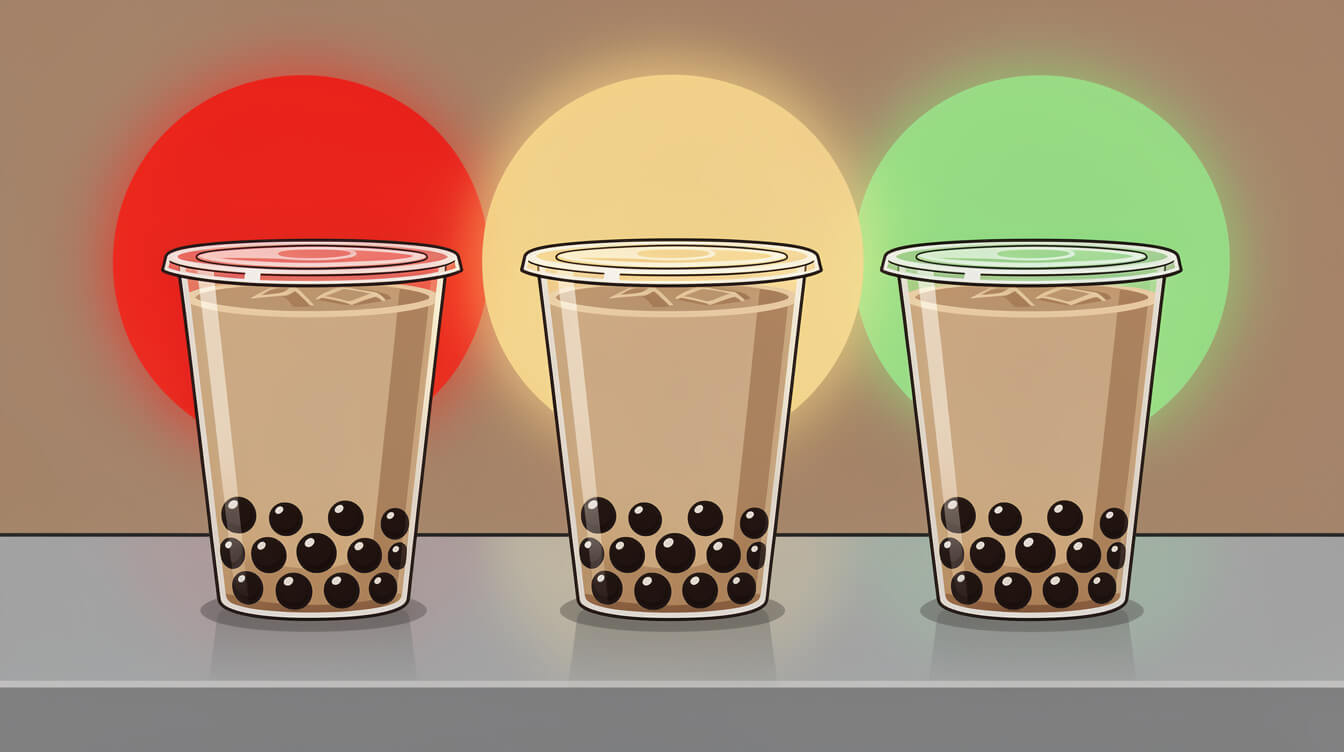
Shops have two ways to comply. They can print the maximum total caffeine in milligrams per cup, or they can use a three-color indicator:
- Red — 201 mg or more of caffeine per cup
- Yellow — 101 to 200 mg per cup
- Green — 100 mg or less per cup
A 2022 amendment also allows shops to deliver the information by QR code or other electronic means rather than printing it on the menu board, which is why you may need to scan rather than squint.
And it’s enforced. Kaohsiung City’s Department of Health published the results of an inspection sweep in December 2024: 36 hand-shaken drink shops, convenience stores and fast-food outlets checked, all 36 compliant.
Two things follow. The practical one: in a drink shop in Taipei or Taichung you never have to estimate from a blog — look at the menu or scan the code, because the number is there by law. No other country in the boba world gives you that.
The revealing one: a government does not build a three-tier color system for a drink that tops out at 40 mg. The existence of a red band tells you some hand-shaken drinks in Taiwan clear 200 mg in a single cup — more than most of the English-language internet will admit, and good reason to retire the comfortable “boba barely has any caffeine” line.
Taiwan’s health ministry pairs the labeling rule with its own daily intake guidance, which is notably more conservative than the American figure most people know: no more than 300 mg a day for adults, no more than 100 mg a day for ages 12 to 18, and avoidance recommended for pregnant women and children under 12.
Hold onto that 300 mg adult figure. We’ll come back to it, because one large cup of the wrong thing can take a serious bite out of it.
How Much Caffeine Is in One Cup — and Why “Per Cup” Is a Trap
Here’s where most of the internet quietly falls apart.
Search does boba milk tea have caffeine and you’ll find confident numbers: black tea has 50 to 90 mg, green has 25 to 35, oolong sits somewhere in between. Those figures aren’t wrong, exactly. But they’re given “per cup” — and nobody ever says how big the cup is.
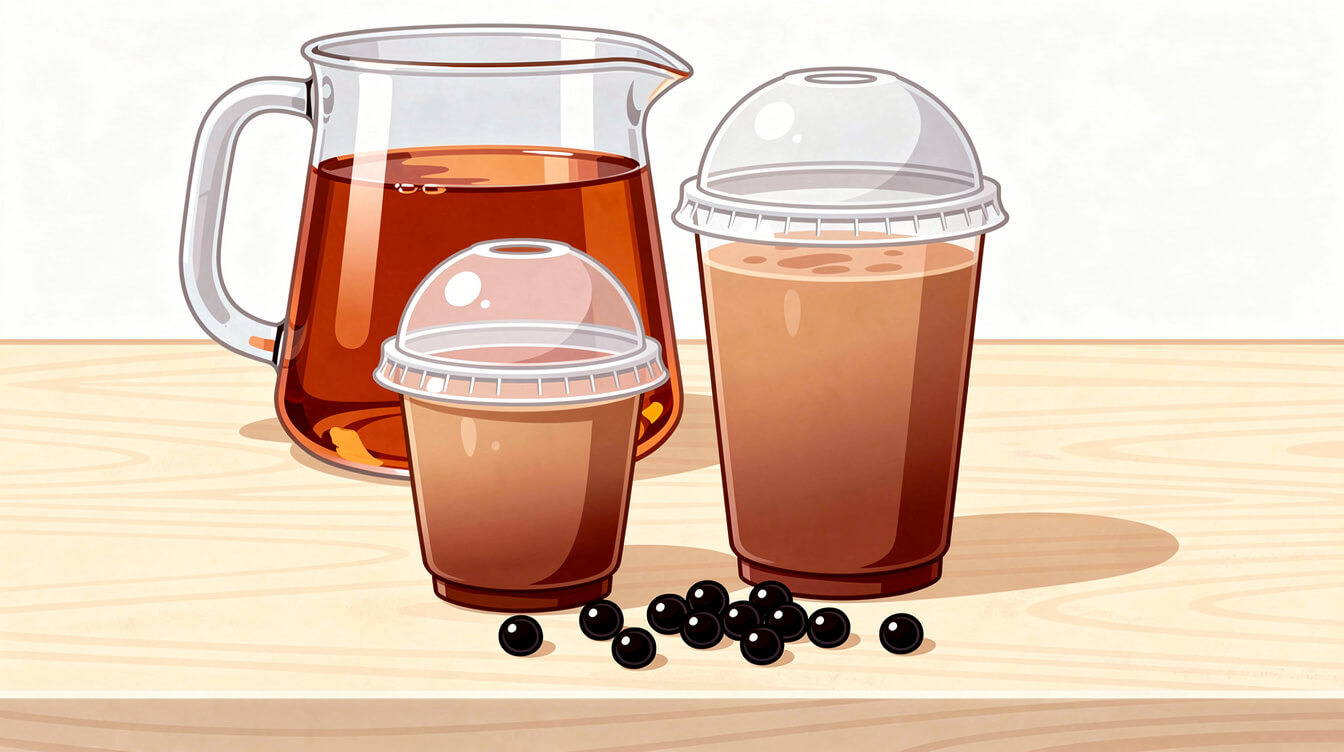
That matters enormously, because a Taiwanese drink cup is not a teacup. The standard sizes at a Taiwanese shop are roughly 500 ml for a medium (中杯) and 700 ml for a large (大杯). Meanwhile, the US Food and Drug Administration publishes its reference figures per 12 fluid ounces — about 355 ml.
So a “cup” of black tea in a nutrition table is roughly half the volume of the large milk tea you’re actually holding.
Let’s do the arithmetic honestly, with the FDA’s own numbers as the anchor. The FDA gives brewed black tea at 71 mg per 12 fl oz and green tea at 37 mg per 12 fl oz. Scale black tea up to a 700 ml large cup at the same strength and you land around 140 mg. A 500 ml medium comes out near 100 mg.
Look at where those land on Taiwan’s color scale: a large black milk tea sits squarely in the yellow band. A medium hovers right at the green/yellow line.
That’s arithmetic, not a lab measurement, so hold it loosely. A good chunk of a 700 ml cup is milk, ice and syrup, which pushes the real figure down — while Taiwanese shops brew concentrated urns of tea to stand up to that milk and ice, which pushes it back up. The two roughly cancel, which is why 100 to 160 mg is a fair working estimate for a standard milk tea, and why the only number worth real trust is the one on the shop’s own label.
One number we’d gently push back on while we’re here: a widely-shared page currently ranking for this question puts a regular cup of coffee at around 380 mg. The FDA’s own figure for regular brewed non-specialty coffee is 113 to 247 mg per 12 fl oz. The 380 figure roughly doubles reality, and it makes boba look more innocent by comparison than it is.
The Taiwanese Tea Bases, Roughly Ranked by Caffeine
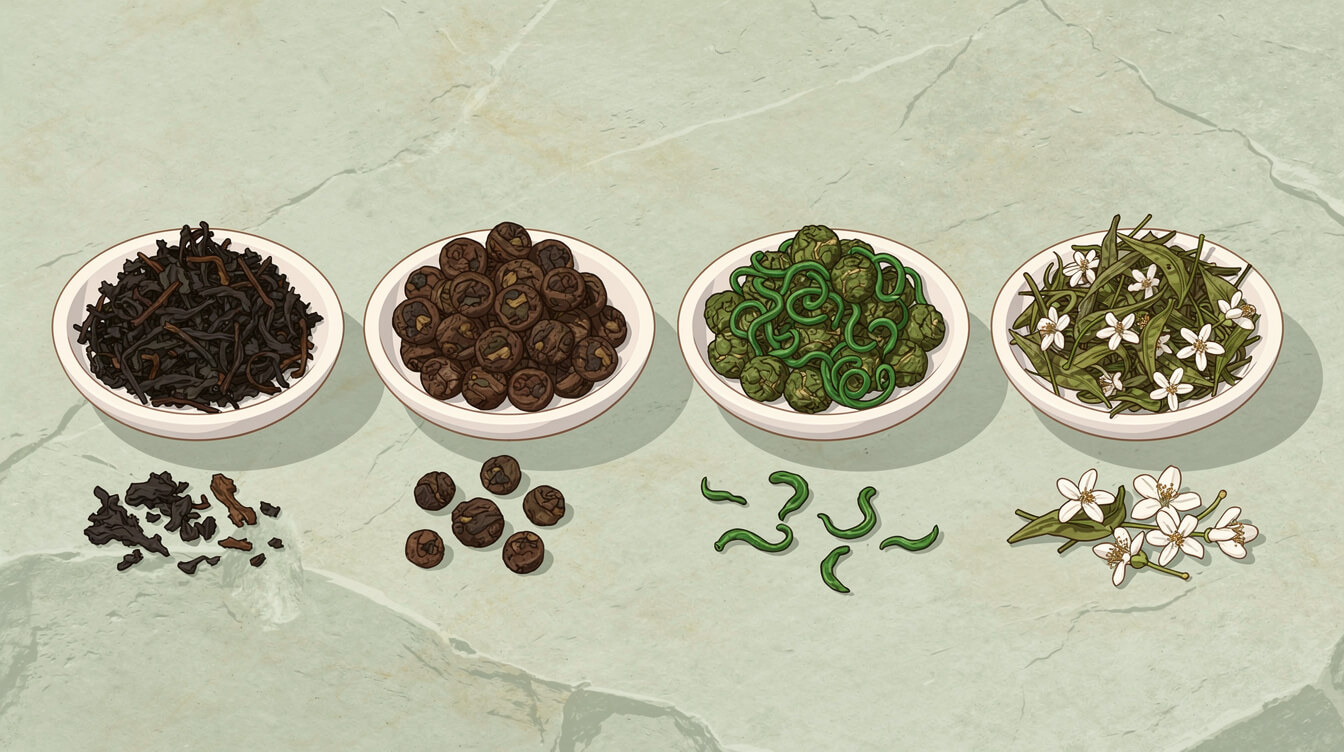
Here’s the gap that bothers us most about the English-language coverage of this question. Every guide splits tea into “black vs green” — the two categories a Western supermarket sells — and then stops.
Walk into an actual Taiwanese drink shop and that’s not the menu. You’re choosing between five or six named bases, and the choice is the single biggest lever you have over the caffeine in your cup. So here they are, in the order you’ll meet them, with an honest sense of where each one lands.
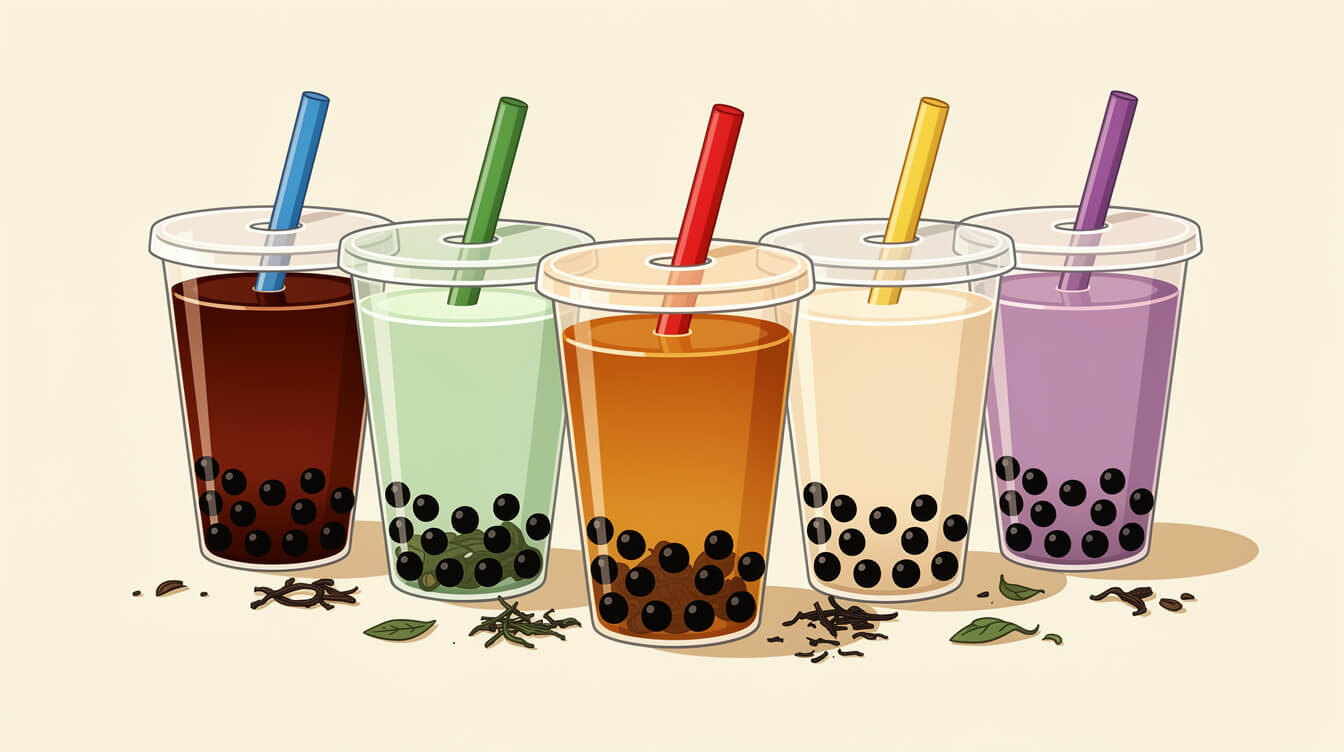
紅茶 (hóngchá) — black tea
Literally “red tea,” which is what the rest of East Asia sensibly calls what the West calls black. This is the default base for classic 珍珠奶茶 pearl milk tea, and it’s the most caffeinated of the standard options. Assam-style leaf is common. If you order a milk tea and specify nothing, this is almost certainly what you’re getting — and it’s the base most likely to put you in Taiwan’s yellow band at a large size.
烏龍 (wūlóng) — oolong
Partially oxidized, sitting between green and black in both flavor and, generally, caffeine. Taiwan is genuinely world-class at this — it’s the island’s signature tea and the reason serious tea drinkers fly here. Oolong milk tea is nuttier and more floral than the black-tea version, and typically a step down in caffeine. We went deep on the varieties and growing regions in our complete guide to Taiwan oolong tea.
青茶 (qīngchá) — the “blue-green” category
Not a separate plant but the traditional category that contains oolong. On a menu it usually means a light, fresh, greenish oolong — treat it as oolong-adjacent for caffeine.
四季春 (sìjìchūn) — Four Seasons Spring
This is the one nobody outside Taiwan writes about, and it might be the most important name on the list.
Four Seasons Spring is a Taiwanese oolong cultivar with a charming origin story: a farmer near Taipei in the 1980s noticed one bush growing markedly faster than its neighbors, took cuttings, and propagated it. The result crops reliably all year round at low altitude — hence the name — with a light, floral aroma regardless of season.
Year-round yield and low altitude mean cheap and consistent, exactly what a shop needs from a base it pours by the thousand-liter, and it has become a workhorse of Taiwan’s modern drink industry. Lightly oxidized, so expect caffeine in the oolong-to-green range rather than the black-tea range — and a drink noticeably more floral and less malty than the version you get abroad.
茉香綠茶 (mòxiāng lǜchá) — jasmine green tea
Green tea scented with jasmine blossom. Lower caffeine than black, and the base of choice for most fruit teas and many of the lighter milk teas. If you want a caffeinated drink but a gentler one, this is the reliable ask.
抹茶 (mǒchá) — matcha
The outlier, and the one that catches people out. Matcha is powdered green tea, and the crucial difference is that you consume the entire leaf rather than steeping it and pouring off the liquid. Nothing gets left behind in a spent leaf. A standard 2 g serving of matcha delivers roughly 60 to 80 mg of caffeine against 25 to 40 mg for a cup of steeped green tea.
So the intuitive ranking — “green tea is the low-caffeine one” — inverts the moment the green tea is powdered. A matcha milk tea can out-caffeinate a black milk tea comfortably. It also carries more L-theanine, the amino acid associated with matcha’s steadier, less jittery feel, which is why it can hit harder on paper while feeling smoother in the cup.
If you want the full tour of what else the island pours — and there’s a lot — our guide to Taiwan drinks covers the whole menu, caffeinated and otherwise.
What Doesn’t Change the Caffeine: Sugar Level, Ice Level, and the Pearls
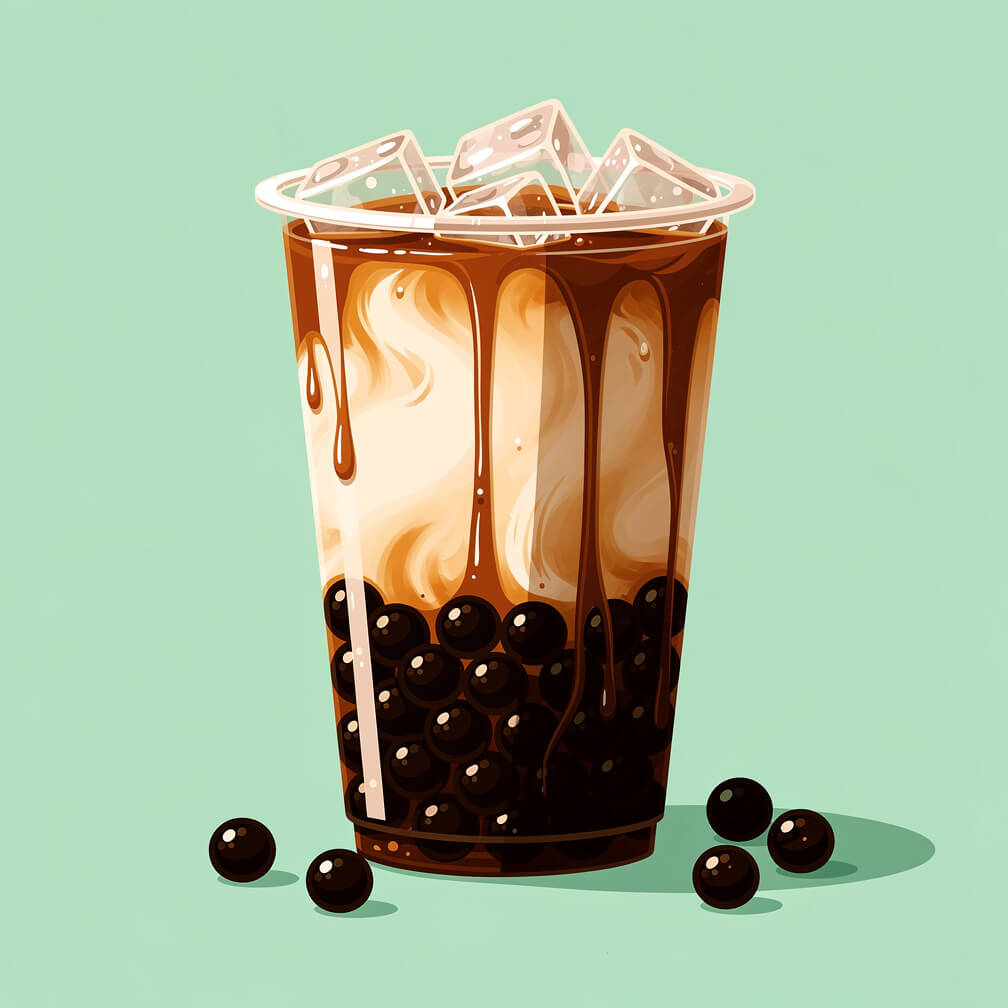
Of everything people get wrong when they ask does boba milk tea have caffeine, this is the most common, and we’ve watched it play out at a counter more than once. Someone orders 無糖 — zero sugar — and says, with real confidence, “so it won’t keep me up.”
It absolutely will.
Sugar level and caffeine are completely independent. Taiwan’s beautiful sweetness ladder — 全糖 full sugar, 少糖 less (around 70%), 半糖 half, 微糖 slight (around 30%), 無糖 none — adjusts how much syrup goes in the cup. It does nothing whatsoever to the tea that was already brewed. A zero-sugar large black milk tea has exactly as much caffeine as the full-sugar version, and a good deal more than a sweet jasmine green.
Worth knowing while we’re on sugar: a National Taiwan University study reported in April 2026 measured drinks from major Taiwanese chains and found that 85.6% contained more sugar than the customer had requested, with 55.6% of “no added sugar” drinks still carrying detectable sugar. A 700 ml “half sugar” drink averaged 46.5 g of sugar. If the sugar level you ask for isn’t reliably the sugar you get, it’s certainly not a caffeine signal.
Ice level does nothing either. 正常冰 normal, 少冰 less, 微冰 slight, 去冰 none — you’re changing dilution and temperature, not the quantity of brewed tea. A no-ice drink is arguably more concentrated per sip, not less caffeinated.
And the pearls are innocent. Tapioca pearls are made from starch extracted from the cassava root — a completely different plant from tea — then boiled and usually steeped in sugar syrup. Plain tapioca pearls contain no caffeine at all, and neither does the brown sugar syrup they’re soaked in. The pearls are carbohydrates and sweetness; the caffeine is in the liquid around them.
One honest asterisk, because blanket statements age badly: some shops make flavored pearls by mixing powder into the tapioca starch, and matcha pearls are a real thing. A matcha-powder pearl would carry a trace of caffeine. It’s a small contribution next to the tea base, but “pearls never have caffeine” is a shade too absolute.
So: if you want less caffeine, changing the sugar, the ice or the topping will get you precisely nowhere. Change the base. That’s the only lever that works.

The Pearls Were Never the Problem
Zero caffeine, one hundred percent chew. The Pearl Gang 珍珠幫 tee puts a squad of glossy kawaii tapioca balls on your chest, because loyalty belongs at the bottom of the cup.
The Taiwanese Drinks With No Caffeine at All
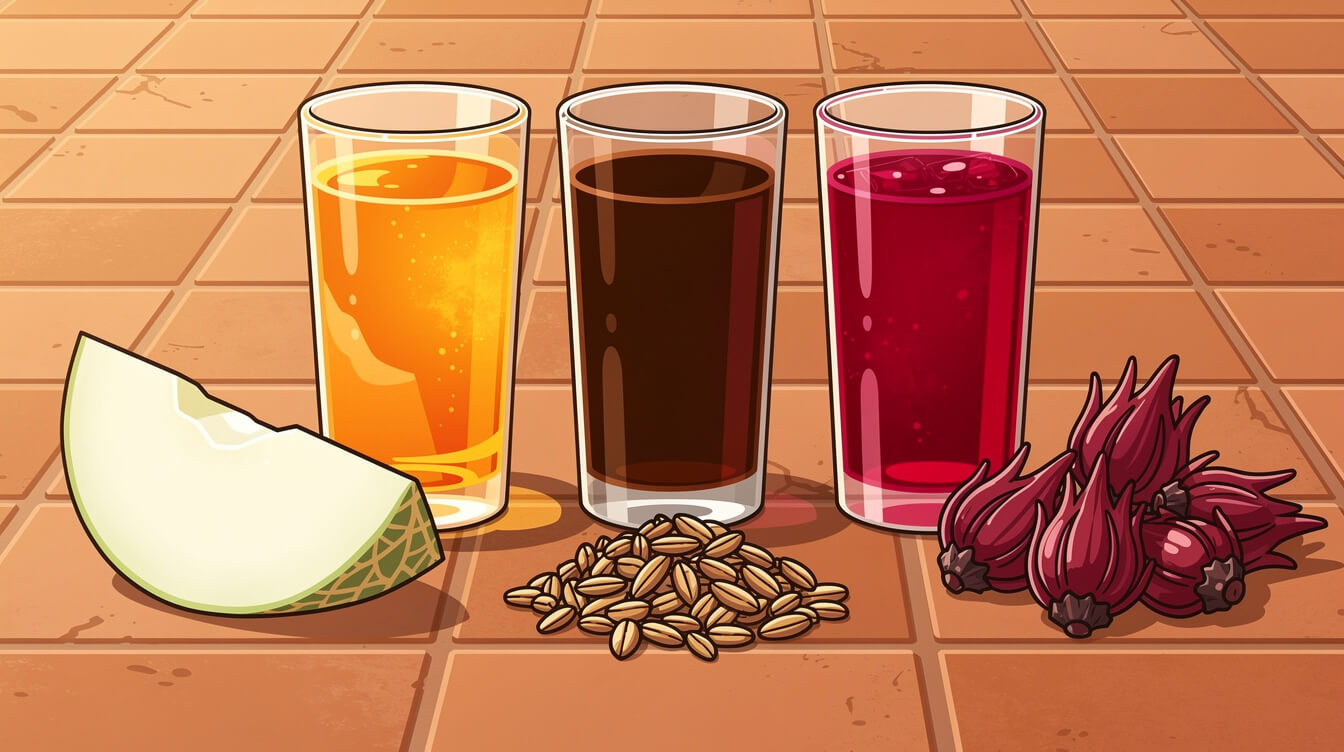
Here’s where knowing Taiwan actually pays off. Most English-language advice on caffeine-free boba gives you two options — fruit tea, or a milk drink — and both come with catches. The Taiwanese menu is much richer than that, and three of its best options are essentially absent from the English internet.
冬瓜茶 (dōngguā chá) — winter melon tea
A dark amber, caramel-sweet infusion made from winter melon simmered down with sugar into blocks, then dissolved. It is not tea in any botanical sense and has zero caffeine. It’s also delicious, deeply traditional, and the standard answer when a Taiwanese parent orders for a child. Winter melon with pearls — 冬瓜珍珠 — is a genuinely great caffeine-free boba drink, and winter melon with fresh milk (冬瓜鮮奶) is better still.
麥茶 (màichá) — roasted barley tea
Toasty, nutty, faintly sweet, served ice-cold in summer across Taiwan, Japan and Korea. Made from roasted barley grains — a cereal, not a tea leaf — so there is no caffeine in it whatsoever. Not low. None. It’s the drink Taiwanese households keep in the fridge by the liter, and it’s criminally underrepresented in boba shops abroad.
洛神 (luòshén) — roselle
Brilliant crimson, sharply tart, made from the fleshy calyces of the roselle plant — a hibiscus relative. Taiwan grows it in Taitung, and the harvest is one of the island’s great seasonal sights. Caffeine-free, vitamin-rich, and the most visually striking drink in any Taiwanese shop. We wrote about Taiwan’s roselle harvest recently — it’s not a flower, despite what everyone assumes.
Fruit teas — the one that needs a caveat
This is where people get tripped up. Many Taiwanese fruit drinks are genuinely caffeine-free juice-and-syrup blends. But a great many others — including some of the most popular — are built on a green or black tea base with fruit added. The word “fruit” on the menu tells you about the flavor, not about the caffeine.
If it’s called 水果茶 (fruit tea) it almost certainly has a tea base. If it’s a 冰沙 slush or a pure juice, it probably doesn’t. When in doubt, ask. Our Taiwan fruit tea guide breaks down which is which.
Taro milk — it genuinely depends
The most-asked-about drink here, and the honest answer is unsatisfying: it depends how the shop makes it. Built from steamed taro or taro paste with fresh milk, it has no caffeine. Built on a tea base with taro powder stirred in, it does. Same name, same color, different drink — so several large chains calling taro caffeine-free are describing their own recipe, not a universal fact. If it matters, ask whether there’s tea in it. We unpacked the whole purple question in our taro bubble tea guide.
And the simplest option of all: fresh milk with brown sugar pearls — 黑糖珍珠鮮奶. No tea, no caffeine, all the chew. It’s on nearly every menu in Taiwan and it’s the drink we order when it’s late.
Boba vs Coffee vs Energy Drinks: an Honest Comparison
The boba industry’s favorite framing is “far less than coffee.” It’s broadly true and slightly self-serving, so let’s put real numbers side by side and let them speak. All coffee and tea figures below come from the FDA’s own reference table, per 12 fluid ounces:
- Regular brewed coffee: 113–247 mg
- Black tea: 71 mg
- Green tea: 37 mg
Against that, Taiwan’s labeling bands tell you what a hand-shaken cup can reach: green up to 100 mg, yellow 101–200 mg, and a red band that exists because some cups clear 201 mg.
So the honest comparison is this. Cup for cup at the same volume, coffee wins comfortably — a 12 oz coffee carries roughly two to three times the caffeine of a 12 oz black tea. But nobody drinks boba at 12 ounces. Scale a black milk tea up to the 700 ml large that Taiwanese shops actually sell and you’re in the 140 mg neighborhood, squarely inside the range of a regular coffee. The volume closes the gap that concentration opens.
Energy drinks are a different animal, frequently exceeding 300 mg per can, and there the comparison genuinely does favor boba.
The takeaway isn’t “boba is secretly as bad as coffee.” It’s that a large black milk tea is a real caffeinated beverage, not a dessert you can have at 10pm without consequence. Set it against Taiwan’s own 300 mg daily ceiling and the arithmetic gets concrete: two large black milk teas is most of an adult’s allowance, before any coffee.
How to Order Low- or No-Caffeine Boba in Taiwan
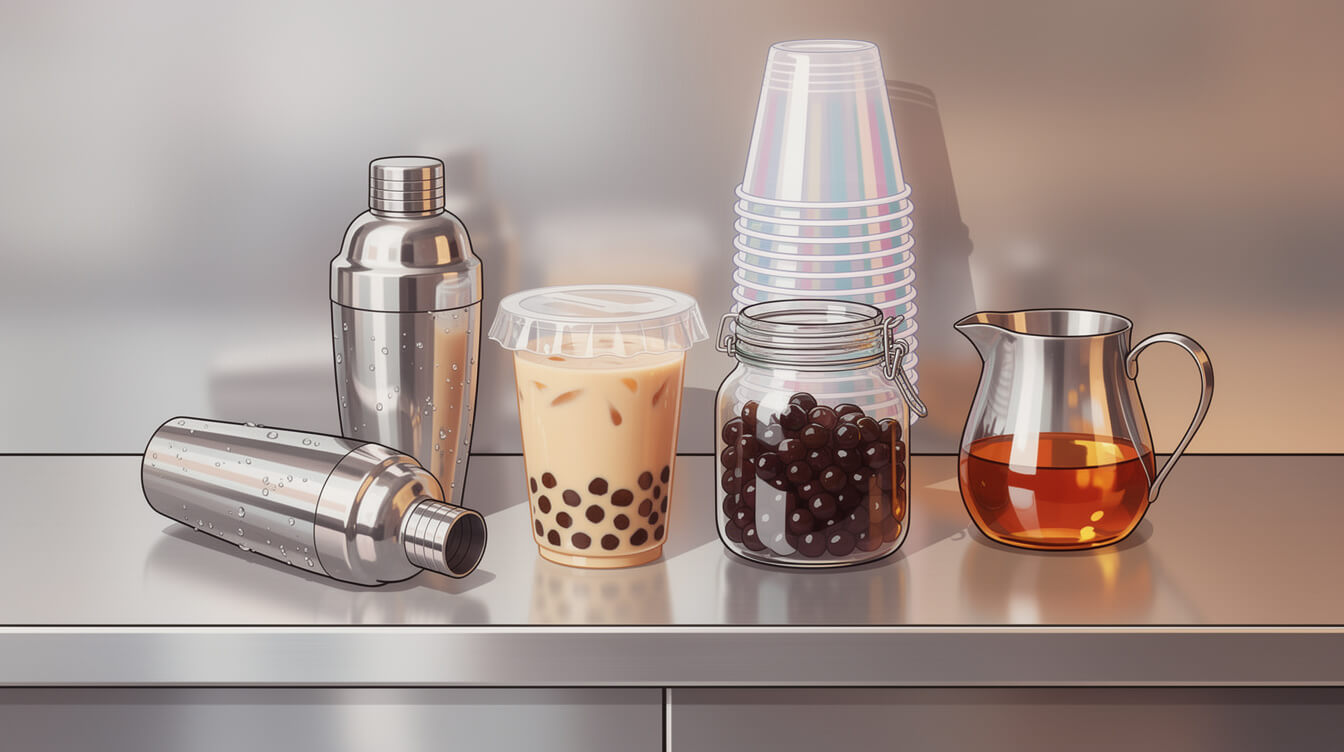
Right. You’re at the counter, there’s a queue behind you, and the menu is a wall of characters. Here’s what actually works.
First, check the label. In Taiwan this is the whole game — chain shops are required to show caffeine content, so look for a number or a red/yellow/green marker on the menu board, or a QR code to scan. You may be the only person in the queue who looks, which is a shame, because it’s the most useful thing on the board.
Then ask the one question that matters. Not “is this caffeine free” — ask whether there’s tea in it:
- 有茶嗎? (yǒu chá ma?) — “Does it have tea in it?” The single most useful phrase here. Any yes means caffeine.
- 有咖啡因嗎? (yǒu kāfēiyīn ma?) — “Does it have caffeine?”
- 我要無咖啡因的 (wǒ yào wú kāfēiyīn de) — “I’d like a caffeine-free one.” Staff will steer you.
Then order by base, not by flavor. A Taiwanese order runs size, drink, sugar, ice — a large pearl milk tea, half sugar, less ice is 「大杯珍珠奶茶,半糖少冰,謝謝」. To cut caffeine, swap the drink, not the sugar.
- Going lower: ask for 綠茶 (green) or 四季春 (Four Seasons) instead of 紅茶 (black). Order medium rather than large.
- Going to zero: 冬瓜茶 (winter melon), 麥茶 (barley), 洛神 (roselle), or 鮮奶 (fresh milk) with pearls.
- Still want it late? 黑糖珍珠鮮奶 — brown sugar pearls in fresh milk, no tea at all.
If you want the full ordering vocabulary — sizes, toppings, the sweetness ladder in detail — our complete guide to ordering boba in Taiwan is the deep dive, and our look at Taiwanese tea culture covers why the island takes its leaf this seriously in the first place.
And if “drink responsibly” has become a genuine operating principle rather than a joke, we made a shirt about exactly that — the Boba Shiba Inu Taipei Metro tee lays down the five sacred Rules of Proper Boba Conduct, which anyone who has carried a full cup onto the MRT will recognize immediately.
Kids, Pregnancy, and the “Why Can’t I Sleep?” Question
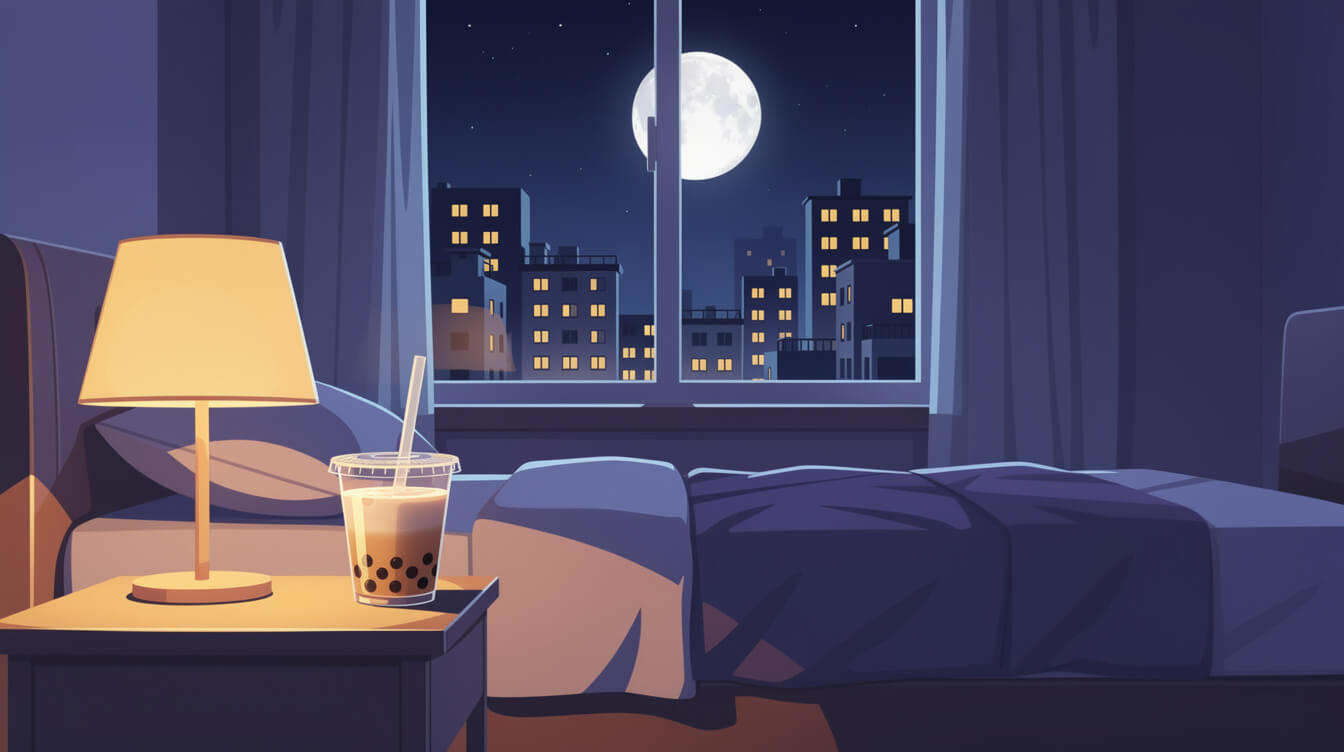
This cluster of questions is the most-asked and the least-answered. The brand blogs ranking for boba caffeine are run by boba chains, which gives them an understandable reason not to dwell on it. So here’s the plain version, with every figure attributed and nothing invented.
A quick and genuine note: we sell t-shirts, not medical advice. What follows is what the named health bodies actually publish. For anything specific to you, your doctor is the right call.
How much is too much for an adult?
Two reference points that differ, which matters if you’re reading advice written for another country. The US FDA cites 400 mg a day for most adults as “an amount not generally associated with negative effects” — about two to three 12 oz cups of coffee. Taiwan’s Ministry of Health and Welfare is more conservative at under 300 mg a day. Both add the same caveat: body weight, medications, medical conditions and individual sensitivity all move the line.
Can kids drink boba milk tea?
The honest answer is that the caffeine is the part worth thinking about, not the pearls.
The American Academy of Pediatrics, via its HealthyChildren guidance, does not publish a safe threshold for children — its position is that “avoiding caffeine is the best choice for all kids.” Taiwan’s health ministry is more specific: avoidance for under-12s, and no more than 100 mg a day for ages 12 to 18.
The practical upshot in a Taiwanese drink shop is cheerful rather than restrictive: the caffeine-free menu is excellent. Winter melon, barley, roselle, or fresh milk with brown sugar pearls are all real drinks that Taiwanese kids actually order, not consolation prizes. The pearls are the point for most kids anyway, and the pearls were never the caffeinated part.
Is boba milk tea safe during pregnancy?
The most widely cited guidance comes from the American College of Obstetricians and Gynecologists, whose Committee Opinion No. 462 states that “moderate caffeine consumption (less than 200 mg per day) does not appear to be a major contributing factor in miscarriage or preterm birth.”
Note the careful wording — it’s a statement about what the evidence does not show, not a permission slip. Taiwan’s own guidance is more cautious still, recommending that pregnant women avoid caffeine. The FDA’s line is to talk to your health care provider.
What we can usefully add is the part the guidance can’t: at a 700 ml large size, a black milk tea can approach that 200 mg figure on its own. If you’re counting, the base and the size are what you’re counting — and the caffeine-free Taiwanese menu above is genuinely good.
Why do I feel jittery, queasy or wide awake after boba?
Probably because you had more caffeine than you thought you did, and possibly a lot of sugar alongside it.
The FDA lists the symptoms of too much caffeine as increased heart rate, heart palpitations, elevated blood pressure, insomnia or sleep disruption, anxiety, jitters, upset stomach, nausea and headache. If a large afternoon milk tea delivered 140 mg on top of a morning coffee, that’s a genuinely caffeinated day — and people who’d never drink coffee at 4pm will happily have boba at 4pm, because it reads as dessert.
Caffeine also lingers. It can stay active in the body for many hours, which is why a 5pm order shows up as a 1am ceiling inspection. If that’s you, the fix isn’t giving up boba — it’s ordering winter melon after lunch.
Does Boba Milk Tea Have Caffeine? Your Questions, Answered
Which boba milk tea has no caffeine?
Anything with no tea in it. In Taiwan the strongest options are 冬瓜茶 winter melon tea, 麥茶 roasted barley tea, 洛神 roselle, and fresh milk with brown sugar pearls (黑糖珍珠鮮奶). Pure fruit slushes and juices qualify too. Be careful with anything labeled 水果茶 “fruit tea” — the word tea is usually literal — and with taro, which is caffeine-free only if the shop builds it from taro paste rather than a tea base.
Can kids drink boba milk tea?
The American Academy of Pediatrics says avoiding caffeine is the best choice for all children and publishes no safe threshold. Taiwan’s Ministry of Health and Welfare recommends under-12s avoid caffeine and that 12-to-18s stay under 100 mg a day. A caffeine-free order solves it entirely, and the Taiwanese caffeine-free menu is genuinely excellent — winter melon with pearls is a childhood staple on this island, not a compromise.
Is boba healthier than coffee?
On caffeine alone, boba is gentler per fluid ounce — the FDA puts brewed coffee at 113–247 mg per 12 oz against black tea’s 71 mg — but boba is sold in 500 and 700 ml cups and coffee usually isn’t, which narrows the gap. Caffeine also isn’t the whole picture: the 2026 National Taiwan University study found 85.6% of chain drinks carried more sugar than requested, a 700 ml “half sugar” averaging 46.5 g. Black coffee has essentially none. “Healthier” depends which number you’re watching.
Do tapioca pearls have caffeine?
No. Tapioca pearls are cassava starch — a root vegetable, botanically nowhere near the tea plant — boiled and steeped in sugar syrup. Neither the pearls nor the brown sugar syrup contribute caffeine. The only asterisk is flavored pearls: a matcha-powder pearl would carry a trace.
Does brown sugar boba milk have caffeine?
It depends on one word. Brown sugar boba milk (黑糖珍珠鮮奶) is fresh milk, brown sugar syrup and pearls — no tea, no caffeine. Brown sugar boba milk tea has a tea base, and therefore does. The syrup and the pearls are never the issue; the presence or absence of tea always is.
Does taro milk tea have caffeine?
Genuinely depends on the shop. Built from steamed taro or taro paste with fresh milk, it has none. Built on a black or green tea base with taro powder stirred in, it does. Chains that call taro a caffeine-free option are describing their own recipe, not a universal truth. Ask whether there’s tea in it.
Why do I feel dizzy or jittery after milk tea?
Most likely a bigger caffeine dose than expected — a 700 ml black milk tea can carry around 140 mg — often alongside a lot of sugar on an empty stomach. The FDA lists jitters, palpitations, nausea and upset stomach among the effects of too much caffeine. If it’s a pattern, switch to a lower-caffeine base like 四季春, or go caffeine-free after midday.
How do I find out exactly how much caffeine is in my drink?
In Taiwan, read the label — chain drink shops, convenience stores and fast-food outlets have been required since January 2023 to display total caffeine per cup, as a figure or a red (201 mg+), yellow (101–200 mg) or green (under 100 mg) marker, including by QR code. Outside Taiwan there’s no equivalent rule, so you’re estimating from base and size.
The Short Version, If You Only Remember One Thing
Does boba milk tea have caffeine? Yes — and the amount is entirely in your hands, because the caffeine lives in the tea base and nowhere else.
Not in the pearls. Not in the syrup. Not changed by asking for 無糖 or 去冰. If you want less, change the tea: black down to oolong, oolong down to Four Seasons or jasmine green, or out of the tea plant entirely into winter melon, barley or roselle.
And if you’re drinking in Taiwan, you have an advantage nobody else in the boba world has: the number is printed on the menu. Red, yellow or green, by law, since 2023. The island that invented this drink is also the only place that tells you exactly what’s in it — which feels about right.
Now go order something excellent. Preferably with extra pearls, which were never the problem.
A Postcard From Taiwan, Every Week
Food stories, festival calendars, artisan finds and the odd drink-shop deep dive — plus first look at new designs. No spam, just Taiwan.

Grab a Free Taiwan Sticker!
Drop your email and we’ll send you a limited-edition Taiwan sticker — plus insider access to new merch drops and island vibes.
No spam. Unsubscribe anytime.