Taiwan Typhoon Season 2026: When It Hits, How to Plan Around It, and What to Do If You Get Caught
If you’re planning a Taiwan trip between June and October, you’re going to hear the word a lot: typhoon. The good news? Taiwan typhoon season is not the trip-killer the internet sometimes makes it sound like. The island sees three to five storms touch its waters in an average year, most of them brush past or weaken before landfall, and the days in between are some of the warmest, greenest, juiciest-fruit-on-the-planet days you’ll ever experience.
The bad news? When a typhoon does decide to come knocking, it doesn’t politely RSVP a week ahead. Sustained winds can rip past 100 km/h, mountains turn into waterfalls, and the entire country goes into a 24-hour ritual of stockpiled instant noodles, plastic-taped windows, and government-declared “typhoon leave.” This guide breaks down exactly when storms hit, why Taiwan gets pummeled harder than its neighbors, how the warning system works, and the cultural rituals you’ll see locals perform that no English-language travel blog ever explains. By the end, you’ll know how to plan around the season, what to do if you get caught in one, and why a typhoon day in Taiwan is honestly kind of magical if you do it right.
When Is Taiwan Typhoon Season? (The Real Calendar Most Guides Get Wrong)
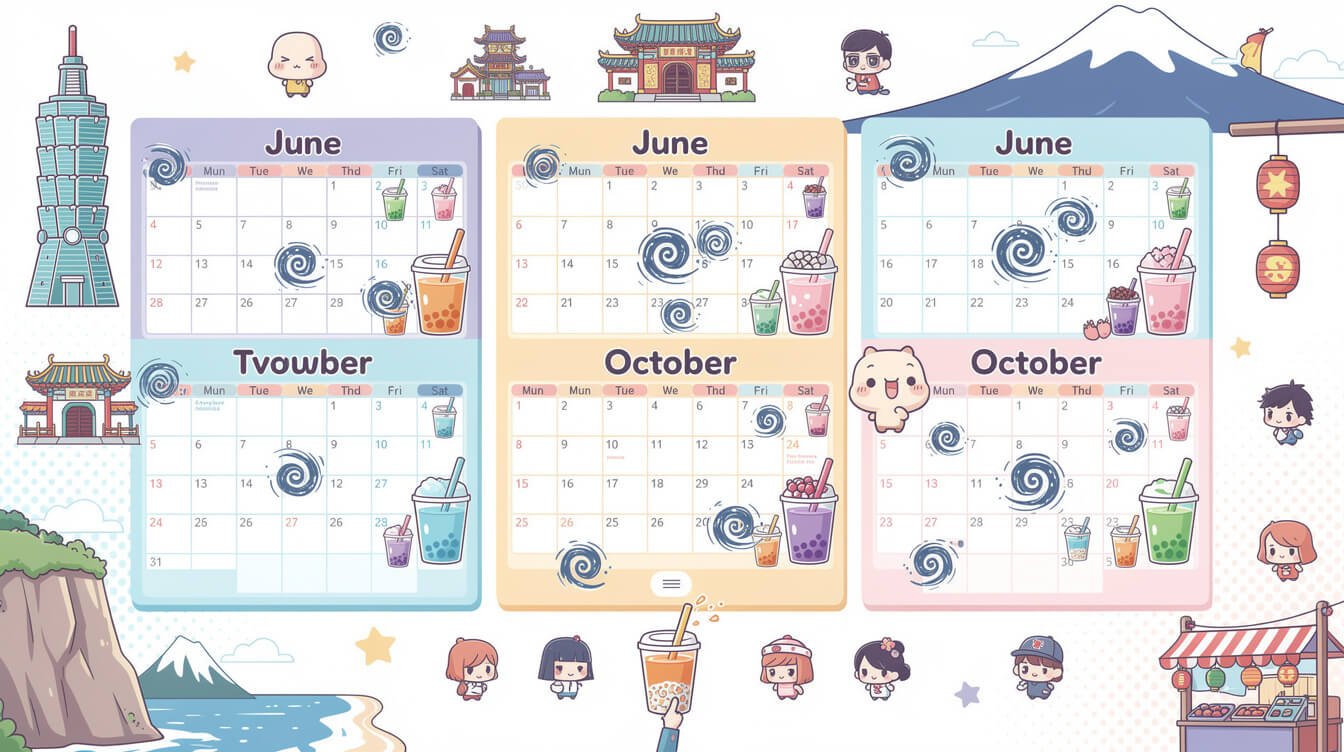
The standard answer to “when is Taiwan typhoon season” is June through October, and that’s technically right — but it papers over the real story. Most years, the season has a sharp personality. June is mostly bluffing. July starts the conversation. August and September do most of the actual damage. October mops up. Knowing the rhythm matters because the difference between visiting Taiwan in early June and visiting in late August is the difference between mild humidity and a country that might literally close for a day.
Month-by-Month Breakdown
- Early Season (June – mid-July): The Pacific is warming up. You might see one or two storms form, but most pass well east of Taiwan or hit the Philippines first. Travel impact: minimal. The bigger problem in June is the tail end of plum rain (méiyǔ) — long, sticky days of heavy showers.
- Peak Season (late July – mid-September): This is when the central weather system really lights up. The Pacific is at its warmest, storms intensify rapidly, and Taiwan sits directly in the firing line of typhoons that recurve north of the Philippines. Statistically, more than 70% of Taiwan’s landfalling typhoons in any given decade arrive in this window.
- Late Season (late September – October): Activity tails off, but a late-season monster can still appear. The 2024 season’s Typhoon Krathon, for example, made landfall in early October. By late October, most travelers are safely back in the dry, cool side of the year.
For the cultural counter-perspective, our short read on why Taiwanese locals quietly welcome typhoon season explains the reservoir paradox behind the panic-buying.
One thing worth knowing: the official forecast bureau, the Central Weather Administration (CWA), tracks the Western Pacific season as the entire calendar year, but storms outside June-October are statistical noise. If you’re planning around Taiwan typhoon season, the honest planning window is just those five months.
How Many Typhoons Actually Hit Taiwan Each Year?
On average, the Western Pacific produces around 25 named tropical cyclones a year — but only 3 to 5 of those actually impact Taiwan, and only 1 or 2 make direct landfall in a typical year. That number can swing dramatically. The 2024 season produced three category-4 storms in quick succession (Gaemi, Krathon, Kong-rey), which the trade press called the most intense typhoon year for Taiwan in nearly a decade. Other years pass by almost quietly. There’s no useful long-range forecast that travelers can rely on — you’re rolling the dice on the season, but the dice are loaded toward “fine.”
How Taiwan’s Geography Turns Tropical Storms Into Typhoons
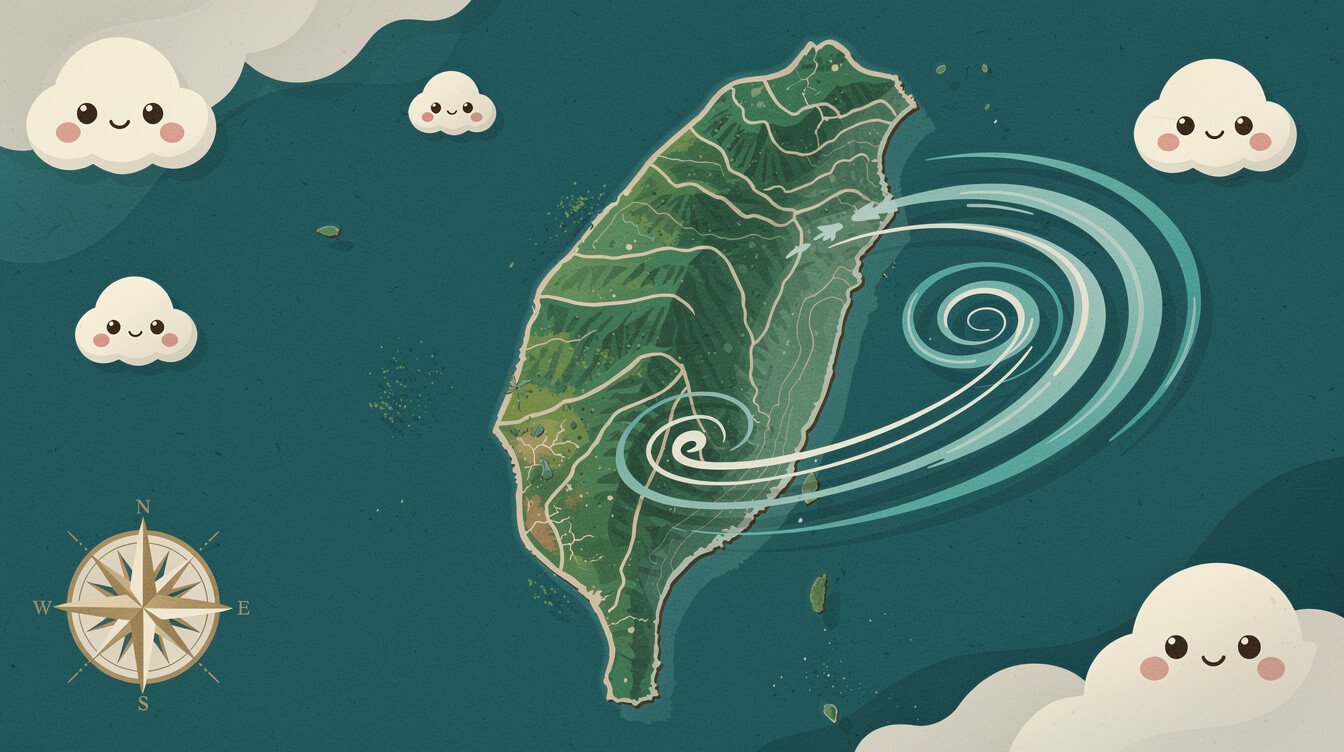
If you’ve ever wondered why Taiwan gets hit so much harder than, say, Japan’s Okinawa just a few hundred kilometers north, the answer is geography. The island is a tiny vertical sliver sitting in the path of a Pacific storm conveyor belt, and its terrain takes whatever the storms throw at it and amplifies the chaos.
The Conveyor Belt
Western Pacific typhoons form near the equator over warm ocean water, then track northwest before hooking sharply north. That hook — meteorologists call it “recurvature” — frequently lines up exactly with Taiwan’s east coast. The Philippines takes some of the punches; the rest land here.
The Central Mountain Range
Taiwan’s spine is the Central Mountain Range (中央山脈), with peaks pushing 3,500 meters. When a moisture-saturated typhoon slams into that wall, the air has nowhere to go but up. As it rises, it cools, and the water it was carrying falls — fast. This is why Taiwan’s typhoon rainfall totals are some of the most extreme on Earth. Typhoon Morakot in 2009 dropped almost 3,000 mm of rain on parts of southern Taiwan in 48 hours. That’s not a typo. Eight feet of water in two days.
The Eastern Coast Bullseye
Hualien and Taitung counties on the east coast catch storms first and hardest. Western cities like Taipei, Taichung, and Kaohsiung often get the storm after it has crossed the mountains, which weakens the winds but unleashes massive rainfall as the system collapses on the leeward side. The takeaway: typhoon impact varies a lot depending on where you are on the island, and a storm warning in Taipei rarely means the same thing as one in Hualien.
The Typhoon Warning System: What CWA’s Alerts Actually Mean
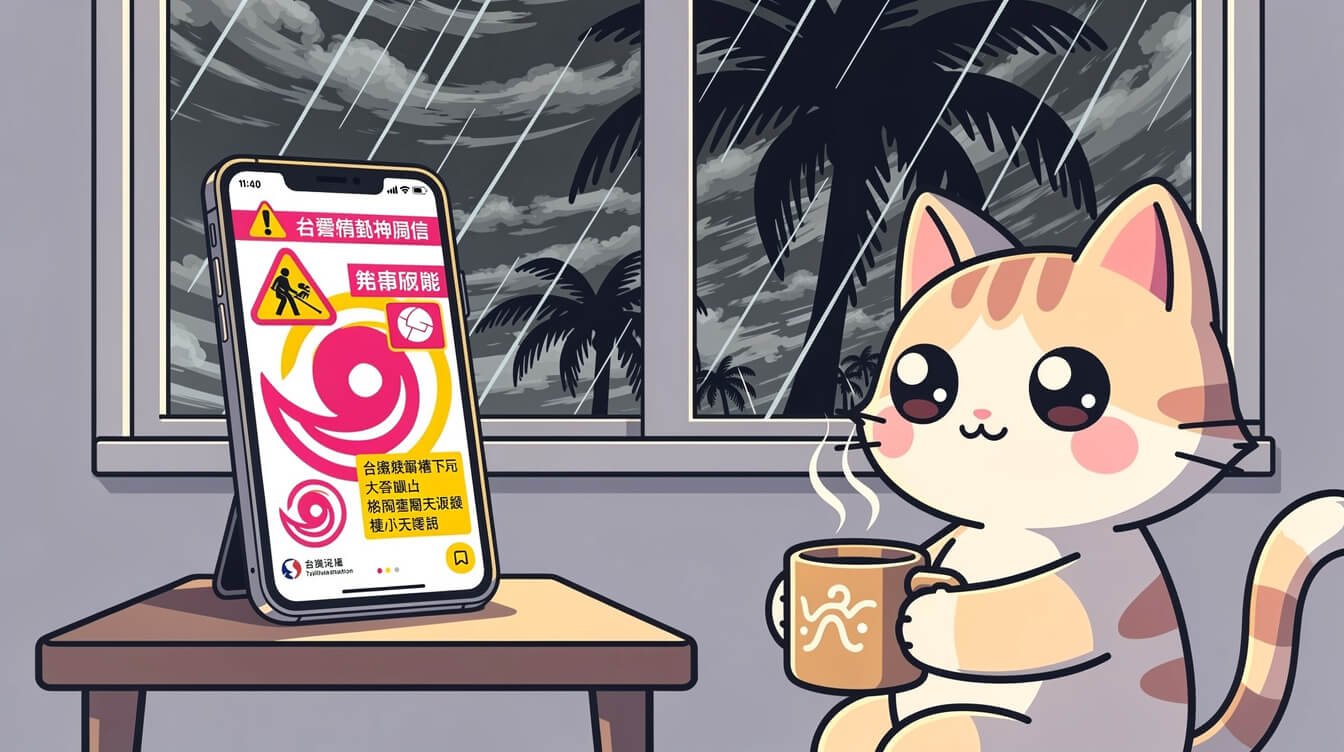
The Central Weather Administration (you’ll see it referred to as CWA, formerly CWB) is the single source of truth for Taiwan typhoon information. Their alerts are the ones that trigger everything else — school closures, office closures, flight cancellations, transport shutdowns. If you’re in Taiwan during the season, this is the website (and the LINE official account) you want bookmarked.
The Two Warning Levels
There are two warnings worth knowing, and they’re issued in sequence:
- Sea Warning (海上警報): Issued when a typhoon’s gale-force radius is expected to enter waters within 100 km of Taiwan’s coast within 24 hours. This mostly affects shipping and coastal areas. Tourists usually shrug at this one.
- Land Warning (陸上警報): Issued when the gale-force radius is expected to reach land within 18 hours. This is the alert that changes your day. Once the land warning drops, local governments start announcing whether the next day will be a “typhoon day off” (颱風假) — and the country starts moving.
How Storms Are Classified
CWA uses three intensity tiers based on 10-minute sustained wind speed:
- Mild Typhoon (輕度颱風): 17.2 – 32.6 m/s. Roughly equivalent to a tropical storm in the Atlantic classification. Annoying but manageable.
- Moderate Typhoon (中度颱風): 32.7 – 50.9 m/s. Category 1-2 hurricane equivalent. This is your “things will close” benchmark.
- Strong Typhoon (強烈颱風): 51.0 m/s and above. Category 3+ equivalent. When you hear “super typhoon” in international press, this is the tier — and Taiwan saw three of them in 2024.
What to Watch For as a Traveler
Track two things and you’ll be fine: predicted landfall location and predicted gale-force radius. If the gale-force radius is forecast to graze the side of the island you’re on, expect transport delays and closures. If the eye is projected to track over your county, expect a full shutdown day and plan accordingly. The CWA’s typhoon path forecast graphic is usually trustworthy 48 hours out and gets sharper as the storm closes in.
Taiwan’s Cultural Side of Typhoon Day (Panic-Buying, Boba Stockpiles & “Typhoon Leave”)

This is the section no other travel guide writes, and it’s the most fun. A typhoon day in Taiwan isn’t just a weather event — it’s a cultural ritual. If you’re on the island when one hits, you’re going to witness the entire country slip into the same rhythm: stockpile, hunker, scroll, repeat. Understanding this rhythm changes a typhoon from “trip ruined” into “best story you tell back home.”
The Race to 7-Eleven
The moment a land warning drops, Taiwan’s legendary convenience-store culture shifts into emergency mode. Shelves at 7-Eleven, FamilyMart, and Hi-Life empty in waves: first the instant noodles (especially Wei Lih’s beef noodle cup and the iconic green-and-yellow Wei Wei Curry), then the bottled water and milk tea, then the bread, then the eggs. There’s a long-running social-media joke that the shelves of Wei Wei Curry instant noodles are the most accurate typhoon early-warning system in the country — they vanish before CWA even confirms the storm.
“Typhoon Leave” (颱風假) — The Day the Country Gets a Day Off
By Taiwanese law, each city and county government — not the central government — decides whether to call a typhoon day off based on CWA’s forecast. The decision drops by 10 PM the night before, posted on the Directorate-General of Personnel Administration’s website and instantly meme-d to oblivion on Facebook and Threads. If your county is declared closed, schools shut, government offices close, and most private businesses follow. Locals watch the announcement like a sports event.
For travelers, a declared typhoon day means: museums, malls, MRT, and most restaurants are usually still open in unaffected counties, but cross-county transport may stop. Always check your specific city’s decision — they sometimes split, with Taipei calling a day off while Taichung 200 km south stays open for business.
Taiwanese Typhoon Food Culture
There’s a long-standing tradition of “typhoon vegetables” (颱風菜) — when storms wipe out farms, leafy green prices spike for two weeks, and home cooks shift to root vegetables, pickles, and pantry staples. Convenience stores roll out limited-edition warm rice balls. Boba shops that brave the wind to stay open become neighborhood heroes. And there’s a specific kind of comfort meal — instant noodles with an egg cracked in, a slice of Spam, and a handful of frozen dumplings — that every Taiwanese person has eaten during at least one typhoon evening.
Speaking of staying cozy indoors — if you’re going to spend a day hunkered down watching the wind, you might as well do it in something legendary. Our Taiwan Bubble Tea Warrior Roman Legion Hoodie was practically engineered for typhoon-day couch sessions — heavyweight, ridiculous, and exactly the right energy to wear while you eat instant noodles and watch the wind try to rearrange the neighborhood.
Best Time to Visit Taiwan to Avoid (or Plan Around) Typhoons

If your travel calendar is flexible and your goal is to dodge typhoons completely, the answer is simple: visit Taiwan between November and April. The Pacific cools down, the storms stop forming, and Taiwan slips into one of the most pleasant travel windows in Asia. For a deeper breakdown, our complete month-by-month guide to visiting Taiwan walks through every season’s pros, cons, and festival calendar.
The Best Months
- March, April, October, November: The sweet spot. Mild temperatures, comfortable humidity, almost no typhoon risk (October being the only minor exception), and the country at its visually best — cherry blossoms in spring, golden autumn light in fall.
- December – February: Cool and crisp in the north, balmy and beach-ready in the south. Zero typhoon risk. Great for hot-pot season, festivals like Lunar New Year and Pingxi Lanterns, and lower hotel prices outside Chinese holidays.
If You Have to Travel During the Season
Plenty of people choose to visit Taiwan in summer despite the typhoon risk — the night markets are at their most alive, mango season peaks in June and July, and beach season is in full swing. If you’re in that camp, three smart moves dramatically reduce the chance of a storm wrecking your itinerary:
- Book flexible accommodation. Most international hotel chains and reputable hostels have free-cancellation rates for typhoon-season bookings. Take them, even if they cost slightly more.
- Buy travel insurance with typhoon coverage. Read the fine print. Many policies cover weather-related delays only if the airline officially cancels, not if you choose to reschedule.
- Build buffer days into your itinerary. If you have a tight transit window — say, a flight out of Hualien the day after a planned hike at Taroko Gorge — assume that one day in three might get rained out and plan accordingly. Travelers building a longer Taiwan trip can borrow structure from our 7, 10, and 14-day Taiwan itinerary guide.
Where to Go When a Storm Is Forecast
If a storm is bearing down on the east coast, shifting your itinerary west and south can save the trip. Storms weaken crossing the central mountains, so Tainan and Kaohsiung often see manageable rain when Hualien is getting flattened. The reverse is also true: a Pacific storm that brushes north can leave southern Taiwan completely untouched.
What to Do When a Typhoon Hits While You’re There (Indoor Survival Guide)

So a typhoon is incoming and your plans for outdoor fun are toast. Don’t panic. Taiwan does typhoon days better than basically anywhere on Earth, and you have more options than you think. Here’s the survival playbook.
Stay Where You Are
Rule one is the simplest: do not try to travel during the storm itself. The MRT in Taipei usually keeps running through moderate typhoons, but inter-city trains, high-speed rail, and most highway buses suspend service the moment land warnings drop. Taxi and Uber availability collapses. Riding out the storm at your hotel is always the right move.
Pre-Storm Supplies
Grab these on your way back to the hotel, ideally the afternoon before the storm hits — by evening the shelves will be picked over:
- 2L of bottled water per person (in case municipal water is briefly disrupted)
- Instant noodles, bread, or anything else that does not require cooking
- Snacks: pineapple cakes, mochi, Want Want rice crackers — typhoon-day comfort food is mostly Taiwanese snacks
- A power bank (charged), in case the lights flicker
- Cash — ATMs occasionally go offline during major storms
Indoor Activities That Stay Open
If the rain lets up between gusts, plenty of indoor experiences continue normally even during typhoon days. Taipei’s National Palace Museum, Eslite bookstores, large department stores, hot-pot restaurants, and most museums are usually open. Taiwan’s volcanic hot springs — particularly Beitou and Wulai, both reachable from Taipei without leaving the city limits — are arguably better in a storm. Sitting in an outdoor onsen with rain pelting the canopy is one of those memories travelers come back to for years.
Other reliable typhoon-day moves:
- Eslite 24-hour bookstores: A Taipei institution. Browse for hours.
- Department-store food halls: Mitsukoshi, SOGO, Breeze. Eat your way through floors.
- Cinema: Hollywood blockbusters are almost always available with English audio and Chinese subtitles.
- Tea houses: Old-Taipei spots like Wisteria House in Da’an or the Maokong tea hills (weather permitting) are made for slow rainy afternoons.
- Karaoke (KTV): A genuinely classic Taipei rainy-day activity. Holiday KTV and Cashbox keep running through storms.
After the Storm
Once the all-clear is announced, give the system 12–24 hours to recover before resuming any mountain, river, or coastal travel. Landslides, swollen rivers, and “barrier lakes” — temporary lakes created when landslides dam a river — are the deadliest post-typhoon hazards. National parks like Taroko Gorge frequently close for days after a major storm. Check the park websites before assuming a hike is back on.

Built for Typhoon-Day Couch Sessions
Heavyweight cotton blend, ridiculous warrior boba on the front, and exactly the right energy for waiting out a storm with instant noodles. The official uniform of riding out Taiwan’s wildest weather in style.
Taiwan Typhoon Season FAQ: Quick Answers to the Questions Travelers Actually Ask
Should I cancel my trip if a typhoon is forecast?
Almost never. Forecasts more than three days out can shift dramatically, and storms regularly weaken or veer away. The smarter move is to monitor CWA’s official site daily as your trip approaches and have a flexible accommodation policy you can lean on if you need to shift dates.
Are flights cancelled during typhoons?
Often, yes — but usually only on the day of the storm and the morning after. Airlines typically waive change fees for affected dates. If you’re flying domestic (Taipei–Kaohsiung, Taipei–Hualien), assume cancellations and book a refundable ticket. International long-haul flights are sometimes diverted but rarely cancelled outright.
Is Taiwan safe during typhoons?
Statistically, very. Taiwan ranks among the world’s safest countries, and its disaster response infrastructure is one of the most advanced in Asia. Buildings are engineered for typhoons, evacuation systems are well-rehearsed, and major flooding rarely affects tourist districts. The two real risks are flash floods in rural mountain areas and the post-storm landslide window.
What’s a “barrier lake” and why does it matter?
A barrier lake is a temporary lake formed when a typhoon-triggered landslide blocks a river. They look harmless but can burst catastrophically days later, releasing the dammed water in a sudden flash flood. Avoid rivers and downstream valleys for at least 72 hours after a major storm.
Can I drive after a typhoon?
Yes, but stay on highways for the first 24 hours and avoid mountain roads entirely. Provincial highways like the Suhua and Central Cross-Island routinely close for days post-storm while road crews clear landslides.
Which apps should I install before the season?
The CWA’s official app (available in English) gives real-time radar, typhoon path forecasts, and warning alerts. The LINE messaging app’s “official accounts” for CWA and your local city government will push notifications when warnings drop. Many travelers also keep Windy.com bookmarked for visual radar.
What happens to night markets during typhoons?
Most outdoor night markets close for the day. Covered or partially covered markets (Raohe, parts of Shilin) sometimes operate at reduced hours. The day after a storm is usually a great time to visit — vendors are eager, prices may be slightly softer, and the air feels washed clean.
Final Thoughts: Embrace the Wind, Respect the Storm
Visiting Taiwan during taiwan typhoon season is like dating someone passionate — most of the time it’s a blast, occasionally things get loud, and the best memories come from the days you didn’t plan. The country has been doing this dance with Pacific storms for longer than most modern nations have existed, and the infrastructure, the cultural rituals, and the calm-but-prepared attitude of the locals reflect that.
The honest summary: come prepared, build flexibility into your plans, watch the CWA forecast, stock the convenience-store essentials when a warning drops, and accept that one day of your trip might get hijacked by a storm. That day will turn into the story you tell back home — the night you ate Wei Wei Curry instant noodles with a Taiwanese family in their living room, or the morning the typhoon broke and you watched a rainbow stretch across the Taipei skyline. Typhoons aren’t a reason to skip Taiwan. They’re a reason to come, eyes open and respect intact, and meet the island on its own wild terms.

Grab a Free Taiwan Sticker!
Drop your email and we’ll send you a limited-edition Taiwan sticker — plus insider access to new merch drops and island vibes.
No spam. Unsubscribe anytime.