Taiwan Tea: The Complete Guide to the World’s Most Underrated Tea Island
Here’s something most tea drinkers never figure out: Taiwan tea punches so far above its weight that one tiny mountainous island accounts for roughly twenty percent of the entire world’s oolong production. The first tea trees on the island were recorded in 1717, in the Shui Sha Lian basin around modern-day Yuchi and Puli — a fact that should make Taiwan a household name in tea circles. Instead, the global SERP for “taiwan tea” is dominated by online stores, not editorial guides. That feels backwards to us. So this is the editorial guide we wished existed: every region, every cultivar, every famous varietal, and every reason Taiwan tea deserves to sit at the same table as Darjeeling, Uji, and Wuyi.
If you only know Taiwan tea through bubble tea — and most of the world does — that’s a fine place to start. But there is an entire universe of high-mountain oolongs, Sun Moon Lake black teas, Oriental Beauty’s bug-bitten leaves, and Wenshan Baozhong sitting behind that frothy plastic cup. By the end of this guide you’ll know how to walk into any teahouse in Taipei, point at the menu, and order something with confidence. You’ll also know exactly which regions to visit if you’re already planning your trip — including the cloud-belt above Alishan and the misty hillsides around Sun Moon Lake.
Why Taiwan Punches Above Its Weight in the Global Tea World
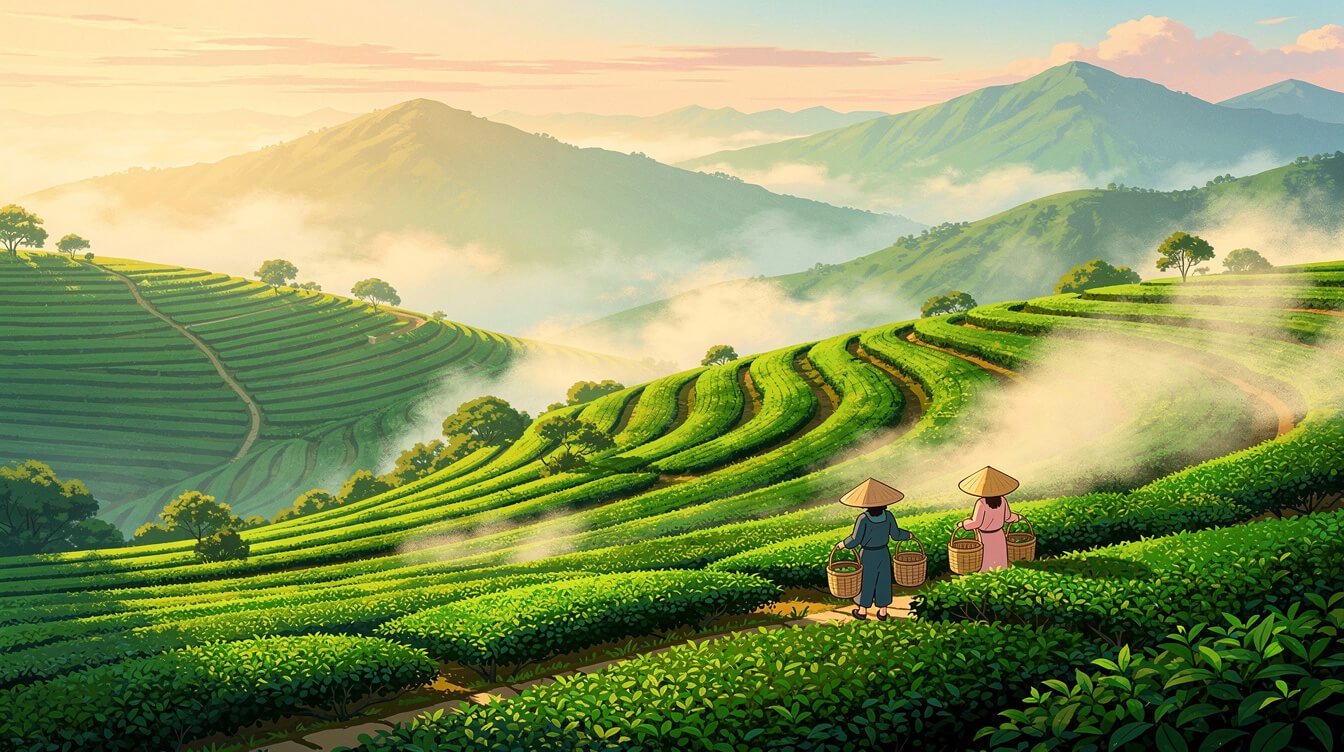
Taiwan is a tea-growing freak of geography. The island sits on the Tropic of Cancer, with a central mountain range that runs nearly its entire length and pushes peaks above 3,900 meters. That gives you everything tea bushes want — humidity, fog, big diurnal temperature swings between day and night, well-drained acidic soil, and altitude that slows leaf growth enough to concentrate flavor. Tea bushes pampered like this don’t grow faster. They grow better.
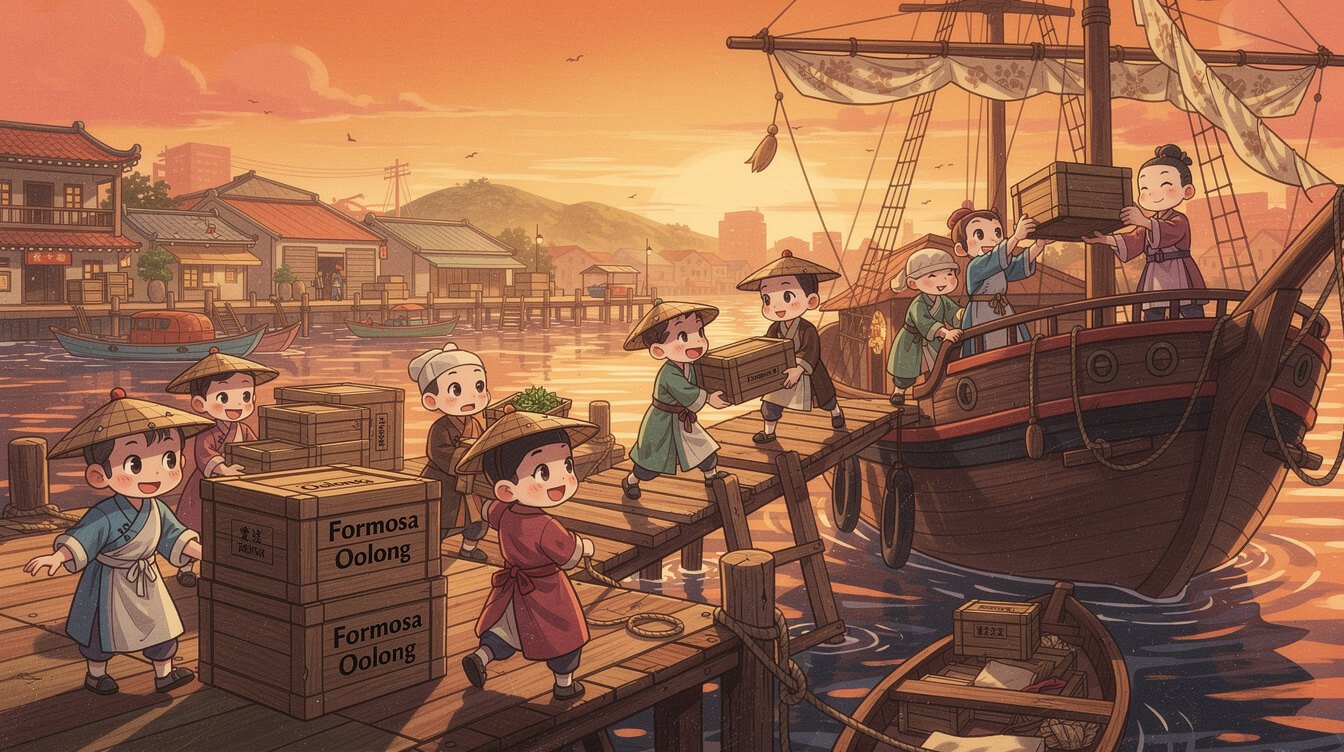
The commercial story of Taiwan tea starts in 1867, when a Scottish merchant named John Dodd set up a tea company in the Wanhua district of Taipei. He shipped Taiwanese oolong to New York under the name “Formosa Oolong,” and the brand was an immediate hit. Pouchong, a flowery lightly-oxidized oolong, soon followed under the export name “Formosa Pouchong.” By the late nineteenth century, “oolong” and “Taiwan tea” were practically synonymous in American grocery stores. Ceylon tea merchants got nervous enough to spread rumors about Taiwanese workers crushing leaves with their bare feet — a smear campaign that backfired when Taiwan’s tea industry mechanized its processing and won prizes at the St. Louis World’s Fair.
When Japan took control of Taiwan in 1895, the colonial administration tried to remake the island into “another Darjeeling.” Mitsui Corporation planted Assam and Sri Lankan tea varieties up north, found them unsuitable, and then in the 1920s pivoted to the Yuchi township in Nantou County. That’s where the Yuchi Black Tea Research Institute was founded in 1926 — and it’s the direct ancestor of today’s Hongyu Ruby 18, a hybrid black tea that’s now Sun Moon Lake’s signature. After Taiwan was hit by the catastrophic 1999 Jiji earthquake, the government poured serious money into rebuilding the tea industry, and the Tea Research and Extension Station continues to crank out new cultivars decade after decade.
The result is a tea culture with three things almost nobody else has at the same time: serious altitude (peaks above 2,500 meters where high-mountain oolongs grow), serious science (a century-old state-funded research institute), and serious tradition (every Taiwanese family has a Tatung-rice-cooker-and-a-tea-table at home). That combination is why “taiwan tea” deserves more than a SERP full of e-commerce listings.
The Tea Regions of Taiwan: From Coastal Pinglin to the Alishan Cloud-Belt
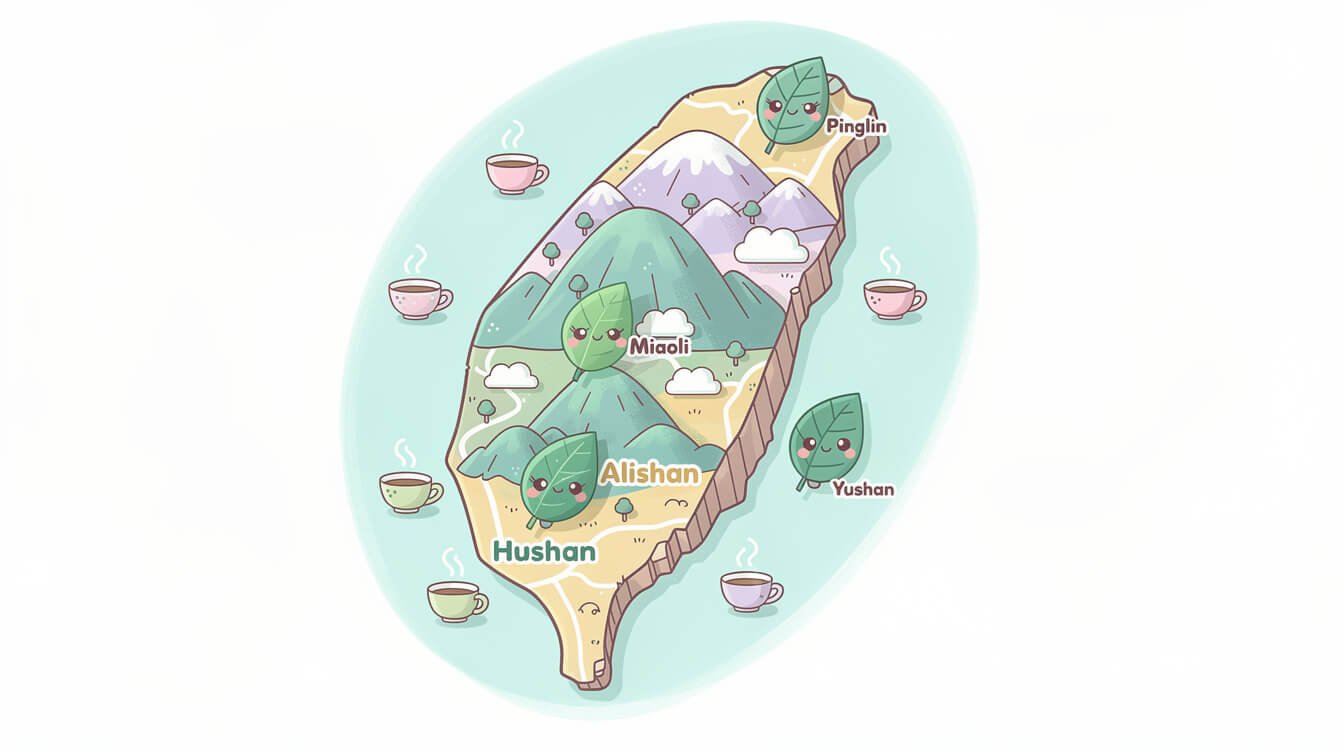
Taiwan tea is grown in five rough geographic zones, each with its own personality. Knowing which region a tea comes from is the single most useful piece of information for understanding what’s in your cup — sort of like knowing whether a wine is Burgundy or Napa.
Northern Taiwan: Pinglin, Muzha, Wenshan
This is where Taiwan’s commercial tea industry was born. Pinglin in New Taipei City is the heartland of Wenshan Baozhong (文山包種), the lightly-oxidized oolong that’s almost more like a green tea — bright, floral, jasmine-adjacent. Muzha just south of central Taipei is the historic home of Taiwan’s Tieguanyin (鐵觀音), a more heavily oxidized and roasted oolong that traveled here from Fujian. Northern teas tend to be lower in altitude (around 400–800 meters) but make up for it with deep traditional craftsmanship.
Mid-Central: Miaoli and Hsinchu
Hsinchu and Miaoli counties are the kingdom of Oriental Beauty (東方美人, also called Bai Hao Oolong or “white tip”). What makes Oriental Beauty unique is that the leaves are deliberately bitten by tiny green leafhoppers — the bug saliva triggers a chemical reaction that produces honey-like notes when the leaf is processed. Yes, this is a tea that depends on insects. Queen Victoria reportedly named it. Take that as you will.
South-Central: Nantou, Chiayi, Yunlin
If high-mountain oolongs are Taiwan’s flagship export, this region is the shipyard. Nantou produces Dongding (凍頂烏龍) on a mountain that translates as “Frozen Peak,” with a roasted character that’s been Taiwan’s gold standard for half a century. Sun Moon Lake in Yuchi township grows Hongyu Ruby 18 black tea on the same lake-warmed slopes where the Japanese first hybridized Assam stock. Chiayi is the gateway to Alishan, and Yunlin is home to Shanlinxi’s bamboo-forest tea farms.
The High-Mountain Belt: Alishan, Lishan, Dayuling, Shanlinxi
Anything grown above 1,000 meters in Taiwan earns the label gaoshan cha (高山茶), and at the very top of the price ladder are Lishan and Dayuling, both above 2,000 meters. Lishan oolong has been known to fetch more than US$200 per 600 grams. Dayuling, grown around 2,500 meters in the Hehuan mountain range, is so prized that counterfeiting it is basically a small industry. Alishan is the most accessible and the most-marketed of the high-mountain regions — and the most likely to end up in your cup if you ask for Taiwanese high-mountain oolong at a teahouse anywhere outside the country.
Eastern Taiwan: Hualien and Taitung
The east coast is Taiwan’s wild side. Tea bushes grow on small farms in Ruisui (Hualien) and on the foothills around Taitung, often shaped by Pacific winds and the indigenous tea-growing traditions of the Truku and Amis peoples. Eastern teas are still small-batch enough that they’re harder to find overseas — which means they’re some of the most rewarding teas to seek out if you visit. The mineral-rich soil here pushes a more savory, almost briny note into the leaves.
The Cultivars That Make Taiwan Tea Different
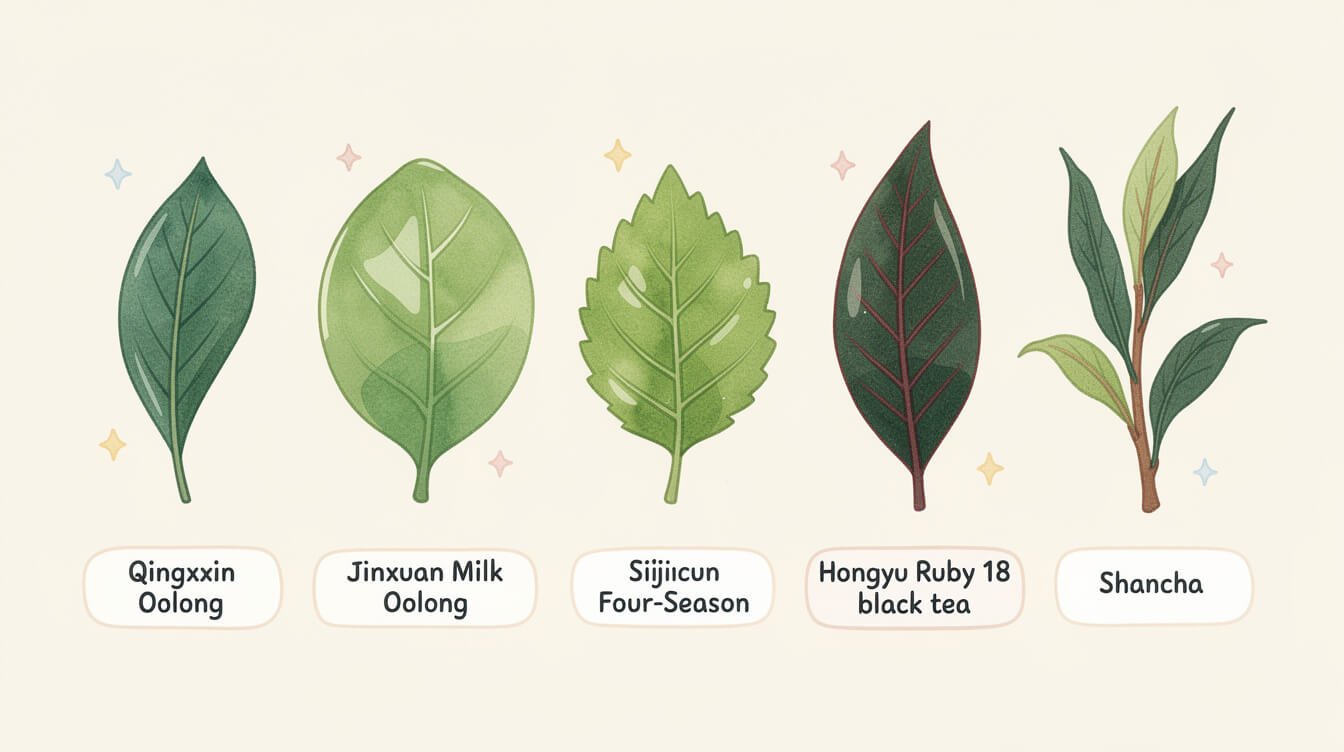
Most people obsess over region with Taiwanese tea. Real obsessives also pay attention to the cultivar — the actual genetic variety of the tea plant. Taiwan’s century of state-funded crossbreeding has produced an unusual collection of cultivars that you’ll rarely encounter anywhere else.
- Qingxin (青心) — Also called “ruanzhi” or just “high-mountain.” About sixty percent of Taiwan’s tea bushes are this cultivar, brought over by Fujianese settlers in the 1700s. It’s the workhorse behind most premium oolongs.
- Jinxuan (金萱) — Cultivar #12, also called “milk oolong” for its naturally creamy, vanilla-tinged finish. Developed by the Tea Research and Extension Station in the 1980s through selective breeding. Higher yields than Qingxin but doesn’t love the highest altitudes.
- Cuiyu (翠玉) — Cultivar #13, also called “Jade oolong.” A floral, fragrance-forward cultivar developed alongside Jinxuan. Often blended into mid-tier oolongs.
- Sijicun (四季春) — Literally “four seasons of spring.” A farmer-developed cultivar from the Taipei area that produces year-round, which makes it cheaper and more abundant.
- Hongyu (紅玉) #18 — Also called “Sun Moon Lake Red Jade” or “Ruby Black Tea.” A hybrid between Assam stock and Taiwan’s indigenous tea, developed at the Yuchi research station. Used almost exclusively for Sun Moon Lake black tea.
- Taiwan Indigenous Mountain Tea (台灣原山茶) — Wild, native Taiwan tea, sometimes called shancha. Genuinely indigenous to the island, used for niche oolongs, white teas, and black teas with a wild-mineral character.
- Tieguanyin (鐵觀音) — Imported cultivar from southern Fujian. Used mostly in Muzha-style traditional Tieguanyin oolongs.
If you ever see a tea labeled “Alishan Jinxuan” versus “Alishan Qingxin,” the difference is the cultivar, not the location. Same mountain, very different cup. Tea shop staff in Taiwan will absolutely walk you through this if you ask.
The Five Types of Taiwan Tea (Plus the One You Already Know)
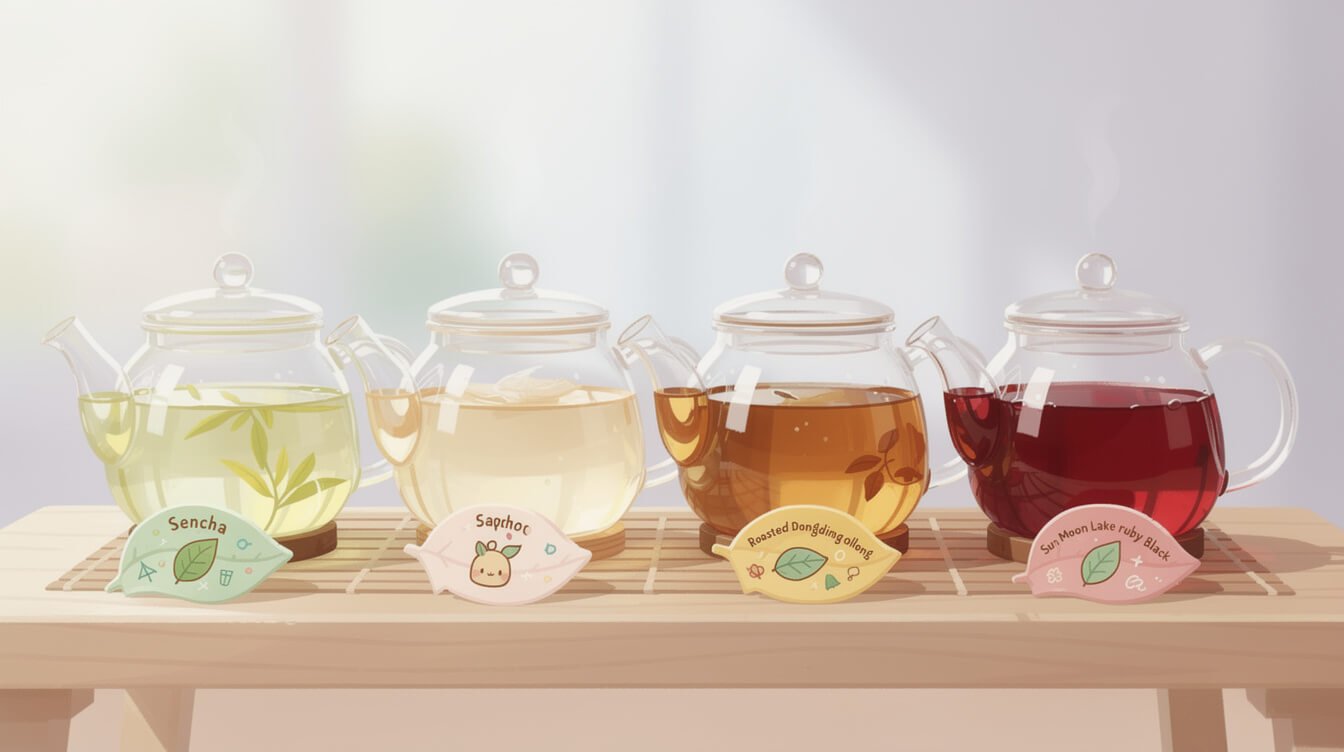
Taiwan officially produces four classical tea types — oolong, black, green, and white — plus one cultural export that the entire world recognizes. Let’s go in order.
Oolong (烏龍茶) — Taiwan’s Heart and Soul
Oolong is partially oxidized tea, sitting on the spectrum between green tea (unoxidized) and black tea (fully oxidized). Taiwan’s specialty is “qingxiang” or fragrance-style oolongs, which are oxidized only fifteen to thirty percent and bake out floral, buttery, sometimes creamy notes. Heavily roasted “shouxiang” oolongs go in the other direction — caramelized, woody, almost coffee-adjacent. Both are technically the same tea processed differently. Welcome to oolong’s identity crisis.
Black Tea (紅茶) — The Sun Moon Lake Story
Taiwanese black tea barely existed commercially until the Japanese-era experiments at Yuchi research station produced Ruby 18 in the 1990s. Today, Sun Moon Lake Black Tea is a flagship export, with notes of cinnamon, peppermint, and a kind of cooling spice that Assam blacks don’t have. There’s also “Honey Black Tea” from Hualien, where the leafhoppers that produce Oriental Beauty also produce a honeyed black tea.
Green Tea (綠茶) — Sanxia’s Niche
Taiwan does make green tea, but in much smaller quantities than its Chinese and Japanese neighbors. The region of Sanxia in New Taipei produces Biluochun (碧螺春) and a Taiwanese version of Longjing (Dragon Well). These are made from the Ganzai cultivar and have a vegetal, grassy, slightly sweet profile.
White Tea (白茶) — The Quiet Trend
Taiwanese white tea is the newest official category, made from minimally processed leaves of the indigenous mountain tea cultivar. It’s still niche, but you’ll see more of it as the boutique tea scene expands. Look for white teas from Pinglin and from indigenous mountain communities in Nantou.
Bubble Tea (珍珠奶茶) — The Tea You Already Know
Bubble tea isn’t a separate tea type — it’s a serving style. But pretending it doesn’t belong in this article would be silly. Pearl milk tea was invented in Taichung in the 1980s (the credit goes to two competing teahouses, Chun Shui Tang and Hanlin Tea Room, and they’re still arguing about it). Bubble tea normally uses Sijicun or Jinxuan oolong, or Ruby 18 black tea, as its base. Speaking of which, our Taiwan Bubble Tea Cat T-Shirt is built for the people who already speak fluent boba and want to flex it as a wardrobe choice.
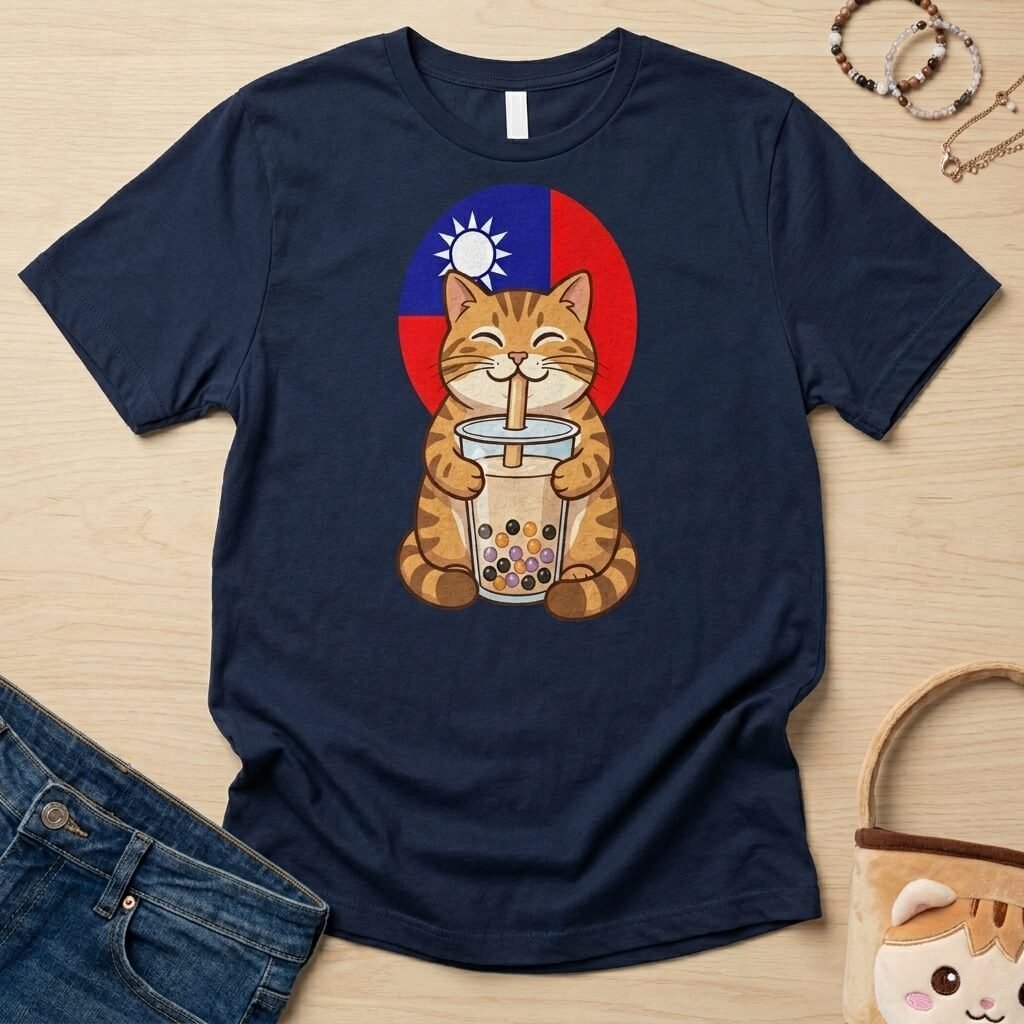
Wear Your Tea Love On Your Sleeve
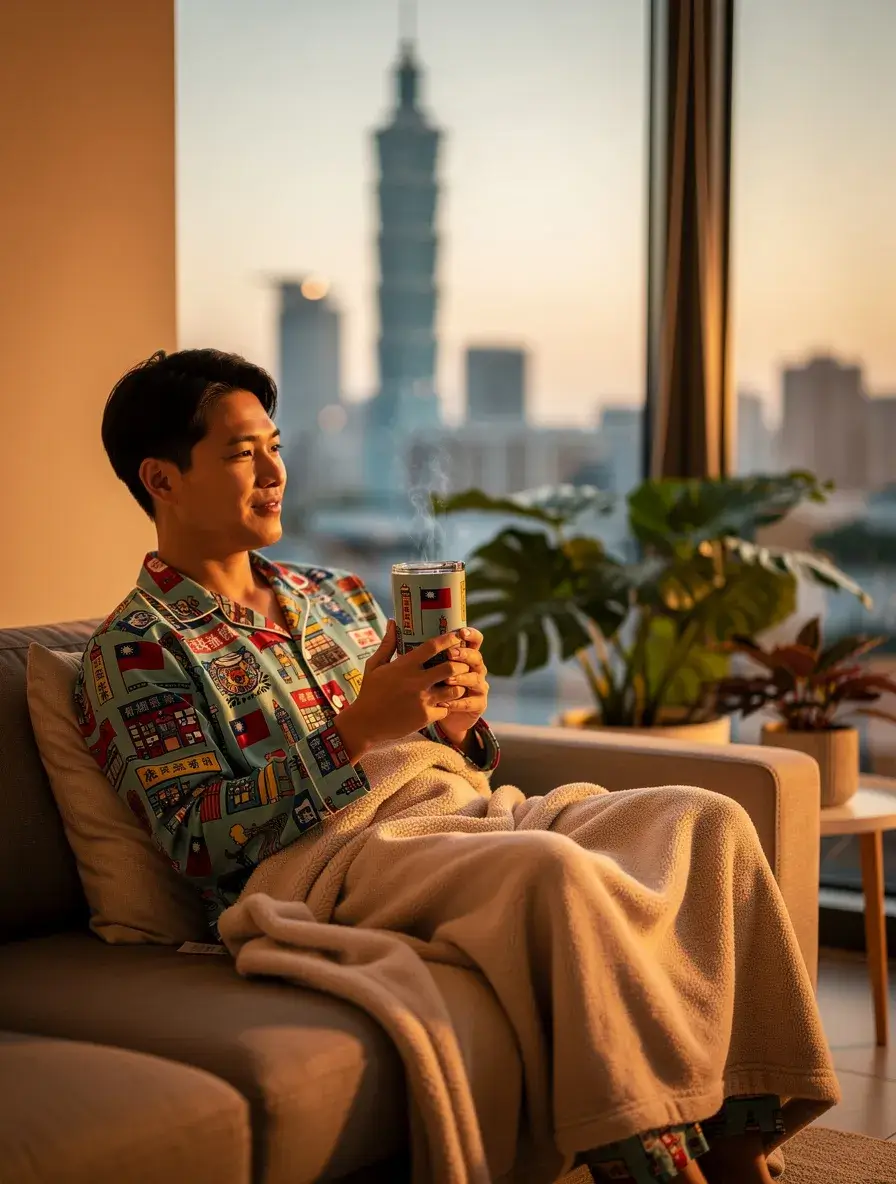
Now that you can tell a Dongding from a Jinxuan, do the next thing every serious tea drinker does — declare it on your t-shirt. Our chubby kawaii Taiwan Bubble Tea Cat is the gateway drug to the rest of the wardrobe.
The Most Famous Taiwan Teas Worth Tracking Down
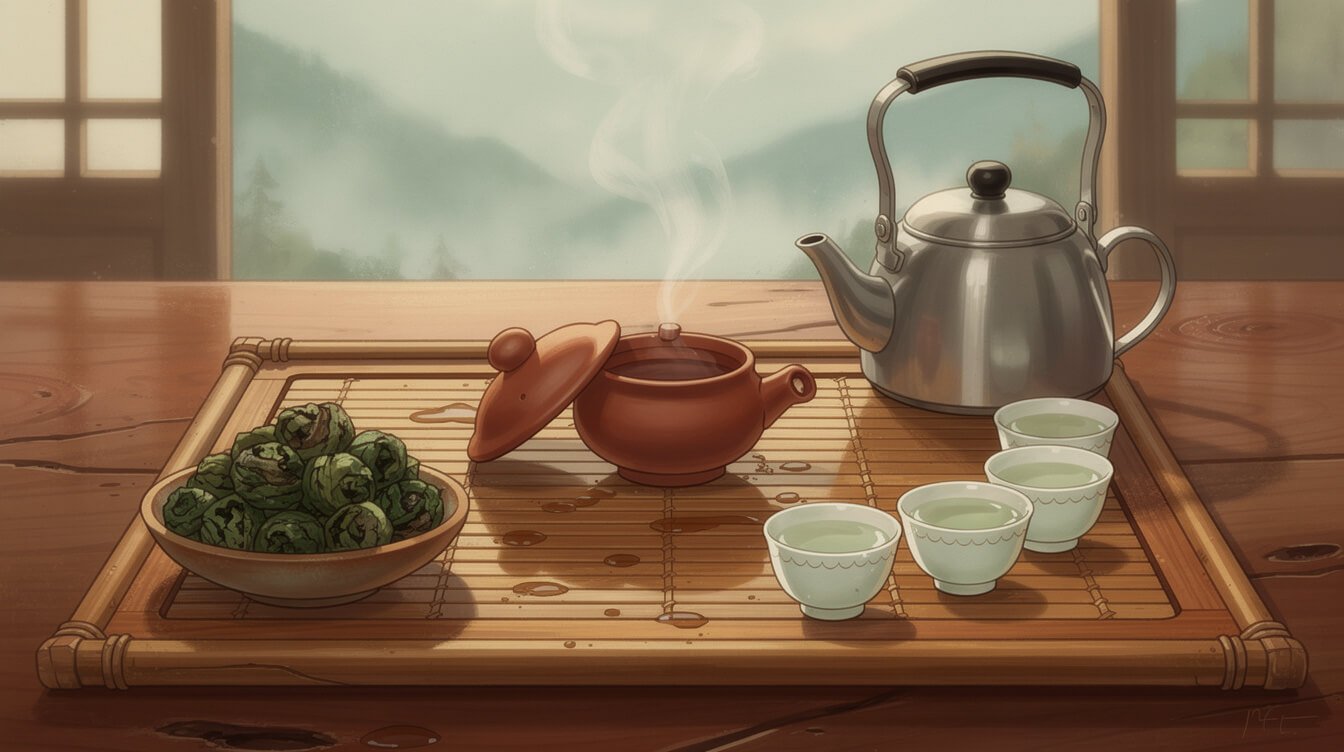
If you’re new to Taiwan tea and don’t know where to start, this is your shortlist. These are the seven teas every serious shop in Taipei will carry, and any one of them is a complete education in the country’s tea identity.
Dongding Oolong (凍頂烏龍)
Probably the most famous Taiwanese tea after high-mountain Alishan. Dongding is grown on the Dongding mountain in Lugu Township, Nantou, at around 700 meters. The signature move is a medium roast on top of medium oxidation, giving you a tea that tastes like baked stone fruit and warm butter. It’s been the gold standard for forty years.
Alishan High-Mountain Oolong (阿里山高山茶)
Picked between 1,000 and 1,400 meters in the Chiayi mountains, Alishan is the friendlier cousin of Lishan and Dayuling. It’s the most famous high-mountain oolong, and tea shops will almost always offer you Alishan first because it’s universally pleasant — buttery, floral, mineral, with a long finish.
Lishan Oolong (梨山茶)
Lishan (“Pear Mountain”) grows at over 2,200 meters in Taichung county. The cold nights and ultra-thin air produce a tea so smooth it’s almost soup-like in body. It’s not cheap. A serious tin of Lishan can easily cost over US$200 — which is why fake Lishan is one of Taiwan’s quieter scams.
Dayuling Oolong (大禹嶺茶)
If Lishan is the king of Taiwan’s high mountains, Dayuling is the emperor. Grown around 2,500 meters in the Hehuan range, with a tiny annual yield, it’s the rarest high-mountain oolong on the legitimate market. Floral but ice-cold in mouthfeel.
Oriental Beauty (東方美人)
The bug-bitten one. Made in Hsinchu and Miaoli from leaves that have been chewed by jassid leafhoppers, then heavily oxidized. The resulting tea is rich, honeyed, and unmistakably fruity — peach, lychee, sometimes muscat grape. Often considered the most distinctive Taiwanese tea.
Sun Moon Lake Ruby 18 (日月潭紅玉紅茶)
The flagship Taiwanese black tea, grown around Sun Moon Lake in Nantou. The Ruby 18 cultivar produces a black tea with native-mint and cinnamon-bark notes that don’t exist in any other black tea on Earth. Drink it straight — milk and sugar are not necessary.
Wenshan Baozhong (文山包種)
The lightest of the famous Taiwanese oolongs, oxidized only around fifteen percent. Baozhong gets its name from the paper packets (“bao” means wrap, “zhong” means variety) that nineteenth-century merchants used to package it. It tastes like fresh orchid and steamed greens and is the entry-level oolong most teahouses pour for first-time visitors.
Where to Actually Drink Taiwan Tea (And How to Order Like You Know What You’re Doing)
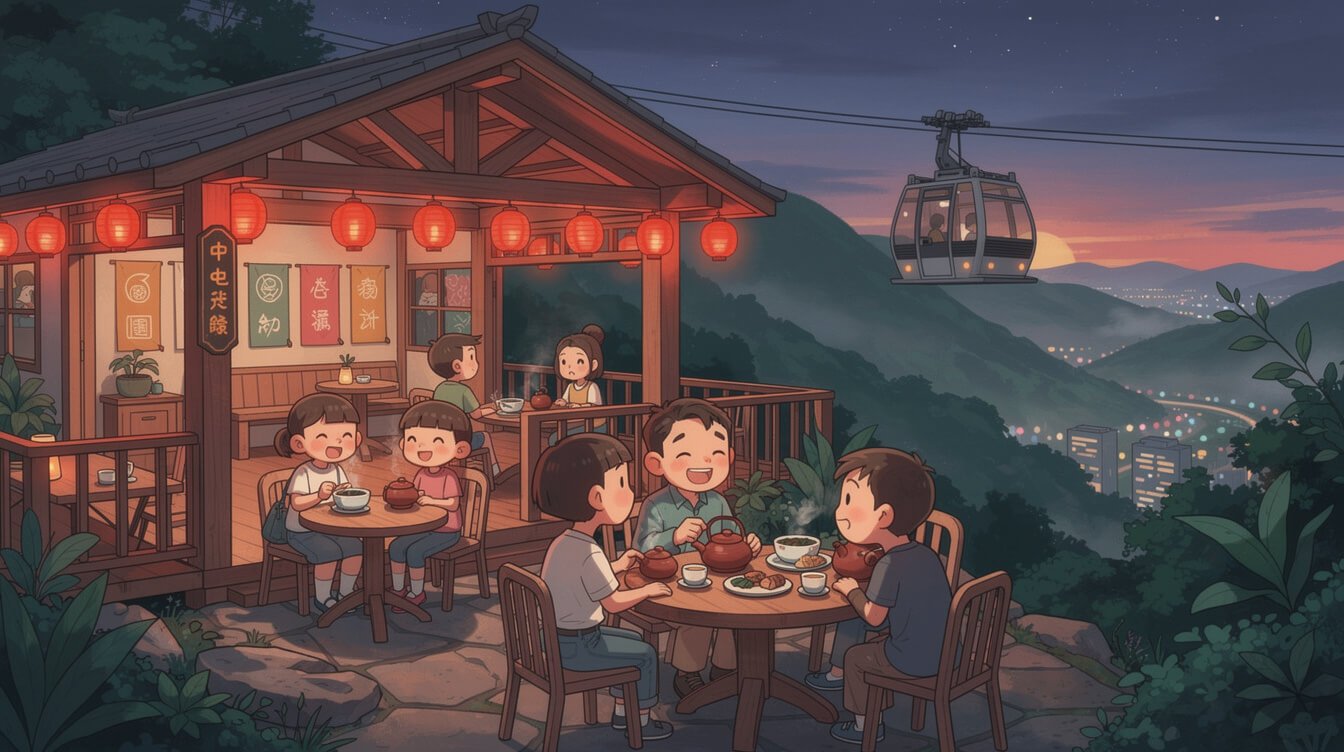
Reading about Taiwan tea is fun. Drinking it on the island that grew it is something else entirely. Here’s where to go and what to do when you get there.
Maokong (Taipei)
Maokong is the closest tea-mountain experience to central Taipei. The Maokong Gondola lifts you from Taipei Zoo MRT station up into Wenshan’s tea hillsides in about thirty minutes. There are roughly twenty traditional teahouses scattered along the ridge, and most stay open into the evening so you can sip oolong while looking down at the city lights. Ask for a “tea set” (茶具組) — most houses charge a small fee for the gear and then let you order leaves separately.
Pinglin (New Taipei City)
If Maokong is the tourist-friendly tea district, Pinglin is the working tea district. The Pinglin Tea Museum is genuinely excellent (English signage available), and the surrounding hills are covered in working Wenshan Baozhong farms. Many farms welcome visitors and will let you watch the processing if you call ahead. Take the 923 bus from Xindian.
Sun Moon Lake and Yuchi Township
Drive up to Yuchi and stop at the Taiwan Tea Research and Extension Station’s branch museum, which tells the Ruby 18 origin story. Then circle around to one of the smaller Hongyu tea farms on the lake’s northern shore for a tasting. Combine this with a two-day Sun Moon Lake itinerary and you’ll come away with a deep appreciation for Taiwanese black tea.
Alishan and the High-Mountain Routes
Alishan is the most accessible high-mountain tea region. The town of Shizhuo is a few switchbacks below the Alishan National Scenic Area gate and is essentially a tea-and-coffee town. Most farms will pour you a few cups for free if you’re polite and curious. Bring cash. Our Alishan guide walks through the practical logistics.
Taipei Teahouses Worth Knowing
If you can’t make it into the hills, you can still drink seriously in the city. Wistaria Tea House (紫藤廬) in Da’an is a national historic site that’s been pouring high-end oolongs since 1981. Chun Shui Tang in Ximending claims to be the birthplace of bubble tea. Eighty-Eightea (Wulin store) is a small modern teahouse that geeks out on single-origin Taiwanese leaves and explains every cup in English if you ask.
How to Order Without Embarrassing Yourself
If you’re at a traditional Taiwanese teahouse, the order goes something like this. Pick the tea by region and cultivar (“I’d like the Alishan Qingxin, please”). Choose how much you want (most shops sell by the 75-gram tin or by the gongfu session). Decide if you want them to brew it for you or if you want the equipment to brew it yourself at the table. The tea master will rinse the leaves once, pour out the first short infusion, and then start serving you cups. Sniff the empty cup before drinking. That’s where the aroma lives.
Taiwan Tea FAQ
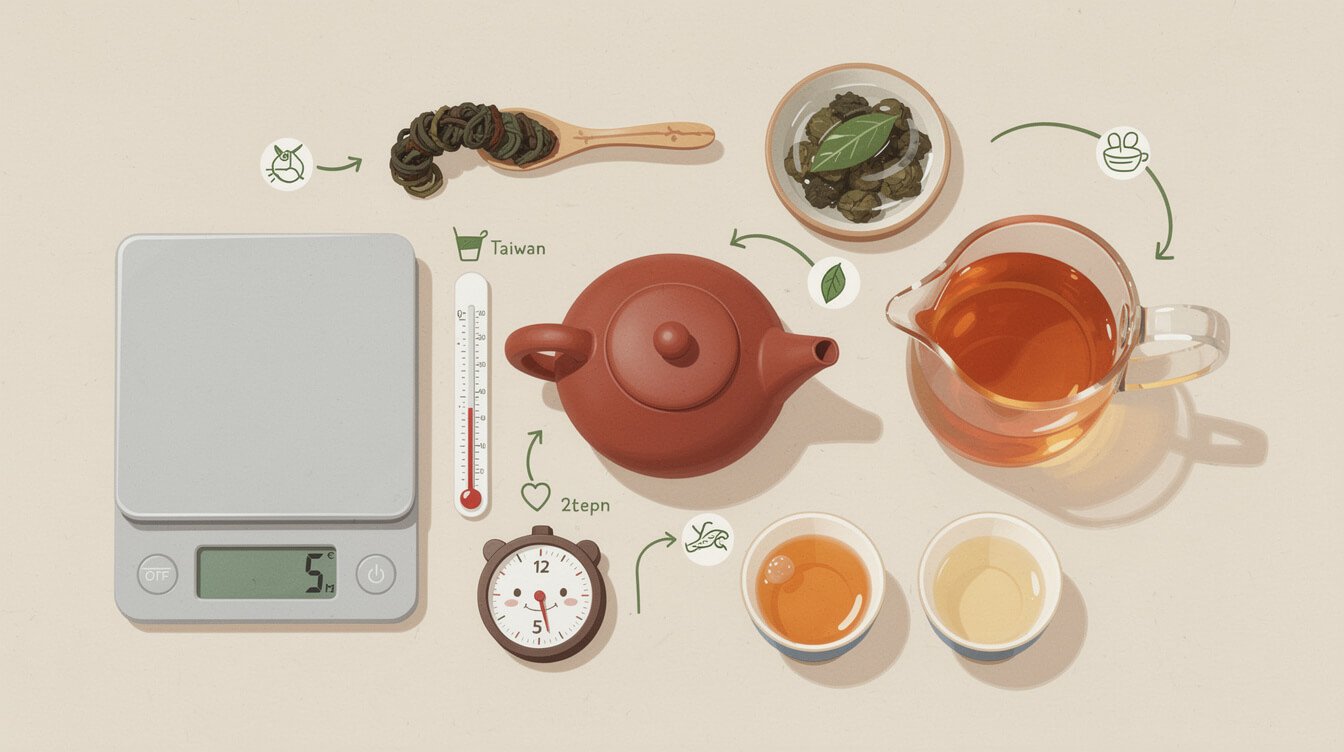
The questions we get asked most often about Taiwan tea — answered quickly.
Is Taiwan tea the same as Chinese tea?
No. The original tea bushes came from Fujian in the 1700s, but Taiwan’s climate, altitude, and century of independent cultivar development have produced teas that are genuinely distinct. Comparing Taiwan tea to Chinese tea is like comparing California Pinot to Burgundy Pinot — same plant family, very different expression.
What’s the most famous Taiwan tea?
Internationally, it’s a tie between Alishan high-mountain oolong and bubble tea. Among serious tea drinkers, Dongding oolong, Oriental Beauty, and Sun Moon Lake Ruby 18 are the three most iconic varieties.
How should I brew Taiwan oolong at home?
Use about five grams of leaves for a 150-milliliter gaiwan or small teapot. Heat the water to 90–95 degrees Celsius. Rinse the leaves with a quick five-second pour and discard that water. Then steep for 30 seconds for the first infusion, adding 10–15 seconds for each subsequent infusion. Good Taiwanese oolong will give you five to eight infusions before it gives up.
Is bubble tea actually Taiwanese?
Yes, definitively. Pearl milk tea was invented in Taichung in the early 1980s — the credit is contested between Chun Shui Tang and Hanlin Tea Room, but both are Taiwanese teahouses and the drink itself is unambiguously a Taiwan invention. The rest of the world bubble-tea-fied later.
What’s Oriental Beauty tea’s deal with bugs?
Oriental Beauty is intentionally grown without pesticides so that tiny green leafhoppers can chew on the leaves. The plant’s defensive chemical response to the bug bites is what produces the honey-and-muscat flavor that makes Oriental Beauty famous. No bugs, no honey. It’s the only tea on Earth that depends on an insect.
Where can I buy authentic Taiwan tea outside Taiwan?
Authentic, traceable Taiwan tea is now widely available online from small importers. Look for retailers that name the specific farm, harvest season, cultivar, and elevation. Avoid anyone who just labels something “Taiwanese oolong” without specifics — that’s usually mass-blended leaves that may not even be from Taiwan.
Is Alishan tea worth the price?
For most people, yes. Alishan is the sweet spot between accessibility and quality. Lishan and Dayuling are objectively better but multiples more expensive. A well-chosen Alishan from a reputable farm is the right entry point into high-mountain Taiwan tea.
Final Thoughts: Taiwan Tea Deserves Its Own Shelf in Your Cupboard
The reason we put this guide together is simple. The global tea conversation has never quite given Taiwan its due. The wine world figured out Burgundy versus Bordeaux. The coffee world figured out Ethiopia versus Colombia. But ask the average tea drinker about Taiwan and they’ll say “bubble tea” and stop there — even though Taiwan grows roughly twenty percent of the world’s oolong on a landmass smaller than the Netherlands.
So if this guide does one thing, we hope it talks you into picking up a small tin of single-origin Taiwanese oolong the next time you have the chance. Dongding if you want the classic. Alishan if you want the easy entry point. Oriental Beauty if you want to taste something genuinely strange and beautiful. Ruby 18 if you want to discover what black tea can be when it isn’t trying to be Earl Grey. Any of them will be a better cup than what you’re drinking right now. That’s a guarantee.

A Postcard From Taiwan In Your Inbox
Real culture, food, and travel stories from Taiwan, straight to your inbox once a week. Plus first dibs on new merch drops.
Grab a Free Taiwan Sticker!
Drop your email and we’ll send you a limited-edition Taiwan sticker — plus insider access to new merch drops and island vibes.
No spam. Unsubscribe anytime.