Aiyu Jelly (愛玉): The Indigenous Taiwanese Summer Dessert That Only Exists Because Someone Washes It by Hand
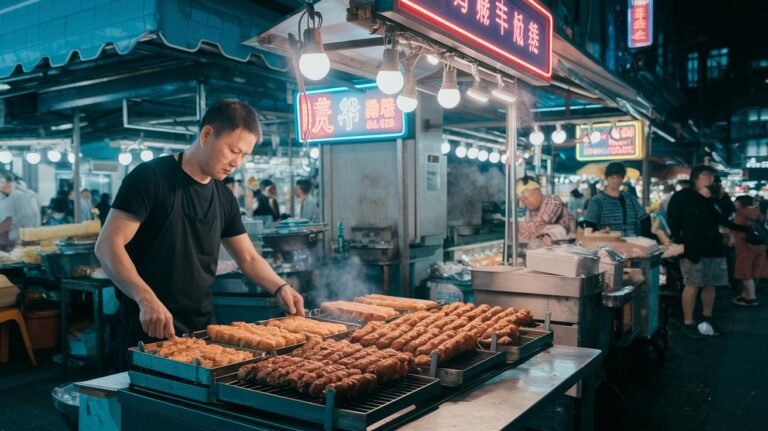
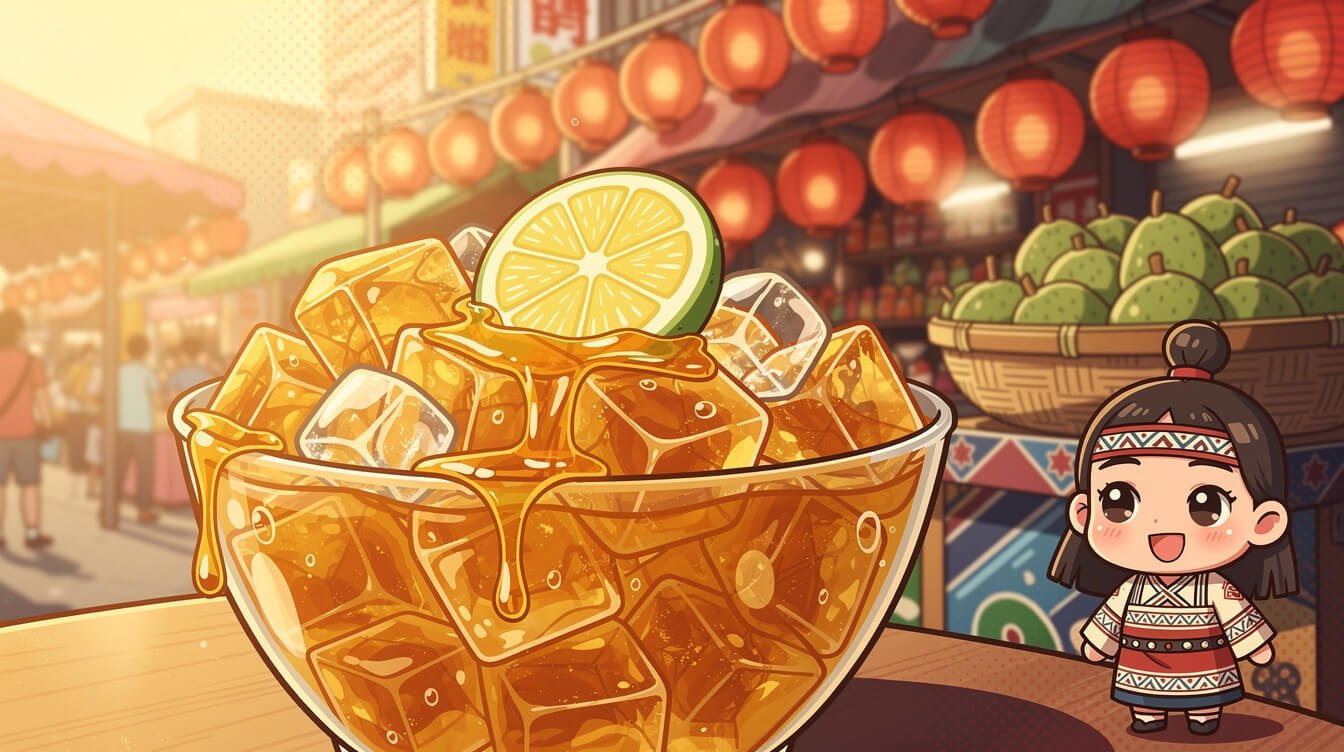
If you’ve ever wandered through a Taiwanese night market in July and seen vendors scooping translucent amber cubes into plastic cups with lemon and honey, you’ve met aiyu jelly (愛玉, àiyù) — possibly the most uniquely Taiwanese dessert that exists. Not Chinese. Not Japanese. Just Taiwanese. And the way it’s made is so weird it almost feels like a magic trick.
It only grows on one island
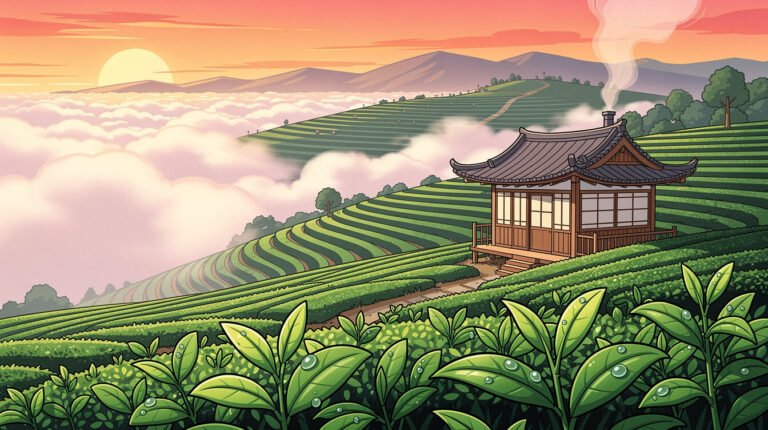
Aiyu jelly comes from the seeds of Ficus pumila var. awkeotsang — a creeping fig vine endemic to Taiwan’s mid-elevation mountain forests, mostly between 800m and 1,800m. The fig has been harvested by the indigenous Tsou people of the Alishan range for centuries, long before Han settlers ever tasted it. Today the bulk of Taiwan’s commercial aiyu still comes from Chiayi and Nantou counties, hand-collected by mountain villagers who climb the host trees the vines wrap around.
You cannot grow aiyu commercially in Vietnam, in southern China, in Indonesia. People have tried. The fig is fussy — it needs Taiwan’s specific cool-humid montane microclimate and its specific pollinator wasp. That’s why aiyu jelly, despite being absurdly delicious, never globalized like boba did.
The hand-washing trick that makes it set
Here’s the part that sounds made up but isn’t. Aiyu doesn’t set with heat. It doesn’t set with gelatin. It sets through a pectinesterase enzyme reaction that only fires when you wash the dried seeds, by hand, in mineral-rich water for about five to ten minutes, inside a cheesecloth bag.
The mechanical squeezing releases the seed’s natural pectin into the water. The calcium and magnesium ions in the water cross-link the pectin into a gel. Walk away for half an hour and your cloudy seed-water becomes a wobbly, perfectly clear jelly — no fridge required, no heat required, no powder added.
The deal-breaker: use distilled or RO water and nothing happens. The pectin needs the minerals. Old vendors swear by spring water from specific Alishan creeks; modern shops just use Taipei tap water, which works fine because Taipei’s water is naturally hard enough.
The folk-tale origin (and the real one)
The official story is that during the Qing Dynasty, a Chiayi merchant noticed wild figs falling into a stream had turned the water into jelly. He brought some home, and his daughter Aiyu (愛玉, literally “loved jade”) sold cups of it at the market with lemon. The dessert was named after her.
The real story is murkier — the Tsou had been eating something very similar for generations, calling it vuvu, and Han traders likely learned the technique from them in the 1800s. The girl-named-Aiyu version was first published in a 1857 Qing travelogue called Tales of Eastern Taiwan, which is also where the recipe first appears in writing.
How locals actually eat it
The classic order is 柠檬爱玉 (níngméng àiyù) — aiyu cubes in iced lemon-honey water. That’s it. Vendors at Shilin Night Market sell it for around NT$50 (~US$1.50) in a clear plastic cup with a fat straw so you slurp the jelly through. Some shops add basil seeds (luó lè zǐ) for extra texture, or top it with passion fruit pulp during summer.
It’s almost zero-calorie (the jelly is 99% water), genuinely cooling on a 36°C Taipei afternoon, and pairs ridiculously well with a side of Aiwen mango shaved ice. If you only try one Taiwanese summer dessert this year, this is the one that you literally cannot get authentically anywhere else.
Where to find it in Taipei: Yong Kang Street’s vendor stalls, Raohe Night Market, and any traditional dessert shop with the character 愛玉 painted on a red sign. Try it with extra lemon — Taiwanese honey is sweet enough on its own.
Want more dessert deep-dives like this one? Browse our full Taiwan Desserts Guide for the island’s complete sweet-tooth lineup.

Grab a Free Taiwan Sticker!
Drop your email and we’ll send you a limited-edition Taiwan sticker — plus insider access to new merch drops and island vibes.
No spam. Unsubscribe anytime.