Taiwan Drinks: The Complete Guide to What the Island Actually Drinks (and How to Order It)
Ask someone what Taiwan drinks and you will almost always get the same one-word answer: boba. It is not a wrong answer — Taiwan did invent bubble tea, and the island exports that culture to every corner of the planet. But it is a bit like saying America drinks Coke. True, and nowhere near the whole story.
Spend a week here and you start to notice something the guidebooks skip. Taiwan is not a country with a famous drink. Taiwan is a country organised around drinking — three separate systems running in parallel, all day, every day, on nearly every street. There is the tea culture, centuries deep, that produces some of the most expensive leaf on earth. There is the drink shop on the corner, where a NT$50 cup gets customised to five sugar levels and four ice levels. And there is the convenience store cold case, arguably the single most honest picture of what Taiwanese people actually drink on a Tuesday morning.
This guide covers all three. Not a list of fifteen Taiwan drinks to try — a guide to the system behind them: what to order, how to say it at the counter, what the locals are buying that tourists walk straight past, and what to drink in July versus what to drink in January. By the end, you should be able to walk into any drink shop in Taiwan and order like you have lived here for a year.
Taiwan Drinks Come From Three Different Worlds
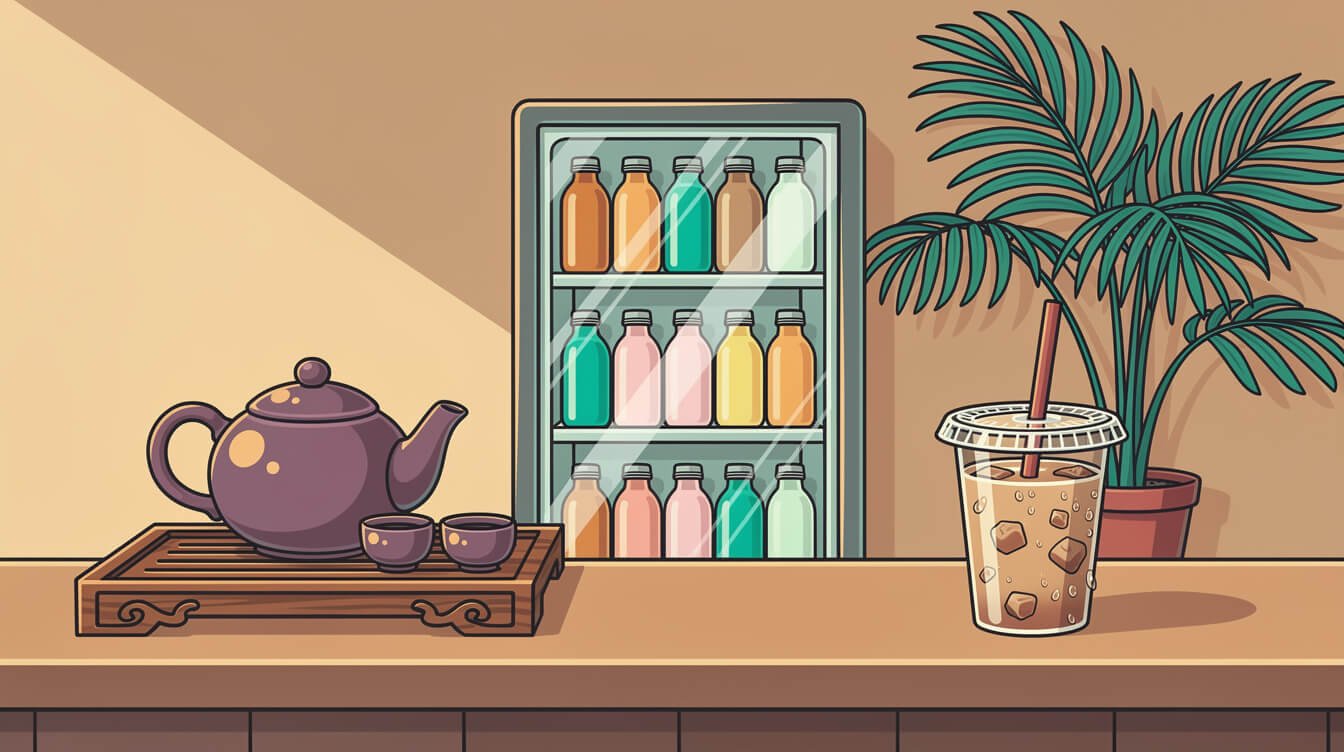
Before any individual entry in the Taiwan drinks canon makes sense, you need the map. Taiwanese drinking runs on three channels, and each one has its own etiquette, price point, and time of day.
Channel one: the tea tradition. Taiwan’s mountains sit in the sweet spot for oolong — high altitude, heavy cloud cover, big day-night temperature swing. The result is a tea industry that produces small volumes of extraordinary leaf, most of which never leaves the island because Taiwanese people drink it themselves. This is the slow channel: clay pots, tiny cups, multiple infusions, conversation. You will find it in tea houses in Maokong, in Lugu, in any older person’s living room.
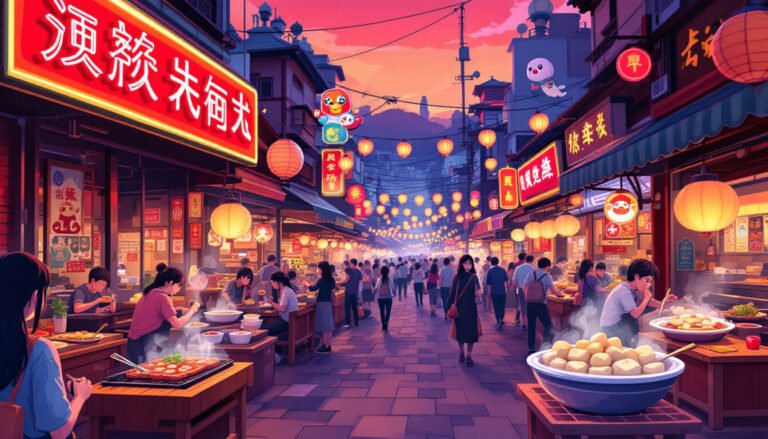
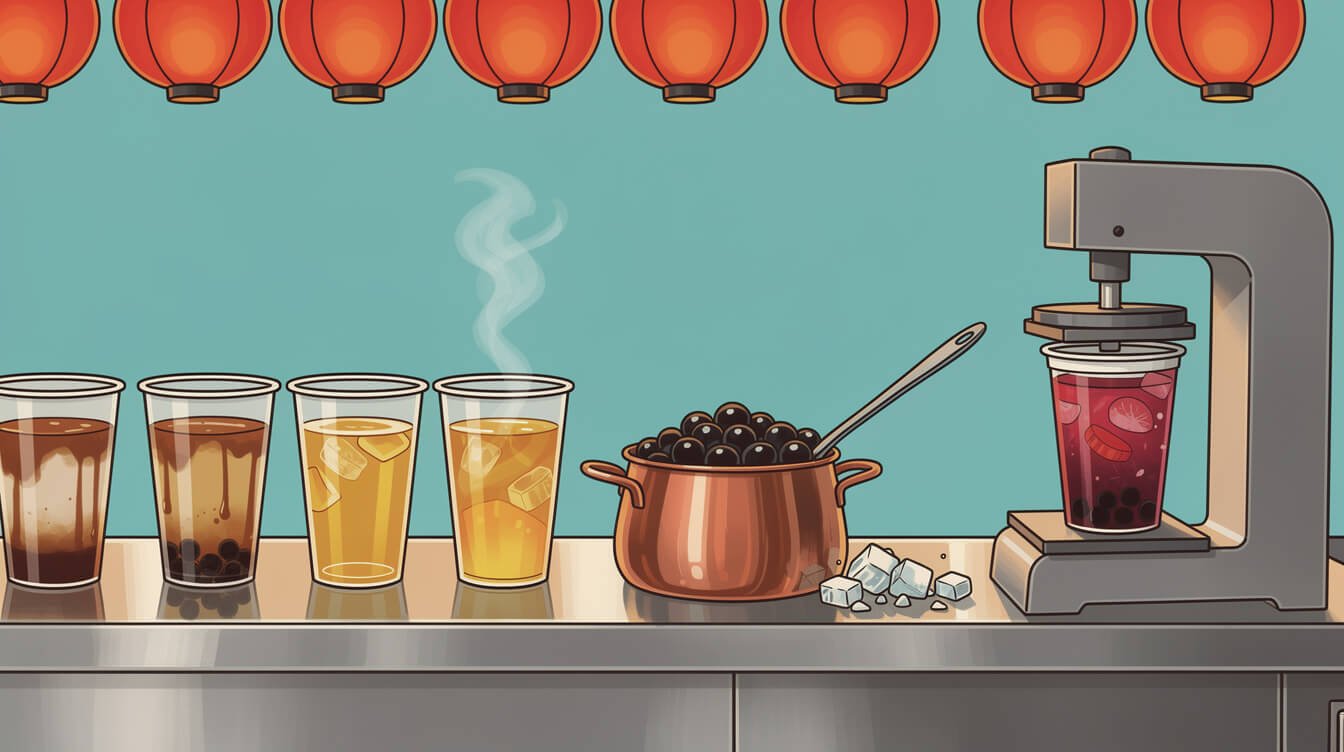
Channel two: the drink shop (飲料店). This is the fast channel and the one that built Taiwan’s global reputation. Roughly 20,000-plus dedicated beverage shops operate across an island of 23 million people — chains like 50嵐, CoCo都可, 清心福全, 迷客夏 and 麻古茶坊 sit two or three to a block in any city. Everything is made to order, sealed with a plastic film by a machine, and handed over in under ninety seconds. The average cup costs NT$30-70 (about US$1-2.20).
Channel three: the cold case. Taiwan has one of the densest convenience-store networks on earth — around 13,000 stores, or roughly one for every 3,500 people, and we have written about exactly how strange that density is. Every one of those stores has a wall of refrigerated bottles and cans that no travel article ever covers. This is the channel Taiwanese people use most, and it is the one most visitors never explore.
Here is the thing worth internalising about Taiwan drinks: these three channels are not competing. A single Taiwanese person might drink hot oolong at breakfast with a parent, grab a canned coffee from 7-Eleven on the commute, order a half-sugar less-ice milk tea at lunch, and finish with a Taiwan Beer at a rechao joint at night. All four, same day, no contradiction. That is the drinking culture.
How to Order at a Taiwan Drink Shop: The Sugar and Ice Scale, Decoded
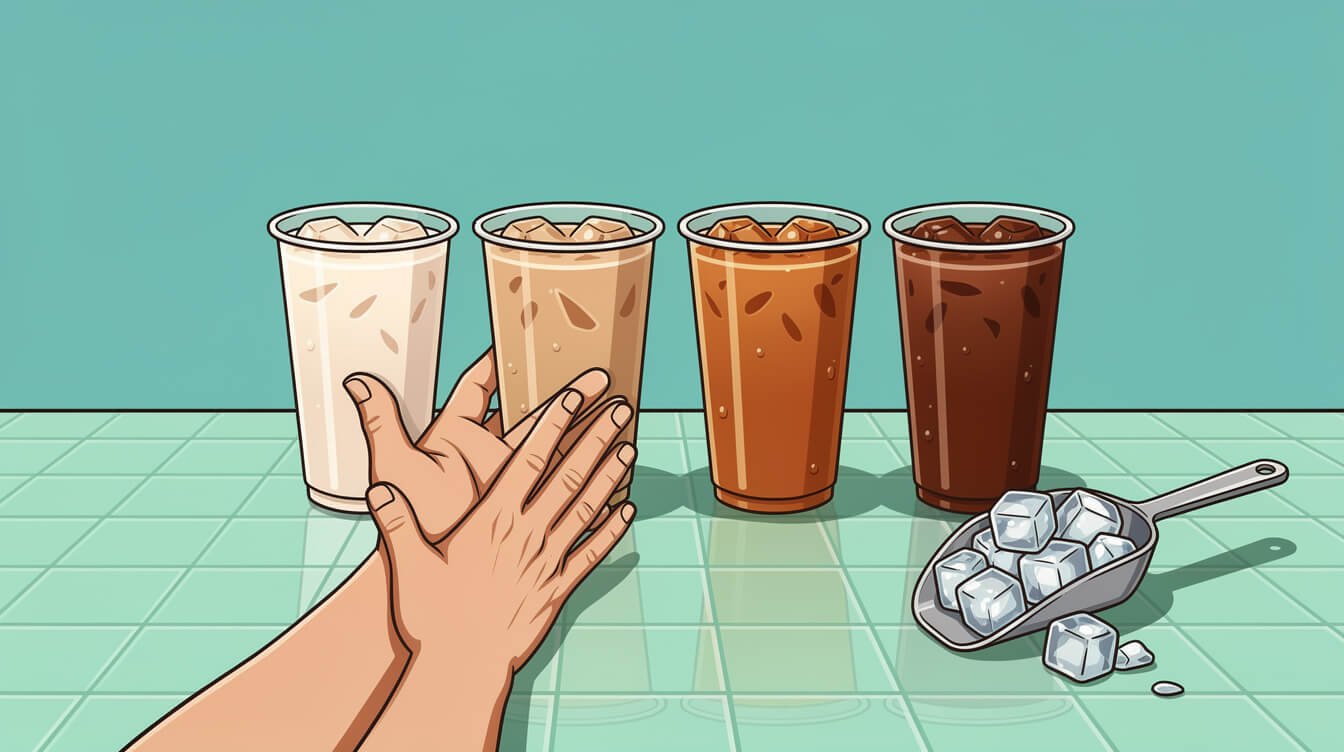
This is the section every other guide to Taiwan drinks skips, and it is the single most useful thing on this page. Every drink shop in Taiwan runs on two sliding scales — sugar and ice — and if you can name your position on both, you have crossed the line from tourist to regular.
The sugar scale (甜度)
Ordered from sweetest to least sweet:
- 全糖 (quán táng) — full sugar, 100%. What you get by default if you say nothing. It is sweet.
- 少糖 (shǎo táng) — less sugar, roughly 70%.
- 半糖 (bàn táng) — half sugar, 50%. The workhorse order. If you only learn one, learn this.
- 微糖 (wēi táng) — slight sugar, around 30%.
- 無糖 (wú táng) — no sugar at all. Very common among locals, especially for straight teas.
Some shops use fractions instead — 七分糖 (70%), 五分糖 (50%), 三分糖 (30%), 一分糖 (10%). Both systems mean the same thing; just answer with whichever you can pronounce.
The ice scale (冰塊)
- 正常冰 (zhèngcháng bīng) — normal ice, the default.
- 少冰 (shǎo bīng) — less ice. More drink, less dilution. Most locals’ pick.
- 微冰 (wēi bīng) — barely any ice.
- 去冰 (qù bīng) — no ice. Crucially, the drink is still cold — they chill it, they just leave the cubes out.
- 常溫 (cháng wēn) — room temperature, no chilling.
- 熱 (rè) — hot. Most shops will make almost anything hot in winter.
The actual order, in sequence
Counter staff expect the information in a fixed order, and if you deliver it in that order you will not be asked a single follow-up question:
- Drink name — 珍珠奶茶 (pearl milk tea), 四季春 (four seasons oolong), 紅茶拿鐵 (black tea latte)
- Size — 中杯 (zhōng bēi, medium) or 大杯 (dà bēi, large)
- Sugar — 半糖
- Ice — 少冰
- Toppings — 加珍珠 (add pearls), if you want them
Strung together: 「大杯珍珠奶茶,半糖少冰,謝謝」 — dà bēi zhēnzhū nǎichá, bàn táng shǎo bīng, xièxie. Large pearl milk tea, half sugar, less ice, thanks. That sentence will work in literally any drink shop on the island.
The toppings (加料)
Toppings usually run NT$5-15 each. The core list:
- 珍珠 (zhēnzhū) — classic tapioca pearls. 波霸 (bōbà) are the bigger, chewier version.
- 椰果 (yēguǒ) — nata de coco, springy coconut jelly cubes.
- 布丁 (bùdīng) — a whole crème caramel pudding dropped into the cup. Wildly underrated.
- 仙草凍 (xiāncǎo dòng) — grass jelly, faintly herbal and bitter, brilliant in summer.
- 芋圓 (yùyuán) — chewy taro balls.
- 奶蓋 (nǎigài) — the salted cream “milk cap” foam poured over the top.
One local move worth stealing: order a straight tea — no milk — at 無糖, and add 珍珠. You get the texture without the sugar crash, and you will look like you know exactly what you are doing.
Bubble Tea and Beyond: The Milk Tea Family
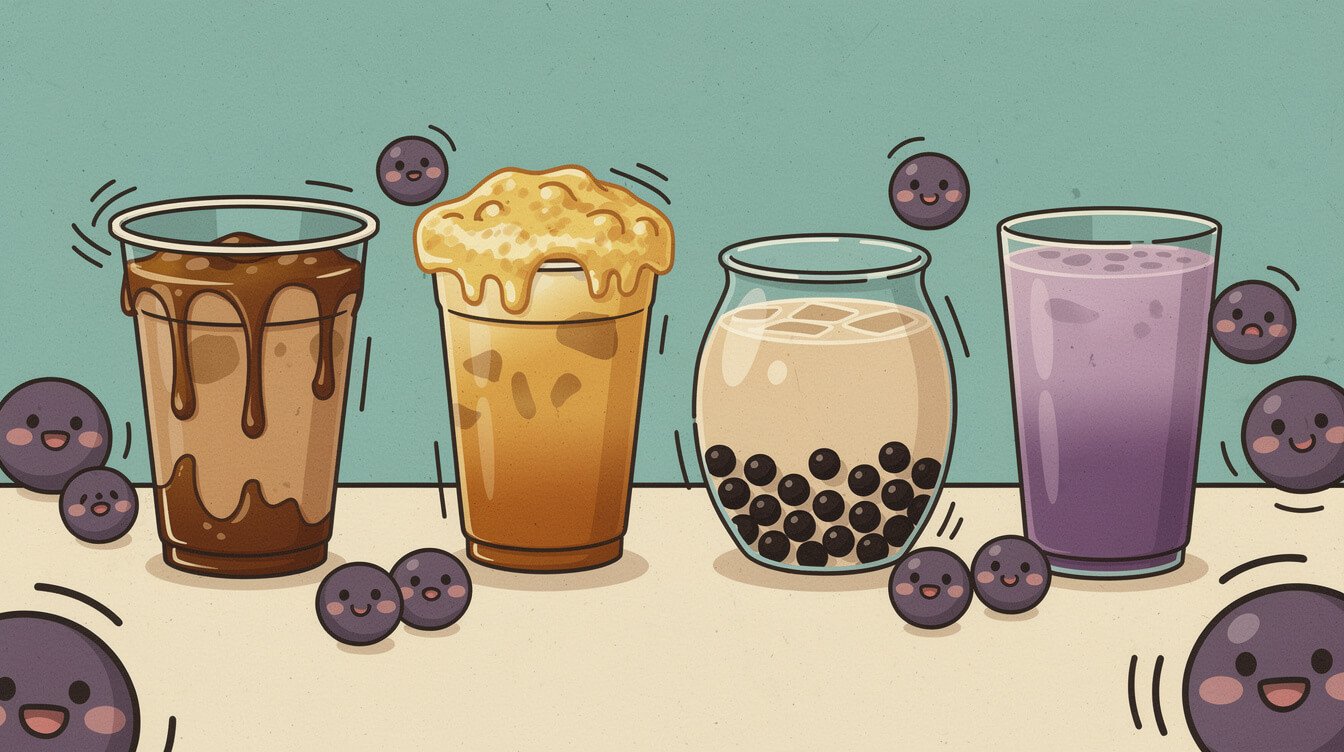
Bubble tea was invented in Taichung in the 1980s, and two tea houses have argued over the credit for decades. Chun Shui Tang (春水堂) says a product manager dropped tapioca dessert into iced tea at a staff meeting in 1988; Hanlin Tea Room (翰林茶館) in Tainan says it got there first in 1986 with white tapioca pearls spotted at a market. A ten-year lawsuit ended with neither side winning exclusive rights, which is arguably the most Taiwanese outcome possible. We have the full origin story of that feud if you want the details.
What matters for ordering is that “bubble tea” is not one drink — it is the largest family in the Taiwan drinks lineup:
珍珠奶茶 — Classic pearl milk tea
Black tea, milk or creamer, tapioca pearls. The original. Order it 半糖少冰 and it is a genuinely balanced drink rather than dessert in a cup.
黑糖珍珠鮮奶 — Brown sugar pearl fresh milk
No tea at all. Pearls cooked in brown sugar syrup, the syrup smeared up the inside of the cup in tiger stripes, then cold fresh milk poured over. Tiger Sugar (老虎堂) turned this into a global queue in 2017. It is the sweetest thing on any menu and unapologetic about it.
奶蓋茶 — Cheese tea / milk cap tea
A layer of whipped cream cheese and salt floated on top of straight tea. The trick is to drink it without a straw, tilting the cup so you get salt-cream and tea together. Sounds wrong, works completely.
The tea-plus-milk lattes
Ask for a 拿鐵 (latte) at a drink shop and you get tea and fresh milk, not coffee. 紅茶拿鐵 (black tea), 烏龍拿鐵 (oolong), 抹茶拿鐵 (matcha), 芋頭鮮奶 (taro fresh milk). These use real milk rather than powdered creamer, cost a bit more, and taste noticeably better.
Fruit teas
Fresh-cut fruit muddled into green or black tea — passionfruit, lemon, kumquat, wax apple, mango in summer. 檸檬青茶 (lemon green tea) is the national hangover cure. We have a whole guide to Taiwan’s fruit teas if this is your lane.
Speaking of boba culture, our Pearl Gang Boba Tapioca Kawaii T-Shirt (珍珠幫) puts the pearls themselves front and centre — which feels about right, given they are the part everyone actually queues for.
Tea, Straight: Oolong, Baozhong and the High-Mountain Obsession
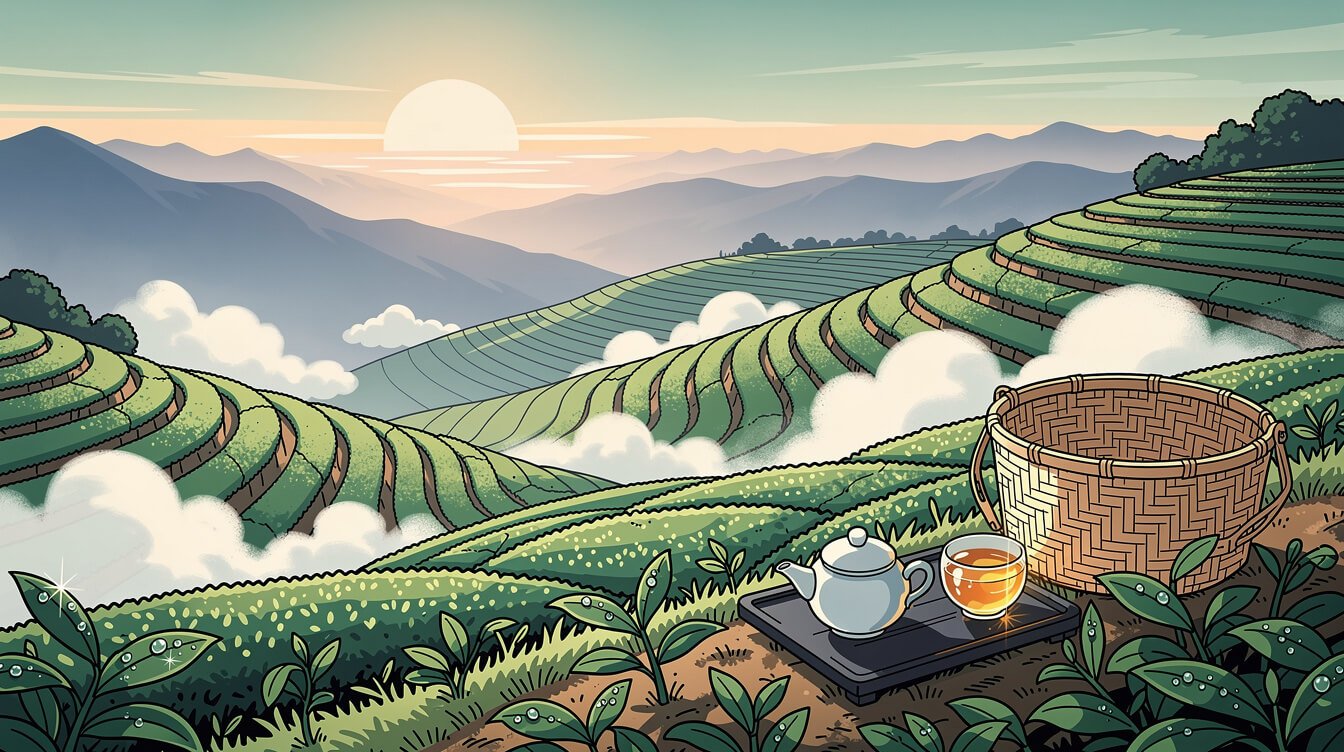
Strip away the milk and sugar and you reach the part of the Taiwan drinks story that made the island famous among tea people. The island’s growing conditions — steep terrain, persistent cloud, altitude up to 2,600 metres — slow the leaf down and concentrate the aromatics. Taiwanese oolong routinely sells for more per gram than mainland competitors, and most of the best lots never get exported.
The names to know:
- 文山包種 (Wenshan Baozhong) — lightly oxidised, barely rolled, floral and green. Grown near Pinglin, just outside Taipei. The gateway Taiwanese tea.
- 凍頂烏龍 (Dongding Oolong) — from Lugu in Nantou. Rolled into tight pellets, medium oxidation, often roasted. Nutty, deep, the classic “Taiwan oolong” flavour.
- 高山茶 (Gaoshan / high mountain tea) — anything grown above roughly 1,000m. Alishan, Shanlinxi, Lishan. Creamy, sweet, with a thickness on the tongue that is hard to describe until you have had it.
- 東方美人 (Oriental Beauty) — heavily oxidised, honeyed, and only possible because a tiny leafhopper bites the leaves first. It is the strangest origin story in tea and we have told it in full.
- 紅玉紅茶 (Ruby 18) — a Sun Moon Lake black tea cultivar with a distinct mint-and-cinnamon note. Taiwan’s answer to Assam, and nothing like it.
- 木柵鐵觀音 (Muzha Tieguanyin) — heavily roasted, dark, almost smoky. Drink it in a Maokong tea house looking down over Taipei.
Buying leaf to take home is the single best souvenir decision most visitors never make — 150g of high mountain oolong weighs nothing and outclasses anything in the airport gift shop. Our Taiwan oolong buying guide covers what to pay and how not to get sold last year’s harvest.
The 7-Eleven Cold Case: The Taiwan Drinks Locals Actually Buy
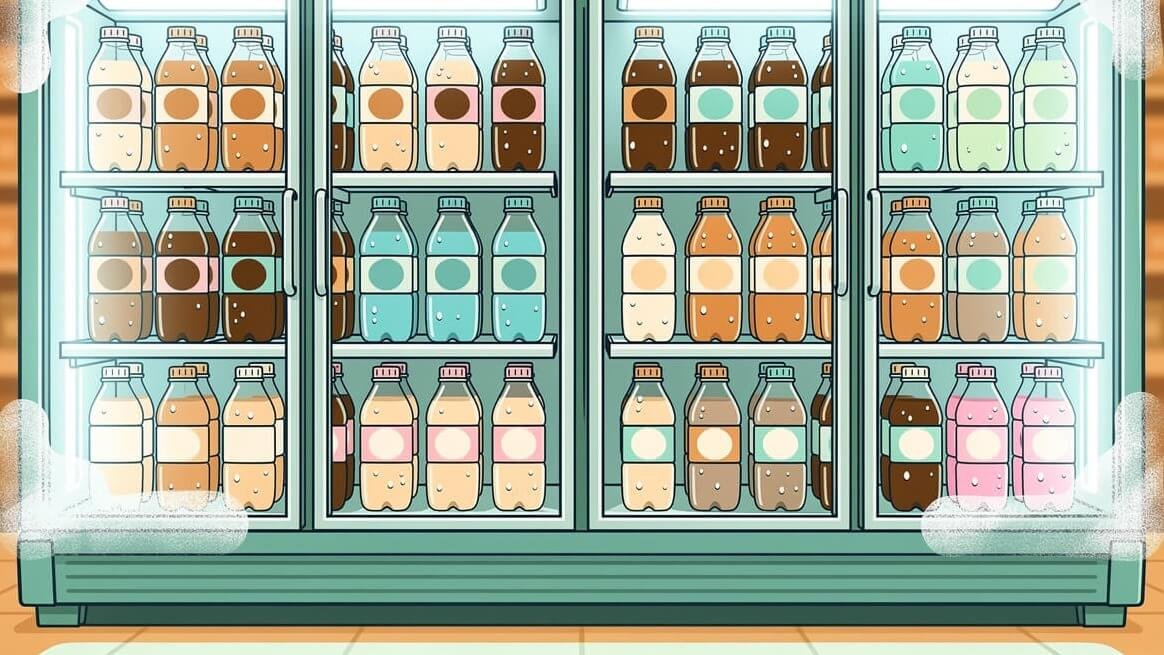
Here is the part no travel guide covers, and it might be the most useful section on this page. Taiwanese people buy an enormous share of their daily drinks from convenience stores, and that cold case is a canon of its own. Walk into any 7-Eleven, FamilyMart, Hi-Life or OK Mart and you will find these:
- 伯朗咖啡 (Mr. Brown Coffee) — canned coffee from King Car, on shelves since 1982. The blue-and-white can is a national object. Sweet, milky, and the default commuter fuel.
- 蘋果西打 (Apple Sidra) — apple soda that has been in production since the 1960s. Every Taiwanese adult drank this as a kid; it shows up at hot-pot dinners and family reunions.
- 舒跑 (Supau) — the yellow-canned sports drink. Taiwan’s Pocari Sweat, prescribed by grandmothers for hangovers, fevers and hot days alike.
- 黑松沙士 (HeySong Sarsaparilla) — a root-beer-adjacent soda made since 1925. The folk remedy is to add a pinch of salt when you have a cold. Try it once; you will have opinions.
- 麥香紅茶 (Mai Xiang black tea) — the small carton of sweet black tea that funded every Taiwanese childhood. Costs about NT$10.
- 茶裏王 / 原萃 / 御茶園 — unsweetened bottled oolong and green tea. This is the grown-up default: cold, zero sugar, NT$25.
- 冬瓜茶 (winter melon tea) — caramel-brown, mellow, and weirdly hard to explain to anyone who has not had it. Here is the full story on dongguacha.
- 豆漿 (bottled soy milk) — I-Mei and Kuang Chuan bottles, sweet or unsweetened, drunk cold straight from the fridge.
- 維大力 (Vitali) — a herbal-guarana soda with a cult following and a taste that splits rooms.
Then there is the coffee counter. 7-Eleven’s CityCafe, launched in 2004, sells coffee at a volume that makes it one of the largest coffee retailers in Asia; FamilyMart’s Let’s Café does the same. An americano runs about NT$45-55, it is genuinely fine, and there is one within three minutes of wherever you are standing. This is why Taiwan’s coffee chain scene is so fiercely competitive — Louisa Coffee (路易莎), the homegrown chain, out-stores Starbucks on the island.
In winter, the same stores swap half the cold case for a hot cabinet: canned milk tea, hot Mr. Brown, hot lemon honey, hot oolong. The bottles look identical; only the temperature changes.
Morning Drinks: Doujiang, and the Coffee Nobody Expects
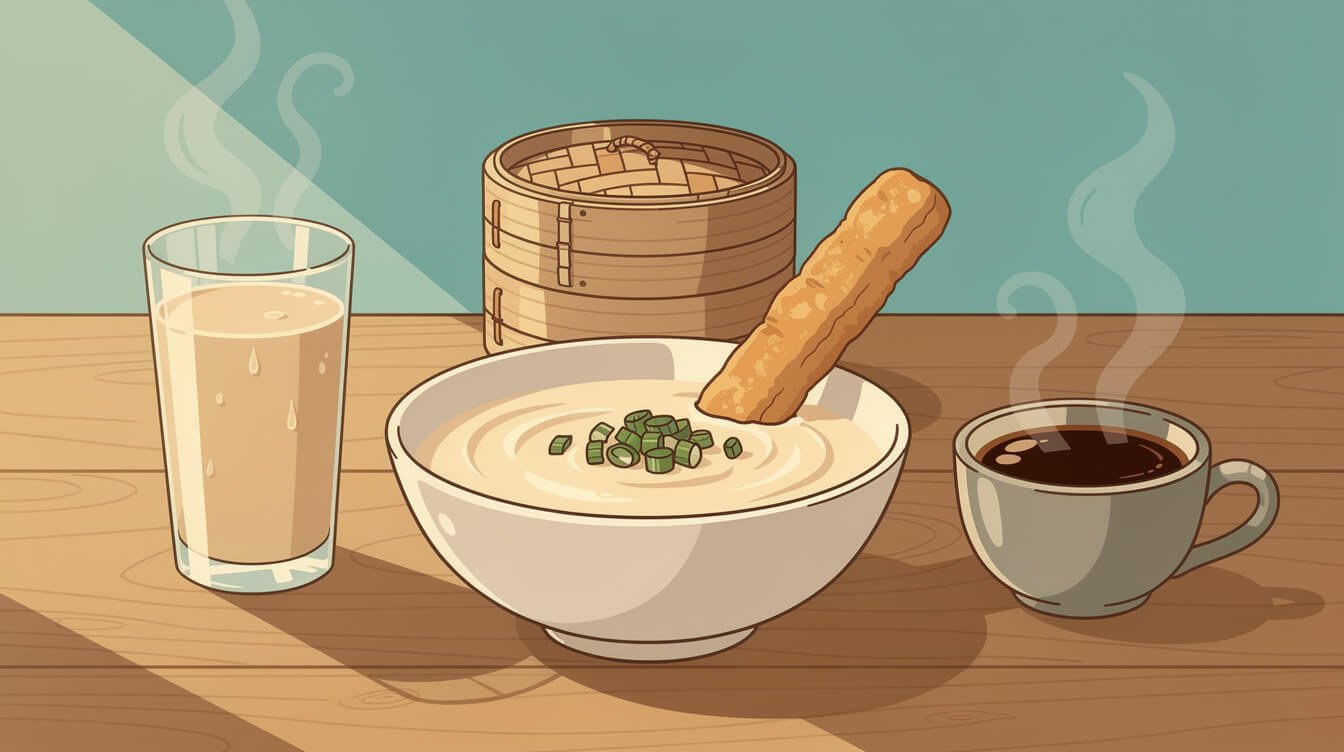
Taiwanese mornings have their own corner of the Taiwan drinks vocabulary, and it starts with 豆漿 (dòujiāng) — fresh soy milk, made daily, served three ways.
甜豆漿 is sweet and hot, the standard pairing for a fried dough stick (油條). 冰豆漿 is the cold sweet version, poured over ice. And 鹹豆漿 — savoury soy milk — is the one that converts people. Hot soy milk is poured over a bowl containing vinegar, soy sauce, dried shrimp, pickled radish, chopped scallion and torn 油條. The vinegar curdles the soy milk on contact into soft custardy clouds. It is savoury, sour, faintly briny, and completely unlike anything in a Western breakfast. Chains like 永和豆漿 run 24 hours, which tells you how seriously this is taken. Our complete guide to Taiwan breakfast food goes deep on what to eat alongside it.
Taiwan actually grows coffee
This surprises almost everyone. The Tropic of Cancer runs straight through the island, and coffee was first planted here in the late 1800s, expanded under Japanese rule, then largely abandoned. Gukeng (古坑) in Yunlin revived it in the early 2000s and now hosts an annual coffee festival; Alishan in Chiayi produces high-altitude beans that have scored well in international cupping competitions.
Taiwanese single-origin coffee is expensive — NT$250-600 for a cup is normal, because labour costs are high and yields are small. It is also a genuinely interesting cup: clean, bright, often with a stone-fruit sweetness. If you are a coffee person, skip the third-wave imports in Taipei for one day and order a local Alishan or Gukeng bean. It is one of the few places on earth where “local coffee” and “local tea” are both world-class.
Street Coolers: Sugar Cane, Aiyu and the Art of Herbal Cooling
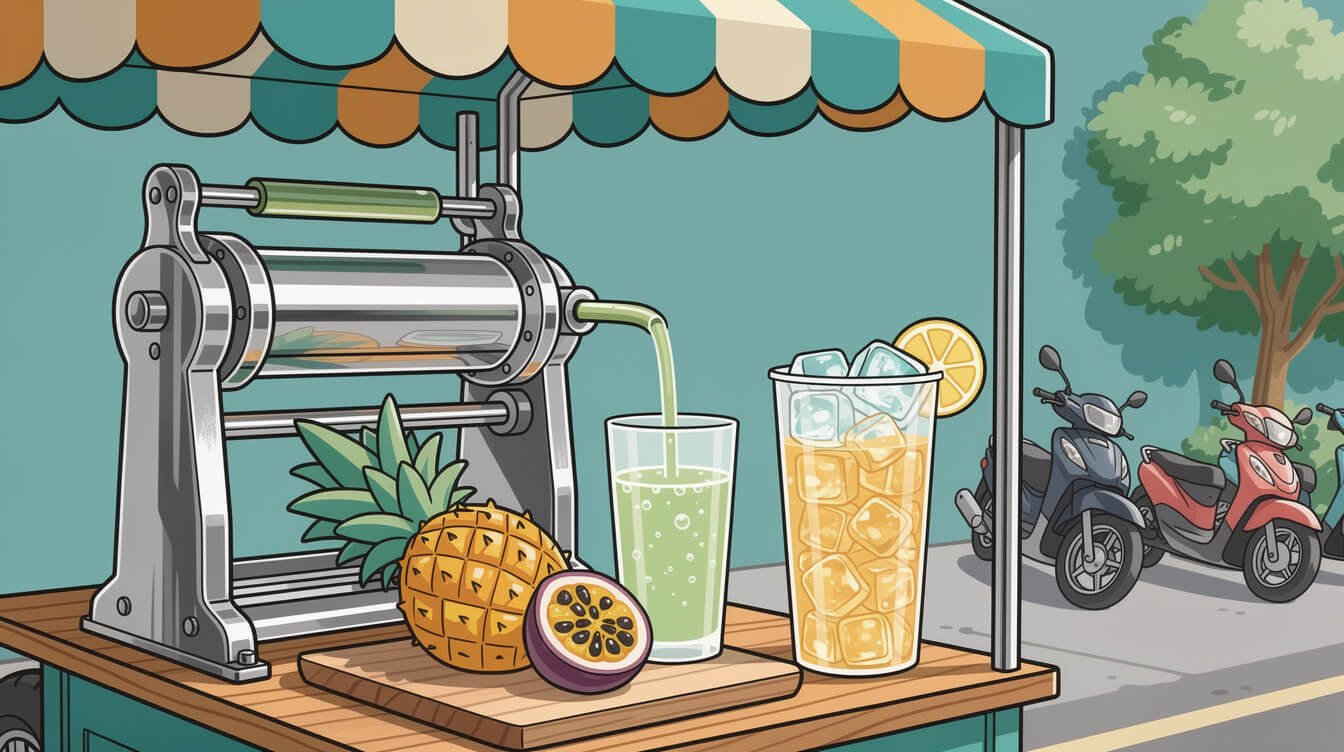
Taiwanese summers are brutal — 35°C with humidity that makes it feel worse — and there is an entire category of Taiwan drinks built for exactly one job: cooling you down. In traditional Chinese medicine terms these are 退火 (tuì huǒ), “reducing fire,” and Taiwanese people take the concept seriously enough that shops selling nothing else survive for generations.
- 甘蔗汁 (sugar cane juice) — pressed to order on a chrome roller machine, pale green, grassy-sweet, served over crushed ice. Often with a squeeze of lemon.
- 愛玉 (aiyu jelly) — a translucent golden jelly made from the seeds of a fig vine endemic to Taiwan, rubbed in water until the pectin sets naturally. Served in lemon water with ice. It is one of the very few foods Taiwan can claim as entirely its own, and it has a genuinely lovely origin story.
- 青草茶 (qīngcǎo chá / herbal tea) — a dark, bitter, cooling brew of mixed medicinal herbs. Sold from old shopfronts near temples, usually next to a wall of dried plants. An acquired taste that locals swear by in August.
- 仙草茶 (grass jelly tea) — the drinkable cousin of the jelly topping. Faintly bitter, mildly sweet, very refreshing.
- 木瓜牛奶 (papaya milk) — fresh papaya blended with milk and a little sugar. Night-market staple, thick as a milkshake.
- 楊桃汁 (starfruit juice) — preserved salted starfruit, sweet-salty and slightly medicinal. A Tainan specialty; if you are in Tainan, find a stand.
- 酸梅湯 (sour plum drink) — smoked plum, hawthorn and licorice, served ice cold. Tart, smoky, wildly refreshing.
Most of these live at night markets and older neighbourhood streets rather than in modern chains, which is precisely why they are worth hunting down. Our city-by-city street food guide maps where to find the stands worth queuing at.
Taiwan After Dark: Beer, Kaoliang, Kavalan and Michiu
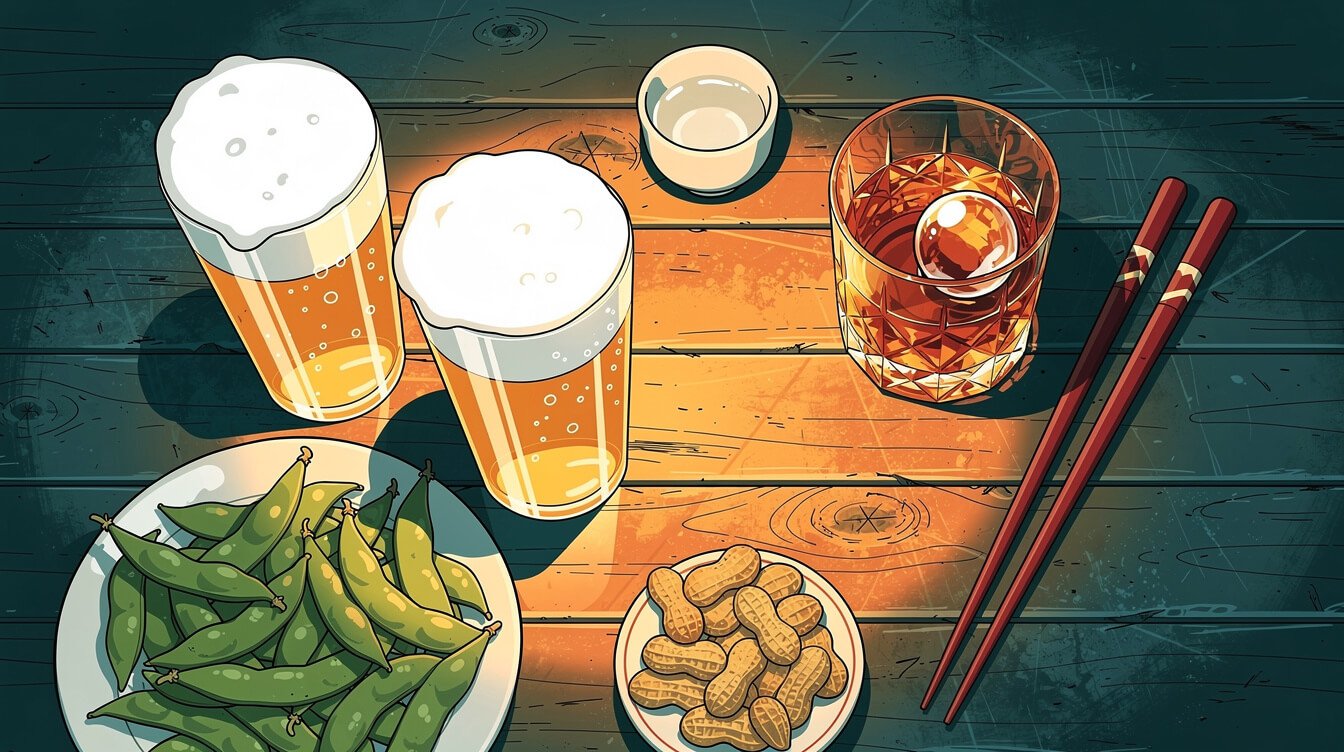
The alcohol side of Taiwan drinks is smaller than the tea side but punches far above its weight internationally.
台灣啤酒 — Taiwan Beer
The state-owned Taiwan Tobacco and Liquor Corporation traces its brewery back to the Japanese colonial Takasago Beer works founded in 1919. 金牌 (Gold Medal) is the standard lager and the default at every rechao (熱炒) stir-fry joint in the country. Two things worth seeking out: 18天生啤酒, an unpasteurised draft with an eighteen-day shelf life that only exists domestically, and the fruit beer line — mango, pineapple, grape, honey — which locals treat as a summer drink rather than a novelty. We have a full guide to Taiwan Beer and how the brand became a national symbol.
金門高粱 — Kinmen Kaoliang
Sorghum liquor distilled on Kinmen, the outlying island that sits a few kilometres from mainland China. The standard bottle is 58% ABV, produced by a distillery founded in 1952 under General Hu Lien using water from the island’s Baoyue Spring. It is fierce, faintly floral, and inseparable from Kinmen’s identity — the distillery is effectively the island’s economy. Drunk in small cups at banquets, usually accompanied by someone telling you 乾杯 (bottoms up) far too often. More on the island itself in our Kinmen guide.
噶瑪蘭 — Kavalan whisky
Taiwan’s whisky story is absurd on paper. King Car built a distillery in Yuanshan, Yilan in 2005; the first bottles shipped in 2008; by 2015 the Solist Vinho Barrique was named World’s Best Single Malt at the World Whiskies Awards. The subtropical heat is the secret — casks mature far faster than in Scotland, with an angel’s share that can hit double digits annually. It is not cheap (NT$1,500-3,000 a bottle is normal), but it is genuinely world-class, and the distillery tour in Yilan is excellent. The island’s other serious distillery, Nantou’s OMAR, is worth a look too.
米酒 — Michiu
Red-label rice wine is less a drinking liquor than a cornerstone of Taiwanese cooking — 麻油雞 (sesame oil chicken), 薑母鴨, and the postpartum confinement diet all depend on it. It became briefly, genuinely political: WTO accession in 2002 reclassified it as a spirit and the price jumped from around NT$21 a bottle to over NT$130, triggering hoarding, a black market, and real public anger before the classification was reversed later that decade. Few countries have had a national crisis over cooking wine.
Also worth knowing: 小米酒, the sweet millet wine central to many Indigenous Taiwanese communities’ ceremonies, and 紹興酒, the Shaoxing-style rice wine produced in Puli, Nantou.
One practical note: drinking in public is legal in Taiwan, convenience stores sell beer until late, and public drunkenness is socially frowned upon. The vibe is beer with food, not beer as the event.
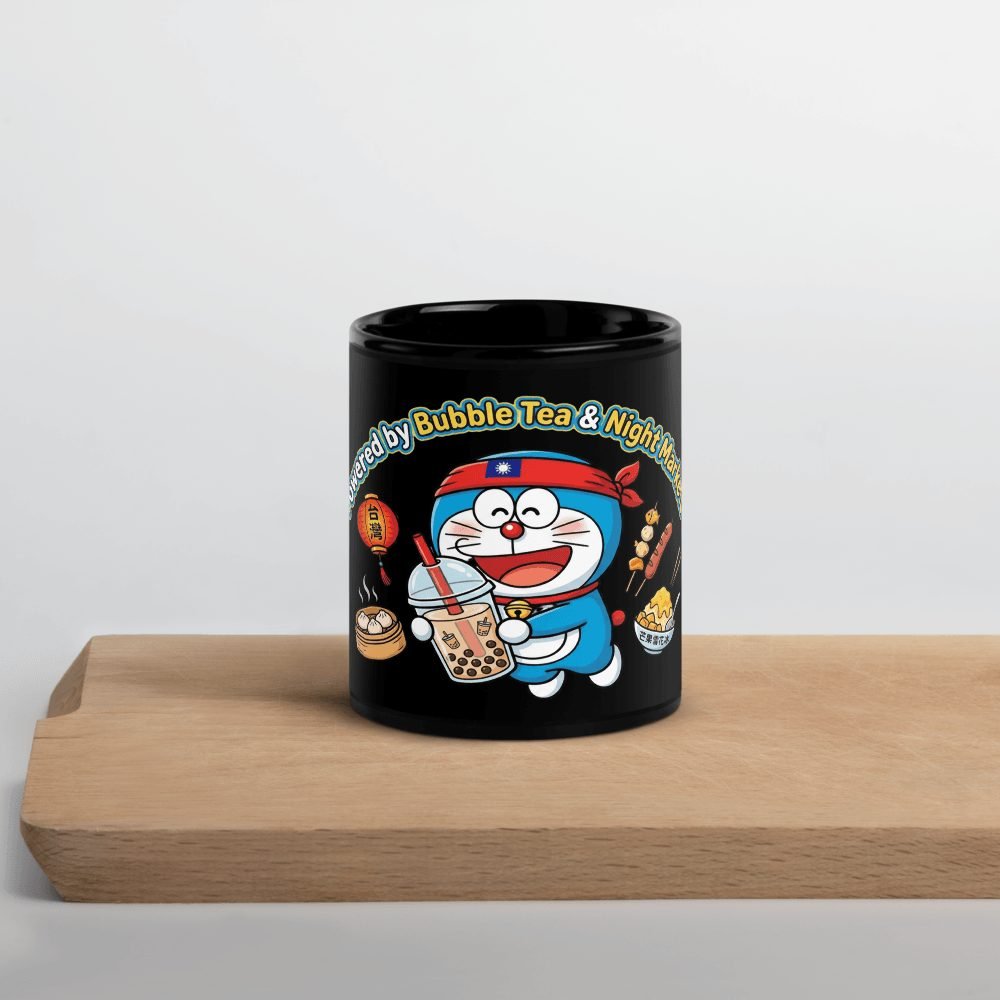
Powered by Bubble Tea
Half sugar, less ice, all day. Our night-market mug carries the whole Taiwan drink habit to your desk — and holds a very respectable amount of hot oolong while it is at it.
What to Drink When: A Seasonal Calendar of Taiwan Drinks
This is the layer visitors almost never pick up on, and it is what separates ordering a drink from ordering the right drink. Taiwan drinks are seasonal in a way that is close to instinctive, and a lot of it descends from traditional ideas about heating and cooling foods.
Summer (June–September)
The cooling drinks take over. Winter melon tea, aiyu with lemon, sugar cane juice, herbal 青草茶, grass jelly tea, sour plum drink, iced unsweetened oolong from the cold case. Drink shops push fruit teas — passionfruit green, mango, wax apple. This is also peak shaved ice season, and half the shaved ice menu doubles as a drink.
Autumn (October–November)
The shoulder season and, quietly, the best tea season. Autumn harvest oolong is prized for its aroma, tea houses in Maokong and Pinglin fill up, and the first hot drinks creep back onto drink shop menus. Osmanthus and roasted oolong show up.
Winter (December–February)
Taiwan does not get properly cold, but 12°C with 90% humidity feels colder than the number suggests, and the drinking flips completely. Hot doujiang in the morning. 薑茶 (ginger tea) with brown sugar. 燒仙草 — hot grass jelly, thick and sweet, served with peanuts and taro balls in a bowl you drink from. Hot canned coffee out of the convenience-store warming cabinet. Hot milk tea from the drink shop, ordered 熱 (rè). And 桂圓紅棗茶, longan and red date tea, which tastes like a warm blanket.
Spring (March–May)
Spring harvest tea arrives and it is the best leaf of the year for most high-mountain oolongs. Cold drinks return gradually. Kumquat lemon and green plum teas have a moment.
The daily rhythm
Layered on top of the seasons is a fairly consistent daily pattern: hot or cold doujiang at breakfast, convenience-store coffee mid-morning, a drink shop cup at lunch or mid-afternoon (the 下午茶 slot is real and sacred), unsweetened bottled tea with dinner, and beer only if food is involved.
Taiwan Drinks FAQ
What is the most popular drink in Taiwan?
Of all the Taiwan drinks out there, bubble tea carries the most cultural weight. By actual daily volume, unsweetened bottled tea from convenience stores and fresh soy milk. If you asked a hundred Taiwanese people what they drank yesterday, more would say 無糖綠茶 (unsweetened green tea) than would say boba.
Is bubble tea really from Taiwan?
Yes. It was invented in Taichung in the 1980s, and two tea houses — Chun Shui Tang and Hanlin Tea Room — have been arguing about which of them did it first for more than thirty years. A lengthy lawsuit settled nothing.
How do I ask for less sugar?
Say 半糖 (bàn táng) for half sugar or 微糖 (wēi táng) for about 30%. For none at all, 無糖 (wú táng). Staff hear these hundreds of times a day and will understand even a rough pronunciation.
How much does a drink cost in Taiwan?
A drink shop cup typically runs NT$30-70 (about US$1-2.20). Specialty brown sugar or cheese foam drinks go NT$55-85. Convenience-store bottled tea is NT$20-30, a CityCafe americano about NT$45-55, a can of Taiwan Beer NT$40-50.
Can you drink the tap water in Taiwan?
The water is treated but the pipe infrastructure is old, so almost nobody drinks it straight from the tap. Boil it or filter it. Every office, school, train station, hotel and convenience store has a free hot-and-cold water dispenser — carrying a bottle and refilling is completely normal and saves a lot of plastic.
What is Taiwan’s national alcoholic drink?
Taiwan Beer for everyday drinking, Kinmen Kaoliang for ceremony and banquets. Kavalan is the one that won the international awards.
Are drink shops open late?
Most run roughly 10am to 10pm, some later near night markets. Convenience stores are 24 hours, and so are many soy milk shops — 永和豆漿 branches will pour you hot doujiang at 4am.
Is it rude to walk and drink?
Not at all — though eating and drinking is prohibited on the Taipei MRT, including the platforms, and the fine is real. Finish your cup before you tap in.
Final Thoughts: Drink Like You Live There
The fastest way to stop feeling like a visitor is not learning the food — it is learning the Taiwan drinks. Drinking here is a running, all-day, everyone-participates ritual in a way that eating simply is not.
So here is the short version. Learn the phrase 半糖少冰. Open the cold case at 7-Eleven and buy something you cannot identify. Drink hot soy milk at 7am at least once. Order your oolong straight, at least once, with no sugar and no milk, and pay attention to what the mountain did to it. And when someone pours you a tiny cup of kaoliang at dinner, take it.
Taiwan drinks are not a checklist to tick off. They are a system with a logic — seasonal, social, and quietly generous. Once you can read it, the whole island gets easier to be in.
A Postcard From Taiwan, Every Week
Culture stories, food deep-dives, travel tips, and first looks at new designs — straight to your inbox. No spam, just Taiwan.
Grab a Free Taiwan Sticker!
Drop your email and we’ll send you a limited-edition Taiwan sticker — plus insider access to new merch drops and island vibes.
No spam. Unsubscribe anytime.