Brown Sugar Milk Tea: The Taiwanese Tiger-Stripe Drink, Explained (and How to Make It)
Brown sugar milk tea is the drink that made the whole world stop and photograph its cup. Dark caramel syrup streaks down the inside of the glass like tiger stripes, warm chewy pearls sit at the bottom, and cold milk swirls through it all. But here’s the twist most recipes skip: the Taiwanese original usually has no tea in it at all.
This guide covers the whole story. You’ll learn what brown sugar milk tea actually is, how a Taichung shop turned it into a global queue in 2017, which sugar really makes the stripes, and how to make both versions at home. We’ll also cover how to order it in Taiwan, where it plays by different rules than every other drink on the menu.
What Is Brown Sugar Milk Tea?
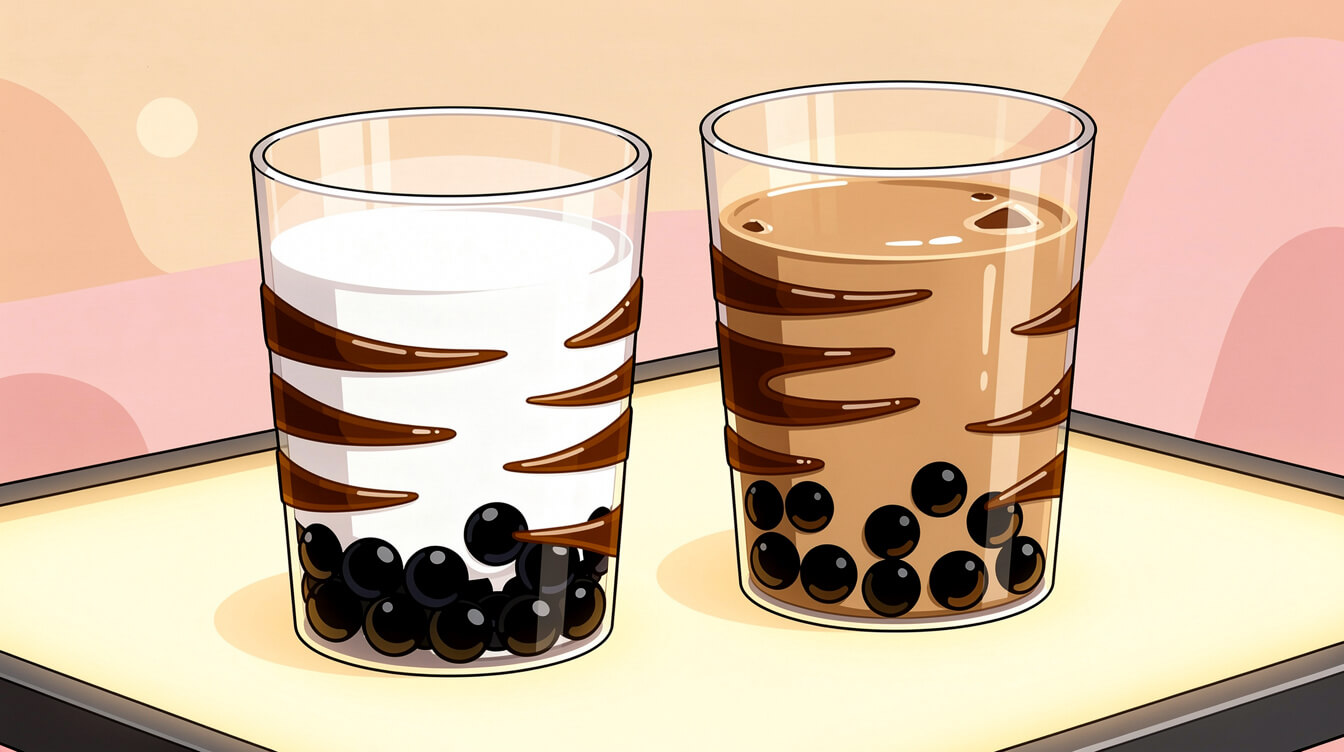
Brown sugar milk tea is a cold milk drink built around tapioca pearls that have been simmered in thick brown sugar syrup. The hot syrup is smeared up the inside of the cup, ice and milk go in on top, and the syrup slowly bleeds down the walls in streaks. Those streaks are the “tiger stripes” that gave the drink its other nicknames: tiger milk tea, tiger boba and tiger sugar.
The Taiwanese original: 黑糖珍珠鮮奶
In Taiwan, the signature drink is called 黑糖珍珠鮮奶 (hēitáng zhēnzhū xiānnǎi), which translates to “brown sugar pearl fresh milk.” Look closely at the name. There’s no 茶 (chá, tea) anywhere in it. It’s just pearls, syrup and fresh milk. That makes it a caffeine-free drink, and it’s the reason it’s so popular as a late-night order.
The version with tea is 黑糖珍珠奶茶 (hēitáng zhēnzhū nǎichá), brown sugar pearl milk tea. Many Taiwanese shops sell both, and plenty of shops overseas only sell the tea version. When English-speaking menus say “brown sugar milk tea,” they might mean either one, so it’s worth asking.
What does it taste like?
The flavor is closer to dessert than to a regular milk tea. Taiwanese 黑糖 tastes deep and toasty, a bit like molasses, toffee and caramel at once, with a slight smokiness. The pearls are warm and soft on the outside and bouncy in the middle. Taiwanese people call that texture QQ. The cold milk mellows everything out. In the tea version, a strong black tea adds a slightly bitter edge that cuts the sweetness, which is why some people prefer it.
If you want the full picture of where it sits on a Taiwanese menu, our Taiwan boba tea guide covers the main drink families, and our guide to Taiwan drinks goes well beyond boba.
From Taichung to the World: The 2017 Tiger-Stripe Craze
Brown sugar and milk were a Taiwanese pairing long before anyone filmed the stripes. The craze itself has a clear starting point, though, and it’s one of Taiwan’s great food exports of the last decade.
Before the stripes: Gongguan’s “frog hits milk”
Near National Taiwan University, the Gongguan shop Chen San Ding (陳三鼎) built a cult following on a drink called 青蛙撞奶 (qīngwā zhuàng nǎi), “frog hits milk.” The name is a joke: the dark pearls in white milk look like frog eggs. Taiwan News described the shop in 2019 as an iconic symbol of the Gongguan commercial district, around 15 years into its run. So when some recipe sites say Tiger Sugar was the first shop in Taiwan to sell brown sugar pearls with milk, that isn’t quite right. Students had been lining up for it in Taipei for over a decade.
Tiger Sugar (老虎堂), Taichung, November 2017
What changed in 2017 was the presentation. Tiger Sugar (老虎堂, Lǎohǔ Táng) opened in Taichung in November 2017. Taiwan’s Mirror Media dates the opening to November 11 that year. The shop made the stripes its whole identity: heavy syrup coated up the cup, fresh milk poured slowly over ice, and a cup designed to be photographed before it was stirred. Its signature version adds a cream topping on top of the milk.
The timing was perfect for Instagram. Within months, the queues were a news story in Taiwan, and the brand went abroad fast. By Wikipedia’s count, Tiger Sugar has operated in Hong Kong since 2018, and it went on to open across Asia, North America and Europe. If you search the drink in the US today, there’s a good chance a Tiger Sugar location shows up in the map results.
Xing Fu Tang (幸福堂), Taipei, 2018
The second big name arrived in 2018. Xing Fu Tang (幸福堂, “Hall of Happiness”) was founded in Taipei and made the cooking itself into theater. Its pearls are stir-fried in brown sugar in a wok in full view of the queue, and the finished drink is browned with a flame torch. Its branch in Ximending, Taipei’s youth shopping district, became famous for its long lines. Wikipedia counts more than 150 Xing Fu Tang locations in over 18 countries as of 2023. If you’re visiting the area, our Ximending guide covers what else to eat nearby.
Between them, these two chains turned a Taipei student drink into a worldwide trend. The look spread to other drink chains, and even to brown sugar boba ice cream bars in Taiwanese convenience stores. When you order “brown sugar milk tea” in Los Angeles, Toronto or London, you’re drinking a Taiwanese export from around 2018.
黑糖 vs Brown Sugar: Which Sugar Actually Makes the Stripes?
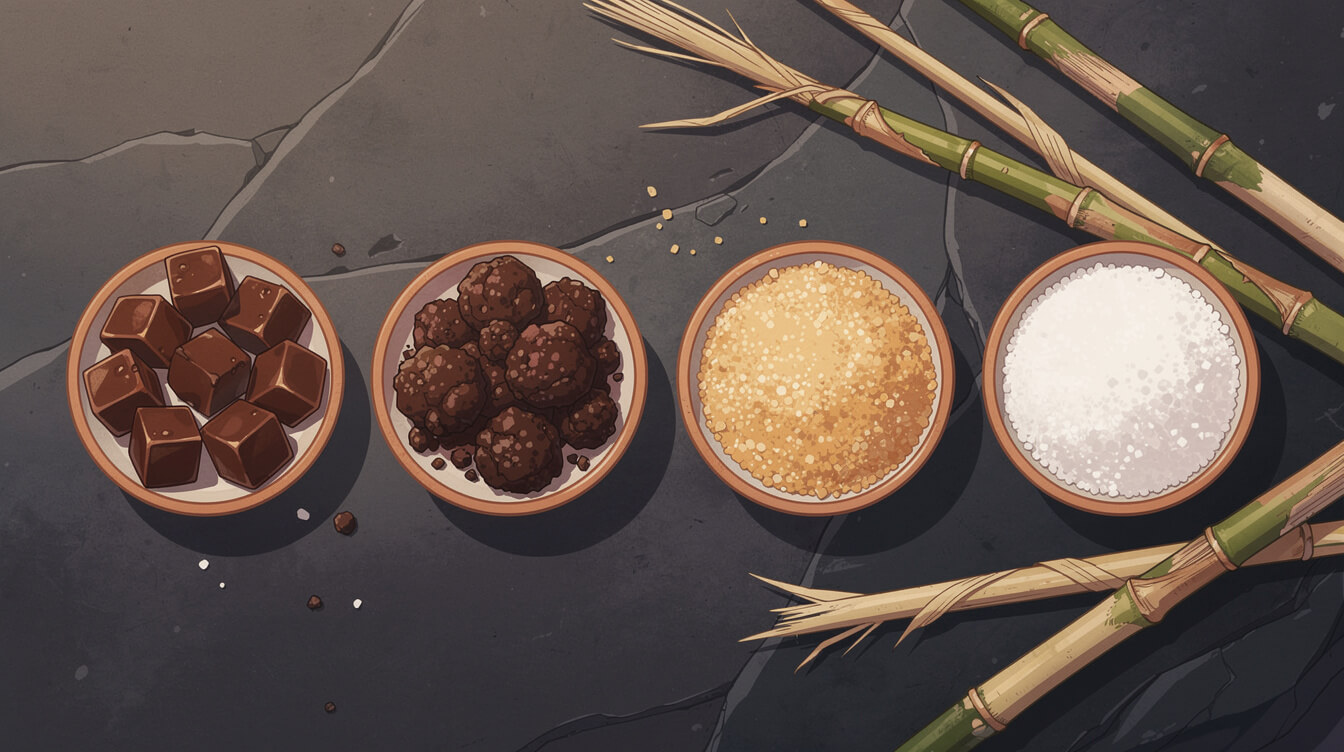
This is where most home recipes go wrong. In English, “brown sugar” usually means the soft light or dark brown sugar sold in US supermarkets. That’s refined white sugar with some molasses added back in. Taiwanese 黑糖 (hēitáng, literally “black sugar”) is different. It’s an unrefined cane sugar, made by boiling down sugarcane juice until it sets. It keeps more of the cane’s flavor and color, and it tastes darker and more complex.
The closest relatives are Okinawan kokuto, muscovado, and similar unrefined cane sugars like panela or jaggery. All of them give you a deeper flavor than supermarket brown sugar.
Which sugar to use
| Sugar | Flavor | Stripes | Verdict |
|---|---|---|---|
| Taiwanese 黑糖 (block or powder) | Deep, toasty, slightly smoky | Dark and bold | The real thing. Look for it in Asian grocery stores. |
| Okinawan kokuto | Rich, mineral, a little salty | Dark and bold | Excellent substitute, often sold in Japanese stores. |
| Dark muscovado | Sticky, molasses-heavy | Dark | The easiest good option in Western supermarkets. |
| Dark brown sugar (US) | Sweet, mild molasses | Medium brown | Works fine. Add a teaspoon of molasses for more depth. |
| Light brown sugar | Mild caramel | Pale, thin | Stripes look washed out. Use only if it’s all you have. |
| White sugar | Plain sweet | None | Skip it. You’ll get sweet milk with no stripes. |
Why the stripes form at all
The stripes are basic kitchen physics. Hot syrup that has been reduced until thick will cling to the glass. When cold milk and ice go in, the syrup cools, thickens even more, and slides down slowly instead of mixing right away. The darker and thicker your syrup, the bolder the stripes. They fade as the syrup dissolves, so in shops the drink goes from counter to camera fast. Stir it before you drink it, though, or your last sips will be pure syrup.
If you love the flavor of Taiwanese dark sugar, you’ll find it all over the island’s desserts too, from shaved ice syrups to warm 豆花 (tofu pudding). Our Taiwan desserts guide is a good place to start.
How to Make Brown Sugar Milk Tea at Home
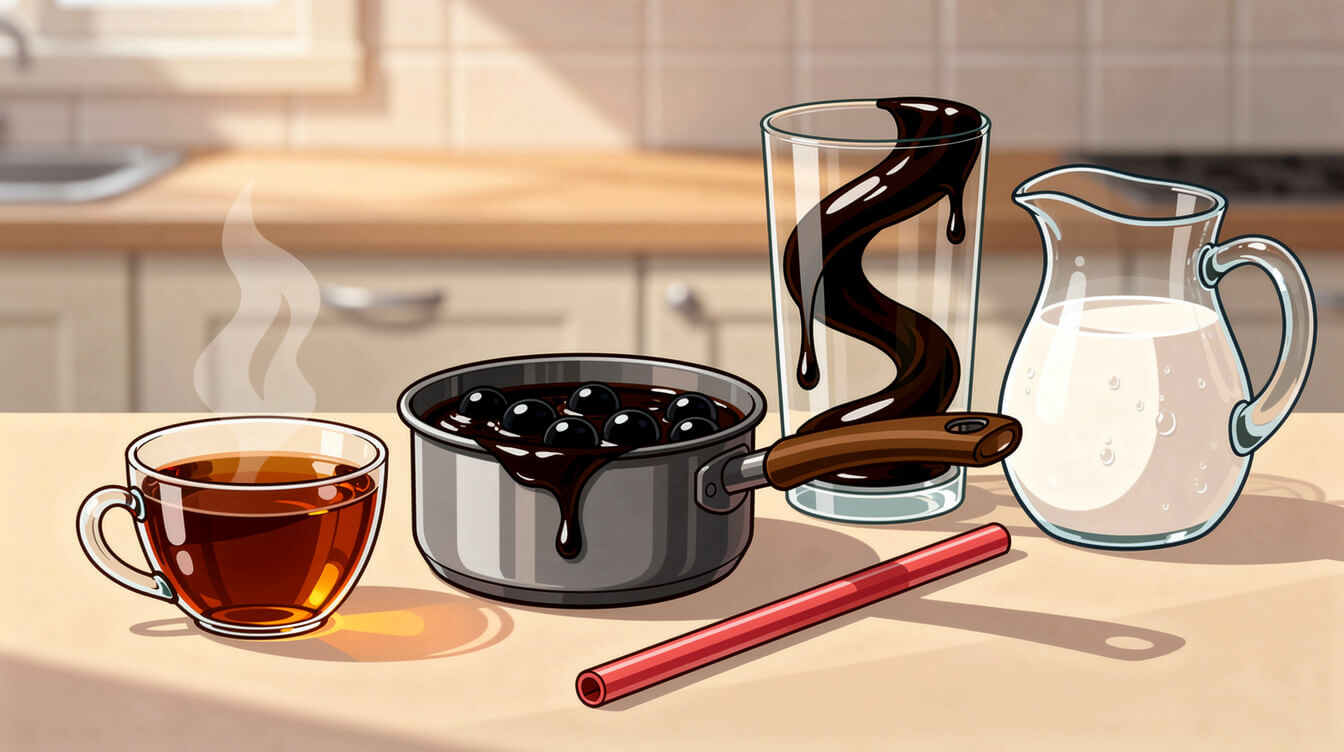
This recipe makes one large drink, about the size of a Taiwanese 700 ml cup. It gives you two choices at the last step: the Taiwanese fresh milk version or the brown sugar milk tea version.
Recipe: Brown Sugar Milk Tea (or Brown Sugar Boba Fresh Milk)
Makes: 1 large drink · Active time: 15 minutes · Total time: about 30 minutes, plus tea cooling time
Ingredients
- 50 g (about 1/3 cup) quick-cook tapioca pearls, or one batch of homemade boba pearls
- 40 g (about 3 packed tablespoons) Taiwanese 黑糖, kokuto or dark muscovado
- 30 ml (2 tablespoons) water
- For the fresh milk version: 250 ml (1 cup) cold whole milk
- For the milk tea version: 2 black tea bags (Assam or Taiwanese black tea), 120 ml (1/2 cup) hot water, and 180 ml (3/4 cup) cold whole milk
- A handful of ice cubes
- A wide boba straw
Method
- Brew the tea first (tea version only). Steep the two tea bags in the hot water for 5 to 6 minutes. You want it strong, because the milk and syrup will dilute it. Remove the bags and chill the tea in the fridge.
- Cook the pearls. Follow the package directions. Quick-cook pearls usually need about 5 minutes of boiling plus a few minutes resting in the hot water. Drain them.
- Make the syrup. Put the sugar and water in a small saucepan over medium heat. Stir until the sugar dissolves, then let it bubble gently for 2 to 3 minutes until it looks glossy and coats the back of a spoon.
- Combine pearls and syrup. Add the drained pearls to the pan and stir over low heat for about 2 minutes. The syrup will thicken and turn sticky. This step is what gives the pearls their caramel flavor.
- Paint the stripes. Spoon the pearls and syrup into a tall glass. Tilt and rotate the glass so the syrup runs up the sides. Let it sit for a minute so the syrup starts to set.
- Add ice, then milk. Add the ice gently, then pour the cold milk slowly over the ice. For the tea version, pour in the chilled tea first, then the milk.
- Take your photo, then stir. Mix everything before drinking so the sugar is spread through the cup.
Tips
- Thin stripes? Reduce the syrup a little longer. Thicker syrup clings better.
- Hard pearls? Pearls go firm in the fridge. Make them fresh and use them within a few hours.
- Want it less sweet? Use 25 to 30 g of sugar. The stripes will be lighter, but the drink is still delicious.
- Dairy-free? Oat milk is the best swap. It’s creamy enough to carry the syrup.
- Want a warm version? Skip the ice and warm the milk gently. In Taiwanese winters, many shops serve it warm.
For the full pearl-making method, including how to get that bouncy QQ texture, see our guide to making boba pearls the Taiwanese way. If you’re wondering what’s actually inside store-bought pearls, our breakdown of what boba is made out of reads the labels for you.
Ordering Brown Sugar Milk Tea in Taiwan
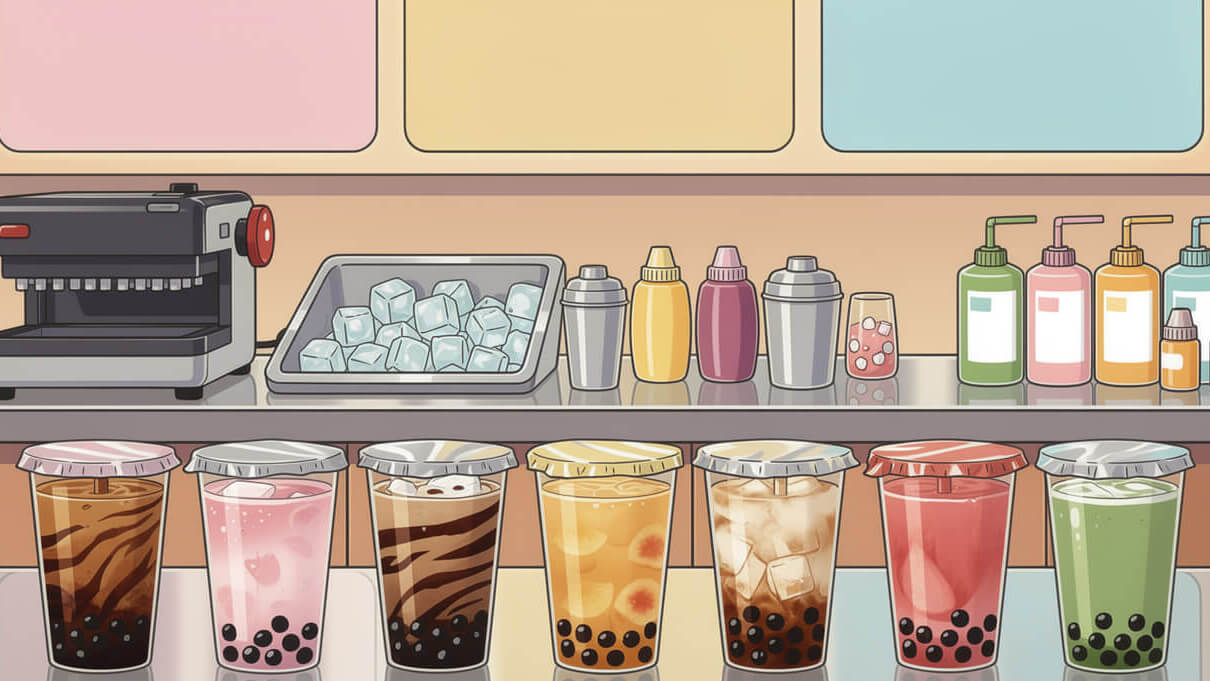
Ordering a drink in Taiwan normally follows a simple pattern: size, drink, sugar level, ice level. The sugar ladder is famous. It goes from 全糖 (full sugar) to 少糖 (less), 半糖 (half), 微糖 (slight) and 無糖 (no sugar). For most drinks, 半糖 is the classic local order.
The one drink that breaks the system
Brown sugar drinks don’t fit that ladder well. In a normal milk tea, sugar is a syrup that gets pumped in separately, so the shop can easily add less. In a brown sugar drink, the sweetness is already in the pearls and the syrup coating the cup. That syrup is the whole point of the drink. As a result, brown sugar specialists tend to offer few sweetness options, or none at all, for their signature drinks. General drink shops that sell a brown sugar version alongside everything else are often more flexible.
If you want it a little lighter, here’s what to try:
- Ask anyway. Some shops will reduce the syrup. Point to the drink and ask 「可以調甜度嗎?」 (kěyǐ tiáo tiándù ma?, “Can you adjust the sweetness?”).
- Go for the tea version. 黑糖珍珠奶茶 tastes less sweet than the fresh milk version because the tea balances the sugar.
- Take less ice. This sounds backward, but more milk in the cup means the syrup is more spread out. Order 少冰 (shǎo bīng, less ice) or 去冰 (qù bīng, no ice).
- Share a large. Taiwanese cups are big, often 700 ml for a large. Splitting one is a very normal thing to do.
For the sugar levels you’ll use on every other drink, plus the full ordering phrasebook, our Taiwan drinks guide has the step-by-step version.
Useful words on the menu
- 黑糖珍珠鮮奶 (hēitáng zhēnzhū xiānnǎi): brown sugar pearls with fresh milk, no tea
- 黑糖珍珠奶茶 (hēitáng zhēnzhū nǎichá): brown sugar pearl milk tea
- 鮮奶 (xiānnǎi) or 拿鐵 (nátiě, “latte”): real fresh milk. Plain 奶茶 at some shops is made with creamer instead, so these words are your clue.
- 奶蓋 (nǎigài): a cream or cheese foam topping
- 溫 (wēn) or 熱 (rè): warm or hot
Speaking of tigers: Taiwanese Mandarin has a perfect phrase for a day that’s just okay, 馬馬虎虎 (mǎmǎhūhū), which literally means “horse horse tiger tiger.” Our 馬馬虎虎 Boba Tea Taiwan Funny T-Shirt shows a horse in tiger stripes sipping bubble tea, and it’s an ideal shirt to wear to your next brown sugar run.

Ride for the Pearls
The Pearl Gang 珍珠幫 tee features a crew of chubby, glossy tapioca pearls, one of them holding a giant boba straw. It’s made for anyone who orders extra pearls without thinking twice.
Brown Sugar Milk Tea Calories, Caffeine and Common Questions
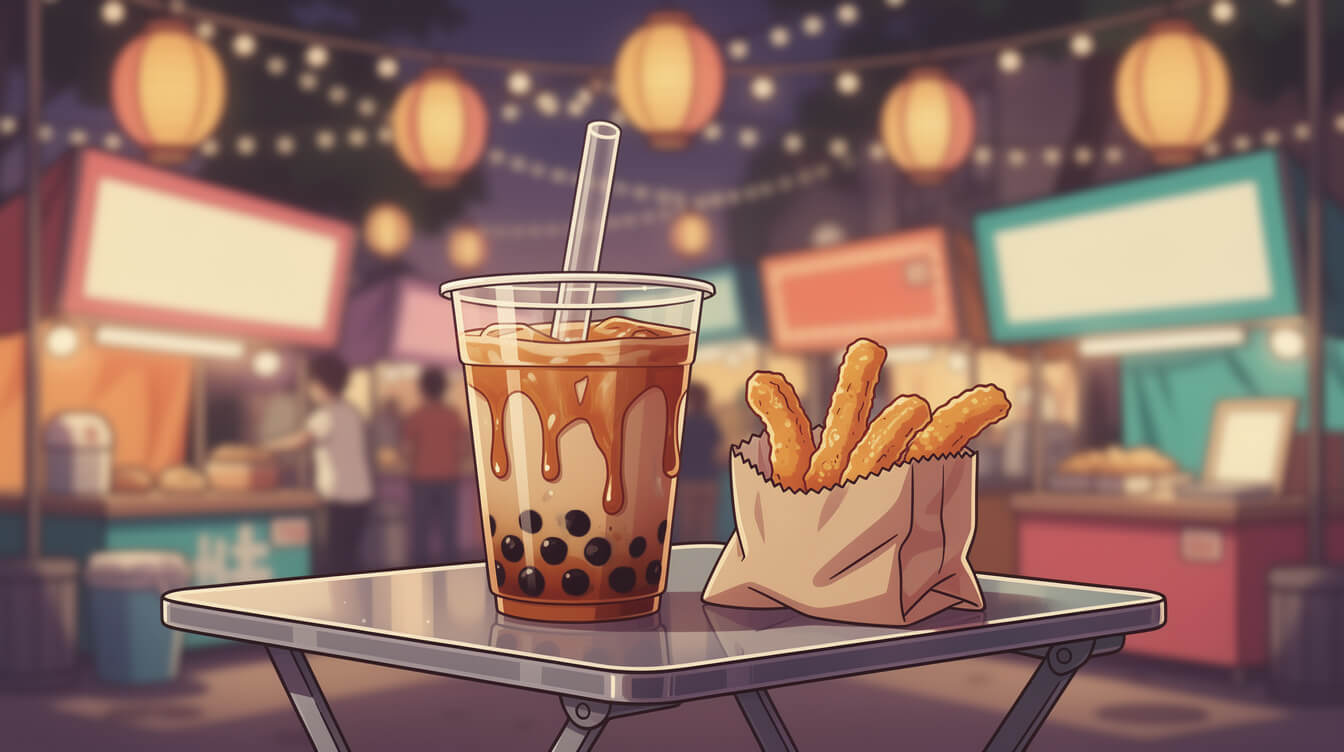
How many calories are in brown sugar milk tea?
It depends heavily on the cup size and how much syrup goes in, so treat any single number with caution. For our homemade recipe above, using standard nutrition values for the ingredients, the math works out roughly like this:
- 40 g dark sugar: about 150 calories
- 50 g dry tapioca pearls: about 175 calories
- 250 ml whole milk: about 155 calories
That’s roughly 480 calories for the fresh milk version. The tea version uses less milk, so it comes in around 440. Switching to low-fat milk saves about 30 to 40 calories, and cutting the sugar to 25 g saves about 55. Shop versions in a 700 ml cup, especially with a cream topping, can be higher. It’s a treat, not an everyday drink, and that’s okay.
Does brown sugar milk tea have caffeine?
The tea version does, because it’s made with black tea. The Taiwanese fresh milk version, 黑糖珍珠鮮奶, doesn’t. Pearls, brown sugar and milk contain no caffeine. In Taiwan, chain drink shops are required to label the caffeine level of the drinks they make, so you can check the menu or the cup. Our guide to whether boba milk tea has caffeine explains that labeling system in detail.
What’s the difference between brown sugar milk tea and brown sugar milk?
Brown sugar milk tea has brewed tea in it. Brown sugar milk, or brown sugar boba fresh milk, is just pearls, syrup and milk. The milk version is creamier and sweeter, and it’s the one Tiger Sugar and Xing Fu Tang made famous. The tea version is a little lighter and more balanced.
Is brown sugar milk tea the same as tiger milk tea?
Mostly, yes. “Tiger milk tea” and “tiger boba” are nicknames for any brown sugar drink with stripes on the cup. Some shops use “tiger” for the fresh milk version and “brown sugar milk tea” for the tea version, but there’s no fixed rule.
Why are my tiger stripes disappearing?
Your syrup is probably too thin, or your milk is too warm. Reduce the syrup until it coats a spoon, let it sit on the glass for a minute, and use cold milk over ice. Pour slowly.
Is brown sugar boba gluten free?
Plain tapioca pearls, sugar and milk are naturally gluten free, but toppings and shop syrups vary. Our topping-by-topping gluten guide covers what to check.
Can I make the pearls ahead of time?
Not really. Cooked tapioca pearls are best within a few hours and turn hard in the fridge. You can make the brown sugar syrup ahead and keep it in a jar, then warm it up with freshly cooked pearls.
Final Thoughts: A Taiwanese Classic Worth Making Right
Brown sugar milk tea looks like an Instagram trend, but it has a real Taiwanese story behind it. It started with students in Gongguan drinking “frog hits milk,” went global through a Taichung shop’s tiger-stripe cups in 2017, and spread worldwide with Xing Fu Tang’s flaming woks. Underneath the photos, it’s a simple, very Taiwanese idea: good dark cane sugar, warm chewy pearls and cold fresh milk.
Now you know the details that most recipes leave out. The original often has no tea, the right sugar matters more than the technique, and in Taiwan it’s the one drink where you can’t always choose your sweetness. Make the fresh milk version once and the tea version once, and decide which side you’re on.
And if brown sugar has you curious about other Taiwanese drinks, try a taro bubble tea next, or learn how to make popping boba for a fruity change of pace.
A Postcard From Taiwan, Every Week
Drink-shop secrets, food stories and the traditions behind Taiwan’s favorite flavors, straight to your inbox. No spam, unsubscribe anytime.
Grab a Free Taiwan Sticker!
Drop your email and we’ll send you a limited-edition Taiwan sticker — plus insider access to new merch drops and island vibes.
No spam. Unsubscribe anytime.