Taiwan Fruit Tea: The Complete Guide to the Island’s Original Iced Tea Tradition
Walk into any old-school tea shop in Tainan on a humid June afternoon and you will see it: a young guy in an apron stabbing fresh pineapple slices onto a stainless-steel skewer, layering them into a tall plastic cup, then drowning them in iced jasmine tea and a long pour of cane-sugar syrup. That, more than any of the fluorescent boba-shop creations the world calls “Taiwanese tea,” is what the locals mean when they talk about Taiwan fruit tea. It is the original — the recipe Taiwan’s farmers and tea brewers were perfecting decades before tapioca pearls ever showed up — and it is having a quiet global moment.
This guide is for the traveler, the diaspora kid, and the curious tea drinker who wants to understand what Taiwan fruit tea actually is, why it tastes nothing like the syrup-pumped versions sold at most American boba chains, which flavors define the canon, how to order it the right way, and where to drink the best cup if you ever make it to the island. We will also explain how a single Taiwanese brand — Yi Fang — turned this farmhouse beverage into a worldwide franchise without losing the soul of it.
What Is Taiwan Fruit Tea?
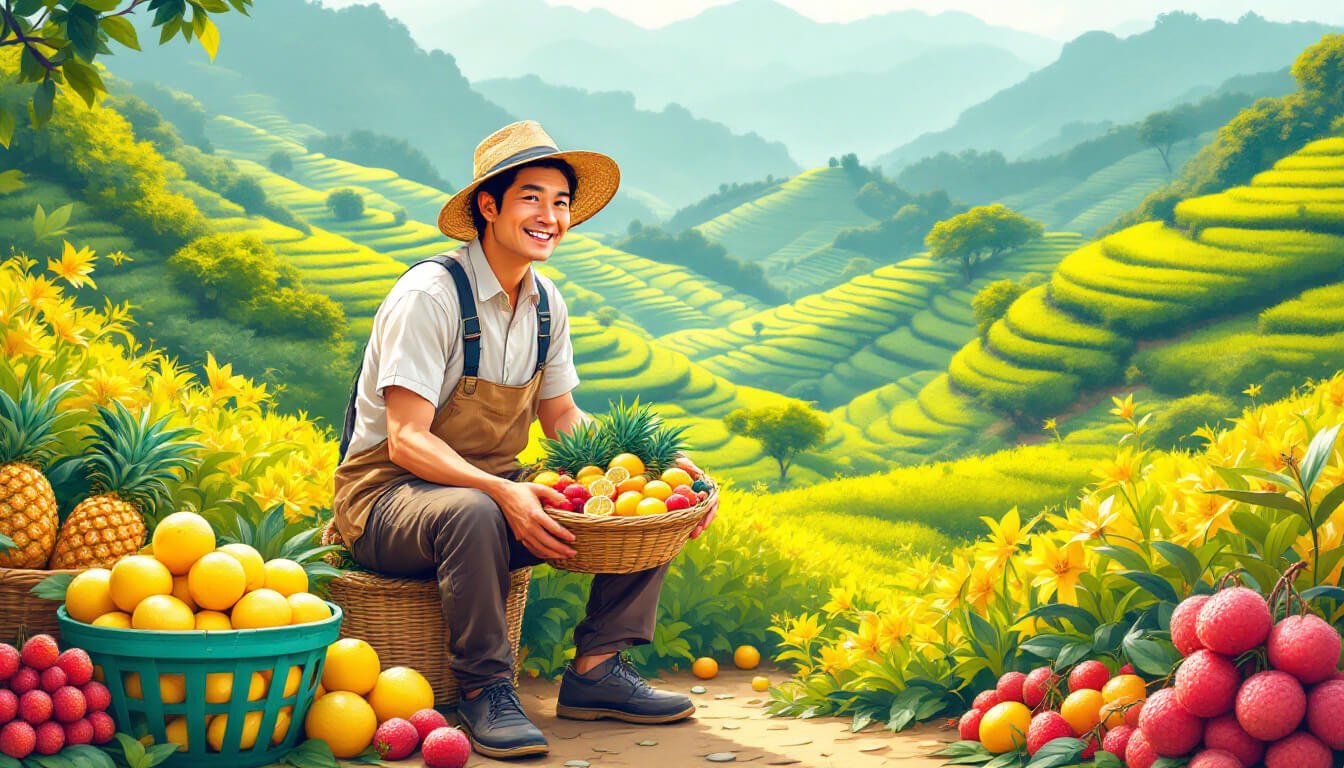
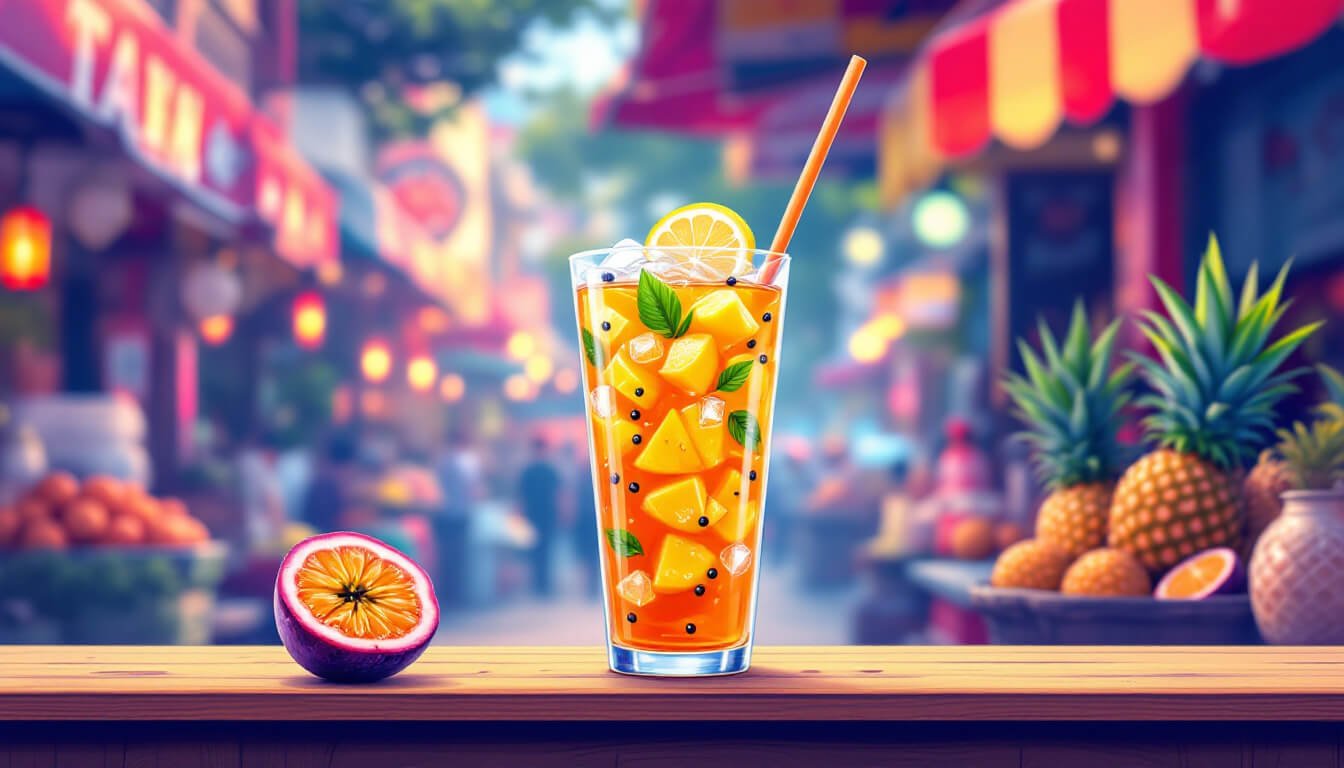
At its simplest, Taiwan fruit tea is brewed Taiwanese tea — usually a green jasmine, a high-mountain oolong, or a roasted black tea — served cold with whole pieces of seasonal fruit, fruit juice, and cane-sugar syrup. The fruit is real. The tea is real. The sweetness comes from sugarcane, not high-fructose corn syrup or fruit-flavored concentrate. There are no pearls in a classic fruit tea, no popping boba, no foam crown. It is a clean, sour-sweet, refreshingly tannic drink that tastes more like an Italian fruit soda crossed with iced sencha than anything you would order at a typical Western bubble tea chain.
The drink’s roots are agricultural. Taiwan is one of the most fruit-rich islands in Asia — its volcanic soil and subtropical climate produce world-class pineapples, passionfruit, mangoes, lemons, lychees, and wax apples. You can read more about that abundance in our Taiwan Fruit guide. Combine that bounty with Taiwan’s centuries-old tea-growing tradition and you get a beverage category that almost had to be invented. The earliest commercial fruit tea stands appeared in southern Taiwan in the 1980s, the same decade that bubble tea was being born up the highway in Taichung. They are siblings, not rivals.
The Taiwanese term you will see on menus is 水果茶 (shuǐguǒ chá), literally “fruit tea.” Older shops sometimes call it 鮮果茶 (xiānguǒ chá) — “fresh fruit tea” — to emphasize that the fruit is sliced fresh, not poured from a bottle. If the menu in front of you says either of those, you are in the right place.
Fruit Tea vs Bubble Tea: Why They Are Not the Same Drink
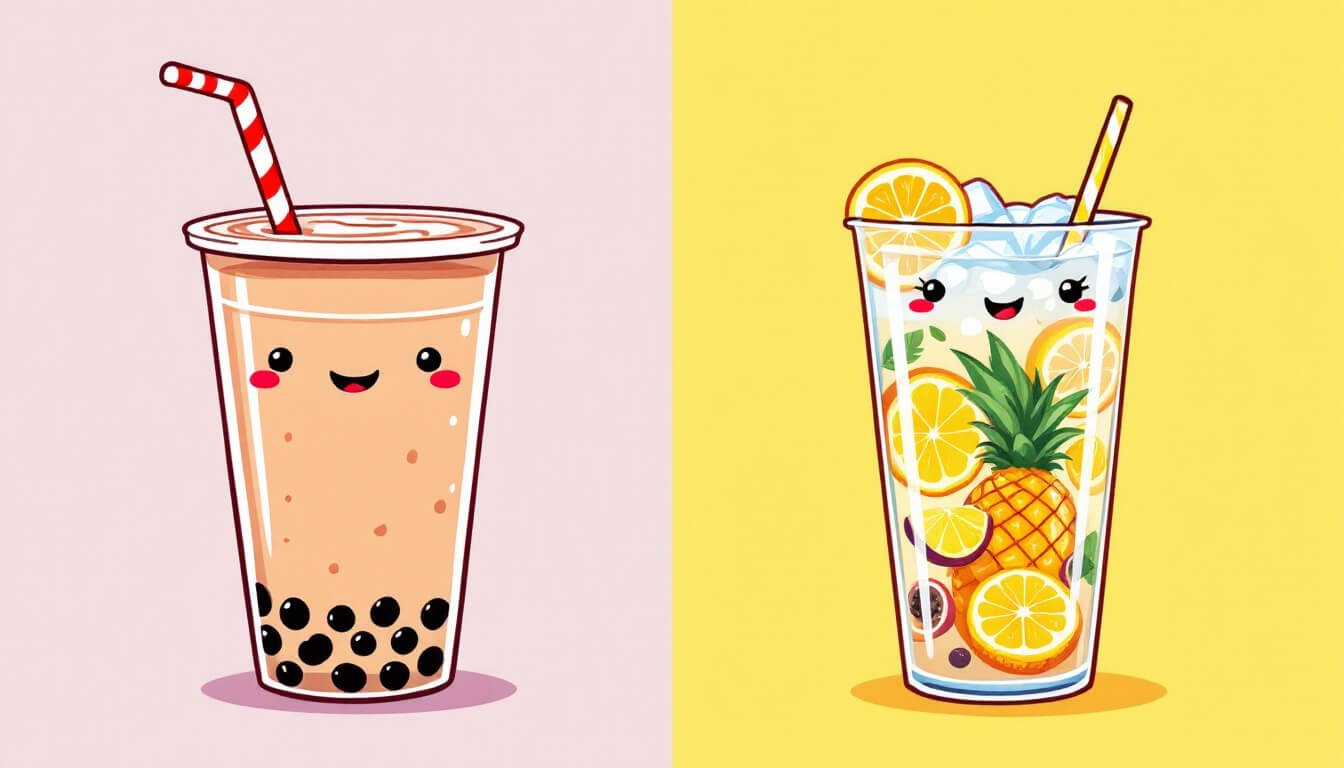
This is the single most common confusion abroad, and it matters. Taiwan fruit tea and bubble tea share a country of origin and roughly the same decade of invention, but they are fundamentally different beverages with different ingredients, different textures, and different cultural contexts inside Taiwan.
- Base ingredient: Bubble tea is built around milk tea (usually black tea + dairy or non-dairy creamer) with chewy tapioca pearls. Fruit tea is built around fresh fruit + plain brewed tea, no dairy, no pearls.
- Sweetness source: Bubble tea traditionally uses brown sugar syrup or fructose. Fruit tea uses cane sugar, sometimes raw honey, and the natural sugars in the fruit itself.
- Texture: Bubble tea is creamy with chewy pearls at the bottom. Fruit tea is bright, acidic, refreshing, with chunks of actual fruit floating in the cup.
- Cultural role: Bubble tea is the iconic Taiwanese global export, a snack-drink hybrid. Fruit tea has always been the everyday “hot weather quencher” — the drink you order when the humidity hits 90 percent and you need something that hydrates instead of fills you up.
For the full bubble tea backstory — including the disputed Chun Shui Tang vs Hanlin tearoom origin claim — see our Taiwan Bubble Tea guide. And if you specifically want to know how to order boba like a local, the Taiwan Boba Tea guide walks through every sweetness and ice level. This article will give you the same treatment for fruit tea, but the rules are different, as you will see.
The Iconic Flavors of Taiwan Fruit Tea
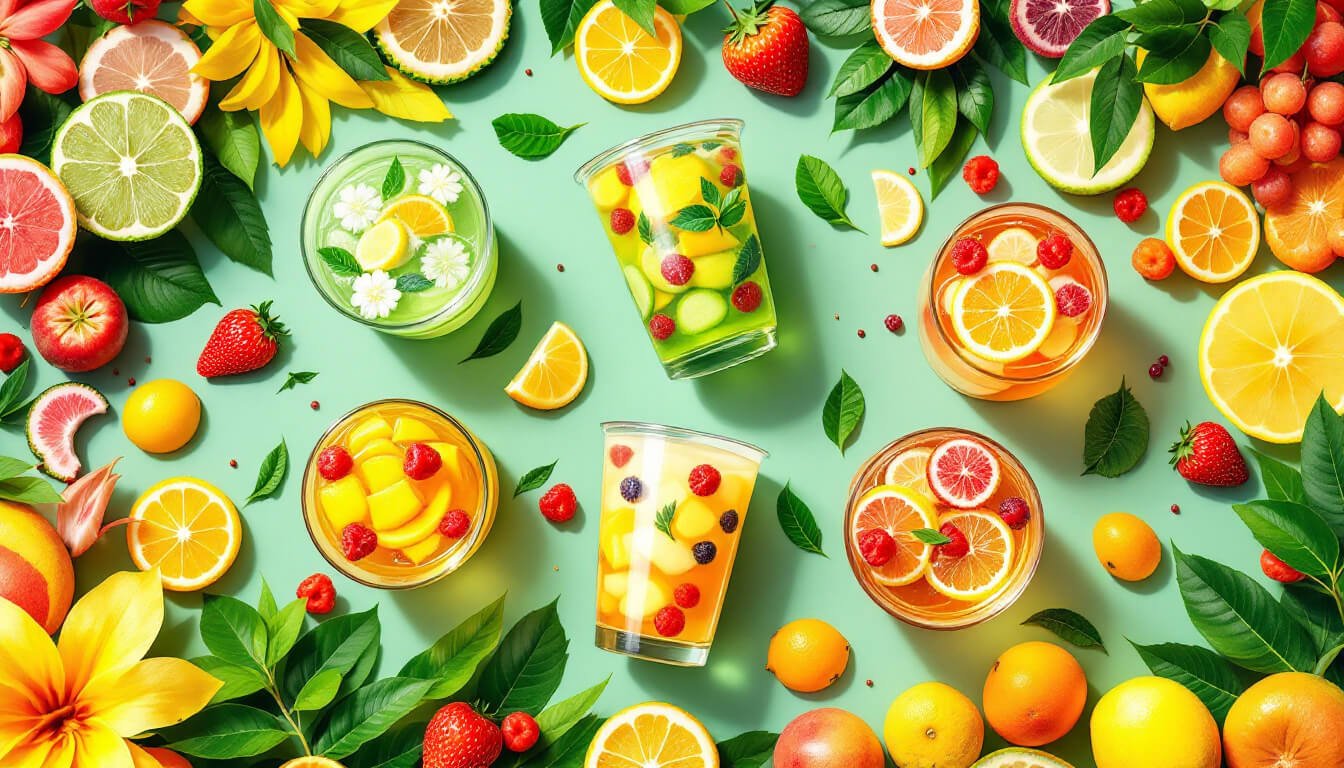
Fruit tea menus in Taiwan rotate with the seasons, which is half the point — what you sip in Tainan in late June is not what you sip in Taipei in February. That said, a handful of flavors anchor the canon. Learn these and you can walk into any tea shop on the island and order with confidence.
Passionfruit Green Tea (百香綠茶)
The undisputed king of Taiwan fruit tea. Fresh passionfruit pulp — seeds and all — gets scooped into a cup, then iced jasmine green tea is poured over it. The seeds give the drink its signature crunch and the floral-tart passionfruit cuts through the tea’s vegetal sweetness. Order this first. If you only try one fruit tea in Taiwan, this is the one.
Winter Melon Lemon (冬瓜檸檬)
A century-old Taiwanese pairing. Winter melon syrup — slow-cooked from a watermelon-sized gourd — provides a caramelized, slightly malty sweetness. Fresh lemon wedges balance it. The drink looks dark amber and tastes a little like iced cola made by an alchemist. Many Taiwanese still consider it the original “summer cooling drink.”
Pineapple Mountain Tea (鳳梨山茶)
This is what Yi Fang built its global brand on. Real pineapple slices, often grilled or muddled, sit at the bottom of the cup. The “mountain tea” base is a lightly oxidized oolong grown in Taiwan’s high-altitude regions — Alishan, Lishan, or Shanlinxi. The pineapple’s tropical fruit-acid cuts the oolong’s creamy floral notes, and the cane sugar bridges the two. It is a more grown-up drink than the passionfruit version.
Kumquat Lemon (金桔檸檬)
Small, sour, fragrant kumquats — squeezed peel-and-all — mixed with fresh lemon juice and either green tea or no tea base at all. Bracingly sour, deeply aromatic, the unofficial cure for a Taipei hangover.
Lychee Black Tea (荔枝紅茶)
Available roughly six weeks a year, when Taiwan’s lychee season peaks. Whole peeled lychees float in a roasted black tea base, usually a Sun Moon Lake Ruby No. 18 or an Assam-lineage Taiwanese black. Sweet, perfumed, faintly woody.
Mango Green Tea (芒果綠茶)
Cubed Aiwen mango, fresh mango puree, and iced jasmine green. A late-spring to high-summer drink. Tastes like a tropical vacation distilled into a cup.
How Yi Fang Built a Global Fruit Tea Empire
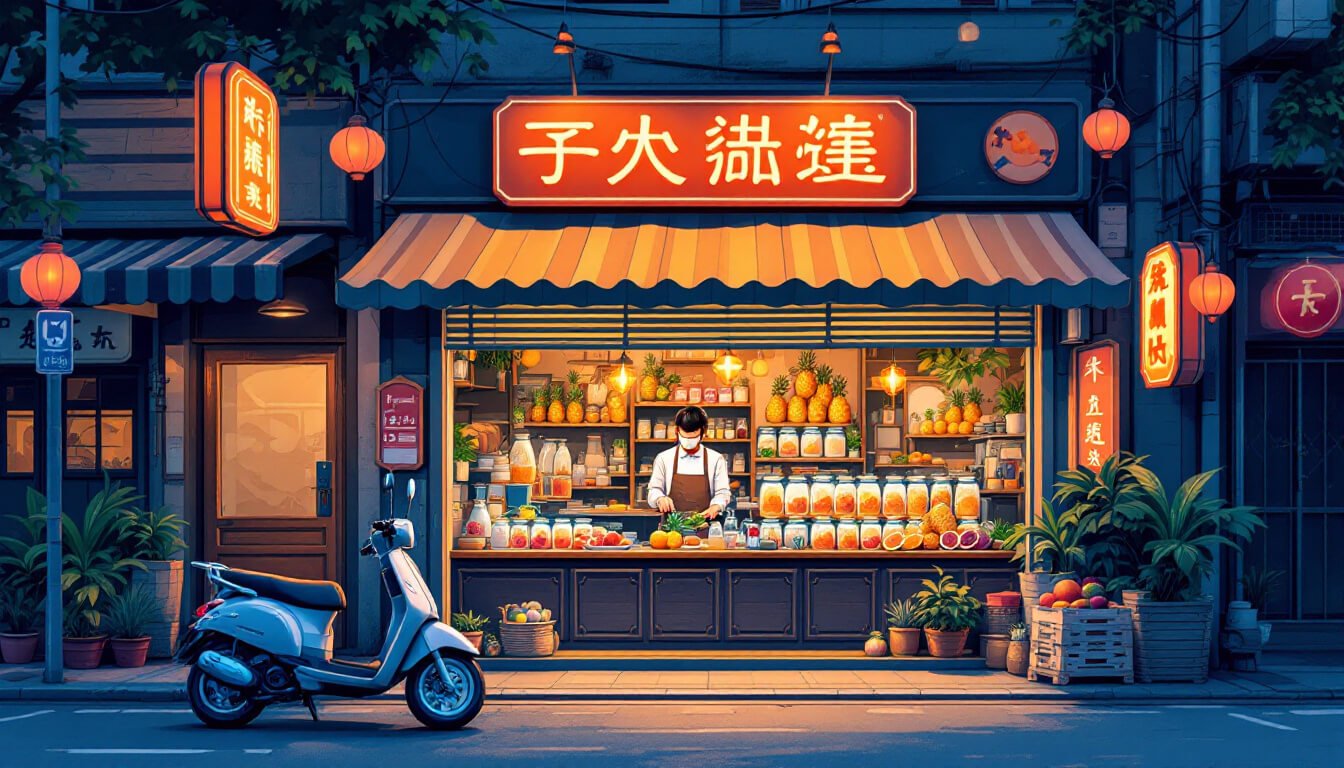
You cannot write about Taiwan fruit tea in 2026 without talking about Yi Fang. The Tainan-founded brand has done for fruit tea what Chun Shui Tang did for bubble tea — turned a regional Taiwanese specialty into something you can order in Manila, Sydney, Vancouver, and Honolulu without the recipe getting watered down.
Yi Fang’s founders made a single non-negotiable decision early on: no fruit syrup, no powders, no concentrate. Every shop on every continent has to slice real pineapples and scoop real passionfruit into the cup, every morning, by hand. That is unusual in a global franchise — most chains standardize away from fresh ingredients because they are expensive and inconsistent. Yi Fang took the harder road. Their signature pineapple-and-passionfruit fruit tea is now arguably the single most exported recipe from southern Taiwan.
The brand’s spread is also why “Taiwan fruit tea” as a search term is dominated by Yi Fang franchise locations rather than editorial coverage — almost every page-one result is a regional Yi Fang storefront (Northern California, Hawaii, Arizona, the Pacific Northwest). If you have only ever drunk Yi Fang and never tried fruit tea at an independent Tainan shop, you have had a very good introduction. But there is more out there.
How to Order Taiwan Fruit Tea Like a Local
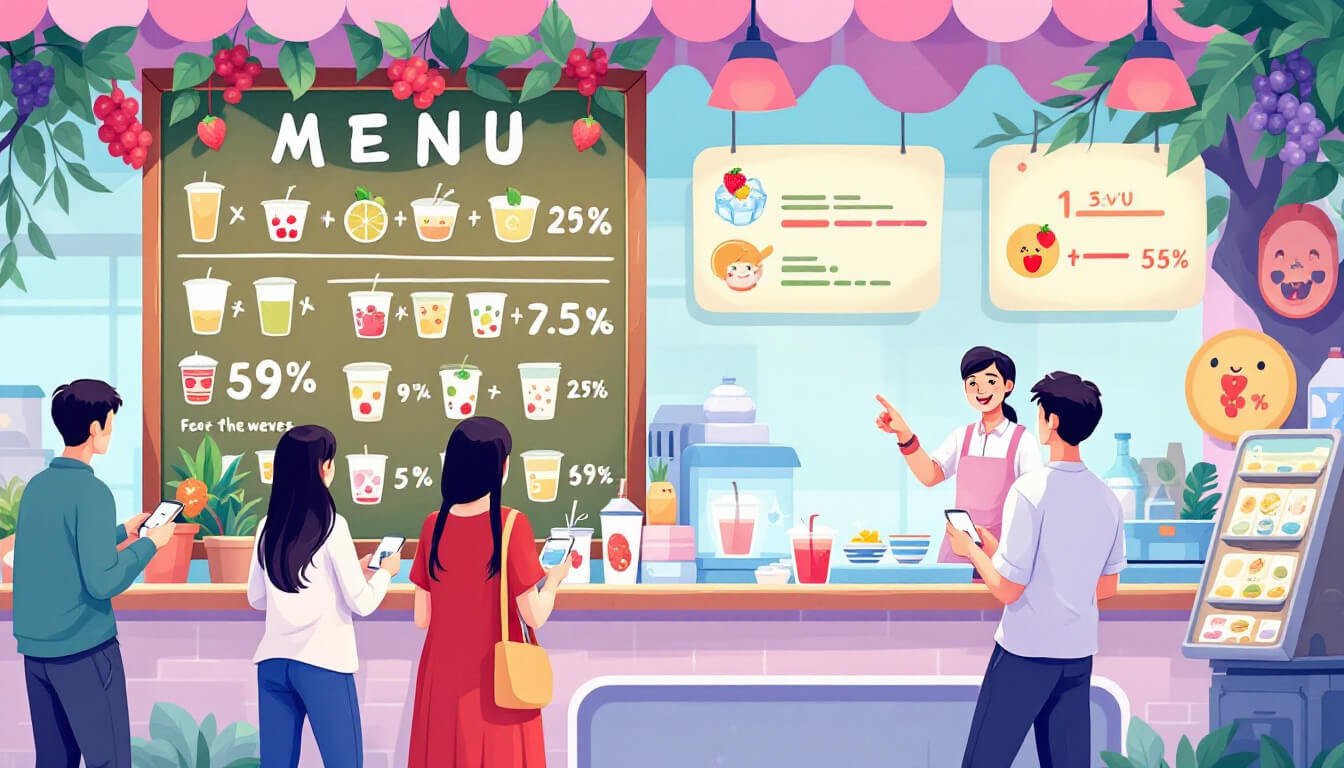
Ordering fruit tea in Taiwan uses the same template as ordering bubble tea, but the variables matter more. With a syrupy boba milk tea, picking “half sweet” rounds off the edges. With a real-fruit drink, picking the wrong sweetness can wreck the balance — too little sugar and the fruit acid is brutal, too much and the tea disappears.
The four levers you will be asked about:
- Sweetness (甜度). Most shops offer 全糖 (full, ~100%), 少糖 (less, 70%), 半糖 (half, 50%), 微糖 (mild, 30%), and 無糖 (none). For a fresh fruit tea with sour fruit like passionfruit or lemon, half sugar is the local default. Mild sugar is fine for sweeter fruit like pineapple or mango. Avoid no-sugar unless you genuinely enjoy aggressive tartness.
- Ice (冰塊). 正常冰 (regular ice), 少冰 (less), 微冰 (a little), 去冰 (no ice). Less ice gives you more drink for your money but the tea will warm faster. Most Taiwanese order regular ice in summer.
- Tea base. Many shops let you swap the default base. Green/jasmine is the safe choice. Oolong gives you more aromatic complexity. Roasted black handles strong sweet fruit like lychee or mango well.
- Toppings. Fruit tea is traditionally pearl-free, but some modern shops let you add aiyu jelly (愛玉) or konjac jelly. Aiyu — a wild Taiwanese fig jelly — is the local-approved addition. Tapioca in fruit tea is considered amateur hour by purists.
One more pro tip: when you receive the cup, give it a gentle stir with the straw, then a single sharp shake before drinking. The fruit juice settles at the bottom, the tea floats on top, and the cane syrup hides in the middle. A quick shake reunites them.
Wear the Tea Capital Pride
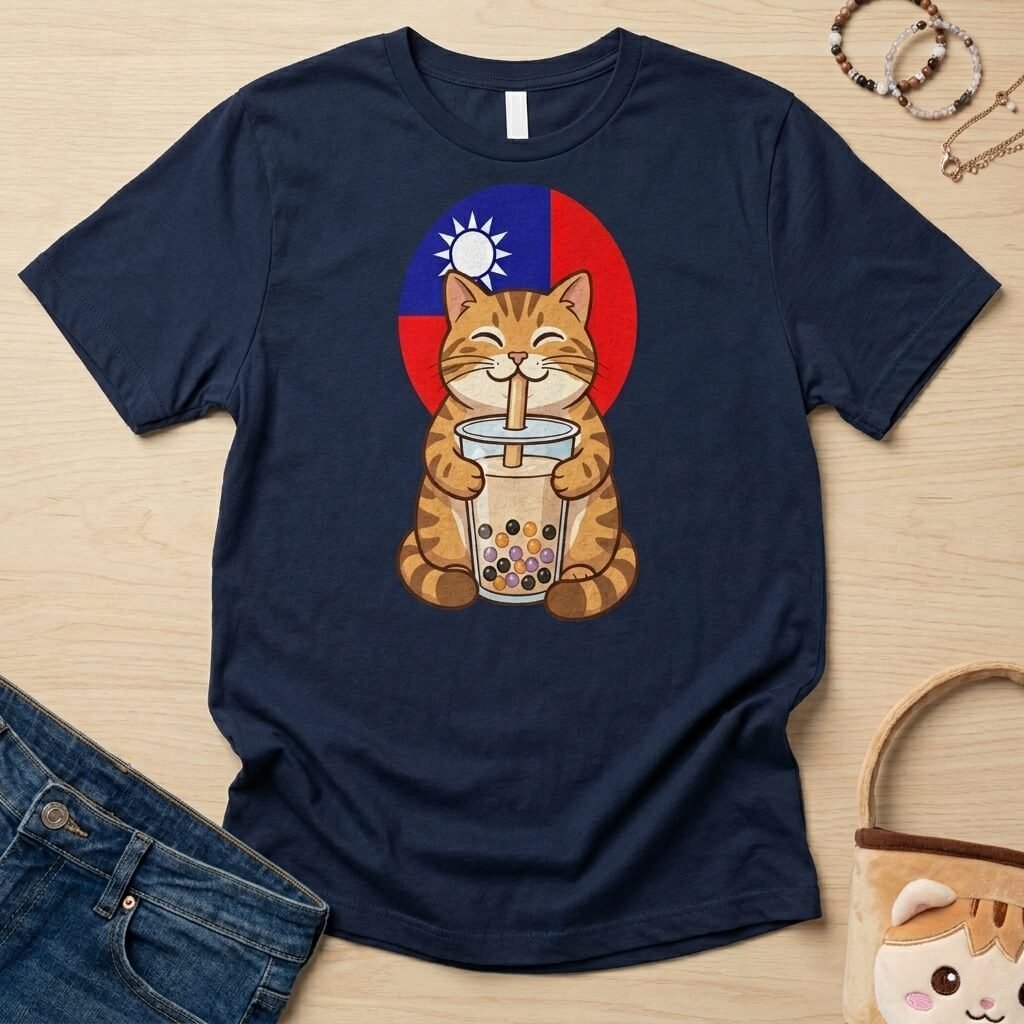
If reading about pineapple oolong and passionfruit jasmine has put you in a Taiwan-summer mood, we make merch for exactly this kind of feeling. Our Taiwan Merch shop stocks bubble tea, boba cat, and fruit-stand-themed graphic tees, mugs, and tote bags — wearable love letters to the island’s drink culture. The Boba Cat tee in particular has become a quiet favorite among diaspora kids who grew up sipping passionfruit green tea on their grandmother’s porch in Tainan.
Sip Taiwan Wherever You Are
Wear the island’s drink culture loud and proud. Our Boba Cat tee is the kawaii anthem for everyone who grew up — or fell in love — sipping passionfruit green tea on a hot Tainan afternoon.
Where to Drink the Best Fruit Tea in Taiwan
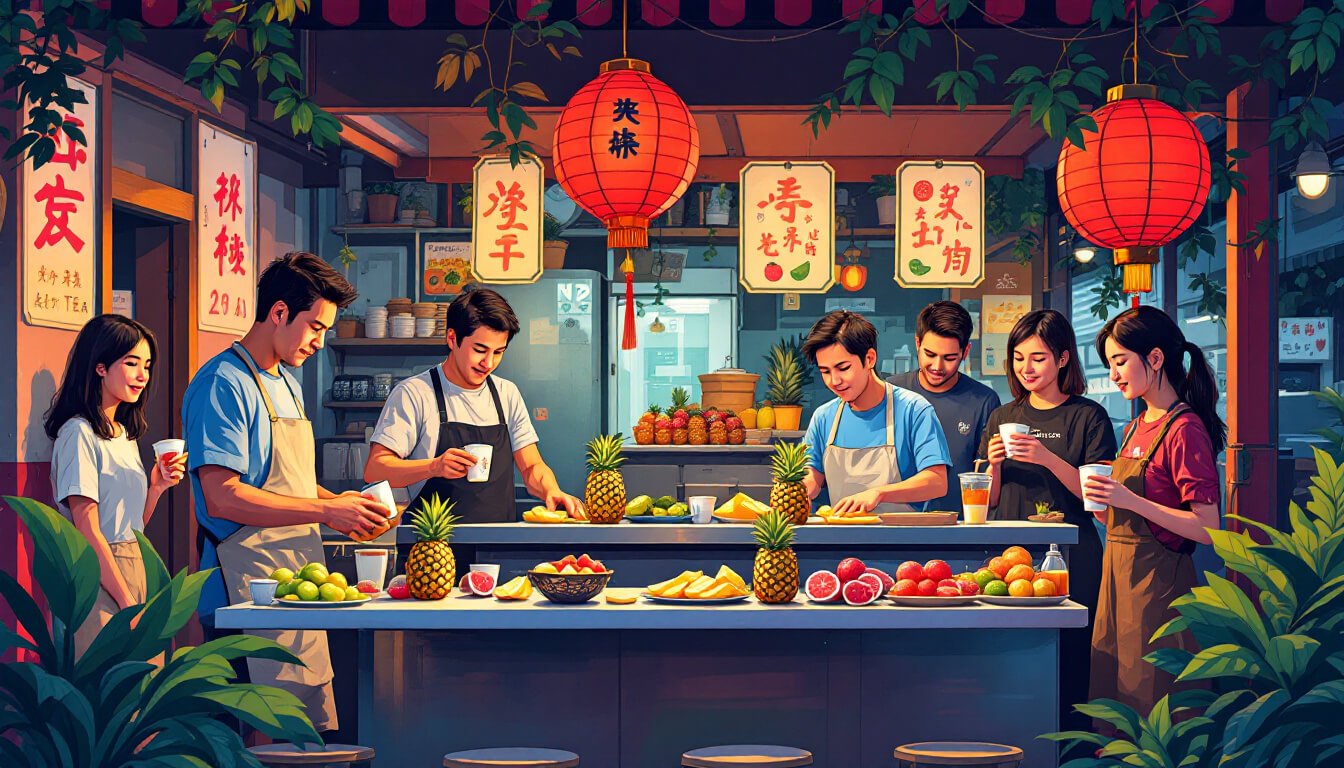
If you are going to make a pilgrimage, here is the geography of Taiwan’s fruit tea scene.
Tainan (台南) — The Spiritual Home
This is where the modern Taiwan fruit tea recipe was perfected. Yi Fang was founded in Tainan in 1994 and their original storefront still operates near the Confucius Temple. But beyond Yi Fang, Tainan’s old town is full of independent tea shops that have been doing fresh fruit tea for two generations — places where the owner remembers your order from the last time you visited five years ago. Walk the lanes around Shennong Street or Yongle Market in the late afternoon and follow your nose. Almost any shop with a stack of fresh pineapples on the counter will be good.
Taichung (台中) — Bubble Tea’s Hometown, Fruit Tea’s Cousin
The same city that birthed bubble tea also has a strong fruit tea scene, partly because Taichung sits at the gateway to Taiwan’s central fruit belt. The night markets — especially Fengjia — have dedicated fruit tea stalls that operate well past midnight. Order the pineapple oolong here. It is the one to beat.
Taipei (台北) — Modern Cafés and Heritage Stands
Taipei has both ends of the spectrum: hip third-wave tea cafés in Da’an and Xinyi that serve single-origin oolong fruit teas in stemmed glassware, and decades-old hole-in-the-wall fruit tea stands tucked behind night markets like Ningxia and Raohe. Don’t sleep on the older spots. The unmarked stand on a folding table next to a 7-Eleven is often serving the better drink.
Pingtung and Kaohsiung (屏東, 高雄) — Mango Country
If you are in the deep south during mango season (May through August), the mango fruit teas here are the best on the island. Pingtung grows most of Taiwan’s Aiwen mangoes, so you are drinking the freshest fruit possible. Many local shops grill the mango briefly before muddling it — the caramelization adds a smoky depth that is hard to find elsewhere.
Bringing Taiwan Fruit Tea Home: DIY Recipe and Buying Tips
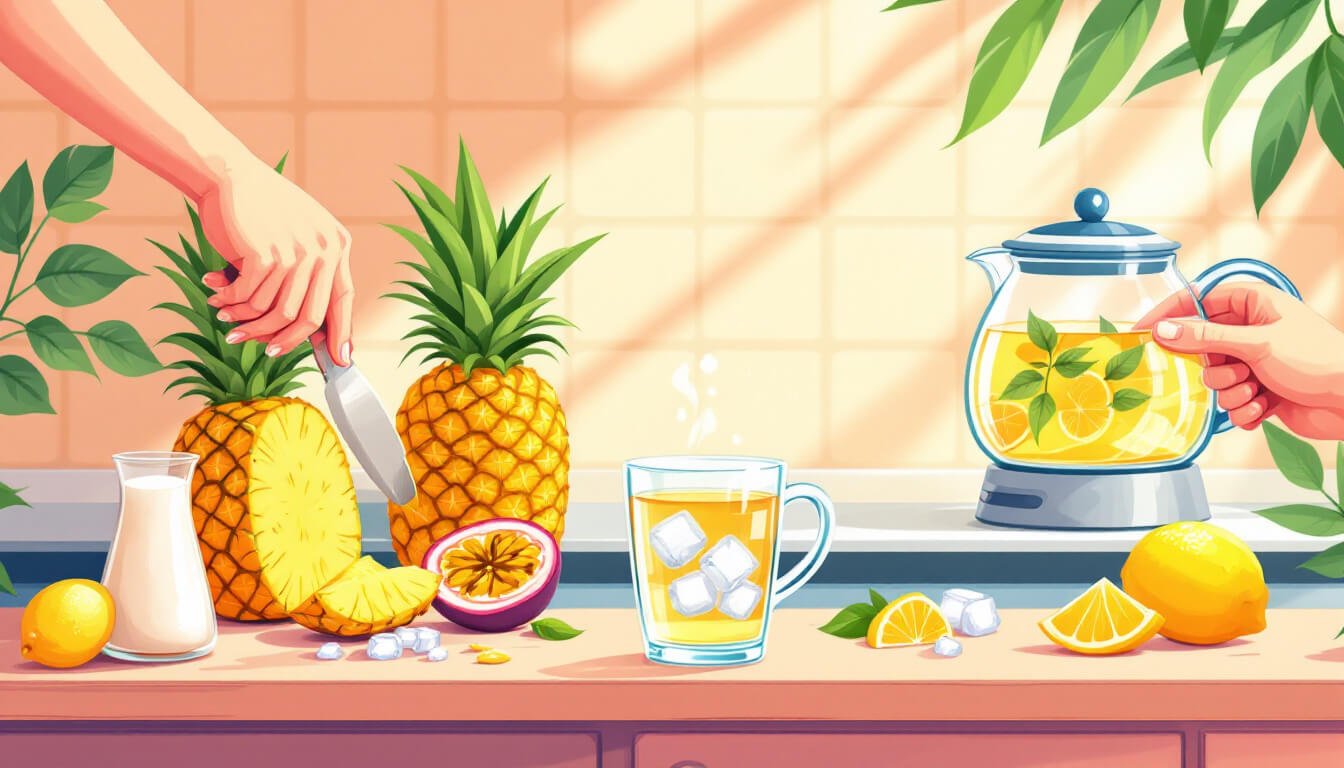
You don’t need a shop in Tainan to drink the real version. With a couple of practical shortcuts, you can build a credible Taiwan fruit tea at home.
The Basic Recipe (Pineapple Passionfruit, 1 Glass)
- 1 cup strong-brewed jasmine green tea, cooled (use loose leaf, 1 tsp per 6 oz, steeped 3 minutes at 175°F)
- 2-3 fresh pineapple slices, halved
- 1 fresh passionfruit, scooped pulp and seeds
- 2 tsp cane sugar syrup (or to taste — start light)
- 1 lemon wedge, squeezed
- Ice — regular fill
Method: muddle the pineapple gently at the bottom of a tall glass. Add the passionfruit pulp. Add ice to fill. Pour cooled tea over the ice. Drizzle the cane syrup. Squeeze the lemon. Stir with a long spoon. Drink immediately. Total time including tea cooling: about 12 minutes.
What to Source
- Tea leaves: Order direct from Taiwan if you can. Eco-Cha, Tea from Taiwan, and Floating Leaves all ship internationally. For everyday brewing, supermarket jasmine green works fine.
- Cane sugar syrup: The Filipino brand Carlos or any 1:1 cane sugar simple syrup you make at home (equal weights cane sugar and water, simmered until dissolved). Avoid corn syrup.
- Passionfruit: Frozen passionfruit pulp (the kind sold in Latin American grocery stores) is a workable substitute when fresh is out of season.
- Pineapple: Whole fresh pineapple every time. Canned will not give you the right texture.
If You Want to Skip the Cooking
Yi Fang ships internationally to several markets and operates physical storefronts across North America, Europe, Southeast Asia, and Oceania. Independent Tainan-founded brands like CoCo, KOI, and Bobii Frutii are also expanding globally. None will be exactly like sipping a fresh passionfruit green at a Tainan corner stand at 4 PM, but they are far closer than a typical American boba chain’s “fruit tea” — which is usually flavored syrup over black tea with zero fresh fruit involvement.
Frequently Asked Questions About Taiwan Fruit Tea
Is Taiwan fruit tea healthy?
Relatively, yes — at half-sugar or less. A standard 500ml cup of half-sugar passionfruit green tea runs roughly 120-150 calories, contains real vitamin C from the fresh fruit, and uses tea instead of dairy. Compared to a bubble milk tea (which can hit 400-500 calories per cup with pearls), it is the lighter option. Full sugar is another story.
Does Taiwan fruit tea have caffeine?
Yes, but less than you might think. A 500ml cup brewed with iced jasmine green has roughly 30-50mg of caffeine — about half a cup of brewed coffee. Oolong-based versions are slightly higher. Black-tea-based fruit teas (lychee, mango) sit at the top end.
Can you make Taiwan fruit tea hot?
Almost no one does. Fresh fruit doesn’t hold up well in hot tea — the acids brighten unpleasantly and the fruit cooks. Fruit tea is, by tradition and by physics, a cold drink. If a shop offers a “hot fruit tea,” they are likely using fruit syrup, not fresh fruit.
What’s the difference between Yi Fang and CoCo fruit tea?
Yi Fang is the purist’s choice — fresh fruit, no syrup, smaller menu, more expensive per cup. CoCo is more accessible — broader menu, lower price, mix of fresh and concentrate. Both originate in Taiwan. Both are legitimate. Yi Fang is closer to the southern Taiwanese original; CoCo is closer to a modern global chain.
When is fruit tea season in Taiwan?
Year-round, but the peak runs May through October — when passionfruit, pineapple, mango, lychee, and wax apple are all in season simultaneously. Winter fruit teas tilt toward citrus (kumquat, lemon, pomelo) and dried fruit blends. If you are visiting Taiwan specifically to drink fruit tea, target July or August.
Final Thoughts: Why Taiwan Fruit Tea Deserves Its Own Spotlight
Bubble tea owns the global imagination, and that is fine — Taiwan’s milk tea export deserves the attention. But anyone who spends real time on the island figures out pretty quickly that Taiwan fruit tea is the drink locals actually reach for on a 33-degree afternoon. It is older than boba, lighter on the body, brighter on the palate, and more honestly tied to the agricultural heritage that makes Taiwan such an unusually delicious country.
If you only ever ordered a passionfruit green tea once, at a streetside shop in Tainan, with the humidity at 88 percent and a pineapple-slicing teenager working through a stack of fresh fruit behind the counter, you would understand why Taiwanese people get a little misty-eyed about it. Until you can make that trip — order it at your nearest Yi Fang, try the home recipe above, and respect the drink for what it is: a beverage that has been quietly waiting decades for the rest of the world to catch up.
Taiwan, In Your Inbox
Fresh stories, seasonal fruit drops, night-market deep dives, and the occasional discount code from Taiwan Merch. One email a week. Unsubscribe whenever.
Grab a Free Taiwan Sticker!
Drop your email and we’ll send you a limited-edition Taiwan sticker — plus insider access to new merch drops and island vibes.
No spam. Unsubscribe anytime.