Did You Know? Taiwan’s Best Tea Grows Above the Clouds — The Secret of Gao Shan Cha (高山茶)
Most countries grow tea in low-altitude fields. Taiwan doesn’t care about most countries.
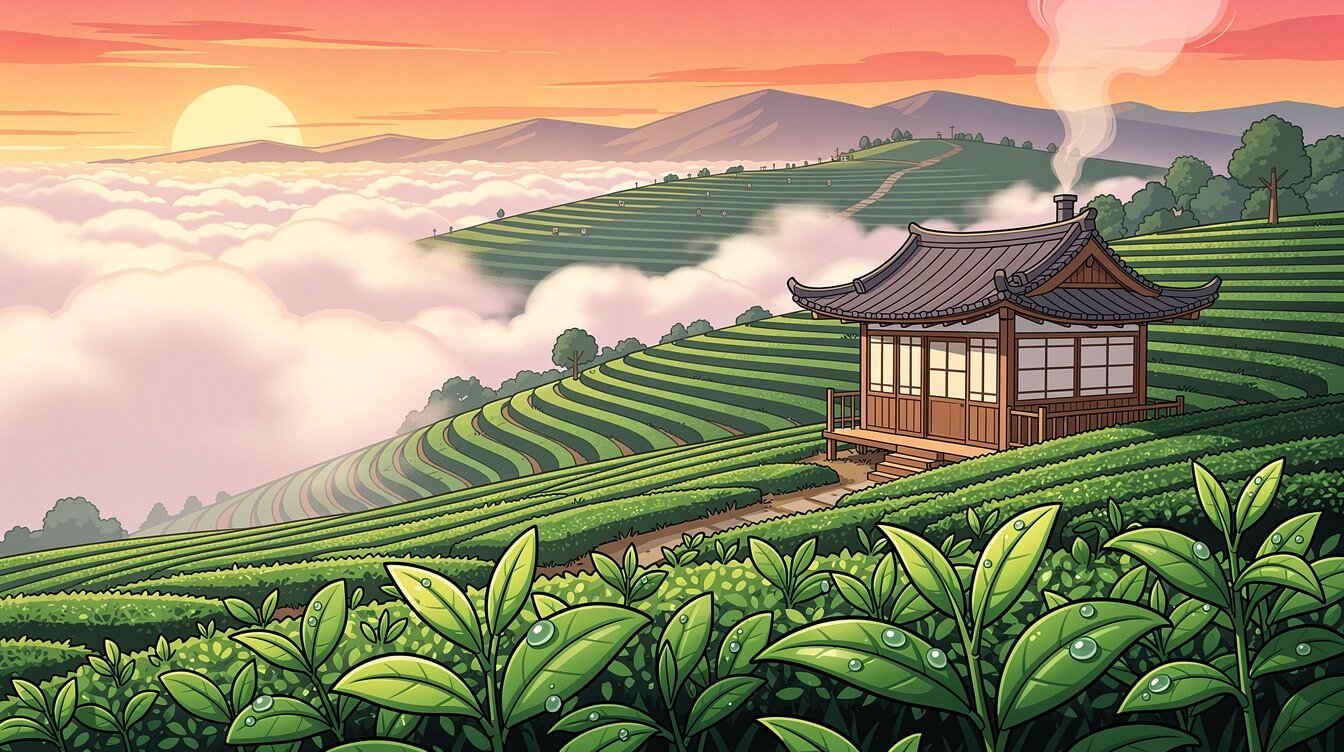
Some of Taiwan’s finest tea — known as Gao Shan Cha (高山茶), or High Mountain Tea — grows above 1,000 meters elevation, where clouds roll in daily, nights drop sharply cold, and most plants struggle to survive. That difficult environment is exactly what makes it extraordinary.
Why Does Altitude Change the Taste?
It comes down to stress — the good kind. At high elevation, the tea plant grows more slowly because of cooler temperatures and lower oxygen levels. That slower growth gives the leaves more time to develop complex flavor compounds. Meanwhile, the daily cloud cover acts as natural shade, reducing UV exposure and boosting the production of L-theanine — the amino acid responsible for tea’s smooth, umami-like sweetness and calm alertness.
The result? High mountain oolongs from Taiwan tend to be floral and creamy with minimal bitterness — a profile that surprises first-time tasters expecting something sharp and astringent.
The Famous Growing Regions
- Alishan (1,200–1,800m) — Chiayi County, the most famous. Morning mist, rich red soil, classic floral oolong. If you’ve tried Taiwanese high mountain tea, it was probably from here.
- Shanlinxi (1,600m) — Nantou County, known for a lighter, more vegetal character.
- Li Shan (梨山, 2,000m) — Taichung, small-batch ultra-premium production.
- Da Yu Ling (大禹嶺, 2,600m) — Among the highest commercial tea gardens on earth. Extremely limited harvests fetch prices per hundred grams that rival fine wine.
Two Varieties Worth Knowing
Qing Xin Oolong (青心烏龍) is the classic cultivar — light, floral, with a delicate honey finish. Jin Xuan (金萱), often called Milk Oolong, has a naturally creamy, buttery note that many people mistake for added flavoring. (It isn’t. That’s just what the plant does.)
A Quick History Note
Taiwan’s tea exports really took off in 1869 when Scottish merchant John Dodd shipped Formosa Oolong directly to New York — one of the first times Taiwanese tea reached a Western market under its own name. Today, most of the best stuff stays on the island. The domestic premium market has made it nearly impossible to find Da Yu Ling outside Taiwan without paying a steep import premium.
The takeaway: If you’re visiting Taiwan, pick up a small tin of Alishan Qing Xin Oolong from any reputable tea shop. It’s the fastest way to understand what all the fuss is about — and a souvenir that improves with every cup. Speaking of Taiwan souvenirs that tell a real story, our Taiwan-themed merch brings that same cultural pride into everyday wearables.
Planning a trip through Chiayi on your way to Alishan? Our Chiayi travel guide covers everything from the tea plantations to the city’s underrated food scene.

Grab a Free Taiwan Sticker!
Drop your email and we’ll send you a limited-edition Taiwan sticker — plus insider access to new merch drops and island vibes.
No spam. Unsubscribe anytime.