Taiwan vs Thailand: Which Should You Visit? A 2026 Comparison of Visas, Weather, Food and Costs
Taiwan vs Thailand: two of Asia’s favorite trips, two names that sound close enough that a few of us have had a package rerouted to Bangkok. If you’re trying to pick between them for your next trip, this guide skips the vague “both are amazing” verdict. It puts the two side by side on the things that actually change your plans in 2026: entry rules (Thailand just halved its visa-free stay), the weather month by month, food, costs, getting around, and etiquette. Then it covers how to do both in one trip, because they’re only about four hours apart by air.
Quick bias check: we’re a Taiwan shop, so you know where our heart is. We’ve tried to be fair anyway. Thailand wins some of these rounds, and we’ll say so.
Taiwan vs Thailand at a Glance
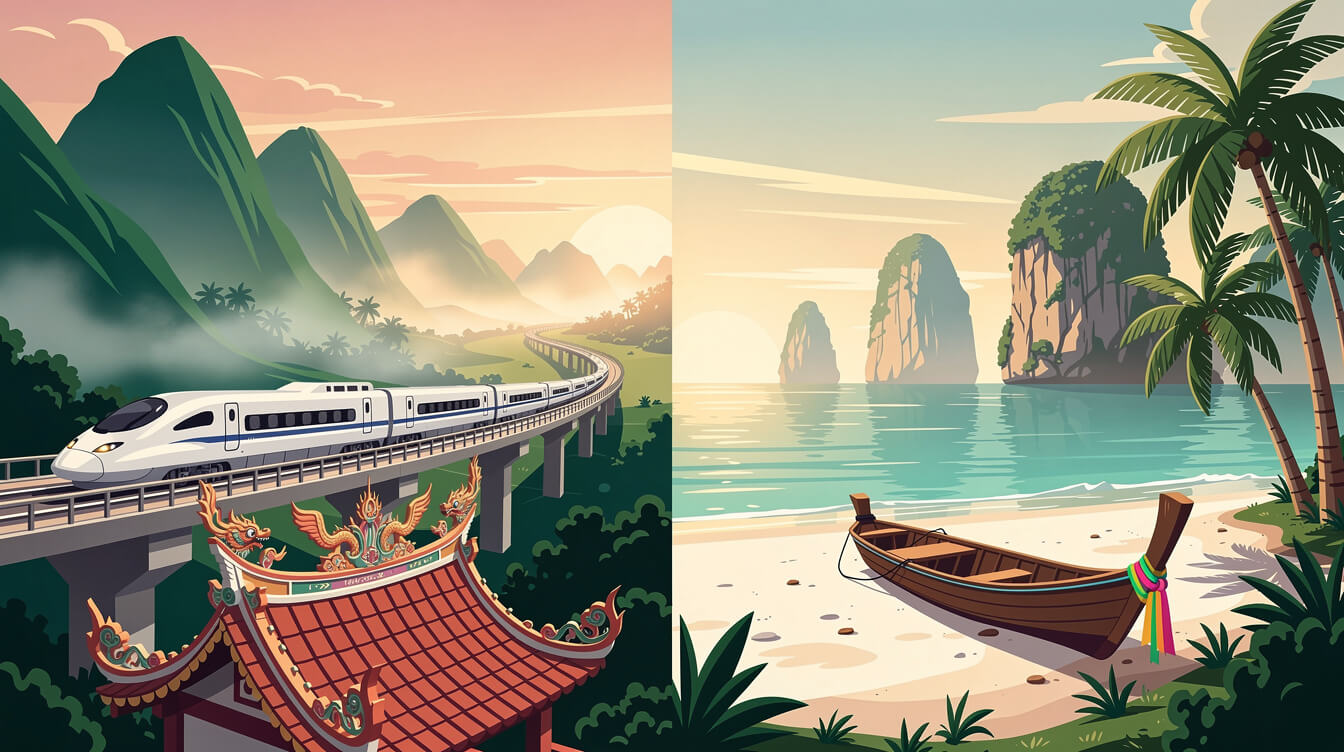
Start with scale. Thailand covers roughly 513,000 square kilometers, about fourteen times the size of Taiwan (around 36,000 km²). Thailand’s civil registry counted about 65.8 million people at the end of 2025. Taiwan’s interior ministry counted about 23.2 million in mid-2026. Put simply, Thailand is a big country with a lot of different regions. Taiwan is a compact, mountainous island where you can wake up in Taipei, eat lunch in Tainan and be back for dinner.
That difference in size shapes every other comparison. In Thailand you choose a region: Bangkok, the north around Chiang Mai, or the islands of the Andaman Sea or the Gulf. In Taiwan you can see most of the highlights in a two-week loop.
| Taiwan | Thailand | |
|---|---|---|
| Visa-free stay (US passport) | 90 days | 30 days (since Sept 15, 2026) |
| Online arrival form | TWAC, within 3 days of arrival | TDAC, within 3 days of arrival |
| Currency (mid-Oct 2026) | ~32.4 TWD per US$1 | ~33.5 THB per US$1 |
| Power | 110V, US-style plugs | 220V, mixed sockets |
| Best months | Oct–Dec, Mar–Apr | Nov–Feb |
| Highest peak | Yushan, 3,952 m | Doi Inthanon, 2,565 m |
| Beaches | Good (Kenting, outer islands) | World-class |
| Signature trip | Night markets, mountains, trains | Islands, temples, nightlife |
“Wait, Taiwan or Thailand?”
Ask anyone in the Taiwanese diaspora: at some point someone has heard “Taiwan” and answered with a story about their Phuket honeymoon. The two are different countries with different languages, scripts, food and histories. Thai is its own language with its own alphabet. Taiwan mostly speaks Mandarin, written in traditional Chinese characters, plus Taiwanese Hokkien, Hakka and the Indigenous languages. A Taiwan vs Thailand trip comparison really is apples and mangoes. Both are sweet, and they taste nothing alike.
Taiwan vs Thailand Entry Rules in 2026: The 30-Day Change

Most comparison articles still say Thailand gives you 60 days visa-free. As of this fall, that’s out of date. Regulations published in Thailand’s Royal Gazette on August 31, 2026 repealed the 60-day visa exemption scheme that started in July 2024. From September 15, 2026, US, UK, Canadian and Australian passport holders (along with travelers from the other countries on the list) get a 30-day visa-free stay. The Tourism Authority of Thailand’s announcement also limits land-border entries on this exemption to two per calendar year for most nationalities. The new exemption covers tourism only, where the old one also covered short business trips. If you want more time, Thai immigration offices can extend a stay once, by up to 30 days, for a fee.
Taiwan hasn’t changed: US passport holders still get up to 90 days visa-free. You need a passport valid for at least six months from arrival and an onward or return ticket. Our Taiwan visa guide covers the other passports and edge cases.
For a slow trip, that’s the biggest practical difference between Taiwan and Thailand this year. Three months in Taiwan needs no paperwork beyond a passport. A month and a half in Thailand now means a trip to an immigration office.
Both countries now want a form before you fly
- Taiwan: the paper arrival card was retired on October 1, 2025. Fill in the free Taiwan Arrival Card (TWAC) at twac.immigration.gov.tw within three days before you arrive. Our TWAC cheat sheet walks through every field.
- Thailand: the Thailand Digital Arrival Card (TDAC) has been mandatory since May 1, 2025. It’s also free, and it’s also submitted within the three days before arrival, at tdac.immigration.go.th.
Copycat sites charge “processing fees” for both forms. Neither government charges anything, so if a site asks for a card number, close the tab.
Two rules that catch travelers out
Vapes: both countries ban them, and both enforce it. Taiwan’s amended Tobacco Hazards Prevention Act, in force since March 2023, bans unapproved e-cigarettes, and customs confiscates them on arrival. Thailand has banned e-cigarettes since 2014, and tourists have been fined and arrested over them. Leave the vape at home for either trip.
Cannabis: if your idea of Thailand comes from the 2022–2024 dispensary boom, it’s out of date. Since late June 2025, cannabis flower in Thailand has been prescription-only, and tourists can’t buy or carry it without a prescription from a licensed Thai practitioner. In Taiwan, cannabis is a scheduled narcotic and penalties are severe. The short version is the same for both: don’t.
One more thing to watch: Thailand has approved a 300-baht tourist entry fee for air arrivals in principle several times since 2023, but as of this writing it still isn’t being collected. Check before you fly. It may finally have started.
Weather: When Taiwan and Thailand Are Each at Their Best
The usual Taiwan vs Thailand line is “both are hot.” Look at the official climate normals and you’ll find they peak in slightly different months, and you can plan around that. The figures below are 1991–2020 averages from Taiwan’s Central Weather Administration and from Thailand’s Meteorological Department/NOAA records for Bangkok.
| Month | Taipei avg temp | Taipei rain | Bangkok avg temp | Bangkok rain |
|---|---|---|---|---|
| January | 16.4°C / 62°F | 91 mm | 27.4°C / 81°F | 24 mm |
| April | 22.3°C / 72°F | 153 mm | 30.7°C / 87°F | 93 mm |
| July | 29.9°C / 86°F | 226 mm | 29.2°C / 85°F | 190 mm |
| September | 27.7°C / 82°F | 315 mm | 28.6°C / 83°F | 336 mm |
| October | 24.6°C / 76°F | 150 mm | 28.4°C / 83°F | 289 mm |
| November | 21.9°C / 71°F | 83 mm | 28.4°C / 83°F | 45 mm |
| December | 18.2°C / 65°F | 89 mm | 27.3°C / 81°F | 12 mm |
Three things stand out:
- Taiwan has a real winter. Bangkok doesn’t. Taipei averages 16°C in January, which is light-jacket weather, and the mountains get properly cold. Bangkok barely moves from the high 20s all year. If you want beach heat in January, Thailand wins easily.
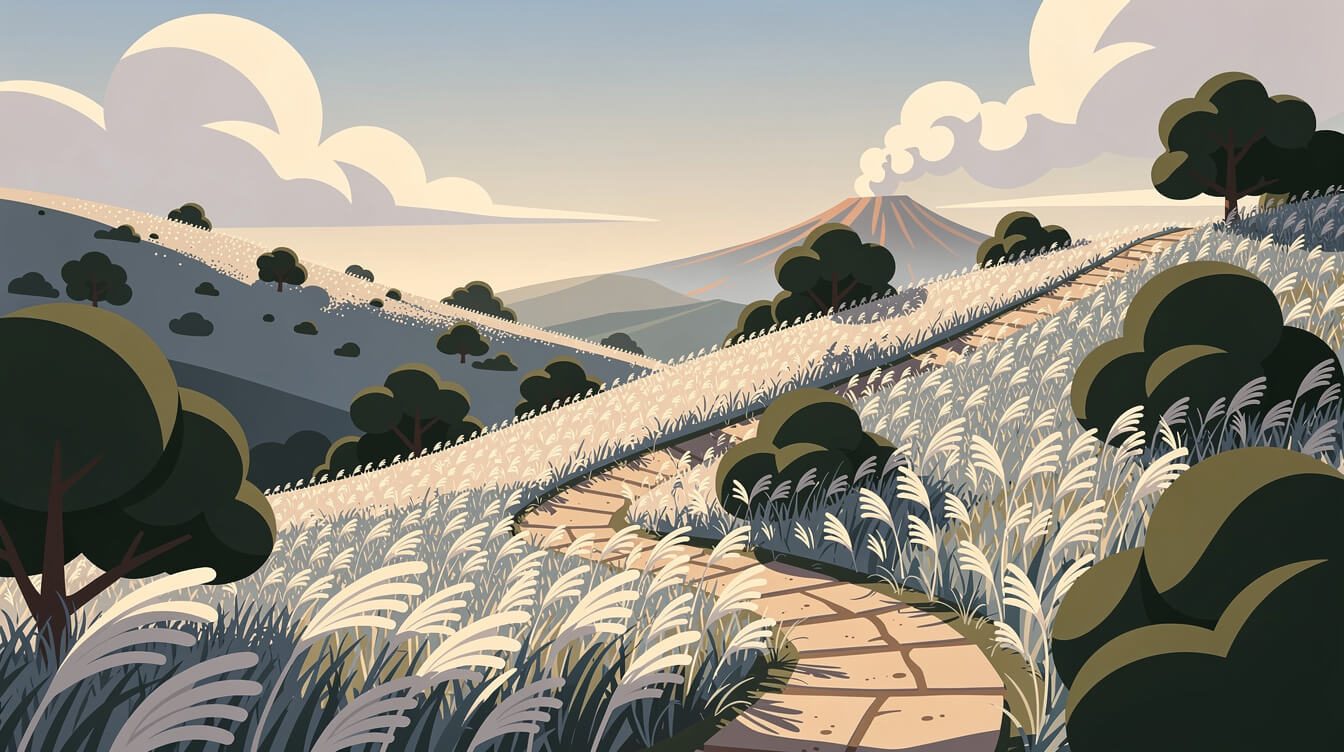
- October favors Taiwan. Bangkok’s October still brings close to 290 mm of rain, nearly double Taipei’s. Northern Taiwan’s autumn is dry and clear and is when Yangmingshan’s silver grass turns the hills white.
- Late summer is rough in both. September is the wettest month in both cities. Taiwan’s typhoon risk peaks from July to September (see our typhoon season guide), while Thailand is in its southwest monsoon.
Southern Taiwan follows a different pattern from Taipei. Kaohsiung gets under 30 mm of rain a month from November through February, and Kenting is nearly as dry from December. That makes the south of the island a good fit for exactly the months Thailand is at its best. One catch on the Thai side: the Gulf islands such as Koh Samui get their heaviest rain late in the year, so match your island to your month.
The verdict on weather
Want guaranteed warmth from December to February? Thailand. Want hiking, cool mornings and fewer crowds from October to December, or in spring? Taiwan. November is the month where both work. Our Taiwan in December guide goes deeper into that window.
Food: Taiwan vs Thailand on a Plate
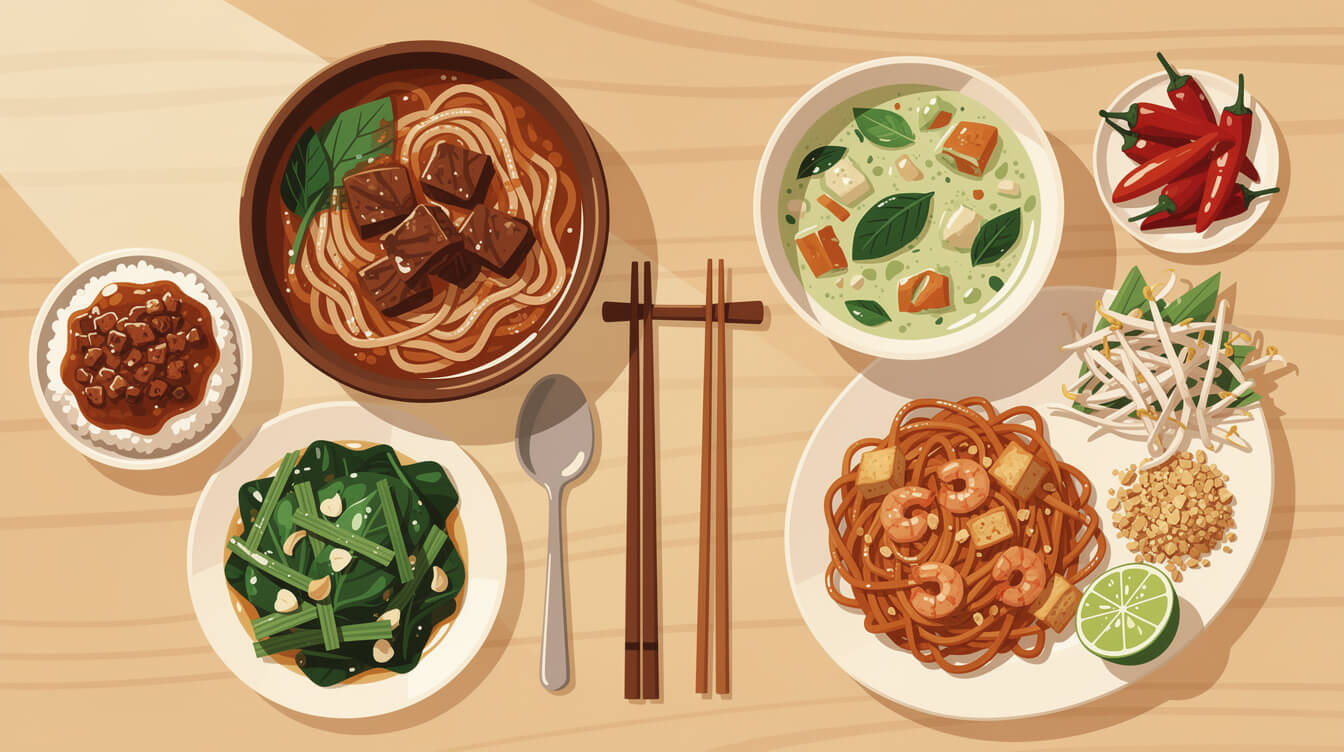
This is the round people argue about most, and it really comes down to taste. Thai food is world-famous for good reason. It’s built on contrast: sour lime, salty fish sauce, palm sugar and fresh chili all in one bite, with herbs (Thai basil, lemongrass, galangal, kaffir lime) doing the heavy lifting. Green curry, tom yum, som tam and a proper street-side pad krapow will reset your idea of what “spicy” means.
Taiwanese food goes in a different direction, and a lot of comparison pages get this wrong when they call it “pretty spicy.” Most of it isn’t. It’s savory, slow-braised, soy-and-rice-wine cooking, often a little sweet, built on texture: the springy bite Taiwanese call Q, from tapioca pearls to fish balls. The big names are beef noodle soup, lu rou fan (braised pork rice), gua bao, oyster omelets, scallion pancakes, and the whole bubble tea universe that started here. Real heat shows up in specific places like mala hot pot and chili-oil wontons, not as a default.
Night markets vs street stalls
Both countries do great street food, but the setups differ. Thai street food is everywhere, all day. Taiwan concentrates its street food in the evening night markets, hundreds of them around the island, where one evening can cover a dozen snacks. If you love grazing, Taiwan’s night markets are a highlight of Asian travel. If you love sitting down to one perfect, fiery plate, Thailand probably edges it.
- Vegetarians: Taiwan is unusually easy thanks to its Buddhist vegetarian tradition and clear labeling. Our vegan Taiwan guide explains the symbols. In Thailand, fish sauce and shrimp paste turn up in many dishes, so ask for jay food.
- Spice-averse travelers: Taiwan is the safer bet. In Thailand, “mai phet” (not spicy) helps, though “a little spicy” is relative.
For a full tour of the island’s eating, start with our Taiwan street food guide.
Costs: Is Taiwan or Thailand Cheaper?
Overall, Thailand is cheaper, but the gap depends on what you’re paying for. The two currencies sit close to each other in mid-October 2026 (about 32.4 Taiwan dollars and 33.5 baht to the US dollar), so the price on the menu gives you a rough sense of the comparison.
Where Thailand is clearly cheaper: accommodation, especially guesthouses and mid-range beach resorts; massages and spa treatments; and island-hopping on a backpacker budget. Thailand’s tourism industry is huge and very competitive, and prices reflect that.
Where Taiwan holds its own or wins: getting around and day-to-day food. Taiwan’s metro, buses and trains are cheap for what you get, and one stored-value card works across most of them (see our EasyCard guide). A bowl of braised pork rice or a night-market snack still costs very little. You’ll also spend less on scams and price haggling. Taiwan has very little tourist pricing, and nobody tries to take you to their cousin’s gem shop.
Where Taiwan costs more: hotels in Taipei, and anything involving a car. Budget for higher accommodation costs than in Bangkok.
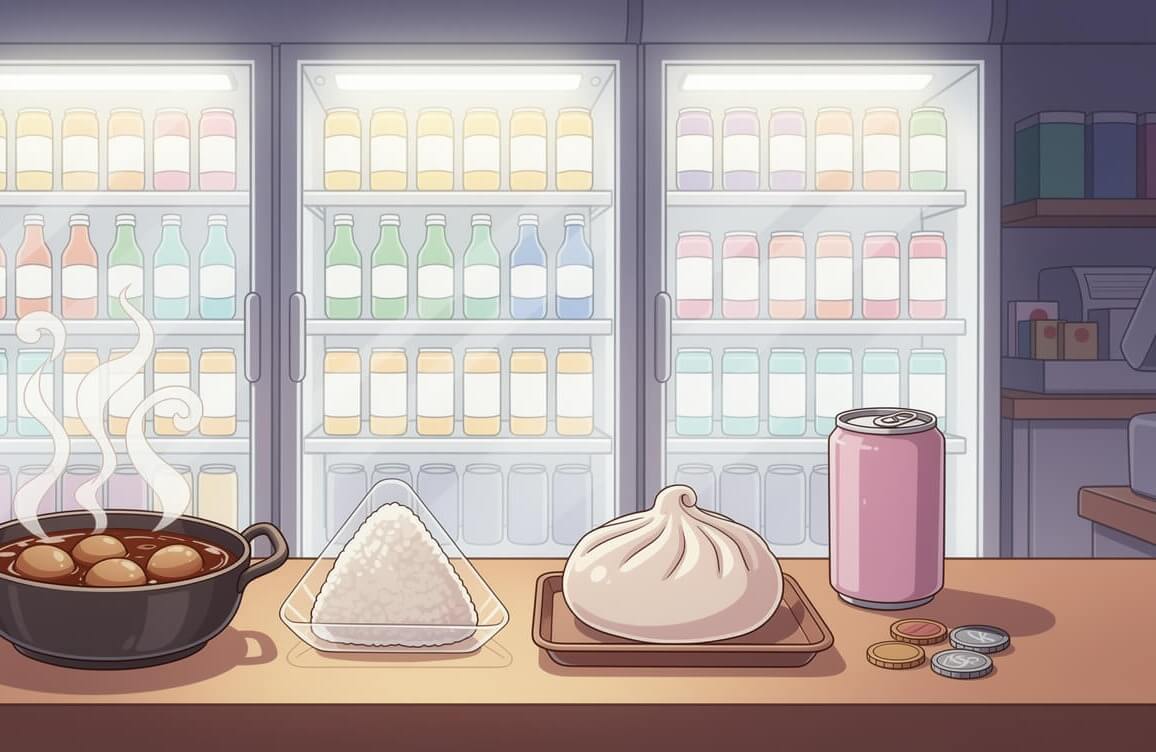
Both countries are also convenience-store nations. In Taiwan the 7-Eleven is practically a public utility: you can pay bills, print documents and buy a decent dinner there (our 7-Eleven Taiwan guide explains). Grab a tea egg and a canned coffee, and you’ve had the classic Taiwanese convenience-store breakfast. Mr Brown canned coffee has been a fixture of those fridges for decades, and if that can brings back memories, our Mr Brown Coffee Taiwan Vintage Logo T-Shirt is one of the most popular things we sell.
Tipping and service charges
Neither country has a US-style tipping culture. In Taiwan, tipping isn’t expected. Many sit-down restaurants add a 10% service charge to the bill, and that’s it. In Thailand, small tips for massage therapists, guides and restaurant staff in tourist areas are common and appreciated, but not mandatory. For cash habits in Taiwan, our New Taiwan Dollar guide has the details.
Getting Around: High-Speed Rail vs Tuk-Tuks and Island Ferries
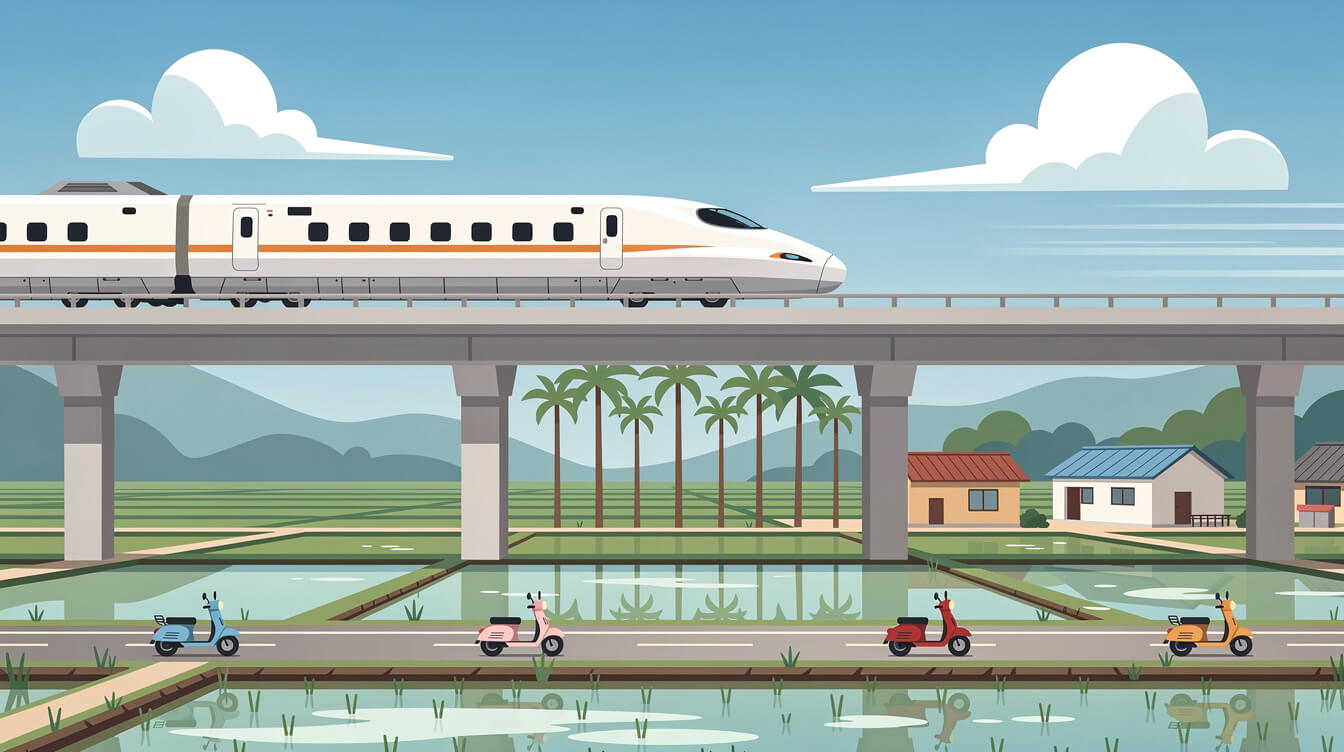
Taiwan is one of the easiest places in Asia to travel independently. The high-speed rail runs down the west coast from Taipei to Kaohsiung in about an hour and a half (our HSR route guide has fares and stops). The conventional rail network loops the whole island, and the Taipei metro is clean, bilingual and famously orderly. Stations and trains use English signage, and Taipei MRT announcements play in four languages. Our Taipei MRT guide decodes the map.
Thailand’s transport is more of a patchwork, and it can be more fun for it. Bangkok has the BTS Skytrain and MRT, ride-hailing apps are everywhere, and long distances are usually covered by cheap domestic flights, overnight trains or buses. To reach the islands you’ll combine ferries, longtail boats and a bit of patience. Tuk-tuks are an experience, so agree the fare before you get in.
Plugs are a small but useful difference. Taiwan runs on 110V with US-style sockets, so American chargers just plug in. Thailand runs on 220V with mixed socket types. Most phone and laptop chargers handle both voltages, but check hair dryers and anything with a heating element.
The verdict on getting around
In the Taiwan vs Thailand transport round, first-timers, solo travelers and anyone nervous about navigating a new country will find Taiwan easier. For island-hoppers who enjoy a bit of chaos, Thailand.
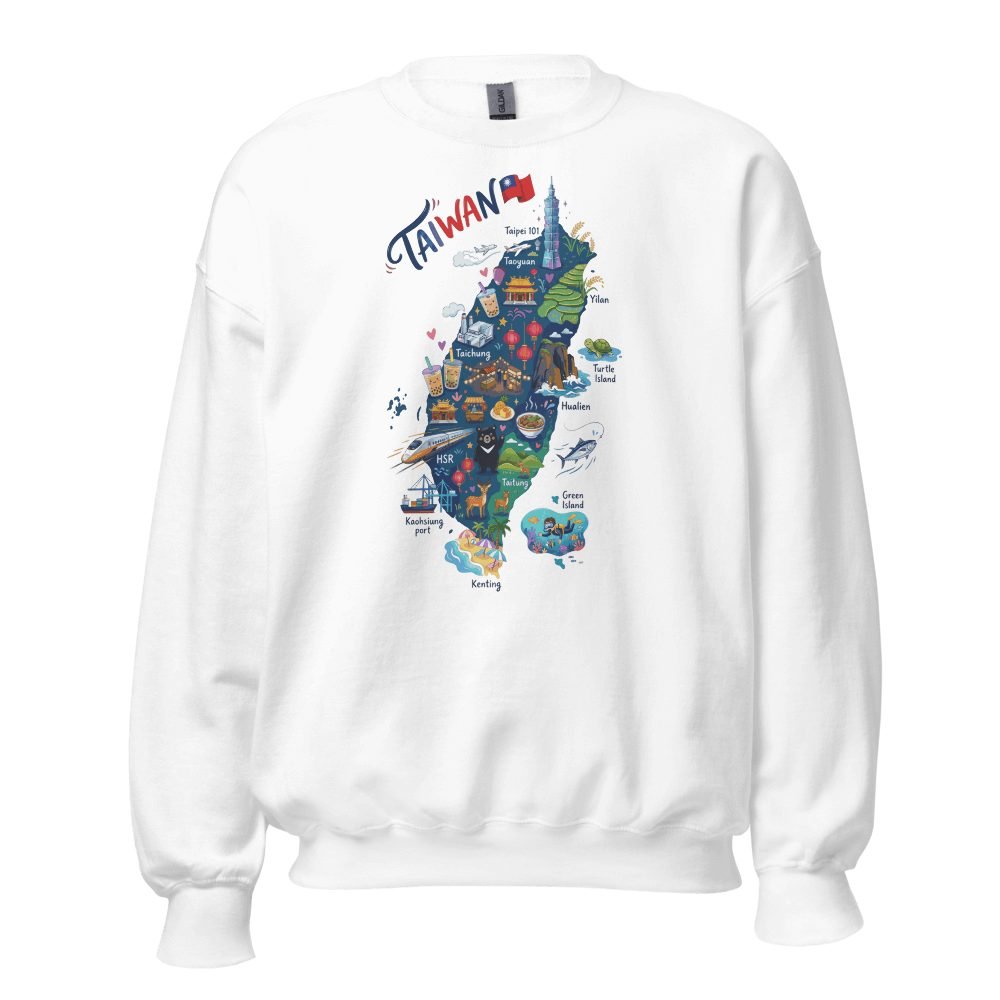
Taiwan, Not Thailand. Here’s the Map.
Tired of explaining which island you mean? Our illustrated Taiwan map sweatshirt puts the whole island on your chest, night markets and mountains included. It’s warm enough for a January evening in Taipei, too.
Culture, Language and Etiquette
Thailand is overwhelmingly Theravada Buddhist, and its temples, with their gilded spires, saffron-robed monks and morning alms rounds, are a big part of why people visit. Etiquette there is about respect: cover your shoulders and knees at temples, take your shoes off where asked, never point your feet at a Buddha image or touch someone’s head. Thailand also has strict laws protecting the monarchy, so treat the royal family with respect and leave the jokes out.
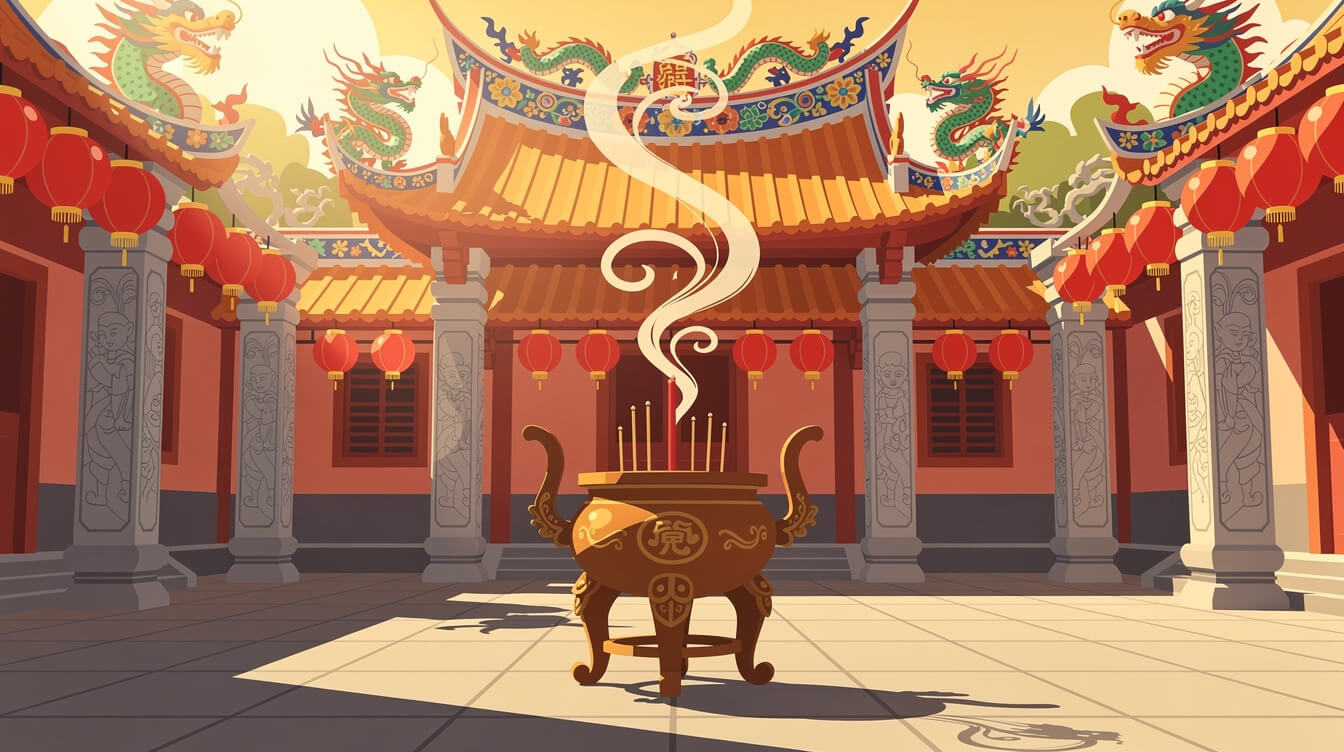
Taiwan’s religious life looks very different. It’s a blend of folk religion, Buddhism and Taoism, often in the same temple. You’ll see people baibai (pray with incense), throw red crescent moon blocks to ask the gods a question, and crowd in for a deity’s birthday parade with firecrackers and drums. Our Taiwan temple culture guide explains what’s happening. Visitors are welcome, dress codes are relaxed, and the main rules are: don’t block worshippers, walk in through the right-hand door, and don’t touch the offerings.
Language
English is more widely spoken in Thailand’s tourist hubs, simply because tourism there is so big. In Taiwan, fewer people speak English fluently, but signage is excellent, younger people often speak some, and people are kind and patient when you point at a menu. Our guide to what language is spoken in Taiwan covers what you’ll hear on the street. A few words go a long way in either country: xièxie (thank you) in Taiwan, khop khun (with khrap or kha) in Thailand.
The everyday feel
Travelers who’ve been to both tend to describe the difference the same way. Thailand is relaxed, sunny and built for visitors. Taiwan is orderly, safe and quietly welcoming, with queues at the MRT, trash trucks that play classical music, and strangers who’ll walk you to the right bus stop. Neither is better. They’re different moods.
Beaches, Mountains and Nightlife: Which Trip Do You Want?
Here’s where your answer probably lands.
- Beaches and island life: Thailand, easily. The Andaman coast and the Gulf islands are why Thailand is famous. Taiwan has good beaches (Kenting, Penghu, Green Island; see our Taiwan beach guide), but nothing on Thailand’s scale.
- Mountains and hiking: Taiwan, easily. More than 200 Taiwanese peaks top 3,000 meters, and Yushan (3,952 m) is taller than anything in Thailand by more than a kilometer. One note: Taroko Gorge is only partly open after the 2024 earthquake. Our Taroko guide tracks what’s accessible.
- Nightlife: Thailand. Bangkok and the islands go big. Taiwan’s nightlife is mostly night markets, KTV, craft-beer bars and late-night snacks.
- Food grazing, tea and cafés: Taiwan. From oolong tea farms to third-wave coffee in old Japanese-era houses.
- Temples and history: a tie, in very different styles.
Can You Do Both? Combining Taiwan and Thailand in One Trip

Yes, and it works better than most combinations in Asia. Nonstop flights between Taipei (TPE) and Bangkok (BKK) take a little over four hours. EVA Air, China Airlines and Thai Airways fly into Suvarnabhumi, and budget carriers such as Thai AirAsia and Thai Lion Air use Don Mueang (DMK).
A simple two-week framework:
- Days 1–7, Taiwan: Taipei and the north coast, then the HSR south to Tainan and Kaohsiung. Our Taiwan trip planner has itinerary options.
- Day 8: fly Kaohsiung or Taipei to Bangkok.
- Days 9–14, Thailand: Bangkok for two or three nights, then the islands (in the dry-season months) or Chiang Mai.
Go Taiwan-first in November or December. You’ll get cool, clear weather for city walks and hikes, then finish warm on a Thai beach. Remember the two separate arrival forms (TWAC and TDAC), each due within three days of landing, and the new 30-day limit on the Thailand leg.
Taiwan vs Thailand: Frequently Asked Questions
Is Taiwan cheaper than Thailand?
Generally, no. Thailand is cheaper overall, mostly because accommodation and services cost less. Taiwan is good value for food and public transport, and you’ll rarely be overcharged as a tourist, but hotels in Taipei cost more than in Bangkok.
Is Taiwan the same as Thailand?
No. They’re separate places about 2,500 km apart, with different languages (Mandarin and Taiwanese Hokkien vs Thai), different writing systems, different cuisines and different histories. The names just sound similar in English.
How long can Americans stay in Thailand without a visa now?
Thirty days, for tourism, from September 15, 2026, when Thailand replaced its 60-day exemption. You can apply once at a Thai immigration office to extend by up to 30 days. Taiwan still allows US citizens 90 days visa-free.
Which is better for first-time travelers in Asia: Taiwan or Thailand?
Thailand is easier if you want a well-worn tourist trail and English everywhere. Taiwan is easier if you want to travel independently on excellent public transport in a very safe, organized setting. In the Taiwan vs Thailand question for first-timers, it depends on whether you’d rather have a lot of help or a lot of independence.
What is the best month to visit both Taiwan and Thailand?
November. Taipei averages about 22°C with around 83 mm of rain, and Bangkok has moved into its dry season with about 45 mm. December also works, especially if your Taiwan days are in the drier south.
Do I need an arrival card for Taiwan and Thailand?
Yes, for both, and both are online. File Taiwan’s TWAC and Thailand’s TDAC on the official government sites within three days before each arrival. Both are free.
Final Thoughts: Taiwan or Thailand?
If you want beaches, warmth from December to February and the best-developed tourist trail in Asia, go to Thailand, and plan around this year’s 30-day visa-free limit. If you want mountains, night markets, cool autumn hikes, trains that run on time and a place where you can comfortably wander alone at midnight, go to Taiwan. You also get three months without a visa.
Our honest advice for the Taiwan vs Thailand question: you don’t have to choose. They’re four hours apart, their best seasons overlap in November, and seeing both on one trip shows you two very different sides of Asia. Just don’t mix up the names at immigration.
Planning the Taiwan half? Start with our 2026 Taiwan trip planner, and save the arrival card cheat sheet for three days before you fly.
A Postcard From Taiwan, Every Week
Travel tips, entry-rule updates, food deep dives and the stories behind Taiwan, straight to your inbox. No spam, unsubscribe anytime.

Grab a Free Taiwan Sticker!
Drop your email and we’ll send you a limited-edition Taiwan sticker — plus insider access to new merch drops and island vibes.
No spam. Unsubscribe anytime.