Things to Do in Kaohsiung City Taiwan: The Neighborhood-by-Neighborhood Guide to Taiwan’s Reinvented Port City (2026)
Kaohsiung is the city most Taiwan first-timers skip — and the one Taiwan-obsessed return visitors fall hardest for. For most of the 20th century, this was the island’s industrial muscle: petrochemical refineries, the world’s third-busiest container port, smokestacks competing with mountain views. Then, sometime around 2018, the whole place flipped. Old warehouses became Asia’s coolest contemporary art district. The Love River got cleaner than Tamsui in Taipei. A radical white concrete swoop went up that became the largest single-roof performing arts center on Earth. The 85 Sky Tower stopped being a punchline and started being a postcard.
If you’re searching for the best things to do in Kaohsiung city Taiwan, you’re going to find a lot of flat lists of attractions. This isn’t that. Kaohsiung sprawls across 12 districts, and what you actually want is a map of where to be on each day so you’re not crisscrossing the city on the MRT for two hours just to eat a bowl of noodles. So we’ve organized this guide neighborhood by neighborhood — the way you’ll actually move through the city — with a final run at the food scene, day-trip Buddhas, and the FAQs that the operator gets from operator nieces and nephews every time they fly down here.
Buckle up. Kaohsiung deserves at least three days, and by the end of this guide you’ll see why.
Yancheng and Pier-2: The Harbor Reinvention
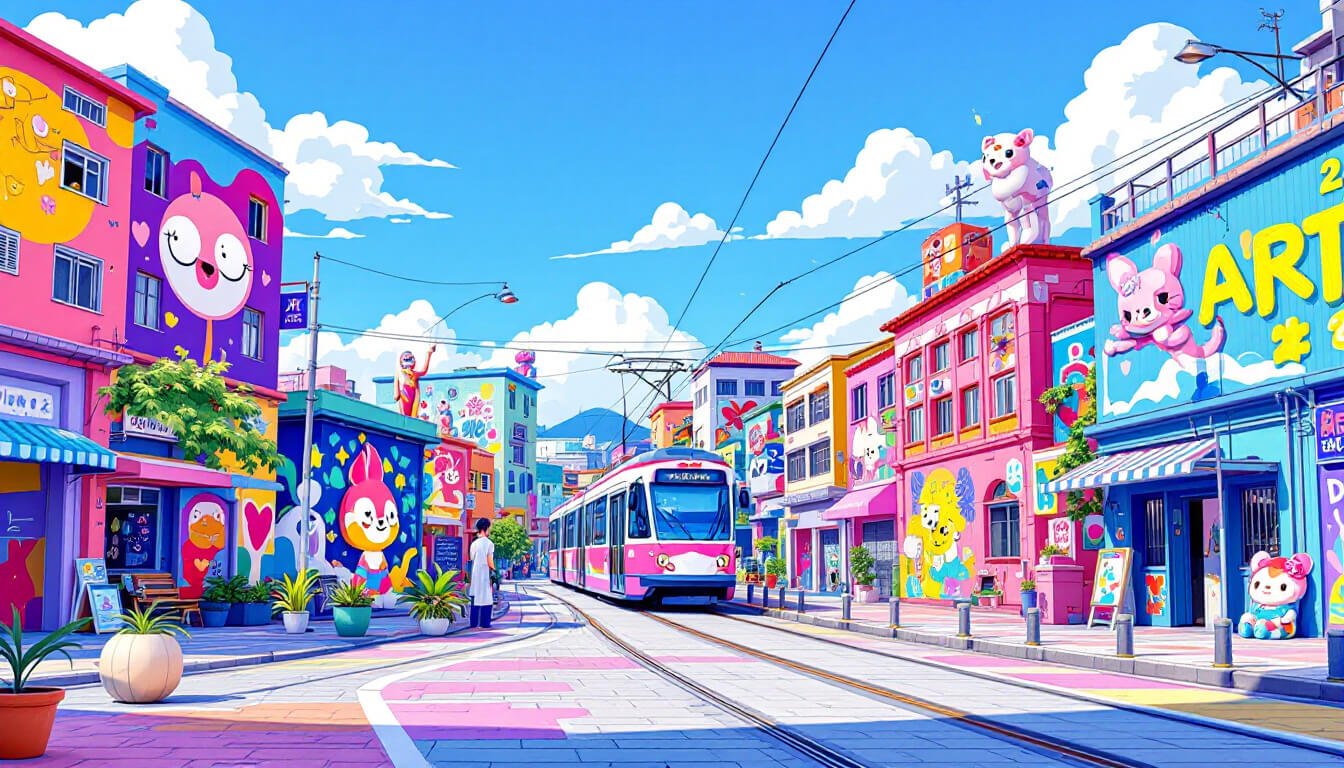
If you only have one day in Kaohsiung, spend it here. Yancheng District sits between Kaohsiung Harbor and the Love River, and it’s where the city’s identity transformation is most visible. A century ago this was salt warehouses and customs offices. Today it’s the dense, walkable, slightly grungy art-and-coffee neighborhood that punches Taipei’s Dadaocheng straight in the mouth.
Start at the Pier-2 Art Center (駁二藝術特區). The city took an entire 25-warehouse strip along the waterfront, repainted everything in saturated reds, blues, and yellows, dropped public art sculptures into every empty lot, and now hosts rotating exhibitions, music festivals, and design markets year-round. The vibe is somewhere between Berlin’s Kreuzberg and Brooklyn’s Williamsburg, with night-market food at half the price. Wander, get lost, photograph everything. There’s no single “main building” — the joy is the sprawl.
The Kaohsiung Light Rail (高雄輕軌) runs right through Pier-2, and unlike most light rails it’s genuinely fun to ride — fully electric, with that quiet hum that lets you hear the harbor. Hop on at the Hamasen station and ride down to Lizihnei for a panoramic loop of the harbor.
Two more stops in this neighborhood that almost every guide forgets to flag clearly:
- Dome of Light at Formosa Boulevard MRT (美麗島站): This is the world’s largest single piece of public glass art — 4,500 square meters of stained glass dome by Italian artist Narcissus Quagliata. It’s free, it’s a working subway station, and it’s been on multiple “most beautiful metro stations in the world” lists. Don’t just transit through — exit the gates, walk the four quadrants, and look up. Showtimes at the top of the hour add light-and-music sequences.
- Sanduo Shopping District (三多商圈): If Pier-2 is daytime grunge, Sanduo is glossy nighttime Kaohsiung. The 85 Sky Tower watches over a cluster of department stores, the Kaohsiung 85 Observation Deck, and the original Hanshin Arena — useful when the harbor breeze gets too hot in summer.
For sleeping, base yourself in Yancheng or near Formosa Boulevard MRT. You’ll be within a 15-minute walk of every restaurant, gallery, and ferry pier you actually want to hit.
Zuoying and the Lotus Pond: Temples and Deep History
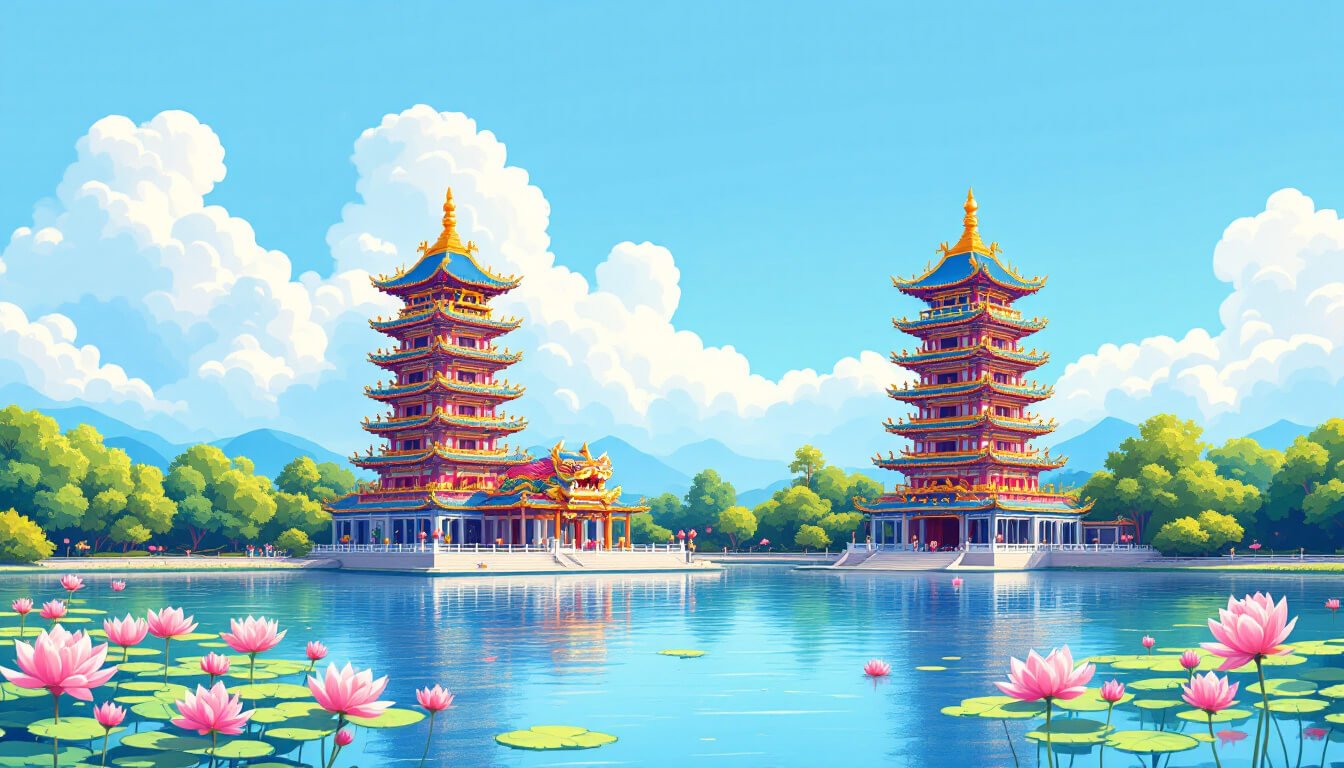
Take the MRT red line north to Zuoying (左營) — about 20 minutes from downtown — and you arrive in what was Kaohsiung’s original walled city, founded back when this was called Takao under the Qing. The neighborhood today is built around Lotus Pond (蓮池潭), a 1.4-kilometer artificial lake ringed by some of the most photographed temples in southern Taiwan.
The headline shot is the Dragon and Tiger Pagodas (龍虎塔) — twin seven-story pagodas connected to the shore by an elaborate dragon-and-tiger gateway. The lore: enter through the dragon’s mouth, exit through the tiger’s, and you’ll turn your bad luck into good. The pagodas closed for a long-overdue restoration in 2020 and reopened in 2024 — the colors are now eye-watering. Go at sunrise for empty walkways and pink-on-water reflections that look fake until you see them.
Don’t stop at the pagodas. Walking clockwise around the pond you’ll hit, in order:
- Spring and Autumn Pavilions (春秋閣): Twin octagonal pavilions guarded by a dragon-mounted statue of Guanyin.
- Confucius Temple (孔子廟): Taiwan’s largest, modeled on the original at Qufu. Free entry, peaceful courtyard.
- Beiji Xuantian God Statue (北極玄天上帝): A 22-meter bronze deity standing on a turtle in the middle of the lake. The legs of the platform host a small altar room and a one-way mirror trick you have to see in person.
Allow at least two hours for the loop, or rent a YouBike from any of the Zuoying stations and do it in 40 minutes if you’re short on time. The 5-Mile Walk around the pond is mostly flat and shaded, which matters because Kaohsiung in summer is no joke.
Cijin Island: A Five-Minute Ferry to Another World
Of every cheap, easy thing to do in Kaohsiung, the Cijin Island (旗津島) ferry might be the most underrated. From Gushan Ferry Pier in Yancheng it costs NT$40 round trip, runs every ten minutes, and dumps you on a long, skinny barrier island that feels nothing like the rest of the city.
The island itself is just 11.3 square kilometers, so you don’t need a plan — you need an appetite. The main strip is Miaoqian Road, lined with raw bar–style seafood restaurants where you point at what’s flopping on ice and they grill it tableside. Cijin’s specialty is the giant grilled squid on a stick — Taiwanese tourists buy two and walk down to the beach. Get yours from any vendor that looks busy and skip the ones with English menus posted out front.
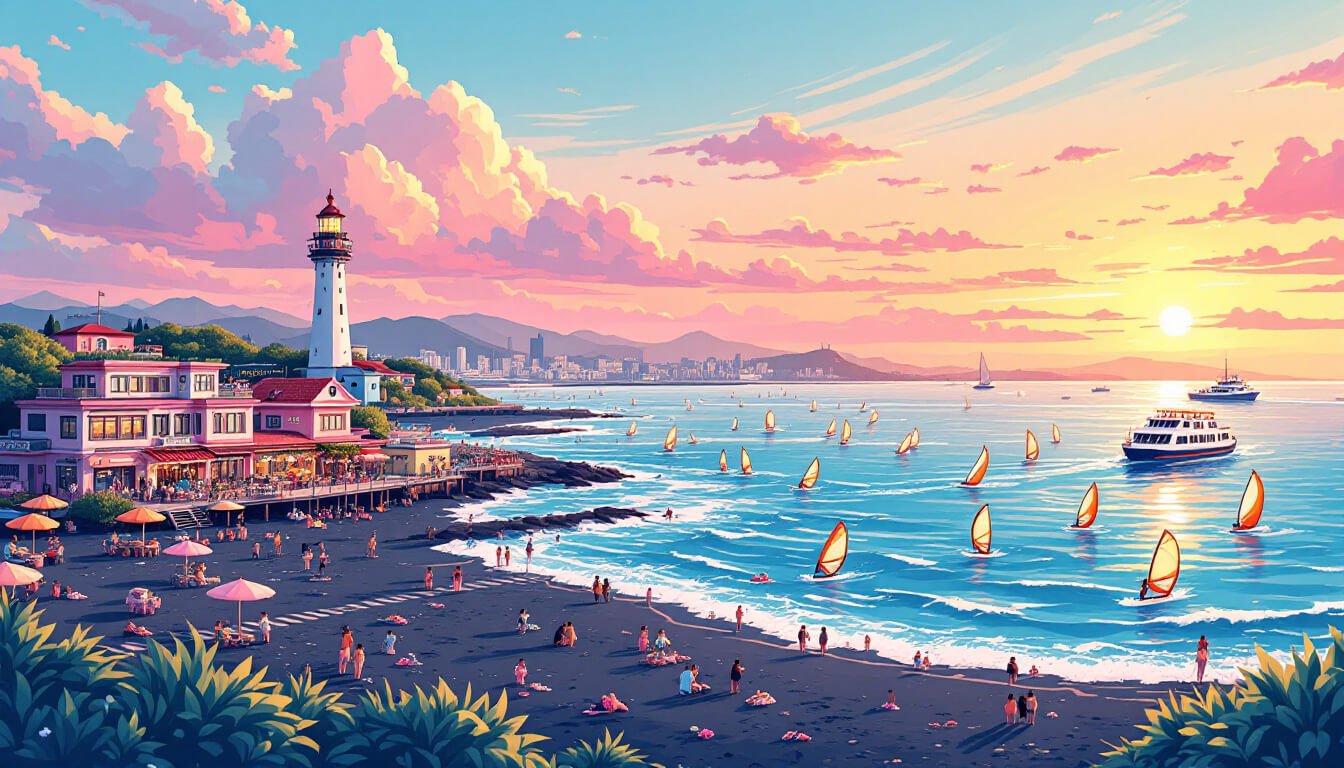
The Cijin Black Sand Beach (旗津海岸公園) is wide, wind-blasted, and surprisingly clean now that the city has restored it. Windsurfers love it. Swimmers find it choppy but doable from May to September. Walk to the southern end for the Rainbow Church — not a church, just 36 multicolored arches that the city built as an Instagram bait installation. It worked.
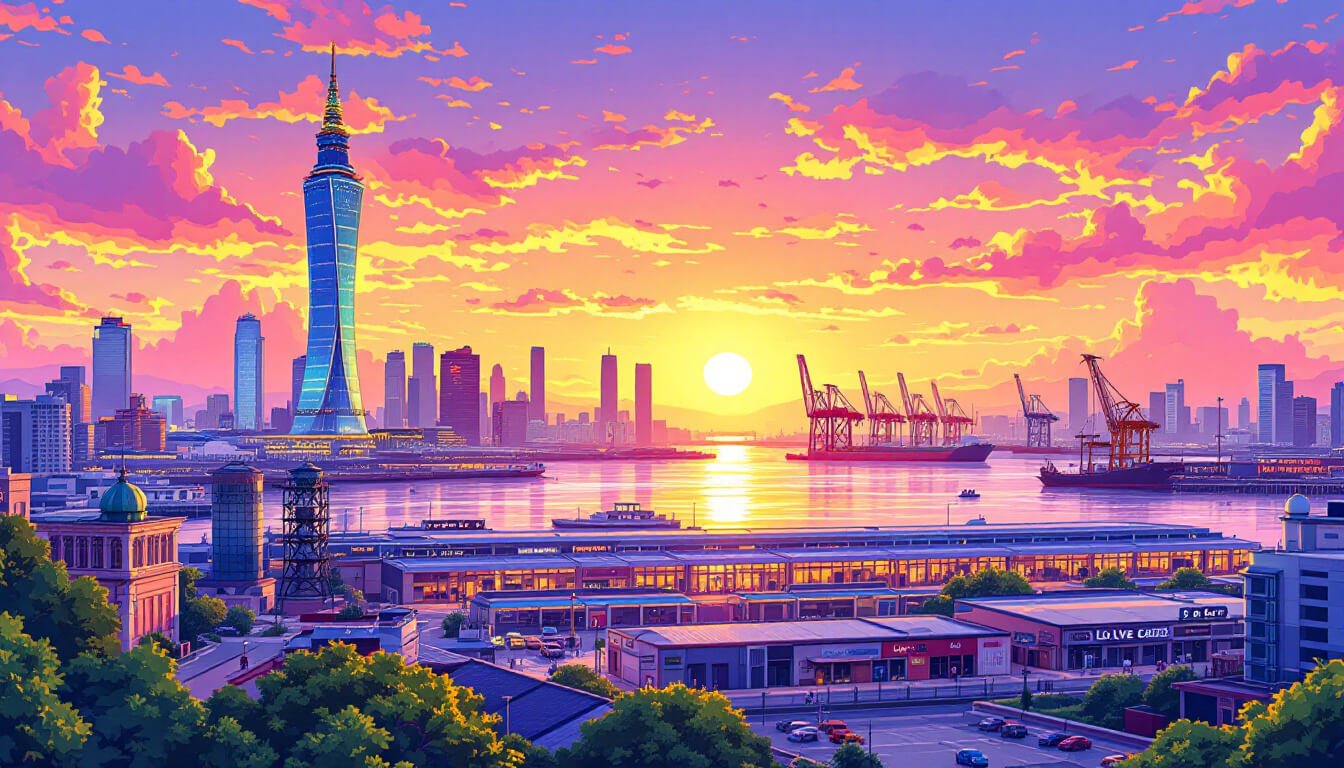
End the day at Cijin Lighthouse (旗后燈塔). Built by the Qing in 1883, redone in the Western style under the Japanese in 1918, it’s a 15-minute hike up from the temple at the base. The view at sunset — harbor cranes, the 85 Sky Tower glowing pink, container ships gliding in — is the single best view of Kaohsiung you’ll get, and it’s free.
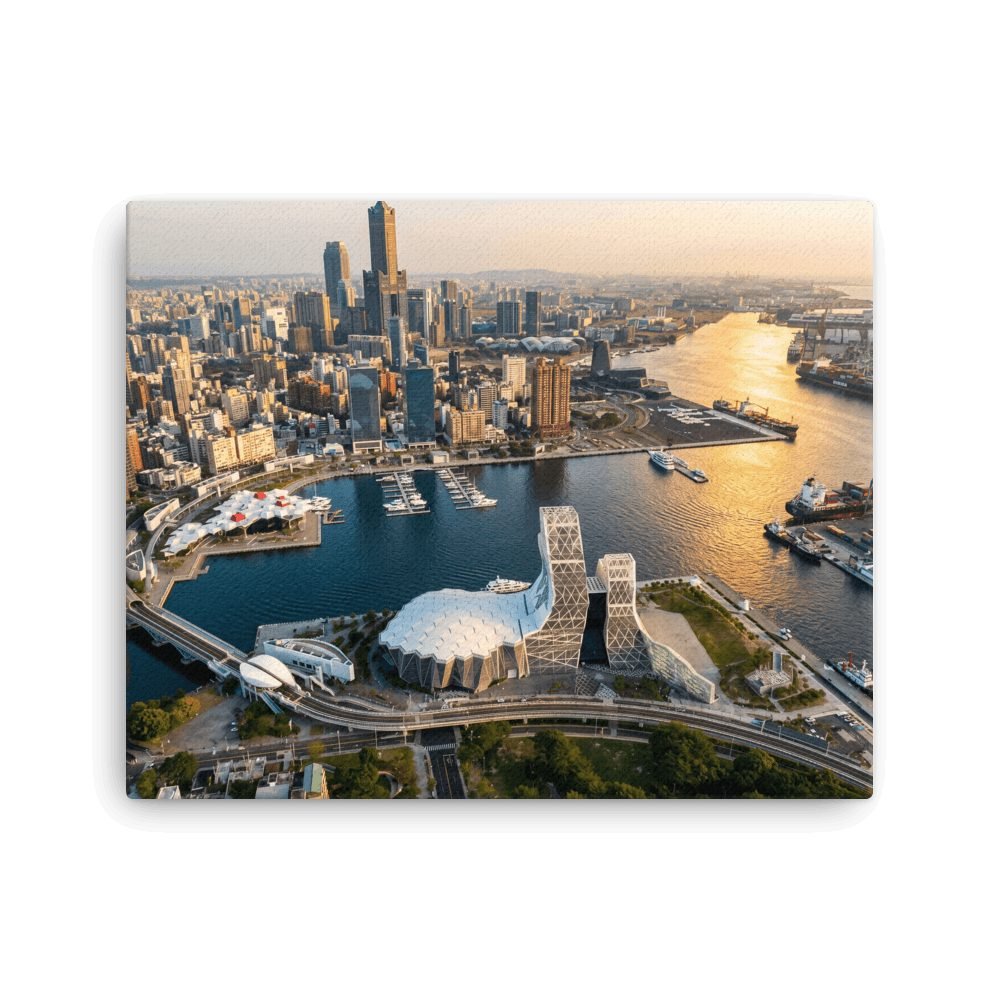
If you want to bring a piece of that harbor view home, our Kaohsiung Harbor Aerial View wall art captures the same golden-hour vibe — minus the squid grease on your fingertips.
Liuhe and Ruifeng: Night Markets That Actually Belong on Your Itinerary
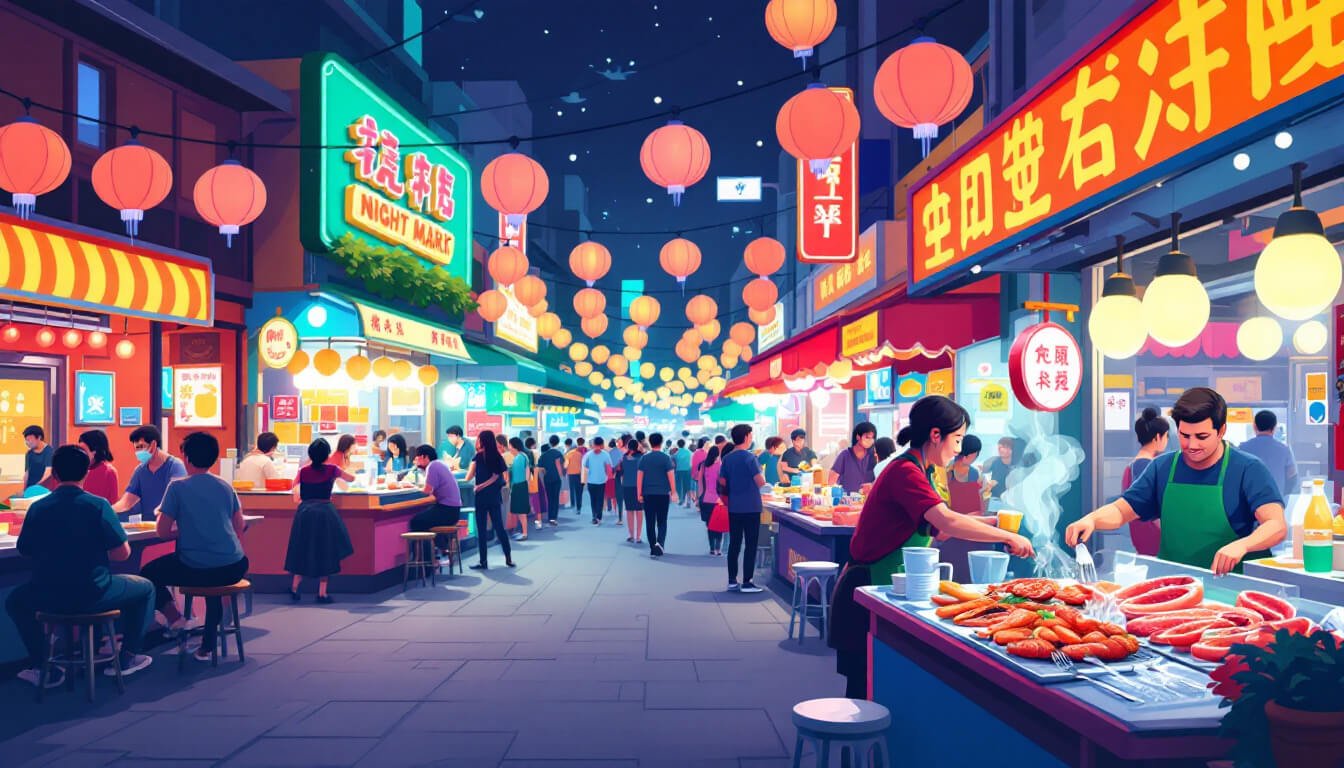
Taipei’s night markets get all the press, but Kaohsiung quietly runs two of the best in Taiwan, and they serve very different purposes. Pick one for tourist atmosphere and one for the local-favorite, please-don’t-bring-the-guidebook energy.
Liuhe Night Market (六合夜市) is the tourist headliner. It runs along a single pedestrian street, the lanterns are red, the vibe is bright, and the food specialty is the southern Taiwan style — bigger, sweeter, more papaya. Try the Wonder Papaya Milk Stand (Kao Chi Papaya Milk) — Kaohsiung is the unofficial birthplace of papaya milk and Liuhe is where you should drink your first glass. Pair it with milkfish belly soup, grilled squid, and Tainan-style coffin bread (棺材板). Open from 18:00 to about midnight, no rest days.
Ruifeng Night Market (瑞豐夜市) is the local favorite. It’s three times the size of Liuhe, six blocks deep, and a near-religious gathering for Kaohsiung university students. The food here is less performative and more weird-in-a-good-way: pizza-stuffed sticky rice balls, giant Korean cheese hotdogs, Taiwanese fried chicken cutlets the size of a dinner plate, brown sugar boba pancakes. Closed Mondays and Wednesdays. Take the MRT to Kaohsiung Arena (R14), exit 1.
The locals’ rule: if it’s your only night, go to Liuhe for the postcard. If it’s your second night, go to Ruifeng — and don’t eat dinner first.
Foguangshan and the Big Buddha: The Day Trip Everyone Underestimates
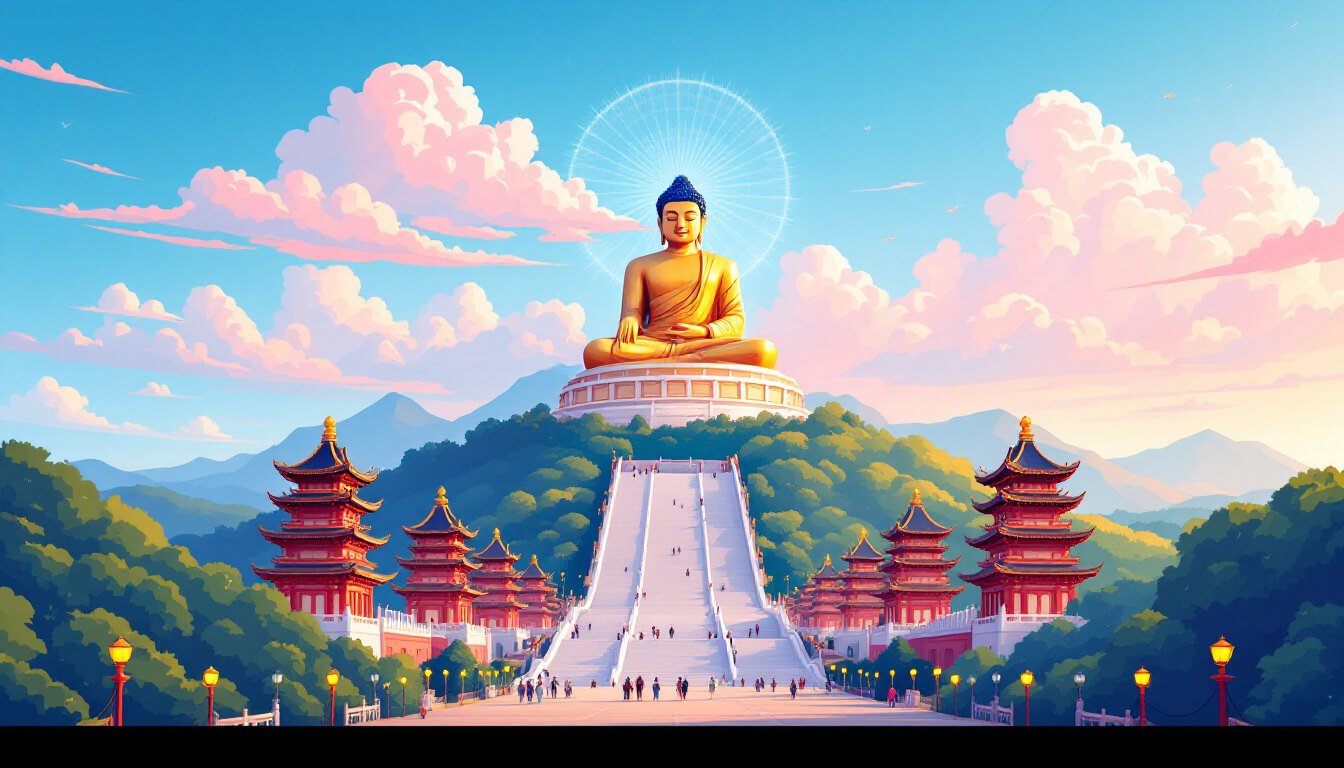
Foguangshan Monastery (佛光山) is a 40-minute bus ride from central Kaohsiung and somehow most visitors skip it. That’s a mistake. Founded in 1967 by Master Hsing Yun, Foguangshan is the world headquarters of the Fo Guang Shan Buddhist Order — one of the four major Buddhist orders of contemporary Taiwan, with over a thousand affiliated temples on six continents. The monastery itself is huge. The adjacent Buddha Memorial Center (佛陀紀念館), opened in 2011, is bigger still: a 100-hectare site with eight Chinese-style pagodas leading up a grand axis to a 108-meter seated bronze Buddha that you can see from the highway in Pingtung.
The whole complex is free. You can walk it in three hours, or take a full day and tag in the museum, the underground gallery, the calligraphy hall, and a vegetarian temple lunch (humbly delicious, NT$100). The vibe is reverent without being austere — schoolkids on field trips, monks in saffron robes, photo-snapping aunties, all coexisting. Even if you’re not religious, the scale of the place will rearrange your thinking on what “things to do in Kaohsiung” can mean.
To get there: take Kaohsiung Bus E02 from Zuoying HSR station or the Kaohsiung Main Station — about 40 minutes either way. If you’re already exploring southern Taiwan, you can stop at Foguangshan on the drive between Kaohsiung and Tainan or back from Kenting.
Weiwuying and the Cultural Power Move
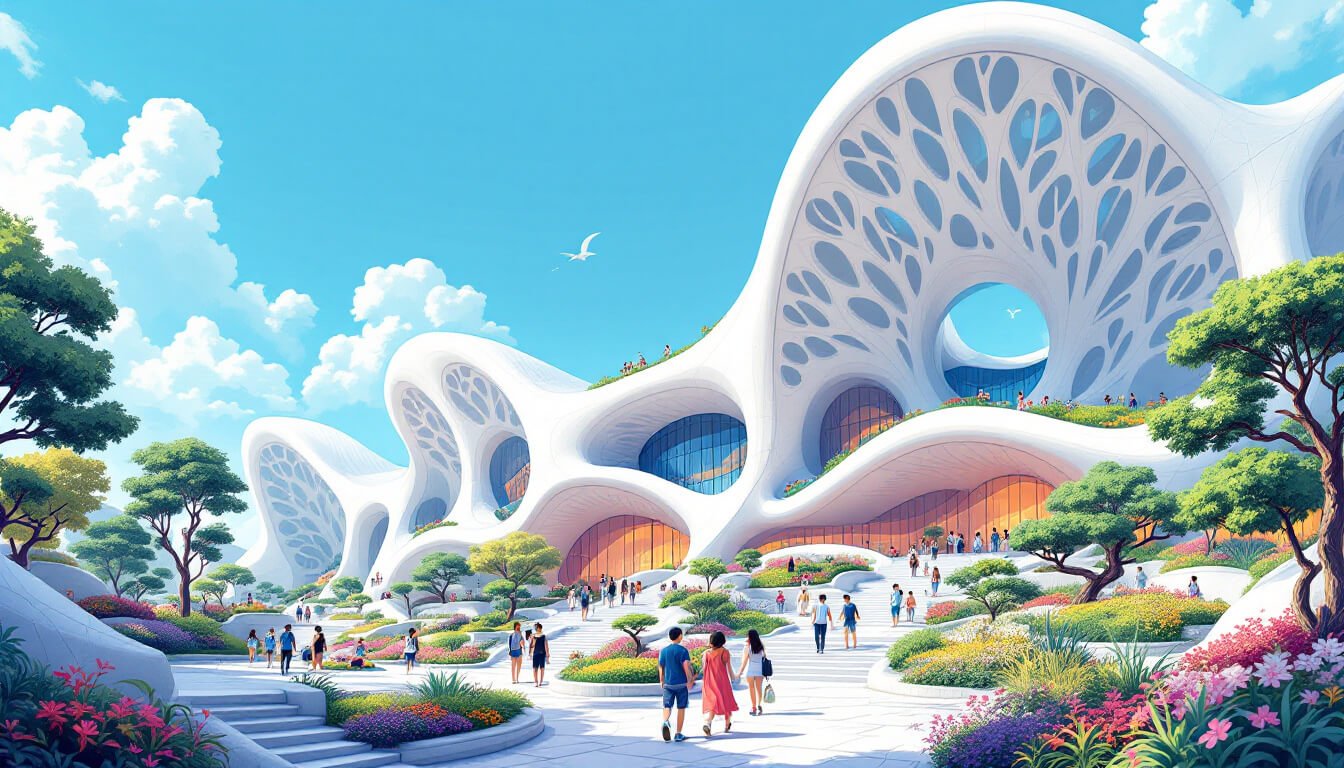
If you want to feel exactly how much Kaohsiung has changed in the past decade, walk into the National Kaohsiung Center for the Arts (衛武營國家藝術文化中心) — known locally as Weiwuying. Designed by Dutch architect Francine Houben and finished in 2018, it’s a 141,000-square-meter wave of white concrete that contains four world-class performance halls under a single curving roof — the largest such building on the planet. The architectural inspiration was the canopy of the banyan trees that used to grow on this site when it was a military training base.
Tour it during the day — they offer free 50-minute guided tours at 11:00 and 14:00 in English, Mandarin, and Hakka. Then book a ticket for an evening show. The lineup ranges from Cloud Gate Dance Theatre to Berliner Philharmoniker visiting tours, jazz, Beijing opera, and contemporary Taiwanese theater. The opera house has shoebox acoustics on par with the Concertgebouw, and tickets routinely run NT$400–1,200 — a fraction of what comparable shows cost in Taipei.
The surrounding Weiwuying Metropolitan Park is the closest thing Kaohsiung has to a Central Park: a 47-hectare green lung with lakes, jogging trails, and the largest banyan-tree forest in southern Taiwan. Pack a snack from any of the bakeries along Sanduo Road and picnic between sets.
For an even denser dose of Kaohsiung’s culture-economy rebrand, walk 15 minutes east to the Kaohsiung Music Center (KMC) on the harbor. The complex looks like inflatable whale fins and hosts everything from K-pop tours to indie Taiwanese rock. It’s worth a beer at the rooftop bar even if you don’t catch a show.
The Kaohsiung Food Scene Beyond the Night Markets
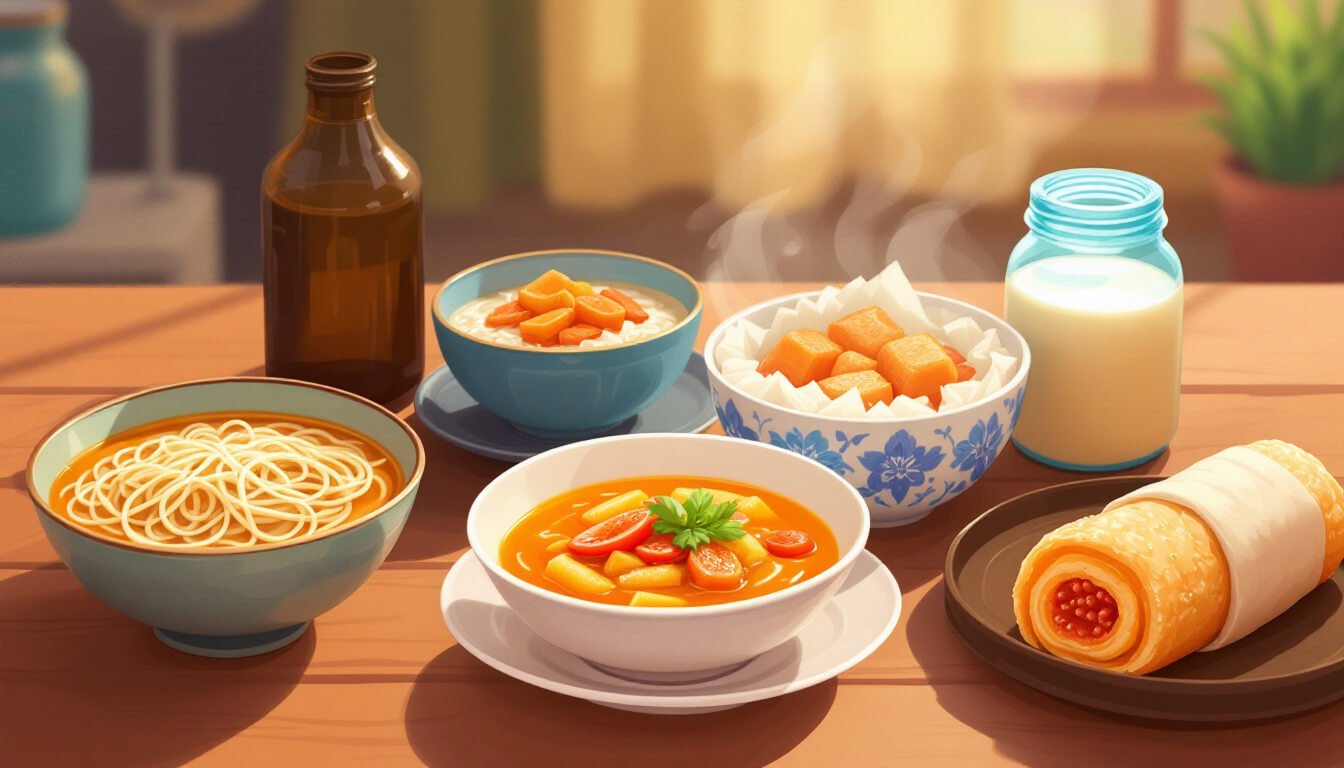
Taipei does refined Taiwanese. Tainan does heritage Taiwanese. Kaohsiung does Taiwanese with sea salt and confidence — bigger portions, sweeter sauces, more papaya, more shellfish, fewer apologies. Three categories you should plan a meal around:
Breakfast culture. Kaohsiung breakfast is its own genre. Start with danzai mian (擔仔麵) — a tiny porcelain bowl of thin noodles in shrimp broth, topped with one perfect prawn and minced pork. The dish was invented in Tainan in 1895 by a fisherman waiting out typhoon season, and Kaohsiung perfected the export version. Pair it with milkfish belly soup at any shaurou fan (燒肉飯) spot — the milkfish here, raised in the brackish ponds of nearby Linyuan, is the closest thing Taiwan has to a regional fish identity. Finish with fan tuan (飯糰): a fist-sized sticky rice roll stuffed with savory cruller, dried pork floss, pickled radish, and a tiny smear of chili sauce. Locals eat all three before 09:30 and don’t see anything weird about it.
Coffee. Yes, in a tea country. Kaohsiung was the port where most of Taiwan’s specialty coffee importers set up shop in the 2010s, and the result is a downtown saturated with single-origin roasters that would not look out of place in Melbourne or Portland. Hit Soulr Specialty Coffee in Yancheng, Pier No. 5 Cafe on the harbor, or The Old Place in the lanes behind the Pier-2 light rail station. Read more about how Taiwan became a specialty coffee powerhouse if you want context before ordering.
Seafood with the locals. Skip the polished restaurants and go to Qijin Seafood Street (旗津海產街) or the lanes around Yancheng Harbor (鹽埕埔) — point-at-the-tank places with plastic chairs and 60-year-old aunties at the till. A standard table of four people, ordering a steamed grouper, garlic shrimp, a stir-fry of morning glory, and a pot of rice, will land around NT$1,500 — call it US$50, in a port city where the fish was on a boat eight hours ago.
If you want to go deeper on regional flavors before you fly, our guide to the most famous food in Taiwan is a useful primer for everywhere you’ll eat once you land.
Take Kaohsiung Home With You
Our Kaohsiung Harbor Aerial View premium wall art captures the golden-hour magic of Taiwan’s reinvented port — the same view you’ll see climbing Cijin Lighthouse at sunset. Museum-grade print, ready to ship worldwide.
Frequently Asked Questions About Things to Do in Kaohsiung
How many days do you need in Kaohsiung? Three full days is the sweet spot. Day one for Yancheng and Pier-2 (with a Cijin sunset). Day two for Zuoying, Lotus Pond, and Weiwuying. Day three for Foguangshan and the food crawl. Add a fourth if you want to side-trip to Kenting National Park or Tainan (both an hour away by car).
Is Kaohsiung worth visiting over Taipei? Yes — but ideally and Taipei, not instead of. Taipei is dense, fast, and northern. Kaohsiung is wide, slow, warm, and southern. Most well-built Taiwan trips do Taipei for 3–4 nights, take the High-Speed Rail south, and end in Kaohsiung — for the weather, the food, and the easy onward exit to Kenting beaches.
When is the best time to visit Kaohsiung? November through March. Summer is brutal — 33°C+ daily highs with high humidity — and typhoon season peaks August to October. The shoulder months of April and May are pleasant but watch for the plum rain season. December and January are cool, dry, and have the lowest hotel rates of the year.
How do you get around Kaohsiung? The MRT has two lines (red and orange) that cover most attractions. Add the Light Rail loop along Pier-2 and YouBike rentals for the harbor. Get an iPASS card at any MRT station — it works on every transit mode in the city. Uber works too, but most rides under 5 km cost more by car than MRT.
Where should I stay in Kaohsiung? Near Formosa Boulevard MRT (R10/O5) or in Yancheng. Both put you within walking distance of Pier-2, the Love River, and the night markets, and within 20 minutes of Zuoying by train. Skip the airport-area hotels unless you have a 5 a.m. flight.
Is Kaohsiung safe for solo and female travelers? Extremely. Taiwan ranks as one of the top five safest countries in the world, and Kaohsiung is no exception. Late-night night-market walks alone are routine for local women. Read our Taiwan safety guide for the full picture.
Final Thoughts: The Things to Do in Kaohsiung You’ll Wish You’d Booked Longer For
If Taipei is Taiwan’s brain and Tainan is its heart, Kaohsiung is the muscle that surprised everyone by also having good taste. Ten years ago, recommending three days in Kaohsiung would have raised eyebrows. Today it’s the rare second-tier Asian city that’s actively, visibly, beautifully reinventing itself — the warehouses now galleries, the river now swimmable, the port now a postcard, the food still cheap and salty and overwhelming.
Go. Take the ferry to Cijin. Get the squid. Climb the lighthouse at sunset. Eat your second papaya milk at Liuhe. Watch the Dome of Light cycle on the hour. Sit on the Lotus Pond seawall and decide that yes, the dragon’s mouth is what you walk into first.
Then come back home and start planning the next trip — because three days will not be enough.
More Taiwan in Your Inbox
Get our weekly dispatch on Taiwanese culture, food, artisans, and merch you actually want to wear. No spam — just the good stuff.
Grab a Free Taiwan Sticker!
Drop your email and we’ll send you a limited-edition Taiwan sticker — plus insider access to new merch drops and island vibes.
No spam. Unsubscribe anytime.