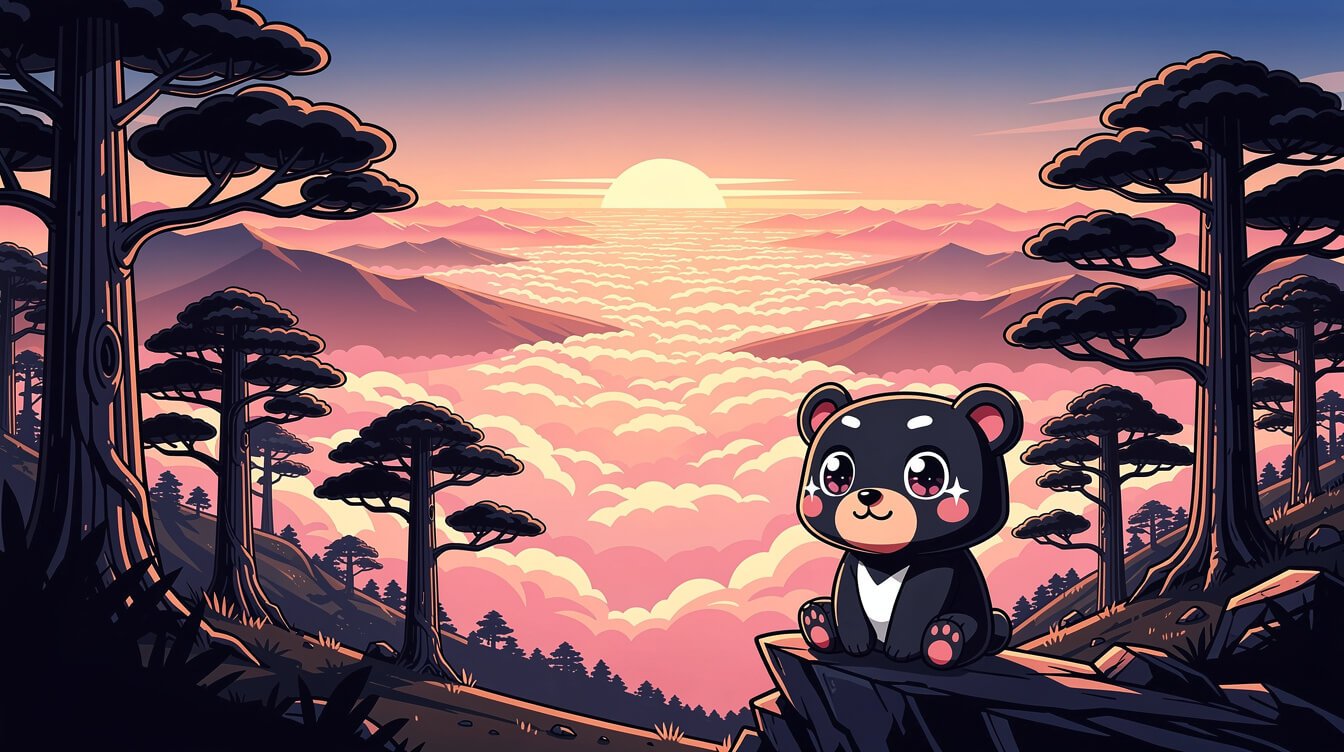
Did You Know? Taiwan’s Only Bear Wears a White “V” — And There May Be Fewer Than 600 Left
Taiwan has one bear. Just one — and it is found nowhere else on earth.
The Formosan black bear (Ursus thibetanus formosanus, 台灣黑熊) is an endemic subspecies of the Asiatic black bear and the largest land mammal on the island. It is also, by a comfortable margin, the most recognisable animal in Taiwanese design — and the reason comes down to a single marking on its chest.
The white “V” that made it a national symbol
Asiatic black bears are often called “moon bears” for the pale crescent across their chest. Taiwan’s bears wear theirs as a bold, blunt V — a stripe of cream-white fur against jet black, wide at the shoulders and pointed at the sternum.
Locals have long read that mark as more than markings. A V for victory. A V for 台灣加油 — Taiwan, jiayou, roughly “Taiwan, let’s go.” That reading is why the bear ended up as the tourism mascot OhBear (喔熊), why Bravo the black bear fronted the 2017 Taipei Universiade, and why you will see the silhouette on everything from hiking-trail signage to convenience-store loyalty stamps. No committee designed that logo. The bear came with it.
Fewer than a thousand, and probably far fewer
Here is the part most visitors never hear: the wild population is usually estimated in the low hundreds. Researchers have long worked from a figure of roughly 200 to 600 animals scattered across Taiwan’s central mountain spine, and the species has been legally protected as endangered since the Wildlife Conservation Act came into force in 1989.
Most of what we know comes from one person’s stubbornness. Hwang Mei-hsiu (黃美秀) — known in Taiwan as the Bear Mother — spent years in the remote Dafen area of Yushan National Park doing the first serious field study of the animal. Her most-quoted finding is a hard one: a striking share of the bears she captured were missing toes or part of a paw, injuries consistent with snares set for other game. The bears are not usually hunted on purpose. They are caught by accident, and they carry it for life.
Why September matters
Formosan black bears spend most of the year high up, generally somewhere between 1,000 and 3,500 metres in the broadleaf and conifer forest. But they follow food, and autumn is mast season — acorns, oaks, wild fruit. As the nuts ripen, bears drift downhill and concentrate wherever the crop is heaviest, which is exactly when hikers in Yushan, Taroko and Shei-Pa are most likely to find a claw-scarred trunk or a bent-over feeding platform in the branches.
You are still extremely unlikely to see one. Sightings are rare enough that they make the news. If you hike Taiwan’s high country this autumn, the realistic goal is evidence, not encounter: store food properly, keep your distance from anything you do find, and let the bear stay wild.
The takeaway
Taiwan’s national animal is an endemic bear with a victory sign stitched into its chest, a population you could seat in a small theatre, and a research legacy built almost single-handedly by one woman who kept going back to the mountain. That is a lot of story for one silhouette.
If you want the mountains that bear lives on, our Yushan is taller than Mt. Fuji fact is the companion piece — and if you like Taiwan’s endemic wildlife generally, meet the island’s only native monkey, the Formosan rock macaque.
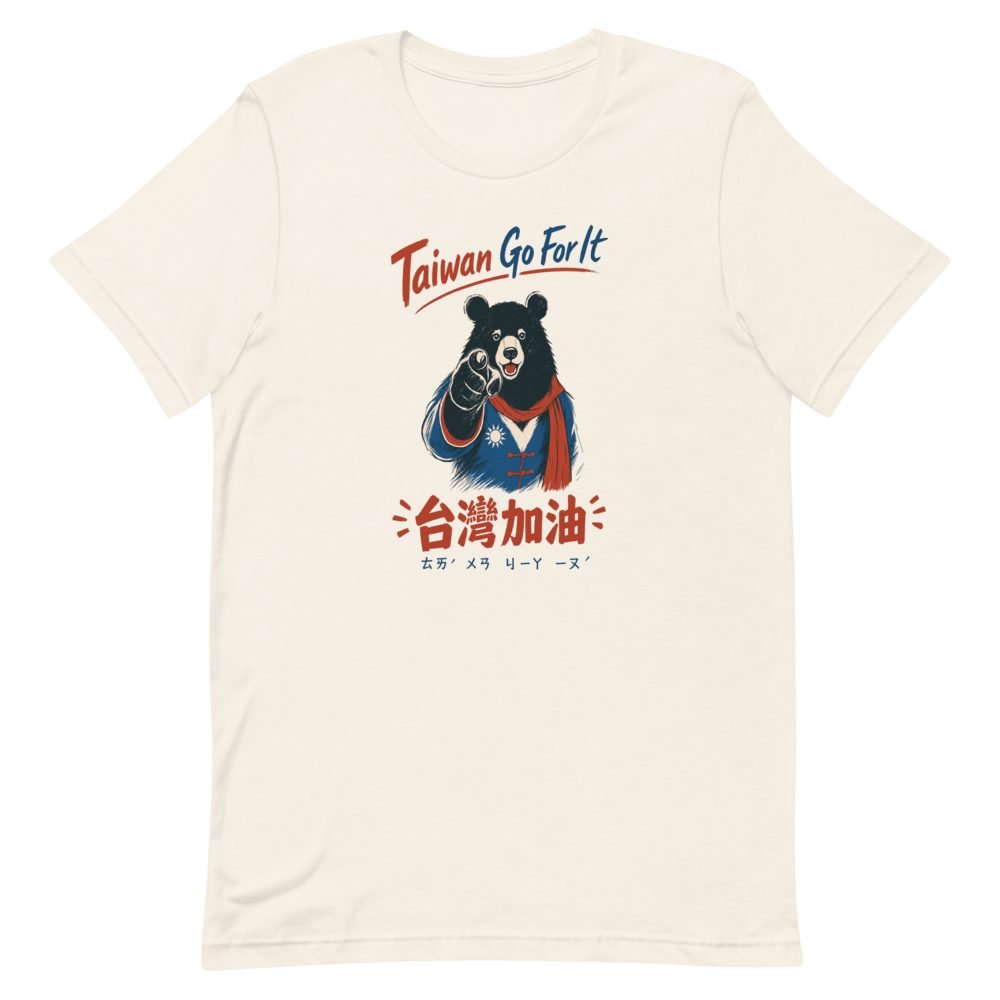
And yes — we put the V on a shirt. The Taiwan Black Bear Jiayou 台灣加油 tee is exactly what it sounds like: the island’s bear, the island’s cheer, one design. Shop Taiwan Merch for the rest of the collection.

Grab a Free Taiwan Sticker!
Drop your email and we’ll send you a limited-edition Taiwan sticker — plus insider access to new merch drops and island vibes.
No spam. Unsubscribe anytime.