Taiwan Trip Planner 2026: The Real-World Guide to Costs, Culture & Choosing Your Perfect Itinerary
Planning a Taiwan trip for 2026? Most travel guides skip straight to the itinerary — Day 1 Taipei, Day 2 Jiufen, Day 3 the tea fields. Fine, but useless if you haven’t answered the questions that actually determine whether you’ll enjoy it: what will it cost, do you need a visa, what should you pack for a country where the temperature swings 20°F in one train ride, and how do you avoid coming across like the tourist everyone winces at.
This is the pre-itinerary planner. By the end you’ll know whether Taiwan is the right pick for your 2026 trip, roughly what it’ll cost you, what paperwork you need, and the ten or so cultural quirks that separate a smooth first visit from an awkward one. Once you’ve got that dialed, jump into our day-by-day Taiwan itinerary guide to build out the actual route.
Why Taiwan (and Why Now in 2026)
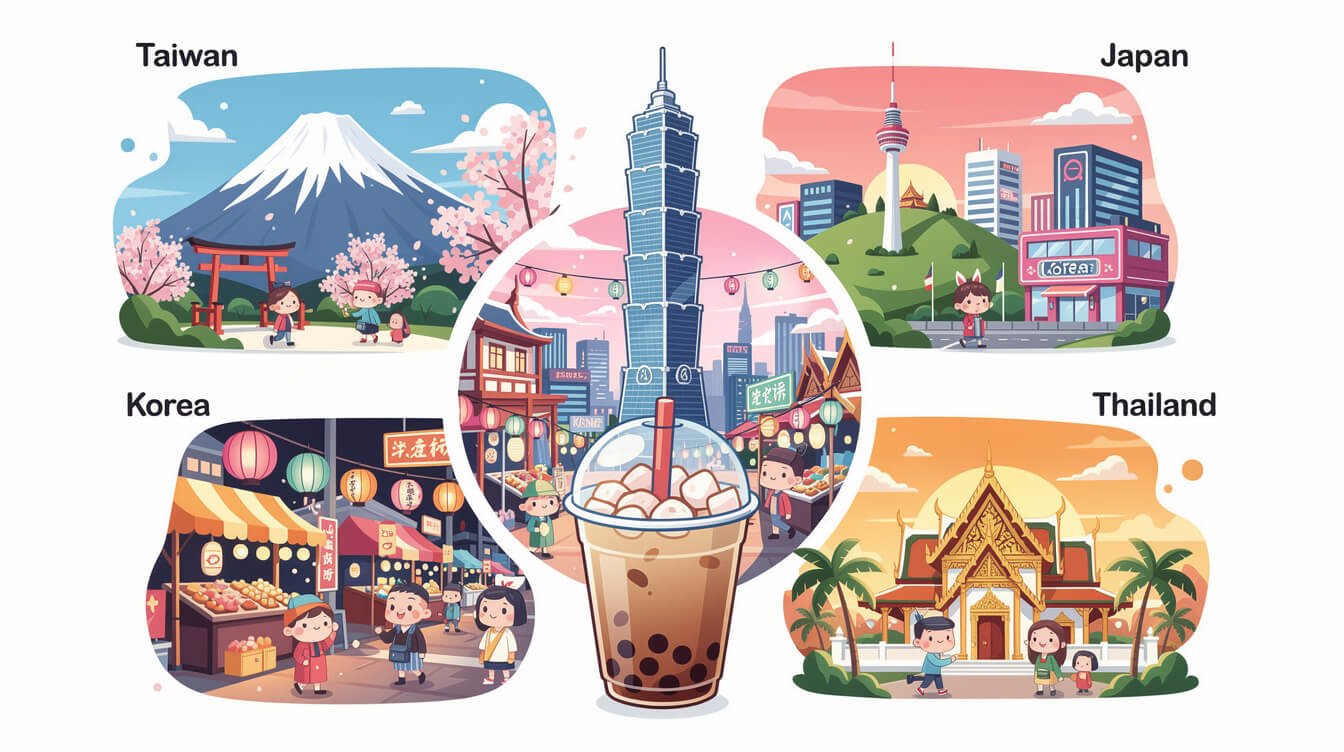
First-time Asia travelers usually deliberate between four countries: Japan, South Korea, Thailand, and Taiwan. Taiwan gets picked last, but it probably shouldn’t. Here’s the honest side-by-side.
Japan is polished, punctual, and eye-wateringly popular in 2026 — overtourism in Kyoto and central Tokyo is now the story. Prices for a mid-range hotel in Shibuya have roughly doubled since 2019. Taiwan gives you 80% of what people love about Japan — the food obsession, the transit precision, the safety, the convenience-store culture — at roughly half the price and a tenth of the crowds.
South Korea is trendier and more design-forward, but the food scene is narrower once you leave Korean cuisine, and English signage outside Seoul thins out fast. Taiwan wins on food variety (Chinese regional cooking, Japanese influence, Indigenous specialties, world-class street food) and on ease-of-use for English-only visitors.
Thailand is cheaper and beachier, but the tourism infrastructure has thinned out in Bangkok and Phuket after the 2024–2025 scam-and-crime spikes. Taiwan is one of the safest countries in Asia, with virtually zero petty crime and public transit that runs on time.
Taiwan is the pick if you want the “clean, safe, food-obsessed, easy-to-navigate” version of Asia without paying Japan prices or fighting Kyoto crowds. It’s also having a moment — a wave of English-language content, new high-speed rail routes, and 2026 typhoon-recovery investments have made the island more traveler-friendly than at any point in the last decade.
2026 Entry Requirements
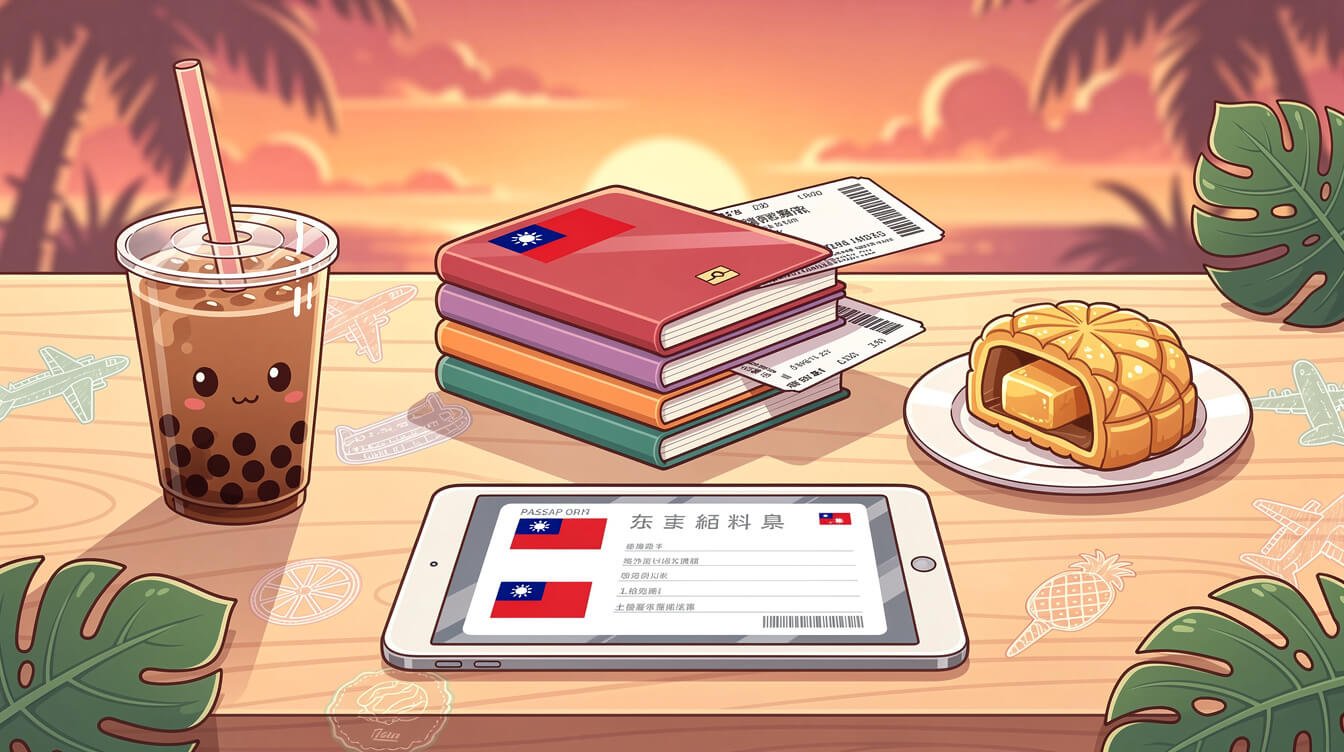
Taiwan’s entry rules are among the most forgiving in Asia for most Western passport holders. Here’s what you actually need for 2026.
Visa-free entry: Citizens of the US, Canada, UK, Australia, New Zealand, Japan, South Korea, Singapore, and all EU countries get 90 days visa-free on arrival. No advance application, no fee, no interview. Just show up with a valid passport and a return or onward ticket. Full list and edge cases are on our Taiwan visa requirements guide.
Passport rule: Your passport must be valid for at least six months beyond your intended departure date. This is enforced. Don’t cut it close — several travelers get turned away at check-in each week because of the six-month rule.
Digital Arrival Card: Taiwan’s optional online arrival form (arrival.card.immigration.gov.tw) lets you skip the paper form at immigration. Fill it out within 72 hours of arrival. It shaves five to ten minutes off the process. Not required, but recommended — the immigration hall at Taoyuan gets backed up on weekend evenings.
Return ticket: Immigration officers occasionally ask to see proof of onward travel. It’s rare, but bring a screenshot of your return flight to be safe.
Customs: Cash over USD 10,000 (or equivalent), agricultural products, and any pork product (Taiwan takes African Swine Fever seriously — a ham sandwich in your carry-on can trigger a fine up to NT$1 million) must be declared. Fresh fruit, meat, and dairy are prohibited.
Health: No vaccinations required. Bring any prescription medication in original packaging with a copy of the prescription — Taiwan is strict about controlled substances, including some common ADHD and anxiety meds that require pre-approval.
The Real Cost of a Taiwan Trip
Taiwan is a mid-range destination in 2026 — cheaper than Japan or Singapore, more expensive than Vietnam or Thailand. Here’s what a day actually costs, in USD, based on 2026 pricing.
Budget traveler (USD 55–75/day): Hostel dorm bed (USD 20–28), street food and night market meals (USD 15), MRT and local trains (USD 5), one paid attraction (USD 8), convenience store snacks and 7-Eleven coffee (USD 7). This is a very livable Taiwan trip if you’re happy with hostels, night markets, and public transit.
Mid-range (USD 130–180/day): Business hotel private room in Taipei (USD 70–100), a mix of restaurants and food halls (USD 40), high-speed rail day trip (USD 30), one or two attractions (USD 15), casual bar or teahouse in the evening (USD 20). This is the sweet spot for most first-time visitors and gets you a comfortable, low-stress trip.
Luxury (USD 280–450/day): Four- or five-star hotel (USD 180–300), Michelin-starred dinner (USD 80–150), private driver day trip (USD 120), premium teahouse experience (USD 60). Taiwan’s luxury tier is a bargain compared to Japan — a Michelin dinner in Taipei costs roughly a third of the Tokyo equivalent.
Fixed costs to budget separately: Round-trip flights from the US West Coast run USD 900–1,500 (higher during Lunar New Year and July–August peak). Travel insurance is USD 60–120 for two weeks. A local eSIM is USD 15–25 for two weeks of unlimited data.
For a realistic ballpark: a two-week mid-range Taiwan trip lands around USD 2,500 per person including flights, all-in. Extend that to three weeks and it’s roughly USD 3,200. If you’re hunting for savings, our guide to cheap things to buy in Taiwan covers the products where you’ll actually save vs your home country.
Best Time to Visit Taiwan (Month by Month)
Taiwan has genuinely bad months. Don’t let a guide talk you into July or August unless you’re built for humidity and possible typhoon disruption. Here’s the real picture — our month-by-month Taiwan weather guide has the full breakdown.
January–February: Cool and often gray in Taipei (50–65°F). Lunar New Year in late January or February shuts down half the country for a week — many restaurants and small shops close. Book flights early or wait it out.
March–May: The best window overall. Mild temperatures (65–80°F), dry, cherry blossoms in Alishan in March, decent chance of clear skies for landscape photography. Prices are moderate, crowds manageable.
June: Warm and humid, but shoulder-season prices and the mango season kicks in. Plum-rain season lingers into mid-June with afternoon showers.
July–September: Peak typhoon season and 90–95°F humidity. Typhoons average two to three named storms making landfall or grazing the island. Trips get disrupted — flights cancelled, ferries paused, mountain roads closed. If you must go in summer, buy flexible plane tickets and cancellable hotel bookings, and build in buffer days.
October–November: The second-best window. Typhoon season winds down, humidity drops, temperatures return to the 70s. Fall foliage in Alishan and Hehuanshan is genuinely stunning.
December: Cool and often clear. Christmas isn’t a national holiday, so hotels stay affordable. The one caveat: temperatures in the north can drop into the low 50s, and heating in older buildings is minimal.
Best overall: Late March through late May, or October through mid-November. Avoid: July through mid-September unless you have a specific reason and buffer time.
What to Pack for Taiwan’s Variable Weather
Taiwan is famous among seasoned Asia travelers for one thing: the weather can flip on you within a single day. You’ll leave sunny Taipei in the morning, take the train to Alishan, and step off into 55°F fog. Packing for a Taiwan trip means preparing for at least two climates.
Essentials for any season: A packable rain shell (Taiwan gets sudden downpours year-round), quick-dry pants or lightweight travel trousers, comfortable walking shoes broken in before you leave, a lightweight day pack, a foldable umbrella, a reusable water bottle (tap water is safe once boiled but most travelers stick to bottled).
March–May: Light layers, a thin fleece or long-sleeve for evenings in the mountains, one sweater for cool nights in Taipei.
June–September: Lightweight moisture-wicking shirts, one pair of shorts, a full-sun hat, reef-safe sunscreen (harder to find in Taiwan than at home), an extra pair of shoes for typhoon rain.
October–February: A warm mid-layer (fleece or lightweight down jacket), long pants, thermal base layer if you’re heading to Alishan or Hehuanshan in December–February. Winter in the mountains can drop to freezing.
Cultural packing: Modest clothes for temple visits — no tank tops or short shorts inside temple grounds. A small gift from your home country if you’ll be visiting anyone; Taiwanese hospitality is real and you’ll want to reciprocate.
What to leave at home: Formal wear (Taiwan is remarkably casual), heels of any kind (cobblestone alleys, hot spring towns, night markets — you’ll regret them), pork jerky or any pork snack you were planning to bring.
Cultural Etiquette 101 for Your Taiwan Trip
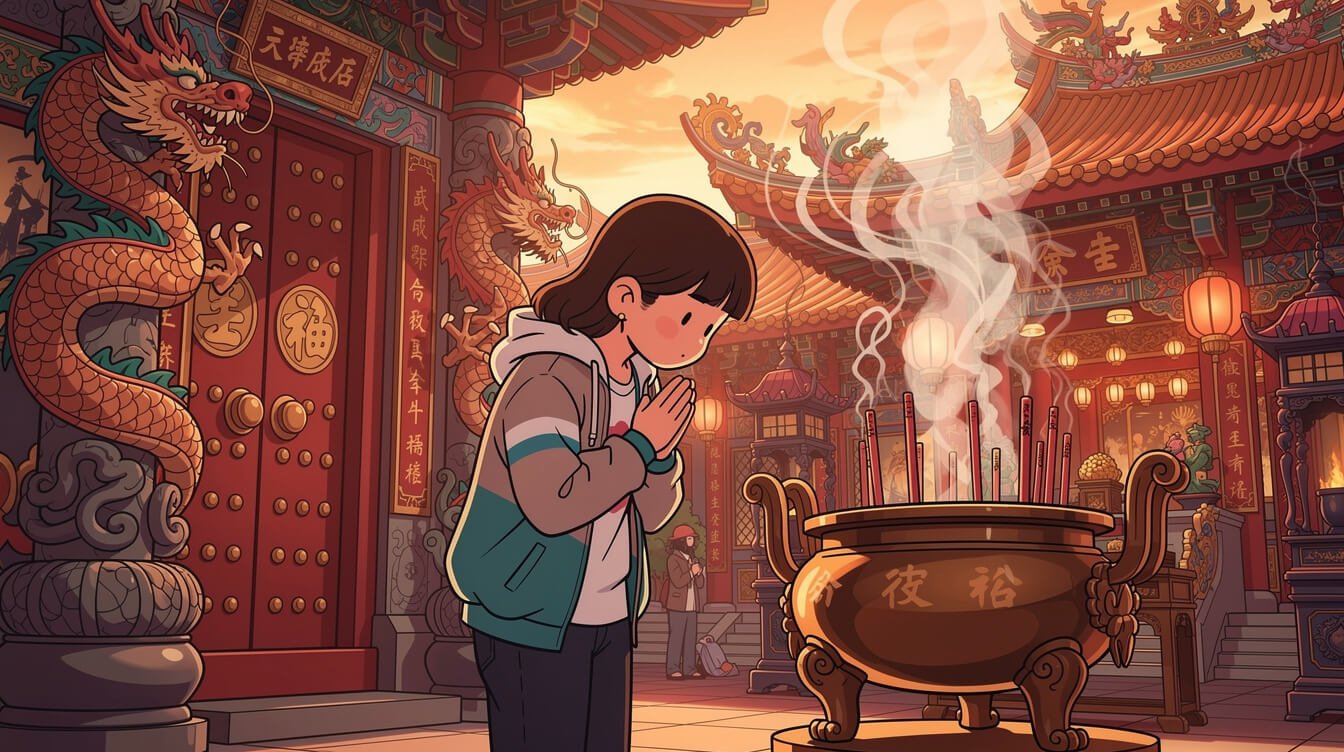
Taiwan is one of the most forgiving countries in Asia for cultural fumbles — Taiwanese people are famously patient with foreign visitors — but getting a handful of things right will noticeably change how locals treat you.
Temples: Enter through the right door (the “dragon door”), exit through the left (the “tiger door”). Never step on the raised wooden threshold — step over it. Don’t point cameras at people praying. Small offerings and incense are fine to buy and use, but ask a temple attendant if you’re unsure. Loud voices, photography of the main altar during ceremonies, and revealing clothes are all frowned upon.
Chopsticks: Never stick them upright in a bowl of rice — this mimics funeral incense and is genuinely upsetting. Don’t pass food chopstick-to-chopstick (also a funeral association). Rest chopsticks on the provided holder or across the top of your bowl.
Tipping: Not customary and often refused. Restaurants add a 10% service charge automatically. Taxis round up to the nearest NT$10. Hotels don’t require tips outside of five-star international chains.
MRT etiquette: No eating or drinking on trains, platforms, or in stations — this is enforced with fines. Stand on the right side of escalators, walk on the left. Don’t sit in the dark blue priority seats unless you’re elderly, pregnant, injured, or with a small child; they often stay empty even on packed trains and stepping into one gets you dirty looks.
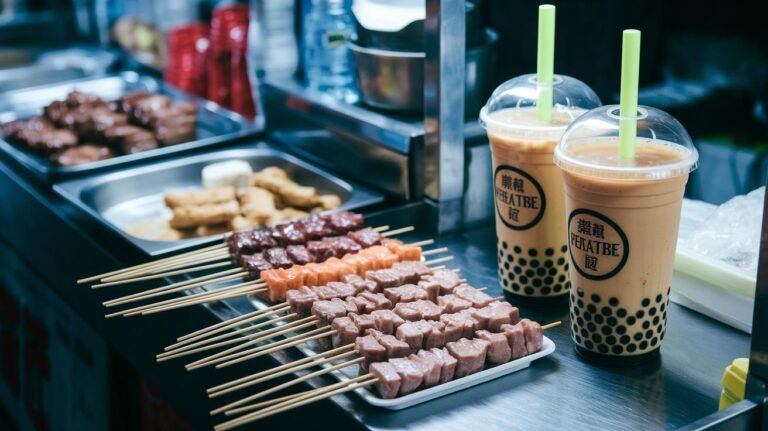
Night market navigation: Order at the counter, don’t line up if there’s a scrum (order boldly), have small NT bills ready, and don’t take photos of vendors without asking. Cash-only stalls are the norm.
General: Business cards get exchanged with both hands. Shoes come off inside homes and some restaurants and guesthouses. Don’t stick out your finger to point — use an open palm. Loud phone calls in public are considered rude. And when someone treats you to a meal or drinks, let them; the reciprocation happens over time, not immediately.
The deeper dive on all of this is in our complete guide to Taiwan culture — worth a read before you land.
Choosing Your Itinerary Length: 5, 7, 10, or 14 Days
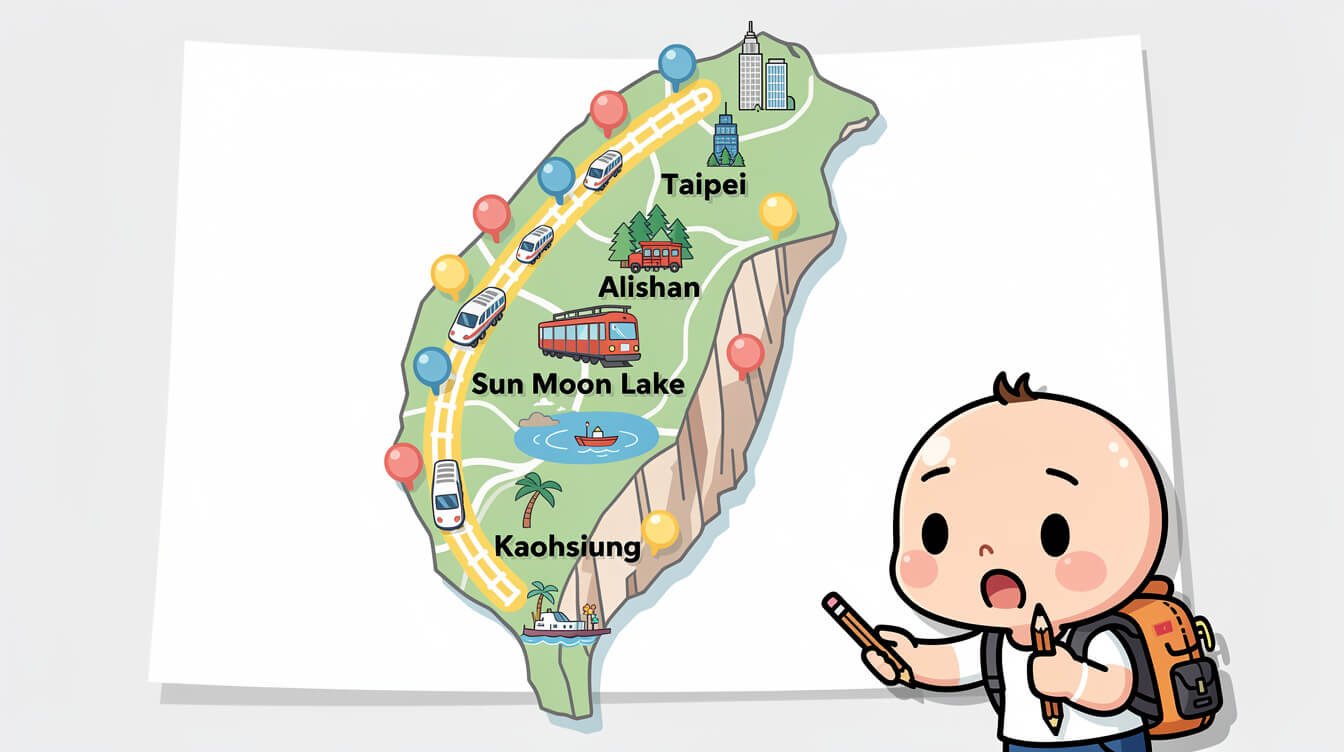
The single biggest first-timer mistake is trying to see too much in too few days. Taiwan looks small on a map but the mountain roads, the train transfers, and the sheer density of things worth stopping for eat time faster than you’d expect. Here’s the honest calculus.
5 days: Taipei only, with one or two day trips (Jiufen, Yangmingshan, or Yehliu). You’ll get the food, the temples, the night markets, and one taste of the countryside. Do not attempt Alishan or the east coast on a 5-day trip — you’ll spend more time in transit than at the destinations.
7 days: Taipei plus one substantial add-on. Either Sun Moon Lake and Alishan (mountain and tea country), or Hualien and Taroko Gorge (east coast dramatic canyon), or Tainan (Taiwan’s historic cultural capital). One region beyond Taipei, done properly.
10 days: Taipei, one mountain region, and one southern city. This is the sweet spot for most travelers — you get the full range without ever feeling rushed. A common route: Taipei → Sun Moon Lake → Alishan → Kaohsiung → Tainan → back to Taipei via high-speed rail.
14 days: Full country loop. Taipei, west-coast cities via HSR, Alishan and the mountains, Kaohsiung and the south, Kenting for beaches, then the east coast (Taitung, Hualien, Taroko) back to Taipei. This is the itinerary that actually earns Taiwan its “underrated” reputation — you’ll see three or four Taiwans in one trip.
For the day-by-day breakdown of each of these length options, our Taiwan travel itinerary guide spells out the specific route, hotels, and meals worth planning around.
Money, SIM, and Transport Basics
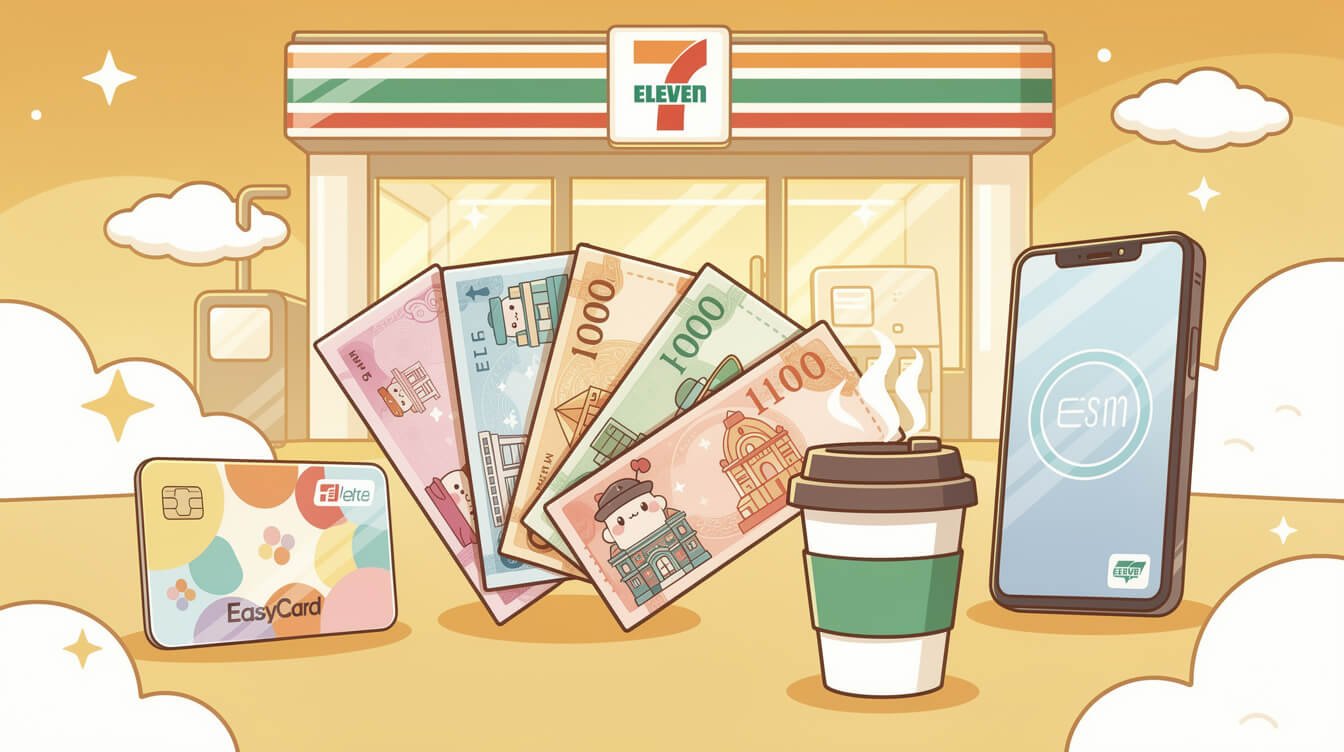
Handle these three things in the first 24 hours after landing and everything downstream gets easier.
Money: Taiwan’s currency is the New Taiwan Dollar (NT$ or TWD). Roughly USD 1 = NT$32 in early 2026. Bring some cash — night markets, small shops, and rural areas are cash-only. Credit cards work at hotels, department stores, and mid-tier restaurants but are unreliable at street food stalls. ATMs at 7-Eleven, FamilyMart, and post offices dispense TWD with foreign cards; withdrawal fees are usually NT$100 (about USD 3) per transaction, so pull larger amounts less often.
EasyCard: This single card is the most useful piece of plastic you’ll carry. Buy it at any MRT station or 7-Eleven for NT$100. It pays for MRT, buses, most trains, YouBike rental, convenience store purchases, and even some taxis. Top up with cash at any 7-Eleven or MRT station. Refund the unused balance at the airport when you leave.
eSIM or SIM: If your phone supports eSIM, buy one before you fly (Airalo, Ubigi, and Nomad all work well). If not, grab a Chunghwa Telecom or Taiwan Mobile SIM at the airport — bring your passport. Fifteen-day unlimited data runs around NT$700 (USD 22).
Transport: Taipei’s MRT is world-class — clean, punctual, English signage, USD 0.60–2 per ride. The High-Speed Rail (THSR) connects Taipei to Kaohsiung in 94 minutes. Local trains (TRA) are slower but cheaper and reach smaller towns. Intercity buses (Kuo-Kuang, Ubus) are budget-friendly and comfortable. Scooter rental is popular in coastal and mountain towns but requires an International Driving Permit and local license translation — don’t rent one without both, as unpermitted scooter accidents void your travel insurance.
Uber vs taxi: Uber operates in Taipei and Kaohsiung but has fewer drivers than yellow cabs. Regular taxis are metered, honest, and cheap. Most drivers don’t speak English — screenshot your destination in Chinese from Google Maps before getting in.
Common First-Timer Mistakes on a Taiwan Trip
Repeat visitors and Taiwan-based expats see the same mistakes on every wave of new arrivals. Skip these and you’ll be ahead of most tourists.
Booking July or August without thinking. Peak typhoon and humidity season. If your calendar is flexible at all, shift to spring or fall.
Only visiting Taipei. Taipei is fantastic but it’s roughly 20% of what makes Taiwan Taiwan. Even 7 days lets you add one region beyond the capital.
Ignoring the mountains. Alishan, Hehuanshan, and Taroko Gorge are the reason Taiwan gets called the “Ilha Formosa” (beautiful island) by early Portuguese explorers. Skip them and you’ve missed the country’s most photogenic landscapes.
Renting a car in Taipei. Parking is a nightmare, traffic is dense, and the MRT reaches everywhere you’d want to go. Rent a car only if you’re driving the east coast or the south.
Trying to visit every night market. Pick two or three and eat well. Bouncing between five in one week leaves you exhausted and eating small portions of everything.
Underestimating tea culture. Book at least one proper Taiwanese teahouse experience — Wistaria in Taipei, Xitou in the mountains, or any of the working farms in Alishan. It’s the country’s most underrated cultural export.
Forgetting to bring a souvenir home. The moment you’re back and someone asks “how was Taiwan?” you’ll wish you’d grabbed a t-shirt, a tote, or something specific. Speaking of which — we designed our Taiwan Merch collection specifically for people who’ve just come back from a trip and want to keep a piece of the island with them. Bubble tea graphic tees, night market prints, Formosa flag hoodies — all designed by Taiwan-loving artists.
Bring a Piece of Taiwan Home
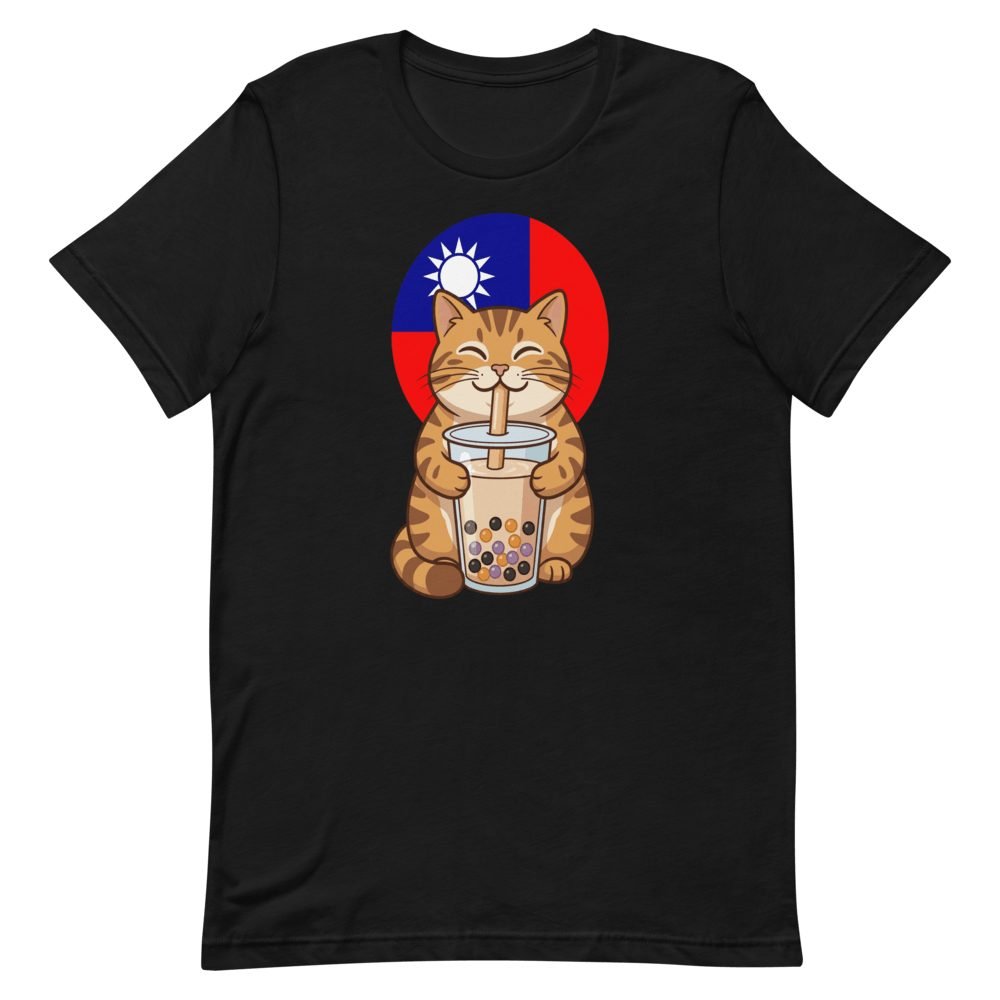
Every Taiwan trip deserves a souvenir that’s not another fridge magnet. Our Taiwan Boba Tea Cat tee captures the country’s kawaii-meets-street-culture vibe in one wearable design — the kind of piece you’ll actually wear back home.
Final Thoughts: Your Perfect Taiwan Trip Starts Here
Taiwan is not the loud, brand-name Asia trip that Instagram trained you to expect. It’s quieter, cleaner, safer, and more food-obsessed than any of the destinations that get more marketing spend. The trade-off is that you have to plan a little more thoughtfully — pick the right season, understand the weather swings, know a handful of cultural rules, and choose your itinerary length based on what you actually want to see.
Do that homework once, and Taiwan rewards you with the kind of trip travelers rave about for years afterward. It’s the country you’ll come back from thinking, “why did nobody tell me about this place.” Now you know. The next step is building the actual day-by-day plan — head over to our Taiwan travel itinerary guide and start mapping your route.
Taiwan in Your Inbox
Get our weekly dispatch of Taiwan travel tips, cultural stories, food guides, and new merch drops. No spam — just the good stuff, once a week.

Grab a Free Taiwan Sticker!
Drop your email and we’ll send you a limited-edition Taiwan sticker — plus insider access to new merch drops and island vibes.
No spam. Unsubscribe anytime.