Taiwan Hot Pot: Shacha, Solo Pots and the Winter Stews Locals Actually Eat
Walk into almost any Taiwanese home on a cold, wet January night and there’s a good chance a pot is bubbling in the middle of the table. Taiwan hot pot (火鍋, huǒguō) is the island’s comfort food, its party food and its Lunar New Year centerpiece all at once. But it isn’t one dish. It’s a whole family of pots, each with its own back story: a dipping sauce that arrived with postwar migrants, a stone pot borrowed from Korean restaurants, a one-person set that changed how Taiwanese people eat out, and winter tonic stews that open with the cold and close again in spring.
This guide covers all of them. You’ll learn what makes Taiwan hot pot different from the Sichuan or Japanese versions you may know, how to order at a solo-pot shop, how to build the shacha dipping bowl locals swear by, which winter stews to look for, and how to host a proper Taiwanese hot pot night at home with ingredients from any Asian grocery.
What Makes Taiwan Hot Pot Different
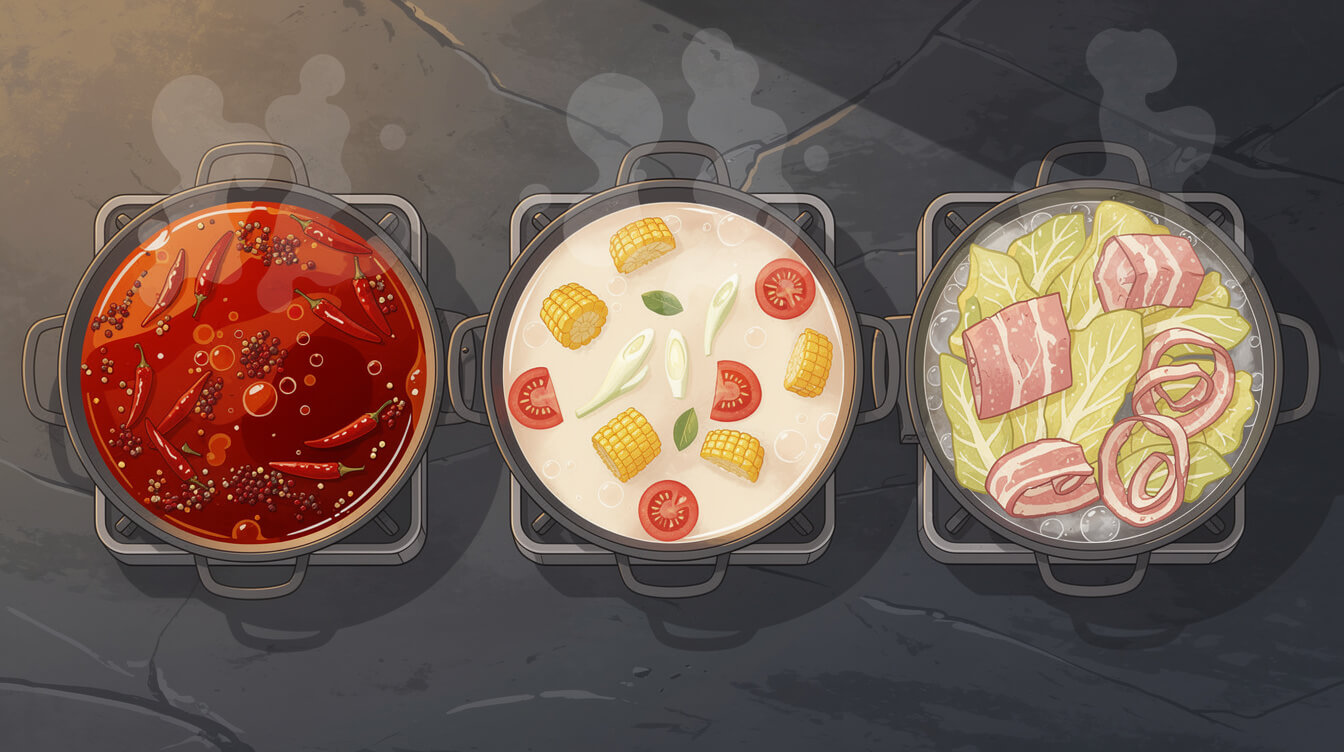
The basic idea is universal: a pot of simmering broth in the middle, raw ingredients around it, and everyone cooking as they go. What makes the Taiwanese version distinct is how many traditions got poured into the same pot over the last hundred years.
During the Japanese era, sukiyaki was fashionable among Taiwan’s urban elite. After 1949, people arriving from across mainland China brought their own pots: Sichuan chili broth, Cantonese da bin lou, and the sour pickled-cabbage pot of the Northeast. Chaoshan (Teochew) migrants brought shacha sauce, which became the island’s signature dip. Later, Japanese shabu-shabu gave Taiwan the word 涮涮鍋 and the idea of a light broth for swishing thin meat. Taiwan then remixed everything and added inventions of its own.
Here are the traits you’ll notice on your first visit:
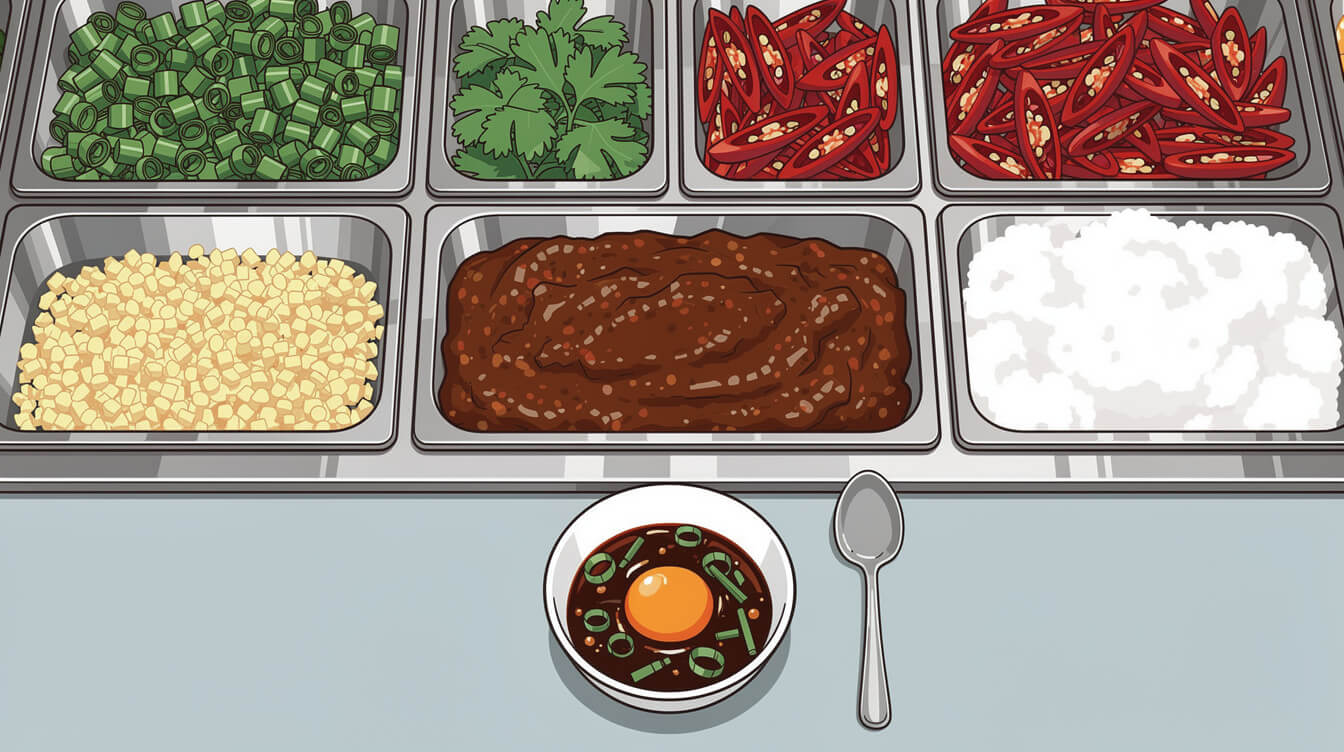
- The sauce bar is a big deal. Many restaurants have a self-serve condiment station, and building your own dipping bowl is part of the meal.
- One pot per person is normal. The individual hot pot (個人小火鍋) is everywhere, from mall food courts to neighborhood shops.
- Hot pot balls are their own food group. Fish balls, pork balls (貢丸), fish tofu, egg dumplings (蛋餃) and squares of pig’s blood rice cake (米血糕) all go into the pot.
- There’s a season. Hot pot is eaten all year, but winter brings ginger duck and mutton stew shops, and New Year’s Eve means a pot on nearly every family table.
Taiwan has loved this kind of meal for a long time. A Taipei newspaper report from November 17, 1973, quoted by food historian Tseng Ling-yi, said shacha hot pot shops could be seen “almost everywhere you look” in the city. Half a century later, that’s still true, just with more variety.
The Solo Pot: Why Every Diner Gets Their Own
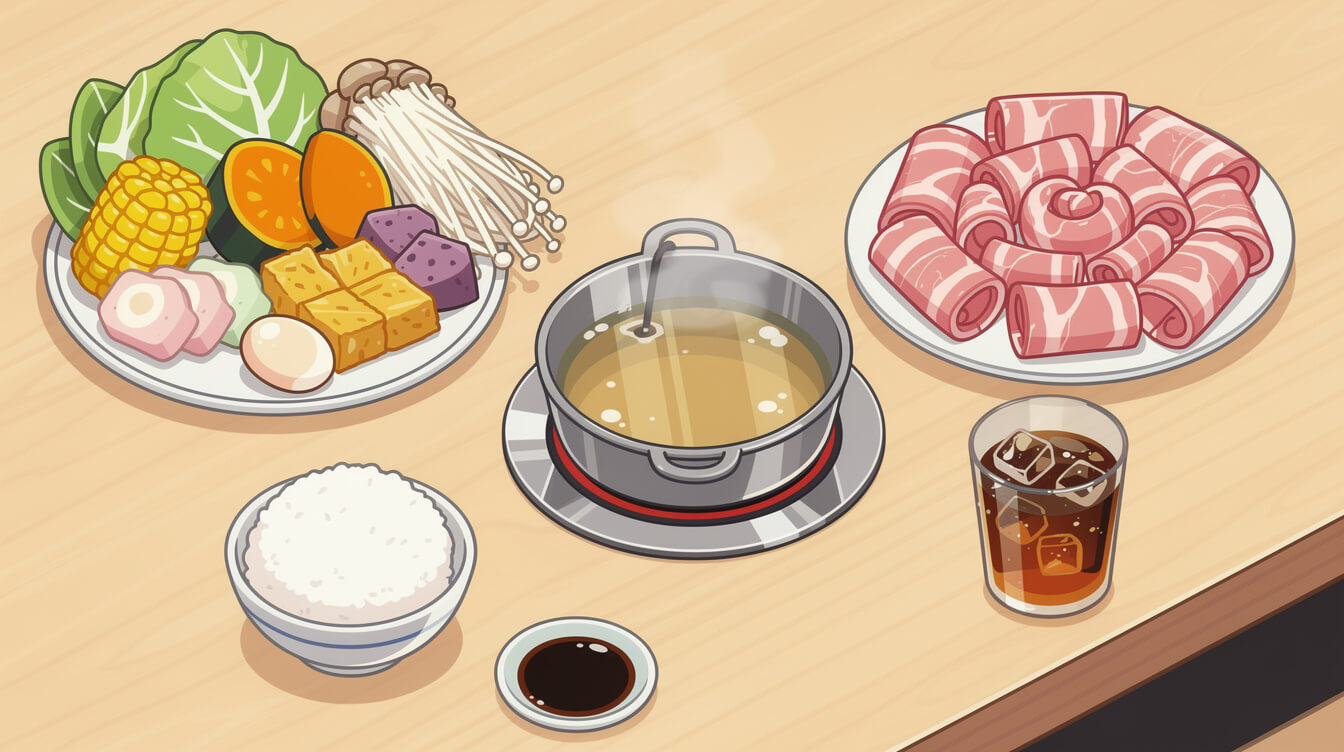
If you picture hot pot as a crowd crowded around one shared cauldron, Taiwan will surprise you. The everyday version here is the individual hot pot: a small pot on its own burner, your own broth and your own set meal.
Where it came from
A shop called 天喜迷你火鍋, near Taipei’s Ningxia Night Market, claims to be Taiwan’s first mini hot pot restaurant, opening around 1980 or 1981 (sources disagree on the year). The format fit a changing city. Office workers wanted a quick dinner alone, diners wanted their own broth, and many people simply preferred not to share a pot.
The format really took off with budget chains. 三媽臭臭鍋 opened in Yuanlin, Changhua in 1998, selling pots for NT$80, and made the cheap solo pot a national habit. Today the best-known budget chain is probably 石二鍋, a brand of the Wowprime (王品) restaurant group founded in 2009. Its sets start at roughly NT$250, which tells you how affordable this kind of meal still is.
How a solo-pot set works
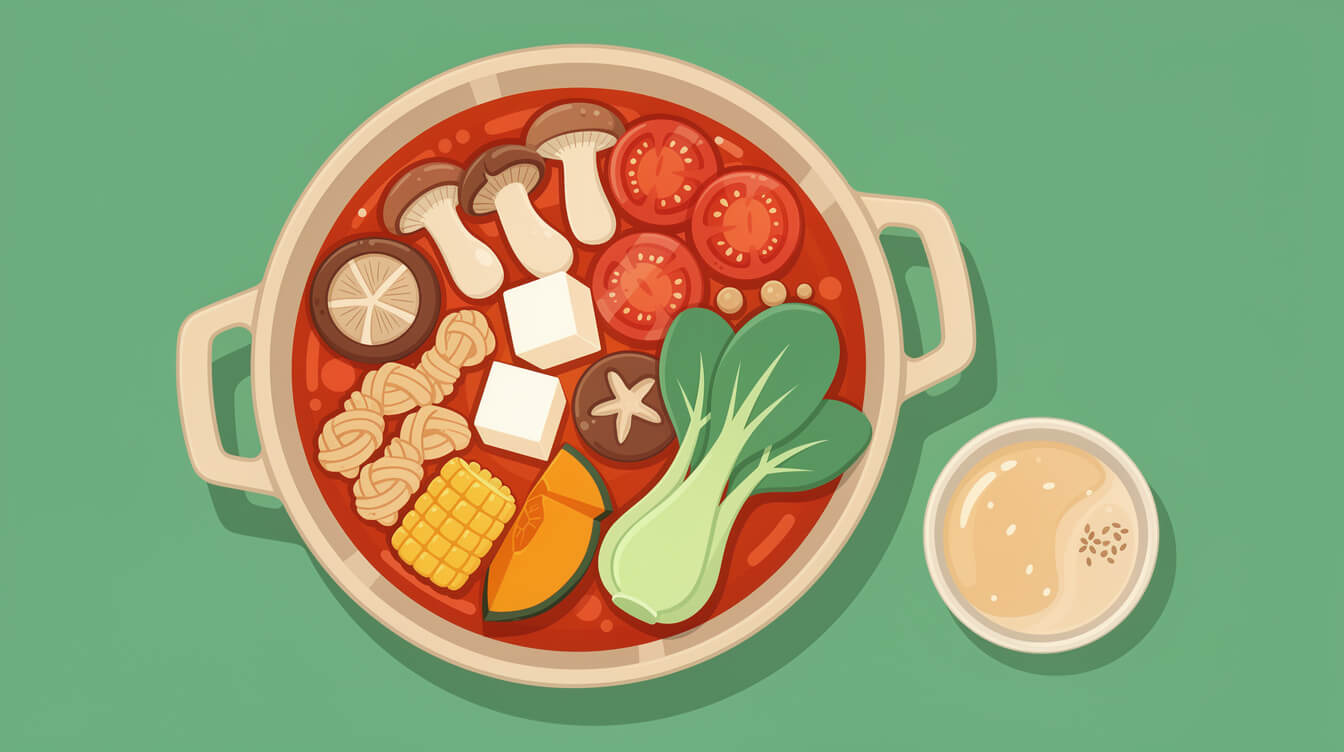
- Pick a broth. Common options include a light base (often kombu or pork bone), mala, kimchi, tomato, milk, and sour pickled cabbage.
- Pick a protein. Usually thin-sliced pork, beef, lamb or chicken, or seafood. Many shops offer double meat for a small upcharge.
- Get the vegetable platter (菜盤). It comes with the set: napa cabbage, corn, pumpkin, taro, mushrooms, tofu, a few hot pot balls and often an egg.
- Choose rice or noodles. Rice is often free and refillable, so ask.
- Visit the sauce bar, if there is one, and grab a drink.
The solo pot also gave rise to one of Taiwan’s most loved and most feared dishes: 臭臭鍋, the stinky tofu hot pot. It’s a one-person pot loaded with cabbage, sliced pork, pig’s blood rice cake, fried tofu skin, duck blood, pork intestine and, of course, chunks of fermented stinky tofu. It’s a night market staple and much milder than its name suggests.
Shacha: The Sauce That Defines the Taiwan Hot Pot Dipping Bar
If one flavor defines Taiwanese hot pot, it’s shacha (沙茶醬): a dark, grainy, savory paste made mostly from dried fish and shrimp, garlic, shallots and chili cooked down in oil. It tastes like the ocean, a little smoky and very deep.
From satay to shacha
The name gives the story away. 沙茶 is how “satay” sounds in Teochew and Hokkien. The sauce traces back to Southeast Asia, where Chaoshan emigrants picked up satay and adapted it. When large numbers of Chaoshan people came to Taiwan after World War II, many arriving with the Nationalist government, they brought shacha with them.
Shacha hot pot first caught on in Taipei, around Ximending and the old Jiancheng Circle food district, and in Kaohsiung. In 1962, a cook named 簡吉田 opened 第一沙茶火鍋 (“Number One Shacha Hot Pot”) by Jiancheng Circle.
The sauce also changed how Taiwanese people ate beef. Many older Taiwanese families avoided beef, partly out of respect for the farm ox. Historian Tseng Ling-yi’s 2018 study argues that shacha, introduced by Chaoshan migrants, helped shape new styles of beef eating in postwar Tainan. Tainan is also home to the most famous jar on the shelf: Bullhead (牛頭牌), started in the late 1950s by Teochew-born Liu Lai-qin and later based in Tainan. (Accounts of the exact founding year differ.) If you’ve read our beef noodle soup guide, it’s the same postwar beef story told through a different bowl.
How locals build a shacha dipping bowl
There’s no single correct recipe, but this is a classic starting point:
- 1 heaped tablespoon of shacha
- 1 to 2 teaspoons of soy sauce (or soy paste, 醬油膏, for something sweeter and thicker)
- A spoon of chopped scallion and a little minced garlic
- Cilantro and fresh chili, to taste
- A splash of black vinegar to lift it (optional)
- A raw egg yolk, stirred in
The egg yolk surprises visitors, but it’s a well-known habit, especially in the south. Food site Supertaste describes shacha with egg yolk as the classic southern way to eat it. Kaohsiung shacha hot pot shops bring house-made sauce and an egg to the table, and you stir the yolk in for a richer, silkier dip that coats each slice of beef. If you’re making this outside Taiwan, use pasteurized eggs.
Stone Pot, Mala and the All-You-Can-Eat Chains
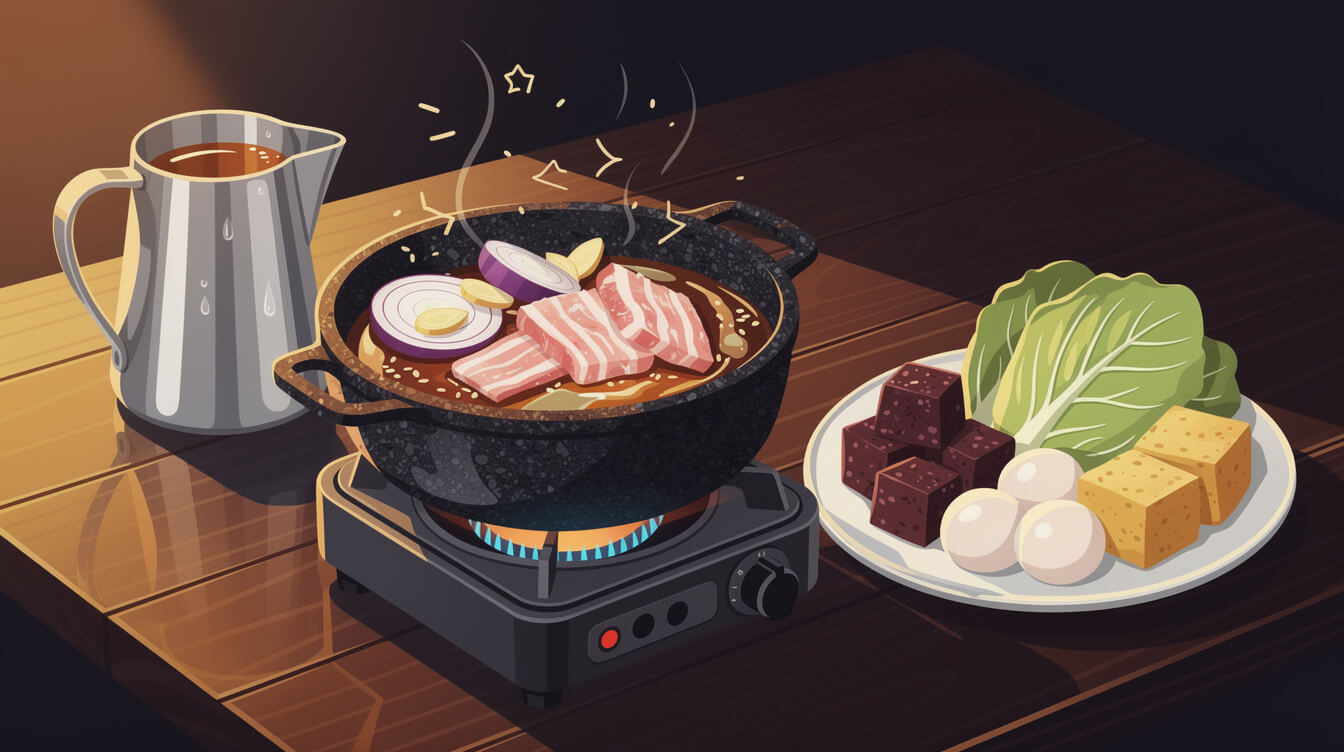
Once you’re past the solo pot, Taiwan’s restaurant hot pot splits into several distinct styles. Here are the ones you’ll see most.
Stone hot pot (石頭火鍋)
The idea came from Korean restaurants in Taiwan, and early shops did use real stone bowls before many switched to iron. What makes it different is the first step: before any broth goes in, onion, garlic, ginger, shacha and meat are stir-fried in the pot (爆香, “frying until fragrant”). Then the stock is poured over the sizzling base, so the broth tastes toasty and rich from the first sip.
The chain most linked with the style is 可利亞, founded in 1968. Taiwanese media describe it as the island’s first stone hot pot chain, starting in Taichung, and say it pioneered the all-you-can-eat format in 1992. A 2025 retrospective reported that its last branch closed in 2024. In Taipei, 簡吉田 of Number One Shacha Hot Pot learned the stone pot technique from the owner of a Korean restaurant on Emei Street in Ximending, and opened the much-loved 帝一火鍋 in 1976.
Mala hot pot (麻辣鍋)
Numbing and spicy, built on chili and Sichuan peppercorns. Taiwan’s first mala hot pot restaurant is generally given as 寧記, which opened in 1979 near Anhe Road and Tonghua Street in Taipei. Its founder was reputedly a former chef for Chiang Kai-shek. Taiwan’s mala has its own personality: many shops serve a split pot, half spicy and half mild, and the duck blood and tofu soaked in the red side are often the stars.
Today, the big name is 鼎王, which started at Taichung’s Zhongxiao Night Market in 1991 and grew into one of the best-known mala brands in Taiwan. For a bigger group, all-you-can-eat (吃到飽) chains such as 馬辣 let a table work through mala broth and a long list of meats for one set price.
Pickled cabbage and pork belly pot (酸菜白肉鍋)
A pale, sour broth packed with fermented napa cabbage and thin slices of pork belly. It comes from Northeast China and was brought to Taiwan by mainlanders after 1949. One documented early home for it was a Taipower staff canteen in the early 1960s. Sun Yun-suan, then working at Taipower and later Taiwan’s premier, had studied in Harbin and brought in a classmate to run it. That canteen still operates today as 台電勵進餐廳, and the dish is now a winter favorite across Taiwan.
Winter Stews: Ginger Duck and Mutton Hot Pot Season
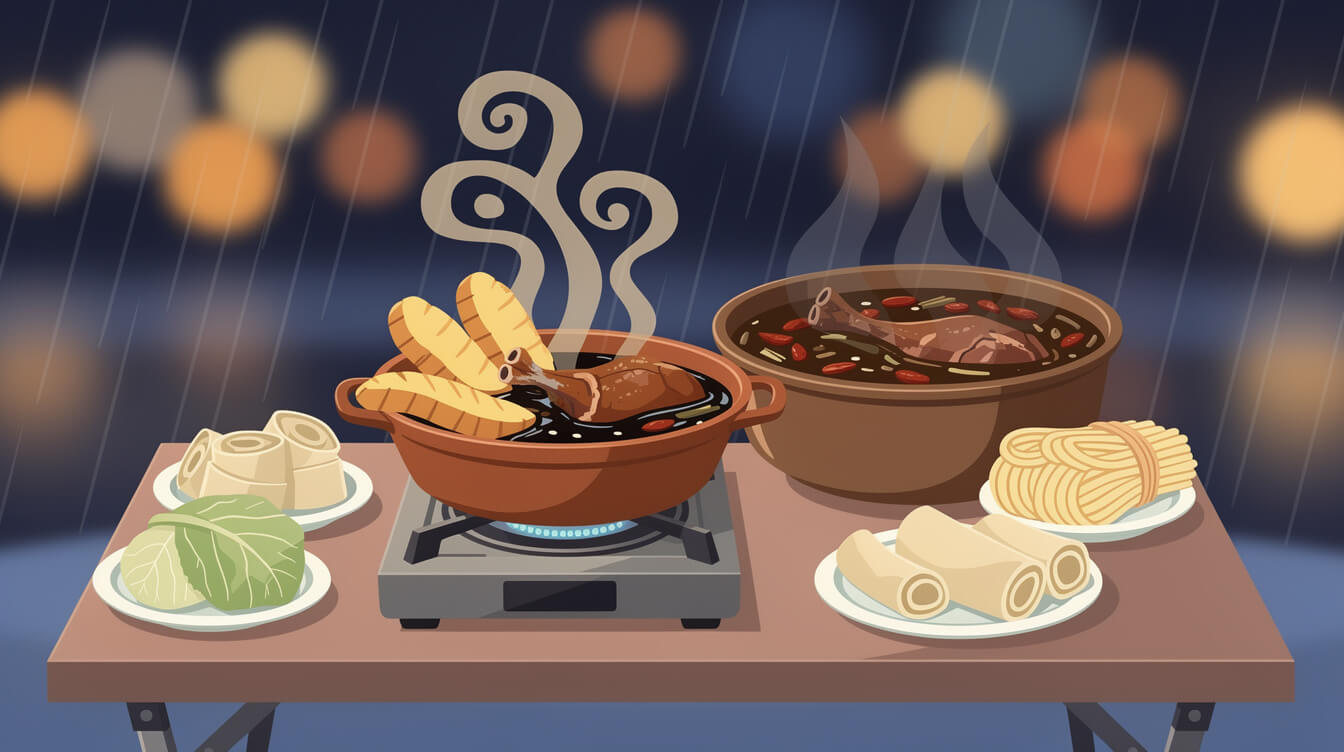
Every autumn, some Taiwanese restaurants come back to life. Shutters that stayed down all summer roll up, gas burners come out onto the sidewalk, and the smell of sesame oil and ginger fills the street. That’s the start of 進補 season, when people eat warming tonic foods through the cold months.
The traditional starting point is 立冬, the “Start of Winter” on the solar calendar. In 2026 it falls on Saturday, November 7, and plenty of families will mark it with a pot of something rich.
Ginger duck (薑母鴨)
Duck (usually the red-faced Muscovy, 紅面番鴨) simmered for hours with black sesame oil, rice wine and a huge amount of old, mature ginger, served in a clay pot over a live flame. Add cabbage, tofu skin and duck blood as you go, then finish by dropping thin mian xian noodles into what’s left of the broth. Our ginger duck deep dive explains why the name doesn’t mean “mother duck” and why the bird on the sign isn’t the bird in your pot.
Mutton hot pot (羊肉爐)
A dark herbal broth with bone-in goat or lamb, goji berries and Chinese medicinal herbs, eaten with a dipping sauce of fermented tofu. The town most tied to it is Gangshan in Kaohsiung, where mutton is one of the “three treasures” along with honey and chili bean paste. According to a 2025 timeline by the Taiwanese travel magazine 旅讀, Gangshan’s 大新羊肉爐 traces back to 1926, when its founder, 余水勝, sold lamb door to door from a shoulder pole. That would make it one of the oldest hot pot businesses still running in Taiwan.
Winter is the season for eating these warming stews, and for layering up. If you’re dreaming of a chilly Taipei night with a steaming clay pot, our Taiwanese Beef Noodle Cat Vintage Art Crew Neck Sweatshirt was made for exactly that kind of evening. And if you’re planning a winter trip, our guide to Taiwan in December explains why buildings without central heating make a hot pot dinner feel even better.
How to Host a Taiwan Hot Pot at Home
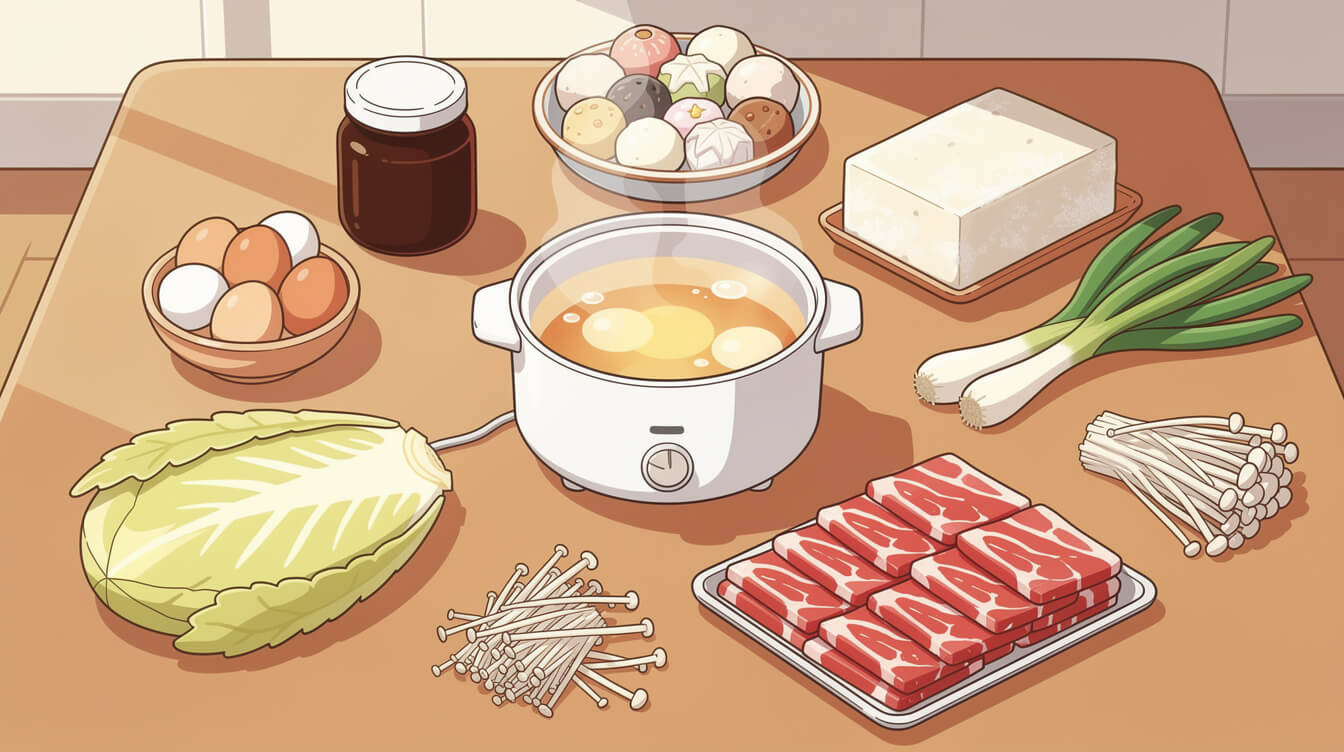
The good news: Taiwan hot pot is one of the easiest Taiwanese meals to recreate abroad. You don’t need special skills, just a burner, a pot and a trip to an Asian grocery.
Equipment
- A heat source on the table: an electric hot pot, an induction plate or a portable butane burner. Only use butane in a well-ventilated room.
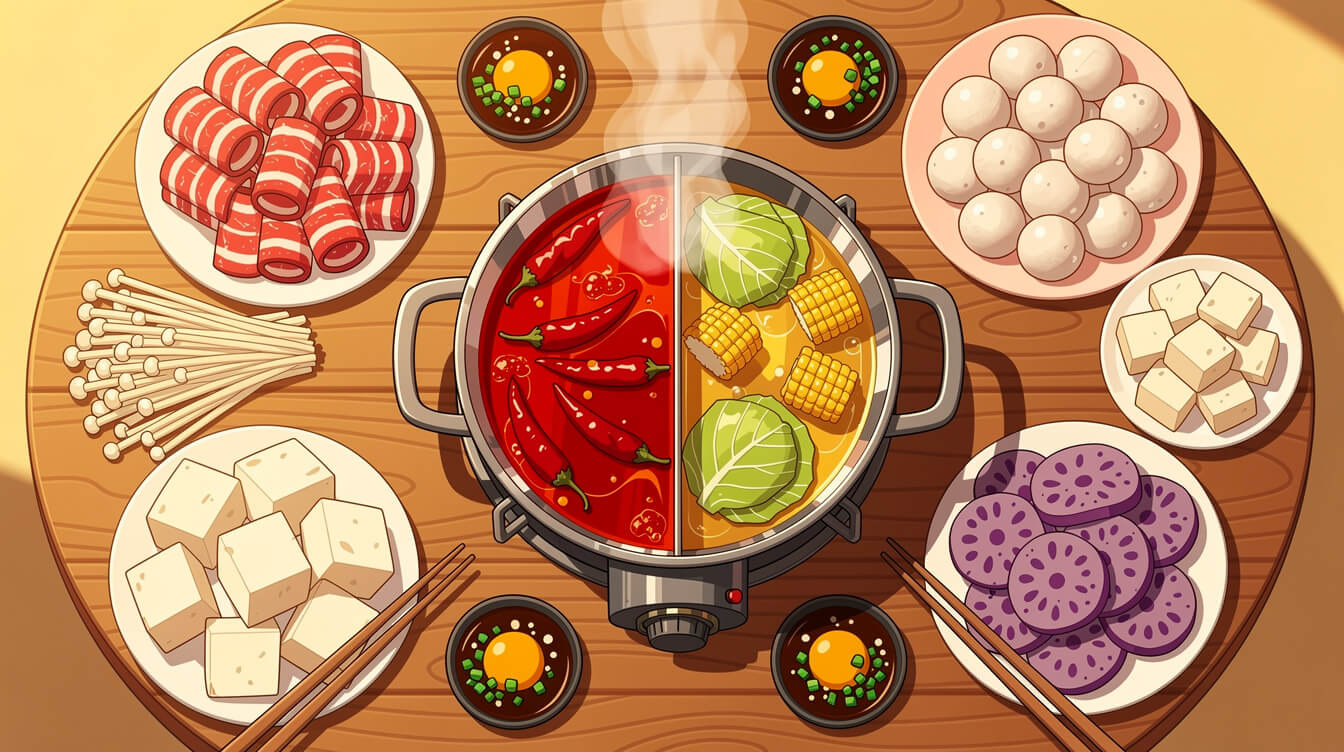
- A wide, shallow pot, ideally a split “yin-yang” pot so you can do one spicy broth and one mild.
- Small slotted ladles so people can fish out their food, plus one soup ladle.
Two easy broths
Light Taiwanese base: simmer pork bones (or chicken wings) with a strip of kombu, chunks of daikon, a corn cob and a few slices of ginger for an hour. Skim, season lightly with salt and finish with a splash of rice wine. Keep it plain. The flavor comes from what you cook in it and from the dipping sauce.
Shacha base: fry sliced onion, garlic and a spoonful of shacha in a little oil in the pot, stone-pot style, then pour in your stock. Add taro: shacha hot pot shops often fry it first so it holds together, then slowly melts into the broth and thickens it.
Shopping list
- A jar of shacha. Bullhead is the best-known Taiwanese brand.
- Thinly sliced meat: look in the freezer aisle for “hot pot” or “shabu” cuts of beef, pork or lamb.
- Hot pot balls: fish balls, pork balls, fish tofu and egg dumplings, all in the frozen section.
- Vegetables: napa cabbage (essential), enoki, shiitake, corn, daikon, taro, pumpkin and leafy greens like tong ho.
- Tofu: firm tofu, fried tofu puffs and tofu skin. Freeze firm tofu the night before; it turns spongy and soaks up broth.
- Noodles or rice to finish.
- Sauce-bar extras: soy sauce, black vinegar, scallions, garlic, cilantro, chilies and eggs.
Set out the sauce ingredients in small bowls so guests can build their own dip. That part of the meal matters as much as the pot. To drink, Taiwanese tables often have cold beer. Our Taiwan Beer guide covers what to pour.

Dress for Hot Pot Night
The Taiwan Beer Draft 18 Days tee is our best-selling design, a nod to the bottle that shows up on so many Taiwanese dinner tables. It’s a perfect host shirt for your first hot pot party.
Hot Pot Etiquette: Serving Chopsticks, Cooking Order and the Last Bowl
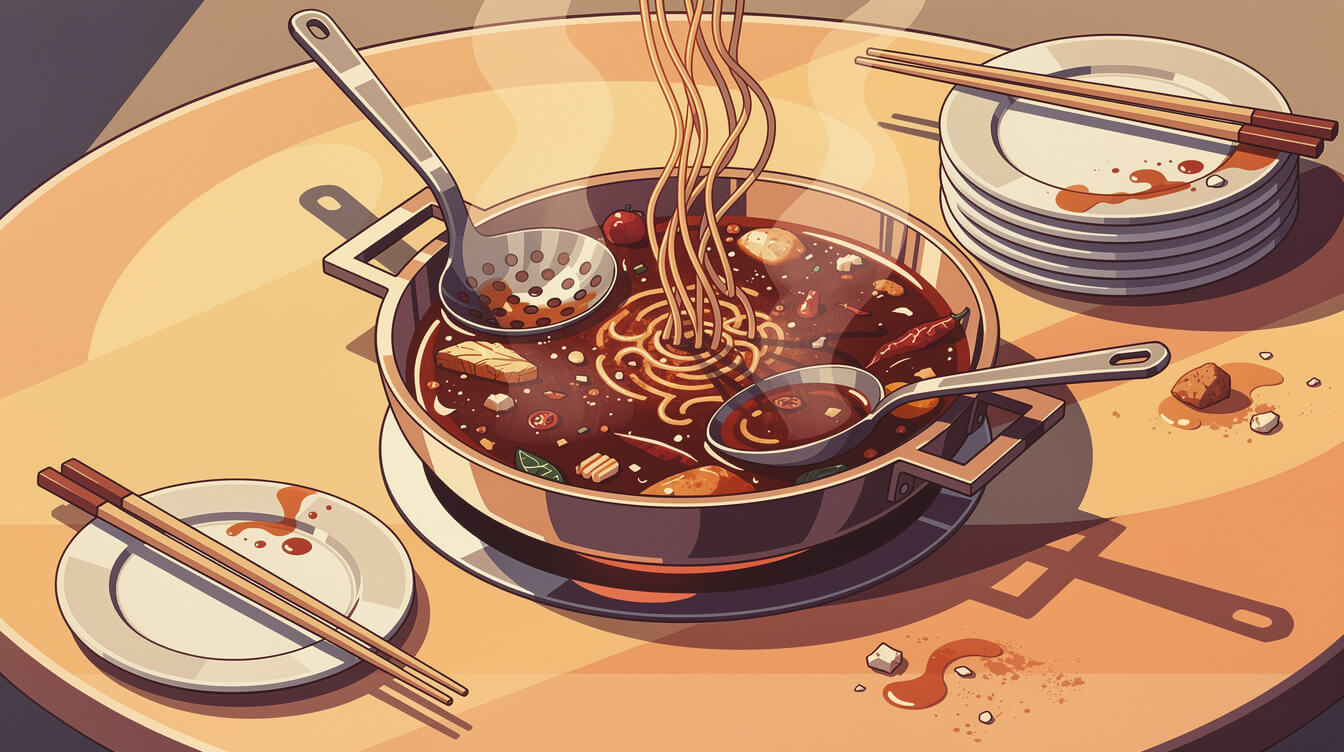
Hot pot is relaxed, but a few habits will make you look like you’ve done this before.
Use the serving utensils
At a shared pot, use the communal ladles or serving chopsticks (公筷) to add and remove food, not the chopsticks you eat with. Taiwan has promoted the “serving chopsticks and spoons” habit (公筷母匙) since around the early 1980s as a public-health measure. Many families and restaurants still follow it, especially with older relatives at the table.
Cook in a sensible order
- Taste the broth first, before anything goes in.
- Slow things go in early: corn, daikon, taro, pumpkin and frozen tofu. They flavor the broth as they cook.
- Balls and dumplings next. Most are ready when they float.
- Meat goes in last and comes out fast. Swish thin slices for a few seconds until the color changes. Don’t drop a whole plate in and walk away.
- Leafy greens need well under a minute.
Other small courtesies
- Don’t dig around in the pot hunting for one particular piece.
- Skim the foam off the top now and then, and top up the broth when it gets low. Many restaurants refill it for free.
- At a solo-pot shop, you’re on your own clock, so don’t feel rushed.
- Tipping isn’t customary in Taiwan. Some sit-down restaurants add a 10% service charge, which will be on the bill.
Save room for the ending
The best bowl of the night is often the last one. After an hour of cooking, the broth is packed with flavor from everything that went into it. Drop in noodles or a scoop of rice and let it soak up the broth, or crack in an egg. At a ginger duck shop this is the mian xian moment. At home it’s the reward for whoever stayed to help clean up.
Taiwan Hot Pot FAQs
What is hot pot called in Taiwan?
火鍋 (huǒguō), literally “fire pot.” The individual version is 個人小火鍋 or just 小火鍋 (“small hot pot”), and the Japanese-style light broth is often called 涮涮鍋, after shabu-shabu.
How is Taiwan hot pot different from Chinese hot pot?
Mainland China has many regional hot pot traditions, and Taiwan absorbed several of them after 1949. What’s distinctly Taiwanese is the mix: shacha as the default dip, the one-person solo pot as an everyday meal, local styles like stinky tofu hot pot and stone hot pot, and huge varieties of hot pot balls and tofu.
Is Taiwanese hot pot spicy?
Only if you order it that way. Mala pots are hot, but the most common everyday broths are mild. Split pots let a table do both.
How much does hot pot cost in Taiwan?
Budget solo pots start at roughly NT$250 at chains like 石二鍋, and night market stinky tofu pots can be cheaper. All-you-can-eat buffets and premium hot pot restaurants cost noticeably more. Expect prices to vary by city and to change over time.
Can vegetarians eat hot pot in Taiwan?
Often, yes. Taiwan has a strong vegetarian food culture, and many hot pot shops offer a vegetable or tomato broth with plenty of tofu, mushrooms and greens. Ask about the broth base, since a “vegetable” broth may still use meat stock. Our guide to vegan Taiwan explains how to read 素食 labels.
When do Taiwanese people eat hot pot?
All year round, but it peaks in winter. On Lunar New Year’s Eve, the family reunion dinner is called 圍爐, “gathering around the stove.” Historically the stove meant a brazier for warmth: a 1769 Qing gazetteer of Penghu describes setting a fire under the table and drinking around it. Today, for many Taiwanese families, a New Year’s Eve without a hot pot doesn’t feel complete. Read more in our Taiwan Lunar New Year guide.
Is hot pot a night market food?
Some kinds are. Stinky tofu pots and small solo pots are common at night markets, and mala chain 鼎王 got its start at one. Our Taiwan night market guide can help you find them.
Final Thoughts: One Pot, Many Stories
A single meal of Taiwan hot pot can include a sauce that traveled from Southeast Asia through Chaoshan, a stone-pot method picked up from Korean restaurants, a sour cabbage broth from the far north of China, and a solo-pot format that is pure modern Taiwan. That’s what makes it worth learning about. It’s history you can eat, one ladle at a time.
If you’re in Taiwan this winter, try at least three: a solo pot for a quick lunch, a shacha pot with a raw egg yolk stirred into your dip, and ginger duck or mutton stew once 立冬 arrives on November 7. If you’re at home, pick up a jar of shacha, invite a few friends, and let the pot do the rest. And if your winter plans include the holidays, our Christmas in Taiwan guide shows how the island celebrates when the hot pot season is at its peak.
A Postcard From Taiwan, Every Week
Food deep dives, seasonal traditions and the stories behind Taiwan’s favorite dishes, straight to your inbox. No spam, unsubscribe anytime.

Grab a Free Taiwan Sticker!
Drop your email and we’ll send you a limited-edition Taiwan sticker — plus insider access to new merch drops and island vibes.
No spam. Unsubscribe anytime.