Beitou, Taipei: The Volcanic Mountain District Hiding Inside the City (Beyond the Hot Springs)
Say Beitou, Taipei to anyone who has spent five minutes reading about the city and they will immediately say “hot springs” back at you. That’s fair. Beitou has been synonymous with volcanic bathing since a German sulfur merchant built the first hot spring club here in 1894, and it hasn’t really stopped since. But here’s the thing that nobody puts on the tourist brochure: Beitou is one of the most geologically weird, culturally layered, and quietly beautiful neighborhoods in all of Taiwan — and most of what makes it special has nothing to do with soaking in a bath.
This is the guide to Beitou, Taipei for people who want to understand the whole neighborhood — the dormant volcano hiding above it, the indigenous tribe who called it “Residence of the Witch,” the only mineral in the world named after a Taiwanese place, and a ship-shaped green library that draws architecture nerds from three continents. We’ll cover the hot springs, of course. But we’ll get to those last, because Beitou has been playing the second act for a hundred years and it deserves to open the show.
A Volcanic Neighborhood Hiding Inside Taipei
Beitou is the largest and northernmost of Taipei’s twelve districts — 56.8 square kilometers of mountain, mist, and steaming valley, with roughly 241,000 people crammed into the flat parts at the bottom. It sits at the very foot of Yangmingshan National Park, and Yangmingshan is where the trick lives.
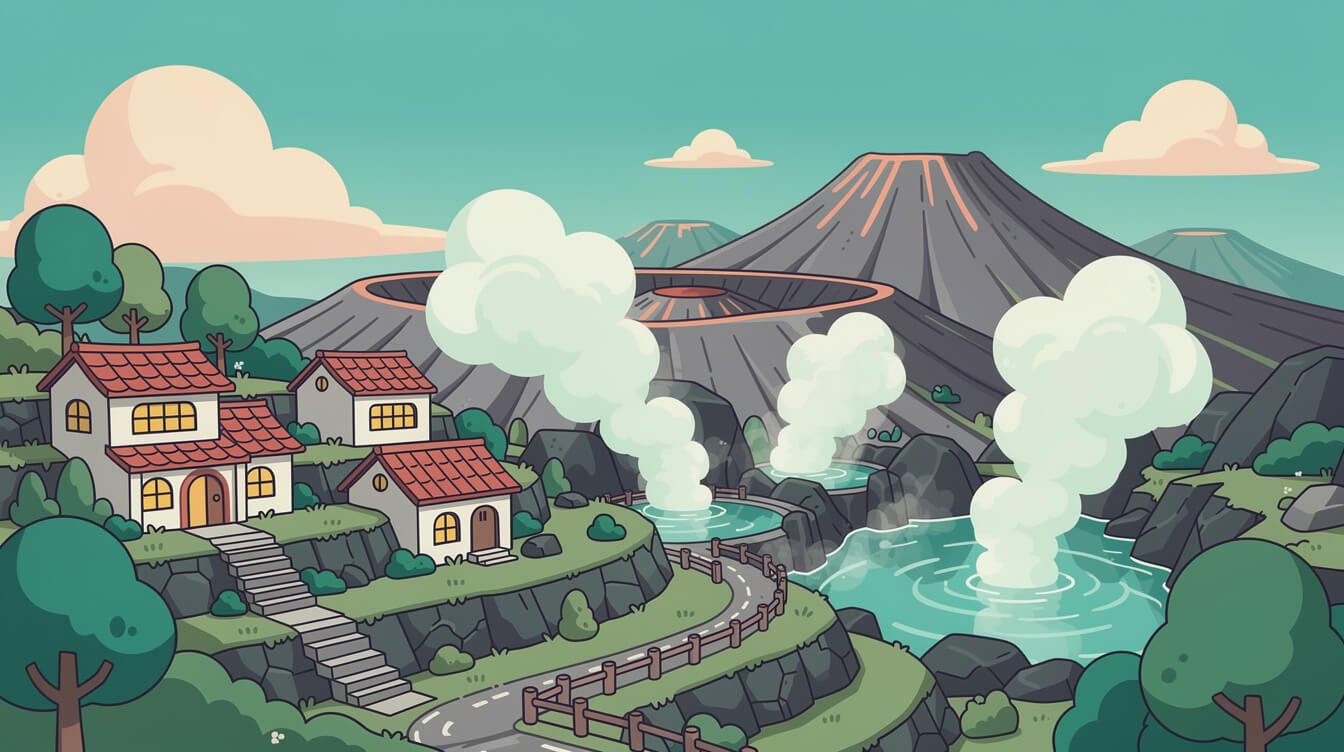
Yangmingshan is a cluster of dormant volcanic peaks — including Seven Star Mountain (七星山 or Qixingshan), a stratovolcano that hasn’t erupted in about 6,000 years but is very much still classified as active. The park sits on the Datun Volcano Group, and the seismic-geologic paperwork on this thing has been quietly nervous for decades. The magma chamber, according to the Ministry of Science and Technology’s own studies, sits somewhere around 20 kilometers beneath your feet.
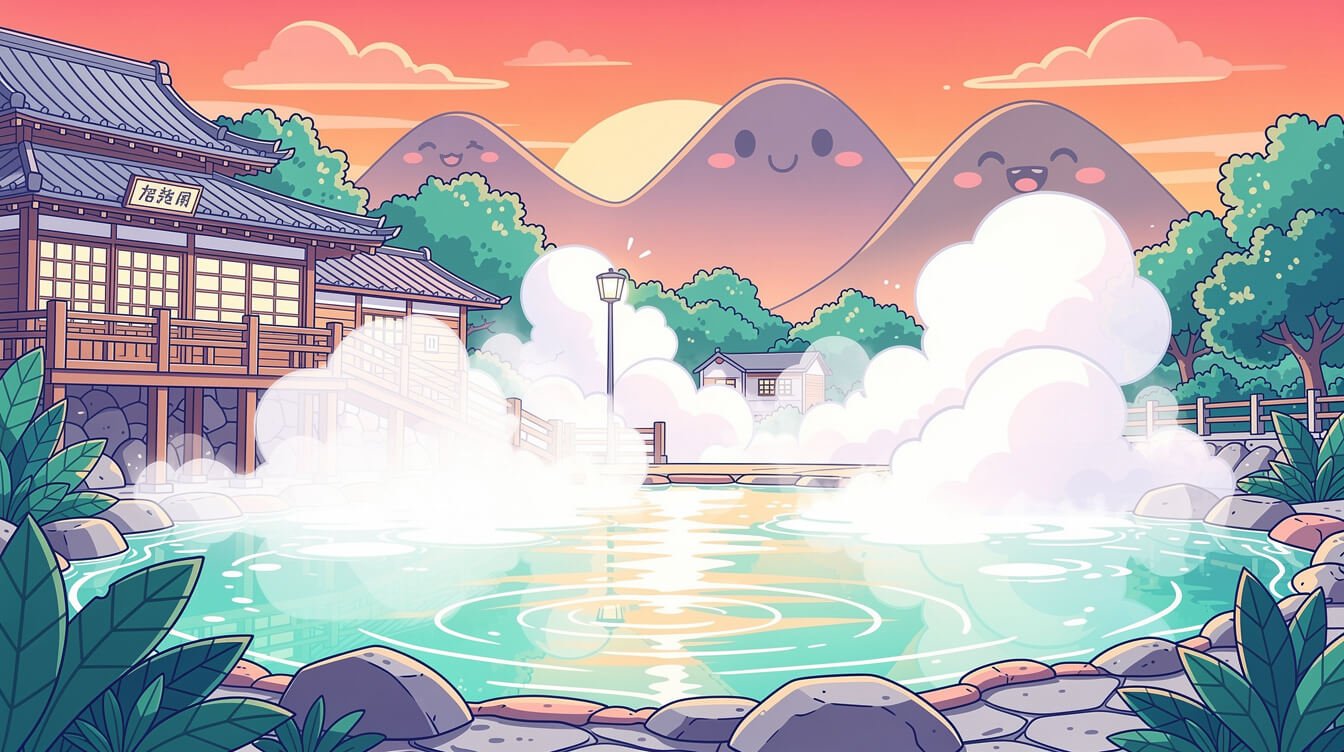
What this means for Beitou is that the neighborhood is essentially a volcano’s downstairs bathroom. Every one of those hot spring hotels you’ll pass on the way from Xinbeitou MRT is fed by geothermally heated groundwater percolating out of that magma chamber. There are three distinct sulfur-water types running through the district — “white sulfur” from the Liuhuanggu (硫磺谷) and Longfenggu (龍鳳谷) thermal valleys, “green sulfur” from the acidic pool at Beitou Thermal Valley, and an “iron sulfur” spring further east along Xingyi Road. Different chemistry, different colors, different smells, all from the same restless volcanic engine.
You can see the volcanic connection most dramatically at the Sulfur Valley Recreation Area (硫磺谷遊憩區) uphill in Yangmingshan, where geysers spit steam through the rocks and the landscape genuinely looks like you’ve walked into a crater. It’s a 30-minute walk from Xinbeitou MRT or a quick minibus ride, and it is one of the only places in a major Asian capital where you can stand inside what is essentially an active volcanic feature and buy a bottle of water on the way out.
The Ketagalan and the “Residence of the Witch”
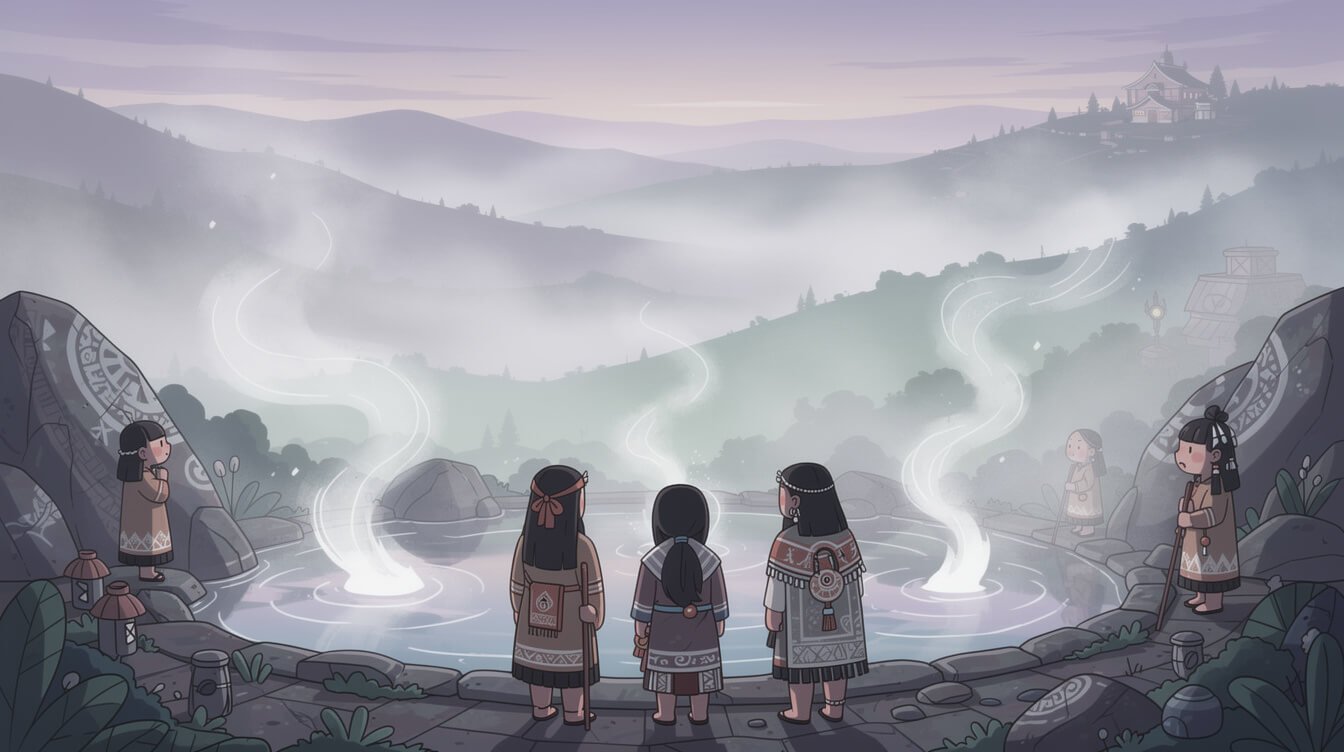
Long before any German sulfur merchants and long before Japan renamed the place Hokutō, the Taipei basin belonged to the Ketagalan tribe, one of the plains-dwelling indigenous peoples of northern Taiwan. The Ketagalan were aware of Beitou’s hot springs. They just didn’t want anything to do with them.
They called the area “Pataauw” (北投 is the Chinese phonetic rendering, and it’s where the district’s name eventually came from), which loosely translates as “Residence of the Witch” — a name inspired by the year-round mist that pours out of the sulfur valleys and envelops the neighborhood in a supernatural haze. In their cosmology, the steaming ground wasn’t a spa opportunity. It was a place where something powerful lived, and where you did not, under any circumstances, casually take off your clothes.
Taiwan’s early Han Chinese settlers didn’t develop a bathing culture around the springs either. It took the Japanese, arriving in 1895, to look at all this free scalding sulfur water and immediately see hotels. The indigenous history of Taiwan is full of moments like this — a whole worldview about a place, quietly overwritten by whoever arrived next with a bigger economy.
You can still get pieces of the Ketagalan story at the Ketagalan Culture Center (凱達格蘭文化館) right across from Xinbeitou MRT. It’s a 12-story building on the site of an old military police base, opened in 2002, and it houses art and cultural artifacts from all 16 of Taiwan’s officially recognized indigenous peoples — not just Ketagalan. Admission is free. Most tourists walk right past it on their way to a foot bath. Don’t be one of them.
Hokutolite: The Only Mineral Named After Taiwan
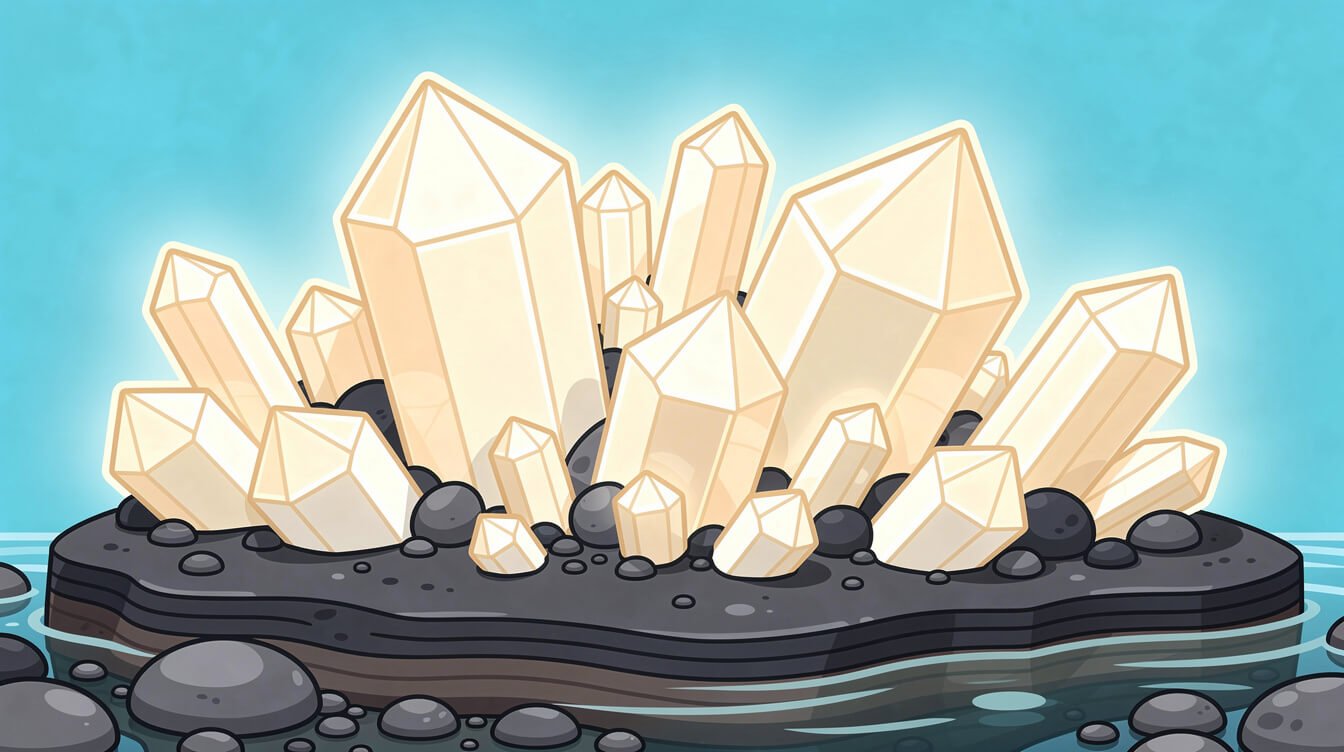
Here is a thing that not one of the top-ranking Beitou guides will tell you, and that we think is the single coolest fact about the neighborhood: the water flowing under Beitou is radioactive enough to create its own mineral, and the mineral is named after Beitou.
The story goes like this. The spring water pouring out of Beitou Thermal Valley is high in radium — a naturally occurring radioactive element. About 150 meters downstream of the source, the radium-rich water reacted with the andesite rocks lining the creek bed, over years and years of contact, and slowly grew crystals. Cream-and-white, diamond-shaped, faintly luminescent. A Japanese mineralogist named Yamashita Denkichi cataloged them formally in 1912 and named the mineral Hokutolite — after Hokutō, the Japanese name for Beitou.
This is the only mineral in the world named after a place in Taiwan. It’s also one of only a handful of naturally radioactive minerals that regular tourists can go and see. Beitou Creek, running through Beitou Hot Spring Park, is one of only two rivers on the planet where Hokutolite has been documented forming naturally — the other is in Tamagawa, Japan, and even there it’s rarer than in Beitou.
The Taiwanese government now protects the Hokutolite deposits as a natural monument. You cannot legally take a chunk of Beitou stone home in your carry-on. What you can do is walk along the fenced sections of the creek in Hot Spring Park and see the cream-colored crystalline layers on the rocks — evidence of geology quietly writing itself into the landscape while joggers pass by ignoring it.
Beyond the Baths: Beitou’s Non-Hot-Spring Attractions

Beitou has enough non-bathing sights to fill a full day. Some are famous, some are extremely famous only to a very specific tribe of architecture-and-design people, and one of them is a library that looks like a wooden ship parked in a forest.
Start at the Beitou Public Library (北投圖書館), which opened in 2006 as an official branch of the Taipei Public Library system. It was the first building in Taiwan to earn a Diamond rating from the EEWH — Taiwan’s green building certification system, which is the local equivalent of LEED Platinum with the dial cranked up. The library gets 10% of its power from rooftop solar panels, harvests 40% of its water from rain that filters through a soil-and-plant layer on the roof, and uses natural cross-ventilation and low bookshelves to keep the interior lit and cool without heavy HVAC. It looks like a wooden Japanese ship — a nod to Beitou’s Japanese-era timber architecture — and you can see the whole silhouette best from the lotus pond just north on Zhongshan Road.
Pop in briefly. It is a real, active library, so keep your voice down, and no photos are allowed inside. That’s the point. It’s a building designed to be inhabited, not photographed.
From the library, walk five minutes to the Xinbeitou Historic Station — the wooden 1916 train station that used to sit at what is now the Xinbeitou MRT stop. In 1988 it was disassembled, sold for a symbolic dollar to a folk village in Changhua County that later closed, and left in pieces. In 2017, after years of local petitioning, it was reassembled at its original location. It now sits right beside the MRT station, houses a small historical exhibit, and hosts fruit and craft stalls on weekends. It is the most restored-old-thing an old-thing can be.
Keep walking and you’ll hit Qixing Park, Beitou Hot Spring Park, and (if you’re up for it) the Beitou Museum — one of the best-preserved wooden Japanese buildings in Taiwan, built in 1921 as the Kazan Hot Spring Hotel and repurposed during World War II as lodging for Kamikaze pilots the night before their final missions. That is not a sentence you write about a lot of buildings.
Speaking of Taipei’s other under-the-radar neighborhoods worth a full day, check out our Xinyi District guide for the glassy skyscraper side of the city, or our Zhongshan neighborhoods guide for the three completely different sub-districts hiding around one MRT stop.
Puji Temple and Beitou’s Japanese Colonial Layer
If the Ketagalan gave Beitou its name and the volcano gave it its water, the Japanese gave it almost everything else you can see with your eyes. The neighborhood functioned essentially as a Japanese resort town from 1895 to 1945 — first for military officers and merchants, later for Japanese and upper-class Taiwanese tourists, and by the 1920s Hokutō was a full-blown geisha-and-onsen scene.
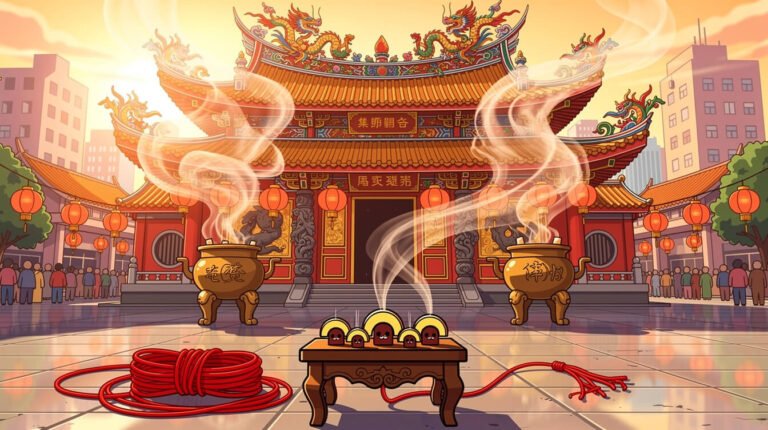
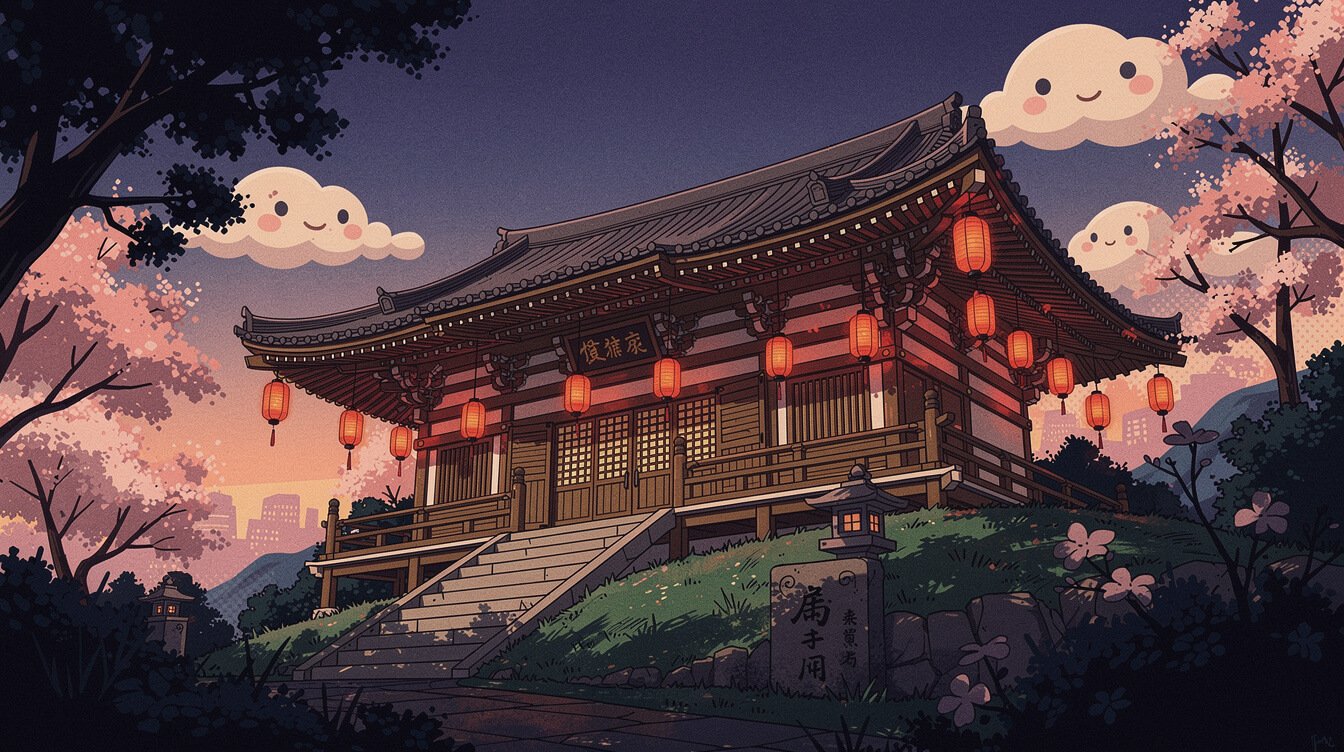
Puji Temple (普濟寺), tucked into the hillside above Hot Spring Park, is the quiet monument to that era. It was built in 1905 with donations from Japanese railway workers and dedicated to Avalokiteshvara, the Buddhist goddess of mercy. It belongs to the Shingon sect of Japanese Vajrayana Buddhism, headquartered at Koyasan in Wakayama — one of only a handful of Shingon temples that survived on Taiwanese soil after the Japanese left. The temple itself is small, simple, and wooden. There’s no gift shop. Bring a coin for the collection box and go.
Walking around the rest of the hot spring zone, you’ll pass the Beitou Hot Spring Museum (originally the 1913 Hokuto Public Bathhouse — one of the largest in East Asia when it opened), Plum Garden (the summer home of the Chinese calligrapher and politician Yu Youren), and Longnice Hot Spring — the oldest continuously operating bathhouse in Beitou, with a modest stone stela out front commemorating a visit by then-Crown Prince Hirohito in 1923. Half of Beitou is basically a walking Japanese colonial architecture exhibit that just happens to be free.
Reading the neighborhood this way — as a layered cultural site rather than a big outdoor bathtub — is how you get the most out of a Beitou day trip. If you’re new to Taiwan’s broader bathing culture and want the wider picture, our Taiwan hot springs guide puts Beitou in context with the island’s other volcanic bathing spots from Yangmingshan to Green Island.
Getting to Beitou and When to Actually Go
Beitou is stupidly easy to reach. From Taipei Main Station, take the Red Line (Line 2) north to Beitou Station. That’s 12 stops. Then transfer to the pink two-stop shuttle line and ride it two stops to Xinbeitou Station (新北投). The shuttle train itself is worth the trip — it’s decorated inside like a mobile hot spring commercial, with images of the district’s landmarks painted on the walls and ceiling. Total travel time from Taipei Main: about 40 minutes. Total cost: NT$25 (roughly US$0.80).
The single best time to visit is between late October and early April. Taipei winters are cool and drizzly, which is objectively the correct weather for soaking in scalding sulfur water and then eating a hot spring egg. Summer in Beitou is possible but painful — 33°C air plus sulfur steam plus a hot bath is a specific kind of suffering. If you’re in Taipei from June through September and still want to visit, come in the early morning or after sunset, stick to the museum-and-library circuit, and save the actual bath for a shorter session in a private room with air conditioning.
Almost everything in Beitou closes on Monday. The Museum, Thermal Valley, Ketagalan Culture Center, and Plum Garden are all Monday-closed, so build your day around Tuesday through Sunday. If you want an efficient itinerary, aim to spend a full day. If you want the neighborhood to sink in, stay overnight at one of the hot spring resorts on Wen Quan Road and let Beitou do what it does best, which is slow you down.
What to Wear (and Take Home) From Beitou
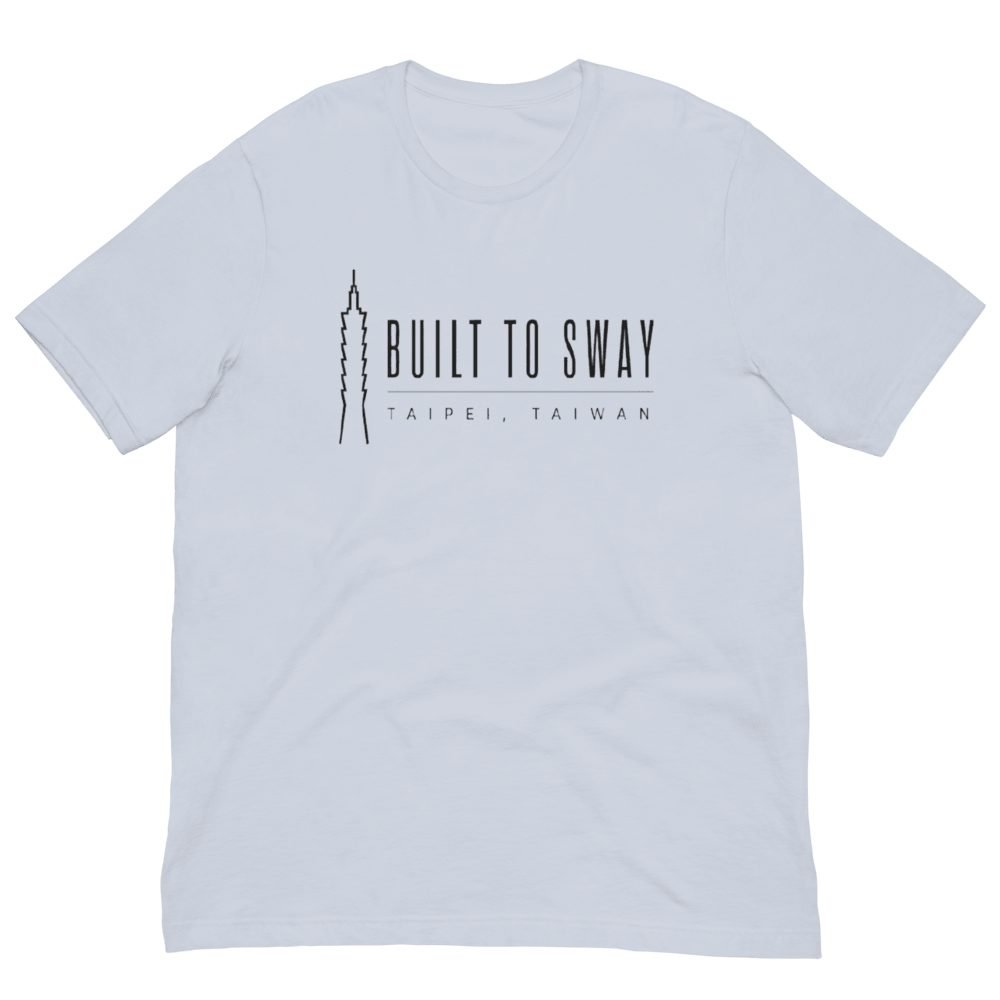
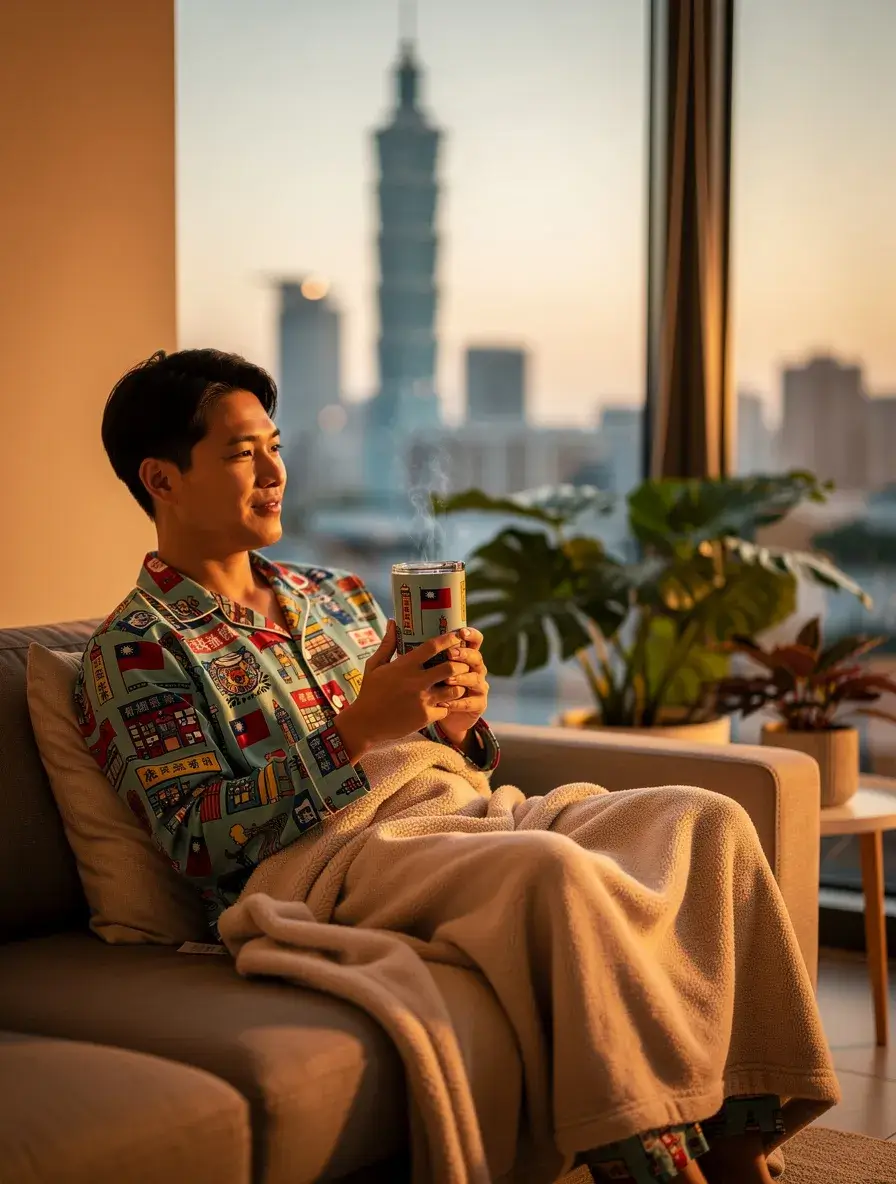
Beitou is a neighborhood that rewards slow, curious travel — the kind of place where you can stumble on a 1913 bathhouse, a radioactive rock, and a temple to a Japanese Buddhist sect all in one afternoon. It’s also, quietly, one of the most photograph-worthy parts of Taipei, especially when the sulfur steam is rising against the mountains at sunset. If you love that mix of city-and-mountain that only Taipei really pulls off, you’ll feel right at home in our Taipei 101 “Built to Sway” T-shirt — a minimalist tribute to the city’s skyline and the earthquake engineering that keeps it standing above places like Beitou.
Wear the Skyline Above Beitou
Taipei 101 stands tall over Beitou’s steaming valleys — engineered to sway 60 cm in a typhoon and still hold coffee steady. Our minimalist tribute tee celebrates the tower and the wild volcanic city underneath it.
Beitou Taipei FAQ
Is Beitou worth visiting if I’ve already been to Yangmingshan? Yes — different neighborhood, different vibe. Yangmingshan is a national park experience (hiking, mountain lookouts, flower fields). Beitou is an urban historic-district experience (colonial architecture, museums, hot springs, temples) that happens to sit at the foot of the park. Most Taipei trips do both, either as a two-day combo or a very ambitious one-day loop.
How much time do I need in Beitou? A half-day (3-4 hours) is enough for the greatest hits: Xinbeitou Station, Hot Spring Park, Library, Thermal Valley, and one bath. A full day lets you add the Beitou Museum, Puji Temple, and Sulfur Valley Recreation Area. An overnight lets you slow down and eat dinner in a Japanese heritage restaurant like Marshall Zen Garden.
Do I need to book hot spring hotels in advance? On weekends and Taiwanese public holidays, yes — the popular ones sell out. On weekdays, you can walk in. If you’re just soaking (not staying overnight), most upscale places offer 90-120 minute “day soak” packages you can book same-day. Look for the term 湯屋 (tang wu, “hot spring room”) online.
Can I visit Beitou if I have tattoos? Taiwan is much more relaxed about tattoos than Japan. Public mixed-sex hot springs (where you wear a swimsuit) don’t care at all. Nude Japanese-style bathhouses in Beitou, including Longnice, are also generally tattoo-friendly — which is a real cultural distinction from onsen etiquette in Osaka or Kyoto.
What’s the deal with the sulfur smell? That’s hydrogen sulfide gas venting out of the thermal valleys. It’s harmless in open-air concentrations, but it’s the reason electric appliances in Beitou apartments corrode fast and residents replace their refrigerators more often than the Taipei average. You get used to it in about ten minutes.
Final Thoughts on Beitou
Beitou is proof that the most popular tourist story about a place is almost never the whole story. The hot springs are wonderful — go soak in them, order the hot spring egg, buy the small souvenir. But the neighborhood is a genuinely fascinating layered landscape: a dormant volcano’s front yard, an indigenous mist-country turned Japanese resort, and one of the greenest civic buildings in Asia, all tucked into a 40-minute MRT ride from downtown Taipei.
Come for the sulfur. Stay for the Ketagalan story, the ship-shaped library, the radioactive rocks, and the Shingon temple hiding on the hill. That’s the Beitou that keeps drawing us back, and the Beitou we think you should meet next time you’re in Taipei. If you want the wider picture on what to build a Taiwan trip around, our things to do in Taipei guide is the place to start.
Grab a Free Taiwan Sticker!
Drop your email and we’ll send you a limited-edition Taiwan sticker — plus insider access to new merch drops and island vibes.
No spam. Unsubscribe anytime.