Tao Flying Fish Festival: Why Orchid Island’s Most Sacred Season Is Happening Right Now
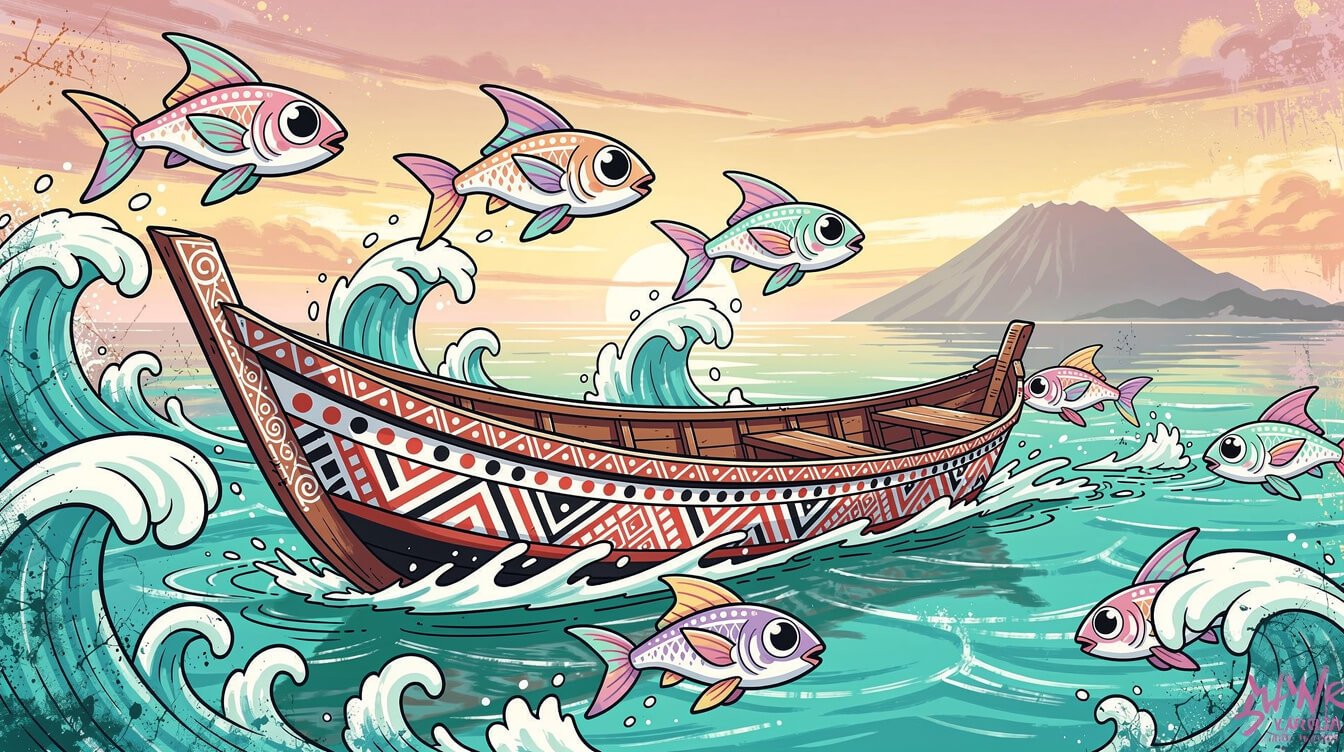
Right now, on a tiny volcanic island 60 kilometers off Taiwan’s southeast coast, hundreds of hand-carved wooden boats with red, white, and black geometric patterns are slipping into the Pacific at dawn. Their crews — exclusively male, dressed in loincloths and silver helmets — are hunting alibangbang, the flying fish that the Tao people consider a literal gift from the gods.
This is the Flying Fish Festival (飛魚祭, Mivanwa), and it’s not a tourist event. It’s the spiritual axis of the entire Tao calendar — and it’s happening right now, at its peak.
The Only Sea-Going Indigenous People in Taiwan
Taiwan officially recognizes 16 indigenous tribes, and 15 of them are mountain peoples. The Tao (also known by the older colonial name Yami) are the exception. They live exclusively on Orchid Island (蘭嶼, Lanyu) — a 45-square-kilometer volcanic speck closer to the Philippines than to Taipei — and their language, DNA, and entire material culture point to a maritime Austronesian heritage shared with the Ivatan people of Batanes, just 100 km further south.
Everything in Tao life revolves around the sea. And for half the year, everything in the sea revolves around the flying fish.
The Three Sacred Seasons
The Tao split the year into three lunar-based seasons, all defined by their relationship to alibangbang:
- Rayon (February to June) — the flying fish season. Boats launch, ceremonies open, and life is governed by strict taboos.
- Teyteyka (July to October) — the post-season. Caught fish are dried, stored, and eaten on a precise schedule. After October 15, the last flying fish must be consumed or burned — you cannot keep them into the next cycle.
- Amyan (November to January) — winter. No flying fish are caught, eaten, or even spoken of casually. The ocean rests.
Right now, late May, sits squarely in Rayon — the most active and most spiritually charged stretch of the year.
The Painted Boats Are Built Without a Single Nail
If you’ve ever seen a photo of Orchid Island, you’ve probably seen a chinurikuran — the iconic 10-person plank boat with the soaring curved prow and dazzling red-white-black geometric patterns. These boats are arguably the most photographed object in Taiwan after Taipei 101.
What most visitors don’t realize: every chinurikuran is hand-built from 21 to 27 individual wooden planks, lashed and pegged together without a single nail or screw. The wood comes from specific tree species the builder’s family has cultivated for generations. The painted motifs aren’t decoration — they’re ancestral identifiers, marking the boat’s home village and the clan that owns it. The eye-shaped mata no tatala on the prow watches for fish and wards off evil spirits.
A single boat can take a year to build. Launching a new one triggers the Mivaci ceremony — a multi-day affair with chanting, gold-flake offerings, and a ritual where the entire village lifts the boat overhead and tosses it into the air repeatedly to bless its first voyage.
The Taboos Are Real (and Visitors Should Know Them)
Tao culture treats flying fish with the seriousness most cultures reserve for religion. During Rayon, dozens of taboos govern daily life:
- Women cannot touch the boats, the fishing gear, or step inside the boat houses.
- Flying fish must be cleaned, cooked, and eaten using designated utensils that never touch other foods.
- Pork and flying fish cannot be served at the same meal.
- Photographing certain ceremonies — especially the opening Mivanwa ritual where men slaughter chickens at the shoreline and call the fish — is forbidden without explicit permission.
If you’re visiting Lanyu this season (and the ferry from Taitung’s Houbihu Port runs daily through summer), the single most important rule is: ask before you photograph, and stay off the painted boats entirely. Sitting in one for an Instagram shot is the kind of disrespect that gets discussed in village meetings for years.
Why This Matters Beyond Lanyu
The Tao Flying Fish Festival is one of the last living indigenous maritime traditions in East Asia that hasn’t been turned into a stage show. There’s no ticketed venue, no scheduled performance. The ceremonies happen because the fish are there — and the entire community organizes its year around honoring that gift.
In an island nation that often gets reduced to night markets and bubble tea, the Tao remind us that Taiwan’s deepest cultural roots stretch out across the Pacific — and that the languages spoken here connect Taiwan to Madagascar, Hawaii, and New Zealand through one of the greatest seafaring migrations in human history.
Right now, somewhere off Orchid Island, a painted boat is gliding home in the dawn light with the season’s catch. That’s worth knowing about — even if you’ll never see it.
Wear Your Love for Taiwan’s Indigenous Heritage
Celebrate Taiwan’s incredible cultural diversity with our island-inspired apparel and accessories — from Formosa-themed tees to Pacific-blue prints that honor the seafaring spirit.
Grab a Free Taiwan Sticker!
Drop your email and we’ll send you a limited-edition Taiwan sticker — plus insider access to new merch drops and island vibes.
No spam. Unsubscribe anytime.