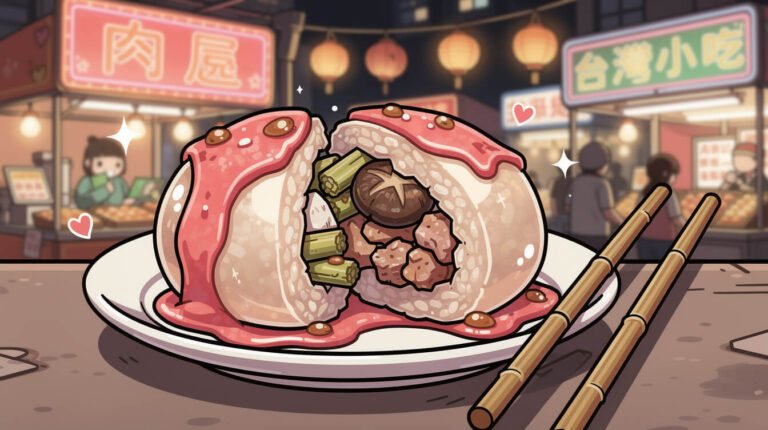
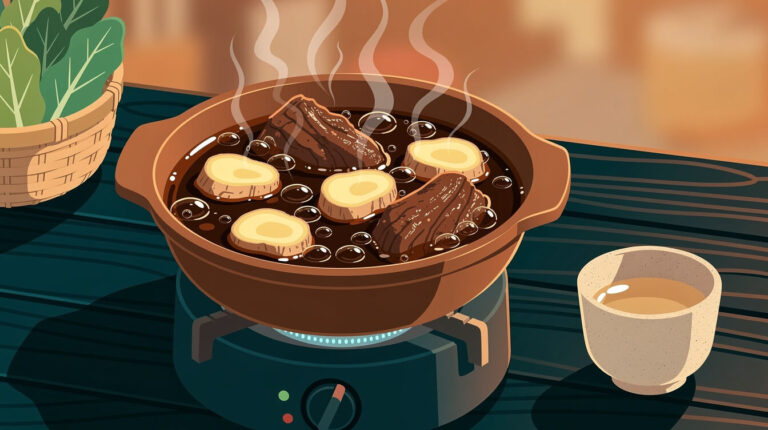
Taiwan Beef Noodle Soup Recipe: The Authentic Hongshao Method and the Story Behind Every Bowl
The best Taiwan beef noodle soup recipe isn’t the fastest, and it isn’t the fanciest. It’s the one that respects a bowl of noodles that carried refugees, fed generals, comforted college students at three in the morning, and became — in less than a lifetime — the unofficial national dish of an entire island. This is that recipe, plus the story of how it got here.
Below you’ll find the authentic hongshao (红烧, red-braised) method the same way you’d get it at a shabby Taipei shop that’s been running since your grandmother was young: a deep, spice-perfumed broth built on doubanjiang, beef shank braised until it collapses under a chopstick, chewy hand-pulled noodles, and the mandatory fistful of pickled mustard greens. We’ll cover the ingredients, the technique, the Instant Pot and slow-cooker shortcuts for weeknights, the FAQ every home cook eventually asks — and, because we can’t help ourselves, the history behind why this bowl exists at all.
What Makes Taiwanese Beef Noodle Soup Different from Every Other Beef Noodle Bowl
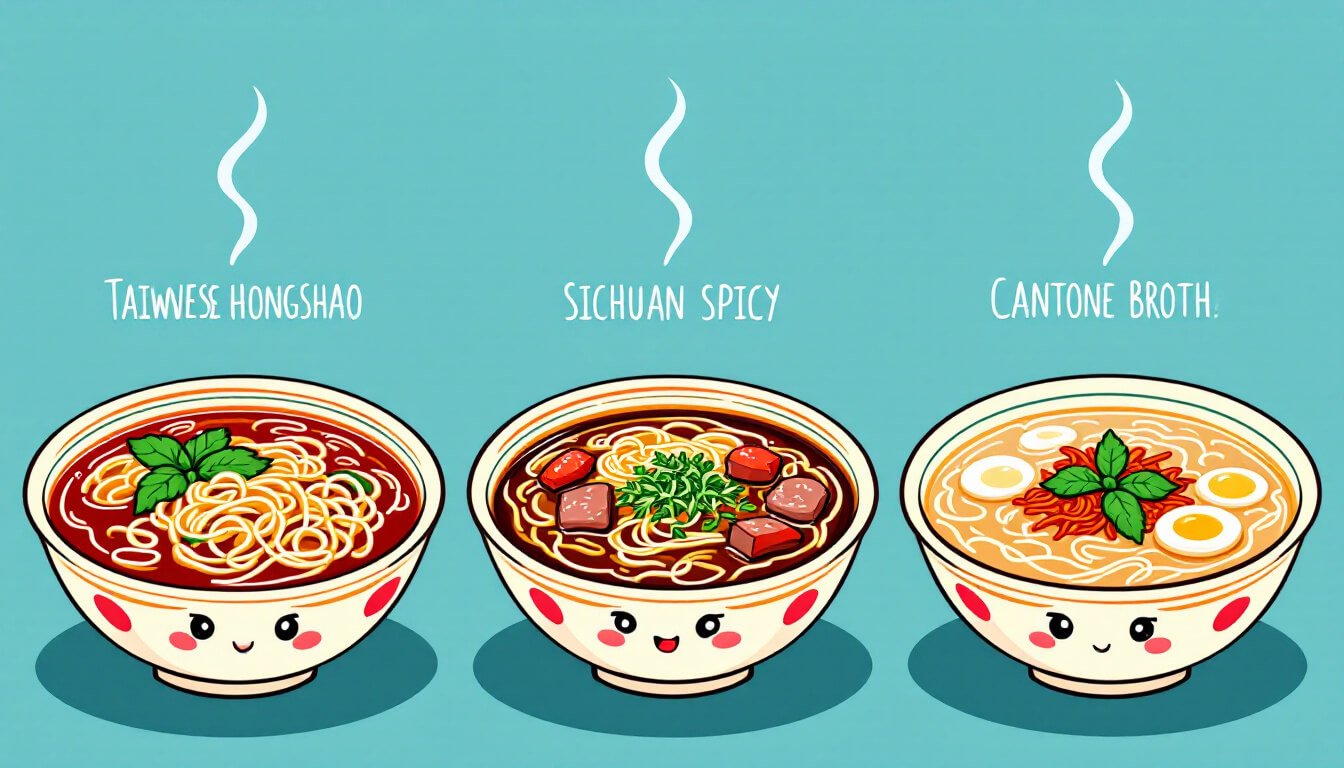
Walk into any noodle shop in Asia and you’ll find beef in a bowl. Vietnam has pho, with its clear anise-perfumed broth. Cantonese kitchens serve slow-simmered brisket in a light clear soup. Sichuan has its own aggressively numbing versions. So what actually separates the Taiwan beef noodle soup recipe from the rest of the family?
Three things do the heavy lifting. First, the broth is hongshao — literally “red-cooked” — which means it’s braised rather than simmered. The color comes from soy sauce, doubanjiang (fermented broad bean paste), and rock sugar caramelized in the wok before liquid ever hits the pot. It’s darker, thicker, and more assertive than a Cantonese broth.
Second, the spice profile is unmistakably Taiwanese-Sichuanese hybrid: star anise, cinnamon bark, Sichuan peppercorns, and fennel seed, but tempered with something you’d never find in mainland Sichuan — a whisper of five-spice and, at the finish, that signature pickled mustard green garnish (suan cai) that cuts the fat and pulls the whole bowl into balance.
Third, and most important: the noodles. In Taiwan the standard is thick, chewy hand-pulled or knife-cut wheat noodles that grab the sauce and hold it. Not rice noodles, not thin egg noodles — you want something with real bite that can survive being submerged in a spoonful of that dark broth.
The three regional variations you’ll actually see in Taiwan
- Hongshao (红烧): The default. Red-braised, spicy-savory, doubanjiang-forward. This is what most Americans think of as “Taiwanese beef noodle soup” and what we’re making today.
- Qingdun (清炖): Clear broth version, closer to a Cantonese or Northern Chinese style, popular in Muslim-run Taiwan shops that skip the doubanjiang.
- Fanqie (番茄): Tomato-based, sweeter, milder — the “starter” version served in college dining halls and family kitchens.
The Cultural Story: How Postwar Sichuanese Migrants Created Taiwan’s National Bowl
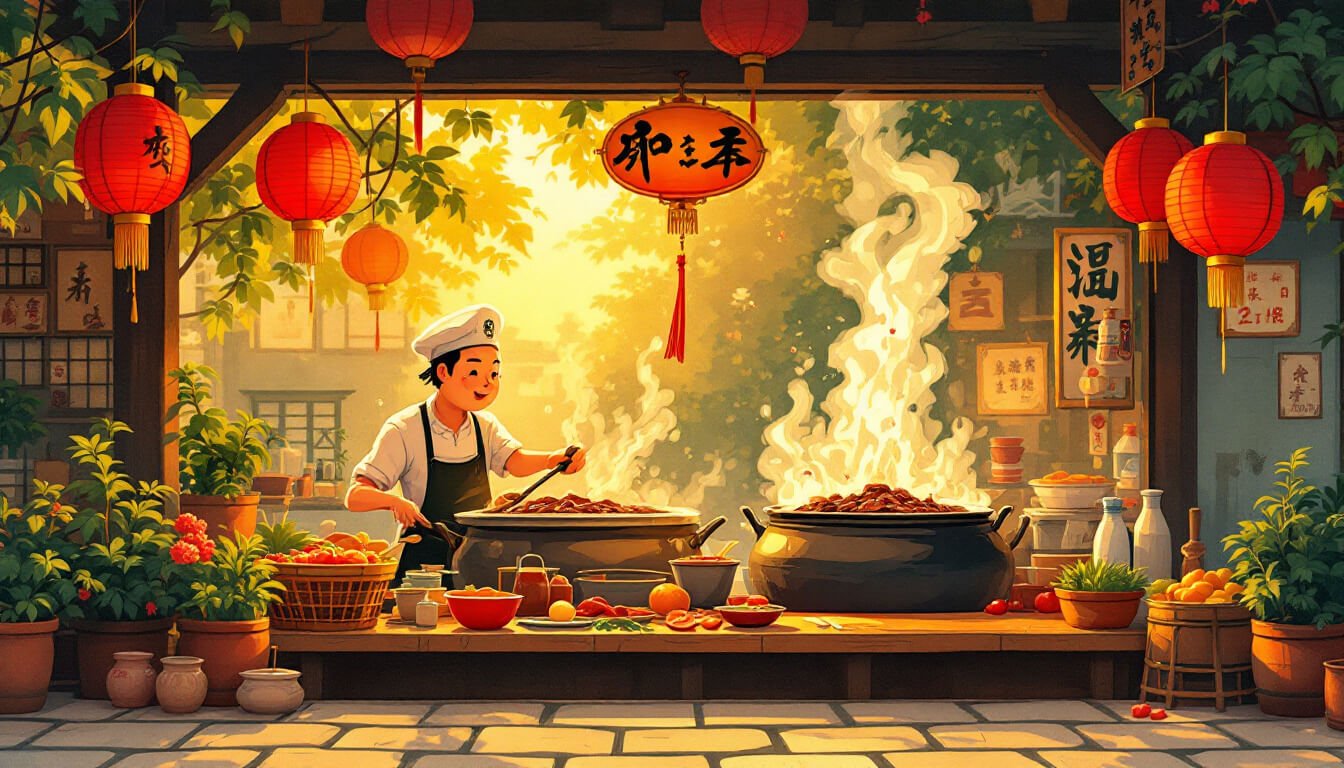
Here’s the strange, wonderful truth about Taiwan beef noodle soup: it’s less than 80 years old, and it wasn’t invented by Taiwanese people. It was invented in Taiwan, by mainland refugees, from ingredients that most Taiwanese at the time didn’t eat.
The story starts in 1949. Around 1.2 million Nationalist soldiers, government workers, and their families evacuated with Chiang Kai-shek’s regime from mainland China to Taiwan. Many settled into the government-built military dependents’ villages (juancun) that ringed cities like Kaohsiung, Taichung, and the outskirts of Taipei. Sichuanese soldiers — homesick, broke, and hungry — started cooking what they could remember of home in the tiny communal kitchens of these villages.
They didn’t have real Sichuan doubanjiang. They didn’t have proper Sichuan chilies. What they had was Taiwanese sugar cane, soy sauce, cheap beef shank (Taiwanese Buddhists traditionally didn’t eat beef, so it was affordable), and improvised versions of the fermented pastes they missed. What emerged from those cramped juancun kitchens wasn’t Sichuan food and wasn’t Taiwanese food — it was something new.
By the 1960s the recipe had leaked out of the villages and into small storefront shops across Taipei. By the 1980s Taiwan’s economic boom made beef affordable for the general population, and beef noodle soup became a democratic food — eaten by construction workers, office managers, professors, and taxi drivers alike. In 2005 the Taipei City Government launched the Taipei International Beef Noodle Festival, a citywide competition that now draws hundreds of entries every year. In 2011 the government formally designated it a national dish.
A bowl of Taiwan beef noodle soup is, in the most literal sense, a fusion food born from displacement. It exists because people were forced to leave home, and then made a new home worth staying in.
That backstory matters because it tells you what to aim for when you cook it. This isn’t a delicate dish. It’s supposed to taste like a warm room at the end of a long, cold day. If you want to explore the broader context, our complete guide to Taiwan culture traces how the juancun era reshaped the island’s food identity for good.
Ingredients You’ll Need for Authentic Hongshao Beef Noodle Soup
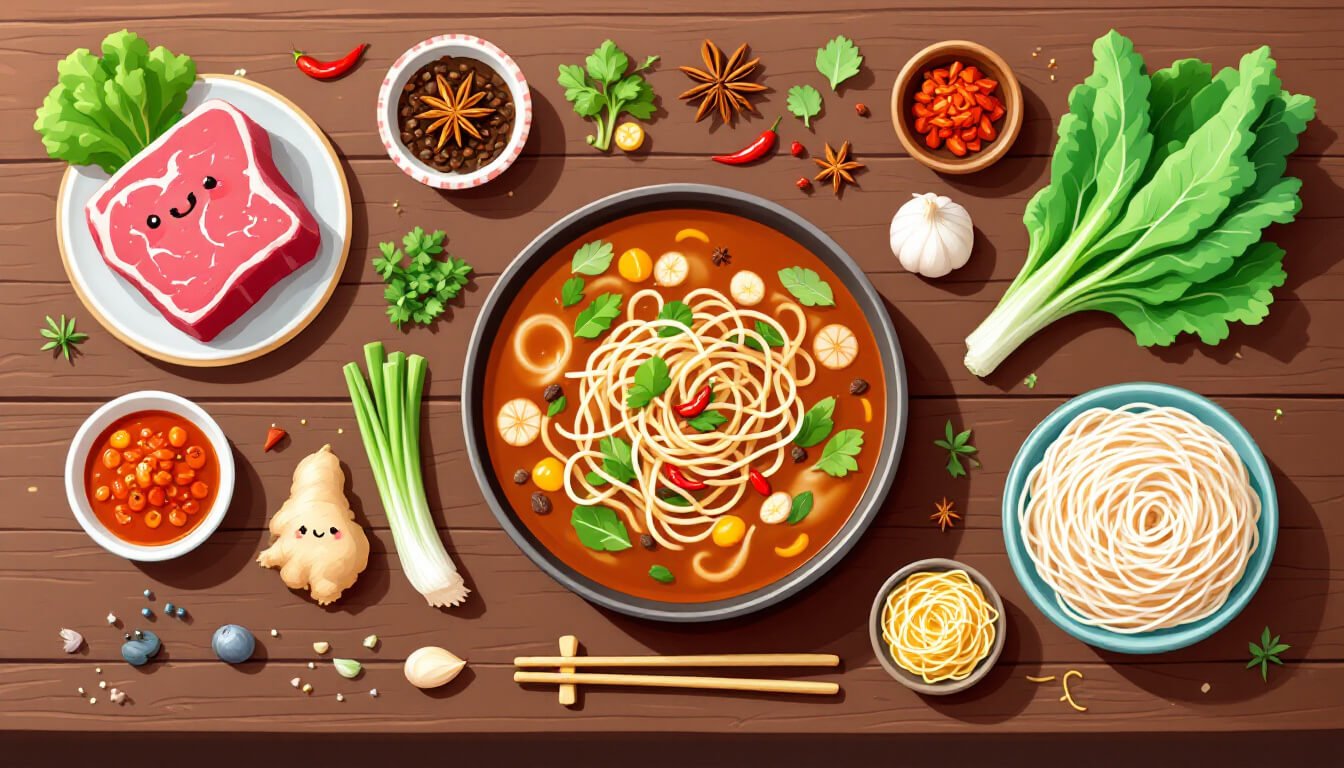
Recipe yields 4 large bowls. Prep 20 minutes, active cook 30 minutes, braise 2 hours (Instant Pot: 45 minutes total).
For the beef and broth
- 2 lbs (900g) beef shank or beef shin, cut into 2-inch chunks (bone-in is even better if you can find it)
- 2 tbsp neutral oil (canola or peanut)
- 3 tbsp doubanjiang (Pixian broad bean paste — the fermented, chili-red kind, not sweet)
- 1 tbsp tomato paste (optional but adds body and color depth)
- 6 slices fresh ginger
- 6 cloves garlic, smashed
- 4 scallions, cut into 3-inch lengths
- 3 dried red chilies (adjust to heat preference)
- 1/4 cup Shaoxing wine (or dry sherry)
- 1/4 cup dark soy sauce
- 2 tbsp light soy sauce
- 2 tbsp Chinese rock sugar (or 1.5 tbsp brown sugar)
- 8 cups water or unsalted beef stock
For the aromatic spice packet (put in a mesh bag or cheesecloth)
- 3 star anise pods
- 1 stick cinnamon (2 inches)
- 1 tsp Sichuan peppercorns
- 1 tsp fennel seeds
- 3 bay leaves
- 2 cloves
- Optional: 1 small piece dried tangerine peel (chenpi)
To finish and serve
- 1 lb fresh hand-pulled wheat noodles (or thick knife-cut noodles / udon as a substitute)
- 4 baby bok choy, halved
- 1/2 cup pickled mustard greens (suan cai), chopped — non-negotiable
- 4 scallions, thinly sliced
- Small handful cilantro, roughly chopped
- Chili oil to taste
Two ingredient notes that make or break this recipe. First, do not substitute regular soy sauce for the doubanjiang — the paste is doing structural work, adding funk, salt, and a slow-burn heat that soy sauce alone cannot deliver. Second, the pickled mustard greens are not optional garnish; they are the acidic counterweight that keeps the fatty broth interesting from spoon one to spoon last.
The Authentic Hongshao Method: Step-by-Step Instructions
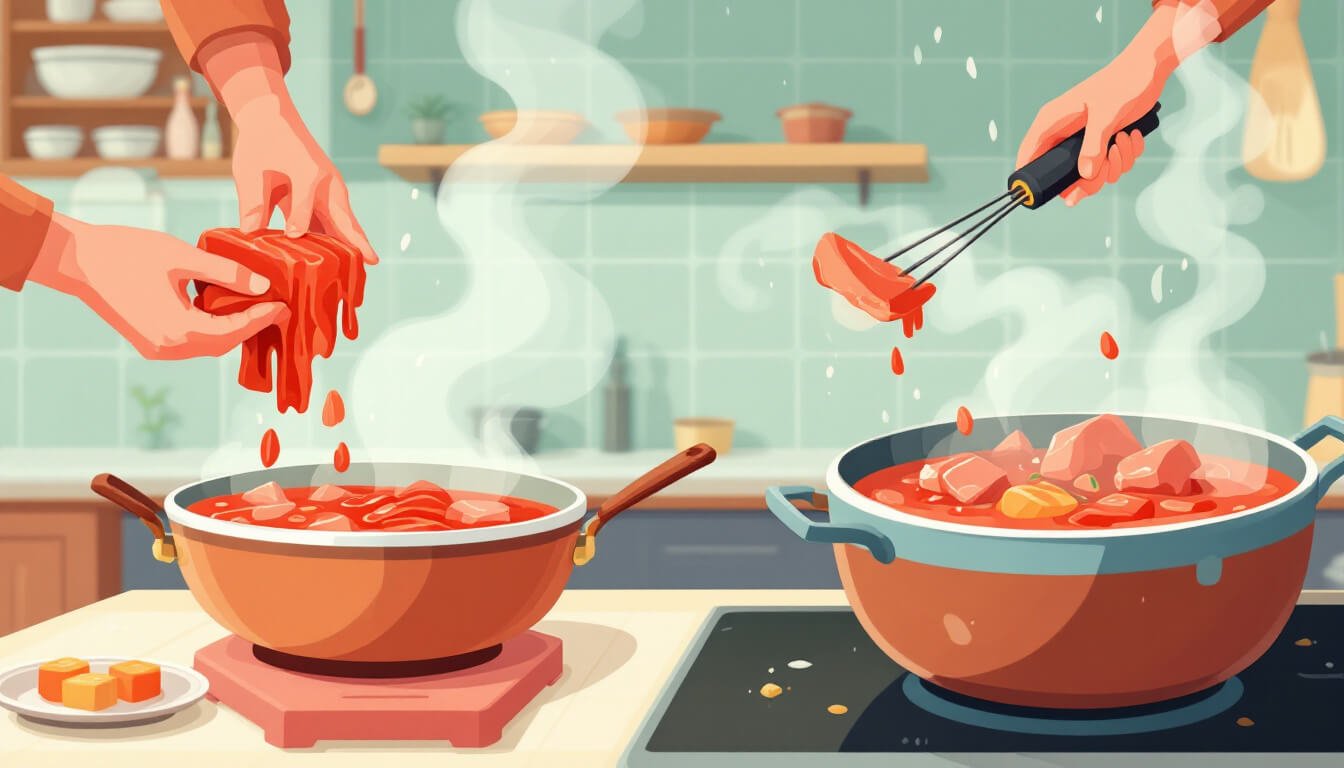
Step 1: Blanch the beef (do not skip this)
Put the beef chunks in a cold pot, cover with water by two inches, bring to a boil, and boil for 3-4 minutes. Grey scum will rise — that’s blood and impurities you don’t want in your broth. Drain, rinse the beef under cold water, and set aside. Wash the pot before the next step.
Step 2: Build the aromatic base
Heat the oil in a heavy pot or Dutch oven over medium heat. Add the ginger, garlic, scallions, and dried chilies. Stir for 60 seconds until fragrant, then add the doubanjiang and tomato paste. Fry the paste in the oil for a full 2-3 minutes — the oil should turn a deep, glowing red. This step is called chao xiang (“frying the fragrance”) and it’s what separates competent Taiwan beef noodle soup from muddled, one-note versions.
Step 3: Deglaze and braise
Add the Shaoxing wine to the pot and scrape up any browned bits. Add the beef, both soy sauces, rock sugar, spice packet, and water. Bring to a boil, then reduce to a bare simmer. Cover and cook for 2 to 2.5 hours, checking occasionally — the beef is done when a chopstick slides in with no resistance but the chunks still hold their shape.
Step 4: Rest overnight if you can
Every serious Taiwan beef noodle recipe agrees on this: the broth is better on day two. If you have the patience, cool the pot, refrigerate overnight, skim the solidified fat off the top, and reheat before serving. The flavors marry, the beef sets tighter, and the broth clarifies. If you’re eating tonight, at least let the pot rest off-heat for 20 minutes before serving.
Step 5: Cook the noodles and assemble
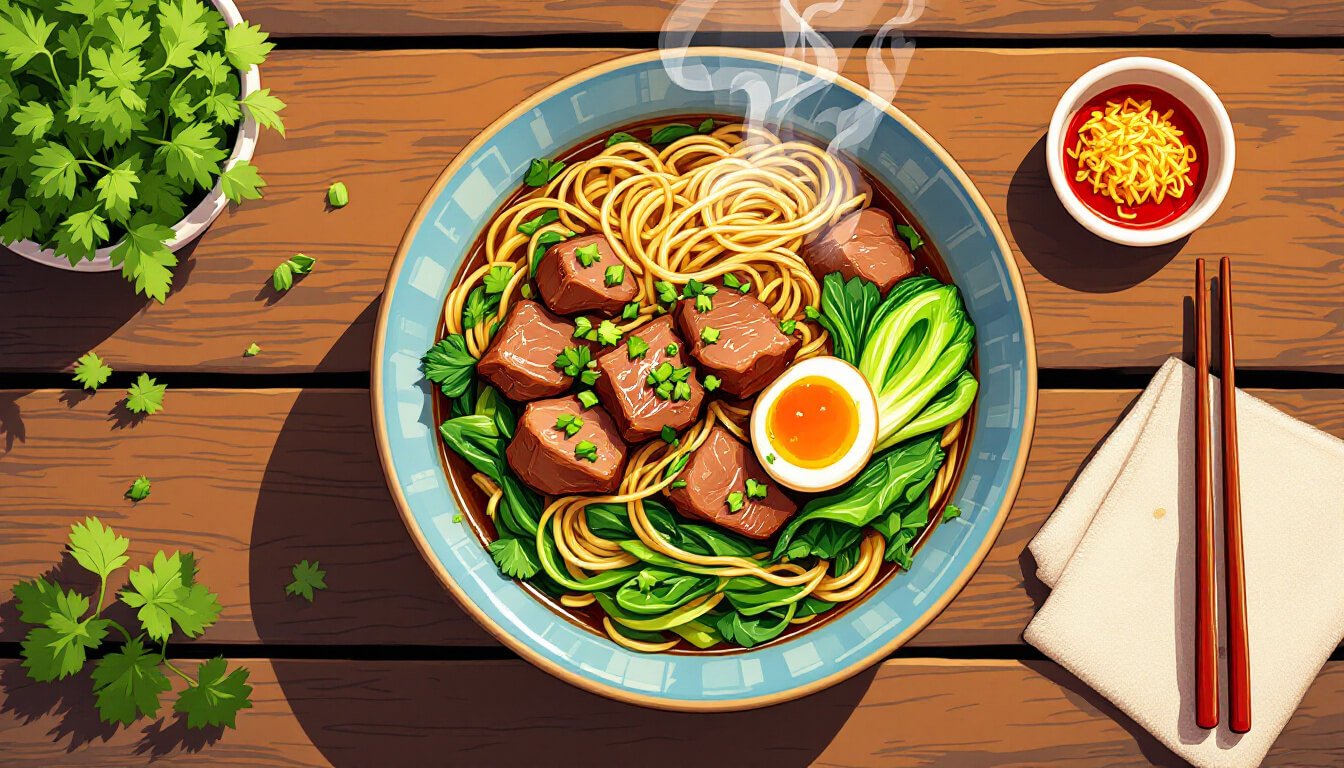
Bring a large pot of water to a boil. Blanch the bok choy for 60 seconds, remove, and set aside. Cook the noodles according to package directions (fresh noodles usually 2-3 minutes; dried thick wheat noodles 5-7 minutes). Divide noodles among four large bowls. Ladle in the beef, then several ladles of hot broth. Top with bok choy, a generous heap of pickled mustard greens, sliced scallions, cilantro, and a swirl of chili oil.
Step 6: Eat immediately
Beef noodle soup does not wait. The noodles keep absorbing broth, the greens wilt, and the pickled mustard loses its snap. Serve straight from the pot to the bowl to the table. And because a proper bowl deserves the right vibe at the table, if you’re the sort of home cook who leans into it, our Taiwanese Street Food Guide T-Shirt makes an oddly perfect Sunday cooking uniform.
Instant Pot and Slow Cooker Variations for Modern Kitchens
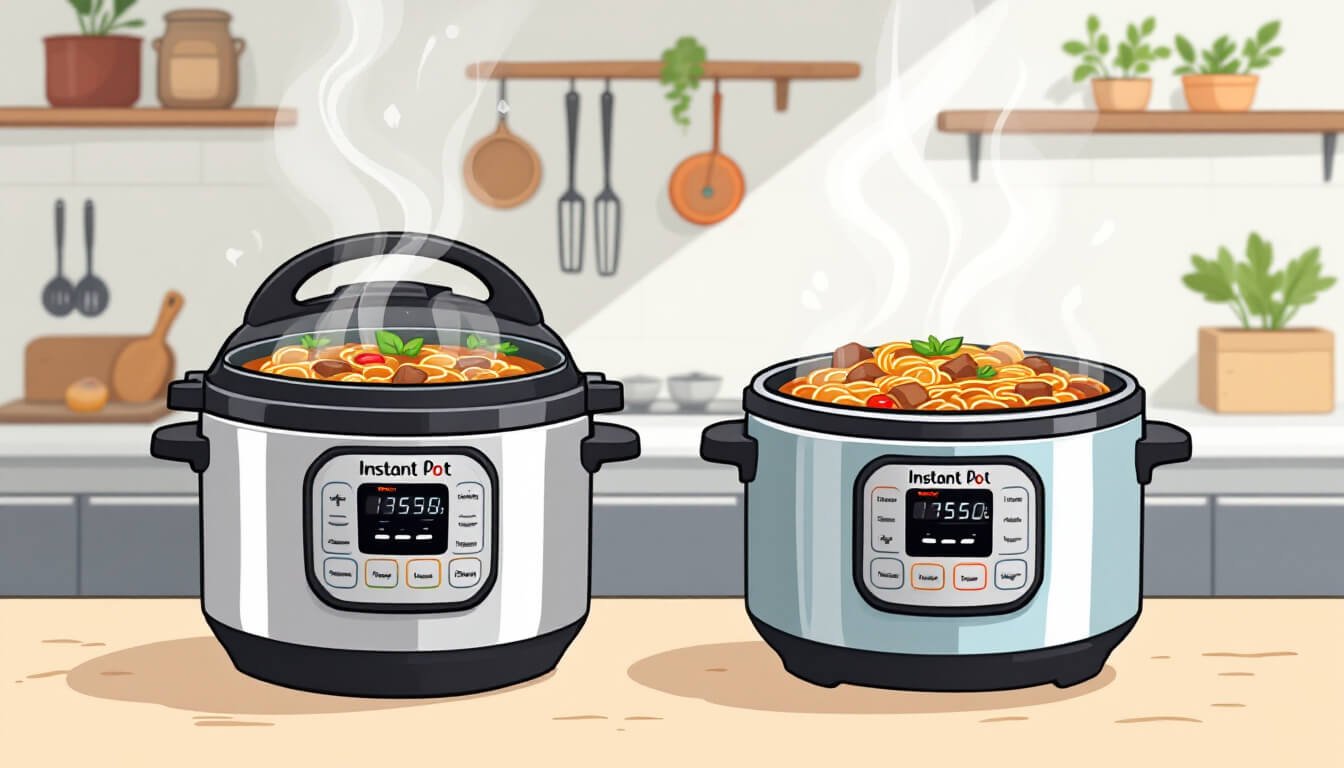
Purists will tell you a proper hongshao broth cannot be rushed. Purists are, in this case, mostly correct — but a good Instant Pot version can get you 85% of the way there in a quarter of the time. Here’s how each variation works.
Instant Pot method (45 minutes hands-on, 45 minutes cooking)
Blanch the beef in a separate pot as in Step 1. Set the Instant Pot to Sauté (high). Do Steps 2 and 3 directly in the Instant Pot insert — fry the aromatics, bloom the doubanjiang, deglaze with wine, then add the beef, soy sauces, rock sugar, spice packet, and water. Lock the lid, seal the valve, and set to Pressure Cook (High) for 35 minutes. Let the pressure release naturally for 15 minutes, then quick-release the rest. Open and taste — if you want a deeper reduction, put the Instant Pot back on Sauté for 10 minutes with the lid off.
Slow cooker method (25 minutes hands-on, 8 hours cooking)
Do the blanch, then do Steps 2 and 3 in a wok or skillet — you cannot properly bloom doubanjiang in a slow cooker; the temperature is too low. Once the base is built and deglazed, transfer everything to the slow cooker. Cook on Low for 8 hours or High for 5 hours. The result is meltier beef but a slightly thinner broth than the stovetop version — if you want to concentrate it, transfer the finished broth to a pot on the stove and reduce for 15 minutes before serving.
Weeknight shortcut version (75 minutes total)
Use 1.5 lbs of pre-cut beef stew meat (any well-marbled cut), skip the overnight rest, and cut the braise to 90 minutes on the stove or 25 minutes in the Instant Pot. It won’t hit the same complexity as the full method, but it’s absolutely a Tuesday-night bowl of noodles that will make your kitchen smell like Taipei.
How to Serve, Store, and Customize Your Bowl
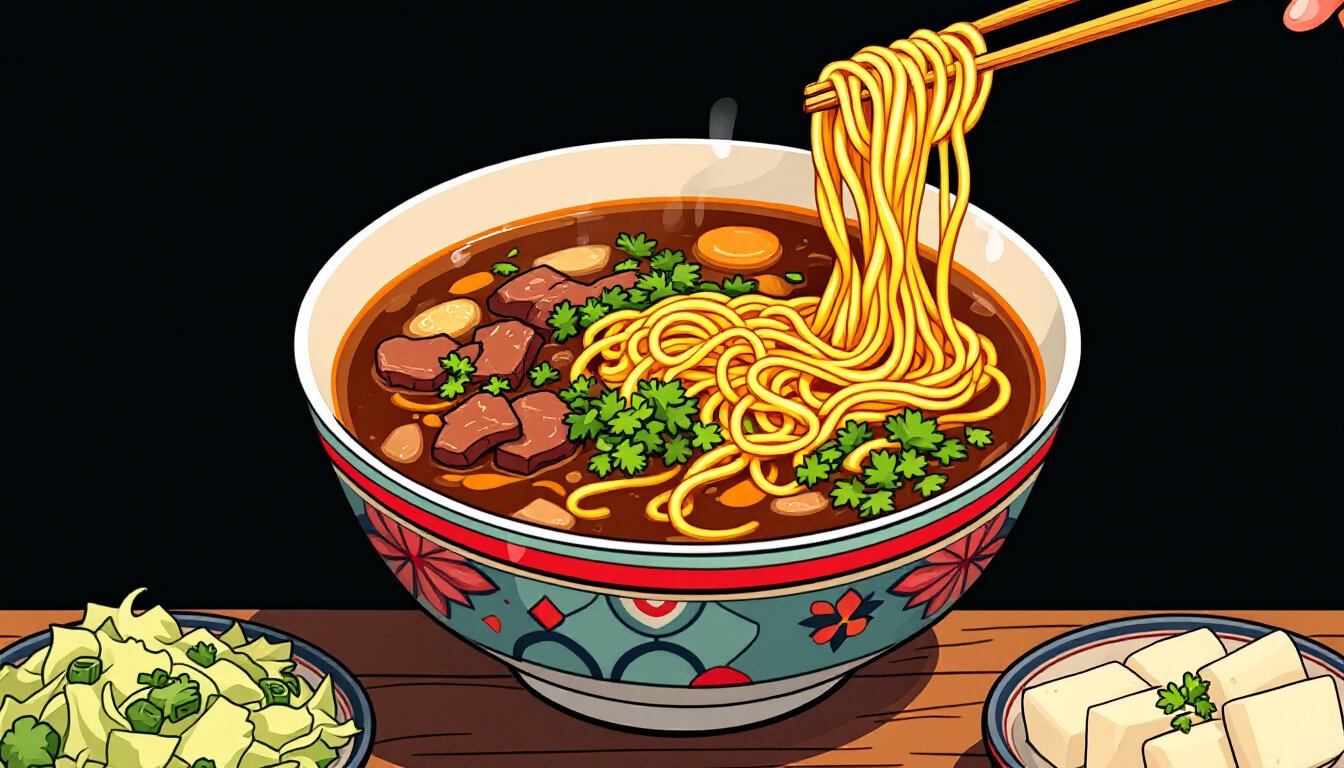
Side dishes that turn a bowl into a meal
In Taiwan, a beef noodle shop is never just noodles — there’s always a small refrigerator case of cold appetizers ready to round out the table. The classics:
- Taiwanese cold cabbage salad — shredded cabbage with rice vinegar, sesame oil, garlic, and a pinch of sugar
- Cold spiced tofu (dou gan) — pressed tofu simmered in the same braise liquid, then sliced thin
- Marinated soft-boiled tea egg — cracked and steeped in soy sauce and black tea
- Steamed edamame with garlic and star anise — the perfect thing to eat while you wait for the noodles
Storage and reheating
The braised beef and broth keep beautifully. Store the broth-and-beef separately from the noodles (never store noodles in broth — they turn to mush). Refrigerate up to 4 days; freeze the broth up to 3 months. When reheating, bring the broth to a rolling boil, add fresh-cooked noodles, and finish with fresh greens and pickled mustard. Do not microwave — the delicate spice compounds break down and the beef seizes.
Common customizations
- Extra spicy: add 1 tbsp Sichuan-style spicy fermented broad bean paste in addition to the doubanjiang, and finish with a spoonful of chili crisp
- Milder for kids: halve the doubanjiang and skip the dried chilies; the result is closer to the fanqie (tomato) version
- Vegetarian version: replace beef with king oyster mushrooms and fried tofu puffs; use vegetable stock and 1 tbsp miso to replace the umami depth
- Gluten-free: substitute rice noodles or shirataki noodles; use tamari instead of soy sauce; verify your doubanjiang is wheat-free (many aren’t)
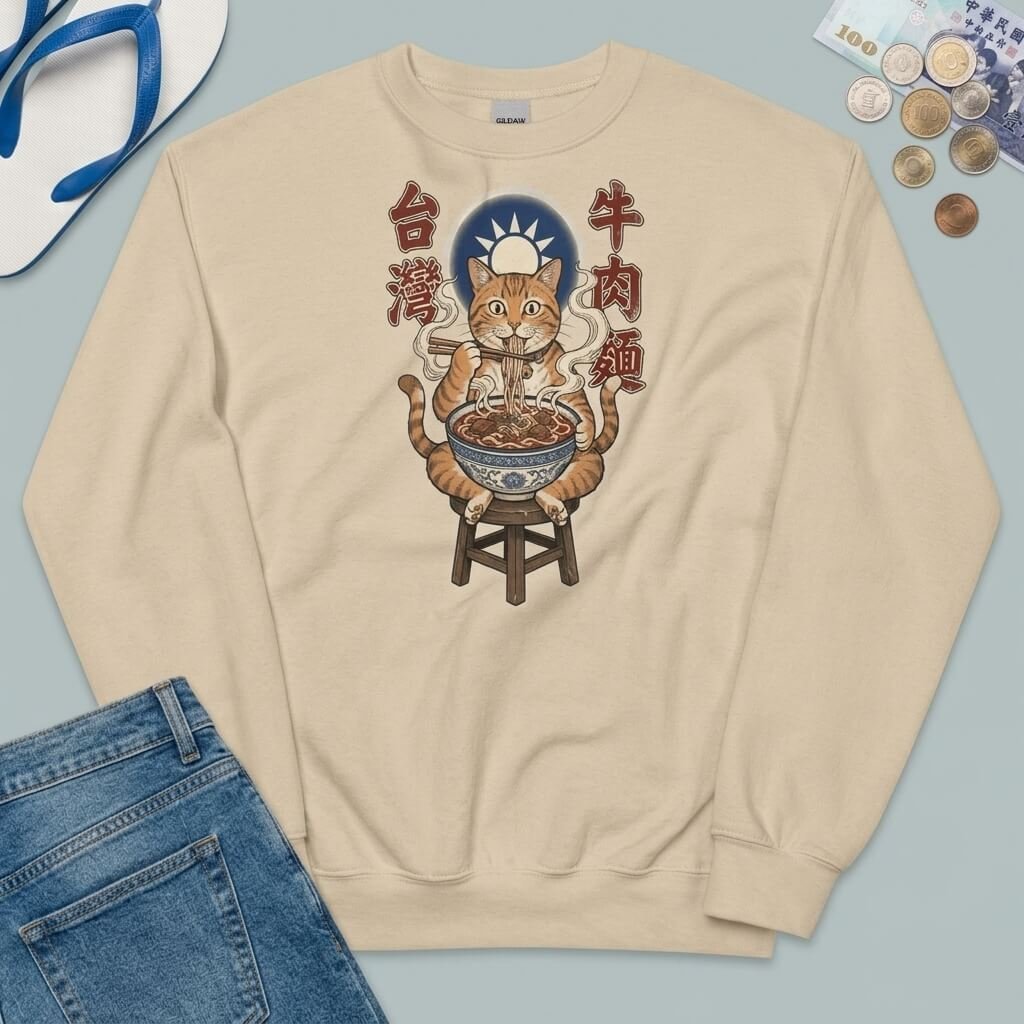
Wear the Bowl You Just Made
Our Taiwanese Beef Noodle Cat sweatshirt takes the island’s most iconic bowl and turns it into a soft-cotton uniform for cold kitchens, long braises, and lazy Sundays. Vintage-poster art, cozy fit, unmistakably Taiwan.
Frequently Asked Questions About Taiwan Beef Noodle Soup
What is the difference between Taiwanese and Chinese beef noodle soup?
Chinese beef noodle soups vary wildly by region — Lanzhou’s clear broth pulled noodles are almost a different dish entirely. The Taiwan beef noodle soup recipe is distinguished by three things: a hongshao (red-braised) doubanjiang base, the pickled mustard green garnish, and thick chewy wheat noodles. The Sichuan influence is unmistakable, but the sweet-savory balance and the finishing touches are pure Taipei.
What cut of beef is best for Taiwan beef noodle soup?
Beef shank is the traditional and best choice — the connective tissue breaks down into gelatin during the long braise, giving both tender chunks and a silky broth. Beef shin, oxtail (for extra body), or a mix of shank and brisket also work. Avoid lean cuts like sirloin or tenderloin; they turn stringy and add nothing to the broth.
Can I make this without doubanjiang?
Not really — doubanjiang is the defining ingredient of the hongshao style. If you cannot source it (most Asian groceries carry it; look for “Pixian” broad bean paste), you can approximate with a mix of red miso, gochujang, and a pinch of Sichuan chili flakes, but the result is a different dish. It’s worth ordering doubanjiang online for this recipe alone.
What noodles should I use?
In Taiwan the default is thick hand-pulled wheat noodles (la mian) or knife-cut noodles (dao xiao mian). If you can find fresh noodles at an Asian market, buy them. If not, thick dried udon or Japanese ramen noodles are decent substitutes. Avoid thin noodles — they get lost in the heavy broth.
How spicy is authentic Taiwan beef noodle soup?
Milder than Sichuan mainland cooking. The doubanjiang and dried chilies provide a background heat and complexity rather than a face-melting burn. Most Taipei shops let you customize with a jar of chili oil (la you) on the table. If your bowl comes out mild-ish, that’s traditional — the pickled mustard greens are supposed to add the punch of contrast, not more heat.
Is beef noodle soup healthy?
It’s a rich, restorative bowl — high in protein and collagen from the beef, with real nutritional density. It’s also high in sodium and fat. Traditional Taiwan beef noodle soup is not diet food and isn’t trying to be. Skim the fat off the chilled broth before reheating if you want to lighten it up, or halve the soy sauces and rock sugar for a lower-sodium version.
Where did Taiwan beef noodle soup originate?
The consensus origin story is the postwar military dependents’ villages (juancun) of Kaohsiung and Taipei in the late 1940s and early 1950s. Sichuanese refugees adapted their home cuisine to what was available in Taiwan, and the resulting bowl gradually spread from the villages into commercial noodle shops through the 1960s and 70s.
What should I drink with Taiwan beef noodle soup?
Traditionally: hot barley tea or Taiwan Beer. The astringency cuts through the richness. Cold water is fine but boring. If you want the full experience, our guide to Taiwan tea culture covers which oolongs pair best with braised dishes.
Final Thoughts: Making Taiwan’s National Bowl Your Own
The best Taiwan beef noodle soup recipe is the one you make three times in a row until you can hear when the doubanjiang stops smelling raw and starts smelling toasted, until you know without checking that the beef has an hour left, until the pickled mustard greens go in without measuring. That’s how this dish was designed to be learned — by refugee cooks with no recipe cards, feeding families in kitchens they never expected to be cooking in.
Make it once with the full 2-hour braise and overnight rest. Make it again with the Instant Pot on a Wednesday. Feed it to the kids with less chili, to your friends with more. Bring it to someone who is sick. Eat it at midnight when you get home cold. That’s what this bowl has always been for.
And if you fall in love with it — as most people do — you’re in good company with about 23 million other people who claim it as their national dish. Welcome to the family.
More Taiwan, Delivered Weekly
Get more Taiwan culture deep-dives, recipe stories, and merch drops straight to your inbox — one email a week, no spam, easy unsubscribe.

Grab a Free Taiwan Sticker!
Drop your email and we’ll send you a limited-edition Taiwan sticker — plus insider access to new merch drops and island vibes.
No spam. Unsubscribe anytime.