Alishan Forest Railway: The Complete 2026 Guide to Taiwan’s Century-Old Cypress Line
The Alishan Forest Railway is not just a train ride — it is a 113-year-old engineering miracle, a slow-motion time machine, and one of only three surviving mountain railways of its kind on Earth. Built by Japanese colonial engineers in 1912 to haul giant red cypress logs down from Taiwan’s central range, the line climbs 2,216 meters from the sweltering Chiayi plains to the misty Alishan cypress forest, threading through 50 tunnels and 77 bridges, spiraling around a single mountain four times, and switching back like a zigzag stitched into the ridgeline.
In July 2024, after 15 years of typhoon-battered repairs, the full main line finally reopened end-to-end. This is your complete 2026 guide to riding the Alishan Forest Railway — the history, the route, the trains, the sunrise ritual, the legendary station lunchbox, and how to actually get a ticket.
A Century of Cypress: How the Alishan Forest Railway Was Born
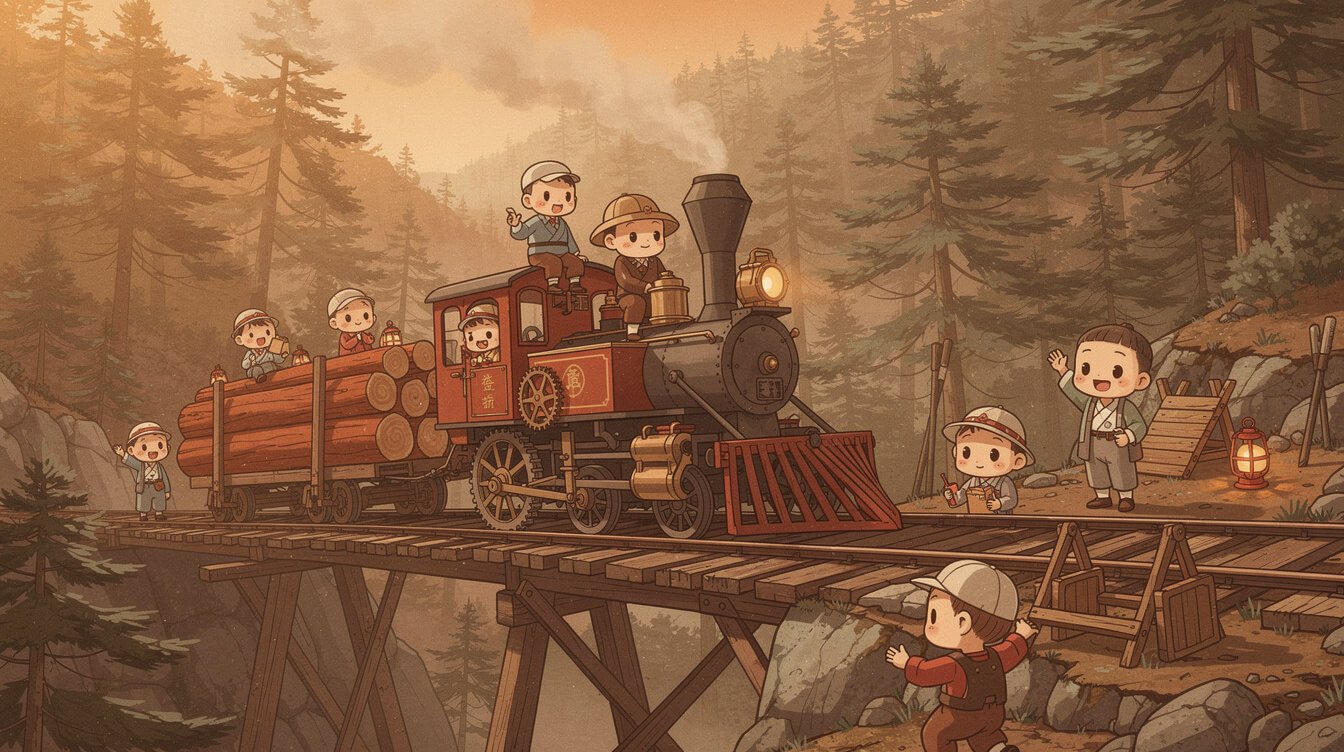
Before the tourists, before the sunrise trains, before the pineapple-cake-shaped souvenir carriages — there were the trees. When Japan took control of Taiwan in 1895, colonial surveyors discovered something extraordinary in the mountains above Chiayi: forests of red cypress (Chamaecyparis formosensis) and yellow cypress (Chamaecyparis obtusa var. formosana) that had been growing undisturbed for two thousand years. Some individual trees were older than the Roman Empire. The wood was rot-resistant, aromatic, and — to a rapidly industrializing Japan — priceless.
The problem was getting it down. The Alishan range rises from near sea level to over 2,600 meters in less than 80 horizontal kilometers, a gradient no ordinary railway could handle. So Japanese engineer Kawai Ryutaro drew up plans for a narrow-gauge line specifically engineered for extreme mountain terrain: 762 millimeters between the rails (about 2 feet 6 inches — nearly a foot narrower than the standard Taiwan Railway gauge), Shay-geared steam locomotives with pistons that could actually crawl uphill on 6% grades, and a route that would need to loop back on itself repeatedly to gain elevation without ever exceeding what the little trains could climb.
Construction began in 1906 and the first section opened in 1912. At its peak, the railway carried tens of thousands of cubic meters of cypress a year down to Chiayi, where the logs became temple pillars, torii gates, and imperial construction material. Logging officially ended in 1963, and by the 1970s the line had reinvented itself as a passenger tourist railway — the only way, at the time, to reach the newly opened Alishan National Scenic Area at the top.
Today, that heritage is why the railway matters. It is one of only three functioning mountain railways in the world using the specific combination of narrow gauge, spiral loops, and switchbacks (the others are in India’s Darjeeling and Sri Lanka), and it is currently on Taiwan’s UNESCO World Heritage tentative list. Every station wooden bench, every hand-painted platform sign, every diesel locomotive that now replaces the old Shay engines is riding on a legacy that started with a tree.
The Route from Chiayi to Alishan: What You Actually Ride
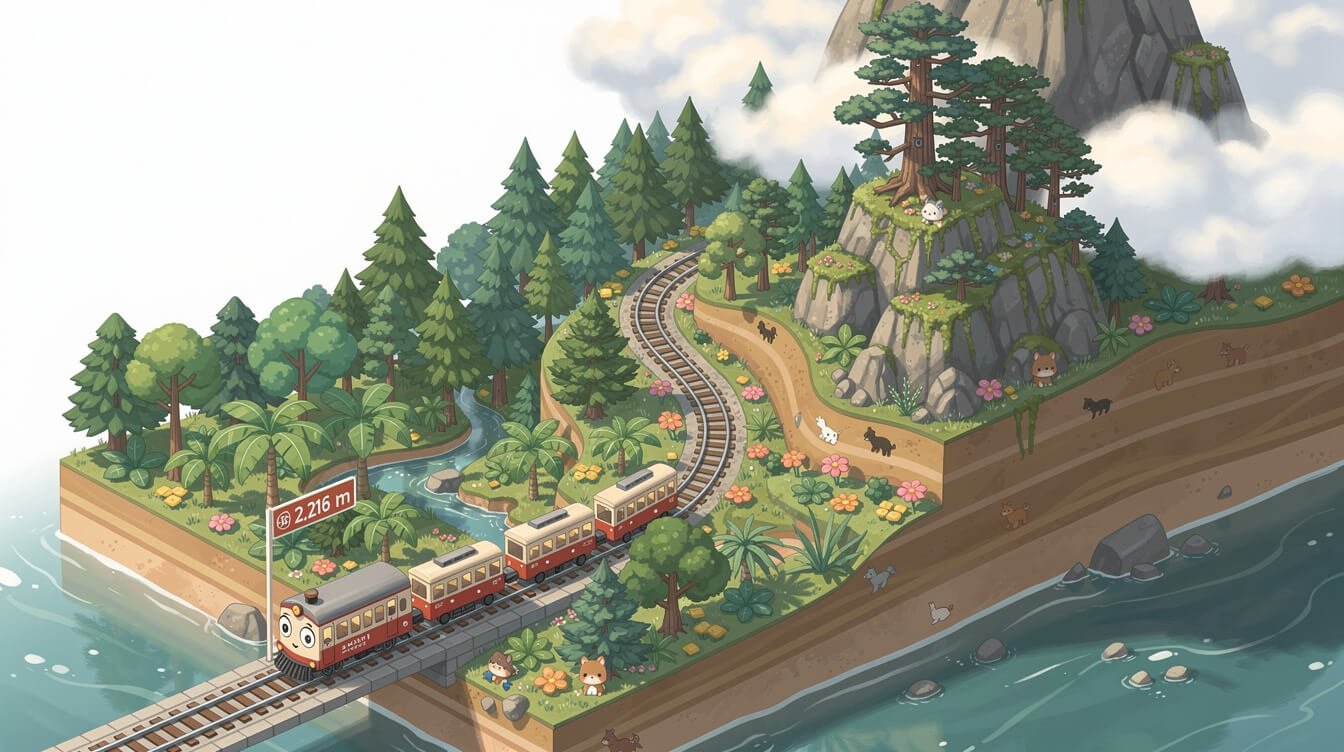
The main line is 71.4 kilometers long and takes roughly four hours from bottom to top. In that time you cross four different climate zones — an experience geography students describe as “traveling from Southeast Asia to Canada in a single afternoon.” Here is what the ride actually looks like, station by station.
Chiayi (30m) → Beimen (31m): The line’s official terminus is Chiayi Station in the middle of the city, but almost every actual passenger train starts one stop north at Beimen Station — a beautifully preserved Japanese-era wooden depot built in 1912. Beimen is where you should photograph the classic red diesel-electric locomotives before boarding. It is also home to the Alishan Forest Railway Garage Park, an open-air museum of retired Shay steam engines that ran the line for six decades.
Beimen → Zhuqi (127m): The first hour of the ride is deceptively flat. You cruise through betel-nut plantations, pineapple fields, and small farming towns on the Chiayi Plain. The tropical zone. Watch the vegetation carefully — it is about to change dramatically.
Zhuqi → Duli Shan (743m) → Fenqihu (1,403m): This is where the mountain starts. The train enters bamboo groves, then subtropical evergreen forest, and this is where the spectacular engineering begins (see the next section). Somewhere around Duli Shan you will spiral around the same mountain four times, feeling the wheels grind on tight curves.
Fenqihu → Alishan (2,216m): The final push. The temperate cypress zone begins around 1,800 meters, and by the time you reach Alishan Station at the top, you are in subalpine cool-temperate forest, surrounded by red cypress giants and often above the cloud line. Bring a jacket even in July — Alishan is regularly 15°C cooler than Chiayi.
If four hours of mountain train feels like too much, most travelers ride the main line one way and take a bus back down — the Chiayi Bus 7322 does the Alishan-to-Chiayi run in about two and a half hours. For a full breakdown of your transport options between the two, see our complete Chiayi to Alishan transport guide.
Engineering Marvels: Spirals, Switchbacks, and 77 Bridges
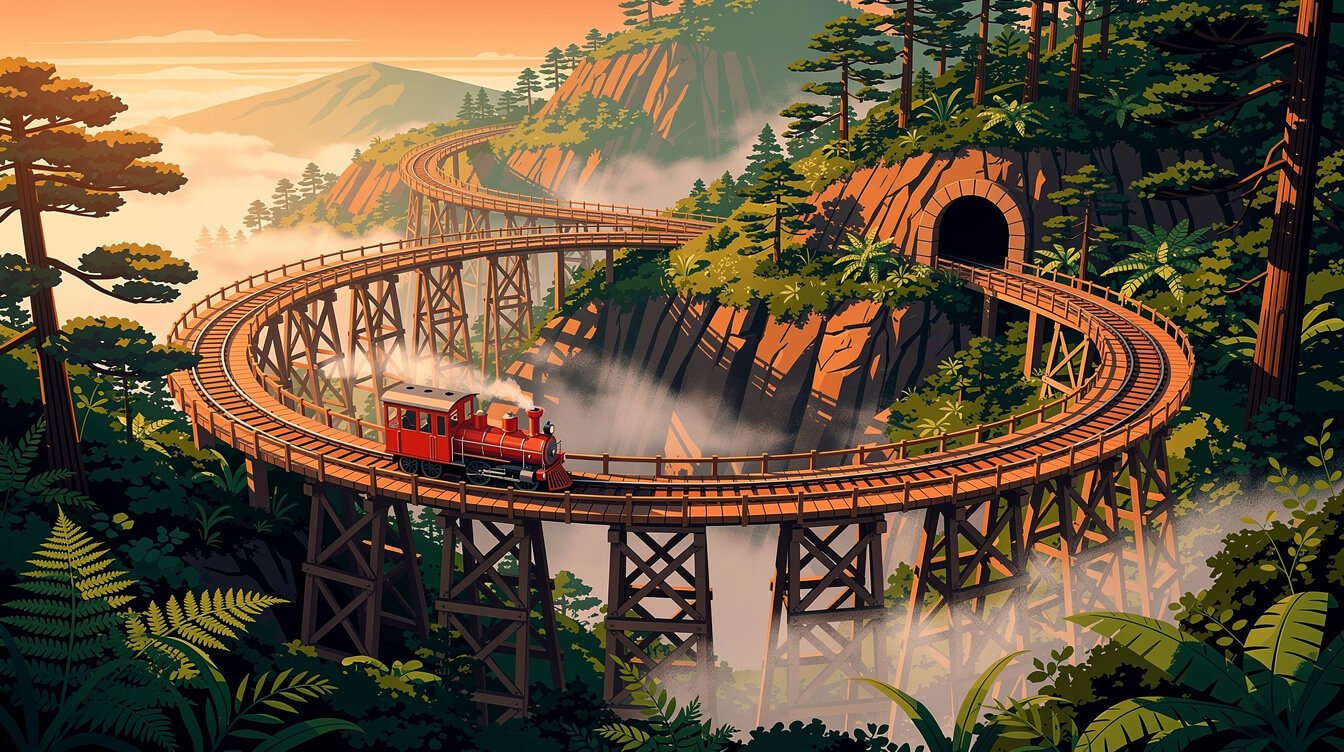
Here is the number that gets thrown around most: 50 tunnels and 77 bridges in a single line 71 kilometers long. That is one tunnel every 1.4 kilometers and one bridge every 900 meters. The reason is elevation. You cannot build a normal railway that climbs from 30 meters to 2,216 meters in that distance — the grade would be over 3%, and mainline trains struggle above 1%. So the engineers had to be clever in three specific ways.
Spiral loops on Duli Shan. “Independence Mountain” is the single most famous piece of engineering on the line. Rather than climb straight up, the railway loops around the mountain four separate times, gaining about 200 meters of elevation on each spiral. From certain viewpoints, you can see the tracks stacked one above the other on the same mountainside. Passengers who look out the left window at the right moment can actually see the front of the train while sitting near the back — a slightly disorienting optical experience unique to spiral railways.
Zigzag switchbacks above Fenqihu. Between Fenqihu and Alishan the mountain gets too steep even for spirals, so the line uses “Z” switchbacks: the train pulls onto a short spur, stops, then reverses direction up the next section, then reverses again onto the next forward section. Three complete reversals lift the train nearly 800 meters over just a few kilometers. The conductor walks through the carriage swiveling the reversible seat backs so you are always facing forward — a small ritual that never fails to charm first-time riders.
Wooden trestle bridges. Many of the 77 bridges are timber trestles built from cypress from the very forests the railway was originally cut to harvest. They have been rebuilt many times — after floods, typhoons, and the massive Chi-Chi earthquake of 1999 — but the design remains true to the 1912 originals. The most photographed is the trestle at Erwanping, a delicate wooden crescent over a green ravine that is featured on most postcards of the line.
The whole system was designed for a maximum speed of just 20 kilometers per hour on the steepest sections. That is not a limitation — it is the point. This is a railway you ride slowly on purpose.
Which Trains to Ride: Main Line, Branch Lines, and the Sunrise Special
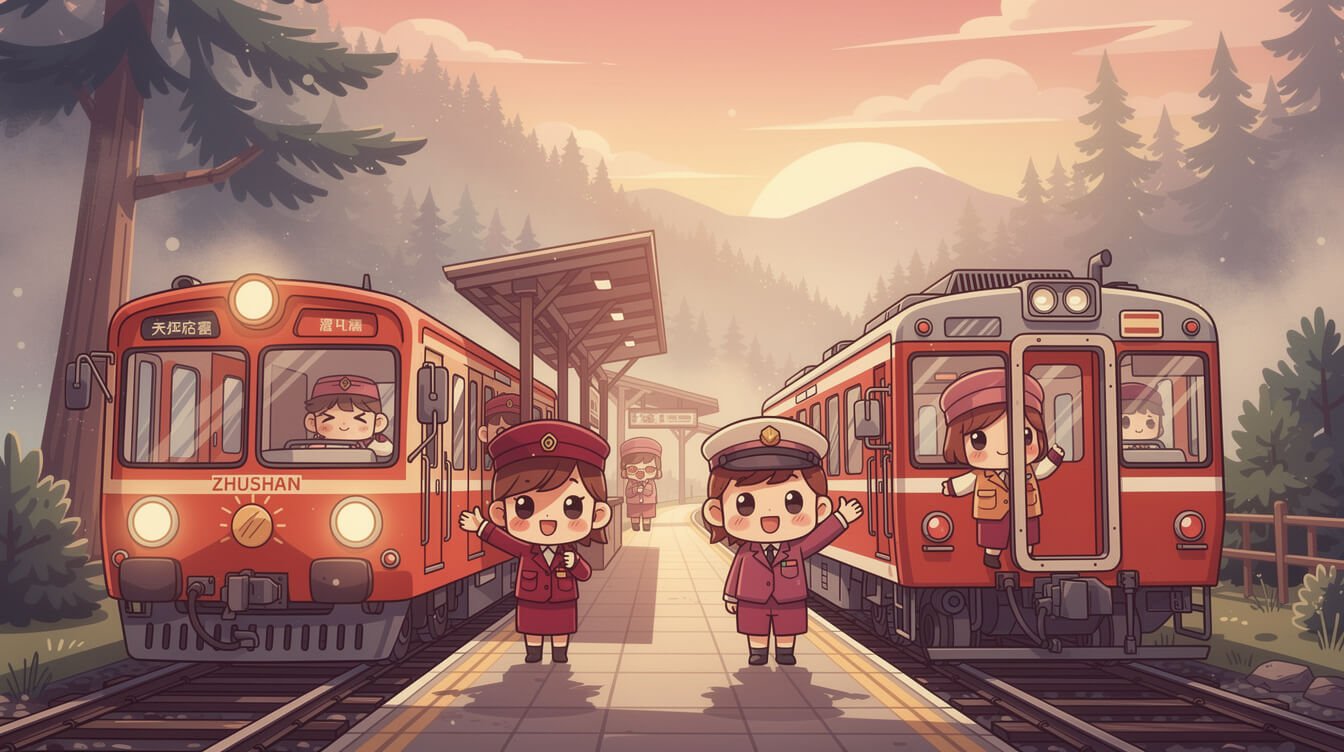
There are five distinct services running on the Alishan Forest Railway right now, and they do very different things. Knowing which one you actually want is the difference between a magical day and a confused afternoon at a station platform.
1. The Main Line (本線). This is the full Chiayi-to-Alishan run, about 4 hours one way. It uses modern diesel-hydraulic sets with reversible cushioned seats and large panoramic windows. There are typically one or two departures a day in each direction — that is it. If you want to ride the entire historic line, this is the train. Book at least a month ahead.
2. The Chushan Line (祝山線) — the Sunrise Train. A short 6.25-kilometer branch that leaves Alishan Station in the pre-dawn dark and climbs to Chushan Station (2,451m) in time for sunrise. Departure time changes daily — typically between 4:00 and 5:30 AM depending on when the sun rises that morning. This is the single most iconic train in Taiwan. More on this in a moment.
3. The Zhaoping Line (沼平線). A very short 1.6-kilometer connector between Alishan Station and Zhaoping Station near the heart of the National Forest Recreation Area. Ride this if you are staying up top and want a quick loop through the highest cypress groves.
4. The Shenmu Line (神木線). Another short branch to Shenmu Station, near where the legendary Alishan “Sacred Tree” — a 3,000-year-old red cypress — stood until it fell in 1998. The stump is still there, and the surrounding trail passes some of the oldest surviving cypresses on the mountain.
5. Special Heritage Runs. On selected weekends, the railway operates restored vintage carriages painted in the original Japanese colonial livery, and occasionally fires up one of the preserved Shay steam locomotives for short heritage runs from Beimen. These are announced on the Alishan Forest Railway official site a few weeks in advance and sell out within hours.
Riding the railway is also the ideal moment to wear something that celebrates Taiwan’s mountain heritage — the Formosan black bear is native to exactly these Alishan cypress forests, and our Formosa Black Bear Minimalist Mountain T-Shirt puts one of Taiwan’s most iconic endemic species front and center. It has become one of our most popular tees among hikers heading up to Alishan for exactly this reason.
Fenqihu Station: The Halfway Highlight (and the Legendary Bento)
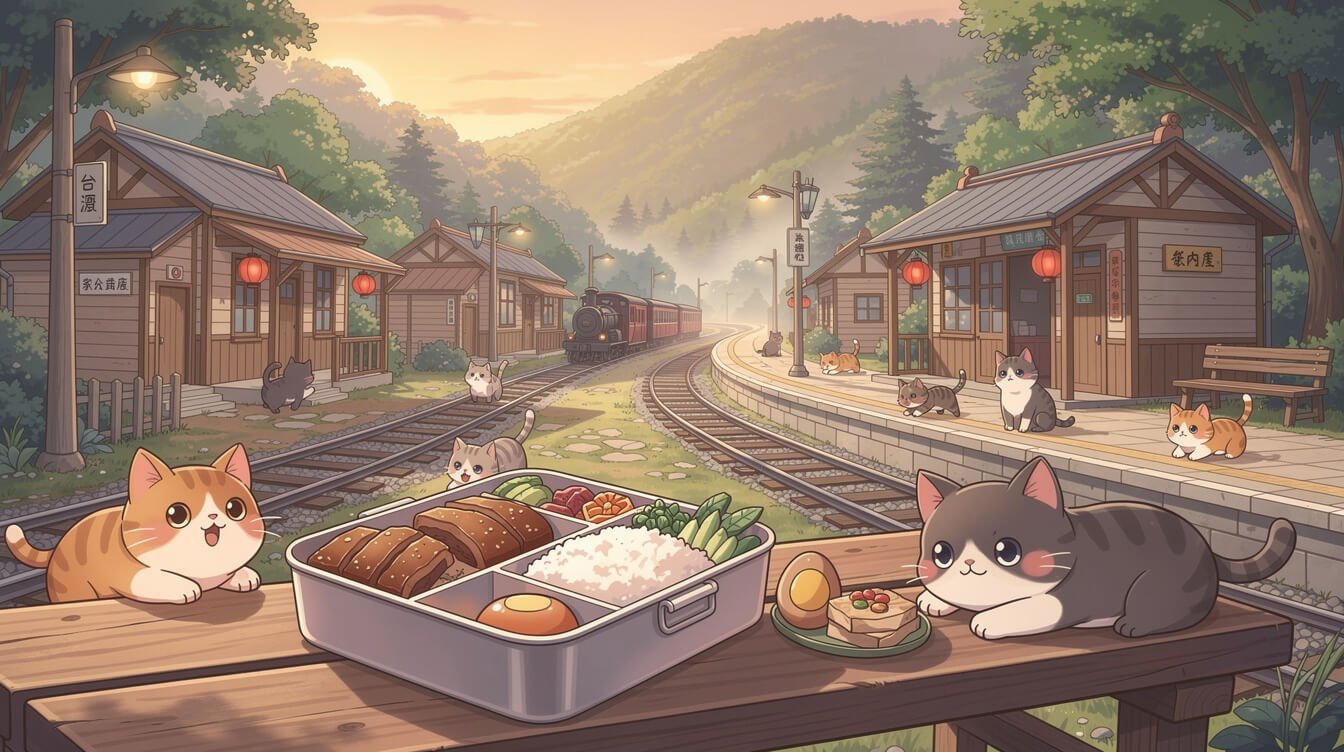
Every long-distance train needs a lunchbox town, and on the Alishan Forest Railway that town is Fenqihu (奮起湖). At 1,403 meters, it is roughly the halfway point of the main line, and virtually every train stops here for at least 20 minutes.
Fenqihu is worth planning around even if you are not riding the main line, and here is why: the Fenqihu railway biandang (奮起湖便當) is genuinely one of the most beloved food items in Taiwan. It is a wooden lunchbox packed with braised pork belly on rice, a hard-boiled tea egg, pickled vegetables, cabbage, and a small drumstick. The dish was born in the 1950s when the railway crews needed portable meals for the long climb, and the vendors at Fenqihu Station perfected it. Today the queue starts forming an hour before every scheduled train arrival.
The old street (奮起湖老街) leading down from the station is genuinely charming — a narrow stone-paved lane lined with dried-mushroom sellers, aiyu jelly stalls, and small teahouses selling the Alishan high-mountain oolong that has made the region internationally famous. If you want to understand why this tea is so prized, our Alishan Oolong Tea guide explains the specific terroir that makes it different from any other high-mountain tea in the world.
Practical tip: Fenqihu is at a cool temperature year-round (average 15-18°C) and the fog rolls in unpredictably in the afternoon. If you plan to overnight here — and the wooden mountain guesthouses are lovely — bring an extra layer. Even in July.
Alishan Forest Railway Sunrise Train: The Chushan Line Ritual

If there is one train in Taiwan that consistently sells out — one that Taiwanese travelers plan entire weekend trips around — it is the Chushan Sunrise Train. And there is a specific ritual to it.
You need to be staying inside the Alishan National Forest Recreation Area (or in the small village just outside the gates). At around 3:30 AM, the loudspeakers at the guesthouses start playing a gentle wake-up chime. You shuffle to Alishan Station through the cold pre-dawn air, wearing every layer you brought. The train departure time is posted the night before at the ticket office — it moves with the sunrise, roughly 4:00 AM in summer and 5:30 AM in winter.
The ride itself is 25 minutes of dark forest. Then Chushan Station (2,451m) appears, and you walk to the observation deck alongside a few hundred other pilgrims who have made the same journey. When the sun clears the ridgeline over Yushan (Jade Mountain), the entire “sea of clouds” that has been hanging over the valley below turns pink, gold, and orange. It is genuinely one of the most photographed sunrise views in East Asia.
Booking the sunrise train: Tickets go on sale at the Alishan Station office the afternoon before, from about 1:00 PM. In peak season (summer weekends, October foliage, Lunar New Year) they can be gone in ten minutes. If you are staying in Alishan proper, the front desk will usually collect your money and send someone to queue on your behalf — this is worth asking about at check-in.
Booking Alishan Forest Railway Tickets in 2026
The single most common question we hear from readers planning an Alishan trip: how do I actually book a main-line ticket? Here is the honest 2026 answer.
Where to book: The only official channel is the Taiwan Railways Administration (TRA) booking portal at railway.hinet.net, or the TRA mobile app. Alishan Forest Railway tickets are integrated into the standard TRA system, not sold on a separate site.
When bookings open: 14 days before departure at midnight Taiwan time. Set an alarm. Main-line seats for weekend departures typically sell out within 30-60 minutes of release, especially between March and November.
Pricing: The one-way main-line fare Chiayi → Alishan is currently NT$400 (about US$12), children half price. Short branch line rides (Chushan, Shenmu, Zhaoping) are around NT$100-150.
Backup options if the main line is sold out: Consider riding only the lower Chiayi → Fenqihu segment (much easier to book, still gets you the spiral loops), then taking a bus or shared taxi the rest of the way to Alishan. Or, book the reverse: bus up to Alishan in the morning, ride the train down in the afternoon. The downhill main-line direction tends to have slightly more availability. Getting to Chiayi in the first place is straightforward if you are coming from Taipei on the high-speed rail — see our Taipei to Kaohsiung HSR guide for how the same line connects to Chiayi HSR Station en route.
What you cannot book online: The Chushan sunrise train (must be bought in person at Alishan Station the day before) and special heritage runs (announced separately on the Alishan Forest Railway official site).
Frequently Asked Questions About the Alishan Forest Railway
Is the Alishan Forest Railway fully operating in 2026? Yes. The full main line from Chiayi to Alishan reopened in July 2024 after 15 years of typhoon-repair closures. All five services (main line, Chushan, Zhaoping, Shenmu, and special heritage runs) are currently active, though occasional closures still happen after major typhoons — check the official site 48 hours before you travel.
How long is the main-line ride? Approximately 3 hours 30 minutes to 4 hours from Chiayi (or Beimen) to Alishan, depending on the specific service and any scheduled photo stops at Duli Shan or Fenqihu.
Is it worth riding the full main line, or should I skip it? If you enjoy trains, mountain scenery, or engineering heritage, the full main line is one of the great rail journeys of Asia and worth every minute. If you are short on time or prone to motion sickness on winding routes, ride only the lower half to Fenqihu (about 2 hours), have lunch, and continue up by road.
Can I bring luggage? Yes, but keep it small. The narrow-gauge carriages have limited overhead space. Anything larger than a carry-on is genuinely difficult. Most travelers store big luggage at Chiayi Station’s coin lockers and go up with a daypack.
What is the best season to ride? Every season has a case. March-April is cherry blossom season at Alishan — spectacular but heavily crowded. October-November brings foliage and clearer skies. December-February is cold at the top (near freezing) but offers the highest chance of the classic “sea of clouds” at sunrise. July-August is warm and green but afternoons often bring heavy mountain rain and possible typhoon closures.
Do I need to speak Chinese? No. Signs at major stations are bilingual (Chinese and English), the TRA booking site has an English interface, and staff at Chiayi and Alishan stations are used to international travelers. Fenqihu and smaller stops are more Chinese-language-dominant, but pointing at pictures at the biandang stall works fine.
How does the Alishan Forest Railway compare to the Darjeeling and Sri Lanka mountain railways? It is the highest of the three (peak elevation 2,451m at Chushan), the longest in single-line distance, and the one with the largest surviving fleet of heritage steam locomotives (kept for display and special runs). Darjeeling and Nilgiri are UNESCO-listed; Alishan is on the tentative list. All three are considered engineering treasures.

Wear the Mountain Home
The Formosan black bear roams the same Alishan cypress forests your train just climbed through. Our minimalist mountain tee celebrates Taiwan’s most iconic endemic species — soft, breathable, and made for travelers who come home wanting to keep a piece of the ride.
Final Thoughts: Why Every Taiwan Trip Should Include This Ride
The Alishan Forest Railway is the rare tourist attraction that has more soul than its brochure suggests. It was built to steal a forest, then it became the tool that let people fall in love with what was left of it. Every one of those 50 tunnels and 77 bridges was hand-cut by someone. Every wooden station bench was worn smooth by decades of workers, and now by the shoes of curious travelers heading up to see a sunrise.
Ride it slowly, sit on the left side going up for the best spiral views, buy the biandang at Fenqihu, and try to catch at least one sunrise from Chushan. And if the full four-hour main line is sold out — do not force it. Ride the lower half. Take the road the rest of the way. Come back for the sunrise. The mountain will wait.
Weekly Taiwan Culture, Delivered
Join the Taiwan Merch newsletter for weekly stories on Taiwan food, festivals, hidden mountain rides like this one, and first-look drops on our newest tees. No spam — just the good stuff from the island.

Grab a Free Taiwan Sticker!
Drop your email and we’ll send you a limited-edition Taiwan sticker — plus insider access to new merch drops and island vibes.
No spam. Unsubscribe anytime.