Taiwan Desserts: From Night Market Classics to Instagrammable Cafe Creations
Taiwan desserts hit differently. On one street in Taipei you can queue for a night market shaved ice piled with fresh mango, walk two blocks to a century-old shop for silky douhua, then duck into a soufflé pancake cafe that looks like it was designed for Instagram. The island’s sweet scene is a living archive of Fujianese heritage, Japanese colonial pastry technique, indigenous ingredients, and a runaway modern cafe wave — all crammed into a place slightly smaller than Maryland.
This guide is organized by where you eat them, not by random numbered list. Whether you’re rolling through a night market, hunting the perfect pineapple cake to bring home, or seeking out the trendy dessert cafes taking over Taipei, you’ll know exactly what to order, why it exists, and where to find the best version. Buckle in — we’re covering more than 30 iconic sweets across seven experience types.
Why Taiwan Is a Dessert Paradise
Taiwan’s dessert culture didn’t happen by accident. Three forces collided on this tropical island to create one of the most inventive sweet scenes in Asia. First, the climate: subtropical heat means cold desserts have been survival food for centuries — shaved ice with sweet toppings existed here long before the industrial freezer. Second, the ingredient pantry: the island is the self-proclaimed Kingdom of Fruits, producing world-class mangoes, guavas, wax apples, and pineapples that show up in everything from shaved ice mountains to filled pastries.
Third — and this is the part most guides miss — Taiwan absorbed two distinct pastry traditions. The Fujianese and Hakka settlers brought heritage sweets like taro balls, glutinous rice cakes, and red bean pastries. Then fifty years of Japanese colonial rule (1895–1945) layered in wagashi technique, delicate crumb structures, matcha, and the entire concept of the aesthetic dessert shop. What you eat today — pineapple cake in Taiwan is really an Osaka-style butter shortbread wrapped around a Chinese-style fruit filling — is a fusion nobody else has.
Add in the night market ecosystem that made dessert accessible for one US dollar, plus a modern cafe culture that treats dessert as a design object, and you get the specific Taiwan combination: heritage sweets sold at 100-year-old shops, modernized versions at aesthetic cafes, and street-vendor variants at every night market. Nowhere else stacks those layers this densely.
Night Market Desserts — The Classics You Cannot Skip
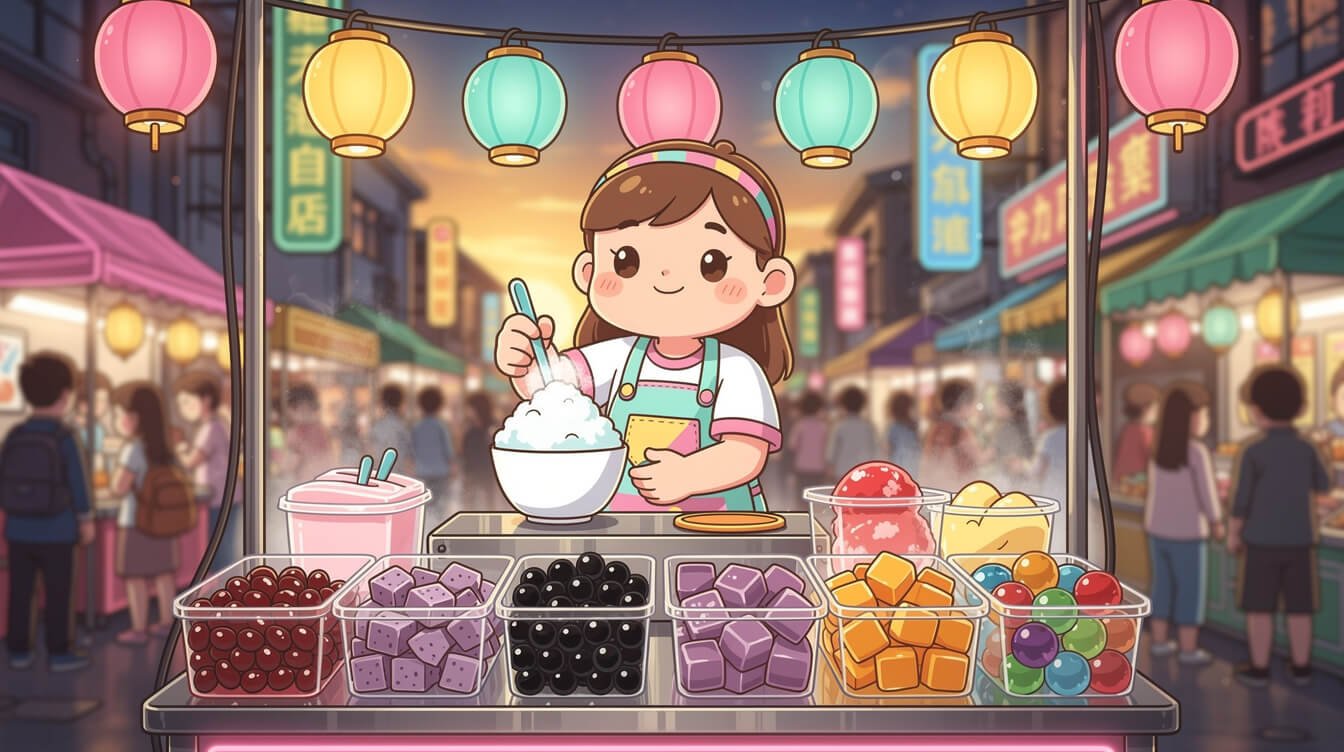
Every serious Taiwan trip runs through a night market, and the dessert stalls are half the reason. These are the sweets you eat standing up, off a paper plate, with a plastic spoon — cheap, hot or cold, and often invented specifically for the walking-and-eating format. Start with these seven at any night market and you’ve covered 80% of the classic street sweets menu.
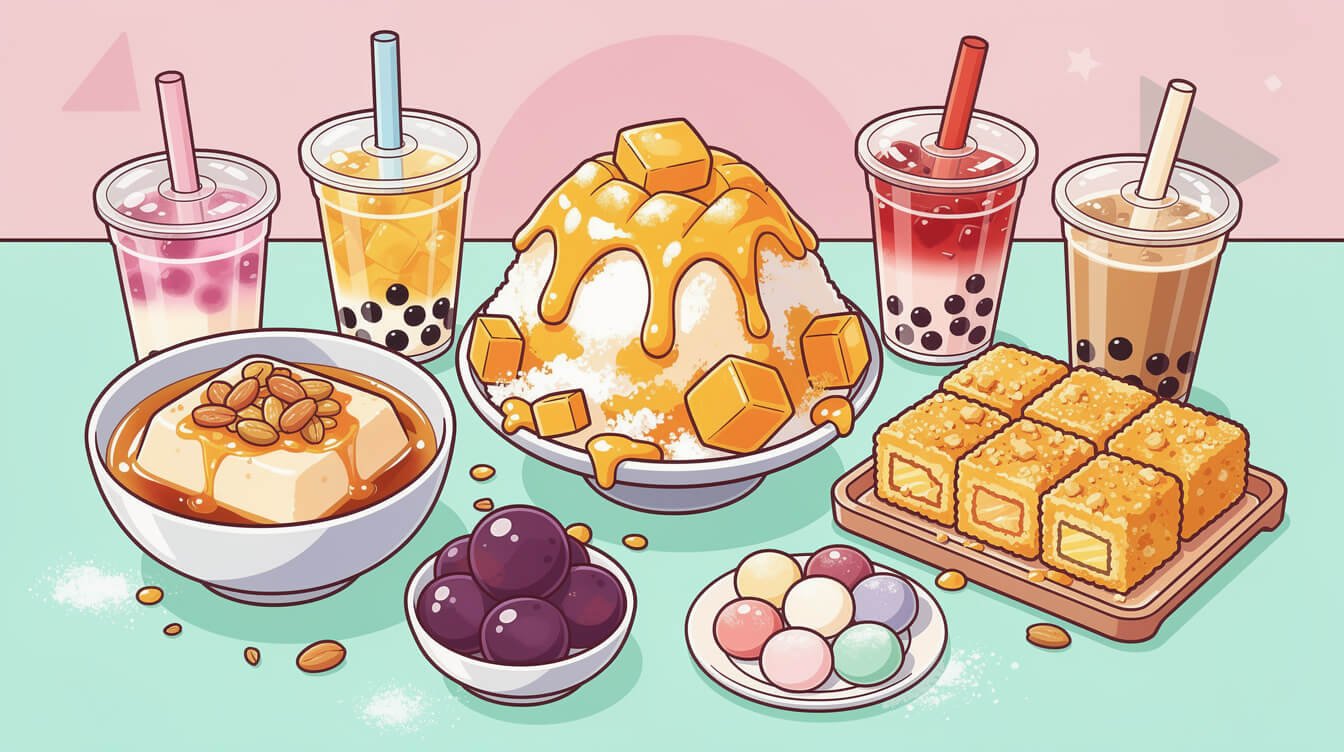
Baobing (刨冰) — Shaved Ice with Toppings. The OG. A mountain of hand-shaved ice base topped with syrup, condensed milk, and your choice of eight or so mix-ins from a display case: red bean, mung bean, grass jelly, tapioca pearls, taro chunks, mochi, sweet potato balls, and fresh fruit. Point at what you want — the shop stacks them on top. Shilin Night Market’s Ice Monster spinoff shops popularized the tourist-friendly version, but the neighborhood versions are cheaper and often better.
Douhua (豆花) — Silky Tofu Pudding. Warm silken tofu (yes, tofu is a dessert here) served in a bowl of sweetened ginger syrup or brown sugar water, topped with peanuts, red bean, or taro balls. In summer it flips to iced version with fruit. Legendary at Modern Toilet-adjacent stalls near Ximending, but every night market has one.
Bubble Tea (珍珠奶茶) — The One That Went Global. Invented in Taichung in the 1980s, this needs no introduction. Order it at a night market for the wild variations you won’t find at chains: brown sugar boba with fresh milk, cheese foam tea, seasonal fruit teas with real fruit chunks, or the newer black diamond jelly versions. Skip the American chains and try Chun Shui Tang or 50 Lan.
Aiyu Jelly (愛玉冰). A cold, wobbly, lightly citrus-perfumed jelly served over ice with lemon and honey. Made from the seeds of a Taiwan-native fig, this dessert exists nowhere else on Earth as a mass-market street food. Refreshing beyond words after a hot night market walk.
Muah Chee (麻糬). Hot, freshly-pounded glutinous rice balls rolled in peanut powder and sugar. You watch the vendor pound the dough in a wooden bowl, tear off pieces, and roll them right in front of you. Best eaten warm and pillow-soft.
Grilled Sweet Potato (烤地瓜). Not fancy, but underrated. Charcoal-roasted purple sweet potatoes with a burnished, sticky skin and near-liquid caramelized flesh. The winter classic — sold from converted oil drums outside night markets from November through March.
Deep-Fried Ice Cream Roll. A wafer wrapped around ice cream, shaved peanut brittle, and cilantro (yes, cilantro — trust the process). The peanut, cold ice cream, and herb combination is a signature Taipei night market dessert. Try it at Yongkang or Raohe.
Ready to plan a full night market feast? Our Taiwan night market food guide covers the savory game plan to build around these sweets.
Traditional Shop Desserts — Douhua, Taro Balls, and the Century-Old Sweets
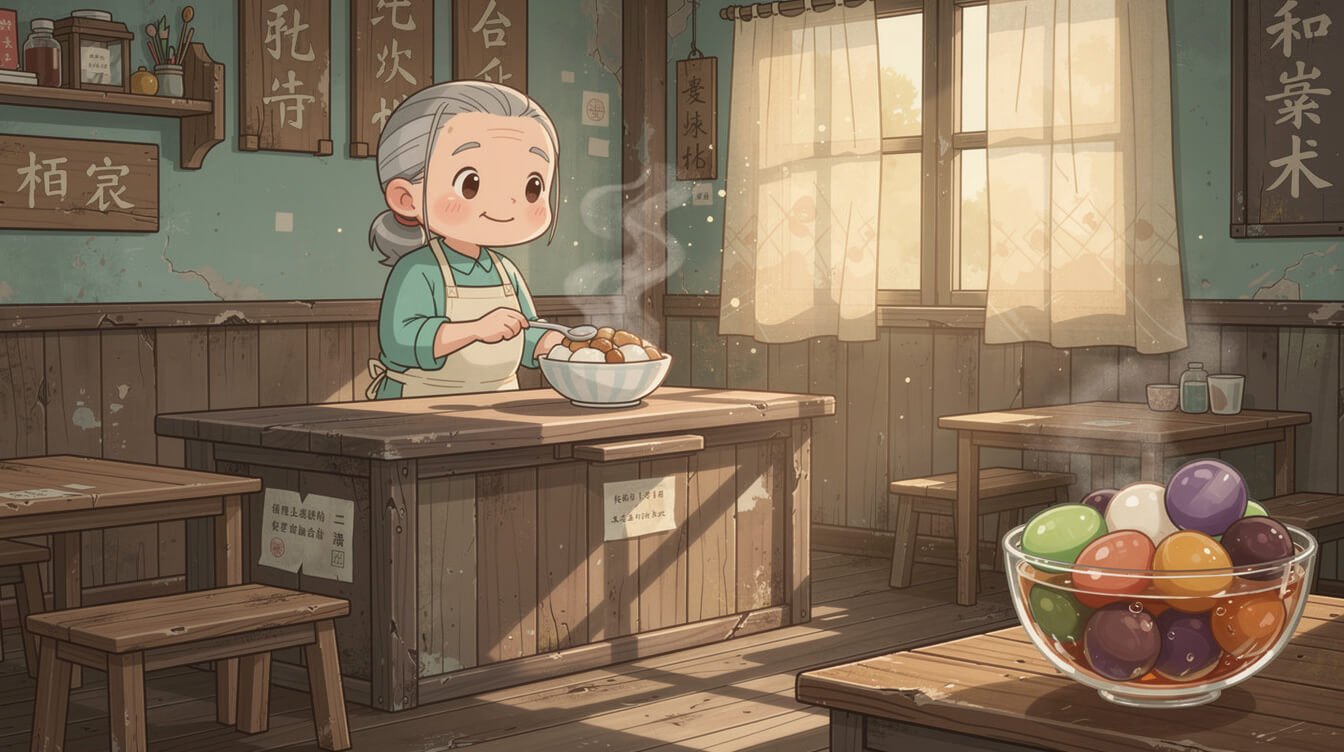
Some Taiwan desserts belong in dedicated shops — quiet spots with wooden benches, hand-painted signs, and a menu of maybe six items perfected over three generations. These are the desserts that predate the night market economy and reward the traveler who slows down.
Jiufen Taro Balls (九份芋圓). The town of Jiufen — the misty mountain village that inspired Studio Ghibli’s Spirited Away — is home to this handmade dessert. Fresh taro is steamed, mashed, mixed with tapioca starch, hand-cut into small dumpling-like balls, and served in a bowl of chilled sweet broth with red bean, mung bean, and shaved ice. Or the same balls hot in a warm broth for winter. Ah Gan Yi (阿柑姨芋圓) is the legendary shop with a mountaintop view — worth the queue.
Almond Tofu (杏仁豆腐). Not tofu at all — it’s a wobbly, chilled almond-milk pudding that tastes like the ghost of marzipan. Traditional dessert shops serve it in a shallow bowl with fruit cocktail or lightly-sweetened syrup. Delicate, adult, and criminally under-marketed to foreign visitors.
Winter Douhua (熱豆花). The hot version of the night market classic — silken tofu pudding served in ginger syrup that burns the back of your throat in the best possible way. Traditional shops keep it on the menu year-round even though the summer iced version outsells it.
Peanut Soup with Youtiao (花生湯). A Taiwanese breakfast crossover — soft-cooked peanuts in a sweet, milky broth with a fried dough stick torn in on top. Traditional Fujianese heritage sweet, and shops that specialize in it (like Yong He Peanut Soup) treat it like an art form.
Red Bean Zongzi (甜粽) and Sticky Rice Cakes. Sweet versions of the classic glutinous rice preparations, filled with red bean paste, sweetened jujube, or lotus seed. Traditional dessert shops sell them year-round; you’ll see mountains of them stacked around Dragon Boat Festival.
Turnip Cake, Sweet Edition. Fewer shops make it, but the sweet version of luobo gao — steamed rice cake with brown sugar and jujube — is a heritage sweet worth seeking out at old-school teahouses in Tainan.
The Stories Behind Taiwan’s Iconic Pastries
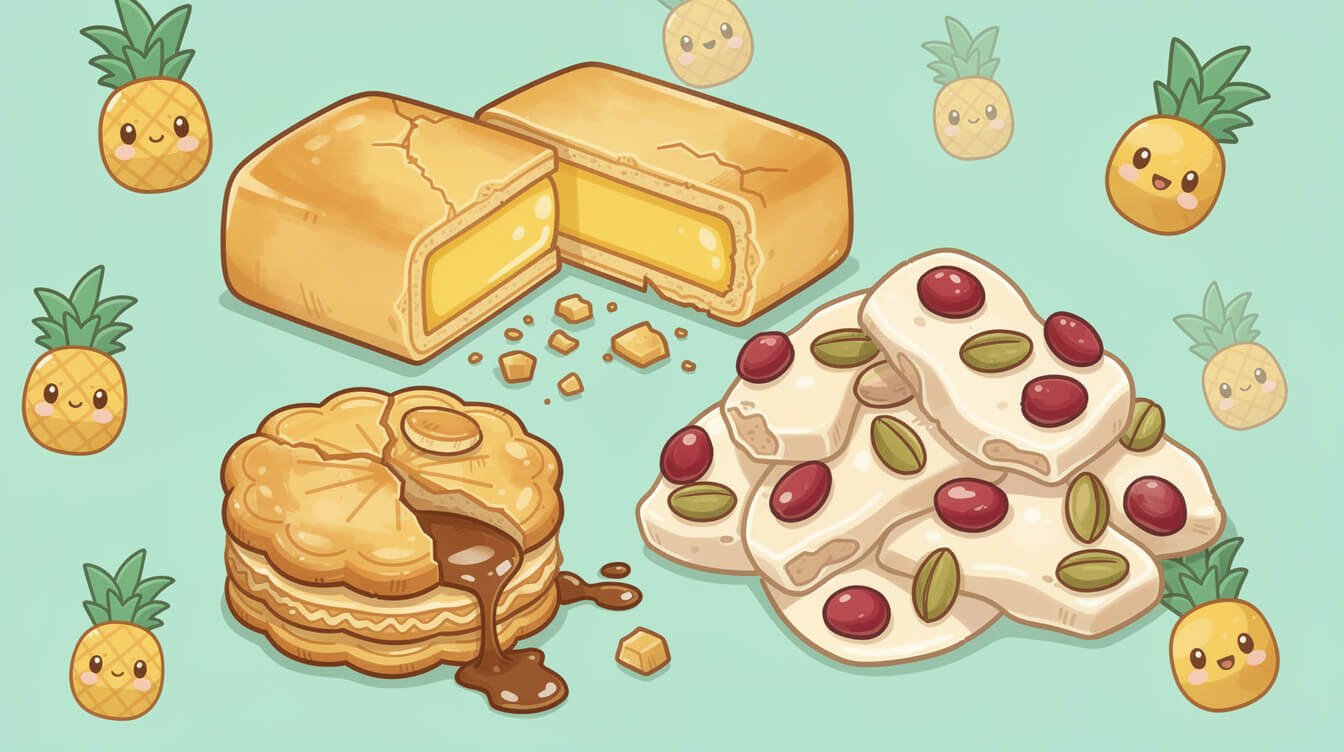
Every country has its signature pastry. Taiwan has three — pineapple cake, sun cake, and nougat — and each carries a story worth knowing before you buy the tin.
Pineapple Cake (鳳梨酥). The souvenir. Small, buttery, palm-sized pastries with a golden shortbread crust and a chewy, tart-sweet pineapple filling. Here’s the thing most tourists never learn: the “traditional” pineapple cake filling is mostly winter melon — dense, chewy, cheap. The 土鳳梨酥 (“tu feng li su” or “native pineapple cake”) uses 100% Taiwan-grown pineapple, and the tartness is a completely different experience. SunnyHills and Chia Te are the two names to know, and both make the native version. Chia Te ships worldwide but the fresh-from-the-shop version in Taipei is the peak. For the deep dive, see our complete pineapple cake guide or the recipe if you want to try it at home.
Sun Cake (太陽餅). Taichung’s signature pastry — a flaky, layered round of pastry filled with a thin, golden malt-sugar syrup. When you bite in, the pastry shatters like a mille-feuille and the filling flows out. There’s a bakery rivalry in Taichung so intense it has its own Wikipedia entry: Tai Yang Tang, Chia Chia Tai Yang Tang, and about eight others all claim the original recipe. Walking down Tai Yang Cake Alley in Taichung, you’ll be handed samples for 200 meters. Take them all.
Nougat (牛軋糖). Taiwan makes some of the best nougat in the world. The Taiwan version is milk-based, softer than the Italian original, packed with pistachios or peanuts or dried cranberries, and often studded with sesame or coffee. Sugar & Spice and Nougat Ronron are the modern favorite brands. Vacuum-sealed for luggage travel and outrageously giftable.
Honorable mentions: the Mooncake (月餅) — Taiwan’s version is often filled with mung bean paste or savory pork; the Wife Cake (老婆餅) — a flaky pastry with sweet winter-melon filling and a Cantonese origin story about a devoted wife; and Hakka Persimmon Cakes, small autumn-only rounds from the Hakka regions of Miaoli.
Modern Cafe Desserts — Taiwan’s New Wave Sweet Scene
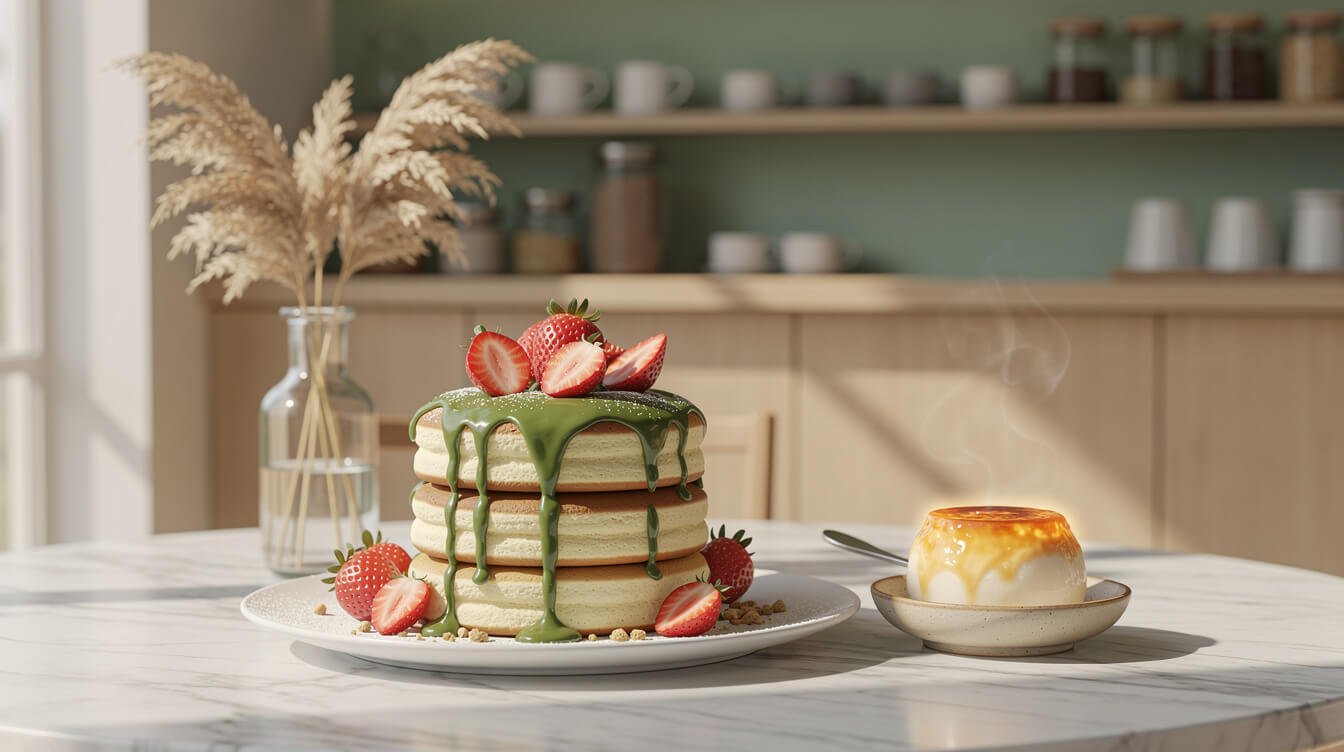
The other guides stop at pineapple cake. They miss the entire second half of the story. Since roughly 2015, Taipei and Taichung have exploded with modern dessert cafes — often Japanese-influenced but with a distinctly Taiwanese twist — that treat dessert as pure design. If you’re on Instagram at all, you already know the aesthetic: warm wood, cream tiles, dried flowers, and dessert that looks unreal.
Souffle Pancakes. Wobbly, cloud-tall stacks that jiggle when you touch them, drizzled with maple, dusted with matcha, or piled with fresh berries. A GRAM in Ximending and Fluffy in Taichung are the pioneers. Order and wait 30 minutes minimum — this is not fast food, it’s a small performance.
Matcha Everything. Taiwan grew up on Japanese matcha culture through its colonial-era tea shops, and modern cafes have gone deep. Matcha soft-serve, matcha tiramisu, matcha basque cheesecake, matcha lattes with a real bamboo whisk visible behind the counter. Wa So Matcha in Yong Kang district is the specialist to visit.
Modern Mochi. Traditional mochi got a rebrand. Shops like Yu Jan Shin and Sweet Mochi now do daifuku with fresh strawberries visible through translucent skin, torched creme brulee mochi with a caramelized sugar top, and salted caramel mochi. Taichung is the modern mochi capital.
Basque Cheesecake. The burnt-top cheesecake style went viral globally, and Taiwan cafes took to it like nowhere else. Fig21 (Taipei), CJSJ (Taichung), and dozens of small bakeries offer versions with earl grey, roasted oolong, matcha, or purple sweet potato swirled in.
Aesthetic Ice Cream. Ice cream in Taiwan is often architectural. Dozo, Mr. Slow, and Fireman Gelato in Kaohsiung build ice cream landscapes with pistachio soil, cocoa gravel, and single flowers on top. Meanwhile in the night markets, purple sweet potato and taro soft serve remain the classics.
The Coffee-Shop Cheesecake Wave. Third-wave coffee shops now often bake in-house. A slice of Basque cheesecake or a burnt honey madeleine at Fika Fika Coffee, Simple Kaffa, or GaBee is peak Taipei afternoon.
Taiwanese Desserts You Can Take Home as Souvenirs
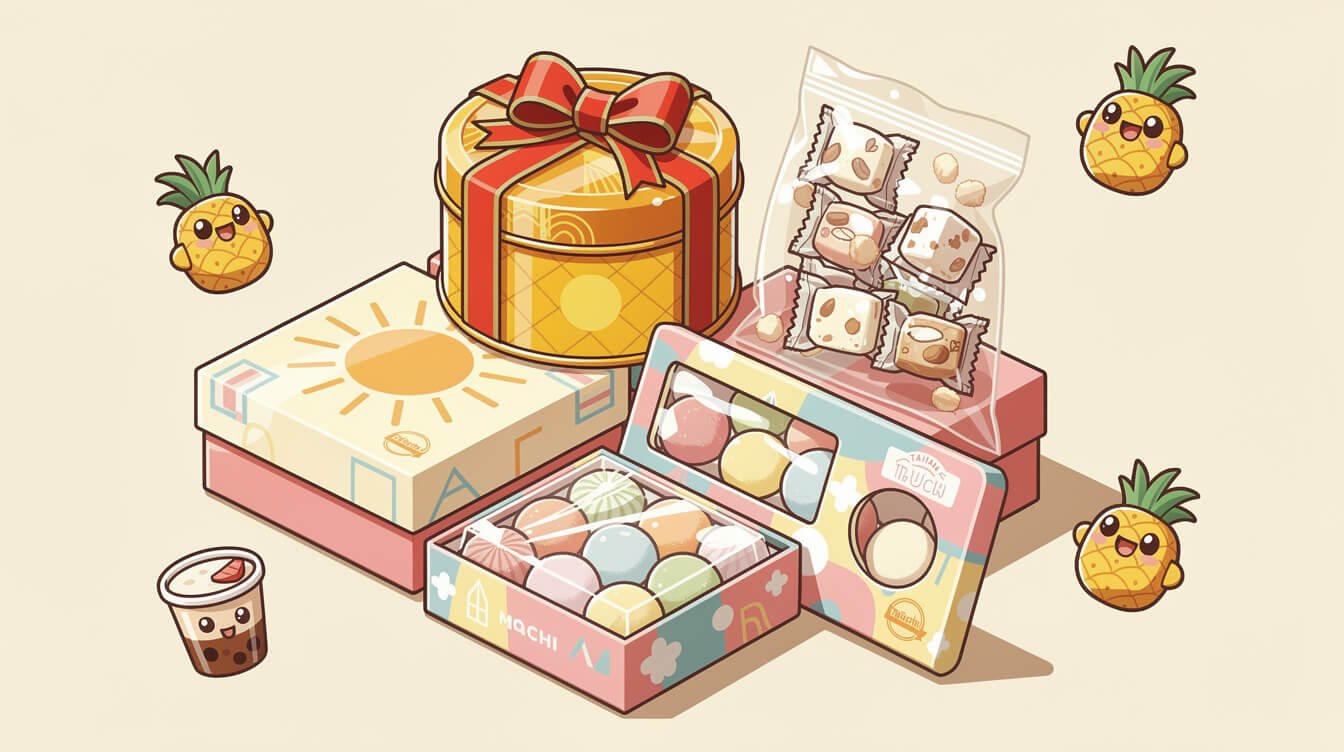
Half the joy of Taiwan sweets is that most travel well. If your suitcase has a spare pocket, here’s the packing list:
- Pineapple cake tins — the Chia Te and SunnyHills gift boxes are the classic move. Vacuum-sealed and shelf-stable for ~30 days.
- Nougat — Sugar & Spice’s mixed variety box in the Taoyuan Airport is the shortcut; Nougat Ronron for the fancier gift.
- Milk candy (牛奶糖) — the small individually-wrapped Taiwan milk candies were literally childhood for a generation of Taiwanese kids. Nostalgia bomb for any Taiwan expat friend.
- Sun cake tins — buy on Tai Yang Cake Alley in Taichung, individually wrapped, holds up ~2 weeks.
- Pineapple cake variants — cranberry, longan, or matcha filled pineapple cakes from newer bakeries make great “obviously Taiwan but not the standard” gifts.
- Mochi assortments — vacuum-sealed daifuku boxes from Taichung shops travel fine for 5-7 days.
- Traditional pastries — Wife cakes, mooncakes (out-of-season versions), and green bean pastries from Yishunxuan or Kuo Yuan Ye pack neatly.
- Instant grass jelly powder — bring home the ability to make xian cao at 2 AM in your own kitchen.
Bringing back edible souvenirs is one thing — but if you want something more permanent for the Taiwan-obsessed friend, our deep pineapple cake tour pairs perfectly with a boba cat tee or Taiwan food graphic tee from our shop — wearable versions of everything you just spent ten days eating.
Seasonal Guide — What to Eat and When
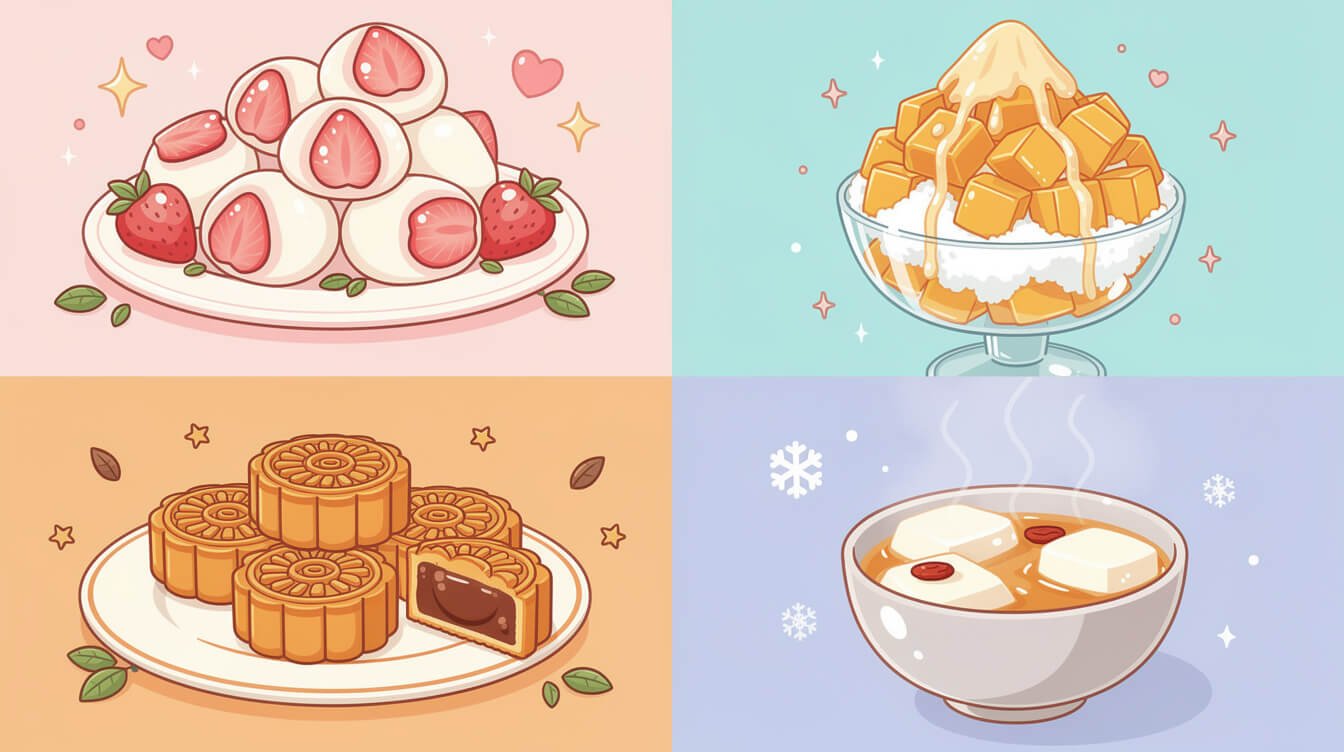
Taiwan desserts are surprisingly seasonal. If you plan your trip around them, here’s the sweet-eater’s calendar.
Spring (March–May). Fresh strawberry season peaks in March, and strawberry mochi, strawberry cream shaved ice, and strawberry Basque cheesecake take over every cafe menu. This is also the sweetest window for wax apple, if you can spot it. Ginger douhua stays on the menu as mornings are still cool.
Summer (June–August). Mango season, and the mania is real. Mango shaved ice mountains at Ice Monster (Taipei) and Yong Kang Ice House pull queues around the block. Baobing, aiyu jelly, and iced douhua dominate the streets. If you love ultra-cold desserts, this is your window. Pineapple is also at peak sweetness — pineapple cake tastes noticeably better if you visit a bakery in summer.
Autumn (September–November). Mid-Autumn Festival brings the mooncake surge in September — every bakery and 7-Eleven turns into a mooncake pop-up for two weeks. Persimmon season starts in Hakka country (Miaoli, Hsinchu) and persimmon-cake makers do brisk business. Peanut, sesame, and warm ginger flavors start creeping into cafe menus.
Winter (December–February). Hot desserts take over. Hot douhua with ginger syrup, sweet peanut soup, hot mochi, roasted sweet potatoes, warm taro ball soup, and hot black sesame paste soup are winter staples. Around Chinese New Year, sticky rice cakes (nian gao, 年糕) show up everywhere as they’re auspicious symbols of “rising higher each year.”
Where to Actually Find the Best Desserts — Taipei, Taichung, and Tainan
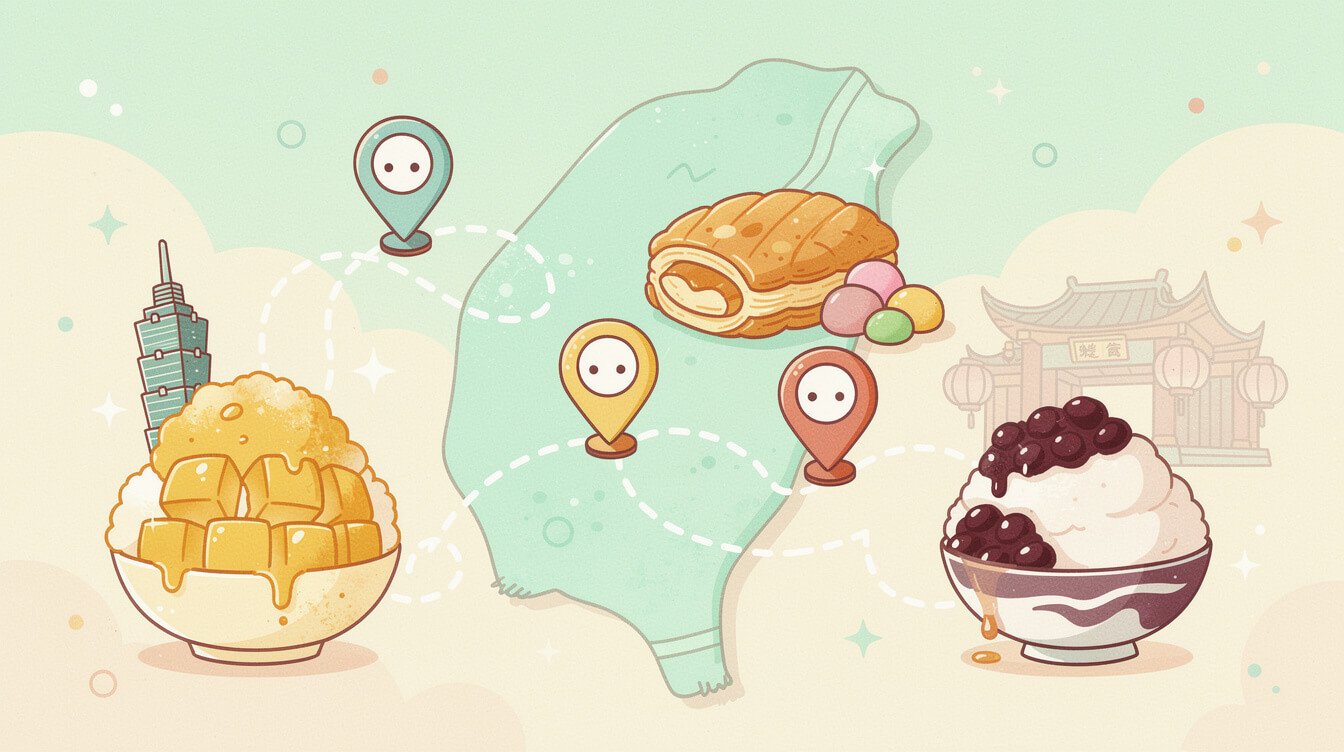
Taipei gets all the international press, but each of Taiwan’s three big cities has its own dessert personality. Here’s the essential map.
Taipei — The Modern Cafe Capital. The neighborhoods to prioritize: Yong Kang (traditional shaved ice at Yong Kang Ice House, plus modern cafes), Da’an (basque cheesecake bakeries and Japanese-style dessert shops), Ximending (youth-culture street desserts, A GRAM pancakes, taiyaki fish waffles), and Shilin Night Market for the classic street sweets tour. Peak flagship: Ice Monster on Zhongxiao East Road for mango shaved ice, and Chia Te bakery near Nanjing Fuxing for pineapple cake.
Taichung — The Pastry Capital. Home to sun cake, modern mochi innovation, and the country’s most experimental cafe scene. Walk Tai Yang Cake Alley (太陽餅街) for the sun cake bakery brawl, then hit Yu Jan Shin (裕珍馨) for modern mochi. The city has a growing basque cheesecake scene at CJSJ, and its cafe density in the West District rivals Taipei.
Tainan — The Heritage Sweet City. Taiwan’s oldest city has the most traditional sweet shops. Try the sweet zongzi at 100-year-old shops in the Anping district, and don’t miss the traditional milk-and-tofu-based sweets that most tourists never learn about. Tainan also does a distinctive brown sugar shaved ice with taro balls that’s slightly different from the Taipei version.
Bonus stops: Jiufen for taro balls at the source (day trip from Taipei); Kaohsiung for the growing modern gelato scene at Fireman Gelato; and Yilan for the nougat factory tours if you want the deep sweet-souvenir experience.
Final Thoughts — Eat Widely, Then Eat the Standouts Twice
The trap most travelers fall into is doing a single “Taiwan desserts tour” that hits the greatest hits in one day. That’s fine, but it misses the point. Taiwan desserts are seasonal, geographical, and layered — a proper sweet week means eating a mango shaved ice on a hot afternoon in Yong Kang, then hunting sun cake in Taichung’s alleys the next morning, then ending in a Basque cheesecake at a Da’an cafe as the rain sets in.
Order the classic once. Order the modern version once. Compare. Then find your favorite and go back three more times before you fly out. That’s the Taiwan dessert experience. If you want the definitive food context to build the trip around, our Taiwan traditional food guide covers the savory side, and the Taiwan fruit guide explains why the mango shaved ice tastes the way it does.
Now go eat.
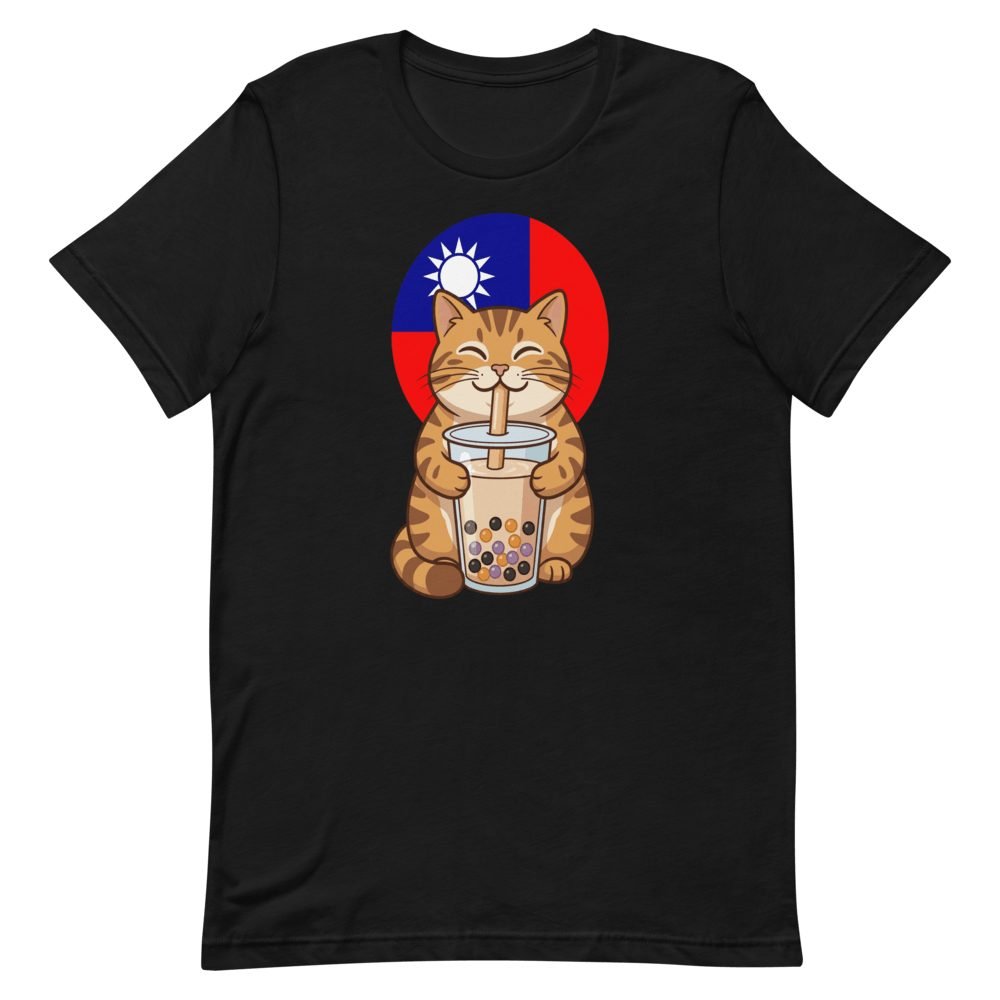
Wear Your Boba Obsession
Just spent an afternoon planning your Taiwan dessert tour? Our Boba Tea Cat tee is basically the wearable version of that mood — cute, quintessentially Taiwan, and a subtle flex for every bubble-tea run back home.
A Postcard from Taiwan, Every Week
Get our best Taiwan food, culture, and travel guides delivered every week. Plus early access to new merch drops and subscriber-only deals.
Grab a Free Taiwan Sticker!
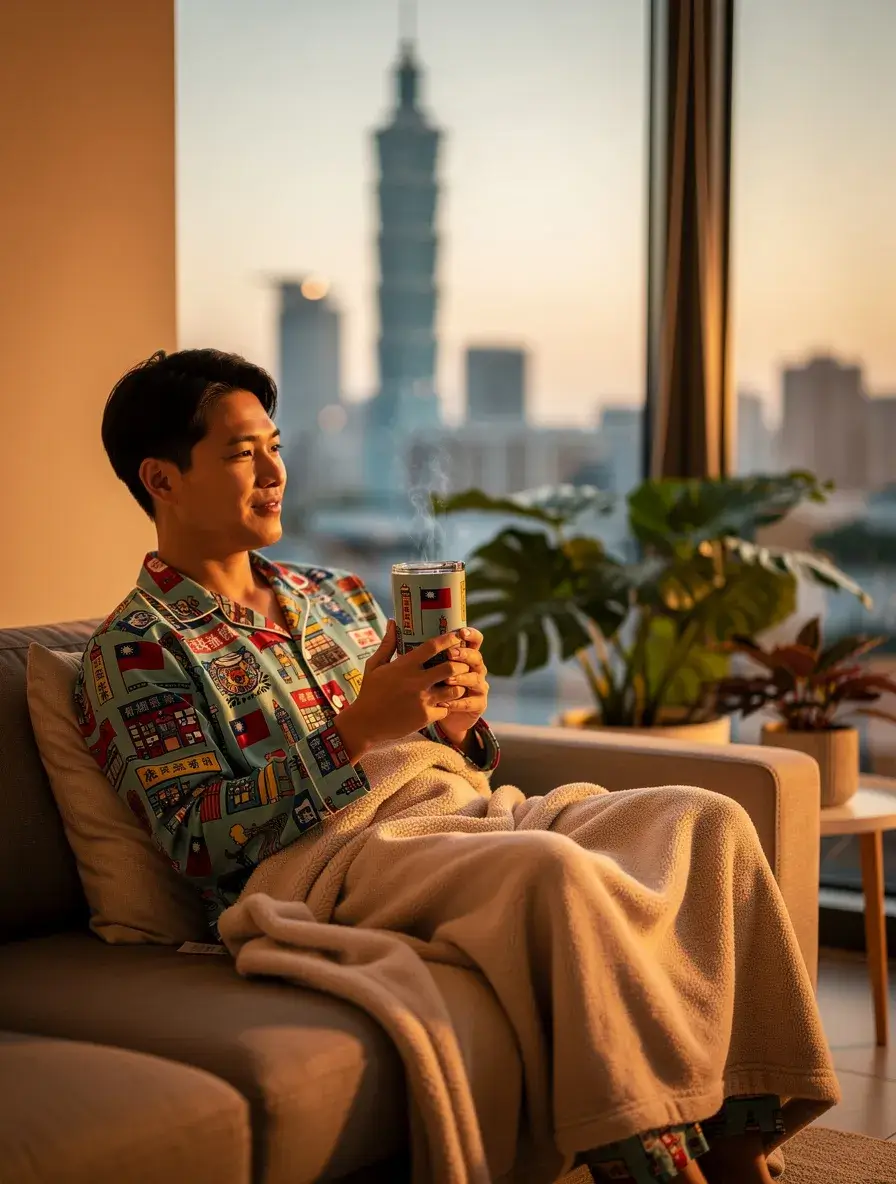
Drop your email and we’ll send you a limited-edition Taiwan sticker — plus insider access to new merch drops and island vibes.
No spam. Unsubscribe anytime.