Is Boba Gluten Free? A Topping-by-Topping Guide (Plus How to Ask in Taiwan)
You’re standing at a bubble tea counter, the line is moving, and the question you actually need answered isn’t on the menu: is boba gluten free? The pearls themselves almost always are. Tapioca comes from cassava, a root, and cassava has no gluten. But a cup of boba is a lot more than pearls. It’s a tea base, a sweetener, maybe a milk or creamer, maybe a flavor powder, and then whatever toppings you pile in, all assembled with shared shakers and scoops. Gluten rarely hides in the boba. It hides in the drink built around it.
So this guide goes topping by topping and drink by drink, using the menus of real Taiwanese chains rather than a generic “check with the shop.” We’ll also cover something no other guide mentions: what Taiwan’s own food law does and doesn’t require drink shops to tell you, plus a short phrase card for ordering in Mandarin. One note before we start: this is a practical guide, not medical advice. If you have celiac disease, your doctor and the shop’s own ingredient information always beat a blog post, including ours.
Is Boba Gluten Free? The Short Answer
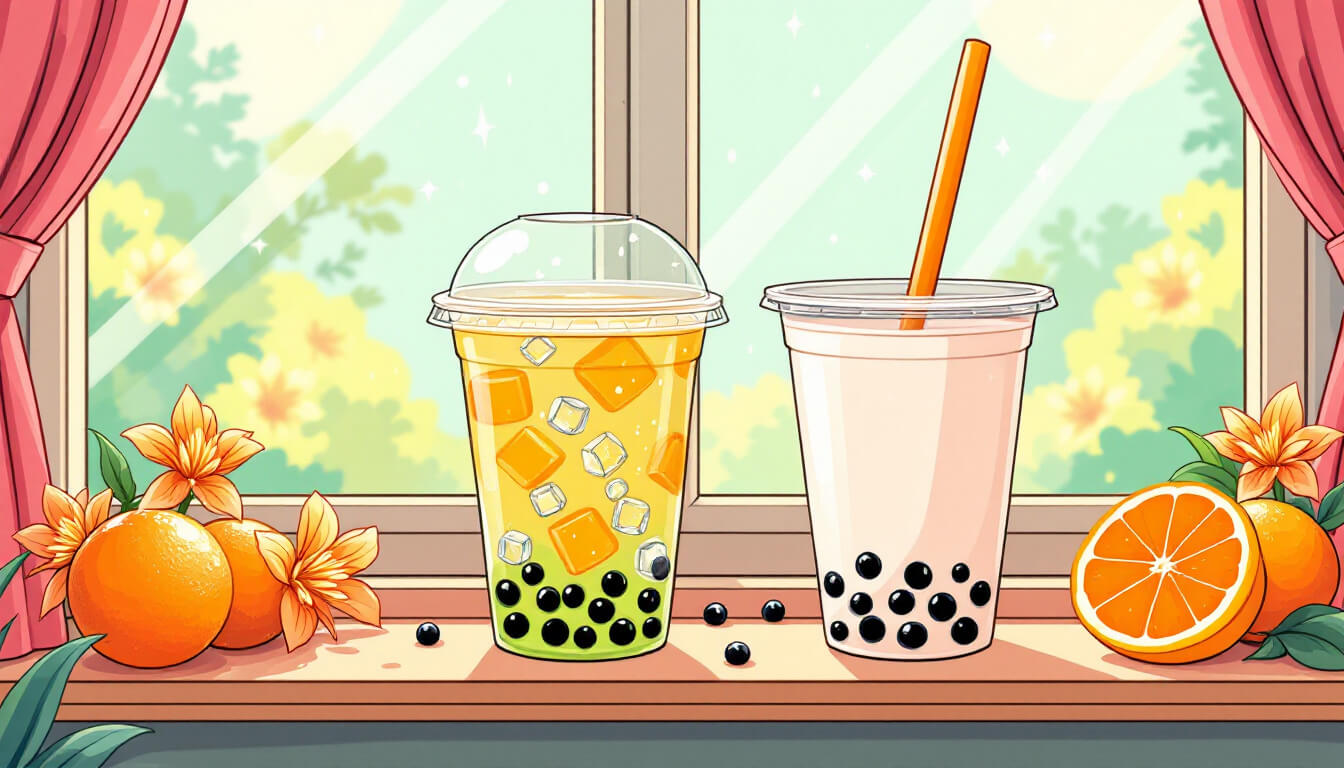
Yes, plain tapioca boba is gluten free, and so is a simple cup of brewed tea with milk and sugar syrup. Tapioca pearls are made from cassava starch, and none of the core ingredients of a classic pearl milk tea comes from wheat, barley or rye. The risk is everything else: malt drinks, barley teas, cookie toppings, some flavor powders, and cross-contact from shared equipment.
Here’s the quick version, before the detail:
- Usually fine: plain tapioca pearls, brewed black, green and oolong teas, fresh milk, cane or brown sugar syrup, fruit teas made with real fruit.
- Ask first: flavor powders (taro, milk tea, matcha blends), non-dairy creamer, pudding, cheese foam, grass jelly, taro balls, anything “house-made.”
- Contains gluten: barley tea, malt drinks like Ovaltine milk tea, Oreo or cookie crumbles, and anything with cake or cereal pieces.
- The wildcard: shared shakers, scoops and blenders. Even a gluten-free order can pick up crumbs.
If you only remember one thing, make it this: the question to ask isn’t “is boba gluten free?” It’s “is this drink gluten free?”
Why Tapioca Pearls Are Gluten Free
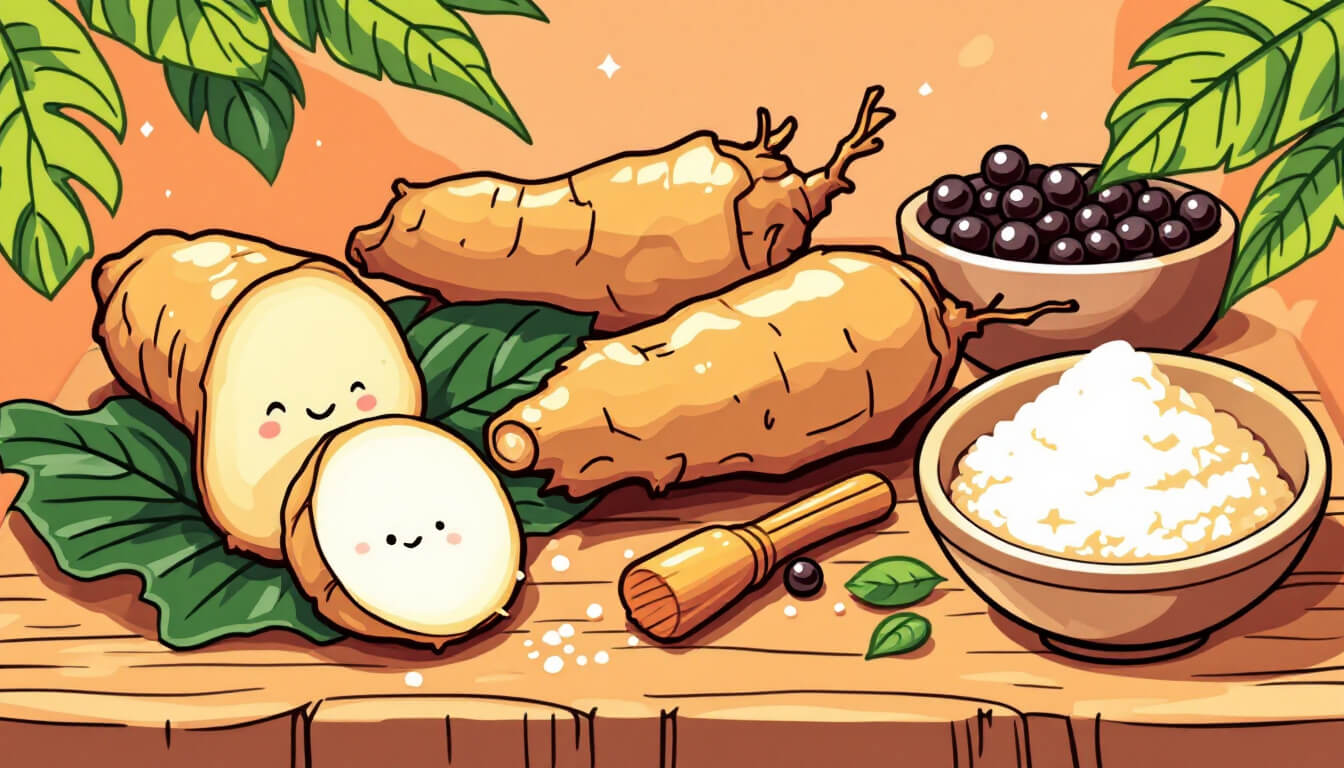
Gluten is a group of proteins found in wheat, barley and rye (and in oats that have been grown or milled next to them). Tapioca isn’t a grain at all. It’s the starch washed out of the root of the cassava plant, a tropical shrub, and it’s close to pure carbohydrate. That’s why celiac organizations list tapioca among naturally gluten-free foods, and why tapioca flour is a staple of gluten-free baking.
A tapioca pearl is that starch mixed with hot water into a dough, rolled into balls and boiled until chewy. Shop pearls (the ones Taiwanese shops call 珍珠, zhēnzhū, “pearls,” or 波霸, bōbà, for the big ones) add very little to that: usually caramel color for the dark shade, a sweetener, and sometimes a thickener. We read the actual retail labels for our guide to what boba is made out of, and every black-pearl label we found listed caramel color as the coloring, not brown sugar.
“But isn’t caramel color made from wheat?”
It’s a fair question, because caramel color can technically be made from several sugars, including ones derived from wheat or barley. In practice it’s rarely a problem. Beyond Celiac notes that caramel color in North America is typically made from corn rather than wheat, and that if wheat were used, US law would require the label to say so. Dietitian Tricia Thompson at Gluten-Free Dietitian reaches the same conclusion. If you’re highly sensitive and want certainty, the pearl manufacturer’s allergen statement is where to look, because under Taiwan’s rules (more on that below) a gluten cereal in a packaged product has to be declared on the bag.
When pearls might not be gluten free
A few edge cases are worth knowing about:
- Flavored or “specialty” pearls. Brown-sugar, honey or flavored pearls are still mostly tapioca, but each extra ingredient is another thing to check.
- House-made pearls. Some shops make their own dough. The classic recipe is just tapioca starch, water and sugar, but you can’t see the recipe from the counter, so ask what goes in.
- “Boba” that isn’t tapioca. “Boba” on a US menu sometimes covers crystal boba (a konjac jelly, as we found in our crystal boba guide) or popping boba (juice in an alginate skin). Neither is made from grain, but they’re different products with different labels.
The upshot: the pearls are the safest thing in the cup. Now for the rest of it.
Is Boba Gluten Free Topping by Topping? The Checklist
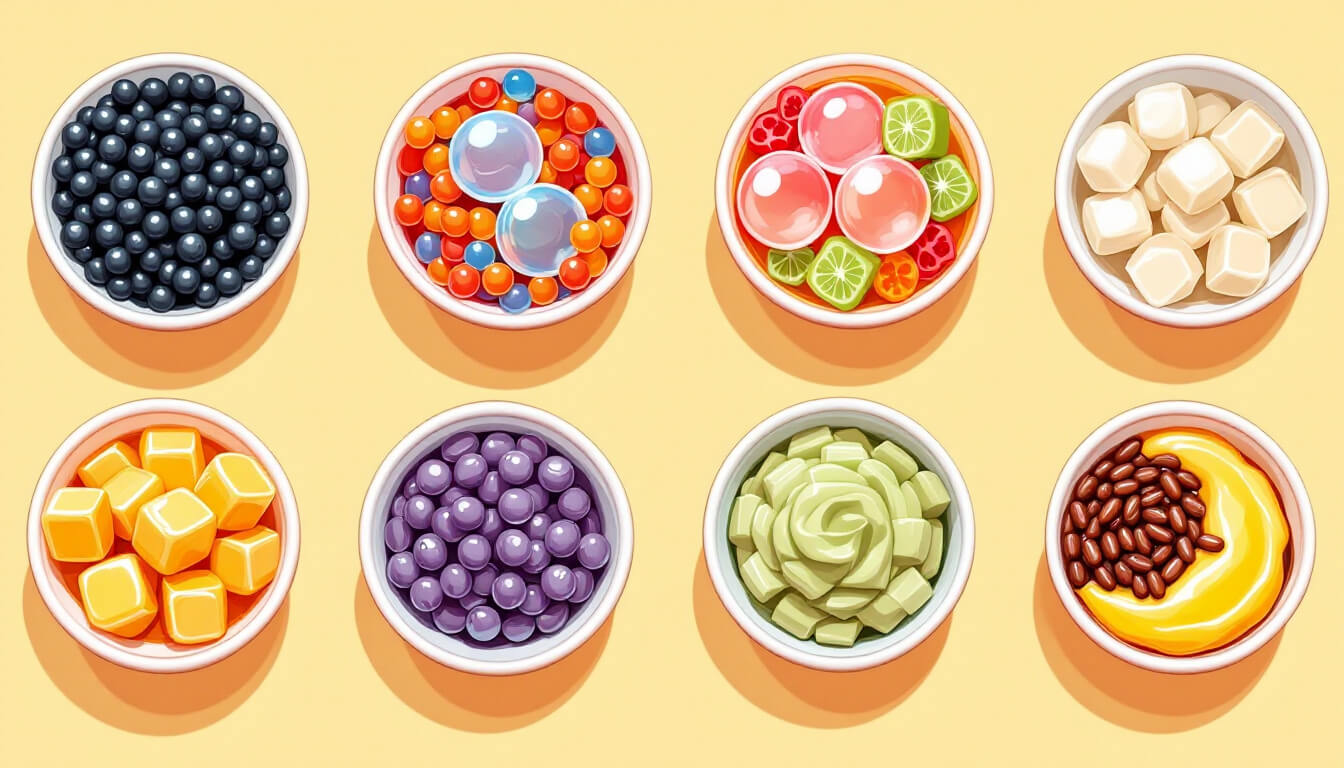
Most guides stop at “watch out for Oreo.” But a Taiwanese drink-shop menu has a dozen toppings, and they’re made in very different ways. We went to the retail labels on the products shops actually buy, from US suppliers like Bossen and Tea Zone and Taiwanese supermarket brands, and sorted each topping by what the labels show. Where we couldn’t find a label, we say “ask,” not “safe.”
| Topping | Chinese name | Verdict | Why |
|---|---|---|---|
| Tapioca pearls | 珍珠 / 波霸 | Usually gluten free | Cassava starch, sugar, caramel color. |
| Crystal boba | 寒天晶球 | Usually gluten free | Konjac and seaweed gums, despite the “agar” name. |
| Popping boba | 爆爆珠 | Usually gluten free | Juice in an alginate skin. Bossen and Tea Zone both tag theirs gluten free. |
| Red bean | 紅豆 | Usually gluten free | Bossen’s canned red bean is just “red bean, sugar, water.” |
| Mini mochi | 麻糬 | Usually gluten free | Glutinous rice has no gluten, despite the name. |
| Grass jelly | 仙草 | Ask | Some versions contain wheat starch. |
| Egg pudding | 布丁 | Ask | No wheat on the labels we read, but one is made in a facility that handles gluten. |
| Cheese foam | 奶蓋 | Ask | The powder we read had no wheat; house recipes vary. |
| Taro balls | 芋圓 | Ask | Usually taro plus sweet potato or tapioca starch, but recipes vary and we found no retail label. |
| Oreo / cookie crumbs | OREO 餅乾 | Contains gluten | Wheat flour is the first ingredient. |
| Cake, waffle or cereal bits | — | Contains gluten | Wheat-based by definition. |
The surprise: grass jelly
Grass jelly (仙草, xiāncǎo) is the dark, faintly herbal jelly made from the Chinese mesona plant, and it’s a classic Taiwanese summer dessert. You’d expect a plant jelly to be gluten free, and some are. Tea Zone’s canned grass jelly is just water, the herb, sodium carbonate and malic acid, and Bossen’s grass jelly powder sets with corn starch.
But Taisun, one of the best-known Taiwanese brands, lists wheat starch (小麥澱粉) in the jelly in its canned grass jelly drink, 仙草蜜, and its UK-labelled grass jelly pudding declares “Wheat (Gluten) Starch.” Starch helps the jelly set firmly. So two cubes of grass jelly can look identical in your cup and have different labels behind them. That’s exactly why “ask” beats “assume.” (Boba Guys’ own allergen sheet, for what it’s worth, flags its grass jelly for honey and gelatin, not gluten. Every shop’s recipe is different.)
Pudding, cheese foam and the “ask” pile
The egg pudding and cheese-foam powders we found didn’t list wheat, but Bossen’s egg pudding powder notes that it’s “processed in a facility that also processes egg, gluten,” which matters if you’re celiac. Many shops also make pudding and cheese foam in house, from their own recipes, so the label on a supplier’s bag may not describe what’s in your cup. Taro balls (芋圓, yùyuán), the chewy purple and orange nuggets from Jiufen, are traditionally made from mashed taro or sweet potato kneaded with sweet-potato or tapioca starch, but we couldn’t find a retail label to confirm that for shop-bought ones.
A tip for reading Taiwanese names: 麻糬 (mochi) and 糯米 (glutinous rice) sound alarming, but “glutinous” describes the sticky texture, not gluten. Rice has none. Aiyu jelly, set from the gel in fig seeds rather than from flour, is another Taiwanese topping worth knowing, though as always, a shop’s version is worth a quick question.
The Drinks That Hide Gluten: Barley, Malt and Ovaltine Milk Tea
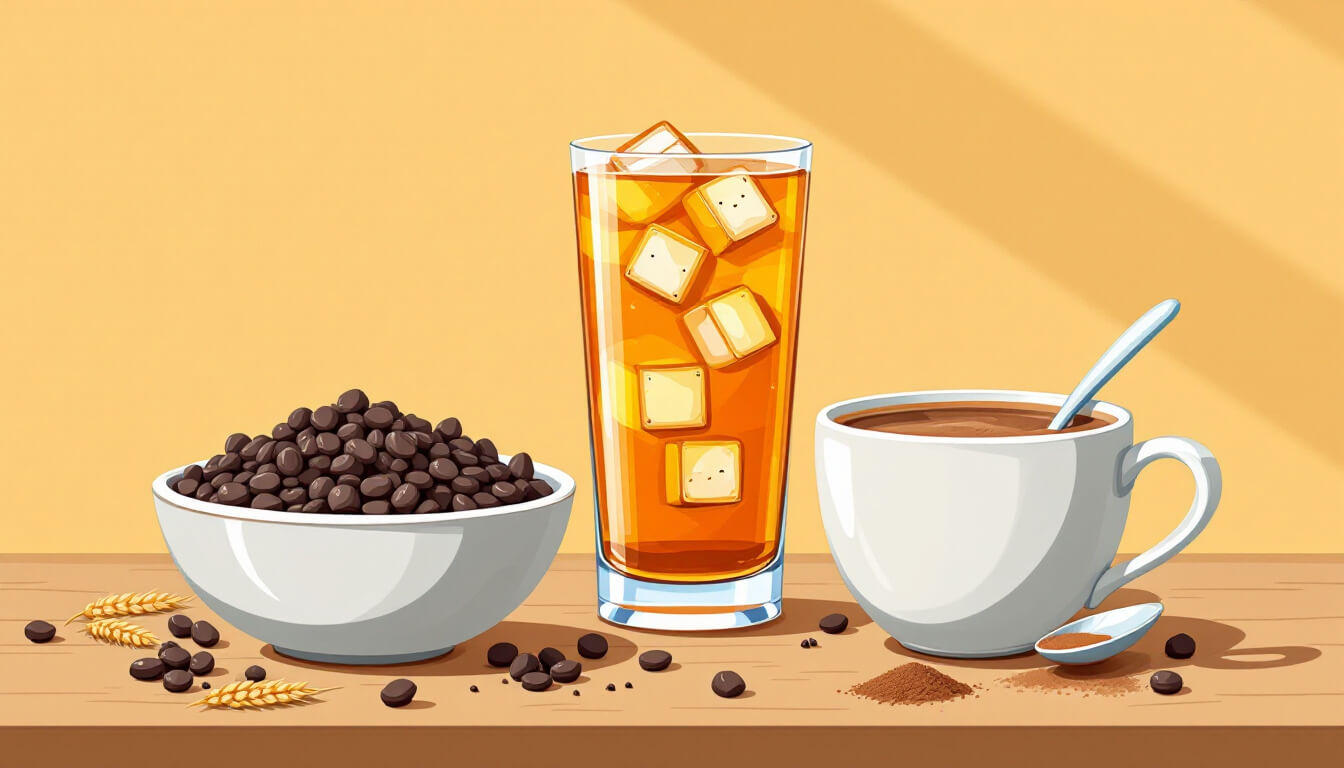
Toppings get all the attention, but on a Taiwanese menu the bigger gluten risk is the drink itself. Barley and malt are everyday flavors in Taiwan, and they turn up in places an English-speaking visitor wouldn’t think to check.
Barley tea and barley milk tea (大麥 / 麥茶)
Roasted barley tea is a toasty, caffeine-free staple across East Asia, and Taiwanese chains use it as a base for both plain teas and milk teas. A few examples from official menus:
- COMEBUY describes its 鮮萃大麥紅茶 (barley black tea) as Assam black tea brewed with roasted barley, and also sells a barley milk tea.
- Milksha (迷客夏) lists 焙香大麥拿鐵 (roasted barley latte) and 冬瓜麥茶 (winter melon barley tea).
- Wanpo (萬波) sells 纖麥茶, described as “light barley,” plus 麥仔奶茶 (barley milk tea).
Barley is one of the three gluten grains. The Celiac Disease Foundation lists it as a source of gluten alongside wheat and rye, so barley tea and anything brewed with it is off the list for celiacs. (Roasting doesn’t change that.)
Malt drinks and Ovaltine (阿華田)
Ovaltine, called 阿華田 (ā huá tián) in Taiwan, is a malted chocolate drink, and Taiwanese media have reported 50 Lan (50嵐) selling it as a milk-tea and latte option. The Taiwanese Ovaltine sold at Costco Taiwan lists malt extract first, and the label itself flags it as a gluten-containing cereal (含有麩質之穀類). The Celiac Disease Foundation lists “malt extract,” “malt syrup” and “malted milk” as gluten sources.
US shoppers should know that “Ovaltine” isn’t one recipe. Ovaltine Classic Malt lists malted barley. One Rich Chocolate drink mix also has barley malt, while another Rich Chocolate mix has no malt at all. Shops don’t always know which tub they have, so treat any Ovaltine drink as containing gluten unless someone shows you the label.
The nostalgia can: 麥香
Here’s one that catches even Taiwanese diaspora off guard. 麥香 (mài xiāng, “barley aroma”), Uni-President’s iconic black tea and milk tea, is named for exactly what’s in it. The brand says it adds roasted barley to the black tea to deepen the flavor and take the edge off the bitterness, and both the 麥香紅茶 and 麥香奶茶 labels list 大麥 (barley). The export English name, “Uni-Wheat,” is a loose translation; the label lists barley, not wheat. Either way, it’s a no for celiacs. If you grew up on those cartons and cans, our 麥香 Taiwan Vintage Milk Tea Can Nostalgia T-Shirt is the one version of 麥香 that’s completely gluten free.
Flavor powders: where cookies and oats hide
Many shops build taro, chocolate, cookies-and-cream and “milk tea” flavors from powders, and powders are where labels get interesting:
- Cookies-and-cream frappe mixes can contain actual cookie. Cappuccine’s Cookies & Cream Frappe Mix lists enriched wheat flour and declares wheat.
- Some taro powders contain oats. Tea Zone’s US-made Taro Powder lists oat fiber, which is a risk unless the oats are certified gluten free. Bossen’s taro powder has no gluten ingredients but notes it’s made in a facility that processes gluten.
- Maltodextrin is not the same as malt. Beyond Celiac says maltodextrin is typically gluten free even when made from wheat, and Taiwan’s allergen rule exempts it too. “Malt,” “malt extract” and “barley malt” are the ones to avoid.
Kung Fu Tea’s 2026 dietary restriction guide shows how this plays out on a real menu. Alongside the obvious Oreo and s’mores drinks, it marks the Taro Tantrum Slush, the Mango Clouds Milk Tea and the Matcha Luck Milk Tea as containing gluten. You wouldn’t guess any of those from the name. Meanwhile the boba, herbal jelly, red bean, popping boba and crystal boba aren’t flagged. For the wider tour of Taiwan’s drink culture, from barley tea to winter melon, see our guide to Taiwan drinks.
Is Boba Gluten Free in Taiwan? Labels, Loopholes and a Phrase Card

Taiwan is the home of bubble tea, and there’s a hand-shaken drink shop (shou yao yin, 手搖飲) on nearly every block. It also has a stricter allergen labelling law than many travelers expect. The catch is that almost none of it applies to the cup you’re about to order.
What Taiwan’s allergen law covers
Taiwan’s Food Allergen Labelling Regulation (食品過敏原標示規定) took effect on 1 July 2020, expanding the mandatory list from six allergen groups to eleven. One of the eleven is “cereals containing gluten and their products” (含麩質之穀物及其製品). The Ministry of Health and Welfare’s official Q&A spells out what that means: wheat, barley, rye, oats and any other cereal internationally recognized as containing gluten. A package can say either 含麩質穀物 (“contains gluten cereals”) or 含麵筋蛋白 (“contains gluten protein”), and both are legal wording.
Two details matter for boba drinkers:
- The exemptions. Glucose syrup and maltodextrin made from cereals, and alcoholic drinks made from cereals, don’t have to carry the gluten warning. Those ingredients are so heavily processed that regulators consider them unlikely to cause a reaction (the EU exempts wheat-based glucose syrups and maltodextrins for the same reason), but it means a “maltodextrin” line on a Taiwanese label won’t trigger the warning even if it came from wheat.
- Oats always count. Under the Ministry’s Q&A, oats are a gluten cereal by default. Taiwan has no official “gluten-free” (無麩質) claim standard of its own. A 2021 Taiwan FDA labelling seminar noted that a 20 ppm gluten-free threshold exists abroad, not in Taiwan’s rules.
The loophole: your drink isn’t packaged
The allergen rule only applies to prepackaged food. The Ministry’s Q&A is blunt about it: bulk food and places that serve food directly “are not regulated” and may disclose allergen information voluntarily. A cup of milk tea shaken in front of you is exactly that kind of food.
Taiwan does regulate chain drink shops, but for different things. Under the labelling rule for freshly prepared drinks at chain drink shops, convenience stores and fast-food chains, the shop must show each drink’s total sugar and calories, its caffeine level (as a maximum in milligrams or a red, yellow or green band), and where its tea and coffee leaves come from. Allergens aren’t on that list. (We dug into the caffeine part in our guide to whether boba milk tea has caffeine.)
So in Taiwan, the bag of tapioca pearls in the back room has to declare any allergens on its label. The menu board at the front doesn’t. That’s actually useful: the information exists, it’s just one step away, and asking to see the package is a completely normal request.
Phrase card for ordering in Taiwan
Taiwan uses traditional Chinese characters. The word for gluten on Taiwanese food labels is 麩質 (fūzhì). The Ministry picked that term over the older 麵筋 because, in its words, it’s the one people know. In everyday speech 麵筋 means the wheat-gluten food itself (the chewy seitan in a vegetarian buffet). Screenshot these, or just show the characters:
| English | Characters | Pinyin |
|---|---|---|
| I can’t eat gluten (wheat, barley, rye). | 我不能吃麩質(小麥、大麥、黑麥)。 | Wǒ bù néng chī fūzhì (xiǎomài, dàmài, hēimài). |
| Does this have wheat, barley or malt in it? | 這個有加小麥、大麥或麥芽嗎? | Zhège yǒu jiā xiǎomài, dàmài huò màiyá ma? |
| Could you please use a clean shaker and cup? | 可以麻煩用乾淨的雪克杯跟杯子嗎? | Kěyǐ máfan yòng gānjìng de xuěkèbēi gēn bēizi ma? |
| Can I see the ingredient label? | 可以看一下成分標示嗎? | Kěyǐ kàn yíxià chéngfèn biāoshì ma? |
One vocabulary trap: 麥 (mài) on a drink menu almost always means a cereal. 大麥 is barley, 小麥 is wheat, 麥芽 is malt, and 燕麥 is oats. If you see 麥 anywhere in a drink’s name, assume it’s a no until someone shows you otherwise. The one exception is 蕎麥 (buckwheat), which despite the name isn’t a gluten cereal, and the Ministry’s Q&A says so explicitly. If you also eat plant-based, our vegan Taiwan guide covers how 素食 labels work, which is a separate system again.
Barley Tea Loyalist? Wear It Instead
Can’t drink 麥香 anymore? You can still pick a side in the great 麥香-versus-boba debate. Our 麥香 Greater Than Boba tee is for everyone who loved the carton before the cup.
Cross-Contact: The Risk Hiding in the Shaker

Here’s the part most “yes, boba is gluten free” answers skip. Even a drink made entirely from gluten-free ingredients can pick up gluten on the way to your hands. Watch a busy boba counter for a minute and you’ll see why:
- Shakers. The metal or plastic shaker that just mixed an Ovaltine milk tea may get a quick rinse, not a wash, before your drink goes in.
- Blenders. Smoothies and slushes with cookie crumbles or malt powder go through the same blender jar as fruit slushes.
- Scoops and ladles. A scoop can move between topping containers, and cookie crumbs are small and travel easily.
- The topping bar. Containers sit side by side, open, and get refilled in a hurry.
- Food on the same counter. Many shops, especially in the US, also sell waffles, toast, popcorn chicken or pastries.
How much this matters depends on you. Someone avoiding gluten as a preference can usually stop at choosing the right ingredients. For someone with celiac disease, even small amounts of gluten can trigger the immune reaction that damages the small intestine, so cross-contact is a real consideration, not fussiness. The Celiac Disease Foundation describes cross-contact as gluten reaching food “through shared utensils or a shared cooking/storage environment,” and the UK’s NHS gives the same warning about food prepared together or served with the same utensils.
How to ask at a US boba chain
Big chains are the easiest place to get a straight answer, because some publish allergen charts. Kung Fu Tea, for example, publishes a dietary restriction guide and says plainly in its FAQ that it isn’t a certified gluten-free facility, so cross-contact is possible. A few tips:
- Look up the allergen chart before you go, and note the date on it. Recipes and suppliers change.
- Order something simple. A brewed tea, a fresh-fruit tea or a plain milk tea with tapioca has the fewest ingredients to check.
- Say “allergy,” not “preference.” Staff tend to take more care when they know it’s medical.
- Ask for a clean shaker and a fresh scoop. It’s a small, specific request, and specific requests are easier to say yes to.
- Skip anything blended if the shop also blends cookie or malt drinks.
- Avoid peak rush if you can. A quiet shop has time to be careful.
And if a shop tells you it can’t guarantee anything, take that at face value. It’s an honest answer, and it’s more useful than a confident guess.
Is Boba Gluten Free? Frequently Asked Questions
Does tapioca have gluten?
No. Tapioca is starch from the cassava root, which isn’t related to wheat, barley or rye. Plain tapioca starch and plain tapioca pearls are naturally gluten free. As with any food, a packaged product can still be made on shared lines, so if you’re celiac, check the package’s allergen statement.
Is boba gluten free and dairy free?
The pearls are both. The drink often isn’t dairy free: milk teas use fresh milk, condensed milk, milk powder or non-dairy creamer (which, despite the name, can contain milk proteins), and cheese foam and egg pudding are usually dairy-based. For a drink that’s both gluten free and dairy free, a brewed fruit tea or plain tea with tapioca pearls is the simplest order.
Does taro have gluten?
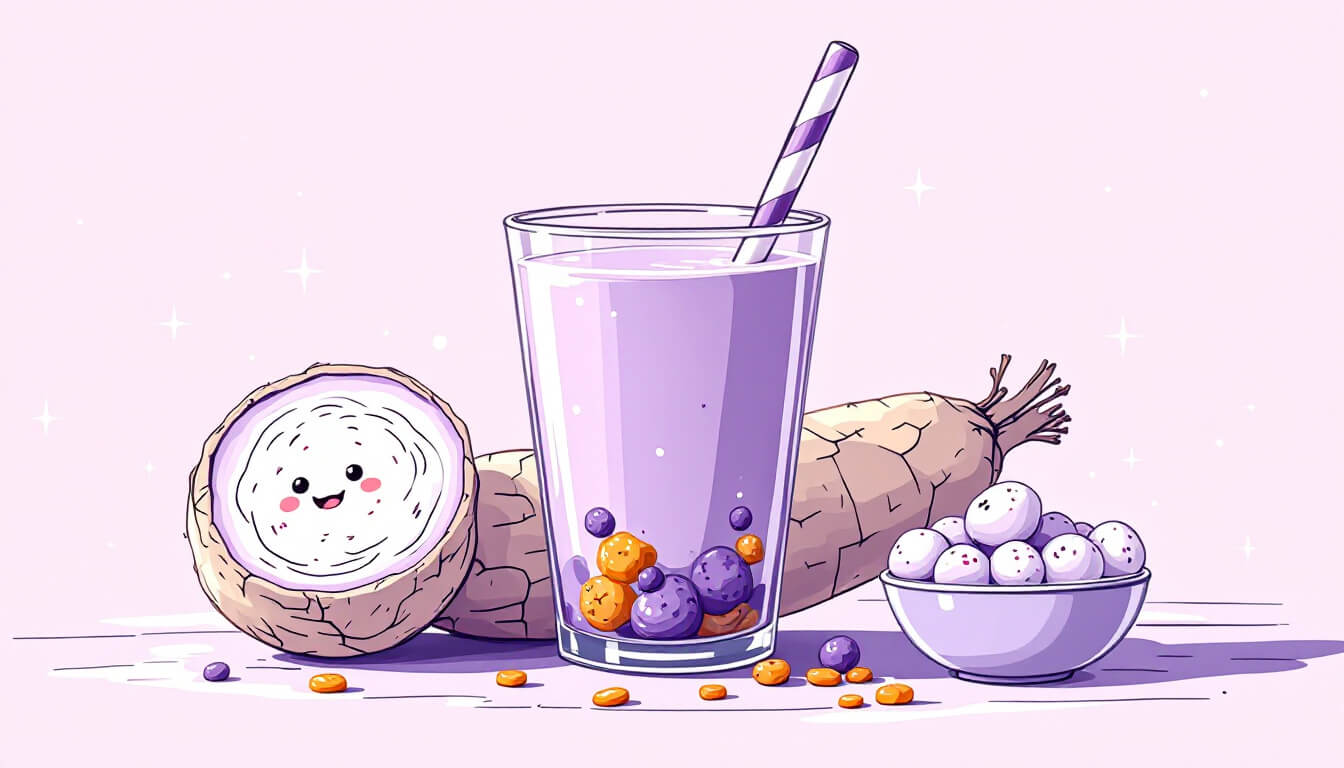
Taro root itself doesn’t. Taro is a starchy corm, like a potato, and is gluten free. Taro drinks are another story: many shops use a taro flavor powder rather than real mashed taro, and powders are blends. One US taro powder we checked lists oat fiber, and Kung Fu Tea flags its Taro Tantrum Slush as containing gluten. Taro balls (芋圓) are traditionally made from taro plus tapioca or sweet potato starch, but recipes vary. Our taro bubble tea guide explains how to tell real taro from powder by sight.
Is Thai tea boba gluten free?
Thai tea is usually brewed from a black tea mix with spices and coloring, sweetened with condensed milk or sugar, and none of those is a gluten source by default. Some shops use a premixed Thai tea powder instead, and that’s the part to check.
Is brown sugar boba gluten free?
Usually, yes. Brown sugar boba is tapioca pearls cooked in a dark sugar syrup, served with milk. Check if the shop adds cheese foam, a malt syrup or a cream topping. (In Taiwan, the dark syrup is 黑糖, hēitáng, which is unrefined cane sugar, not malt.)
Are boba chains like Kung Fu Tea gluten free?
Don’t expect a certified gluten-free kitchen. Kung Fu Tea says outright that it isn’t a certified gluten-free facility, and Boba Guys says it can’t guarantee any product is free from allergens, wheat included, because it uses shared equipment. Plenty of individual drinks are made without gluten ingredients, though. Kung Fu Tea’s guide, for instance, flags its Oreo and s’mores drinks but not its plain boba. Use the chain’s published allergen information where it exists, and ask in store about the specific drink you want. Allergen menus change, so check the current version, not a screenshot from a few years ago.
Is popping boba gluten free?
Popping boba (爆爆珠) is fruit juice wrapped in a thin skin made with sodium alginate, a seaweed extract, so it isn’t made from grain. Bossen and Tea Zone both tag their popping boba gluten free, and Kung Fu Tea’s guide doesn’t flag it. Flavors vary by brand, so the label on the tub is still the final word.
Final Thoughts: Enjoying Boba When You’re Gluten Free
So, is boba gluten free? The boba is. Tapioca pearls are one of the safest things you can put in a cup. Gluten gets into bubble tea through the drink around them: barley teas and 麥香-style milk teas, Ovaltine and other malt drinks, cookie toppings, some flavor powders and grass jellies, and the shaker that made the last customer’s order.
That’s actually good news, because it means you can still enjoy one of Taiwan’s greatest inventions. Keep the order simple: a brewed tea or fresh-fruit tea, plain tapioca or crystal boba, no powders, no blending. Learn to spot 麥 on a menu, and the exception for 蕎麥. Ask to see the label. And in Taiwan, remember that the law requires allergen labels on the package, not at the counter, so the bag in the back is your best source of truth.
Most of all, don’t let anyone, us included, give you a blanket yes. Every shop’s recipe is a little different, and the person making your drink is the only one who can tell you what’s in this cup today. Ask kindly, ask specifically, and then go enjoy that first chewy sip. For the full story of where the drink came from, start with our Taiwan boba tea guide.
A Postcard From Taiwan, Every Week
Drink-shop secrets, night-market bites and the stories behind Taiwan’s favorite flavors, straight to your inbox. No spam, unsubscribe anytime.

Grab a Free Taiwan Sticker!
Drop your email and we’ll send you a limited-edition Taiwan sticker — plus insider access to new merch drops and island vibes.
No spam. Unsubscribe anytime.