Taiwan With Kids: The Honest Family Travel Guide to Night Markets, MRT Rides and Rainy Days
Planning Taiwan with kids is a different problem from planning Taiwan. The generic guides will tell you the island is safe, the food is great and the transport is excellent, and all of that is true. None of it answers the questions that actually decide whether your trip works: whether a stroller survives a night market, whether your six-year-old will eat anything, what you do when it rains for three days straight, and what the rules really are when you put a toddler on the MRT.
This guide answers those — the practical questions that decide how a trip to Taiwan with kids actually goes. Every fare rule, price and opening hour below was checked against the operator’s own published source in October 2026 — not copied from another travel blog — because family logistics is exactly where stale numbers cost you a morning. Where we could not verify something, we say so.
Taiwan With Kids: The Honest Version
Start with the good news, because there is a lot of it. Taiwan is unusually easy on families. Convenience stores are everywhere and sell genuinely edible food at 3am. Public transport is clean, air-conditioned, cheap and frequent. Drivers are not aggressive by regional standards. Strangers will help you carry a pushchair down stairs without being asked, and nobody will glare at you when your child has a meltdown on a train.
Now the honest part. Taiwanese cities are built at a density that is hard on small legs and small wheels. Sidewalks disappear without warning and resume as a shop’s parked scooters. The subtropical heat from May to September is punishing for children who do not regulate temperature well. And the thing that catches most families completely off guard: the best food in Taiwan happens after your children’s bedtime.
That last point is not a minor scheduling annoyance. It is the central design problem of a family trip here, and we have given it its own section below because no other guide treats it as the structural issue it is.
The sweet spot for Taiwan with kids is roughly ages 4 to 10. Under 3, you are carrying a human and the night-market timing problem is at its worst. Over 11, you are essentially travelling with short adults and can follow any normal itinerary — our Taiwan trip planner and island itinerary guide will serve you fine from there.
Night Markets in Taiwan With Kids: The Bedtime Problem
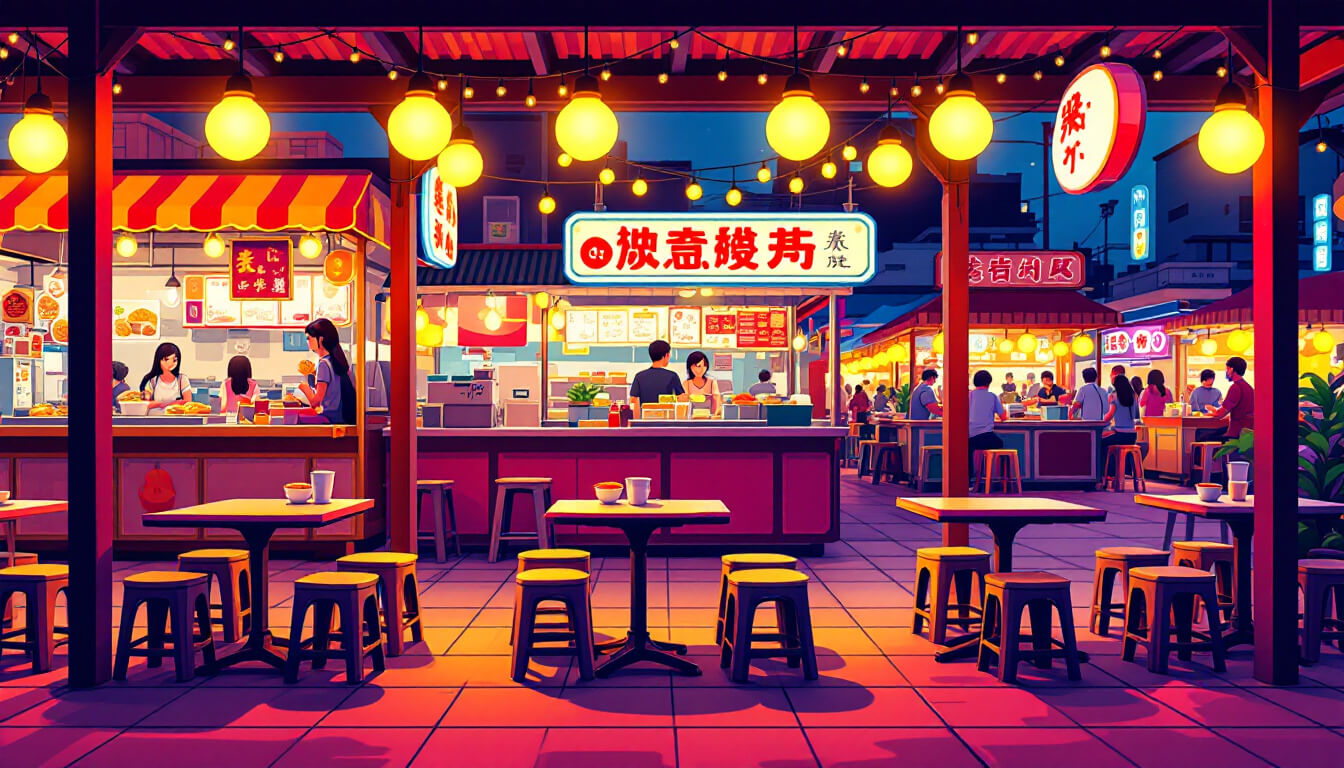
Taiwan’s night markets are the single thing your children will remember, and they are scheduled at exactly the wrong time. Most stalls do not hit full stride until 19:00, and the good ones run past 22:00. If your three-year-old melts down at 19:30, you have a conflict that no amount of enthusiasm resolves.
There are three workable strategies, and they are better than trying to push bedtime.
Go early and treat it as dinner
Arrive at 17:30 to 18:00. Roughly half the stalls are open, the lanes are walkable rather than shuffling, and you can get a table. You lose the full-tilt atmosphere and you gain an evening that does not end in tears. For a first night-market experience with young children this is almost always the right call.
Split the adults
One parent does bedtime; the other goes out at 20:30 and brings back a bag of food. Swap the next night. Unglamorous, completely effective, and it means at least one of you sees a night market at its peak.
Pick a market with seating
This is the lever nobody mentions. Markets vary enormously in whether you can sit down, and sitting down is the difference between a 40-minute visit and a two-hour one. Larger markets with dedicated food courts and seated stall areas are far more forgiving than the tight-lane markets that are essentially a standing corridor. Our guide to Taiwan’s night markets breaks down the character of each, and the Shilin insider’s guide covers the one most families start with — its underground food court is a genuine asset when you have children who need to sit.
Stroller or carrier?
Carrier, for the market itself. A night-market lane at 20:00 is a slow-moving press of people with hot oil at pushchair height, and a stroller turns you into an obstacle that cannot reverse. If your child is too heavy to carry, go early — the 17:30 strategy exists partly for this reason.
For the rest of the day, a small, narrow, one-hand-foldable stroller beats both a big one and no stroller at all. It carries your bags, it gives a tired child somewhere to fall asleep, and it fits through the gaps that Taiwanese sidewalks leave you. Leave the wide double-width model at home.
What a Cautious Eater Will Actually Eat
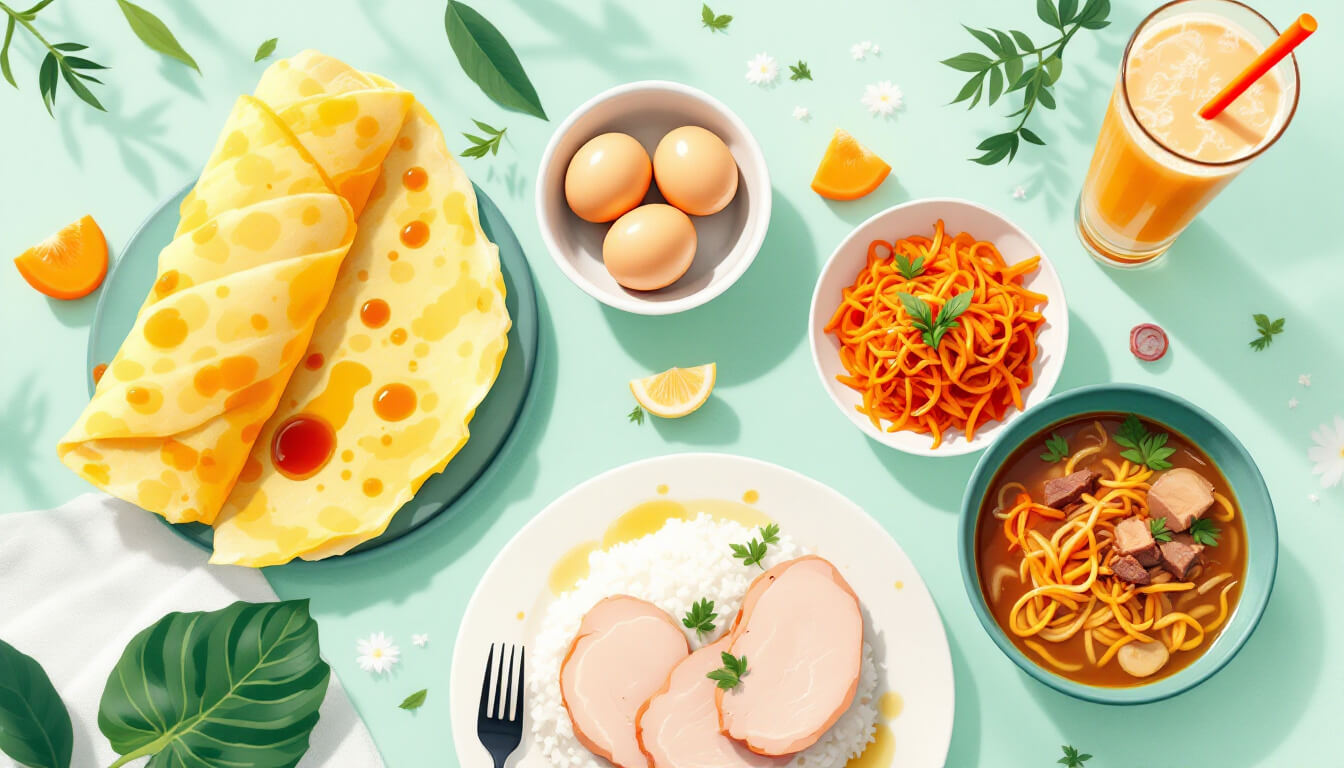
Here is a thing the family-travel internet does not tell you: Taiwanese food is overwhelmingly mild. Chilli is a condiment served on the side, not an ingredient cooked in. The reputation for spice belongs to Sichuan, not Taiwan. A child who refuses heat has far more to eat here than in most of Asia.
That said, “mild” is not the same as “familiar,” and a hungry, tired child is not an adventurous one. These are the dishes that reliably work, and they are worth learning by name before you go.
- Danbing (蛋餅) — a thin savoury egg crepe rolled up, sold at every breakfast shop in the country. It is essentially a plain omelette wrap. This is the single most reliable thing to order for a sceptical child, and it costs almost nothing.
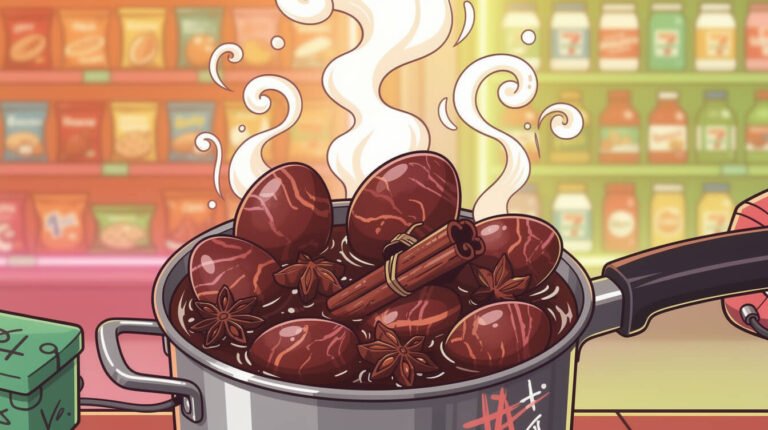
- Tea eggs — hard-boiled eggs simmered in mildly spiced tea, sold hot from a pot on every convenience store counter. Portable, cheap, protein, and visually unthreatening.
- Douhua (豆花) — silky tofu pudding in light sugar syrup, served warm or cold. Reads as dessert, behaves as a snack, and is one of the gentlest introductions to Taiwanese flavours there is.
- Papaya milk — blended fresh papaya and milk. Sweet, thick, and the standard peace offering for a child who has rejected everything else that day.
- Turkey rice (火雞肉飯) — shredded turkey over rice with a little savoury oil. Plain, warm, filling, no sauce to negotiate.
- Beef noodle broth — the national dish, and the broth plus plain noodles can simply be served without the chilli oil and pickled greens. Ask for it bù là (not spicy) and you will get exactly that.
We have written about most of these individually. The Taiwanese breakfast guide is the most useful single page for a parent — breakfast shops are mild, fast, cheap and open early, which makes them the easiest meal of the day with children. For the wider picture, see our guide to Taiwan’s noodles, the desserts guide, and the recipe guide if you want to try a few at home first — a surprisingly effective way to pre-sell a sceptical eater on the trip.
One practical note: convenience stores are a legitimate fallback, not a failure. 7-Eleven and FamilyMart sell onigiri, boiled eggs, milk, fruit, bread and hot food, and there is one roughly every two minutes of walking. On a bad day this is the thing that saves you.
The Transport Rules That Actually Apply to Children
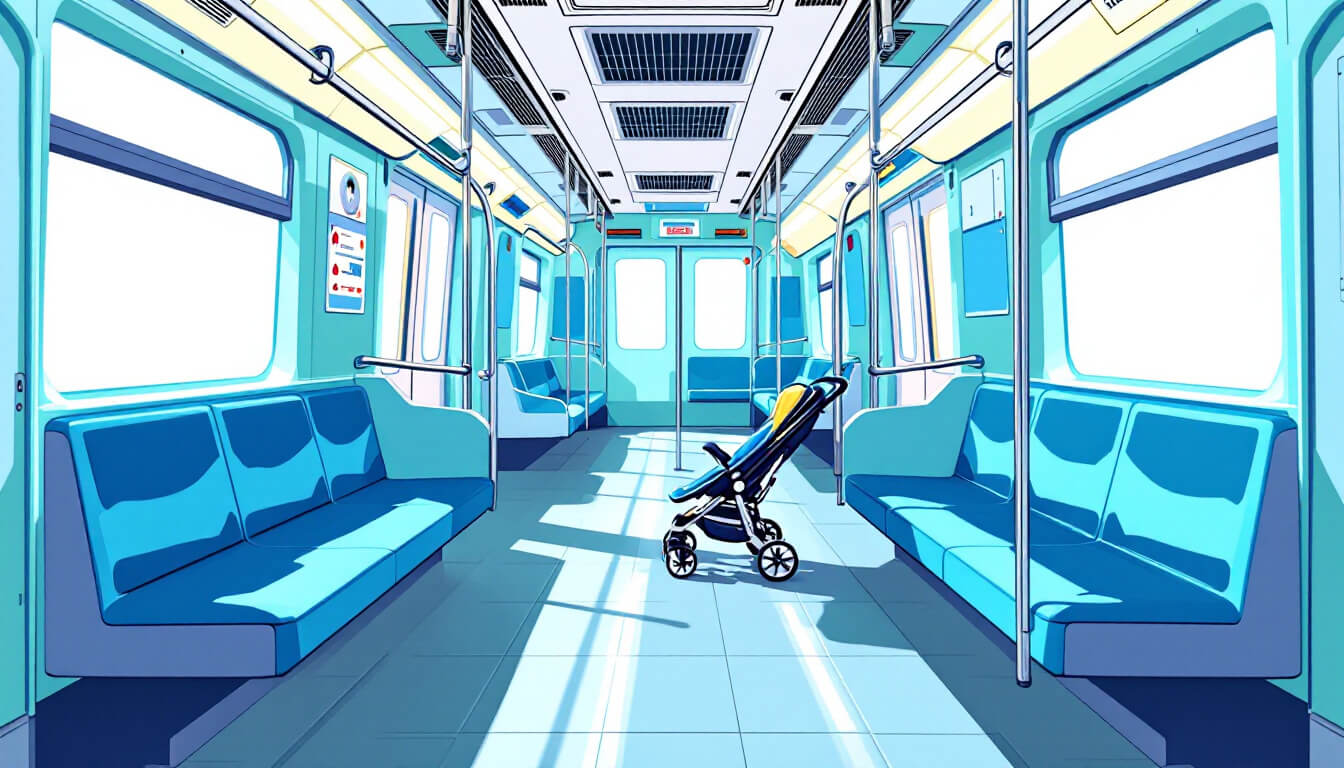
This section is the one we checked hardest, because the numbers circulating online disagree with each other and some of them are wrong. Everything below comes from the operator’s own published rules.
Taipei MRT
Under the Regulations for Use of the Taipei Metro System published by Taipei Rapid Transit Corporation, children travel free if they are under 6 years old, or under 115cm tall — either condition qualifies, and a valid ID is required if the child is taller than 115cm but still under 6. They must be accompanied by a ticket-bearing passenger.
The detail worth knowing: each paying passenger may accompany up to four children. Note that Taipei City Government’s own English-language transport FAQ states a limit of two. Where the city’s page and the operator’s regulations disagree, the operator is the source of record — but if you are travelling with three or four small children, it is worth being ready to point at the rule.
On strollers, the regulations are better than you would expect. The MRT’s carry-on size limit of 165cm on the longest side explicitly does not apply to strollers, which are listed alongside wheelchairs and bicycles as exempt. There is no stroller too large for the Taipei MRT by rule. Practically, every station has lifts, though often only at one exit — worth checking before you arrive rather than after.
And the question every parent asks: does the no-eating rule apply to a toddler? Yes. Eating, drinking, and chewing gum are prohibited within the system’s designated “no food or drink” areas, and under Article 50 of the Mass Rapid Transit Act the fine runs from NT$1,500 to NT$7,500. The regulations do not publish a general exception for small children, so plan to feed and water everyone before you tap in. In practice staff are human about a distressed infant — but do not treat that as a rule, because it is not written as one. Our post on MRT etiquette covers the wider culture, and the MRT map guide will help you plan routes.
Dark blue priority seats are designated for passengers who need them, including those travelling with young children. In practice people stand up for you before you ask.
If your kids end up as fond of the metro as most visiting children do, our Taipei Metro Cat Kawaii MRT Youth T-Shirt is a good souvenir of the thing they actually enjoyed, rather than the thing you thought they would.
High Speed Rail
Taiwan High Speed Rail’s published fare rules exempt children under 115cm from a ticket, and children 115cm or taller but under 6 with proof of ID — provided they do not occupy a seat and travel with a full-fare passenger. The limit here is two exempt children per paying adult, which is different from the MRT’s four. Children 115cm or taller and under 12 may buy a Child Ticket at 50% off, and ID is required if they are 150cm or taller.
The practical read: a lap child is free but has no seat. On the 90-minute Taipei–Zuoying run with a wriggling three-year-old, buying them a half-price Child Ticket is money well spent.
Taxis and car seats
This one is widely misreported, so here is what the regulation says. Under the Regulations for Implementation and Promotion of Safe Seating for Young Children in Small Vehicles:
- The rules apply to private and rental cars. They explicitly exclude taxis (commercial passenger vehicles) and ambulances — the exemption is built into the definition of the vehicle, which is why locals ride with children on their laps.
- Children aged 2 and under must be in a rear-facing child seat or carrycot in the rear seat. Note this is age two, not age one, which several English-language sources get wrong.
- Children over 2 up to 4, and 18kg or under, must use a child seat in the rear, with rear-facing preferred.
- Children over 4 to 12, or 18–36kg, must sit in the rear and use a seat belt.
- The seat position must not be paired with an active airbag.
So: hire a car and you need a seat, and the rental company is required to tell you so. Take taxis and you are legally in the clear, though you may not feel it. If that trade-off matters to you, the honest answer is to build your trip around trains and the MRT, which is what most visiting families end up doing anyway.
Three Days of Rain: The Contingency Plan
Rain is the most underrated risk in planning Taiwan with kids, and northern Taiwan gets plenty of it. Not a brief tropical downpour that clears by lunch — occasionally three or four grey, wet days in a row, particularly from late autumn through winter. With adults that is atmospheric. With children it is the thing that breaks a trip, and it is the contingency almost no family guide plans for.
Build a wet-weather list before you go, so that you are choosing from options at 8am rather than inventing them. The strongest indoor categories in Taipei are museums with dedicated children’s spaces, department store upper floors (which routinely hold play areas and arcades), indoor play centres, and the covered sections of the larger night markets.
Typhoons are a separate and more serious case, concentrated between roughly July and October. When a typhoon day is declared, transport stops, attractions close and you stay indoors — this is not a judgement call you make yourself. The practical family preparation is dull and effective: keep two days of snacks and milk in the room, download offline entertainment before you need it, and never let yourself get to the last clean set of clothes. Our Taipei typhoon guide explains how the closure system works and how to read the warnings, and the December weather guide is useful if you are travelling in the wet northern winter.
One upside worth knowing: Taiwanese malls and MRT stations are connected to an extent that lets you move considerable distances in a city without going outside. On a genuinely bad day, that is a legitimate itinerary.
Places Worth the Trip, With Prices Checked at Source
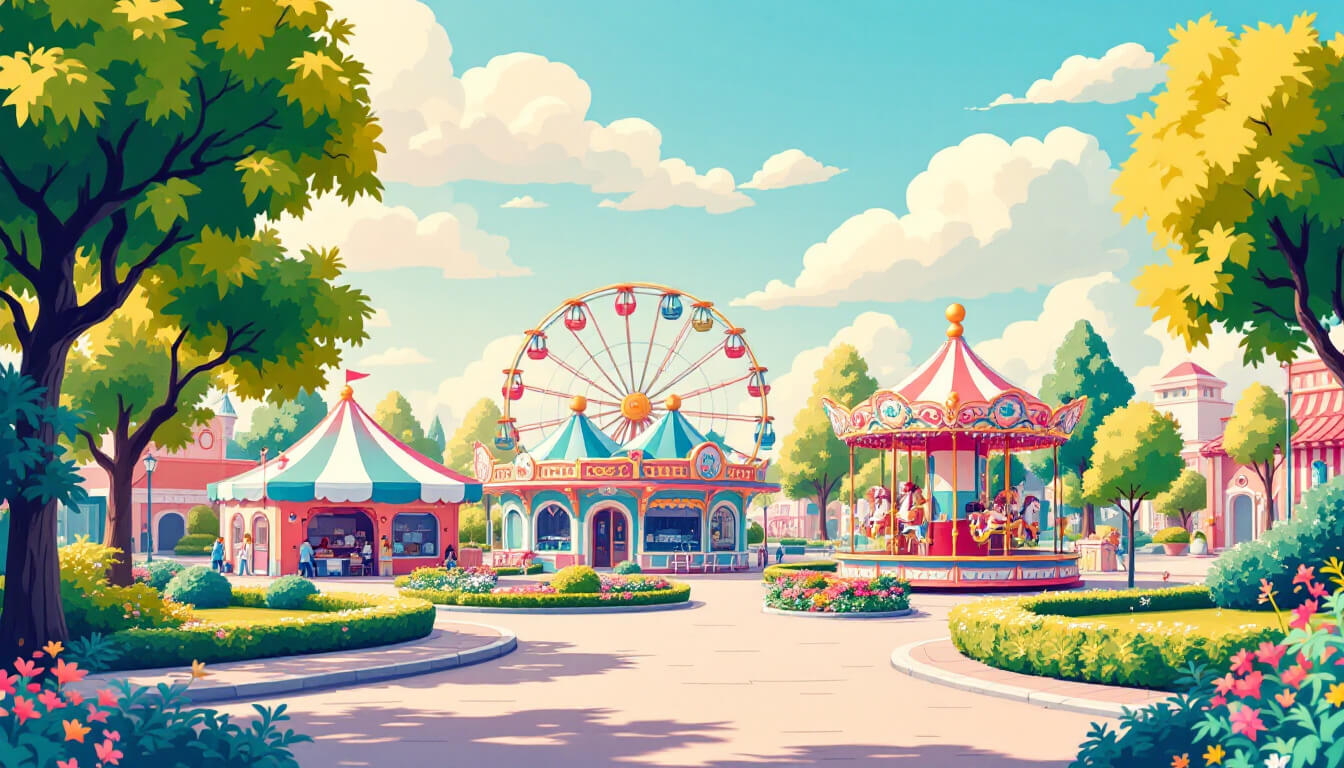
These are the places that most reward the effort of Taiwan with kids, and every figure below was read off the operator’s own site in October 2026. Prices and hours do change — check before you travel — but these are not numbers copied from a 2019 blog post.
Taipei Children’s Amusement Park
The purpose-built city park for younger children, and startlingly cheap. Admission is NT$30 full price, NT$15 concession for children aged 7 to under 12, and free for children aged 6 and under. Rides are charged separately at NT$20 or NT$30 each for the main attractions.
Two details that save money. First, children under 85cm or under 2 ride free on the main rides when accompanied by a paying adult. Second, the NT$200 “One-Day Fun” unlimited-ride pass is recommended by the park itself only for children 100cm and taller — so for a toddler family, the NT$30 ticket plus free rides is the right purchase and the day pass is money wasted. A NT$140 twilight pass is sold from 16:00 during school holidays and long weekends.
Hours vary by season, which is the thing to check. Outside school holidays the park is closed Mondays, open Tuesday to Friday 09:00–17:00 and weekends 09:00–18:00. During winter and summer holidays and long weekends it runs 09:00–20:00 daily. It closes on Lunar New Year’s Eve.
The National Palace Museum (yes, really)
Counter-intuitive, but it earns its place for one reason: admission is free for all visitors aged 17 and under, of any nationality. Adults pay NT$350 for Exhibition Hall I. For a family of four with two children, that is NT$700 rather than NT$1,400.
Better still, the museum’s Children’s Gallery is a dedicated interactive space in B1 of Exhibition Hall I, and it is free admission for everyone. It runs Tuesday to Sunday 09:00–17:00, following Exhibition Hall I’s hours, and children under 10 must be accompanied by an adult. The museum is closed Mondays, with published exceptions — the remaining special Monday openings in 2026 are 26 October, 9 November and 7 December.
One warning, because it catches people out: the museum’s hours page lists seven separately-scheduled facilities, and the NPM Library — which runs Tuesday to Saturday and closes Sundays — is not on the main campus at all. Search snippets regularly serve the library’s hours as the museum’s. Read the facility heading, not the first line of hours you find.
Maokong Gondola
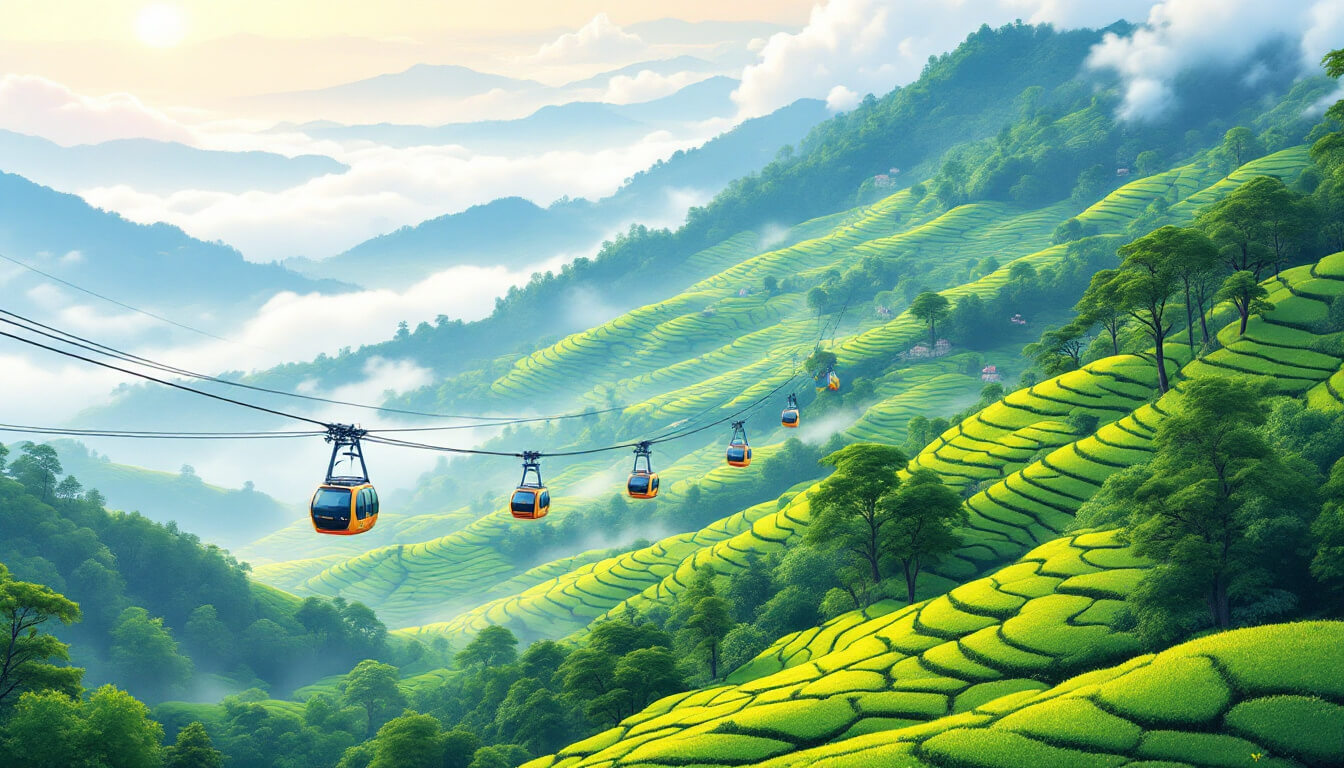
A cable car over tea-terraced hills, and a reliable hit with children who have had enough of city streets. A single journey is NT$180 full fare and NT$50 concession; an unlimited day pass is NT$300 and NT$100. Children aged 0 to 5 ride free with a ticket-holding adult, limited to two per adult. The concession fare covers children aged 6 to under 12, but it requires both proof of age and tapping an EasyCard at the dedicated gate — go through a normal gate and you simply pay full price.
Operating hours are 09:00–21:00 on weekdays and 09:00–22:00 at weekends and holidays. It closes most Mondays for maintenance; the remaining 2026 closure dates are 12 October, 9 and 23 and 30 November, and 14 and 28 December.
Three things the gondola’s own passenger rules tell you that matter with children. Strollers and wheelchairs must not exceed 140cm long, 70cm wide and 170cm high and must stand fixed in the cabin — a genuine size limit, unlike the MRT. Unlike the MRT, plain or mineral water is permitted in the cabins, though other food and drink is not. And the cabins have no interior lighting after dark, which is wonderful for the view and worth mentioning to a child who dislikes the dark before you board, not during.
The gondola suspends service in lightning, strong wind or typhoon conditions — so it is a fair-weather plan, not a rainy-day one.
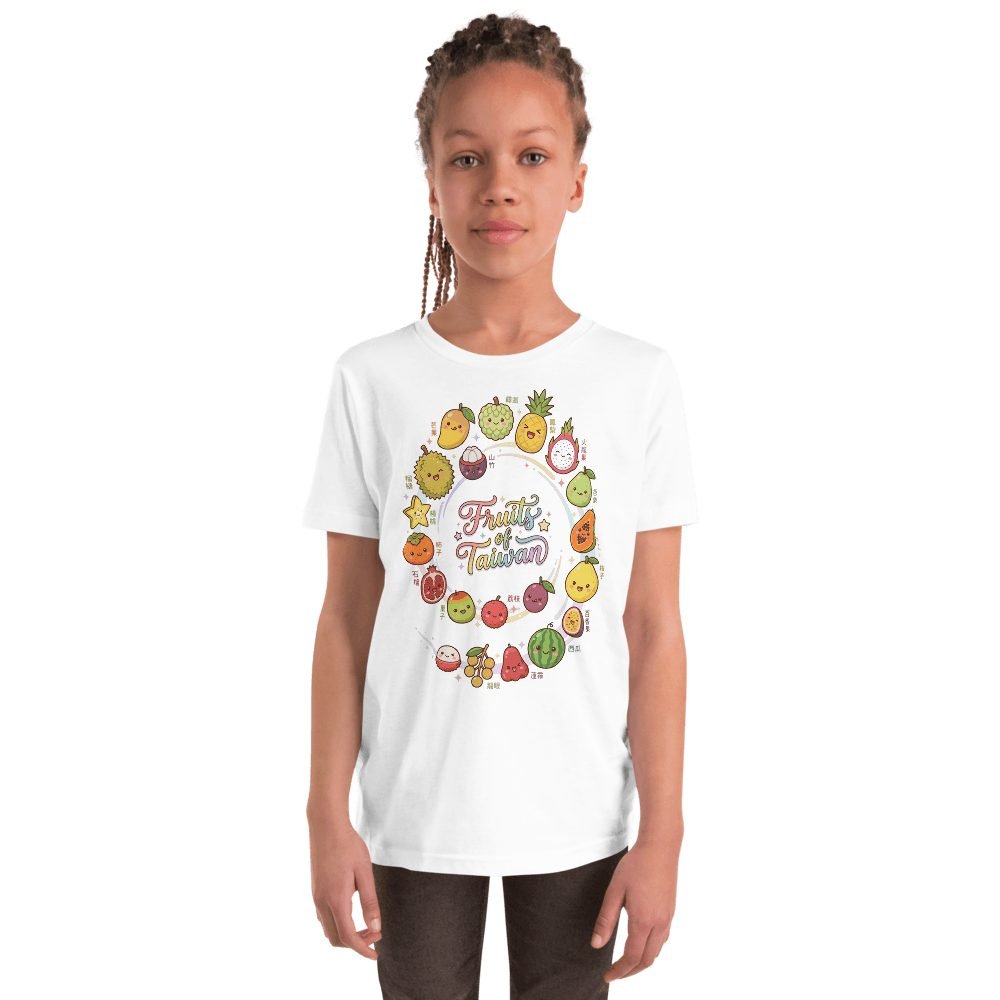
Taiwan-Sized Souvenirs for Small Humans
Our Babies and Kids range runs from youth tees and rash guards to baby bodysuits — Taiwan fruit, metro cats, island maps and more. Far better than another fridge magnet.
Taiwan With Kids: Frequently Asked Questions
What is the best age for Taiwan with kids?
Roughly 4 to 10 is the sweet spot — old enough to walk a full day and eat independently, young enough to find a cable car and a night market genuinely thrilling. Under 3 is entirely doable but the late night-market timing and the carrying are real constraints.
Do children need a car seat in a Taiwanese taxi?
No. The child-seat regulation excludes commercial passenger vehicles from its definition of the vehicles it covers, so taxis are exempt. Rental cars are not exempt — hire a car and a proper seat is required.
How many children can one adult take free on the MRT?
Up to four, per the operator’s published regulations, for children under 6 or under 115cm. On the High Speed Rail the limit is two per paying adult. The two systems genuinely differ.
Is Taiwanese food too spicy for children?
No. Taiwanese cooking is mild by default and chilli is served on the side. Ask for dishes bù là (not spicy) and you will be understood immediately.
Can I bring a stroller on the Taipei MRT?
Yes, and the size limit that applies to ordinary luggage explicitly does not apply to strollers. Every station has lift access, though frequently at only one exit.
Can my toddler eat or drink on the MRT?
No. The prohibition on eating and drinking inside designated areas applies to all passengers, with fines from NT$1,500 to NT$7,500, and the regulations publish no general exception for young children.
What should we do if it rains for days?
Plan indoor options before you travel: children’s museum spaces, department store upper floors, indoor play centres and covered market areas. During a declared typhoon day, stay put — transport and attractions close island-wide.
Final Thoughts on Taiwan With Kids
The families who have a hard time doing Taiwan with kids are usually the ones who planned an adult trip and brought children along. The families who have a wonderful time made three or four small structural decisions early: a narrow stroller instead of a wide one, night markets at 17:30 instead of 20:00, breakfast shops as the anchor meal, and a written list of indoor options for the day the sky opens.
None of that costs money. It is just the difference between a trip designed around what Taiwan is actually like with children and one designed around a brochure. Get those four right and the rest of the island — the trains, the temples, the food, the astonishing kindness of strangers towards tired parents — does the work for you.
Start with a few days in Taipei, let the MRT do the heavy lifting, and give yourself permission to go back to the hotel at 20:00. The night market will still be there tomorrow.
A Postcard From Taiwan, Every Week
Food, culture, travel tips and the occasional very good cat — straight to your inbox. No spam, unsubscribe anytime.

Grab a Free Taiwan Sticker!
Drop your email and we’ll send you a limited-edition Taiwan sticker — plus insider access to new merch drops and island vibes.
No spam. Unsubscribe anytime.