Taipei Taiwan Typhoon: The Complete 2026 Traveler’s Guide to Storm Season
The first time a Taipei taiwan typhoon hits your trip, you’ll notice the city change before the sky does. Convenience store shelves empty by lunchtime. Group chats fill with satellite maps in Traditional Chinese. Somewhere between 8 PM and midnight, every phone in the city dings at once, and the whole island stops for a day. If you’ve never lived through one, it feels apocalyptic. If you have, it feels almost cozy — a rare permission slip to do nothing while a Category 4 spins past your window.
This guide is the one we wish existed the first time we chased a July trip through Formosa’s storm season. It’s built for travelers, not meteorologists — real playbooks for what to buy, when to stay inside, how to read a Central Weather Administration alert without knowing a single Chinese character, and which Taipei neighborhoods you actually want to be stuck in when a Taipei taiwan typhoon parks itself over the island for 36 hours. We’ll cover season timing, warning systems, the ritual of the “typhoon day,” and what to do if your itinerary explodes at hour twelve.
How Taiwan’s Typhoon Season Actually Works

Taiwan sits smack in the middle of the Western Pacific’s typhoon nursery. Roughly a dozen tropical cyclones enter Taiwan’s zone of influence every year, and almost half of them make landfall. The season technically opens in April or May with weaker early-season storms and closes in November as the Pacific cools. But the real fireworks — the storms that cancel flights, close mountain roads, and shut down Taipei — cluster in July, August, and September. If you’re booking a summer trip, you’re not really booking around typhoons. You’re booking with them.
The physics is simple enough. Warm equatorial water east of the Philippines feeds low-pressure spirals with obscene amounts of energy. The Coriolis force nudges the storm north, trade winds push it west, and the eastern Central Mountain Range acts as a giant rain-squeezing sponge. That’s why the east coast — Hualien, Taitung — takes the worst wind, while the west coast including Taipei often takes the worst rain and flooding as storms wring themselves out over the mountains. Taipei sits in a basin, which means water runs downhill fast and the Keelung and Tamsui rivers can rise several meters in a single night.
Some numbers to calibrate expectations. Typhoon Morakot (August 2009) is still the deadliest storm in Taiwanese history, killing 789 people and causing $6.2 billion in damage — mostly from a single village in Xiaolin buried under a rainfall-triggered landslide. Typhoon Doksuri (July 2023) killed 137. Typhoon Gaemi (July 2024) was the strongest typhoon to hit the island in eight years, with 126 fatalities. Typhoon Ragasa reached Category 5 near Hengchun on September 22, 2025. Most storms are nothing like this, and most days in Taipei during storm season are perfectly ordinary and humid. But knowing the worst-case ceiling is why the government treats typhoons the way San Francisco treats earthquakes — a permanent, structural, un-optional part of civic life.
Reading Warnings Without Speaking Chinese
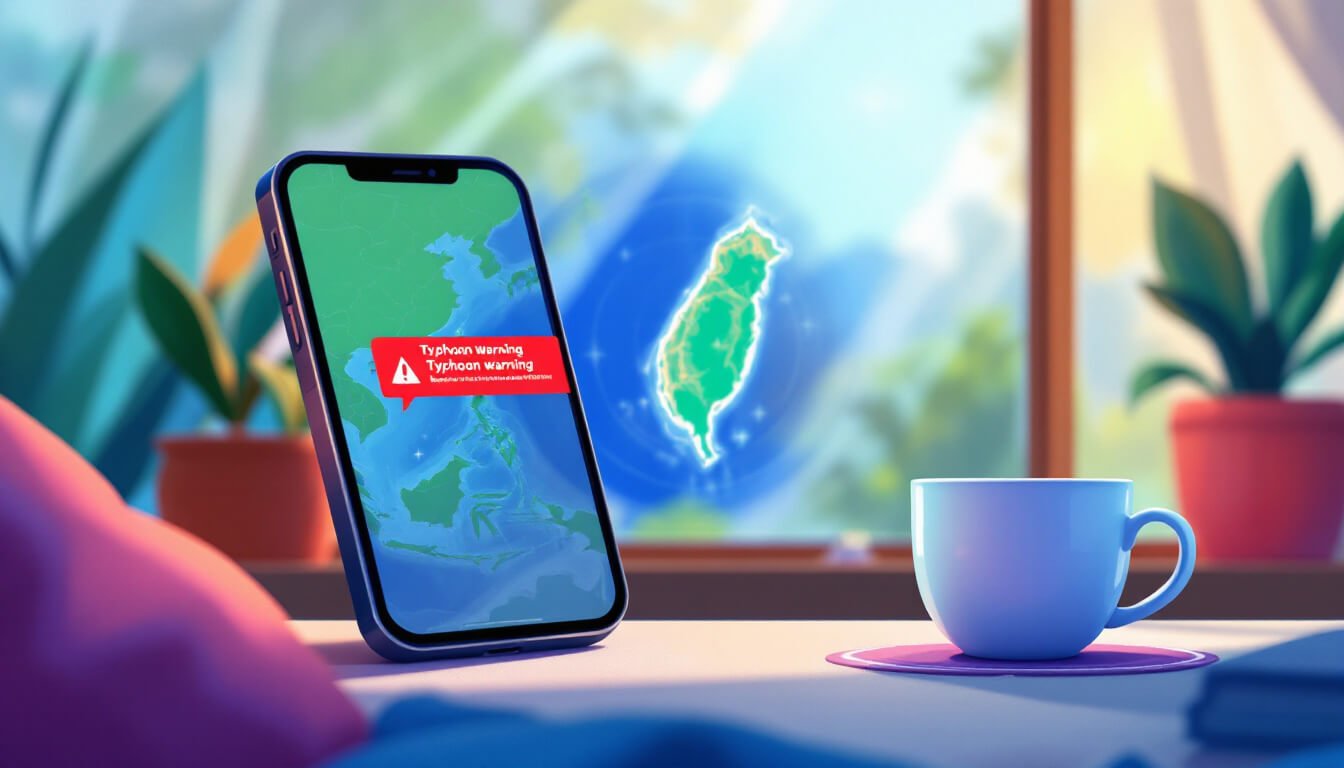
The Central Weather Administration — CWA, formerly the CWB — is your source of truth. Bookmark cwa.gov.tw/V8/E/ (the English portal) and open it every morning in July, August, and September. The homepage shows the current storm track, projected 24-hour path, and the color-coded warning level. Ignore Facebook posts, ignore that friend-of-a-friend on Line, and please ignore the cable news countdown clocks — CWA is the only voice that legally matters.
Two warning categories to memorize:
- Sea Warning (海上警報, hǎishàng jǐngbào) — issued 24 hours before the storm’s radius of maximum winds is likely to touch Taiwan’s shipping zone. Ferries stop, ports close. Doesn’t yet affect your Taipei plans.
- Land Warning (陸上警報, lùshàng jǐngbào) — issued 18 hours before hurricane-force winds are expected to reach any coastal county. This is the trigger for everything that follows: schools, offices, MRT closures, and the famous typhoon day announcement.
The Saffir-Simpson category number matters less than you’d think. What matters for Taipei is the track (does the eye pass north, south, or straight over?), the speed (slow-moving storms dump more rain), and the rainfall forecast (CWA issues threshold alerts at 200mm/24hr for mountains and 350mm/24hr for plains). A “small” Cat 1 that stalls over Yilan for 36 hours can cause more damage than a “big” Cat 4 that races through in eight.
Apps to install on day one
Three free apps make the whole system legible:
- CWA Weather (official app, iOS/Android) — push notifications the moment a warning is upgraded.
- Windy — the visual atmospheric model that shows you exactly where the storm’s eye is trending, hour by hour.
- Google Translate with camera mode — for the moment you’re standing in front of a taped-shut MRT gate trying to figure out what the paper sign says.
The Typhoon Day Playbook: What Locals Actually Do

The most fun anthropological experience of a Taipei taiwan typhoon isn’t the storm itself — it’s the 24 hours before. Around 8 PM the night before landfall, the Directorate-General of Personnel Administration (行政院人事行政總處) publishes the county-by-county call on whether the next day is 停班停課 (tíngbān tíngkè — “stop work, stop class”). If your mayor calls it, the entire city gets a paid day off. Every phone in Taipei dings within the same 90-second window. Group chats erupt. Coffee shops post handwritten “closed tomorrow” signs on the door.
What locals do next is remarkably consistent. Here’s the checklist that unfolds across most Taipei apartments the evening before:
- Fill the bathtub. Taipei rarely loses running water, but low-elevation neighborhoods (parts of Wanhua, Sanchong, Xindian) sometimes do. Freshwater buffer costs nothing.
- Charge everything. Every phone, every battery bank, every laptop. Power outages are rare in central Taipei but common in the mountains and outer districts.
- Move plants and bikes inside. Balcony plants become projectiles at 60 mph. Sidewalk bikes get flipped down alleys.
- Tape the windows. Big X of masking tape on any glass facing an unobstructed direction. Doesn’t prevent breakage; contains the shards if it happens.
- Buy the essentials. Instant noodles, bottled water, bento boxes from FamilyMart or 7-Eleven, snacks for two full days, and — because this is Taiwan — a fresh bag of ground coffee.
The convenience store run is the ritual. By 9 PM the day before landfall, most 7-Elevens will have empty shelves in the fresh-food aisles and one apologetic staffer restocking bottled water on a hand truck. Get there earlier. The night markets close, restaurants close, and even 24-hour breakfast joints put up the shutters — which is why the humble convenience store becomes the entire city’s dining room for 36 hours.
What to Do If a Typhoon Hits Your Trip

Here’s the honest truth: if a Land Warning drops on the day you were supposed to summit Alishan, that plan is dead. Accept it. The mountains are the first thing to shut and the last thing to reopen. High-speed trains up the Central Cross-Island get suspended, the Alishan Forest Railway stops, and buses turn around at the trailheads. Rebook, don’t push through — every year the CWA has to helicopter-evacuate tourists who tried.
What still works in Taipei during most typhoons:
- The MRT — Taipei’s subway is entirely underground in the city center and runs through nearly every typhoon. Occasionally elevated sections (Wenhu Line’s outer stretches, Danshui Line north of Beitou) close for high winds. Check the MRT map and stick to the underground lines during peak winds.
- Museums — the National Palace Museum, MOCA Taipei, and the Museum of Contemporary Art almost always stay open unless the city calls a full typhoon day.
- Covered arcades — Taipei’s old commercial streets have continuous covered walkways (騎樓, qílóu). You can walk from Ximen to Longshan Temple without ever really getting wet.
- Hot springs — indoor Beitou hot spring hotels stay open and are one of the great Taipei experiences during a storm — 42°C sulfur pool while wind howls outside.
Speaking of staying dry: you’ll want a shirt that isn’t going home wet, which is why the Taipei 101 Built to Sway Tee makes for a weirdly perfect typhoon-trip souvenir. Taipei 101’s 660-ton tuned mass damper — the same golden sphere you can see hanging inside the tower — is what actually keeps the building upright when 200 kph winds hit. Wearing the shirt in Taipei during storm season is the closest thing to a local badge of honor a visitor gets.
Flight cancellations
Taoyuan International (TPE) and Songshan (TSA) both close during Land Warnings that cover their operational zones — usually 6 to 18 hours starting when winds cross the 55 kph sustained threshold. Airlines waive change fees for typhoon-canceled flights but rebooking availability disappears fast; call your carrier the moment the warning is upgraded, not the morning after. If you’re heading to Kaohsiung Airport instead, the south of the island frequently reopens 12 hours before the north, so a southbound rebook can save your onward flight.
Where to Ride It Out in Taipei

Not all Taipei neighborhoods are equal during a storm. Some flood, some lose power, some lose nothing but WiFi. If you have any flexibility in your accommodation, here’s the ranking after several storm seasons of watching where the damage clusters.
Best neighborhoods to shelter in
- Zhongshan / Zhongxiao Fuxing corridor — dense infrastructure, underground MRT throughout, tall reinforced-concrete buildings, and endless covered walkways. Almost never floods.
- Da’an — the “safe embassy” of Taipei. Higher elevation than the rest of the basin, plenty of hotels with proper backup generators, mature drainage.
- Xinyi (near Taipei 101) — the newest infrastructure in the city, engineered to typhoon spec. If the power goes out here, something has gone very wrong.
- Ximending — old but incredibly dense with covered arcades and cheap bento shops. Great atmosphere for solo travelers who want to walk out during a lull.
Neighborhoods to avoid if a storm is imminent
- Beitou lowlands and the far reaches of Wenhu Line — mountain runoff, elevated MRT sections that close first.
- Anywhere in Wulai or Yangmingshan — beautiful the other 51 weeks of the year; the first roads closed and last to reopen when a storm approaches.
- Ground-floor riverside hotels in Sanchong and parts of Wanhua — Keelung and Tamsui rivers can rise fast and drainage lags.
If you’re planning further ahead, the smartest hedge is a hotel with a good in-house restaurant, real backup power, and a location within a 3-minute walk of an underground MRT station. You’ll be fine, and you might even enjoy it.
The Morning After: What Reopens First

Post-storm Taipei is one of the most beautiful sights in Asia. The humidity crashes. The sky becomes an impossible washed-blue. Every leaf on every tree looks freshly rinsed. And the city moves fast to reopen.
The sequence, in typical order:
- Convenience stores — 7-Eleven and FamilyMart reopen within hours of the wind dropping. Fresh food deliveries resume by mid-morning.
- MRT — underground lines usually resume within 4-6 hours of the Land Warning being lifted. Elevated sections take longer if debris needs clearing.
- Restaurants and cafes — most independent shops reopen by noon; night markets typically by early evening.
- Airports — usually 8-24 hours after wind speeds drop below 55 kph sustained. Expect a 48-hour backlog even after reopening.
- Mountain roads and forest railways — the last to reopen. Alishan and the Central Cross-Island Highway can be closed for days or weeks depending on landslide damage.
The reopening is often when you’ll take your favorite photos of the trip. Wet cobblestones under blue sky, Taipei 101 glowing like it’s just come off the assembly line, kids splashing through puddles in Da’an Park, the whole city breathing out at once. If you can, stay an extra 24 hours after a storm. It’s the best version of Taipei you’ll ever see.
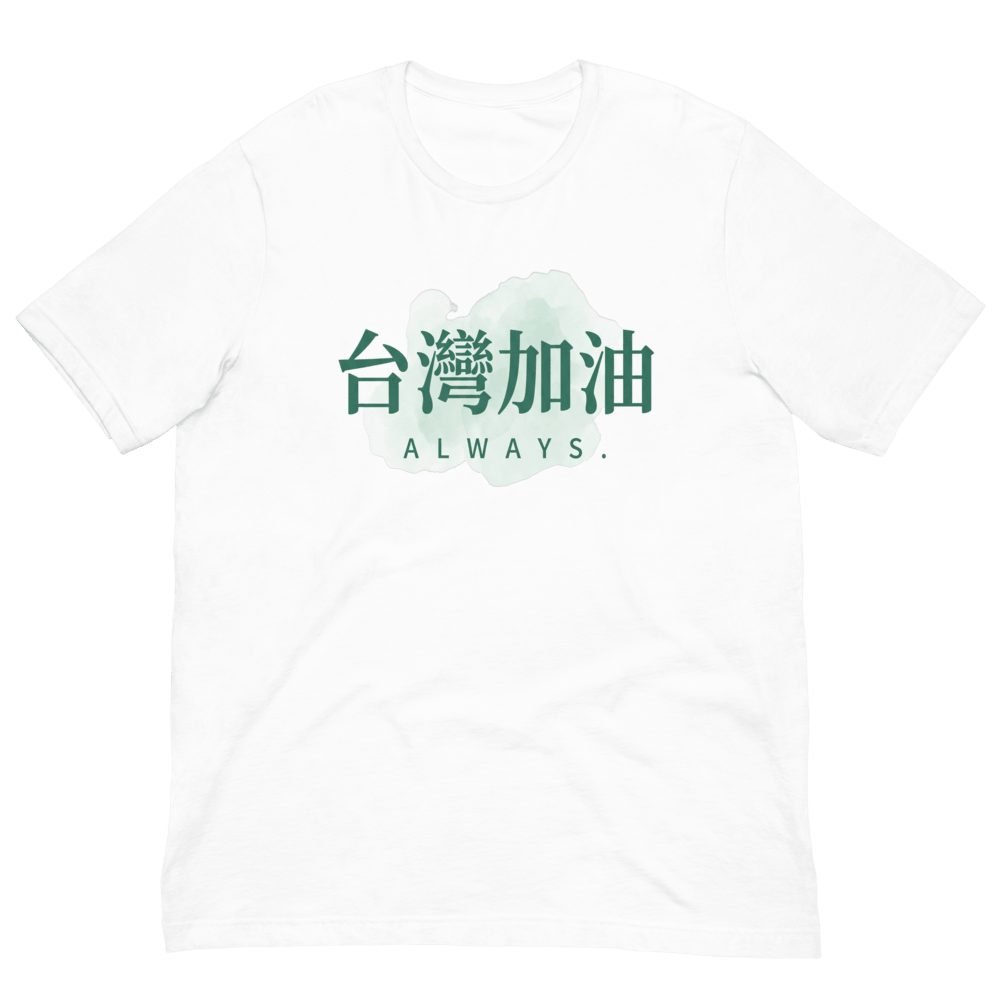
台灣加油 — Because Taiwan Always Bounces Back
Every typhoon season, Taiwan does what it always does — sweeps up the leaves, reopens the night markets, and gets on with life by breakfast. Wear the quiet cheer that carries the whole island through storm season.
Frequently Asked Questions
Should I cancel my Taiwan trip if there’s a typhoon in the forecast?
Almost never. Even in peak season, most storms miss the island or graze the east coast without disrupting Taipei significantly. Book refundable hotels for the specific typhoon-week dates, keep your flights, and monitor CWA daily starting five days out. Cancel individual excursions (mountain trips, offshore islands) rather than the whole trip.
Is Taipei safe during a typhoon?
Yes, remarkably so — as long as you stay indoors during the Land Warning window. Taipei has some of the strictest building codes in Asia, comprehensive storm drainage, and an underground MRT system. The single biggest risk to visitors is going outside “to see it” and getting hit by flying debris. Don’t.
What months should I avoid to skip typhoons entirely?
The safest windows are December through March. Weather is cool and often overcast, but the typhoon risk drops to near zero. October is the popular shoulder-season pick — statistically fewer big storms, still-warm weather. See our full best time to travel Taiwan month-by-month guide for the detailed breakdown.
What’s a “typhoon day” and can tourists take one?
A “typhoon day” (停班停課) is a government-declared paid day off for schools and offices when winds are forecast to exceed local thresholds. Tourists absolutely can — most hotels and museums stay open, but many restaurants and independent shops close. It’s the perfect day for room service, a spa treatment, or catching up on that jet-lagged sleep.
Will my travel insurance cover typhoon disruption?
Most policies cover flight cancellations and hotel forfeitures caused by a named typhoon, but coverage kicks in only after CWA has officially named the storm. If you’re a chronic worrier, buy the “cancel for any reason” upgrade. If you booked with a credit card that includes trip protection, read the small print — many exclude “known events,” meaning you can’t buy coverage once a typhoon is already on the map.
Where can I check typhoon updates in English?
The CWA English portal is authoritative. Focus Taiwan publishes English-language storm news. Windy.com gives you the interactive model. That’s the whole toolkit.
Final Thoughts: The Best Way to Travel Storm Season
A Taipei taiwan typhoon is not the disaster your risk-averse group chat thinks it is. It’s a rhythm the whole island has learned to move with — a 36-hour parenthesis in the middle of an otherwise perfect summer trip. The travelers who love Taiwan most are usually the ones who’ve been stuck inside during one, ordered too many convenience-store snacks, watched Taipei 101 disappear into gray, and then walked out into the freshest air they’ve ever breathed.
Build in a flex day. Keep an eye on CWA. Book a hotel near an underground MRT. Pack a small waterproof shell. And when the ding hits every phone in the city at 8 PM the night before — pour a cup of oolong, close the blinds, and enjoy the quietest 24 hours you’ll ever spend on the island. This is Taiwan showing you its other face. It’s worth seeing.

Grab a Free Taiwan Sticker!
Drop your email and we’ll send you a limited-edition Taiwan sticker — plus insider access to new merch drops and island vibes.
No spam. Unsubscribe anytime.