Taiwan Tea Farmers: Who Actually Grows the Island’s Oolong
Taiwan makes some of the most expensive tea on earth. A competition-grade lot of high-mountain oolong can change hands for more per gram than silver, and the island’s name on a packet carries a premium almost nowhere else in the tea world can match. Ask who actually grew it, though, and the story goes quiet. Taiwan tea farmers are not corporations, and they are not estates. They are families working plots you could walk across in a couple of minutes, on slopes too steep for a tractor, in an industry that has lost roughly two-fifths of its growing area in twenty years.
This is a piece about the people and the economics rather than the tasting notes. Where the leaf comes from, what it costs to pick, who is still willing to do the picking, and what happens to a smallholder when cheaper leaf arrives from abroad wearing their island’s name. If you want to know which oolong to buy, we have a guide for that. This one is about who is on the other end of the transaction.
Taiwan Grows Almost No Tea on Plantations — and That Is the Whole Story
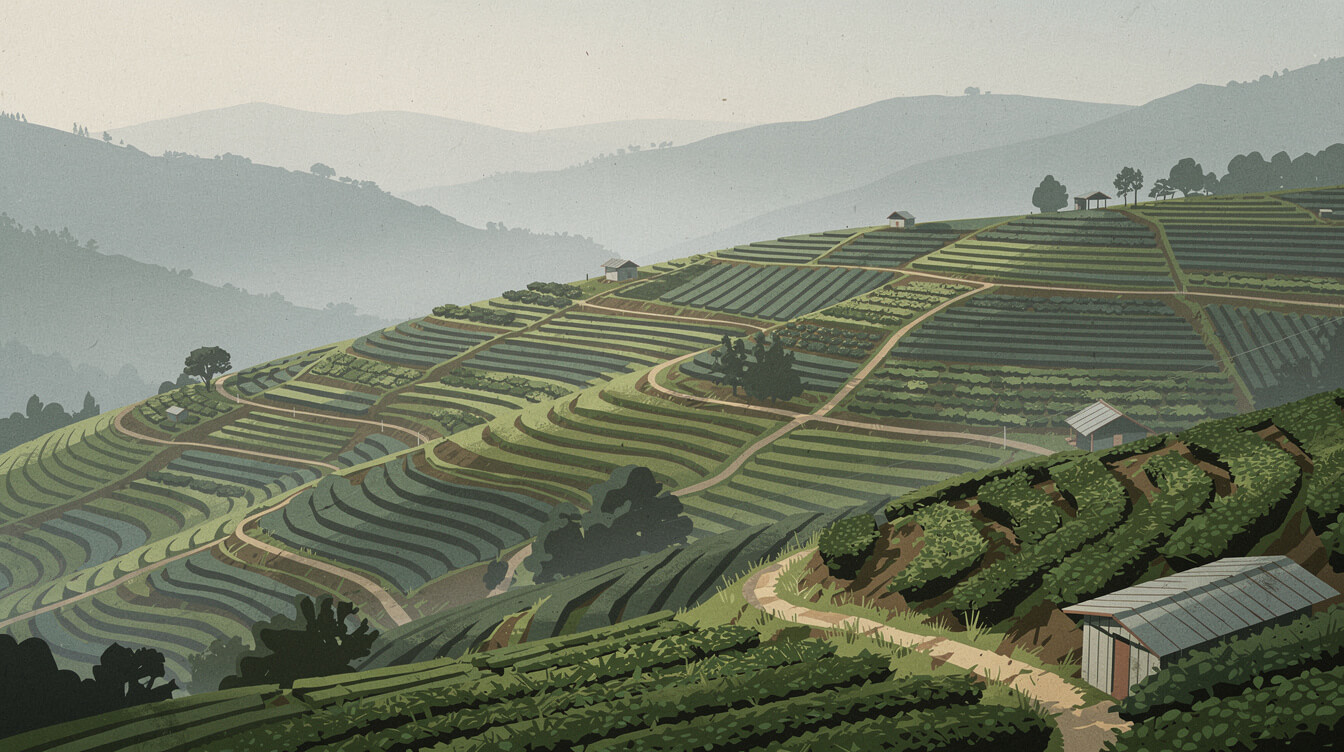
Most of the world’s tea comes off estates. Assam, Kenya, Sri Lanka — large contiguous holdings, a resident or migrant workforce, managers, processing at scale. That model is what makes tea one of the cheapest agricultural commodities on the planet. Taiwan does almost none of it.
According to the Agriculture and Food Agency’s national yearbook figures, Taiwan had 12,192 hectares under tea in 2022, producing 14,027 tonnes. To put that in perspective, the entire tea-growing area of Taiwan would fit inside a square about eleven kilometres on a side. The Tea and Beverage Research Station estimated the sector’s annual output value at over NT$30 billion — roughly a billion US dollars coming off a footprint smaller than many single estates in India.
That high value on a tiny footprint is the entire Taiwanese proposition, and it is what Taiwan tea farmers are actually selling, and it exists because the work is done by hand on land that does not permit anything else. It is also shrinking. Government publications let you trace the area back through time:
- 2001: 20,222 hectares
- 2003: 18,684 hectares
- c. 2007: 16,255 hectares
- 2022: 12,192 hectares
That is a contraction of around 40% in roughly two decades. The agriculture ministry’s own account of why is blunt: after Taiwan industrialised, wages rose, labour got scarce, and Taiwanese tea lost its export competitiveness. The export-oriented districts of Taoyuan, Hsinchu and Miaoli contracted hardest, while Nantou, Chiayi and the east coast grew as the industry pivoted to a wealthy domestic market willing to pay for quality. Taiwan stopped competing on price and started competing on the things only hand-work can deliver — like the insect-bitten leaf behind Oriental Beauty, the island’s priciest oolong.
How Small Is a Taiwan Tea Farm, Really? The Numbers
Here is where the research gets frustrating, and the frustration is itself part of the story. The last time the agriculture ministry published a headline count of tea-farming households, it put the figure at 25,000 households — and that number appears in official documents dated 2001 and 2003. We could not locate a more recent official household count. An industry that supports tens of thousands of families has not had its families counted, publicly and prominently, in over two decades.
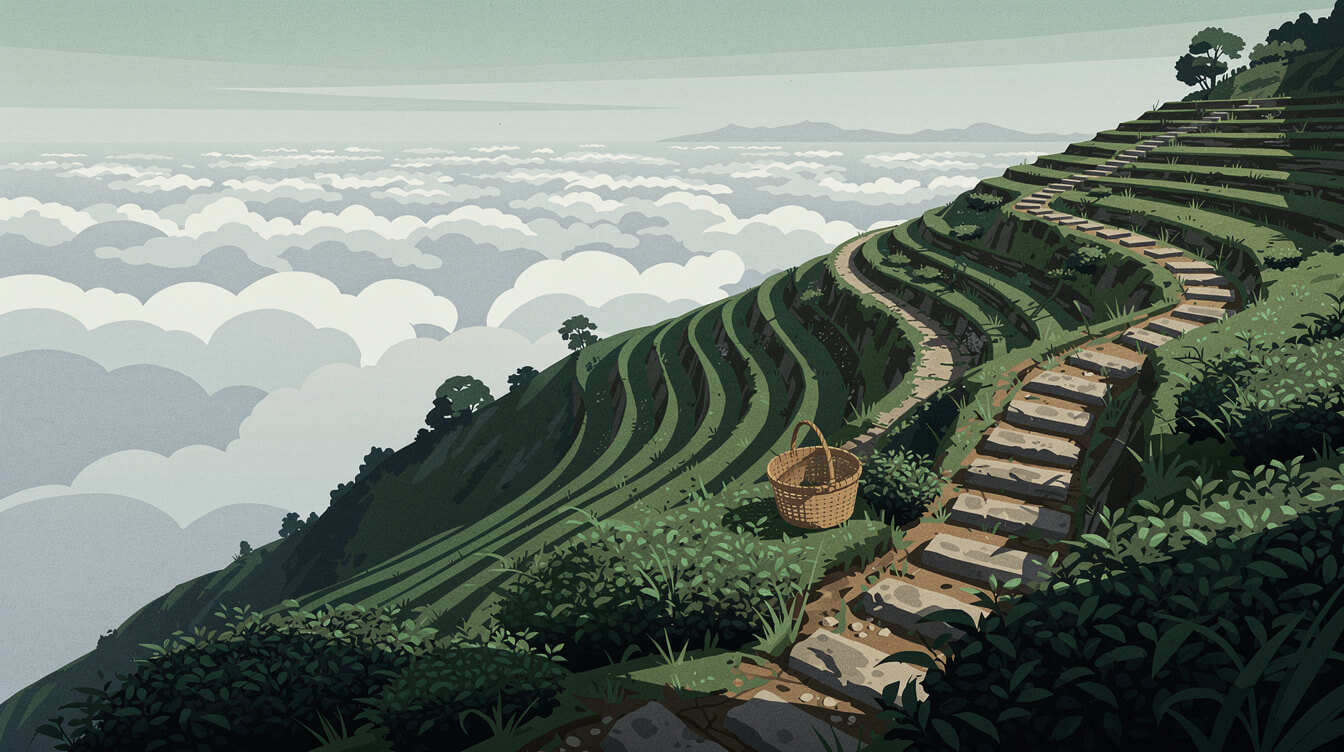
Work with what exists. Twenty-five thousand households across the 18,684 hectares recorded in 2003 gives an average holding of about 0.75 hectares — three-quarters of a hectare, or roughly one and a half football pitches. That is the average, which means a great many growers farm considerably less. It also matches the wider picture of Taiwanese agriculture, where the average farm is under one hectare.
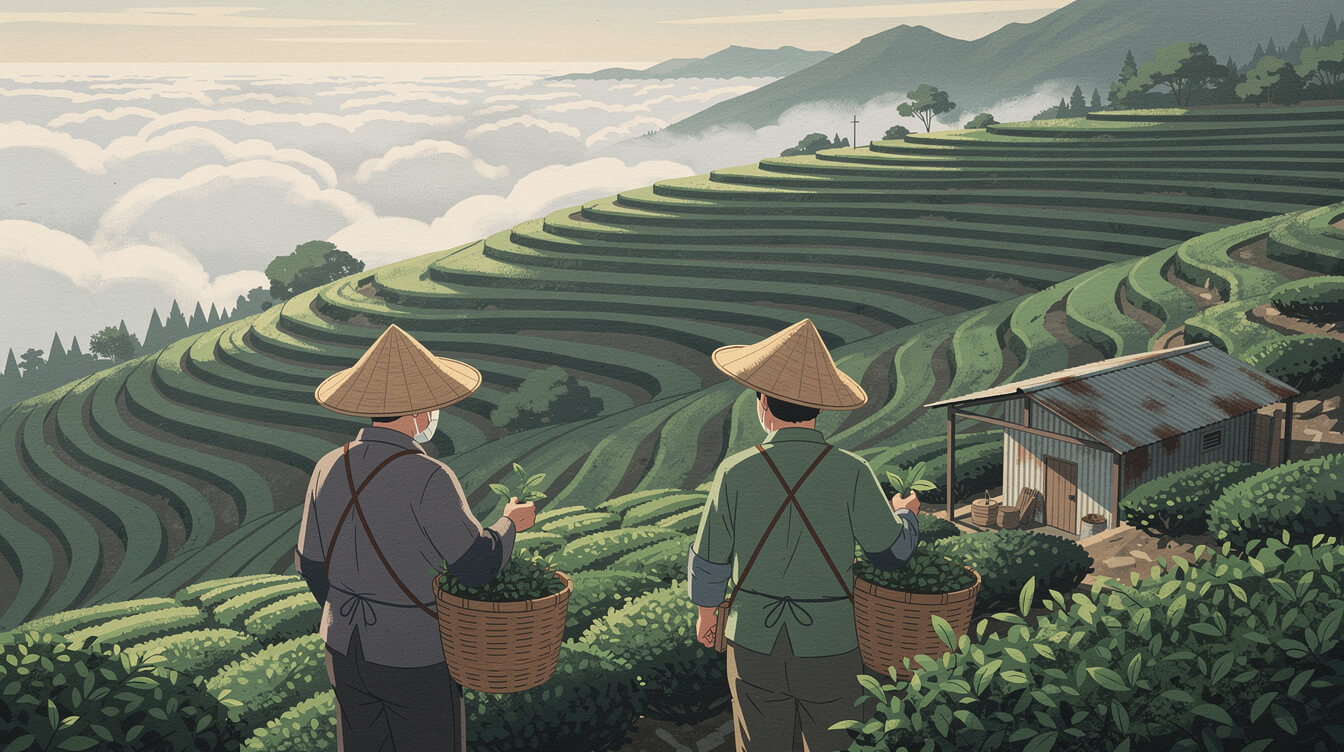
Three-quarters of a hectare is not a business with departments. Most Taiwan tea farmers are a family, a shed, a rolling machine if they are lucky enough to process their own leaf, and a hillside. The concentration is severe, too: Nantou County alone accounts for 6,579 hectares — more than half the national total — with Chiayi a distant second at 1,753 hectares. When people talk about Taiwanese tea, they are mostly talking about a few thousand families in two mountainous counties in the centre of the island, many of them working above the cloud line.
The High Mountains Pay Best and Cost Most: Why Altitude Cannot Be Mechanised
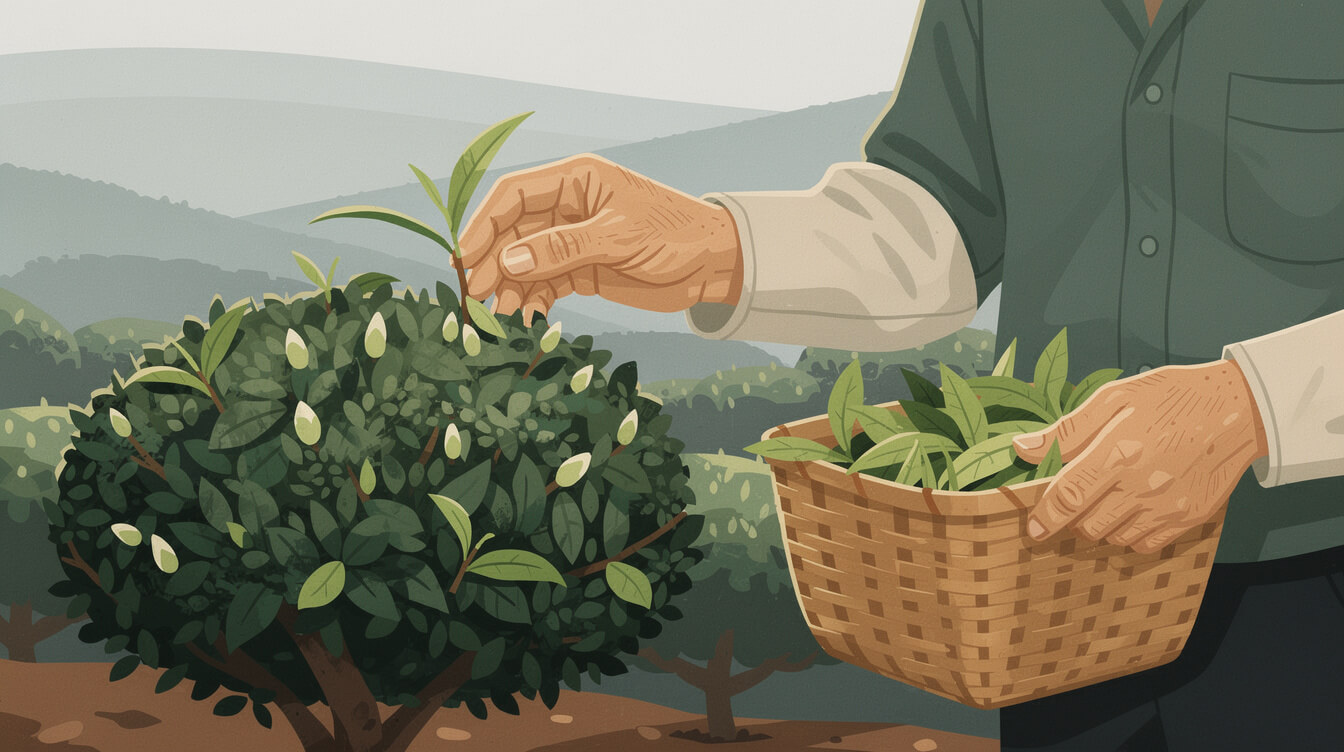
Over half of Taiwan’s tea area — around 6,000 hectares — sits above 1,000 metres, and that is where the premium tea comes from. Altitude slows the plant down. Cool nights, thick cloud cover and big day-night temperature swings produce thicker leaves, more aromatic compounds and less bitterness. It is genuinely better tea, and the market pays accordingly.
It is also the tea you cannot mechanise, and there is a number that captures exactly what that means. The Tea and Beverage Research Station surveyed sixteen tea farms across Nantou and Chiayi and costed out fresh leaf (茶菁) two ways:
- Hand-picked leaf: about NT$241 per kilogram in combined fixed and variable costs
- Machine-picked leaf: about NT$34 per kilogram
Hand-picking costs roughly seven times as much per kilo. In the hand-picked figure, labour dominates; in the machine figure, the weight shifts to equipment and materials. That single ratio explains most of what is strange about the Taiwanese tea economy.
Why not just buy machines? Because a harvester needs a slope gentle enough to stand on, rows wide enough and level enough to run along, and a crop where taking everything at one height is acceptable. High-mountain terraces fail all three tests. The rows curl tightly around contours, the terraces are often barely wider than a person, and quality oolong requires a picker to select one bud with two tender leaves and leave the rest — a judgement made thousands of times an hour that a cutting bar simply cannot make. Machines also take far more bulk: the same survey found machine harvesting yielding roughly 28 tonnes of fresh leaf per hectare against about 13 in the agency’s figures. More leaf, lower grade, a fraction of the price.
So high-mountain Taiwan tea farmers are locked in. They own the land that produces the best tea, and that same land forbids the only technology that would cut their costs. You can see the milder end of this trade-off in the low-altitude, heavily-roasted tea of Maokong on Taipei’s edge, and the extreme end in the oolong grown around Alishan.
Who Is Still Picking? Taiwan Tea Farmers Are Getting Older
A system that runs on hand labour has an obvious vulnerability: it needs hands. Taiwan’s are disappearing. The agricultural workforce has fallen from roughly 1.3 million people in the 1980s to about 542,000 in 2021. That is not a tea-specific figure, but tea sits at the labour-hungry end of an already shrinking sector.
The money explains a lot of it. Taiwanese farm households earned on average about US$34,375 in 2021, against roughly US$41,563 for non-farm households — a persistent gap in a country with abundant, better-paid urban work an hour’s drive away. When a young person in a tea village weighs a semiconductor town against three-quarters of a hectare of hillside, the hillside frequently loses.
Picking is also not year-round employment. It comes in intense flushes — spring and winter harvests command the highest prices — and high-altitude gardens ripen on their own schedule, so crews move between elevations and regions chasing the flush. That makes the labour genuinely hard to secure at exactly the moment the leaf must come off, because a bud held too long stops being a premium bud.
The squeeze has been tightening for a long time. In an agriculture ministry document from 2001, hand-picked leaf cost around NT$145 per kilogram to produce and machine-picked around NT$30. Two decades later the research station’s survey puts the same two figures at roughly NT$241 and NT$34. The two sources are not measuring identically — one is a national average, the other a sixteen-farm survey in two counties — so this is not a precise index. But the direction is unmistakable: the cost of doing it by hand has risen steeply while the cost of doing it by machine has barely moved. The gap between the two has widened, and hand-picking is exactly what Taiwan’s reputation is built on.
Indigenous Tea: Tsou Growers on Alishan and the Wild-Tea Revival
The Alishan (阿里山) range that supplies Taiwan’s most recognisable high-mountain tea is the homeland of the Tsou (鄒族), one of Taiwan’s officially recognised Indigenous nations. Tea growing on Alishan is comparatively recent — the research station encouraged planting at elevation in areas like Shizhuo, roughly 1,200 to 1,500 metres, within living memory — and Tsou families are now among the growers, with some running organic gardens and combining tea with cultural and agritourism work on their own land.
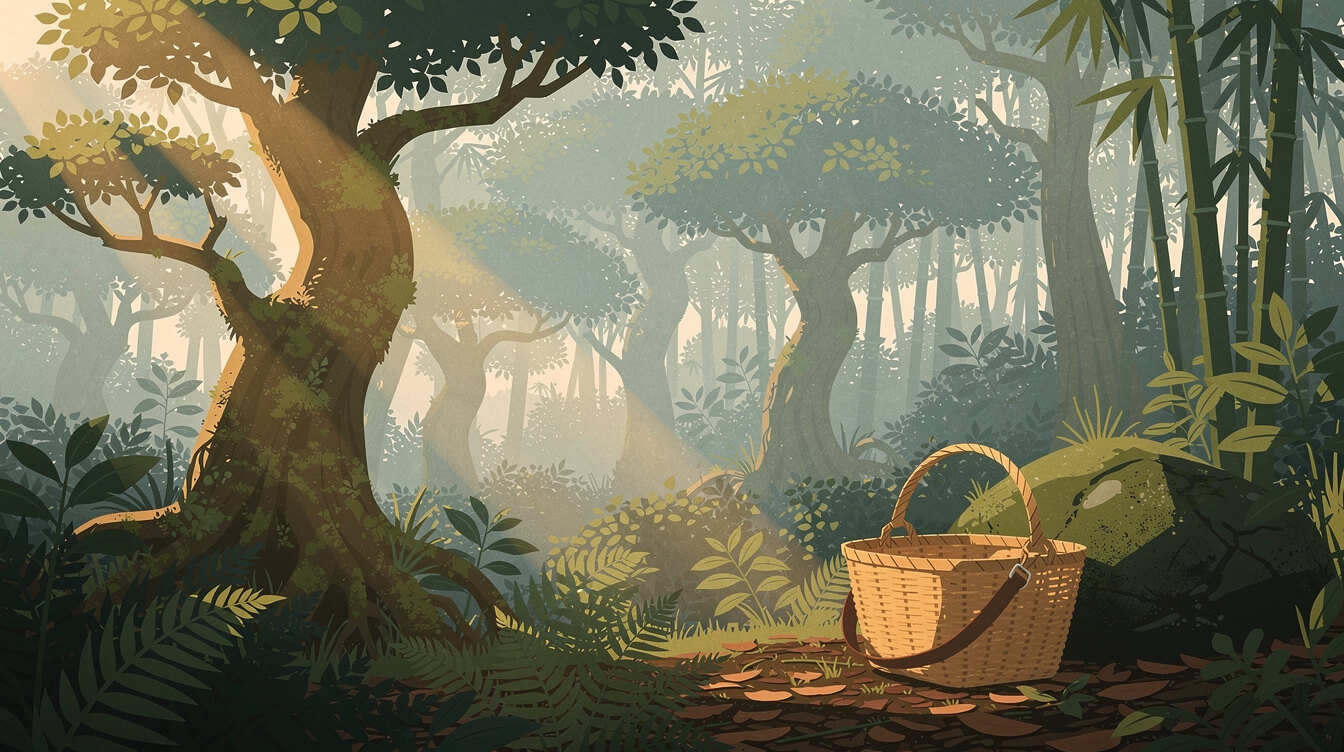
There is an older layer underneath this. Taiwan has a genuinely native wild tea, Camellia sinensis forma formosensis, known in Chinese simply as 山茶, mountain tea. It grows as a tall, irregular tree in cloud forest rather than as a clipped waist-high bush, and it has been used by Indigenous communities far longer than the island has had a commercial tea industry. It is not a historical curiosity either: Taiwan Tea No. 18, the celebrated Sun Moon Lake black tea sold as Ruby (紅玉), is a cross between Assam-type tea and this native Taiwanese variety.
Wild and semi-wild mountain tea is now the basis of a small revival in the east — Hualien and Taitung, where the research station worked with growers around Luye from 2008 to rebuild a tea industry. Eastern conditions suit heavily oxidised styles, and the region’s honey-scented black teas and red oolongs have carved out a niche that does not try to imitate central Taiwan. For Taiwan tea farmers with small holdings and no hope of competing on Alishan’s name, a distinct regional style is a livelihood strategy. If you want the wider context, our guide to Taiwan’s Indigenous nations covers the communities themselves, and Hualien and the Alishan forest area cover the places.
The Relabelling Problem: When Imported Leaf Is Sold as Taiwanese
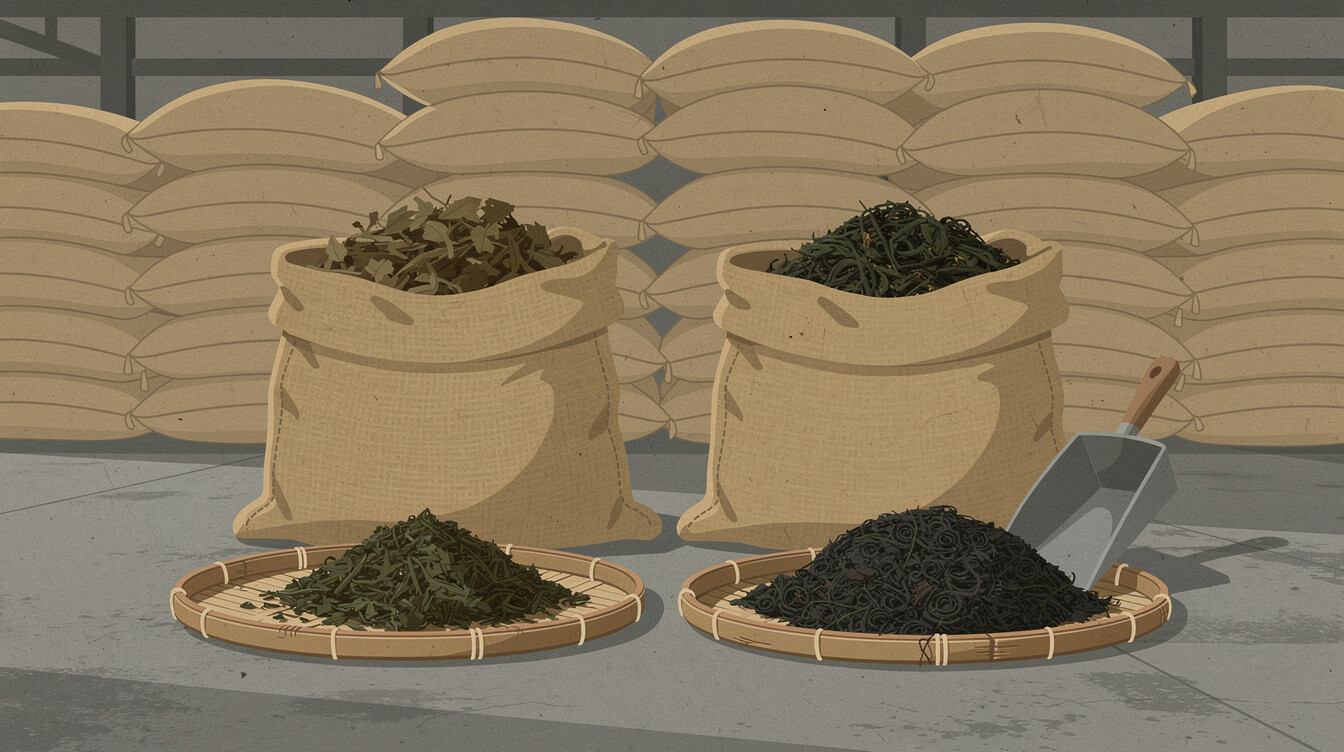
Now the part that costs smallholders real money. Taiwan does not only grow tea — it imports a great deal more than it grows. Taiwan Customs data puts 2024 imports of tea and tea extracts at 29,570 tonnes, worth about US$93.7 million. Set that beside domestic production of 14,027 tonnes and the shape is clear: Taiwan brings in well over twice as much tea as it grows. (The import figure includes processed extracts as well as leaf, so treat it as a scale comparison rather than a like-for-like ratio.)
Much of it comes from Vietnam, which supplied around 76.5% of Taiwan’s imported green tea and 42.6% of its imported black tea by volume in 2024. Most of that is legitimate and unglamorous — it is the base for the bottled and shaken tea drinks that Taiwan consumes in enormous quantities, and nobody pretends a NT$50 cup of iced tea was hand-picked at 1,500 metres.
The problem is the price gap. Vietnamese black tea entered Taiwan at roughly US$1,565 per tonne in 2024, against an overall imported black tea average of about US$3,170. Cheap leaf plus an expensive label is an arbitrage, and people take it. In October 2022, authorities in Kaohsiung seized 107 tonnes of tea sold as Taiwan-grown that had in fact been produced in China and routed through Vietnam. In a separate case, a dealer in Tainan was found with 4,500 kilograms of adulterated tea — imported leaf blended into Taiwanese and sold online as Alishan high-mountain.
Work out who absorbs that. Not the consumer, who mostly never finds out. Taiwan tea farmers do, twice over: once when counterfeit supply undercuts the price of the real thing, and again when a publicised scandal makes buyers suspicious of the entire category. A farmer with three-quarters of a hectare has no marketing budget with which to answer a headline.
Traceability as a Livelihood Tool, Not a Marketing Sticker
Taiwan’s response was regulatory. From 1 January 2023, domestically grown tea sold in Taiwan must carry proof of origin — a traceability serial number, a QR code, or organic certification. More than 4,000 tea businesses had registered their products with the Agriculture and Food Agency. Enforcement runs through the Act Governing Food Safety and Sanitation, and businesses found liable are named publicly. The scheme has since been extended to other fraud-prone products like oysters, garlic and shiitake mushrooms.
It is tempting to file this under packaging compliance. It is better understood as infrastructure that Taiwan tea farmers could not possibly have built for themselves. An individual grower saying “this really is my tea, from my garden, at this altitude” is making a claim a buyer has no way to test. A serial number that resolves to a registered producer converts that claim into something checkable — and it does so at national scale, which is the only scale at which it works. The grower who has been honest all along finally has a way to prove it that costs them a label rather than a brand campaign.
It is not a solved problem. Traceability governs tea grown in Taiwan; it does not by itself stop a blender abroad, and it relies on enforcement and on buyers actually looking. But it shifts the odds, and it shifts them toward the people with the least power in the chain.
What a Fair Price for a Jin of High-Mountain Oolong Actually Covers
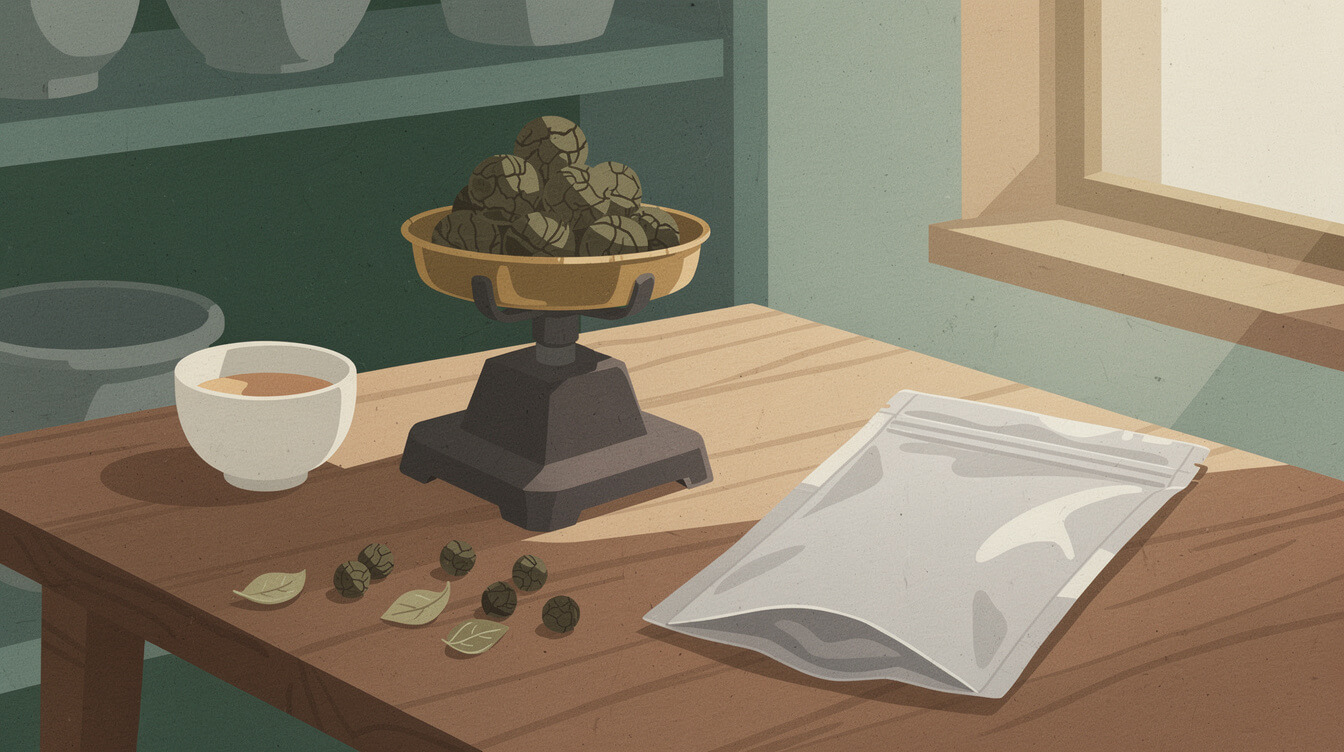
Taiwanese tea is usually priced by the 台斤 (jin), a traditional unit equal to 600 grams. When a competition-grade high-mountain oolong is quoted at several thousand New Taiwan dollars a jin, foreign buyers often assume a tourist markup. Build the number up from the leaf and it looks different.
Start at roughly NT$241 per kilogram of hand-picked fresh leaf. Fresh leaf is mostly water, and it loses the great majority of its weight through withering, firing, rolling and drying — so every kilo of finished tea represents several kilos of picked leaf, and the leaf cost alone multiplies accordingly before anyone has been paid for the processing.
Then add what the processing itself costs. Oolong is the most labour-intensive category there is: withering indoors and out, repeated tossing to bruise the leaf edges, firing at precisely the right moment, then dozens of cycles of cloth-bag rolling to form those tight spheres, and for many styles a long slow roast on top. Much of this is judgement work — experienced makers read the withering by smell — and judgement work is a person’s time. Add fuel, packaging, certification, transport, and the retailer’s margin.
Seen that way, a high price on genuine high-mountain tea is not a markup on a cheap product. It is roughly what the product costs when every selective step is performed by a human being on terrain that rules out machinery. The corollary matters more: if a “high-mountain Alishan oolong” is cheap, something in that chain is not what it claims to be. The arithmetic does not allow for a bargain.
How to Buy So the Money Reaches Taiwan Tea Farmers
None of the above is much use without something to do with it. If you would like your money to actually arrive at a grower, a few habits help.
- Look for the traceability marker. A serial number, QR code or organic certification on Taiwan-grown tea is the system described above doing its job. Absence is not proof of fraud, but presence is real evidence.
- Buy tea that names its farm, its elevation and its harvest. “Alishan oolong” is a region with thousands of hectares. “Winter 2026, 1,400 metres, from a named producer in Shizhuo” is a claim with someone’s reputation attached.
- Treat suspicious cheapness as information. Given the picking costs above, genuinely cheap high-mountain tea is arithmetically improbable.
- Ask the vendor who grew it. Sellers working directly with families answer this instantly and enjoy answering it. Sellers who cannot will change the subject.
- Buy on the mountain if you ever get the chance. Farm-gate purchases in Nantou, Chiayi or the east cut out every intermediate margin, and many growers run tastings. Our oolong buying guide covers varieties and vendors in more detail.
And a word on our own shop, kept in its place: we sell Taiwan-themed apparel and homeware, not tea. If you want to support the growers in this article, buy their tea from someone who can name them — that is the transaction that matters here. Separately, if you have been to the tea counties and want to fly the flag for them, our I Love Chiayi tee is a small nod to the county that grows the tea this piece keeps coming back to.

Fly the Flag for Tea Country
Chiayi is Alishan’s county — 1,753 hectares of tea and some of the steepest gardens on the island. Hometown pride in 嘉義, for anyone who has stood on those terraces.
Taiwan Tea Farmers: Frequently Asked Questions
How many tea farmers are there in Taiwan?
The most recent official figure we could find is around 25,000 tea-farming households, published by the agriculture ministry in documents dated 2001 and 2003. No newer public household count appears to have been issued, which is itself telling. Tea area has fallen by roughly 40% since then, so the current number is very likely lower.
How big is the average Taiwanese tea farm?
Around three-quarters of a hectare, based on 25,000 households working 18,684 hectares in 2003. Taiwanese farms in general average under one hectare. These are family smallholdings, not estates.
Why is Taiwanese high-mountain tea so expensive?
Because it is hand-picked on terrain that cannot be mechanised. Research station costings put hand-picked fresh leaf at about NT$241 per kilogram against NT$34 for machine-picked — roughly seven times the cost — and several kilos of fresh leaf go into every kilo of finished tea before processing labour is counted.
Is a lot of tea sold as Taiwanese actually imported?
Taiwan imports well over twice as much tea as it grows, mostly legitimately for the bottled-drinks trade. Fraud does occur: seizures have included 107 tonnes in Kaohsiung and 4,500 kilograms in Tainan. Since January 2023, Taiwan-grown tea must carry a traceability serial number, QR code or organic certification.
Do Indigenous communities grow tea in Taiwan?
Yes. Tsou families grow tea on Alishan, and Taiwan has a native wild tea species, Camellia sinensis forma formosensis, long used by Indigenous communities. It is one parent of Taiwan Tea No. 18, the Ruby black tea of Sun Moon Lake.
Final Thoughts: The People Behind the Cup
Taiwan’s tea reputation rests on a set of things that only people can do: choosing one bud and two leaves thousands of times in a morning, reading a withering leaf by smell, deciding the hour to fire a batch. That is why the tea is good, why it is expensive, and why the industry is fragile. Every quality that makes Taiwanese oolong worth seeking out is a quality that resists scale.
The pressures are not mysterious. Growing area down 40% in twenty years. An agricultural workforce a third of what it was in the 1980s. Farm households earning less than their non-farm neighbours. Hand-picking costs climbing while machine costs stand still. Cheap imported leaf arriving at half the average price and occasionally putting on a Taiwanese label. None of this is a crisis with a date on it; it is a slow arithmetic problem that a family with three-quarters of a hectare has to solve every season.
There are real responses underway — national traceability, regional styles built around wild and Indigenous tea in the east, growers selling direct instead of through blenders. Whether they add up to enough is an open question, and it partly depends on whether the people drinking the tea ever spare a thought for Taiwan tea farmers at all.
So the next time you get a properly made high-mountain oolong — the kind that keeps giving you something new through six or seven infusions — it is worth remembering what is actually in the cup. Somebody climbed a terrace to pick that, leaf by leaf, and almost certainly did it on a plot smaller than the building you are sitting in.
A Postcard From Taiwan, Every Week
Culture stories, food deep-dives, travel tips, and first looks at new designs — straight to your inbox. No spam, just Taiwan.

Grab a Free Taiwan Sticker!
Drop your email and we’ll send you a limited-edition Taiwan sticker — plus insider access to new merch drops and island vibes.
No spam. Unsubscribe anytime.