Alishan National Forest Recreation Area: The 8-Hour Visitor Playbook Nobody Else Writes
The Alishan National Forest Recreation Area gets confused with a dozen other things called Alishan, and that confusion costs visitors about half a day. This guide fixes that. If you have exactly 8 hours to spend inside the recreation area — arriving on the first shuttle, leaving on the last — this is the hour-by-hour playbook that tells you which trails to skip, which sunrise ticket to book, and why the 2,000-year-old cypress grove is the part everyone underrates.
Nick Kembel’s 27,000-word Alishan monster is the reference bible; treat this piece as its tactical companion. Read it on the shuttle up. By the time you reach the gate, you’ll know exactly what to do.
What You Actually See Inside Alishan National Forest Recreation Area (Not the Scenic Area, the Recreation Area)
Here’s the confusion nobody explains cleanly: Alishan refers to at least four overlapping things, and Google conflates them.
- Alishan Scenic Area — a 415 km² administrative region managed by the Alishan National Scenic Area Administration. It includes tea villages (Shizhuo, Fenqihu), indigenous Tsou settlements, and the entire mountain highway corridor.
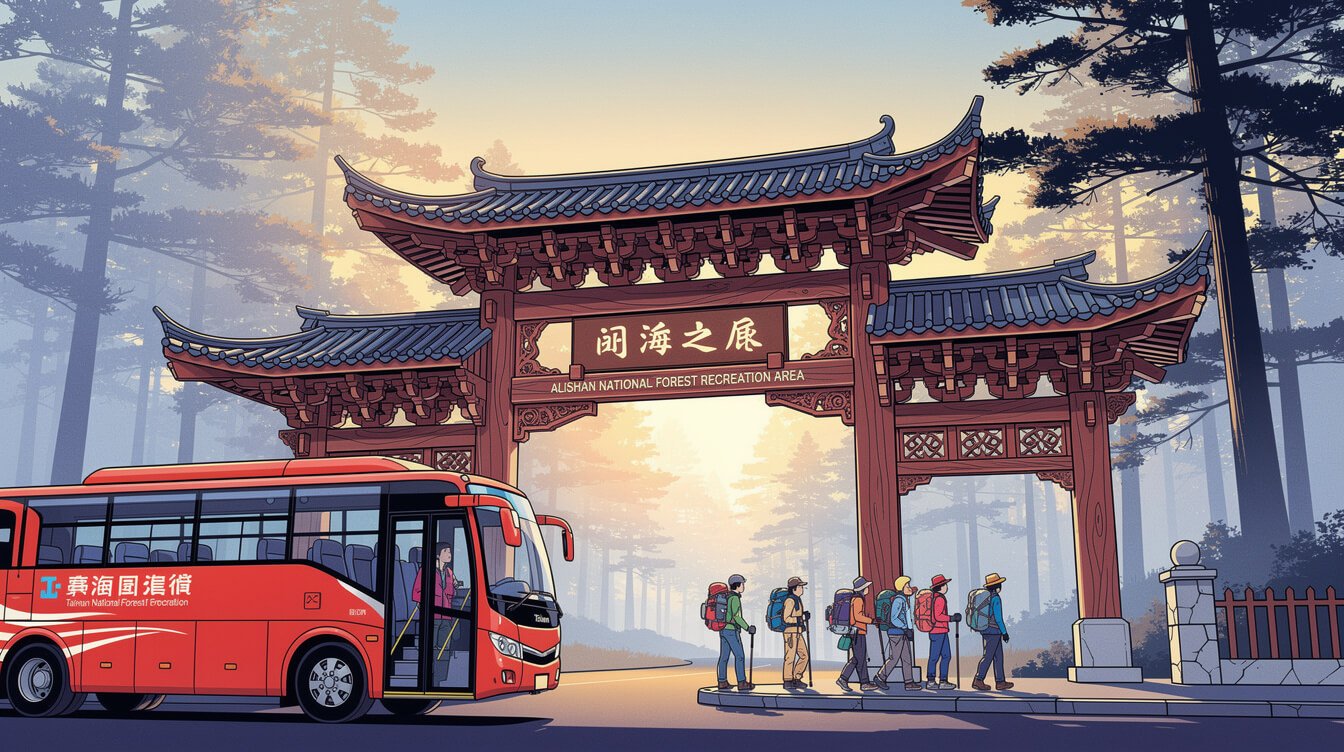
- Alishan National Forest Recreation Area — a specific 1,400-hectare fenced park inside the scenic area, run by the Forestry Bureau. This is where the sunrise train, the cypress groves, and the boardwalk trails live. It has a gate, an entrance fee, and set opening hours.
- Alishan Township — the political jurisdiction, mostly indigenous Tsou land.
- Alishan Forest Railway — the historic narrow-gauge line from Chiayi that partially runs into the recreation area.
When you tell a driver “Alishan,” they’ll ask which one. The 8-hour playbook below is specifically for the fenced recreation area — the part with the gate and the entrance ticket. If you’re piecing together transport to get there, our Chiayi to Alishan transport guide walks through Bus 7322, the HSR link, and the forest railway options.
Inside the recreation area you’ll find: three sunrise viewing platforms (Zhushan is the famous one), the Giant Trees Boardwalk with a dozen named cypress specimens over 1,000 years old, a Buddhist shrine dating to 1919, two ponds (Sisters’ Pond and Elephant Trunk Pond), the Sacred Tree Station where the small train stops, and Xianglin — a genuine 2,300-year-old red cypress that survived the century when everything around it was logged. That’s it. There is no cable car, no roller coaster, no shopping mall. It’s a park.
The 8-Hour Single-Day Itinerary (Hour-by-Hour With Shuttle Times)
The magic window inside the recreation area is exactly 8 hours: first shuttle arrivals from Chiayi around 09:30, last public bus down at 17:10. If you’re overnighting inside the park (Alishan House, Alishan Gou Hotel), you unlock the sunrise train and can arrive-day the itinerary. Otherwise, this is your window.
Day-trippers arriving on Bus 7322 from Chiayi
- 09:30 — 10:00: Arrive at the recreation area bus station. Buy your entrance ticket (see Section 6). Grab a bento at the 7-Eleven inside Alishan Village — this is your only realistic lunch.
- 10:00 — 11:30: Take the Sacred Tree Route (神木線) small train one stop to Sacred Tree Station. Walk the Giant Trees Boardwalk back toward Alishan Station. This is the highest-density old-growth cypress experience in the park, and you’ll pass 8+ named ancient trees.
- 11:30 — 12:15: Detour to Xianglin Sacred Tree (香林神木) — the 2,300-year-old red cypress. Lunch at Xianglin picnic area.
- 12:15 — 13:30: Walk the Plum Garden Loop past the 1919 Ci Yun Buddhist Temple.
- 13:30 — 15:00: Sisters’ Pond Loop → Sacred Tree Station return, or an easier flat detour to Shouzhen Temple.
- 15:00 — 16:30: Return to Zhaoping Station area. Coffee at 7-Eleven or Zhaoping tea shop. Buy Alishan oolong for gifts.
- 16:30 — 17:10: Board the last shuttle back to Chiayi. Do not miss it.
Overnighters unlocking the sunrise
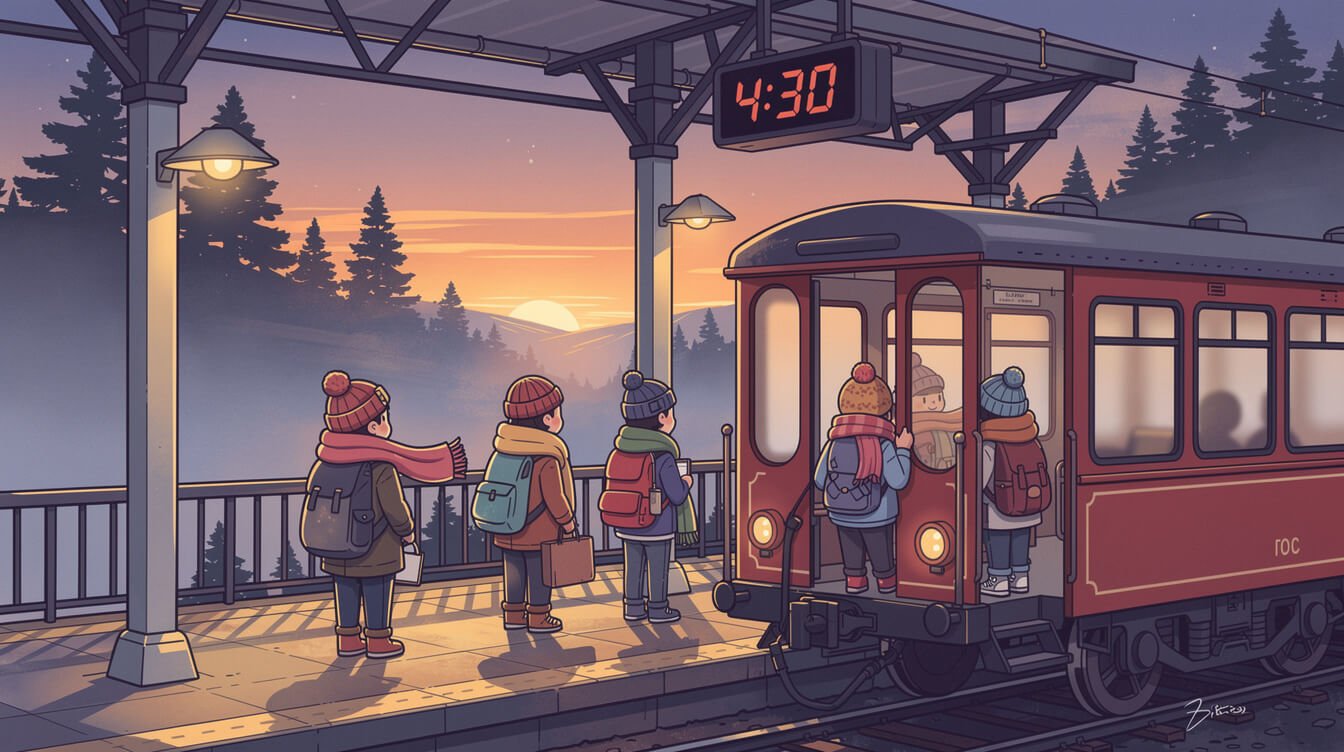
If you’re staying inside the park, wake at 04:00, take the sunrise train to Zhushan platform (arrive by 05:00), watch sunrise 05:15–05:45, ride the train back down. Sleep another two hours. Then run the day-tripper itinerary above starting at 09:30. That’s the maximum-yield 24 hours in Alishan.
Timing matters, and it moves. Sunrise is 05:00 in June, 06:40 in December. If you’re picking a season, our month-by-month Taiwan travel guide breaks down which months give you cloud seas versus clear skies at Alishan.
The Sunrise Small-Train Ticket Booking System, Step by Step
Every travel blog waves at “the sunrise train” without explaining the ticketing. Here’s the actual system.
The sunrise service runs from Alishan Station up to Zhushan Station — the sunrise viewing platform at 2,451 meters. Departure time is calibrated daily to sunrise, so the schedule changes every week. In summer, the train leaves Alishan around 04:00. In winter, closer to 05:30. The park posts the exact time on a physical board at Alishan Station each afternoon for the next morning.
The three ways to buy the ticket
- Same-day at Alishan Station ticket window — opens at 13:00 the day before your sunrise. This is how most locals do it. You must be physically present, and you must be staying in Alishan (they check). Tickets typically sell out by 18:00. Price: NT$150 return.
- Online via the Taiwan Railways Administration site — sunrise tickets go live 14 days ahead. You’ll need a Taiwan mobile number for the OTP verification, which trips up most foreign visitors. Some workarounds exist (WhatsApp-forwarded OTP via a Taiwanese friend); ask your hotel.
- Hotel booking service — Alishan House, Alishan Gou, and Ying Shan Hotel all pre-buy blocks of tickets for their guests. If you’re staying inside the park, this is by far the easiest path — ask when you book the room, not on arrival.
Cypress vs. Chushan platforms — which is which
You’ll hear both names. Zhushan (祝山) is the correct name for the main sunrise platform. “Chushan” is a common romanization variant. There is no separate cypress-tree sunrise platform inside the recreation area — the “Cypress Route” (檜木線) small train runs during the day to Sacred Tree Station and is a different service entirely. If you want that scenic old-growth ride, it’s a separate NT$100 daytime ticket, no advance booking needed.
What to do if it’s cloudy
Alishan sunrise fails roughly 40% of mornings — either the sun is above cloud line but you’re inside the clouds, or the ridge is fogged in entirely. When it fails, the sea of clouds (雲海) at Ogasawara Mountain Platform is often visible instead. The consolation prize is real: pastel clouds cascading over the ridges below, sometimes better than the sunrise itself.
The Three Trail Loops: Which One for Your Fitness Level and Time Budget
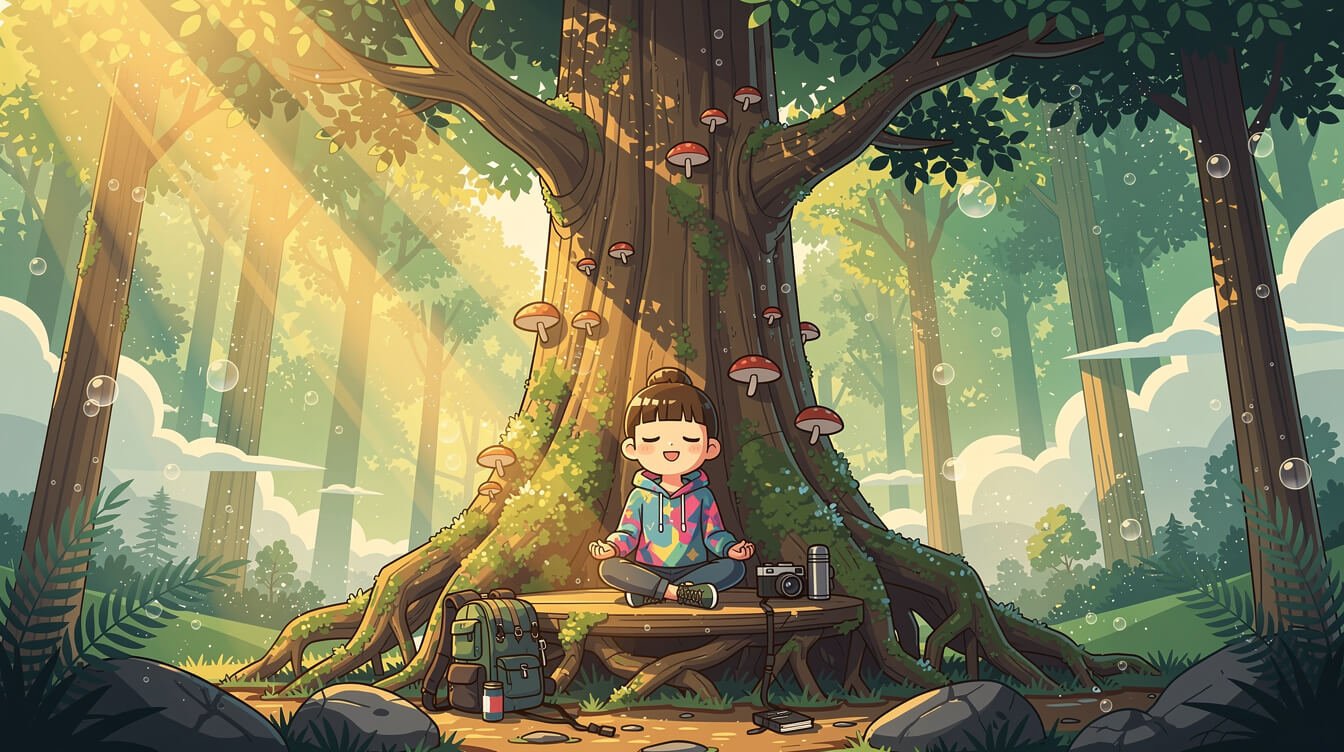
The alishan national forest recreation area maintains three official signed loops. Every visitor should pick one primary loop and one detour based on realistic fitness. Attempting all three in 8 hours is possible but leaves no time for tea, food, or actually looking at the trees.
Speaking of Alishan tea — the tea grown on these slopes is the reason half of Taiwan’s tea money exists. If you’re picking up a canister at Zhaoping, our Alishan oolong buying guide covers how to spot a legitimate high-mountain tea from a lowland impostor. A canister of the real stuff is the single best souvenir you can bring home from this park.
Loop 1: Giant Trees Boardwalk (神木步道)
Distance: 2.1 km one-way from Sacred Tree Station to Alishan Station. Elevation change: gentle downhill on wooden boardwalk. Fitness: anyone who can walk 2 km on flat ground. Time: 60–90 minutes with photo stops.
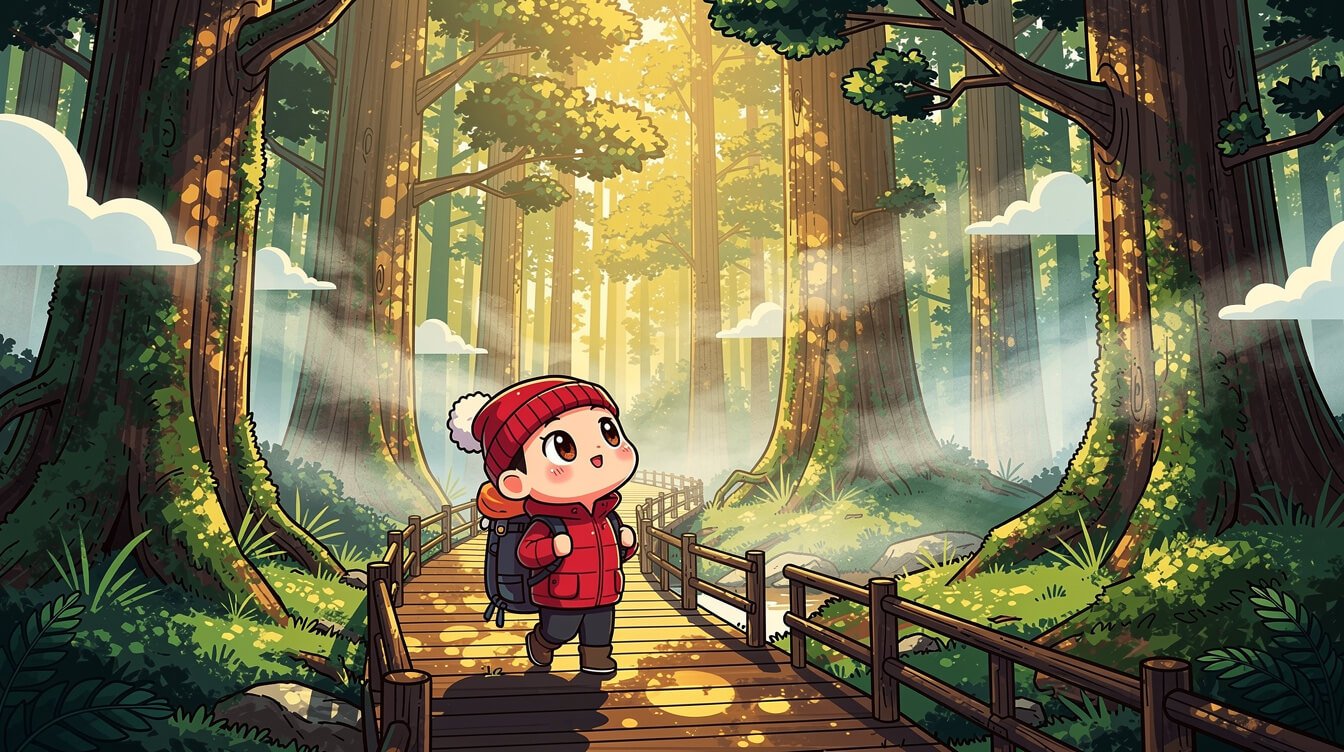
This is the highlight-reel trail. Every giant cypress with a name plate lives on or immediately off this boardwalk. If you only do one thing inside the recreation area, do this. Even wheelchair users can complete the northern half from Sacred Tree Station.
Loop 2: Sisters’ Pond → Elephant Trunk Pond → Sacred Tree Return (姊妹潭 → 三代木)
Distance: 3.5 km loop. Elevation change: 80m up and back down, mostly on packed dirt with stair sections. Fitness: moderate — you’ll be breathing harder at 2,200m elevation. Time: 2 hours.
Sisters’ Pond has a legend attached (two Tsou sisters drowned themselves rather than marry outside the tribe — traditional Alishan grim). Elephant Trunk Pond is smaller and quieter. The Three-Generation Tree — a cypress growing on its dead grandparent’s stump on its parent’s stump — is on this loop.
Loop 3: Duigaoyue (對高岳) Extended Ridge
Distance: 6.2 km return. Elevation change: 350m ascent. Fitness: proper hiker only. Time: 4 hours minimum.
The ridge trail out to Duigaoyue observation deck is the only place inside the recreation area where you get uninterrupted west-facing views of the Yushan range at sunset. Skip if you have any knee issues. Bring 2 liters of water.
Forest Bathing With the 2,000-Year-Old Cypress Grove (The Angle Everyone Misses)
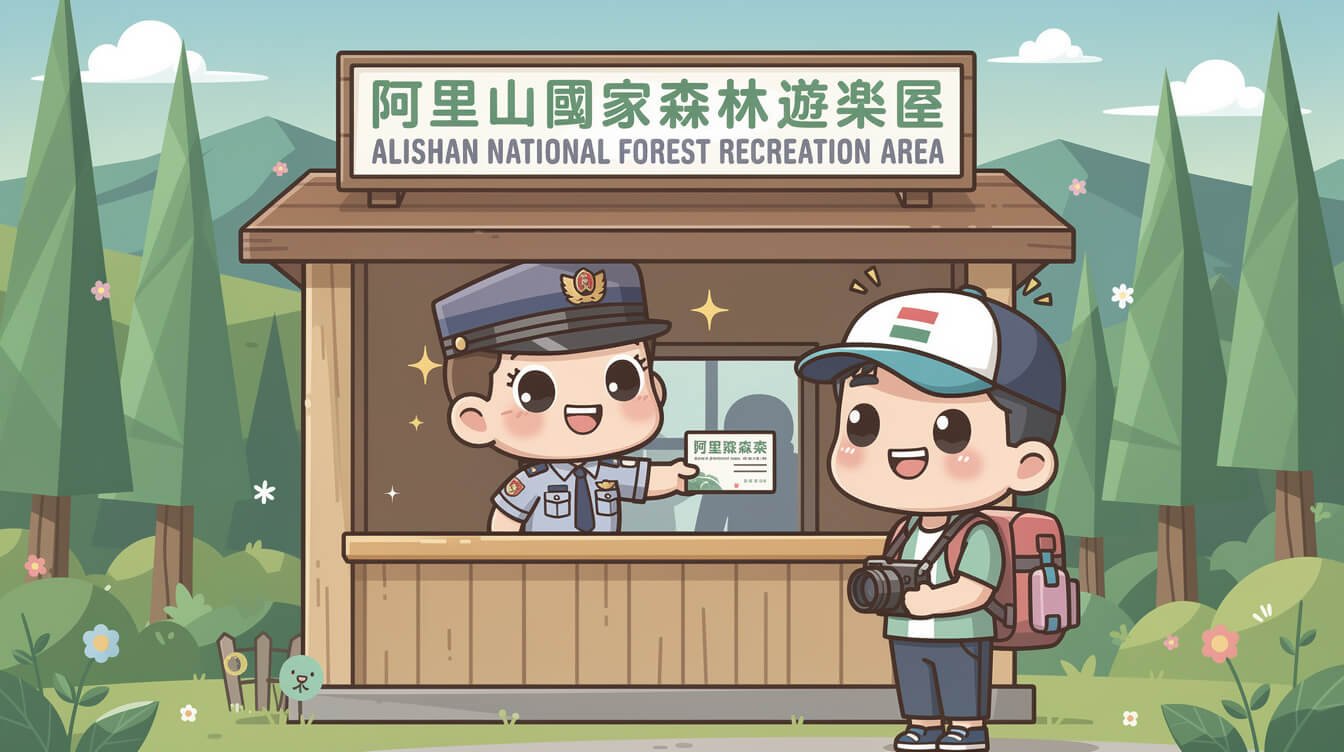
Every top-ranking article about the recreation area lists the trees, gives their ages, and moves on. What nobody tells you: Alishan is quietly one of the best shinrin-yoku (森林浴, forest bathing) sites in Asia. The park is a functional wellness destination, not just a photo op.
The Forestry Bureau formally designated the Giant Trees Boardwalk as a Sen-yu Trail — a certified forest-therapy corridor. The concept, borrowed from Japan and adapted for Taiwan’s endemic hinoki cypress, focuses on slow presence with old-growth trees. The essential oils these cypresses release (α-pinene, borneol, cedrene) are measurable in the air. Blood pressure drops. Cortisol drops. The research is real; the Taiwan Forestry Bureau publishes peer-reviewed studies on it.
How to actually do it
Arrive at Sacred Tree Station at 07:30 before the main crowds. Walk 100 meters into the Giant Trees Boardwalk. Find a specific old cypress you like — the “Xianglin” red cypress or “Three Generations” are good candidates. Sit or stand within 3 meters of the trunk. Breathe slowly for 15 minutes. Don’t take photos. Don’t check your phone. That’s the entire practice.
The tourists rushing past you with selfie sticks will look ridiculous. You’ll look like you know something they don’t. Because you do.
The Formosan black bear connection
These cypress groves are the exact terrain where wild Formosan black bears (Ursus thibetanus formosanus) still roam — Taiwan’s national endemic mammal, and the animal on Alishan’s park signage. You won’t see one; there are fewer than 300 left, and they avoid tourists. But every ancient cypress on this ridge is a tree those bears know. That’s the emotional register the recreation area rewards. If you feel like carrying that connection home, our Formosa Black Bear Minimalist Mountain Tee is our minimalist tribute to the animal and the mountain — designed around the exact ridge silhouette you’ll be standing on.
Entrance Ticket vs. Extras: What’s Included, What’s Not
The single most common Alishan complaint online: “I paid the ticket and then everything was extra.” Here’s the honest breakdown.
The main entrance ticket (2026 prices)
- Adult: NT$300 (approx US$9.50)
- Half-price (student, senior 65+, group of 30+): NT$150
- Weekday resident discount: NT$150 (bring ARC/ID)
- Where you pay: The gate on Highway 18 as your bus/car enters the park. If you’re on Bus 7322, the driver stops for a moment; walk to the window with cash. Credit cards accepted but slower.
What’s included in the ticket
Access to all three trail loops, all boardwalks, all sunrise viewing platforms (the platforms themselves — not the train ride up), all temples inside the park boundary, restrooms, and the free shuttle bus that runs between Alishan Village and Zhaoping Station every 20 minutes.
What’s NOT included (this is where budgets die)
- Sunrise train to Zhushan: NT$150 return. Advance booking recommended.
- Daytime cypress/sacred tree small train: NT$100 one-way per segment.
- Overnight accommodation inside the park: NT$2,500 (basic hostel) to NT$8,000+ (Alishan House).
- Bento/food at 7-Eleven or hotel restaurants: NT$120–350 per meal (marked up ~30% versus Chiayi).
- Alishan oolong tea at Zhaoping shops: NT$800–2,400 per 150g canister (real high-mountain price; anything cheaper is fake).
Budget expectation
A realistic day-trip cost, excluding transport to Chiayi: NT$300 (entrance) + NT$150 (sunrise train, if you overnight) + NT$100 (day train) + NT$300 (bento + coffee + snacks) = ~NT$850 (US$27) per person for a solo day-trip. Overnighting at Alishan House adds another NT$4,500 for one room. Double that for a family of four with two rooms.
The Common Mistakes That Waste Half Your Alishan Day
Every mistake below is preventable. All of them come from the same problem: not understanding what the recreation area actually is.
Mistake 1: Arriving at 13:00 as a day-tripper
People assume “afternoon should be enough for a park.” It isn’t. Last shuttle down is 17:10; by the time you enter the gate at 13:30 and walk to Sacred Tree Station, you have 3 hours. That’s one loop, no lunch, no tea shopping. Arrive on the 06:00 or 09:00 bus from Chiayi, not the 12:00.
Mistake 2: Booking the sunrise train without booking the room first
The ticket window explicitly requires you to be staying inside the park. If you’re overnighting in Chiayi and hoping to catch the 04:00 sunrise train — you can’t. There is no early-morning transport from Chiayi that gets you to Alishan Station by 04:00. Either commit to a park room or skip the sunrise entirely.
Mistake 3: Confusing the Forest Railway with the sunrise train
Two totally different services. The Alishan Forest Railway is the century-old narrow-gauge line from Chiayi that partially reaches the recreation area (currently truncated at Shizhilu due to typhoon damage). The sunrise train is a short shuttle inside the park from Alishan Station up to Zhushan platform. Ticketing systems are separate.
Mistake 4: Wearing city shoes
The boardwalks are wooden and slippery when wet. Alishan is wet more often than dry — the average annual rainfall is over 4,000mm, four times London. Bring hiking shoes with real grip. Fashion sneakers will send you sliding on the Sisters’ Pond descent.
Mistake 5: Underestimating the elevation
Alishan sits at 2,200m. That’s low altitude by high-mountain standards but high enough that unfit visitors get winded fast on stair sections. Move slowly on your first hour. Drink water. If you’re prone to altitude issues, avoid coffee before the sunrise train.
Mistake 6: Skipping the tea shops at Zhaoping
You will not find genuine Alishan-grown, harvest-dated high-mountain oolong for a better price than at the small farmer-run shops near Zhaoping Station. The tea you’ll be offered at Taipei souvenir stores is often blended lowland leaf with a fancy Alishan label. Buy at the source.
Mistake 7: Not layering
The temperature at sunrise on the ridge is routinely 8°C in summer and can hit -2°C in winter. Even if Chiayi is 32°C that afternoon, you’ll be cold at 04:30 on Zhushan platform. Bring a windbreaker minimum, a fleece ideally. Hotels can rent basic jackets if you forget.
Final Thoughts: The Recreation Area Rewards the Ones Who Slow Down
The alishan national forest recreation area is not a theme park. It is a working forest that Taiwan chose to protect, wrapped in a century of colonial-era railway infrastructure, indigenous Tsou heritage, and living old-growth cypress that predates most human civilization. Rush through it on a bus tour and you’ll see nothing but crowds. Give it a full 8 hours with this playbook and you’ll leave with a different relationship to Taiwan’s high country.
The mountain will still be here in a thousand years. The ancient cypresses will still be here in another two thousand. The best move you can make is to show up early, walk slowly, buy the tea, and let the trees do the rest.
Planning your broader route through Taiwan? Our Taiwan High-Speed Rail guide covers how to link Alishan with Kaohsiung, Tainan, and Taipei, and our Taiwan hot springs guide is the natural next stop after 8 hours of cypress air.
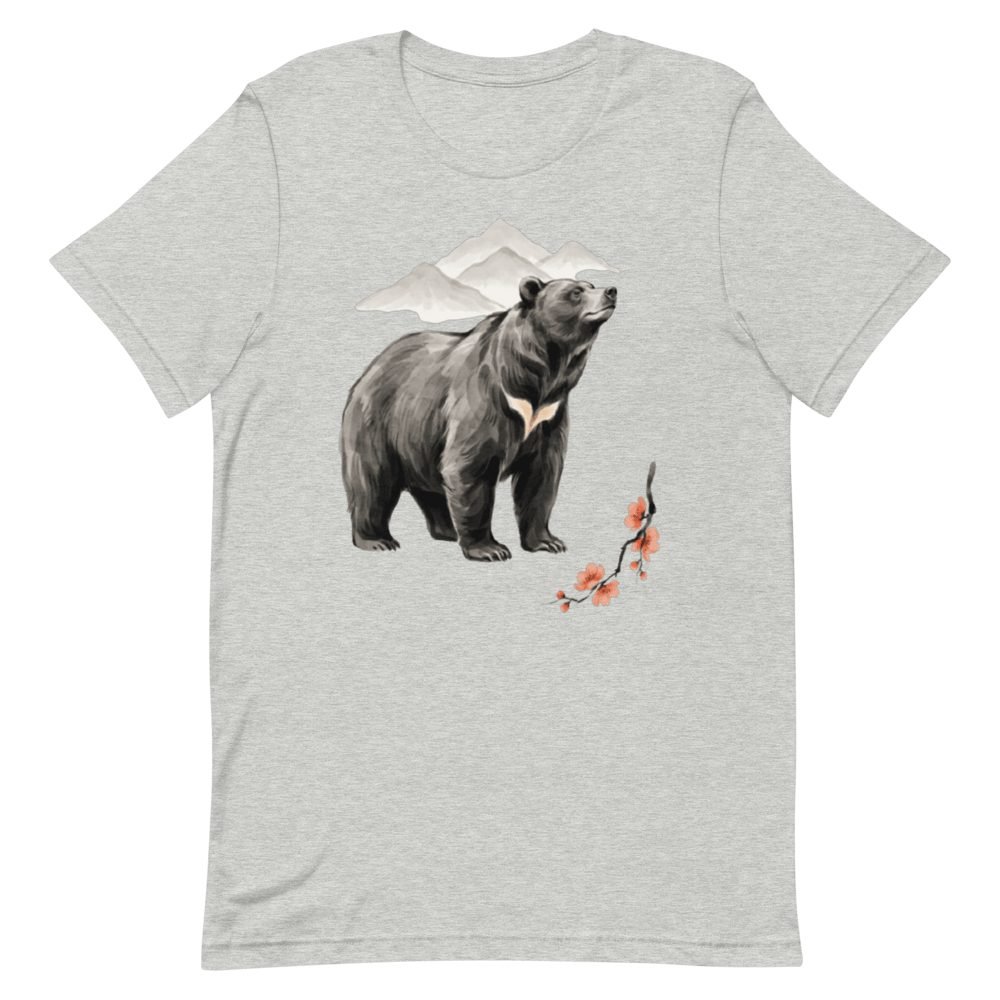
Wear the Ridge You Just Hiked
Our Formosa Black Bear Minimalist Mountain Tee is a quiet tribute to Taiwan’s endemic bear and the Jade Mountain silhouette you can see from Alishan on a clear day. Understated. Made for locals who know.

A Weekly Postcard From Taiwan
Cultural stories, food finds, and new merch drops — one email, once a week, no spam. Join Taiwan fans, diaspora, and travelers who love the island as much as we do.

Grab a Free Taiwan Sticker!
Drop your email and we’ll send you a limited-edition Taiwan sticker — plus insider access to new merch drops and island vibes.
No spam. Unsubscribe anytime.