Taiwan Countryside: How to See Rural Taiwan Without a Car (and When to Go)
Most people picture the Taiwan countryside as somewhere you need a rental car and a Taiwanese licence to reach. You don’t. Taiwan’s rice valleys, Hakka hill towns and tea slopes sit on the same rail lines and bus routes locals use every day. Right now, in mid-October, the second rice crop in the East Rift Valley is turning gold and heading for harvest. This guide skips the “top 10 prettiest places” list (the internet has plenty of those) and covers what those lists leave out: four countryside routes you can do without a car, how to get around once you’re there, a month-by-month rural calendar, how to tell a licensed homestay from an illegal one, and the manners that keep you welcome on a working farm.
What “Taiwan Countryside” Really Means (It’s Closer Than You Think)
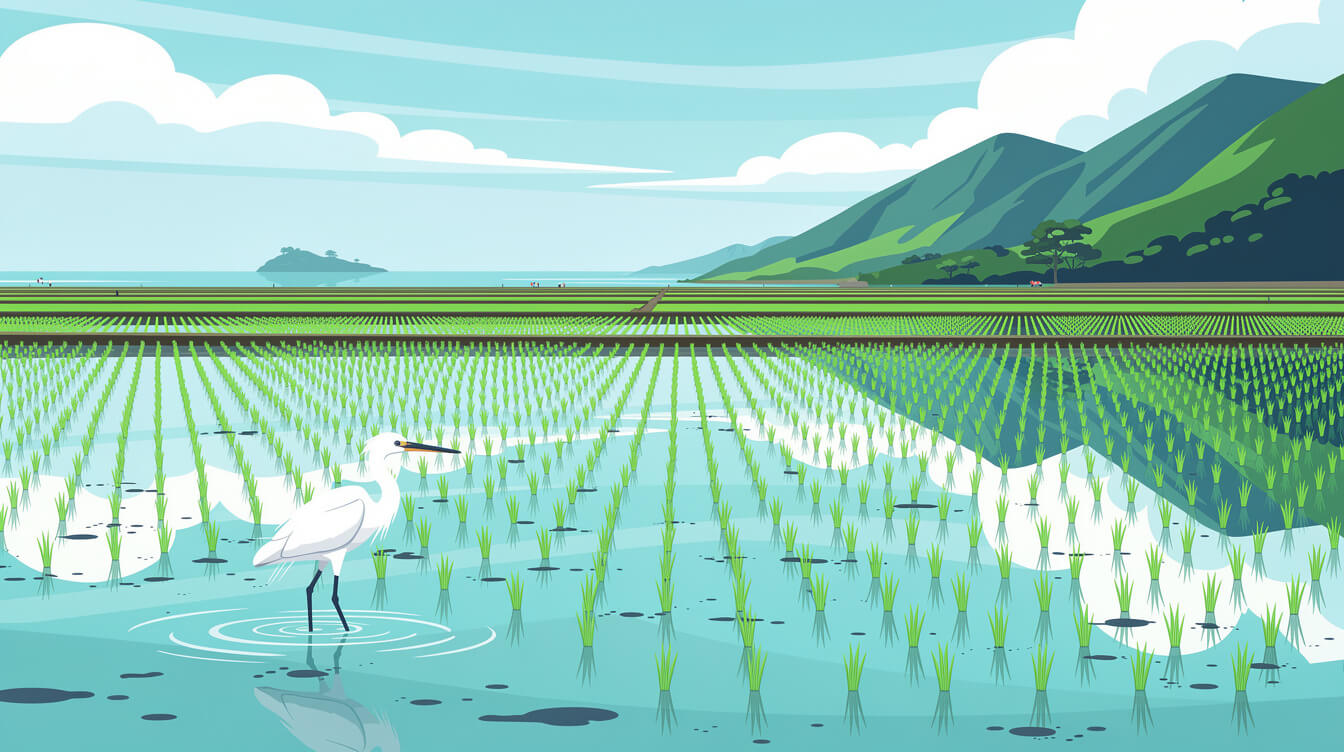
Taiwan is a small, steep island. Most of its 23 million people live on a narrow strip of western lowland, so the cities get the headlines. But leave any of them and the landscape turns rural fast. Yilan’s rice plain is roughly an hour and a quarter from Taipei on a fast train. Hsinchu’s Hakka hill towns are a short bus ride from a high-speed rail station. Even the East Rift Valley, the island’s best-known farm country, is a single direct train from Taipei.
So when people say “Taiwan countryside,” they usually mean one of three things:
- Rice country: the flat, flooded valleys of the east and the Lanyang plain in Yilan, where the year runs on planting and harvest.
- Hakka hill country: the rolling foothills of Hsinchu and Miaoli, full of brick farmhouses, tea, persimmons and slow-cooked Hakka food.
- Mountain and tea country: the high slopes around Alishan and Nantou, which we cover in our Alishan tea and sunrise guide and our piece on Taiwan’s smallholder tea farmers.
This guide sticks to the first two, because they’re the easiest to do car-free and the least understood. The mountain roads are another story.
One thing to know before you go: rural Taiwan is not a theme park. These are working farms, small towns and family homes. The paddies you’ll photograph are somebody’s income. That changes how you travel here, and we come back to it below.
Four Car-Free Taiwan Countryside Routes
These aren’t ranked. Each one suits a different kind of trip, a different season and a different amount of time. All four start from a train or high-speed rail station.
1. The East Rift Valley: Chishang and Guanshan
This is the postcard. The East Rift Valley (花東縱谷) runs between the Central Mountain Range and the Coastal Range from Hualien down to Taitung. Its southern end around Chishang (池上) is famous for rice, for its railway bento, and for a farm road you may already know from ads.
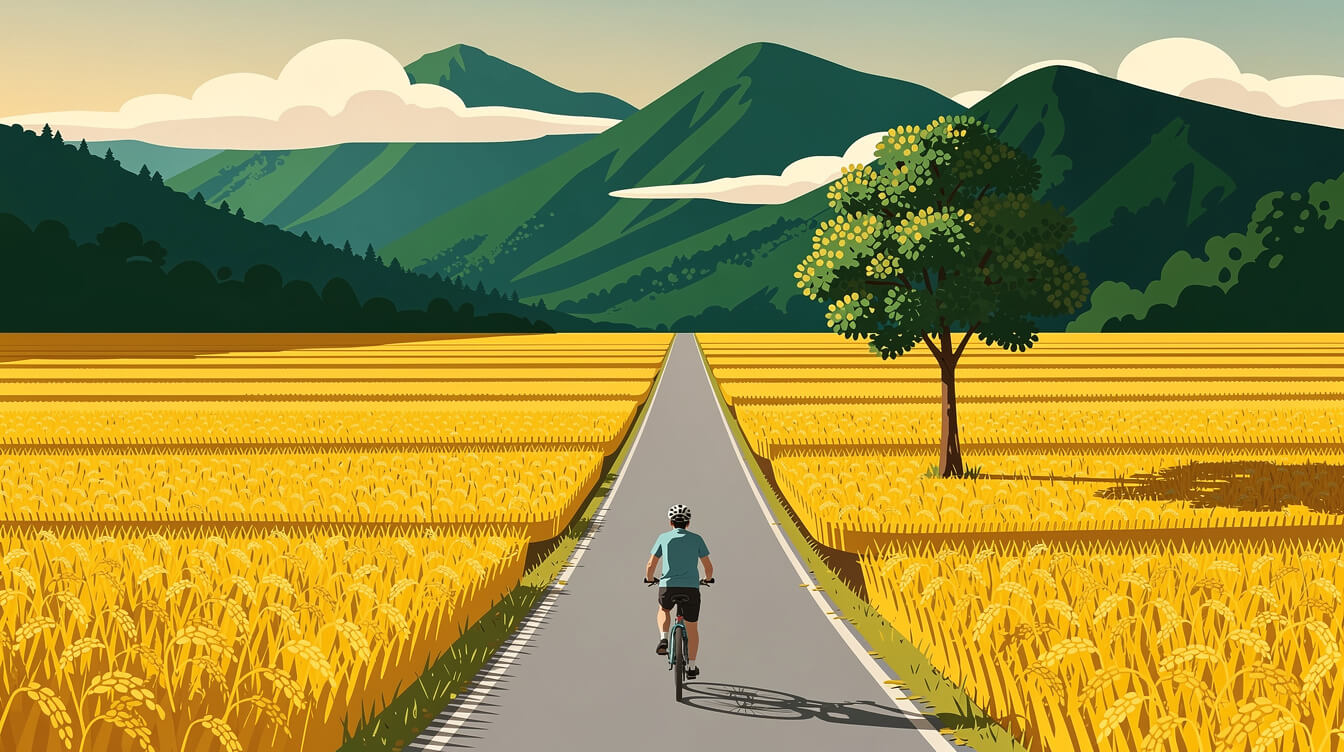
That road is Mr. Brown Avenue (伯朗大道), named after the Mr. Brown Coffee commercials filmed there. Partway along stands a lone bishop wood tree known as the Takeshi Kaneshiro tree (金城武樹). It became famous after the actor sat under it in a 2013 EVA Air ad. Typhoon Matmo knocked it flat in July 2014, and tree specialists set it upright again. It’s still the spot everyone cycles to.
Getting there: Chishang is on the main TRA line down the east coast. On the official timetable for this week, direct Puyuma and Tze-Chiang trains from Taipei take about 3 hours 24 minutes to just over 4 hours, with roughly a dozen through trains a day. From Hualien it’s about an hour to an hour and a half by express. Guanshan is the next stop south.
Best for: cycling flat rice roads, harvest season, a slow two-night stay.
2. The Yilan Plain
The Lanyang plain in Yilan is the easiest real farmland to reach from Taipei. It’s flat, it’s laced with irrigation channels, and on a clear day the paddies mirror the mountains. Yilan is also unusual: it’s the only county in Taiwan that grows just one rice crop a year. Autumn northeast-monsoon rain rules out a second crop, so the fields lie fallow or are planted with green manure through the cooler months. “One-crop Yilan rice” (一年一作宜蘭米) is a selling point here, not a limitation.
Getting there: Puyuma trains from Taipei reach Yilan station in around 75 minutes on the current timetable. Kamalan highway buses from Taipei run through the Hsuehshan Tunnel to Jiaoxi in about 70 minutes, though weekend traffic in the tunnel can add a lot. Once there, the Taiwan Tourist Shuttle’s Dongshan River Line (綠21) runs from Luodong out to the National Center for Traditional Arts, along the river and through farm country, in about 50 minutes.
Best for: a day trip from Taipei, hot springs in Jiaoxi after a field walk, spring planting season.
3. The Hakka Hill Towns: Beipu, Emei and Nanzhuang
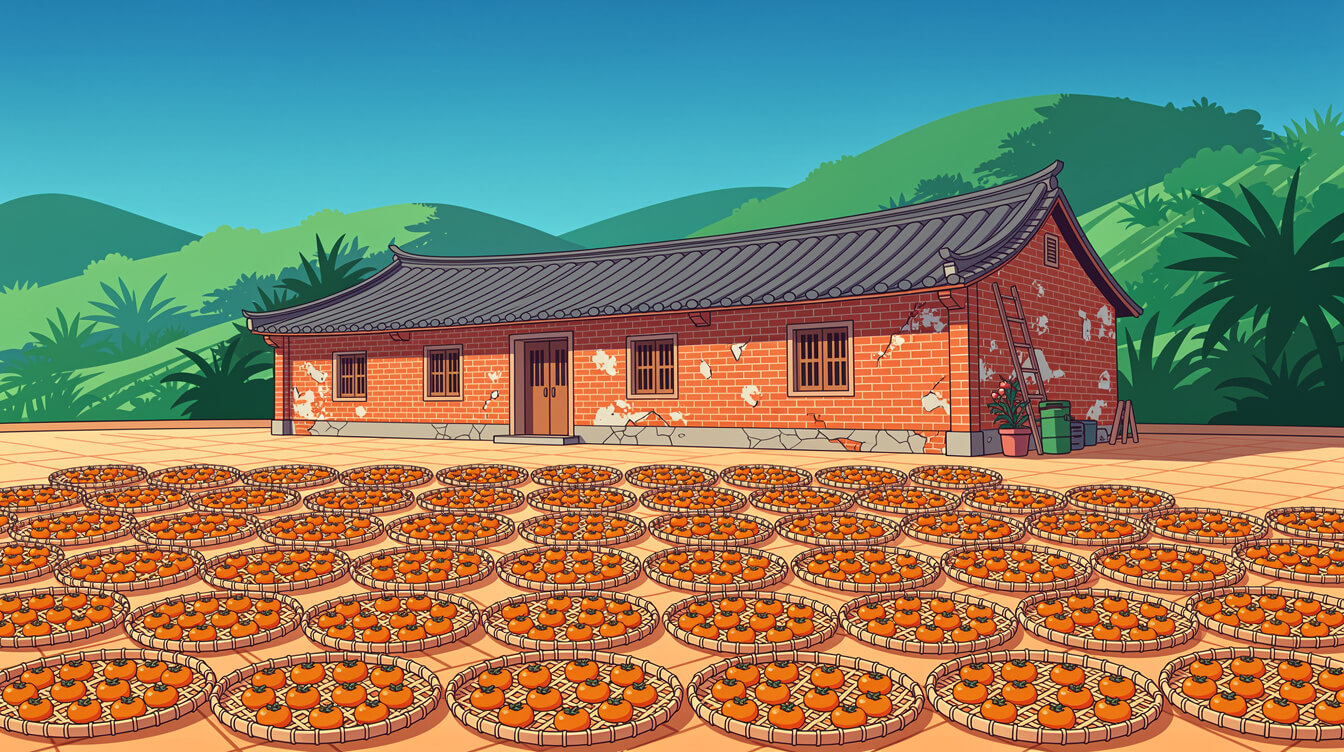
The foothills of Hsinchu and Miaoli are Hakka heartland. The towns are small, the roads curve through tea and orchards, and the food is some of the best on the island. Beipu (北埔) is known for lei cha (擂茶), a “pounded tea” of tea leaves, nuts and grains ground by hand in a bowl, and for dried persimmons.
Those persimmons are a seasonal thing. Neighbouring Xinpu (新埔) dries them in huge rows of round bamboo trays, using the strong, dry autumn wind Hsinchu is known for (九降風, the “ninth-month wind”). Its Hanken area holds a persimmon festival every October, and the core drying season runs roughly October to December. Xinpu is where they’re dried; Beipu’s old street is where you buy and eat them.
Getting there: this is where the Taiwan Tourist Shuttle (台灣好行) earns its keep. The 5700 Lion’s Head Mountain Line (獅山線) starts at TRA Zhubei station, stops at THSR Hsinchu station (Exit 4), then runs via Zhudong to Beipu Old Street, Emei and the Lion’s Head Mountain visitor centre. For Nanzhuang, the 5805A Nanzhuang Line leaves from TRA Zhunan station. Our Hsinchu guide covers the city end of the trip.
Best for: food, autumn persimmon season, travellers with only a day.
4. Meinong
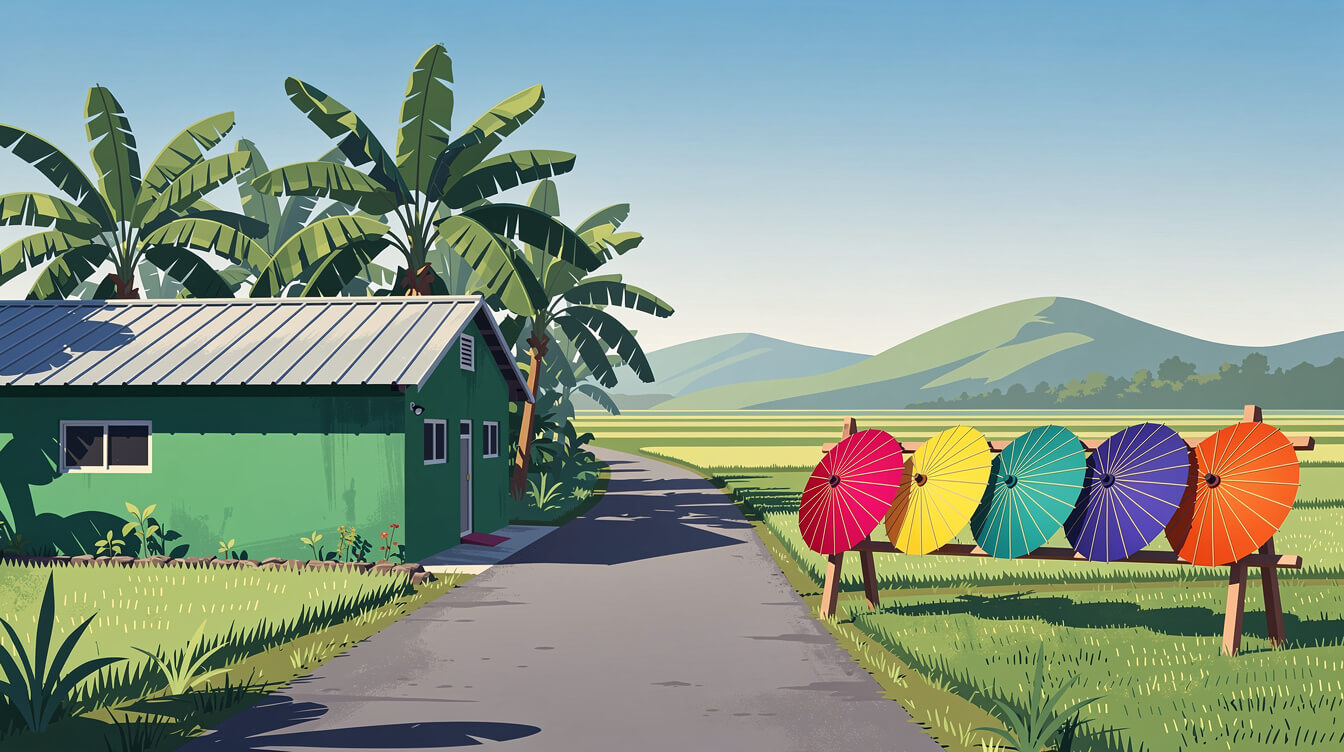
In the far south, Meinong (美濃) is a Hakka farming town on the edge of the Kaohsiung plain. It’s best known for two things: hand-made oil-paper umbrellas (油紙傘), a craft that arrived during the Japanese era and once supported more than 20 workshops here, and flat rice noodles called ban tiao (粄條), which most visitors eat at least twice.
Getting there: note that there’s no Tourist Shuttle route to Meinong on the current official list, whatever older blogs say. Instead, the regular E01 Qimei Freeway Express leaves from THSR Zuoying station (Exit 1) and reaches Qishan in about 40 minutes, with E01B services continuing to Meinong in about an hour in total. Check the current timetable before you go; rural bus schedules change. For the rest of the region, see our Kaohsiung guide.
Best for: crafts, Hakka food, a warm winter escape.
Getting Around Without a Car: Trains, the Tourist Shuttle and Bikes
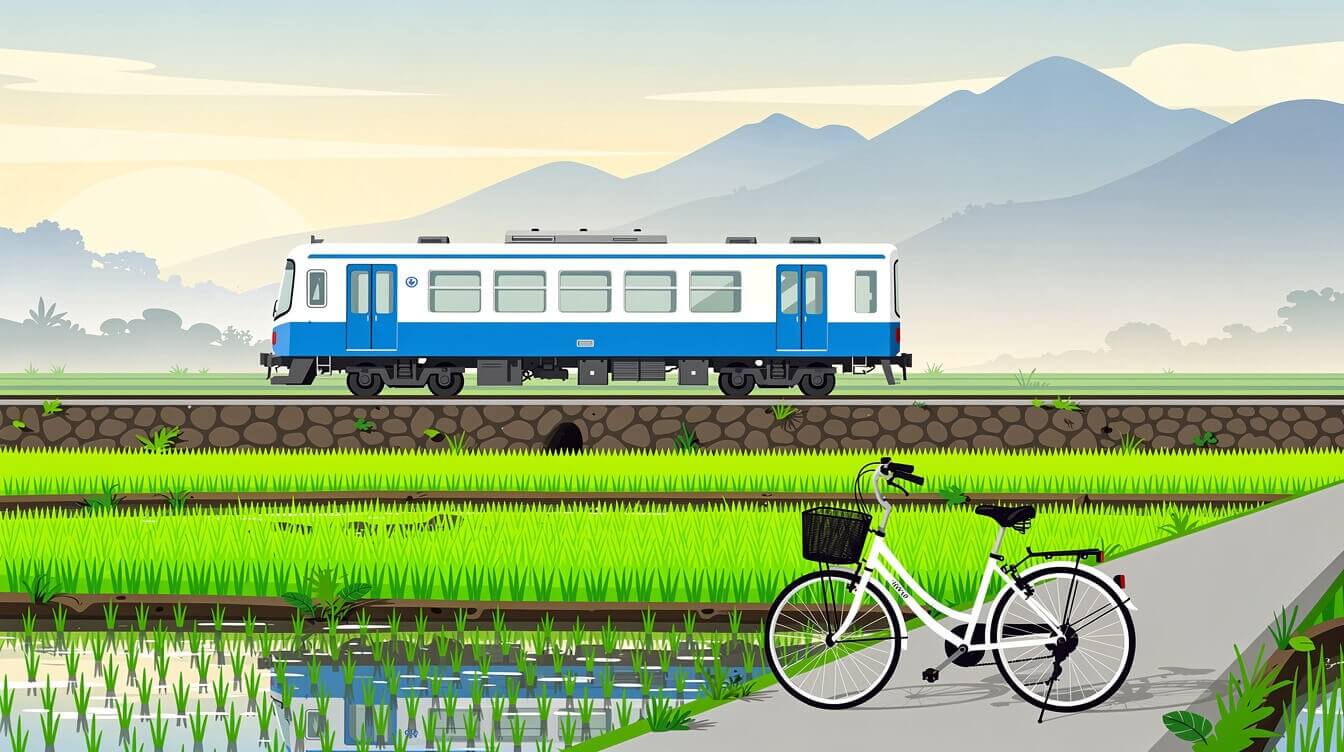
Visitors skip the Taiwan countryside for one reason: they assume they need a car. Driving here means sorting out a permit Taiwan recognises first, and scooter rental has its own licence rules. But the island’s public transport reaches much further than people think. The trick is combining three layers.
Layer 1: TRA trains for the long haul
The Taiwan Railway (TRA) network is how you reach the region. Express trains (Puyuma, Tze-Chiang) cover the distance; local trains stop at the small stations that the expresses skip. Book express seats ahead on weekends and holidays, especially on the east coast, where there’s only one line. Our Taiwan train map guide explains the network, and the official TRA timetable is the only schedule worth trusting.
Layer 2: The Taiwan Tourist Shuttle for the last mile
The Taiwan Tourist Shuttle (台灣好行) is a network of buses built for exactly this problem: getting from a station to places regular buses serve poorly. Routes, stops and timetables are on the official site. Two tips:
- Check run counts, not just routes. The 8168A East Rift Valley Luye Line, from Taitung Transfer Station to the Luye Gaotai plateau, lists just two runs a day on its official page. Older articles say four. Miss one and you’re waiting hours.
- Know what a route doesn’t do. The Luye line doesn’t go to Chishang or Guanshan. For those, take the train.
Layer 3: Bikes for the fields themselves
Once you’re in rice country, a bicycle is the best way to see the Taiwan countryside up close. Chishang has more bike rental shops than you’d expect for a small township: Taiwan’s public broadcaster counted 16 of them in 2025. Next door, the Guanshan bike path (關山環鎮自行車道) loops 12 km around the town. It opened in 1997 as Taiwan’s first leisure bike path.
The rice roads are flat but shadeless, and the east-coast sun is serious even in autumn. Carry more water than you think you need. A big insulated bottle like our Formosan Black Bear Water Bottle keeps ice cold through a morning loop, and it gives you something to refill at the 7-Eleven every town seems to have.
What about scooters? They’re everywhere in rural Taiwan, but renting one legally needs the right licence, and country roads mix scooters with farm trucks and gravel. If you don’t ride at home, a rice field is not the place to learn.
When to Go: A Rural Taiwan Countryside Calendar
Here’s the part most countryside guides get wrong: the Taiwan countryside looks completely different depending on the month. A paddy is a mirror in spring, bright green in early summer, gold before harvest and, in parts of the east, yellow with flowers in winter. Plan around the crop, not just the weather.
How the rice year works
Much of Taiwan grows two rice crops a year. In the East Rift Valley around Chishang, the first crop runs roughly February to June and the second roughly July to November, with the southern valley towns planting and harvesting a little earlier than the northern ones. Yilan is the exception: one crop, transplanted around January and February and harvested in June.
| Season | What you’ll see | Where |
|---|---|---|
| Jan–Feb | Rapeseed flower fields on fallow paddies; first-crop transplanting begins; Yilan’s flooded “mirror” fields | East Rift Valley, Yilan |
| Mar–May | Young green rice; tea harvests in the hills | Everywhere; tea country |
| Jun | First-crop harvest; Yilan’s only harvest | East Rift Valley, Yilan |
| Jul–Aug | Second-crop planting; balloon festival at Luye; typhoon season | East Rift Valley, Taitung |
| Sep–Nov | Golden fields and second-crop harvest; silver grass; persimmon drying | East Rift Valley, Hsinchu hills |
| Dec | Fields cleared and resown with green manure; cool, dry, quiet | East Rift Valley |
Three dates worth planning around
- The Chishang Autumn Rice Harvest Arts Festival (池上秋收稻穗藝術節): the 2026 edition, the 18th, is on October 24–25, 2026, with concerts staged in the open rice fields from mid-afternoon. It’s ticketed, with tickets listed at NT$1,000–2,500 on OPENTIX, and the town fills up, so book beds early.
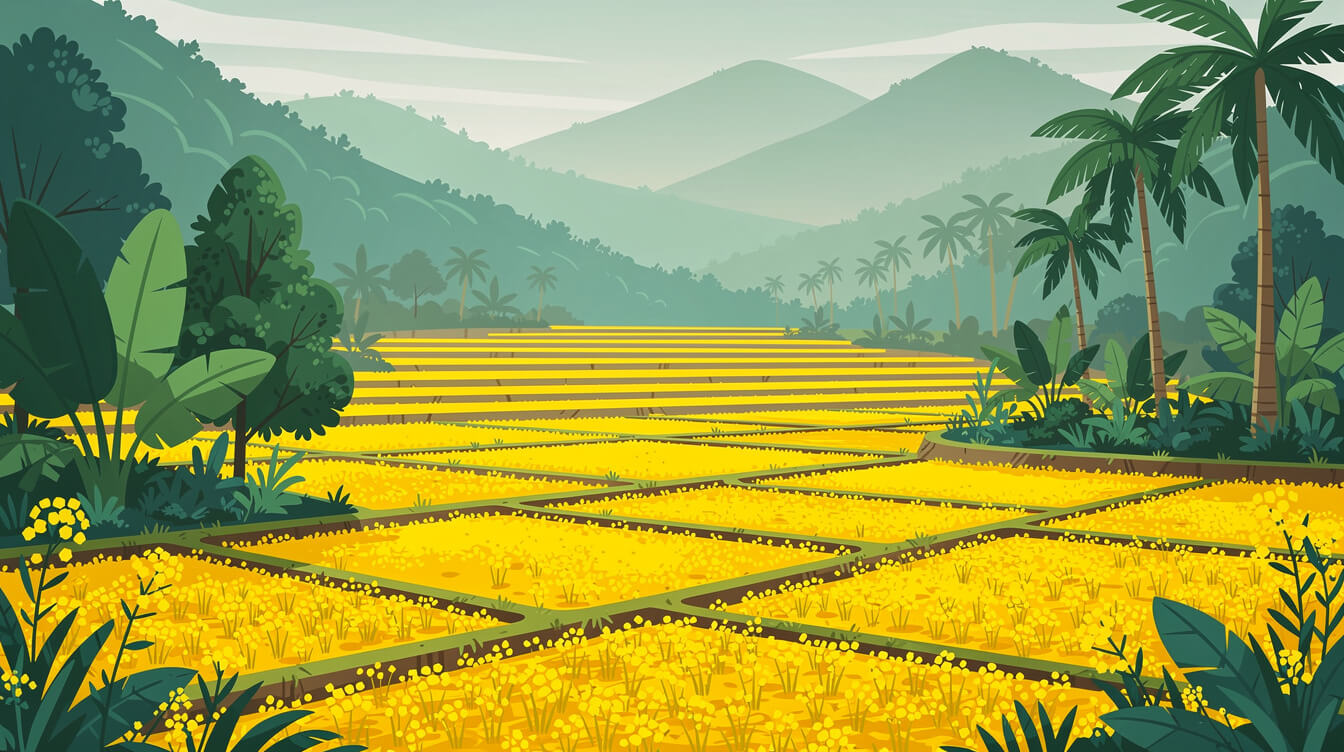
- Winter rapeseed: after the second harvest, farmers in Fuli, Yuli, Chishang, Guanshan and Luye sow rapeseed as green manure. It blooms in about 40–50 days, so the yellow fields usually appear from around mid-January, before they’re ploughed back in for the first crop.
- The Taiwan International Balloon Fiesta at Luye Gaotai: it usually runs through July and August (in 2026 it ran from July 4 to August 20, with balloon displays at dawn and late afternoon). The 2027 dates haven’t been announced yet, so check the official site in spring.
Also worth timing: autumn silver grass on the hillsides, Taitung’s deep-red roselle harvest, and spring and winter tea picking. And keep one eye on the sky in summer and early autumn. Typhoons close roads and cancel trains, so read our typhoon guide and leave a buffer day.
Where to Stay: Leisure Farms and Homestays

Staying the night is what turns a Taiwan countryside day trip into the real thing. You see the fields at dawn, eat dinner with the family that runs the place, and hear frogs instead of traffic. Rural Taiwan has two kinds of stay you won’t find in the cities.
Homestays (民宿)
A minsu (民宿) is a small, family-run guesthouse, often in the owners’ own home or a building next to it. They’re the backbone of countryside lodging, and they vary from simple rooms to beautifully designed farmhouses. They also vary in legality, and an unlicensed one won’t have the fire-safety checks or insurance a registered one does.
Here’s how to tell:
- Look for two things at the door. A legal homestay holds a registration certificate (民宿登記證) and an official homestay sign (民宿專用標識), both issued by the local government. The rules require the certificate to be displayed at the entrance and the sign on the outside of the building.
- Look it up before you book. The Tourism Administration’s Taiwan Stay site (臺灣旅宿網) lists every legal hotel, B&B and homestay. If a listing on a booking app isn’t there, ask why.
- Bonus: the Taiwan Host label (好客民宿). It’s a Tourism Administration certification for legal homestays that meet extra service standards. The programme began in 2011 and passed 2,000 certified properties this year.
Leisure farms (休閒農場)
A leisure farm is a working farm licensed to host visitors. Think fruit picking, farm meals, tea-making classes and rooms on site. They’re licensed under the Ministry of Agriculture’s leisure-farming rules, and since 2022 county and city governments handle the permits for smaller farms. The last official count we could find was 378 licensed leisure farms at the end of 2020. They’re especially good for families and for travellers who want the countryside to come with a programme.
Practical notes for both: many rural stays are cash-friendly rather than card-friendly, so carry some New Taiwan dollars. Many owners will pick you up from the station if you ask when you book, and that one question can solve your whole last-mile problem.

Take the Mountains Home With You
Our Formosa Black Bear tee puts Taiwan’s wild side, a bear on a cliff with Jade Mountain behind, on soft everyday cotton. It’s made for rice-road rides and the stories you’ll tell after.
Countryside Etiquette: Working Farms, Field Shrines and Village Dogs
The Taiwan countryside is famously friendly. People will point you to the best noodle stall, offer you fruit, and ask where you’re from. Keeping it that way comes down to a few habits.
The paddies are somebody’s job
- Stay on the roads and the raised paths. Don’t step into a paddy or onto the narrow mud banks between fields for a photo. They’re part of the irrigation system, and they crumble.
- Don’t pick anything. That includes rice heads, fruit on the trees and the flowers in a rapeseed field. It’s all a crop.
- Give way to farm vehicles. On a narrow farm road, the tractor or harvester wins. Pull your bike right off the road and let it pass.
- Think before you fly a drone. Drones of 250 g or more must be registered with Taiwan’s Civil Aviation Administration, and a drone buzzing low over someone’s field and house is a good way to lose the friendliness. Check the current rules before you pack one.
Shrines at the edge of the field
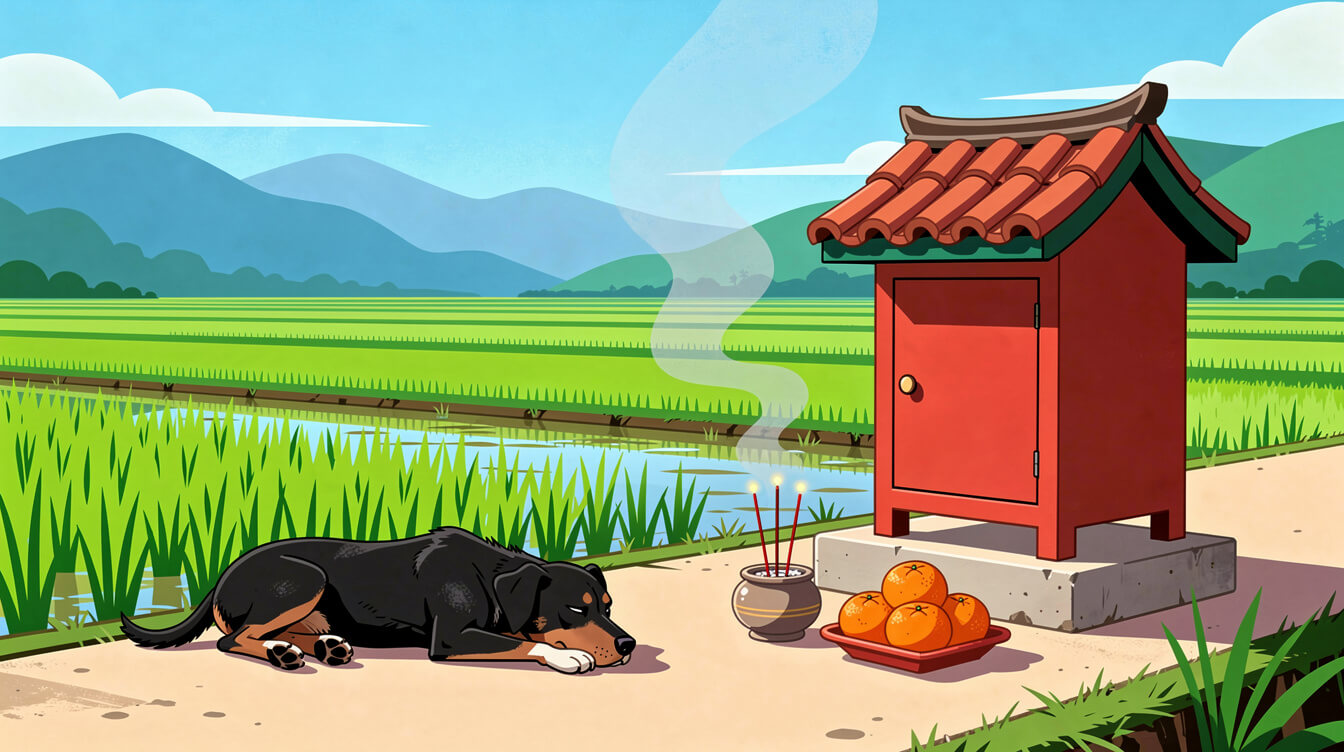
You’ll notice tiny shrines, often red-roofed and knee-to-chest high, at the corners of fields and by village roads. Most belong to Tudi Gong (土地公), the earth god who looks after the land and the people who work it. Photograph them, but don’t touch the offerings or the incense, and don’t sit on or lean against the shrine. If you want to join in, a quiet bow of the head is always welcome.
Village dogs
Many villages have loosely owned or free-roaming dogs, often the lean, short-haired local type you can read about in our guide to the Taiwan native dog. Most ignore cyclists. A few take their road seriously. Slow down, don’t stare, don’t feed them, and if a group starts barking, walk your bike calmly past rather than racing them.
The small courtesies
- Say hello. A simple ni hao, or a-gong and a-ma to an older man or woman, goes a long way.
- Carry your rubbish out. Rural towns often have few public bins, and trash collection runs on its own schedule.
- Many indigenous communities in the east have their own customs and private spaces. Ask before you photograph people, and read our guide to Taiwan’s indigenous peoples before you go.
Taiwan Countryside FAQ
Can you visit the Taiwan countryside without a car?
Yes. Rice country in the East Rift Valley and Yilan is on the main train line, and the Taiwan Tourist Shuttle covers the Hakka hill towns in Hsinchu and Miaoli. Once you arrive, rent a bicycle. The only areas that really reward a car are the high mountain roads.
What’s the best month to see the Taiwan countryside?
It depends on what you want. For golden fields and harvest, go from late September to early November in the east. For flooded “mirror” fields, go to Yilan in January or February. For yellow rapeseed flowers, go to the East Rift Valley in mid-January to February. For dried persimmons in the Hsinchu hills, go in October to December.
Is Chishang worth the trip from Taipei?
Yes, if you stay at least one night. It’s over three hours by express train each way, so a day trip is mostly time on the train. Stay overnight, rent a bike at dawn and ride Mr. Brown Avenue before the tour groups arrive.
How do I know a homestay is legal?
Look for the registration certificate displayed at the entrance and the official homestay sign outside, and search the name on the Tourism Administration’s Taiwan Stay site before you book.
Do I need to speak Chinese?
It helps more in the countryside than in Taipei, but you can manage without it. Major train stations have English signage. A translation app, a few greetings and your homestay’s address written in Chinese will cover most situations.
Is the Taiwan countryside safe?
Very, by most measures. The real risks are practical ones: sun and heat, typhoon-season weather, and traffic on narrow roads. Our Taiwan travel safety guide has the details.
Final Thoughts: Let the Crop Set the Itinerary
The best way to see the Taiwan countryside is to flip the usual travel logic. Don’t pick a place and then find a week. Pick the season you want to see, golden harvest, mirror fields or winter flowers, then choose the route that’s at its best. Book the express train, line up the Tourist Shuttle or a bike, and spend at least one night somewhere you can hear the frogs.
You’ll come home with photos of fields. More likely, you’ll come home talking about the homestay owner who drove you to the station, the persimmon seller in Beipu and the bowl of ban tiao you’re still thinking about. That’s the countryside Taiwan’s locals know, and it’s only a train ride away.
Planning the rest of the trip? Start with our Taiwan trip planner, then add a city stop with our Hualien city guide or head south through Chiayi beyond Alishan. And if crafts are your thing, our round-up of traditional Taiwanese crafts picks up where Meinong’s umbrellas leave off.
A Postcard From Taiwan, Every Week
Rice-field routes, festival dates and the stories behind Taiwan’s small towns, straight to your inbox. No spam, unsubscribe anytime.

Grab a Free Taiwan Sticker!
Drop your email and we’ll send you a limited-edition Taiwan sticker — plus insider access to new merch drops and island vibes.
No spam. Unsubscribe anytime.