Taiwan Travel Safety: Is Taiwan Safe to Visit in 2026? (Honest Local Guide)
If you’re wondering whether Taiwan travel safety is something you actually need to worry about in 2026, the honest answer will probably relax you a bit: Taiwan is one of the safest countries in Asia to visit, and quietly one of the safest anywhere in the world. Not “safe if you’re careful” — genuinely safe. People leave laptops on café tables to hold their seat and come back to find them still there. Solo travelers walk night markets alone at midnight and their biggest problem is deciding which stinky tofu vendor to trust.
But there’s a reason you’re asking. Every Taiwan travel safety search these days runs into a wall of scary geopolitics headlines, a US State Department advisory that looks alarming until you read it, and Reddit threads that swing wildly between “totally fine” and “have you seen the news?” So let’s walk through the whole picture — the crime rates, the China question, typhoons, scooters, night market food, health care, emergency numbers, and everything else that actually matters when you’re planning a trip.
What follows is the guide we wish someone had written for us: the honest, ground-level view of what safety looks like on the island, without either scaremongering or hand-waving.
Just How Safe Is Taiwan? The Numbers Behind the Reputation
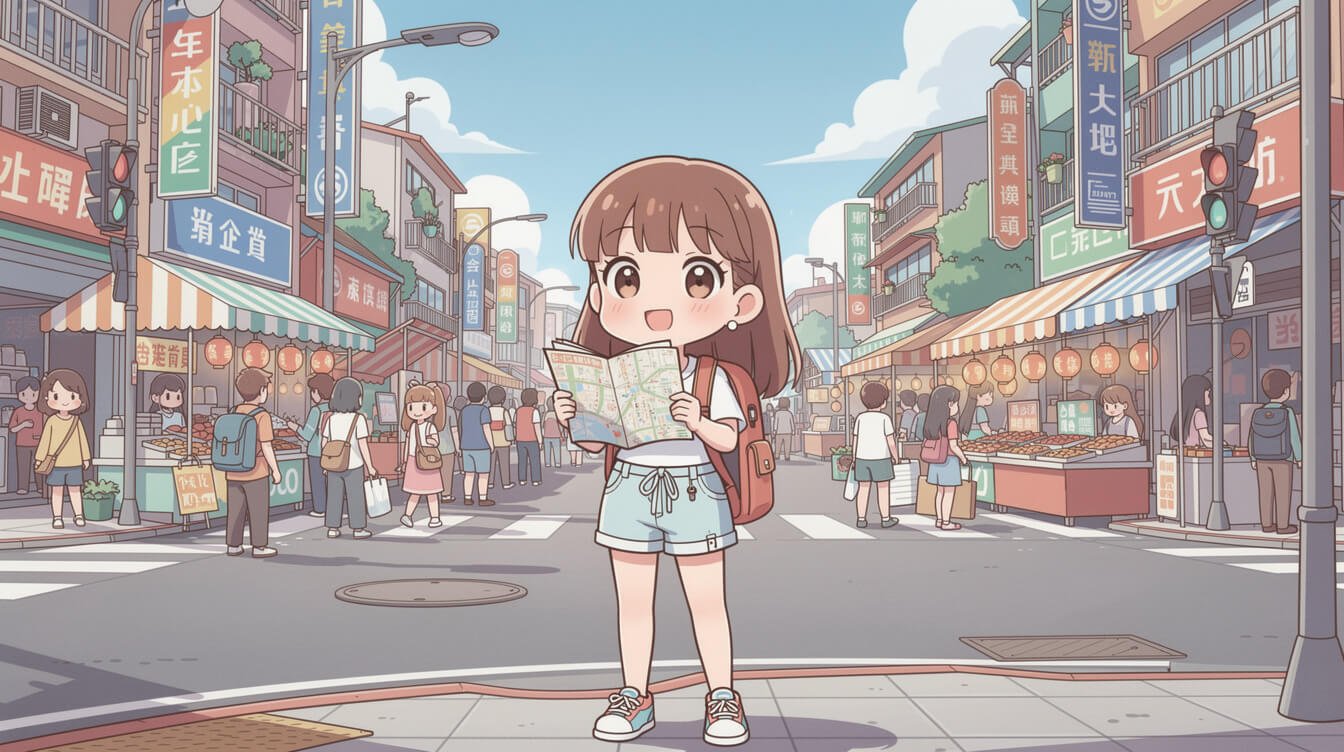
Start with the boring, reassuring facts. Taiwan consistently ranks in the top 5 safest countries in the world on peer-reviewed global safety indices — the Numbeo Crime Index puts it above Japan, Switzerland, and the UAE in most recent years. Violent crime against tourists is vanishingly rare. Petty theft exists but is meaningfully lower than what you’d encounter in almost any European capital.
What that translates to on the ground is simple. You can walk anywhere in Taipei, Kaohsiung, Tainan, or Taichung at any hour and feel comfortable. You can ride a subway at 11 pm. You can leave your bag on a chair while you go order noodles. Nobody’s promising nothing bad has ever happened — pickpockets exist at Shilin Night Market, and there are the usual scams around tourist spots — but the baseline vibe is one of trust and low-key friendliness that visitors from higher-crime countries often find slightly surreal.
The one caveat: Taiwanese people are so used to leaving phones face-up on café tables that they may not warn you not to. Don’t do this. Treat it like anywhere else — bag closed, wallet in front pocket, phone in hand — and the odds of anything going wrong drop to near zero.
The China Question — What Taiwan Travel Safety Really Looks Like Today
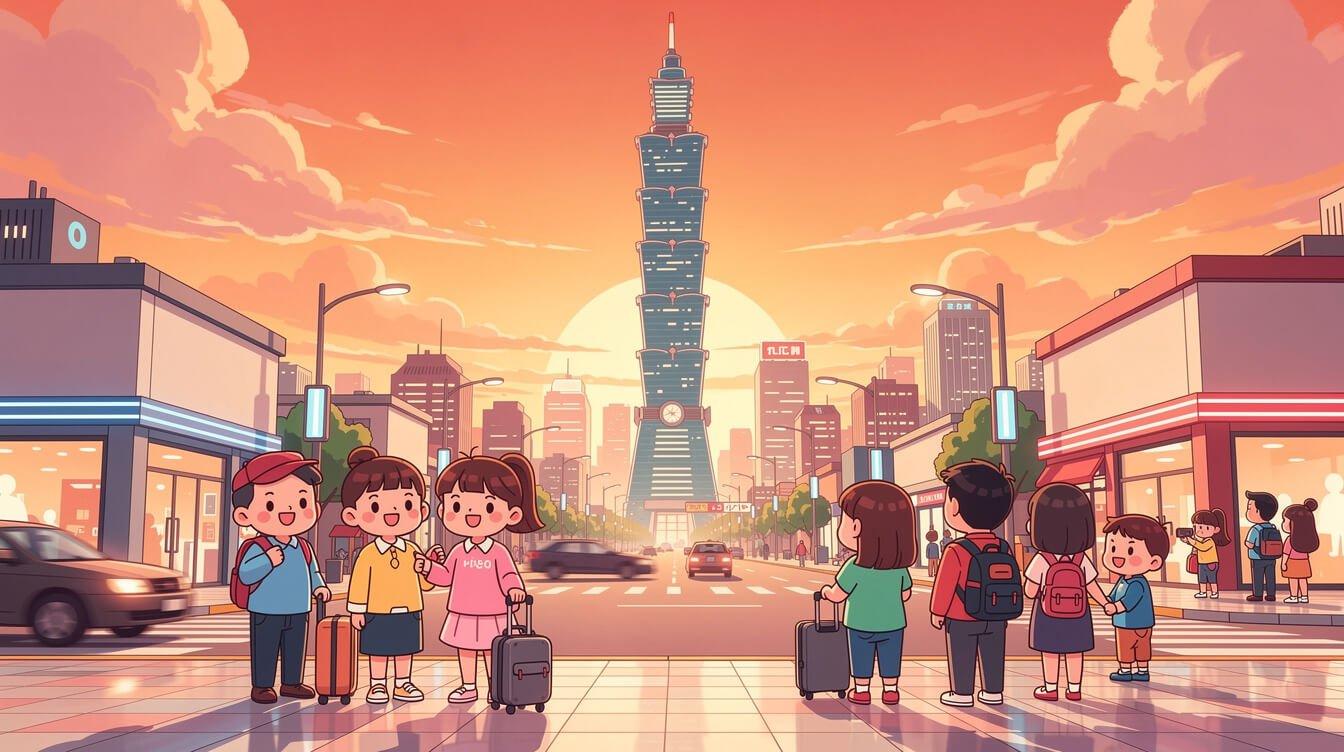
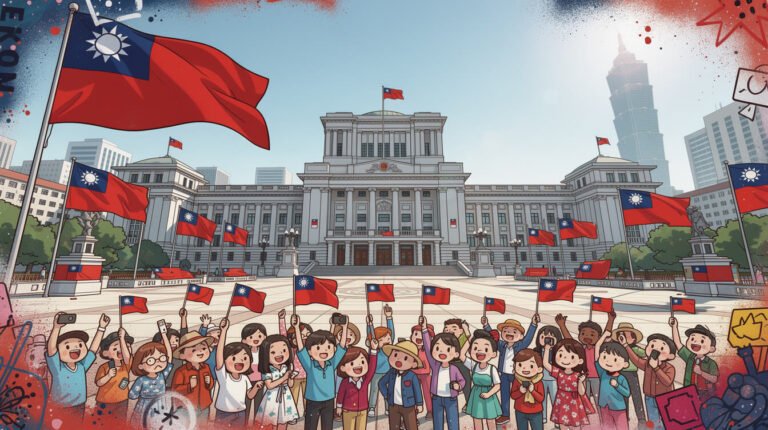
This is the elephant in the Taiwan travel safety room, and it’s the reason most travelers are searching. The short answer: no, cross-strait tensions with the People’s Republic of China are not a reason to avoid a trip in 2026. The longer answer is worth understanding so you can make your own call.
China has never attacked Taiwan. There has not been a single kinetic strike on the main island since the 1950s. What China does regularly do is send military aircraft across the median line of the Taiwan Strait, hold naval exercises in international waters, and issue rhetorical statements. These make international headlines, they’re taken seriously by Taiwan’s military and Taiwan’s allies, and they’re extremely stressful for people who live here. But daily life, for both Taiwanese people and the roughly 8 million tourists who visit the island each year, is completely untouched by them.
Here’s the practical reality. Taipei has never once been evacuated. Flights land and depart normally. Tourists take selfies at Taipei 101 while, in the same week, headlines say “tensions surge.” Both things can be true at once. Taiwan’s own government publishes its Taiwan Travel Advisory equivalents — and they focus on scooter accidents, dengue fever, and typhoon season, not cross-strait conflict.
If you want to know what to actually track: check the US State Department’s Taiwan Travel Advisory (currently Level 1 — “Exercise Normal Precautions” — the same level as most of Western Europe) and enroll in the STEP program if you’re a US citizen. Canadian, Australian, and UK advisories all say the equivalent. If any of those change dramatically, that’s your signal. Until then, book the flight.
For the deeper backstory on how the cross-strait situation actually shapes life on the ground — including the fascinating history of the front-line islands — our guide to Taiwan’s Kinmen Island covers the one place where the Cold War still visibly shapes daily life, and where visiting tourists have been safely landing since the 1970s.
Getting Around: MRT, Trains, and Taxis Are Basically Foolproof
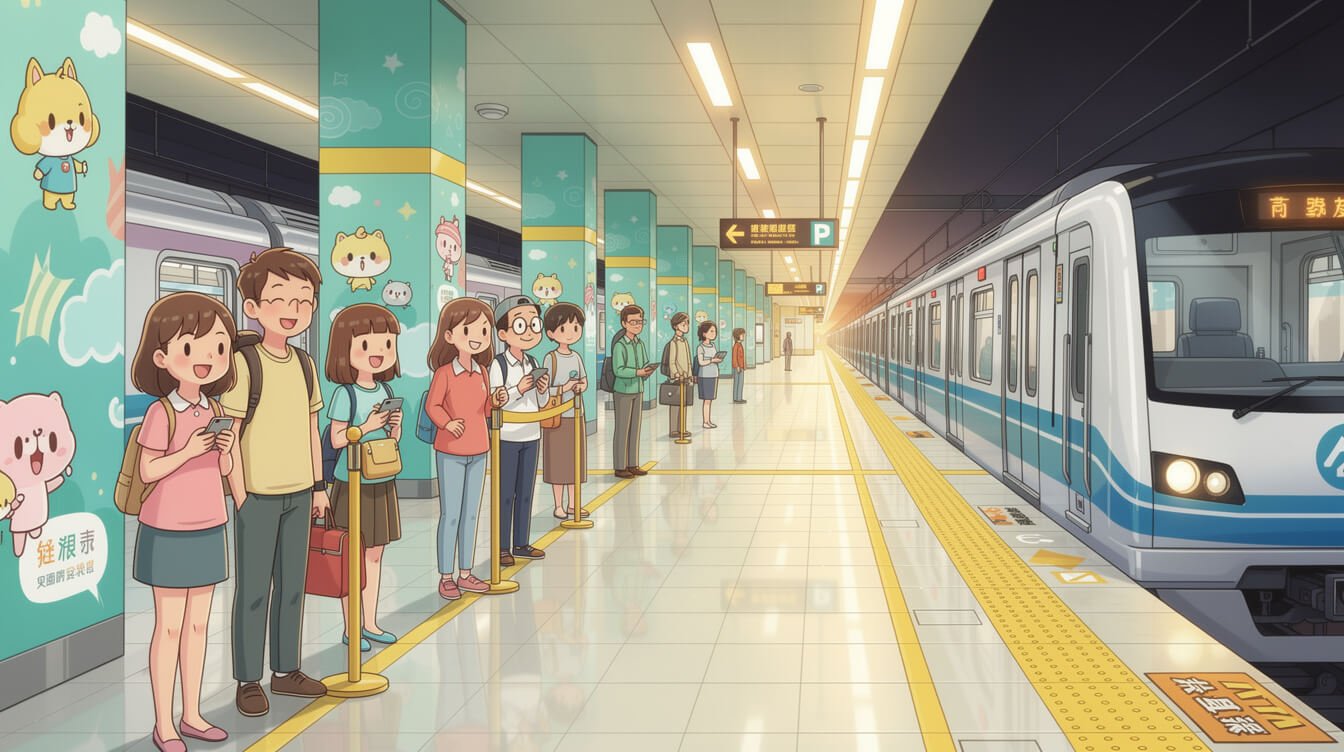
Public transit is where Taiwan travel safety turns from good to almost weirdly excellent. The Taipei MRT is one of the cleanest, most punctual, and most orderly metro systems on the planet. Passengers queue behind painted arrows on the platform. Nobody eats or drinks on the trains — it’s a serious rule and it keeps the whole system pristine. Signage is bilingual (Traditional Chinese + English). Announcements happen in four languages.
The Taiwan High Speed Rail down the west coast (Taipei to Kaohsiung in 90 minutes) is on par with Japan’s Shinkansen for both safety and reliability. Regular TRA trains reach places the HSR doesn’t. And every major city has a well-regulated taxi network — yellow cabs are metered, drivers are almost universally honest, and if you’re nervous about language, the Uber app works nationwide.
Two small tips. First, buy an EasyCard the moment you arrive at the airport — it works on MRT, buses, ferries, trains, YouBike rental, and thousands of convenience stores, and it removes about 90% of the “did I just get scammed” anxiety of navigating a new country. Second, if you’re heading anywhere in Taipei after dark, our neighborhood-level walkthroughs of Xinyi District and Beitou both explain which side of each MRT stop you actually want, so you don’t waste 20 minutes walking the wrong direction from a random exit.
Scooter and Traffic Safety — The One Thing Locals Actually Warn You About
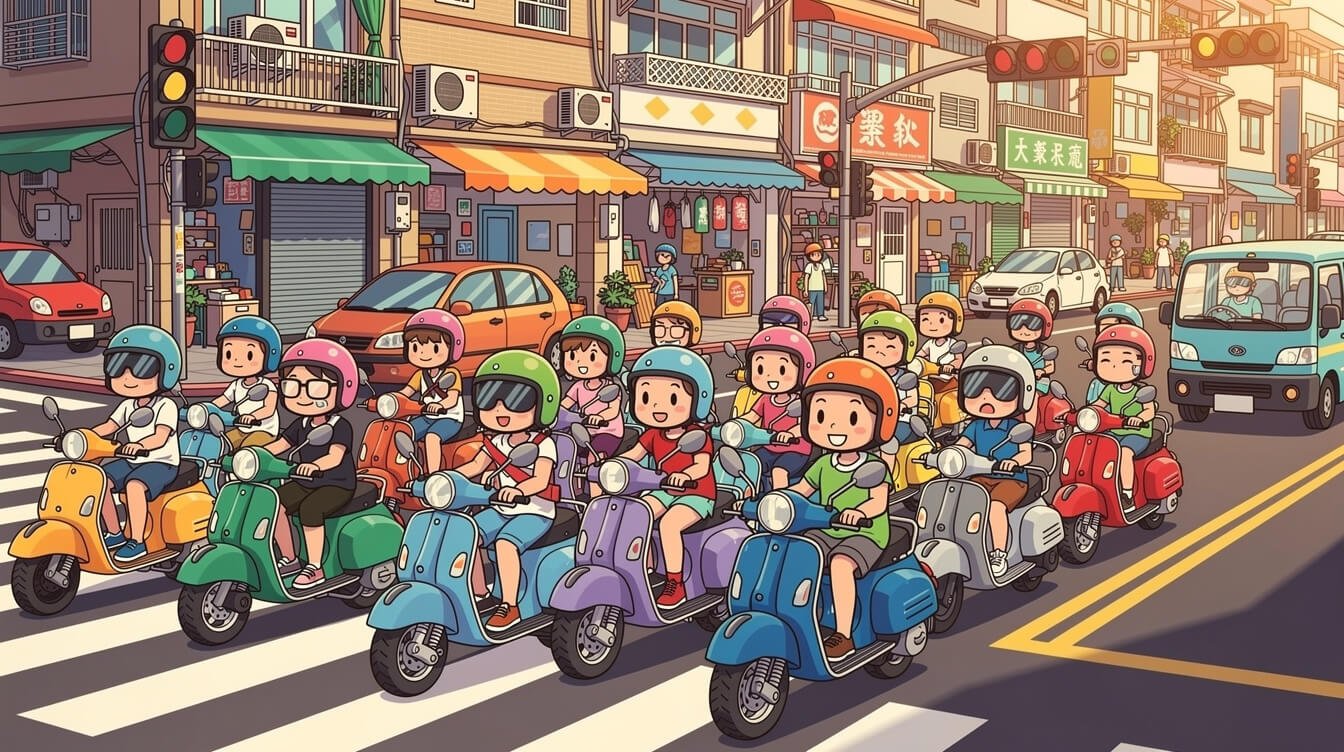
If any local warns you about anything on your trip, it will be scooters. Taiwan has roughly 14 million registered motor scooters — one for every two people — and the swarming waves at Taipei intersections are unlike anything most foreign visitors have seen. Traffic is by far the biggest actual safety risk in Taiwan for tourists, and every reputable travel advisory says the same.
The good news: the risk is manageable if you follow a few rules.
- Cross at marked crosswalks and wait for the pedestrian signal. Taiwan’s pedestrian light system is strictly enforced by cameras now, and drivers are far more likely to yield than they were even five years ago. Just don’t jaywalk — the “scooter wave” doesn’t stop for guessers.
- Do not rent a scooter on your first day. If you’ve never ridden one, Taipei is a bad place to learn. If you’re an experienced rider and want to explore rural Taitung, Kenting, or Hualien on two wheels, wait until you’re out of the big cities.
- Wear the helmet. It’s the law. Rental shops provide them. Wear it even for a five-minute trip.
- Look right before stepping onto any street. Scooters filter down the right shoulder, so the danger is always coming from a direction you’re not looking.
The vast majority of tourist injuries in Taiwan involve scooters — either as pedestrians misjudging the flow, or as riders on their first day of rental. Handle those two situations well and your practical safety risk drops enormously.
Food, Water, and Night Market Safety

Taiwanese street food is legendary, and Taiwan travel safety around food is much less complicated than most first-time visitors expect. Health inspections are frequent and take-no-prisoners, food-borne illness rates are lower than most of the region, and the busiest stalls at night markets rotate their ingredients so fast that freshness basically takes care of itself.
A few practical rules cover most concerns:
- Tap water is not for drinking, but it’s totally fine for brushing teeth, washing produce, and cooking. Bottled water is cheap and universally available at 7-Eleven and FamilyMart, which cover the country roughly the way convenience stores cover Japan.
- Follow the crowd at night markets. If a stall has a line of locals, it’s clean and delicious. If it looks empty at 8 pm on a Saturday, there’s usually a reason.
- Ice at reputable cafés, chain restaurants, and bubble tea shops is safe. It comes from filtered municipal supplies. The old “no ice in Asia” rule doesn’t really apply here.
- If you have serious allergies, learn the character for your allergen. Peanut = 花生, shrimp = 蝦, wheat = 小麥. A photo of the character on your phone works far better than trying to explain in English at a busy stall.
Bring back a piece of the story too. If Taipei 101 or the earthquake-engineering angle in this article catches your imagination, our Taipei 101 Built to Sway T-Shirt is a minimalist tribute to the tuned mass damper that keeps Taiwan’s most famous building standing through both typhoons and quakes — a great low-key souvenir that actually means something.
Typhoons, Earthquakes, and Taiwan’s Natural Hazards

Taiwan sits directly on the Pacific Ring of Fire and directly in the path of the Northwest Pacific typhoon corridor. It has about 100 earthquakes strong enough to feel every year, and 3 or 4 typhoons make landfall or brush the coast in a typical July-through-October season. That sounds terrifying if you’ve never lived with it — but Taiwan is arguably the world’s best-prepared country for both.
Buildings on the island are engineered to sway rather than snap in earthquakes. Taipei 101, all 508 metres of it, contains an 660-tonne tuned mass damper — a gold-plated pendulum you can visit — that quietly cancels out the building’s motion in both quakes and typhoons. Schools drill children on earthquake response the way American schools drill fire alarms. The Central Weather Administration issues alerts, often via a nation-wide phone push, before you feel the shaking begin.
What this means practically: if you feel an earthquake, drop, cover, and hold on under a sturdy table for 30 to 60 seconds. Don’t run outside — falling glass is the biggest actual risk in cities. Once shaking stops, walk (don’t sprint) to an open area.
Typhoons are actually easier to handle because they come with several days’ warning. If the Central Weather Administration issues a Land Warning (“陸上警報”), local governments announce a Typhoon Day — schools close, non-essential workers stay home, and the trains stop running. Follow the local rhythm: stock up on convenience store food the night before, stay indoors while it passes, and enjoy a very quiet Netflix day. For the full story of Taiwan’s uniquely charming typhoon-day culture — including how mayors announce the day off on Facebook Live — read our Taiwan Typhoon Day guide.
If you’re planning a summer trip and want to time it away from typhoon peaks, our detailed Taiwan travel packages buyer’s guide breaks down which months carry which weather risks and how tour operators price around them.

Wear the Earthquake Engineering
A minimalist tribute to the building that sways so its people don’t have to. Perfect gift for the traveler who fell in love with Taiwan — and the engineering geeks who want to know why the tower barely blinks at 5.8-magnitude quakes.
Emergency Numbers, Healthcare, and What to Do If Something Goes Wrong
Even in one of the world’s safest countries, things go sideways — you get sick, you lose a passport, you have a scooter accident. Here’s the concise playbook so you don’t have to search in a panic.
The four numbers to save in your phone right now
- 110 — Police (English-speaking dispatch available in major cities)
- 119 — Fire and ambulance
- 0800-011-765 — 24-hour tourist information hotline (English, Japanese, Korean)
- 1922 — Central Epidemic Command Center / general health hotline
Healthcare works — and it’s cheap
Taiwan’s National Health Insurance system is world-class, and while foreign visitors don’t have coverage, they can walk into any clinic or hospital and receive excellent care for out-of-pocket rates that will genuinely shock Americans. A GP visit is typically $15–30 USD. A basic emergency room visit is $50–100. Prescriptions are dispensed on-site. English-speaking hospitals in Taipei include Taipei Adventist Hospital, National Taiwan University Hospital, and Cathay General Hospital.
Lost passport
Report to the police (a report is required for the replacement), then contact your country’s representative office in Taipei — the US operates AIT (American Institute in Taiwan), and most other countries have equivalent trade offices that perform full consular functions. Replacements typically take 5–10 working days.
Frequently asked safety questions
Is solo female travel in Taiwan safe? Yes, and remarkably so. Taiwan is consistently ranked among the top destinations globally for solo female travelers. Late-night MRT rides, walking home from night markets, staying in hostels — all comfortably safe. The usual travel awareness applies, but the baseline risk is genuinely low.
Is Taiwan safe for LGBTQ+ travelers? Yes. Taiwan was the first country in Asia to legalize same-sex marriage (2019), Taipei hosts the largest Pride march in East Asia every October, and cities are broadly welcoming. Rural areas are more conservative but rarely hostile.
Are Taiwan tap water and food safe for kids? Food yes, tap water for cooking and washing yes, for drinking use bottled or filtered. Baby formula and diapers are cheap and widely available. Public spaces are extraordinarily kid-friendly — Taipei even has stroller-priority MRT cars.
Do I need travel insurance for Taiwan? Yes, always — not because Taiwan is dangerous, but because scooter accidents and hospital visits are the two most common tourist claims, and they’re both cheaper to pay for with insurance than out of pocket at emergency rates.
What about scams? Taiwan has fewer scams than almost any tourist destination in Asia. Watch for the “friendly art student invites you to a tea ceremony” scam in Ximending (rare, but exists), and always confirm taxi fares are metered. That’s basically the entire scam landscape.
Final Thoughts — Taiwan Is Safer Than the Headlines Suggest
If you scroll global news, you’d think Taiwan was on the brink. If you actually visit, you’ll find an island where the biggest daily safety concern is remembering to look right before crossing the street. That gap between perception and reality is basically the whole story of Taiwan travel safety in 2026.
The people are famously kind. The subway is famously clean. The food is famously excellent and, yes, famously safe to eat. The buildings are engineered for quakes. The emergency response is fast. And the “geopolitical risk” that fills your search results has, in practical terms, changed absolutely nothing about what a trip looks like from the ground.
Pack light, wear the helmet, download the CWA earthquake alert app, buy the EasyCard, and go. Taiwan is one of those places that quietly rewards travelers who show up open-minded — and it’s safe enough that you can spend zero mental energy on safety and 100% of it on figuring out which night market has the best oyster omelet.
Postcards from Taiwan, in Your Inbox
Get one honest, useful Taiwan story per week — travel tips, culture deep-dives, artisan spotlights, and new merch drops. No spam, unsubscribe anytime.

Grab a Free Taiwan Sticker!
Drop your email and we’ll send you a limited-edition Taiwan sticker — plus insider access to new merch drops and island vibes.
No spam. Unsubscribe anytime.