Taiwan Native Dog: The Formosan Mountain Dog, the Tugou, and the Truth About Both
Ask ten people in Taipei what a Taiwan native dog actually is and you will get at least three answers. One will point at a lean black dog trotting along a riverside park and call it a tugou. One will tell you the real thing only lives in the mountains with indigenous hunters. One will show you a kennel-club pedigree and a price tag. All three are describing something real, and the gap between them is the most interesting story on this island that nobody bothers to tell properly.
Search the English-language internet for this animal and you get two kinds of page: an American breed-registry care sheet listing grooming frequency and puppy prices, or a rescue charity’s adoption funnel. Both are useful if you already want to own one. Neither tells you why this dog matters in Taiwan, how it got here, why it nearly disappeared four separate times, or what its relationship is to the thousands of free-roaming dogs you will actually meet on a trip.
That is what this guide is for. We are going to sort out the names, the ages, the markers locals use, the four historical catastrophes, the genetics argument that is still unresolved, and the street-dog reality that the breed story is usually told instead of. By the end you will be able to look at a dog outside a temple in Tainan and read it — and know what to do with your hands when it looks back at you.
What Is the Taiwan Native Dog? Three Names for One Animal
Start with vocabulary, because almost every argument about this animal is really an argument about which word someone is using.
Taiwan Dog (台灣犬) is the formal, registry name. It is what the Fédération Cynologique Internationale recognises under Standard N° 348, and what the American Kennel Club lists in its Foundation Stock Service — the waiting room breeds pass through on the way to full recognition. When a document says Taiwan Dog, it means a specific written standard: proportions, coat length, bite, tail set.
Formosan Mountain Dog (福爾摩莎犬) is the romantic name, borrowed from the Portuguese Ilha Formosa, and it carries an implication the registry name does not — that the animal belongs to the high forested interior rather than to a breeder’s yard. Under Japanese rule the same dog was called the Takasago dog (高砂犬), after the Japanese term for Taiwan’s indigenous peoples. Every name this animal has ever had is a name somebody else gave it.
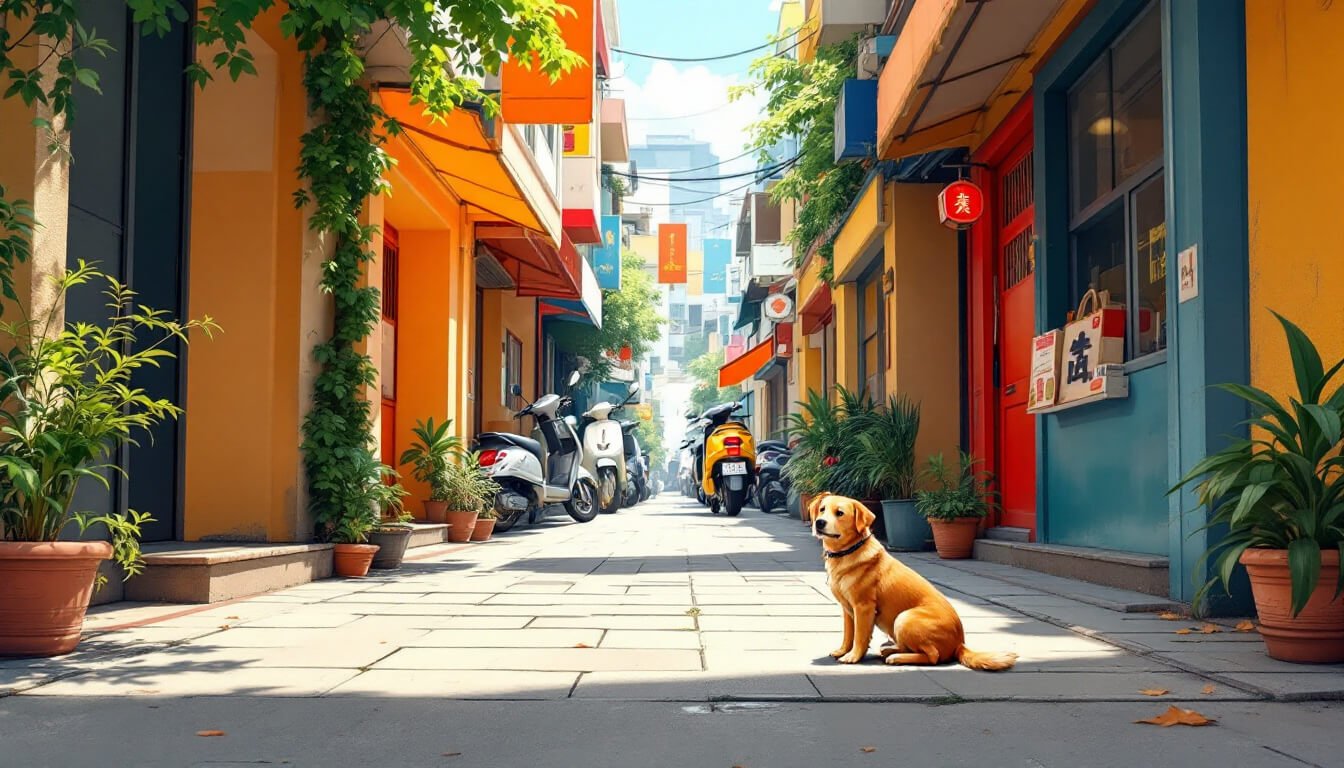
Tugou (土狗) is what people actually say. It translates roughly as “dirt dog” or “local dog,” and it is the everyday word for the short-coated, sickle-tailed, medium-sized dogs that are simply here — in lanes, on riverbanks, outside breakfast shops, asleep in the shade of parked scooters. A related word you will hear is mikesi (米克斯), a straight transliteration of the English “mix,” used affectionately for rescued mixed-breed dogs.
Here is the crucial bit: tugou is a much bigger category than Taiwan Dog. Every registered Taiwan Dog is a tugou. Only a small fraction of tugou would satisfy a judge. Enthusiasts police that line hard. Most people on the street do not police it at all, and that is a perfectly defensible position — as you will see when we get to the genetics.
We wrote a short profile of this animal a while back as part of our Formosan Mountain Dog snapshot; this guide is the long version, with the parts that snapshot had no room for. If you like Taiwan’s endemic animals generally, the Taiwan blue magpie won the island’s unofficial national-bird vote in a landslide, and the Formosan black bear is the closest thing Taiwan has to a national mammal. The dog occupies a stranger position than either: it is the only one of the three that lives in the street with you.
How Old Is the Taiwan Native Dog, Really?

You will see three different ages quoted for the Taiwan native dog, often in the same article, and they are not actually in conflict — they are measuring three different things. Sorting them out is the fastest way to understand what this animal is.
“Ten to twenty thousand years.” This is a claim about lineage. Genetic work places the ancestral population of these dogs deep in the prehistory of East and South Asian dogs, well before anything that could be called a breed existed anywhere on earth. It is a statement about where the branch sits on the tree, not about Taiwan.
“Four to six thousand years.” This is a claim about Taiwan specifically — the window in which Austronesian-speaking peoples settled the island and began the expansion that eventually populated half the Pacific. The dogs came with them, or arrived alongside them, and stayed. If you want the full picture of that migration, our guide to Taiwan’s indigenous peoples covers how a single island seeded languages from Madagascar to Easter Island. The dog is a passenger on that same boat.
“Since 1980.” This is a claim about the breed, and it is the one nobody likes to say out loud. A written standard, a stud book, a registry and a judge’s eye are all twentieth-century inventions. The Taiwan Dog as a formally described breed dates to the research and advocacy of the last fifty years, not to antiquity.
A five-year survey led by Dr. Sung Yung-yi of National Taiwan University between 1976 and 1980 is the hinge of the whole story. His team visited 29 indigenous villages across the mountain ranges looking for unmixed dogs. They located roughly 160 candidates. Only 46 were graded top-rank for purity — 25 males and 21 females. That number was low enough to reach the UN’s Food and Agriculture Organization as a conservation concern. A parallel study with Japanese researchers from Gifu and Nagoya universities concluded these dogs descended from South Asian hunting dogs that had accompanied early settlers.
Then genetics complicated it. Commercial canine DNA analysis of dogs sampled from indigenous villages in several regions — plus dogs exported abroad as Formosan Mountain Dogs — found them largely indistinguishable from what researchers call the East Asian Village Dog: the enormous, ancient, unbred population of free-living dogs that make up most of the world’s roughly one billion dogs. Village dogs are not strays, because they never had a home to stray from, and not mongrels, because they are not mixtures of purebreds. They are a landrace — a geographically shaped population that has been living around humans, largely on human refuse, for millennia.
So is the Taiwan native dog an ancient breed, or a recent breed assembled from an ancient landrace? The honest answer in 2026 is that the evidence supports the second reading while the cultural claim rests on the first — and the cultural claim is not thereby worthless. A dog that has lived on this island for thousands of years, adapted to its terrain, hunted alongside its people and survived four deliberate attempts to erase it has a legitimate claim on the word “native,” whatever the stud book says.
The Hunter’s Dog: What It Actually Did in the Mountains
Function explains anatomy. Everything odd about this dog’s body makes sense once you know the job.
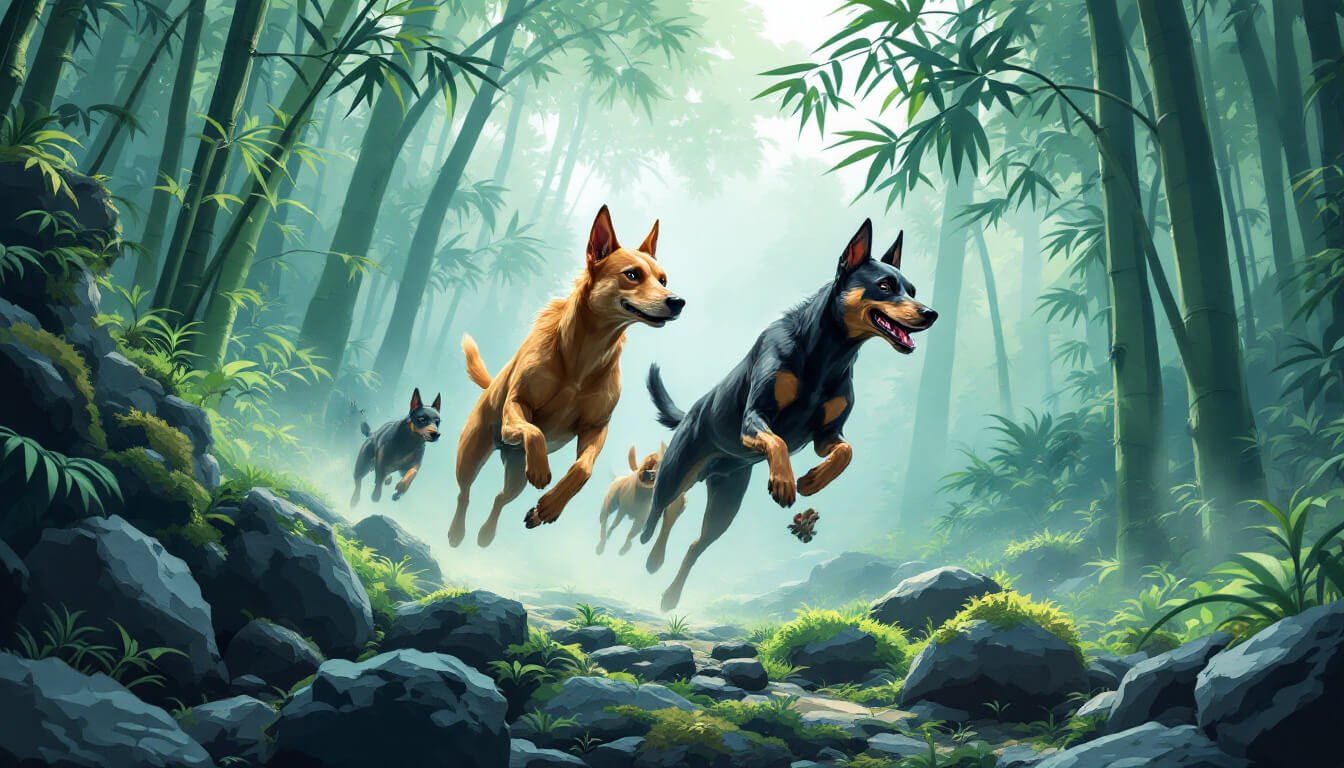
Boar hunting in Taiwan’s interior is not a matter of a big dog holding a big animal. A wild boar outweighs any dog on this island several times over and carries tusks that open a dog from sternum to flank. The technique documented among indigenous hunters used five or six dogs working as a unit: circle the boar, dart in, wound, release immediately, retreat, repeat. Nobody holds a bite. The pack cycles until the animal is exhausted enough for the hunter to finish it.
That single rule — bite and let go — is why the Taiwan native dog moves the way it does. It needs to be able to reverse a 180-degree turn inside its own body length. Hence the nearly square frame, the deep but not exaggerated chest, the tucked belly, the light, springy gait. The breed is also known for a lateral hop: startled or sizing up a target, it will bounce sideways, back and forth, in a way that looks almost comic until you realise it is a threat assessment being carried out at speed.
The coat is a mountain coat: short, hard, lying tight, roughly one and a half to three centimetres long. It sheds water and burrs and dries fast. The tail is the tell — a sickle, set high, carried erect with the tip curving forward, thickly furred on top while the belly stays nearly bare. Working dogs sleeping rough in the mountains curl up and lay that tail across the exposed belly. Some are long enough to reach the snout and keep insects off it. The dog is, in the most literal sense, carrying its own blanket.
These dogs shared the forest with the animals we now treat as endemic celebrities — the Formosan rock macaque, the sambar, the serow, the black bear. They were not pets in that setting. They were equipment, colleagues and alarm systems, and they were fed accordingly: not much. Dr. Sung’s field notes describe dogs that found their own food and vanished for months to whelp in caves, returning with a litter at heel. Semi-wild is the right word for what they were.
How to Spot a Taiwan Native Dog: The Markers That Actually Matter
You do not need a pedigree to read a dog. Locals use a short checklist, and it is genuinely useful on a street in Kaohsiung or a trailhead car park in Nantou.
1. The triangular head and almond eyes
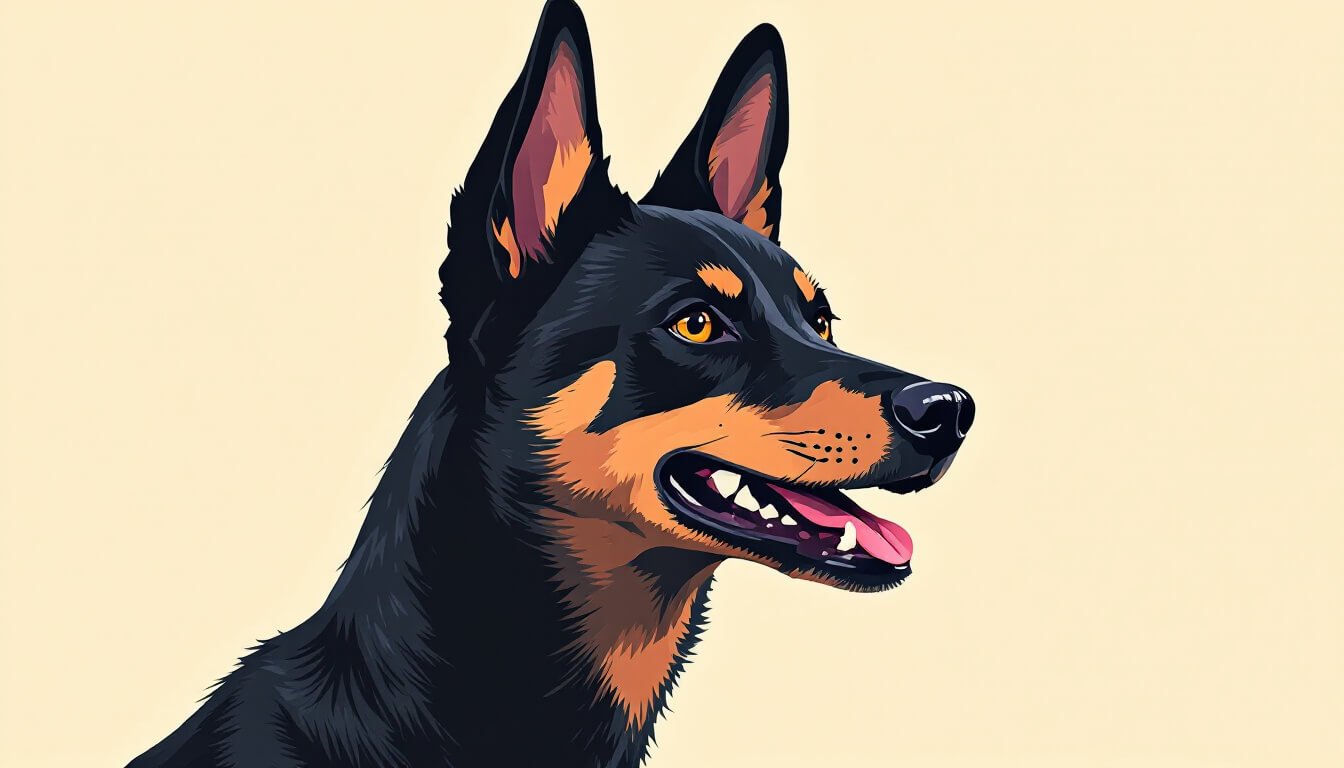
Look down at the dog from above and the skull-plus-muzzle should form a clean wedge, the skull slightly longer than the muzzle, cheeks well developed, no wrinkle. The eyes are almond-shaped and dark brown — round eyes or pale yellow eyes read immediately as mixed. The expression is alert rather than soft.
2. Thin pricked ears set at an angle
The ears are thin, carried erect, set on the sides of the skull at roughly 45 degrees rather than straight up on top like a shepherd’s. Floppy ears mean a mix, full stop — though a young dog’s ears may still be coming up, so give a puppy time before judging it.
3. The sickle tail
Set high, carried erect and active, curving forward at the tip. A tightly curled doughnut tail over the back suggests Akita or Chow ancestry; a low, straight, otter-ish tail suggests something else again. The sickle is the silhouette that makes a tugou recognisable from fifty metres in the dark.
4. Dark spots on the tongue
Black or blue-black pigment on the tongue is one of the most-cited markers of the Taiwan native dog. It is a genuine indicator, though not exclusive to this population, and plenty of unmixed-looking dogs show only a fleck. Nobody sane goes around opening strange dogs’ mouths — treat this as confirmation when a dog yawns at you, not as a test to administer.
5. Size and colour
Males stand about 48–52 cm at the withers and weigh 14–18 kg; females run 43–47 cm and 12–16 kg. That is a medium dog — think “leggy, light, no bulk anywhere.” The standard permits black, brindle, fawn, white, and those colours broken with white. On the street, black and brindle dominate to a degree that puzzles geneticists, since village dogs worldwide skew sandy tan.
The registry’s own summary is a decent field guide in one line: a medium-sized dog with a triangular head, almond-shaped eyes, thin pricked ears and a sickle tail, extremely faithful to its person, keen in sense, alert in movement, bold and fearless.
Four Catastrophes: How Taiwan Nearly Lost Its Native Dog

Dr. Sung framed the history as four catastrophes. It is a useful frame, because each one damaged the population in a different way, and together they explain why finding an unmixed dog in 1976 was so hard.
The Dutch, from 1624
The Dutch East India Company built its base at Tayoan, in what is now Anping in Tainan, and went hunting. Their target was the Formosan sika deer, whose skins they exported by the million — somewhere between two and four million hides over roughly six decades, a trade that helped drive the subspecies out of the wild entirely. For it they imported a lanky European hunting dog Taiwanese records call the “flying dog,” most likely a greyhound or pointer type. It bred with the local dogs. The Dutch also barred indigenous communities from keeping dogs and killed large numbers outright. First contact, first dilution, first cull.
Japanese rule, 1895–1945
The colonial administration pushed roads and military posts deep into the interior — precisely the terrain that had been keeping the mountain population isolated and intact. Military dogs came with the posts and bred with local dogs. Accounts from the period describe deliberate culls, justified on sanitation grounds, of an animal the colonial authorities dismissed as a “barbarian dog” for refusing to be kennelled, feeding itself, and denning in caves to whelp. The mountains stopped being a refuge.
The war years
Wartime scarcity did what wartime scarcity always does to animals that are not, strictly speaking, food or transport. Populations crashed, records stopped, and the survivors were whoever was nearest a household that could still feed them.
The post-1945 era
Two changes arrived together. A dog-eating custom brought by some new arrivals put direct pressure on free-roaming dogs — a practice Taiwan has since decisively repudiated in law. At the same time, the island’s opening to imported pedigree dogs meant German shepherds, Akitas, huskies and pit bulls arriving in waves, being abandoned in waves, and breeding freely with the local population. Modern tugou carry that history in their faces. It is the reason today’s street dogs look more varied, and often heavier, than the wiry little dogs photographed beside indigenous hunters a century ago.
Against all that, the conservation effort is remarkable. Chen Ming-nan spent three decades running a Formosan Mountain Dog conservation centre and years combing indigenous villages for unmixed stock; the criteria he developed underpin the standard in use today, and unusually, he insisted on behaviour as well as morphology — nerve, scenting ability, loyalty — as a condition of acceptance. Advocates today estimate only about 3,000 dogs in Taiwan meet the “pure” bar, of which perhaps a tenth are considered breeding-suitable and perhaps a hundred are top specimens. Whether you regard that as rescuing a lineage or as building a modern breed from a landrace, the work kept an idea alive.
Tugou: Taiwan’s Street Dogs Are the Real Story
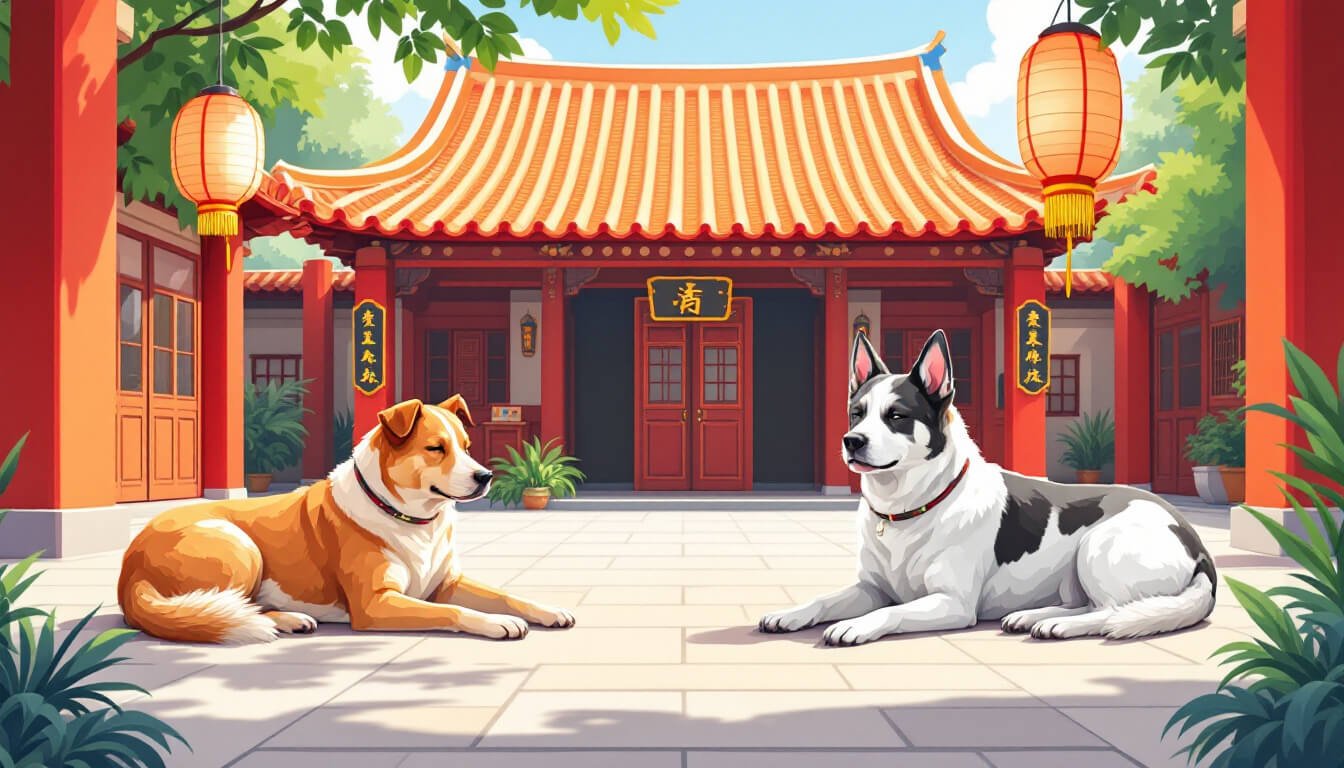
Here is the thing the breed pages leave out. If you spend two weeks in Taiwan, you will meet hundreds of dogs, and almost none of them will be registered anything. They will be tugou: black, brindle, tan, white-chested, sickle-tailed, unbothered, dozing on temple flagstones and outside 7-Elevens and under the awnings of night markets waiting for something to hit the floor.
Taiwan’s relationship with these dogs has changed enormously in one generation. In 2017 the island stopped euthanising unclaimed shelter animals, making it one of the first places in Asia to adopt a no-kill shelter policy; the same year, an amendment to the Animal Protection Act banned the sale and consumption of dog and cat meat, with real penalties attached. Both were genuine milestones, and both had consequences: no-kill without enough adoptions means crowded shelters, which is exactly the pressure that has made trap-neuter-vaccinate-return the backbone of community dog management. Those ear-tipped dogs you see — a neat clipped corner on one ear — have been sterilised, vaccinated and returned to a neighbourhood that knows them.
Community dogs are common: fed by a shop, a temple, a market stall or a whole lane, collectively rather than individually owned. The dog outside the noodle shop is not homeless in the way a Western visitor assumes. It has a territory, a feeding schedule, a name from at least three people and a strong opinion about scooters.
Adoption culture has shifted with it. “領養代替購買” — adopt, don’t shop — is a mainstream slogan here, not an activist fringe position, and rescued tugou are now ordinary family dogs in middle-class apartments, off-leash in riverside parks in packs while pedigree dogs watch from the ends of their leads. The dog that would have been chased off a construction site in 1990 is now somebody’s furry firstborn with a raincoat.
Which is why we would gently push back on the framing that street dogs are a footnote to the “real” native dog. It is the other way round. The tugou population is the living native dog of Taiwan; the registry breed is a curated sample of it. When Taiwanese designers draw a pointy-eared black dog with a curved tail, the animal they are drawing is the one in the lane.
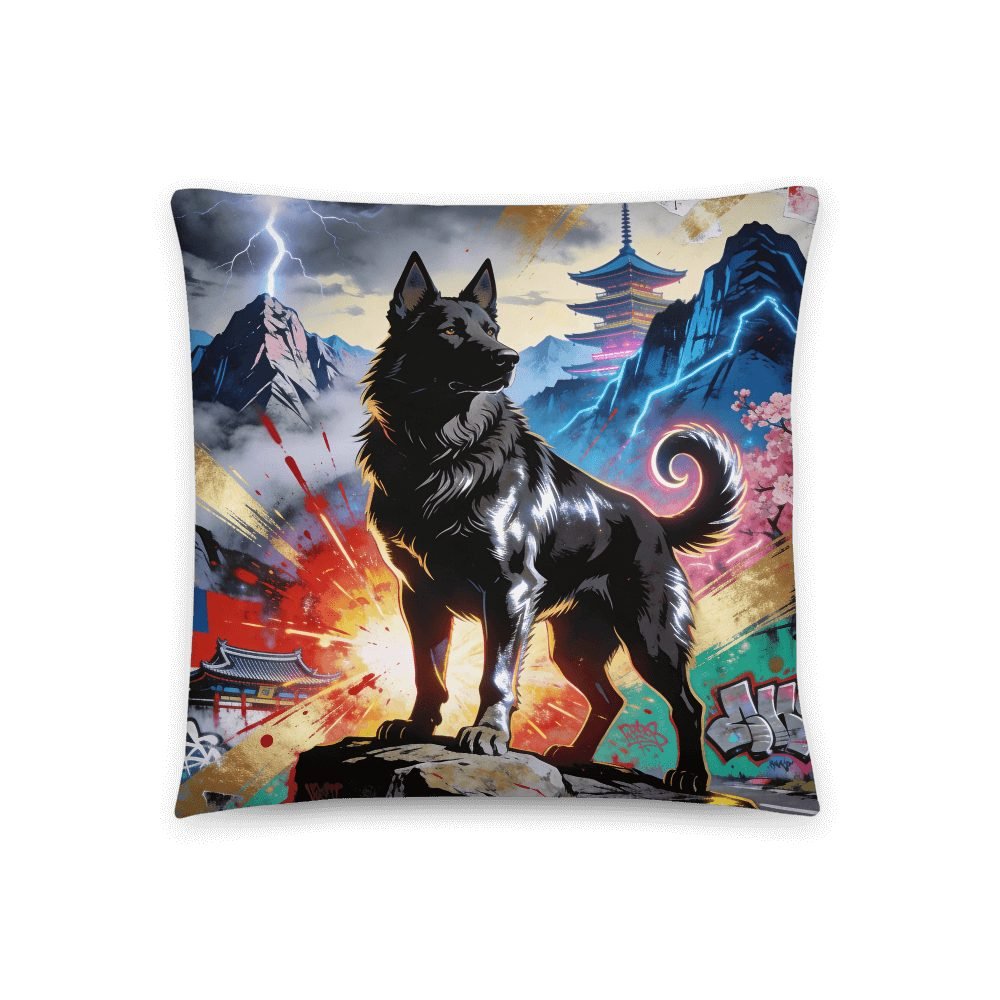
The Island’s Own Dog, in Street-Art Colour
Pointed ears, sickle tail, neon blossoms — our Formosa Mountain Dog design puts Taiwan’s guardian on your sofa. Original art, printed on demand, shipped worldwide.
Meeting, Adopting and Living With a Taiwan Native Dog
Three practical questions come up constantly, so let us take them in order: how to behave around these dogs in Taiwan, how the overseas adoption pipeline actually works, and what living with one is really like.
On the street: what to do with your hands
Free-roaming dogs in Taiwan are overwhelmingly relaxed around people, because people have been feeding them for generations. The etiquette is simple. Do not approach a dog that is lying down and minding its business; let it come to you. Do not reach over the top of the head — offer a loose hand low and let it make the choice. Do not feed a community dog near a shop that is already feeding it, and never feed one anything from a night-market stick. Give a wide berth to any dog near puppies, any dog eating, and any dog on a mountain trail that starts barking with its tail up: that one is working, not greeting.
If you actively want to see these dogs, you barely have to try. Riverside parks in Taipei at dusk are full of off-leash tugou in play groups; temple courtyards anywhere in the south have at least one resident; trailheads in Yangmingshan and around Kenting nearly always have a semi-official mascot dog who will walk you part of the way up and then turn around at exactly the point it considers the end of its territory.
Adopting from abroad
Taiwanese rescue groups have run an organised overseas adoption pipeline for years, sending dogs mostly to the United States and Canada, some to Europe. In practice it means a home check, an application with references, an adoption fee that typically covers vetting and international flight costs, and a flight volunteer — an ordinary traveller who agrees to check a crate as accompanied baggage on a route they were flying anyway. Waits of several months are normal, and any group that does not ask you hard questions is a group to be wary of.
One honest note. A dog described as a Formosan Mountain Dog by a rescue is, in the overwhelming majority of cases, a tugou of uncertain mix, and that is fine — but it means you should adopt on the strength of that individual animal’s temperament assessment, not on a breed description you read online.
Temperament, honestly
The stereotype is accurate more often than stereotypes usually are. Expect a clever, athletic, intensely loyal dog that bonds very hard, frequently to one person, and is reserved-to-suspicious with strangers until it decides otherwise. Expect a dog that learns fast in both directions: it will pick up recall in a week and a bad habit in an afternoon. Expect real exercise needs — this is an animal built to work a mountain, and a walk around the block will not touch it. A nervous or under-socialised individual can tip into fear-reactivity, and the fix is patience and distance, never confrontation. Give one a job, a routine and a person, and it is one of the most rewarding dogs on earth.
The dog as design icon
Watch what Taiwanese illustrators do with this animal and you will notice the same shorthand everywhere: wedge head, upright triangles, that curved tail. It has become visual shorthand for the island itself in a way that runs parallel to characters like BugCat Capoo — homegrown, affectionate and a little scruffy on purpose. We drew our own take on it for the Formosa Mountain Dog throw pillow, guardian pose and all, because a dog that survived four centuries of people trying to breed it out of existence has earned a place on the sofa.
Taiwan Native Dog: Frequently Asked Questions
Is the Taiwan native dog the same as the Formosan Mountain Dog?
Yes — Taiwan Dog, Formosan Mountain Dog and Takasago dog all refer to the same animal, with the first being the registry name and the second the traditional and more romantic one. The everyday Taiwanese word tugou covers a much wider population of local and mixed dogs that includes, but is not limited to, the registered breed.
Is it Taiwan’s national dog?
It is widely described as a national treasure and functions as an unofficial national dog, but Taiwan has no statutory national animal. The Formosan black bear serves the same role for mammals, and the Taiwan blue magpie won a public vote for national bird in 2007. The dog’s status is cultural rather than legal.
How rare is a purebred Taiwan Dog?
Rare. Advocates estimate roughly 3,000 dogs in Taiwan that meet the standard, with perhaps 100 considered top specimens. Meanwhile there are tens of thousands of free-roaming and sheltered tugou across the island, most of which carry at least some of the same ancestry.
Are Taiwan street dogs dangerous to tourists?
Overwhelmingly no. The great majority are habituated to people and indifferent to you. The realistic risks are a territorial dog on a rural or mountain road reacting to a fast-moving scooter or cyclist, and a dog guarding puppies or food. Slow down, do not run, do not stare, give space, and incidents are very unlikely. Rabies exists in Taiwan’s wild ferret-badger population, so any bite from any animal should be seen by a doctor promptly.
Can I bring a Taiwan dog home with me?
Yes, through a registered rescue rather than by picking up a dog yourself. Expect vaccination and rabies-titre requirements, an export health certificate, your own country’s import rules, and several months of process. Rescue groups handle this routinely and will walk you through it.
Do Taiwan native dogs really have black tongues?
Many have dark blue-black pigment spots on the tongue, and it is one of the traditional identifying markers, but it is not universal within the population and not unique to it. Treat it as supporting evidence rather than proof.
What does tugou actually mean?
Literally “earth dog” or “dirt dog” (土狗), meaning local, of this place. It can be neutral, affectionate or faintly dismissive depending entirely on tone — much like “mutt” in English, and increasingly it is said with pride.
Final Thoughts
The Taiwan native dog is not a rare animal hidden in the mountains. It is the dog asleep in the doorway of the breakfast shop you walked past this morning, and the one that followed you fifty metres up a trail and then went home. The registry version — the wedge head, the sickle tail, the stud book — is a real and carefully preserved thing, and it is also a photograph taken of a much larger, much older, still-moving population.
What makes the story worth telling is not the pedigree. It is the persistence. Four separate historical forces tried to dilute, displace or destroy these dogs, and they are still here, still shaped the same way, still hopping sideways at things they are unsure about. In one generation Taiwan went from culling them to legislating for them, and from chasing them off to adopting them into apartments.
So when you are here, look down more often. The island’s most underrated cultural artefact has four legs, is probably black, and is watching you decide whether to share your sausage.
A Postcard From Taiwan, Every Week
Culture stories, food deep-dives, travel tips, and first looks at new designs — straight to your inbox. No spam, just Taiwan.

Grab a Free Taiwan Sticker!
Drop your email and we’ll send you a limited-edition Taiwan sticker — plus insider access to new merch drops and island vibes.
No spam. Unsubscribe anytime.