Hsinchu, Taiwan: The Windy City That Built Itself on Rice Noodles, Glass and Chips
Type Taiwan Hsinchu into a search bar and you get a Wikipedia page, a government sister-cities listing, a thin official tourism blurb, and — sitting high on page one — a Reddit thread titled “Am I missing something about Hsinchu?” That thread is the honest search result. It is what most people actually want to know before they give a day to this city: is there anything here besides the semiconductor fabs, and is it worth getting off the train for?
Here is the answer, up front. Hsinchu is not Tainan. It will not fill four days. But it is the only city in Taiwan whose food, whose oldest industry and whose nickname were all handed to it by the same thing — the wind — and almost nobody writes about that. Give it an afternoon and an evening and you will eat two of the best cheap bowls on the island. Add the county behind it and you have a genuinely excellent two-day trip.
This guide to Hsinchu, Taiwan covers what to eat, what to see, how the wind explains the whole place, the one transport detail that trips up almost every first-timer, and how long to actually stay.
Is Hsinchu Worth Visiting? The Honest Answer
Let’s deal with the Reddit question properly, because pretending otherwise helps nobody. Hsinchu, Taiwan has an image problem, and most of it is deserved.
Hsinchu City is small, dense and industrial-adjacent. Its skyline is not beautiful. A lot of what has been built here in the last forty years was built for engineers commuting to a science park, not for visitors, and the city has never really marketed itself the way Tainan or Taichung have. If you arrive expecting a heritage old town of the kind you get in Tainan, you will spend an hour wondering where it is.
What Hsinchu, Taiwan has instead is concentration. The historic core is tiny — the City God Temple, the 1913 station building, the park and the Glass Museum all sit within a walkable radius — and the food inside that radius is nationally famous rather than locally decent. Two dishes from this city, rice noodles and pork meatballs, are sold together in every corner of Taiwan as a matching pair. That is a real distinction. Most Taiwanese cities have one signature dish. Hsinchu exports a duet.
So here is the honest framing. Hsinchu City is a half-day to a full day: arrive late morning, eat, see the temple and the glass museum, eat again, leave. Hsinchu County behind it — Neiwan, Beipu, Xinpu, the Hakka hill towns — is the part that justifies an overnight stay. Treat the city as the front door rather than the destination and the trip works beautifully. Treat it as a rival to Kaohsiung and you will be disappointed, the same way people are disappointed by Chiayi until someone explains what it is actually for.
If you have one day in northern Taiwan and you have never been to Taipei, go to Taipei. If you have been to Taipei three times and you are tired of it, Hsinchu is a thirty-minute high-speed rail ride into a city that almost no foreign visitor bothers with, and that alone changes the texture of a trip.
The Windy City: How the Monsoon Made Hsinchu, Taiwan
Taiwanese people do not call this place the Silicon Valley of Taiwan. They call it 風城 — the Windy City. That nickname is the key to everything else here, and it is remarkable how completely the English-language internet has missed it.
The geography is simple. Hsinchu sits on a coastal plain on the northwest shoulder of the island, on the leeward side of the Xueshan Range. From autumn through winter the northeast monsoon comes down the Taiwan Strait and gets funnelled across this plain, arriving as sustained, dry, relentless wind rather than as rain. Locals have a name for it too: 九降風, the “nine-descending wind,” the hard seasonal wind that shows up with autumn and does not really let go until spring.
Anywhere else, that is just bad weather. In Hsinchu it became an industry.
Wind, rice and 新竹米粉
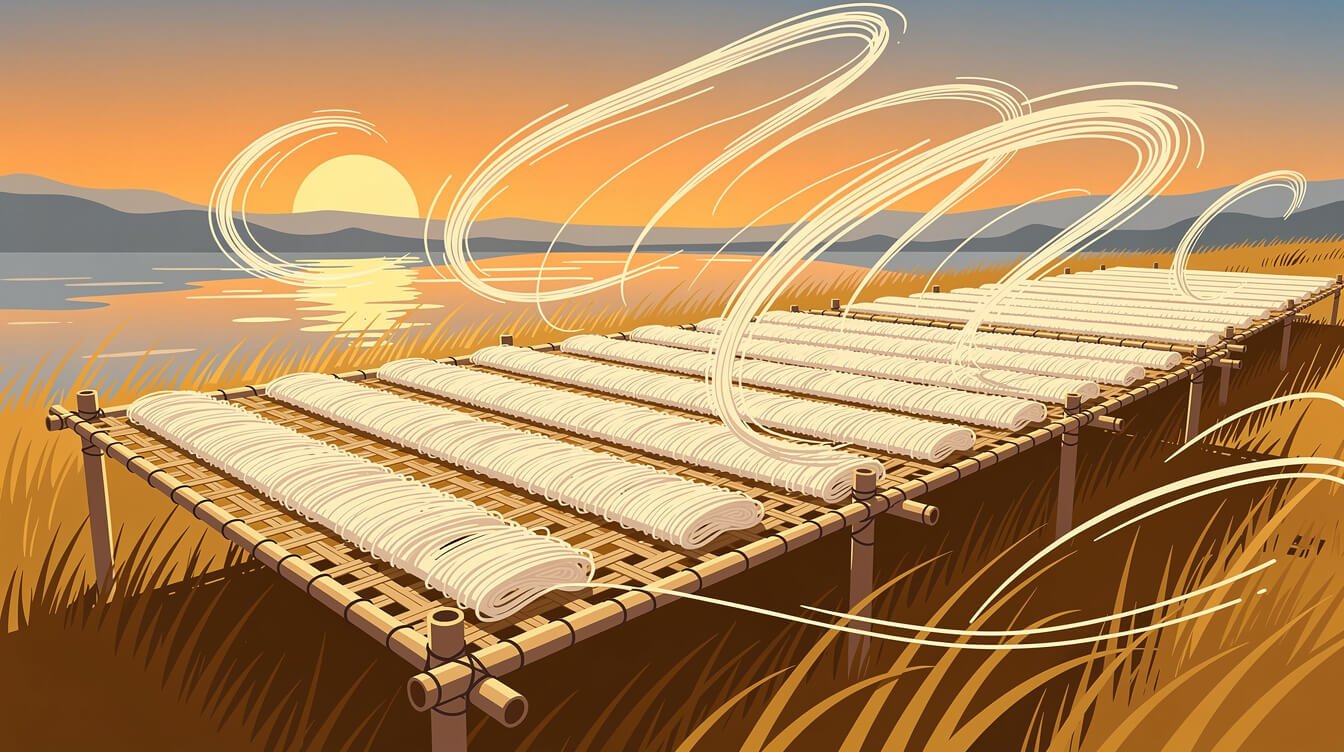
Rice vermicelli has to be dried, and drying it fast and evenly — without cooking it, without letting it sour — is the entire difficulty of making it well. A plain that delivers months of dry wind and comparatively little autumn rain is, as the city’s own tourism office puts it, the best natural drying ground you could ask for. Settlers who brought the craft over from Fujian in the nineteenth century worked that out quickly, and Hsinchu rice noodles (新竹米粉) became the national standard.
You can still see the racks in season: sheets of pale noodle laid out on woven bamboo in open yards, the wind doing the work. It is one of the few places in Taiwan where you can point at the weather and then point at the dish and draw a straight line between them. The same wind dries the persimmons up in Xinpu — more on that later — and for the same reason.
Sand, gas and glass
The second industry came from underneath rather than above. The Hsinchu area sits on deposits of silica sand and natural gas: the raw material for glass and the fuel to melt it, in the same place. A local glassworks opened in 1925, the Japanese colonial government established a larger glass company here in 1939 to make medical and scientific glassware, and at the industry’s peak somewhere between forty and fifty factories were operating in and around the city.
And then the chips
Here is where the honest version diverges from the neat one. It is tempting to say the wind blew in the semiconductors too. It did not. Hsinchu Science Park opened on 15 December 1980 for a much more deliberate reason: Shu Shien-Siu, then president of National Tsing Hua University, argued that Taiwan’s chip industry should be planted next to its engineering universities the way Silicon Valley grew next to Stanford — and Hsinchu already had Tsing Hua and Chiao Tung (today part of National Yang Ming Chiao Tung University) sitting side by side, with the Industrial Technology Research Institute next door. TSMC and UMC both came out of that institute. By late 2024 the park held 584 companies and roughly 177,000 workers across 1,471 hectares.
So Hsinchu is a city built by three unrelated pieces of luck: the wind above it, the sand and gas beneath it, and two universities beside it. The noodles, the glass and the chips have nothing to do with each other — and yet they all ended up in the same small city, which is a far better story than “Taiwan’s Silicon Valley.”
Hsinchu City God Temple: The Highest-Ranking Temple in Taiwan Is Also Its Best Food Court
If you do one thing in Hsinchu, Taiwan, do this one. The Hsinchu City God Temple (城隍廟) is simultaneously the most important building in town and the best place to eat in it, and those two facts are not a coincidence.
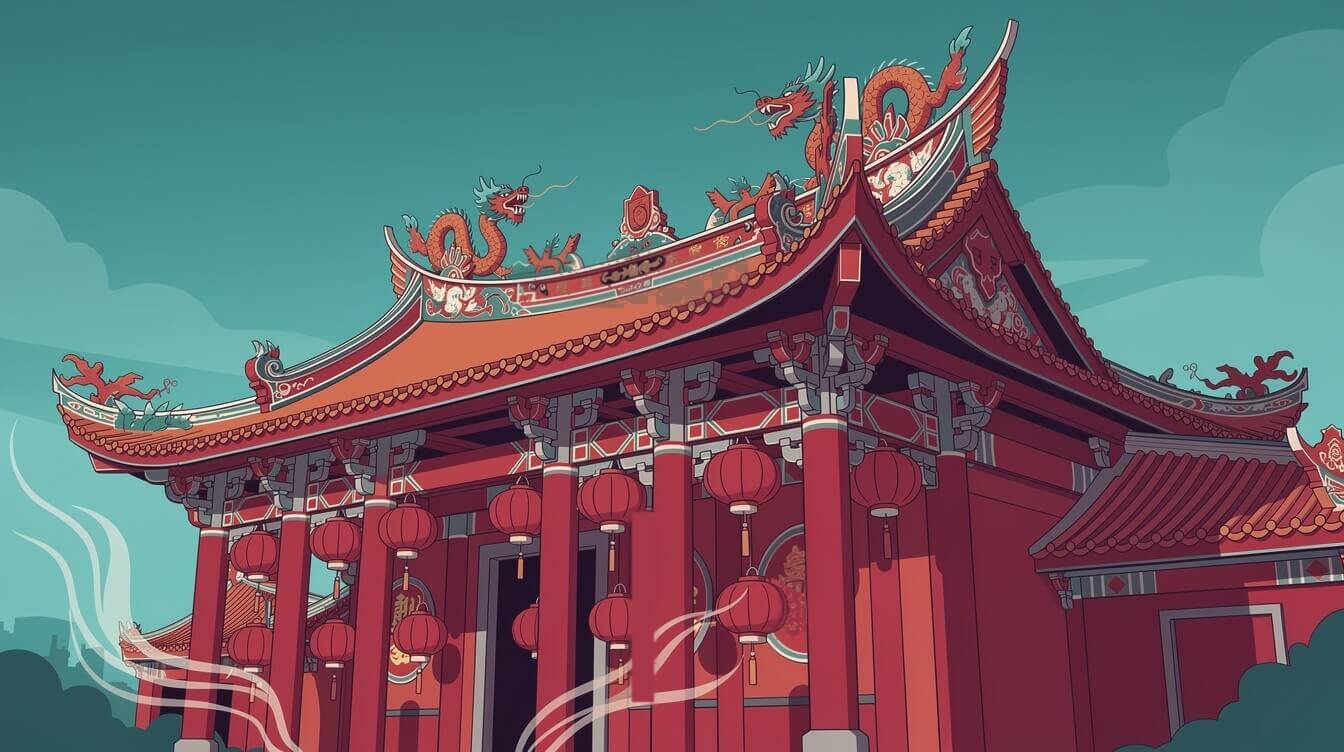
The temple was first built in 1748. City God temples exist in a hierarchy — the City God is a celestial bureaucrat, and his rank rises and falls with the administrative status of the place he governs — and in 1891 the Guangxu Emperor elevated Hsinchu’s to the top of the entire island’s list, granting it the title Weiling Gong. It remains the highest-ranking City God temple in Taiwan. Inside, the carving is genuinely worth slowing down for: the abacus and the plaques of judgment hanging in the entrance hall are there to remind you that this particular deity keeps accounts.
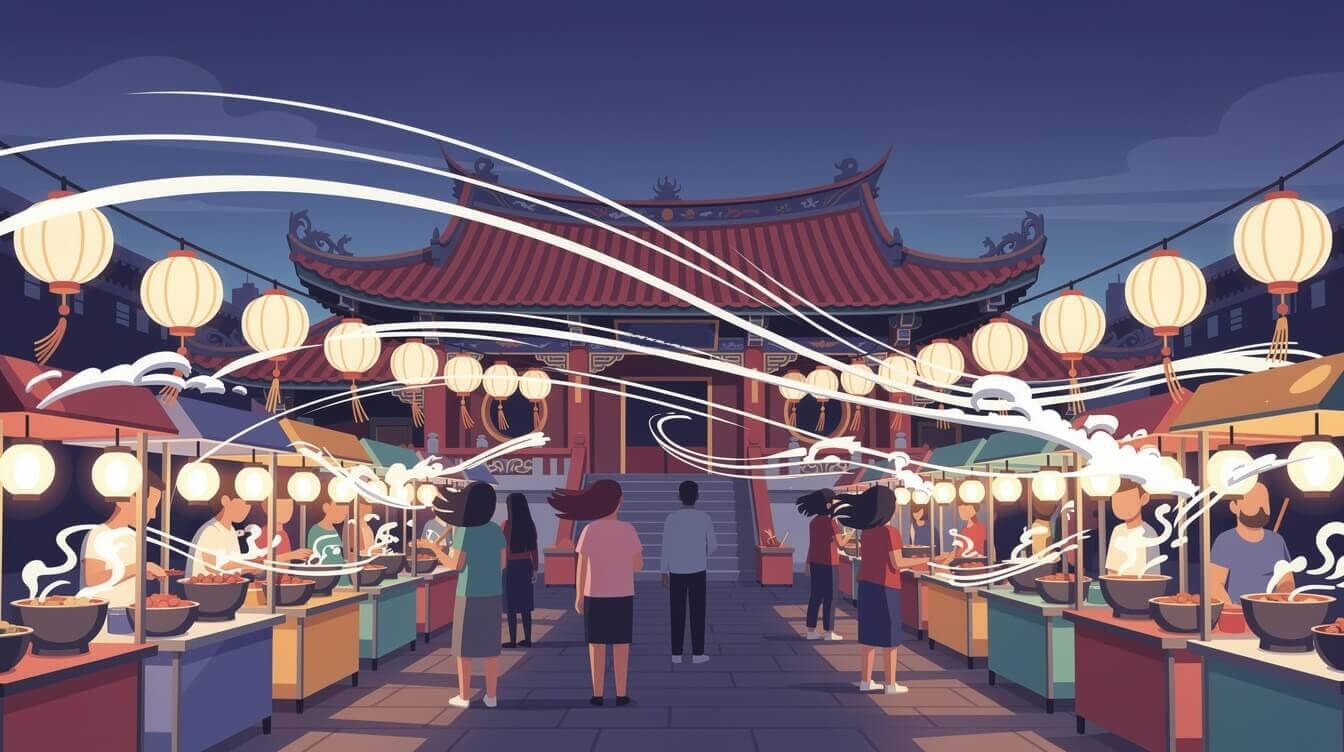
Then you walk out of the main hall into the forecourt and it turns into a food market. Not next door, not down the street — the stalls occupy the temple plaza and the covered lanes wrapping around it, and they have done for generations. Rice noodles, pork meatball soup, thick cuttlefish broth, Zhuqian biscuits, fried taro balls, shaved ice: this is one of the most famous eating spots in Taiwan and it is about twenty metres from an imperial temple.
It runs from mid-morning until late, which makes it more useful than a conventional night market — you can eat here at 11am, which you cannot do at most of the markets in our guide to Taiwan’s night markets. Go hungry, go twice, and do not fill up at the first stall you see. The good ones have queues of office workers, not tourists.
What to Eat in Hsinchu: Rice Noodles and Meatballs Are a Pair
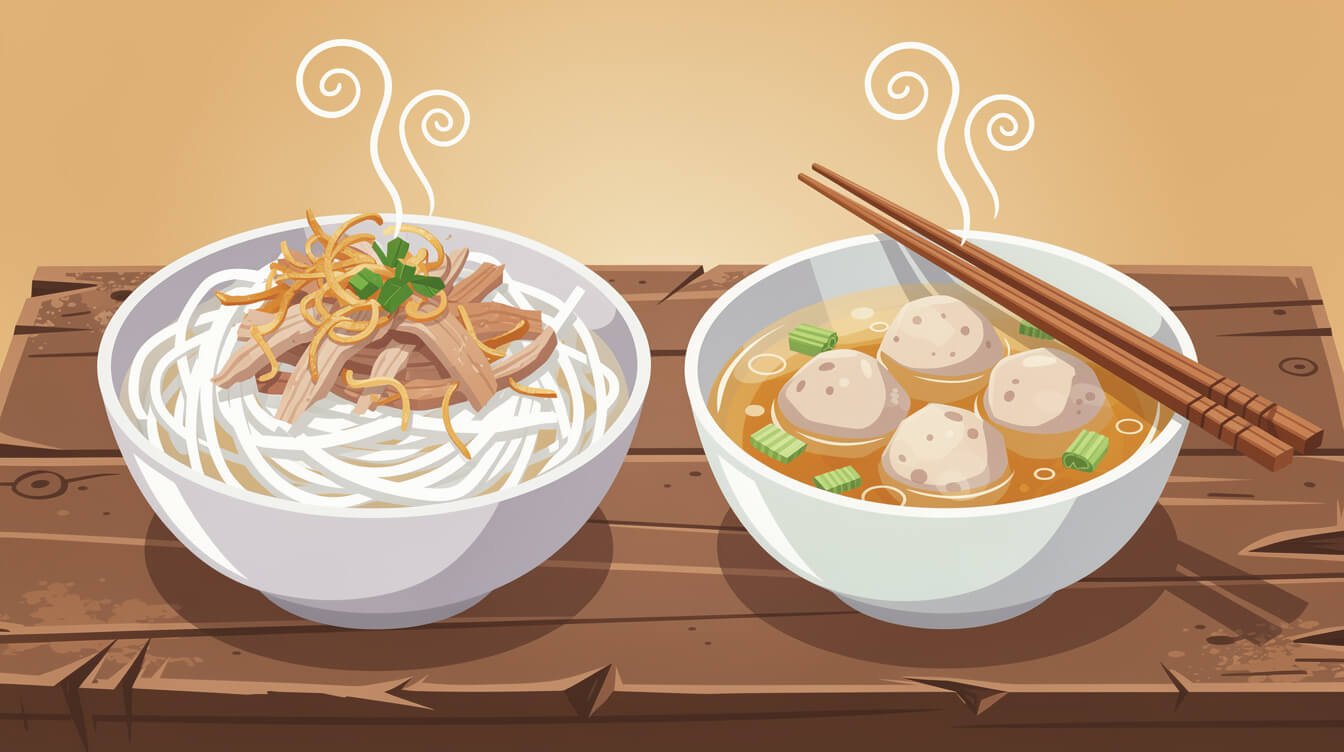
Order them together. This is the single most useful piece of advice anyone can give you about eating in Hsinchu, Taiwan, and almost every English-language write-up of the city skips it.
Hsinchu rice noodles (新竹米粉)
Two styles matter. Chao mifen is the stir-fried version — noodles tossed with shredded pork, dried shrimp, cabbage and a heavy hand of fried shallot, served dry and faintly smoky. Shui mifen is the soup version, the noodles sitting in a light pork broth. The noodles themselves are finer than almost any other rice noodle you will meet in Taiwan; they take sauce and broth the way a sponge does, which is exactly why the drying matters so much. Overdried noodles go brittle and break; underdried ones turn to paste. The wind is the reason the local ones land in between.
If you want to understand where this sits in the broader landscape of Taiwanese noodles, we have a full breakdown of every noodle type on the island — Hsinchu’s is the delicate end of a very long spectrum that runs all the way to beef noodle soup.
Hsinchu meatballs (貢丸)
Gongwan are not meatballs in the Italian sense — nothing is rolled by hand. Pork is pounded until the protein structure breaks down into a smooth, springy paste, then formed into balls and poached. The texture is the entire point: a proper Hsinchu gongwan is bouncy, almost squeaky against the teeth, and it springs back when you bite it. They arrive three or four to a bowl in a clear broth with celery or coriander and a shake of white pepper.
The two dishes are sold as a set across Taiwan — a packet of Hsinchu rice noodles and a bag of Hsinchu meatballs is the standard gift box you bring home from this city. Eat them the same way: a plate of dry stir-fried noodles, a bowl of meatball soup to drink alongside it. Somewhere around NT$100 for the pair, which remains one of the great bargains in Taiwanese food.
What else to look for
- Thick cuttlefish soup (魷魚羹) — starchy, sweet-sour, deeply local.
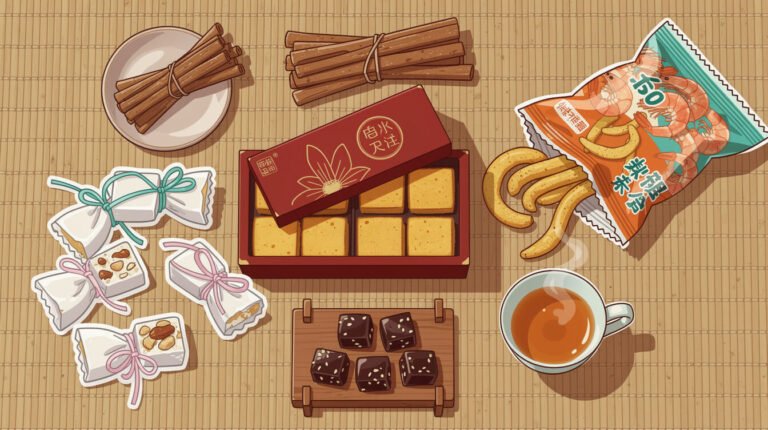
- Zhuqian biscuits — the city’s old name was Zhuqian, and the flaky pastries sold under that name are the classic souvenir.
- Taro and sweet potato balls — the City God Temple forecourt does an excellent version.
- Hakka dishes — once you get into the county, the food changes character entirely. Salt, fat, preserved vegetables, offal done well.
Glass: The Other Thing Hsinchu Has Been Making for a Century
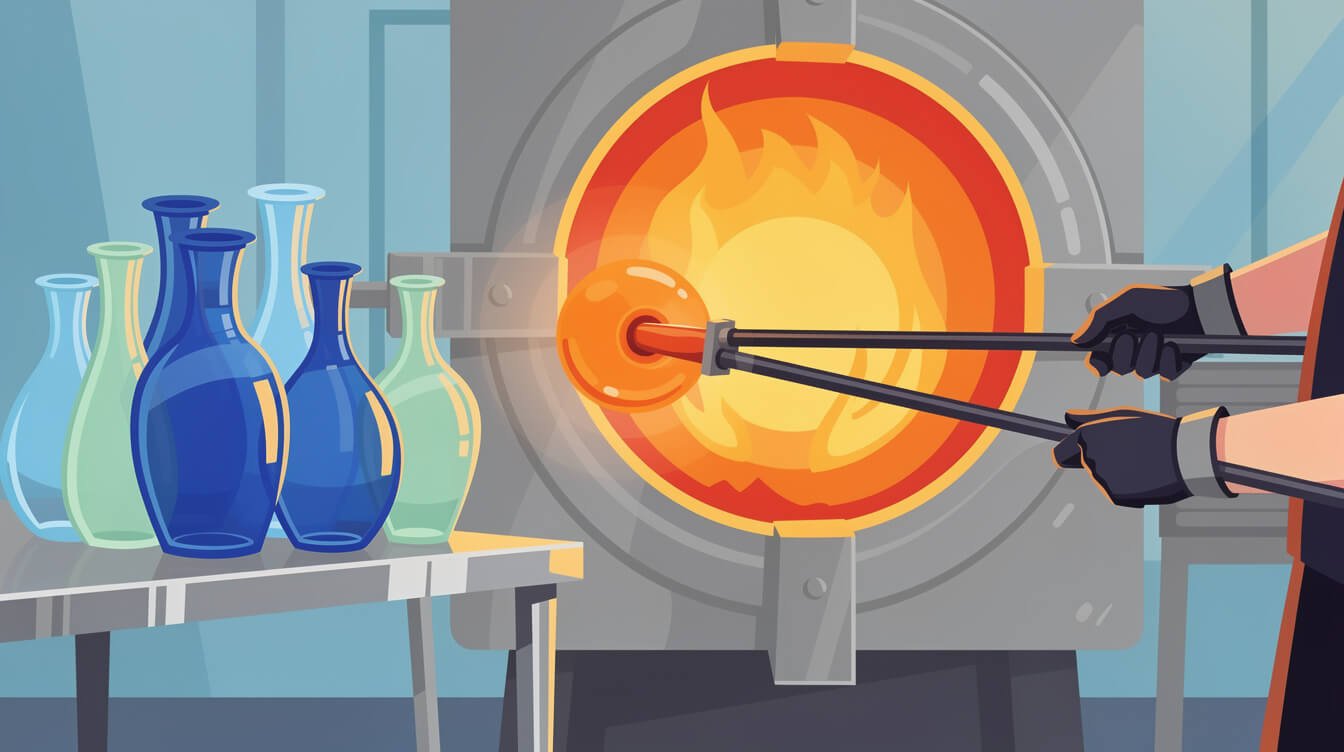
Glass is the most under-sold thing in Hsinchu, Taiwan, and for anyone who cares about craft it is the most rewarding thing here.
What began as an industrial business — bottles, scientific glassware, lamp parts — turned into an art scene as the factories closed and the glassblowers stayed. The Glass Museum of Hsinchu City is the place to see the result, and its building is half the pleasure: it was built in 1936 as a Japanese-era guesthouse for visiting officials and royalty, sitting in Hsinchu Park, and reopened as a museum on 18 December 1999. European lines, oriental detailing, a garden around it, and inside, cases of blown and lampworked glass that run from 1930s medical flasks to contemporary sculpture.
Practical details, verified at the source: it opens Tuesday to Sunday, 09:00 to 17:00, with last tickets at 16:30, and admission is NT$50. It is closed on Mondays — several large travel sites claim it closes Monday and Tuesday, which is wrong, and that error has cost people a morning. The address is No. 2, Section 1, Dongda Road, in the park.
Time it with the park itself. Hsinchu Park is the city’s green lung, the museum sits in the northwest corner of it, and the whole thing is a fifteen-minute walk from the station. In spring the cherry blossoms here draw crowds from Taipei.
Glassblowing is the kind of craft this brand exists to celebrate, and if the idea of drinking out of something with a bit of Taiwan in it appeals, our Taiwan Beer Vintage Label Shaker Pint Glass is the closest thing we make to a souvenir from a glass city — a vintage label design on an actual piece of glassware, which felt like the right object to mention here.
Beyond the City: Neiwan, Beipu and Hakka Hsinchu County
This is the half of the trip that turns Hsinchu, Taiwan from an afternoon into a weekend. Hsinchu County is Hakka country — hill towns, tea, preserved food, and a branch-line train that is a genuine pleasure to ride.
The Neiwan branch line
The Neiwan line runs 27.9 km from Hsinchu station up into the hills, thirteen stations, ending at Neiwan. Past Zhuzhong it becomes single-track and unelectrified, which tells you everything about the pace. Neiwan itself is a small old street town that gets busy at weekends and is lovely on a weekday morning: wild-ginger-flower dumplings, Hakka rice dumplings, a suspension bridge, a river. Ride it for the ride, not just the destination.
Beipu and 擂茶
Beipu is the county’s best-preserved Hakka town, and its signature is lei cha (擂茶) — “pounded tea,” though it is closer to a meal than a drink. You are handed a large ceramic mortar and a wooden pestle and you grind green tea leaves, peanuts, sesame and grains into a paste yourself, then hot water is added and the result is a thick, savoury, nutty tea, usually served with puffed rice and a bowl of rice and vegetables on the side. Some Beipu shops will tell you their blend runs to thirty ingredients. Doing the grinding is the experience; it takes a while, and that is the point.
Xinpu and the persimmon courtyards
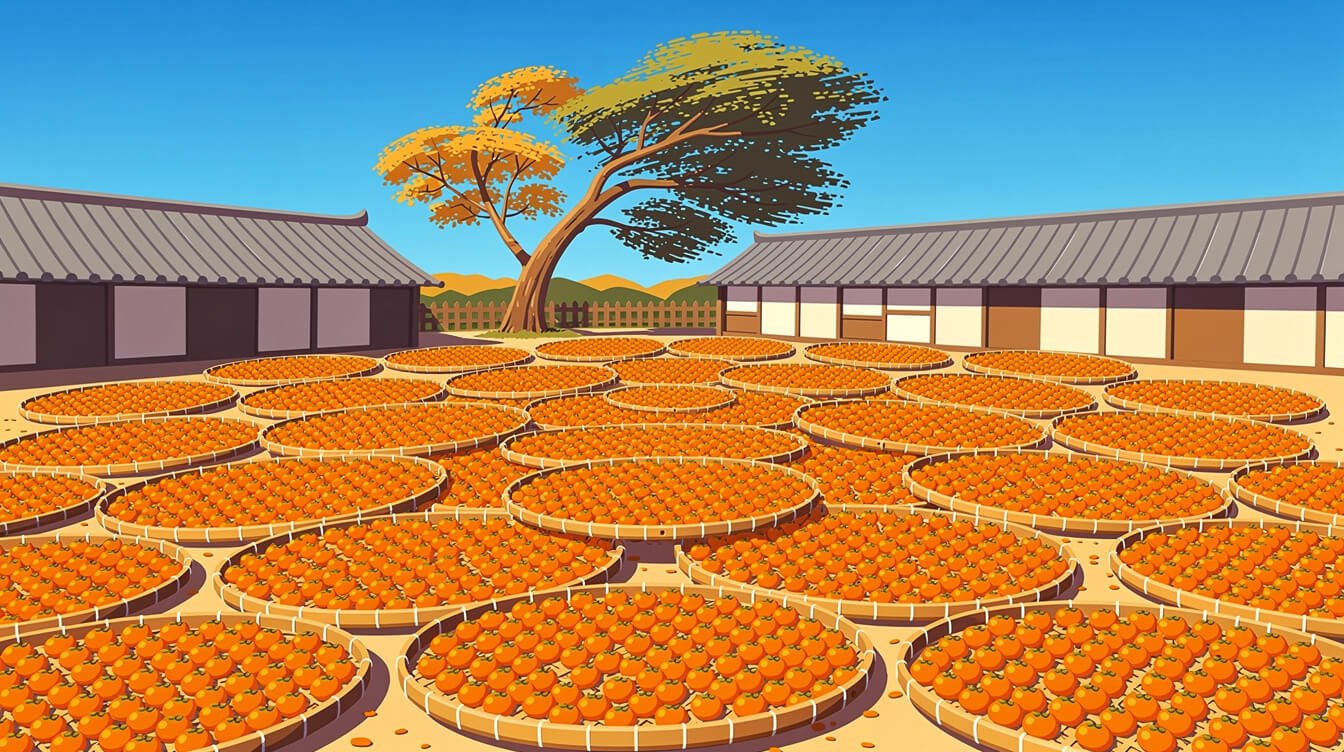
If you are here in autumn, go to Xinpu. The township produces the large majority of Taiwan’s dried persimmons, and the drying is done outdoors on enormous round bamboo trays — thousands of orange discs laid out in rows across farm courtyards under a blue sky. It is one of the most photographed agricultural sights in Taiwan and the season runs roughly from late September through December, with the early weeks the most spectacular.
And note what is doing the work: the same northeast monsoon that dries the rice noodles down on the plain is what dries the persimmons up in the hills. The Hakka farmers here built their whole autumn calendar around that wind long before anyone thought to build a science park.
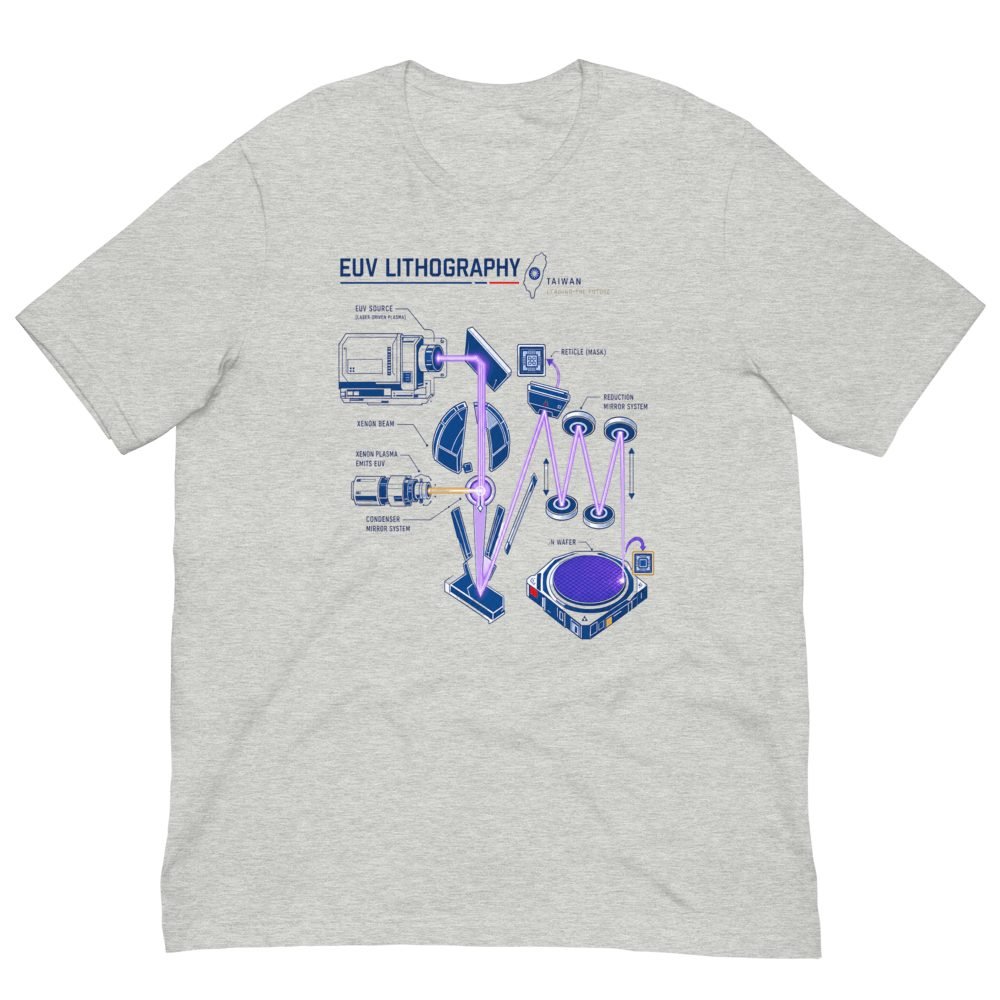
Wear the Machine Hsinchu Runs On
A technical schematic of the EUV lithography rig at the heart of Taiwan’s chip industry — the reason the world knows this small windy city’s name at all.
Getting to Hsinchu, Taiwan: HSR and TRA Are Not the Same Station
Read this section even if you skim everything else, because this is the detail that catches people out.
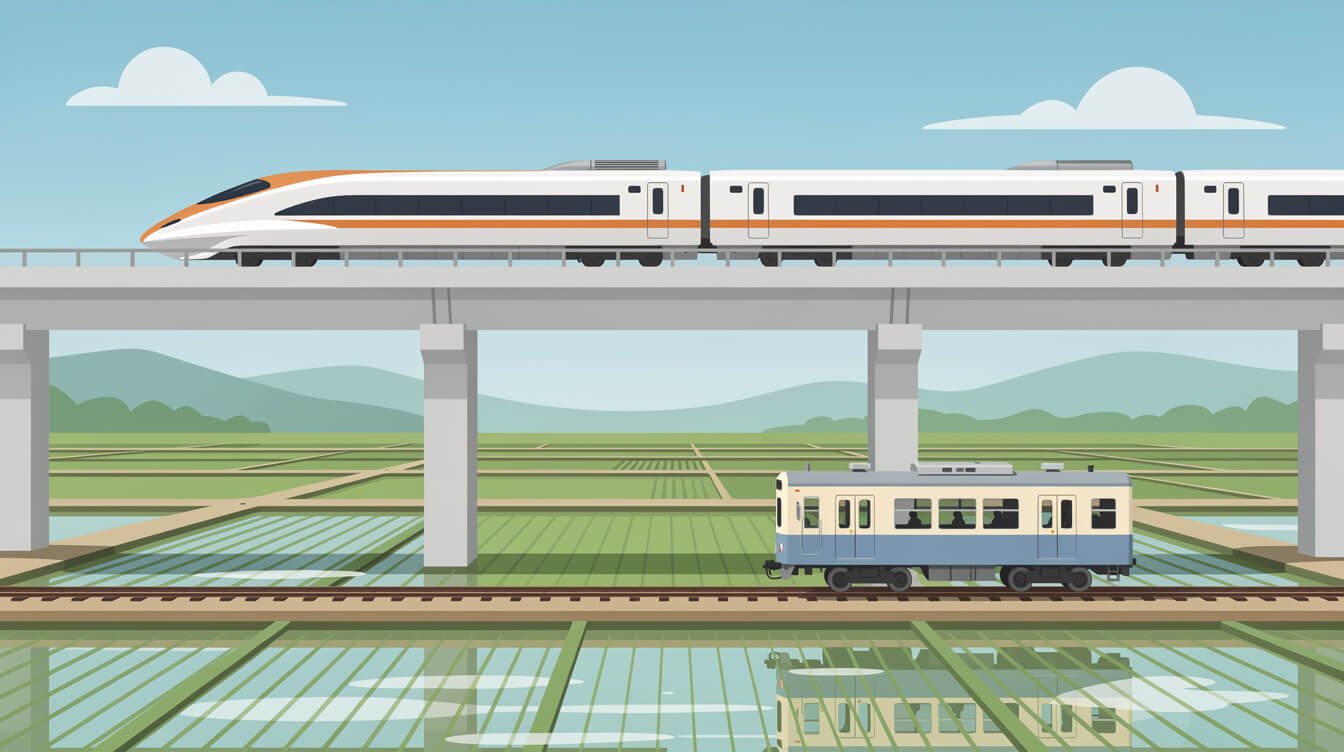
Hsinchu has two entirely separate railway stations about 11 km apart.
The HSR station (high-speed rail) is not in Hsinchu City at all. It is in Zhubei, over the line in Hsinchu County, out among the fields and new apartment towers. The high-speed train gets you there from Taipei in roughly half an hour, which is wonderful — and then you are 11 km from the temple, the food and the museum.
The TRA station (conventional rail) is the one you actually want: the handsome 1913 European-style building, a designated national monument, sitting right in the middle of the old city. Everything in this guide except the Science Park is walkable from it.
How to connect the two
There is a purpose-built rail link. From the HSR station, a second-floor corridor takes you straight to TRA Liujia station. The Liujia line is a 3.1 km spur that opened in November 2011 and joins the Neiwan line at Zhuzhong; from there, trains run through to TRA Hsinchu station. It is a short, cheap ride and it is the reason you do not need a taxi. Buses and taxis also make the run if you land between trains.
Which one should you take?
- Coming from Taipei: honestly, take the conventional TRA train. It goes straight into the city centre, it costs a fraction of the HSR fare, and the time you save on the high-speed leg you hand straight back on the transfer.
- Coming from Taichung or further south: take the HSR and transfer at Liujia. The distance makes the maths work. If you want the full picture of how the high-speed network behaves end to end, our Taipei–Kaohsiung HSR guide covers fares and classes.
- Flying in: Taoyuan International is the nearest airport and closer to Hsinchu than it is to central Taipei. See our Taoyuan vs Songshan comparison if you are choosing.
How long to stay
Half a day: TRA station → City God Temple (eat) → Hsinchu Park and the Glass Museum → temple again (eat again) → train out.
Full day: add the 1913 station building properly, the East Gate, and a slow wander of the old core.
Two days: city on day one, then the Neiwan line to Beipu and Neiwan on day two, with Xinpu instead if it is persimmon season. Sleep in the city — it is cheaper than Taichung and much cheaper than Taipei.
Hsinchu FAQ
Why is Hsinchu called the Windy City?
Because of the northeast monsoon. Hsinchu, Taiwan sits on a coastal plain on the leeward side of the Xueshan Range, which funnels the autumn and winter monsoon across the city as sustained dry wind. Its Chinese nickname is 風城, literally “wind city,” and the seasonal wind itself is called 九降風.
What is Hsinchu famous for?
Hsinchu, Taiwan is famous for three things: rice noodles, glass, and semiconductors. Hsinchu rice noodles and Hsinchu pork meatballs are sold together as a national delicacy; the city has made glass since 1925 thanks to local silica sand and natural gas; and Hsinchu Science Park, opened in 1980, is the heart of Taiwan’s chip industry.
Is Hsinchu worth visiting for tourists?
Yes, with realistic expectations. Hsinchu, Taiwan is a half-day to a full day — the City God Temple food scene and the Glass Museum are the highlights. Hsinchu County behind it (Neiwan, Beipu, Xinpu) is what makes it a two-day trip worth taking.
How far is Hsinchu from Taipei?
About 30 minutes by high-speed rail to the HSR station in Zhubei, or roughly an hour to an hour and a half by conventional TRA train directly into central Hsinchu. The TRA option usually wins for a day trip because it drops you where you actually want to be.
What should I eat in Hsinchu?
Stir-fried rice noodles and a bowl of pork meatball soup, ordered together, at the City God Temple forecourt. Add thick cuttlefish soup if you have room, and buy Zhuqian biscuits on the way out.
When is the best time to visit Hsinchu?
The best time to visit Hsinchu, Taiwan is autumn, roughly October to December, when the wind arrives, the persimmon courtyards in Xinpu are at their best and the rice noodle racks are out. Spring is good for cherry blossom in Hsinchu Park. Summer is hot and the wind that makes the city interesting is not blowing.
Final Thoughts: The City the Wind Built
Hsinchu, Taiwan does not perform for visitors, which is exactly why it is interesting. It is a working city that happens to have an imperial temple in the middle of it, a glassblowing tradition that outlived its own factories, and a food identity so specific that two of its dishes travel the island as a matched set.
The wind is the thread. It dried the noodles that made the city’s name, it dries the persimmons in the hills behind it, and it gave the place the nickname that every Taiwanese person knows and almost no guidebook mentions. The sand and gas underground gave it glass. The universities next door gave it chips. None of those three things planned to meet, and the fact that they did is the most Taiwanese story imaginable — a small place quietly becoming essential while everyone was looking somewhere else.
Give it a day. Eat twice. Take the branch line into the hills. And if the wind is up while you are standing in the temple forecourt with a bowl of meatball soup, you will understand the whole city at once.
A Postcard From Taiwan, Every Week
Culture stories, food deep-dives, travel tips, and first looks at new designs — straight to your inbox. No spam, just Taiwan.
Grab a Free Taiwan Sticker!
Drop your email and we’ll send you a limited-edition Taiwan sticker — plus insider access to new merch drops and island vibes.
No spam. Unsubscribe anytime.