Taiwan Recycling: How a Tiny Island Went From Garbage Crisis to Global Eco Hero
In the 1990s, Taiwan was drowning in its own trash. Illegal dumps lined riverbanks, garbage literally piled up in the streets, and the island earned the unflattering nickname “Garbage Island.” Fast-forward to today, and Taiwan recycles over 55% of its waste — putting it ahead of most European countries and way ahead of the United States.
So how did a small island of 23 million people pull off one of the greatest environmental turnarounds in modern history?
The Musical Garbage Trucks That Changed Everything
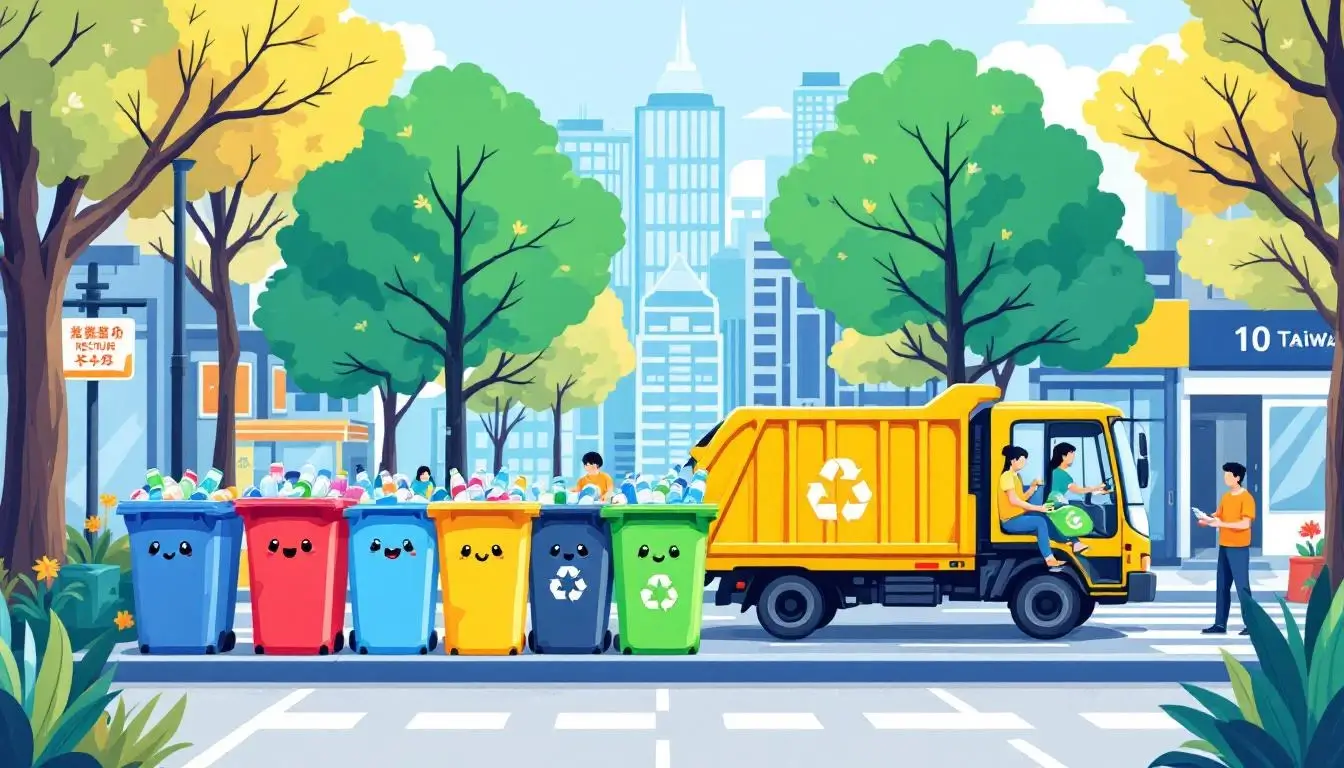
If you’ve ever been to Taiwan, you’ve heard it — the unmistakable melody of Für Elise or A Maiden’s Prayer blasting from a yellow garbage truck. These iconic trucks roll through neighborhoods on a fixed schedule, and residents rush out to hand their sorted bags directly to the crew.
There are no curbside bins sitting out overnight. No dumpsters in alleys. You hear the music, you grab your bags, and you go. It’s a system that sounds chaotic but works brilliantly — because it makes recycling a daily habit baked into community life.
Four Bins, Zero Excuses
Taiwan’s sorting system is serious. Residents typically separate waste into four categories: general trash (which goes in government-issued pay-per-bag blue bags), recyclables (plastics, metals, glass, paper), food waste for composting, and food waste for pig feed. Yes, those last two are different categories.
The pay-per-bag system is genius — you literally pay for every bag of non-recyclable trash. The more you recycle, the less you spend. It’s a financial incentive that turned even the most reluctant residents into sorting experts.
The Numbers Don’t Lie
Taiwan’s recycling rate jumped from under 6% in the mid-1990s to over 55% today. The island recycles 90% of its PET bottles and has one of the highest food waste recovery rates in Asia. Even convenience stores — and Taiwan has over 13,000 of them — serve as recycling collection points.
The Environmental Protection Administration (now the Ministry of Environment) drove this through a combination of Extended Producer Responsibility laws, community education programs, and that brilliantly simple truck system.
What Travelers Notice
First-time visitors to Taiwan are often struck by how clean the streets are — especially considering the island’s population density. You’ll rarely see public trash cans (which initially frustrates tourists), but that’s by design. The absence of bins encourages people to carry their waste home and sort it properly.
At night markets, vendors handle their own waste streams. At parks and public spaces, volunteer cleanup crews are a common sight. It’s a cultural mindset shift that took a generation to build — and it’s now a source of genuine national pride.
A Lesson the World Is Still Learning
Taiwan proves that environmental transformation doesn’t require massive landmass or unlimited resources. It requires political will, smart incentive design, and a population willing to change daily habits. The garbage truck melody isn’t just a quirky cultural moment — it’s the soundtrack of one of the most successful environmental policies on the planet.
Next time you hear Für Elise echoing through a Taipei alley, remember: you’re listening to a revolution.

Grab a Free Taiwan Sticker!
Drop your email and we’ll send you a limited-edition Taiwan sticker — plus insider access to new merch drops and island vibes.
No spam. Unsubscribe anytime.