Lu Rou Fan (滷肉飯): The National Comfort Bowl That Means Something Completely Different in Northern and Southern Taiwan
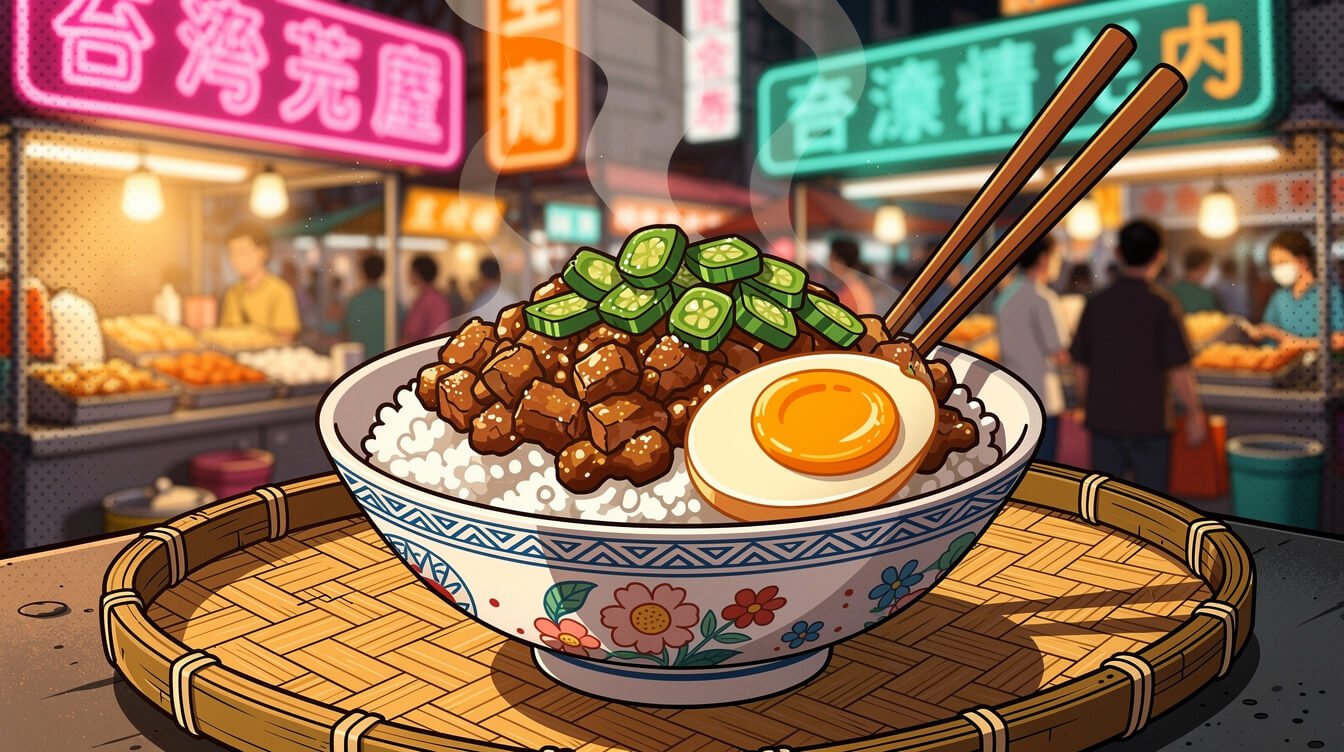
Ask any Taiwanese person what they miss most after months abroad, and there’s a good chance the answer isn’t beef noodle soup or bubble tea. It’s a small ceramic bowl of glossy, five-spice-scented braised pork sauce spooned over a mound of steaming short-grain rice — lu rou fan (滷肉飯). It costs about NT$40 at a neighborhood 便當店 (bento shop), takes ninety seconds to serve, and somehow tastes like everyone’s grandmother made it.
But here’s the twist most travel guides skip: order 滷肉飯 in Taipei and Kaohsiung, and you’ll get two completely different bowls. The dish that unites Taiwan is also the dish Taiwan can’t agree on the name of.
The Great North–South Naming War
In northern Taiwan, 滷肉飯 (lǔ ròu fàn) means finely minced or ground pork belly, slow-simmered until the fat renders into a glossy caramel-brown gravy, then spooned over rice. The meat almost melts. You eat it with a spoon.
In southern Taiwan — Tainan, Kaohsiung, and everything below the Zhuoshui River — 滷肉飯 refers to chunks of braised pork belly (think Dongpo pork), sliced and layered over rice. The minced version southerners call 肉燥飯 (ròu zào fàn), and if you order 滷肉飯 in a Tainan food stall expecting the Taipei-style minced sauce, you will be gently corrected.
Same three characters. Same island. Two different dishes. Both delicious. Locals have argued about this on Dcard and PTT for two decades, and nobody’s winning.
What Makes a Great Bowl
The secret isn’t the pork — it’s the fried shallots (油蔥酥). Real lu rou fan starts with crispy shallots that have been slowly rendered in lard until they turn deep amber. That shallot oil is what gives the sauce its haunting umami depth. Add rock sugar for glossiness, dark soy for color, light soy for salt, five-spice, star anise, a splash of rice wine, and one hardboiled egg per person because it’s basically required.
The best bowls come from stalls that have been simmering the same base sauce for decades — topping it up, never emptying the pot, until the flavor is a genetic archive of every pig that’s passed through.
Where to Try the Legends
Jin Feng Braised Meat Rice (金峰魯肉飯) near CKS Memorial Hall has been on the Michelin Bib Gourmand list multiple years — the northern-style minced version, served with a pickled cucumber, for less than the price of a coffee. Formosa Chang (鬍鬚張), founded in 1960 in Dihua Street, is the KFC of lu rou fan — a chain, but a legitimate one. For the southern chunk-style version, any Tainan-based 便當店 will oblige.
Or you could just wander into the nearest 7-Eleven and grab a shelf-stable pouch. Because that’s Taiwan too — the same dish that Michelin recognizes also lives in a plastic pouch next to the onigiri. Both are legitimate. Both are home.
Wear Your Comfort Food Loud
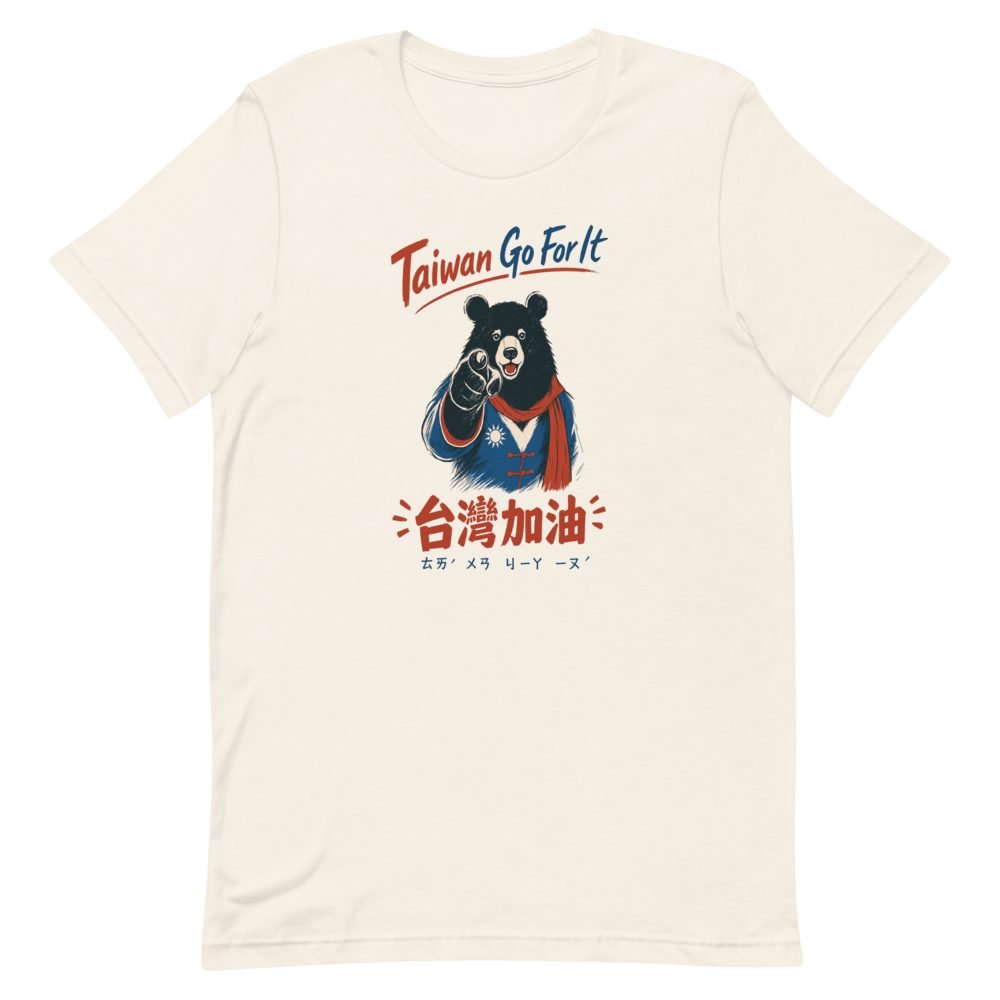
If lu rou fan is the taste of Taiwan, then Taiwan pride is the wardrobe. Our Taiwan Black Bear Jiayou 台灣加油 tee is the equivalent of wearing your grandmother’s kitchen out the door — the same “we’ve got this, together” energy that keeps a lu rou pot simmering for generations.
Wear Taiwan Pride Every Day
The comfort of a home-cooked bowl, on your chest. Taiwan Black Bear Jiayou tee — soft cotton, bold design, ships worldwide.
Hungry for more Taiwan food storytelling? Read our take on the authentic hongshao method for beef noodle soup or dive into the complete guide to famous food in Taiwan.

Grab a Free Taiwan Sticker!
Drop your email and we’ll send you a limited-edition Taiwan sticker — plus insider access to new merch drops and island vibes.
No spam. Unsubscribe anytime.