Taiwan Scallion Pancake: Cong You Bing vs Cong Zhua Bing, Yilan’s Sanxing Scallions, and a Street-Stall Recipe
A good Taiwan scallion pancake is loud before you even taste it. You hear the hiss of dough hitting a shallow pool of oil, then the scrape of two spatulas as the vendor scrunches it into flaky shreds, then the crack of an egg. What you get, handed over in a paper sleeve, is crisp outside, chewy inside, and packed with green onion. It costs about the same as a bus ticket.
Most English recipes treat this as one generic “Chinese scallion pancake.” Taiwan has at least three closely related street foods that people mix up. It also has a whole county, Yilan, that built a reputation on one ingredient: the scallions from a farm township called Sanxing (三星). This guide covers the place, the pancake family, how to order at a stall, and a hot-water-dough recipe you can make at home, including what to do when your supermarket green onions look nothing like Sanxing’s.
What Is a Taiwan Scallion Pancake?

A Taiwan scallion pancake is an unleavened wheat flatbread made by rolling dough thin, brushing it with oil, scattering it with chopped green onion, then rolling and coiling it so the layers separate as it fries. In Mandarin it’s 蔥油餅 (cōng yóu bǐng), literally “scallion oil flatbread.” At a street stall it’s usually fried to order, often with an egg, and finished with a brush of sauce.
The dough came to Taiwan with the wheat-eating northern Chinese cooking that arrived after 1949, alongside soy milk and fried crullers. Taiwan then made it its own. Street vendors added eggs, basil and cheese. Yilan cooks started half-frying it until it puffed. It also has a thinner breakfast-shop cousin, the danbing egg crepe.
Three things make a Taiwanese version taste the way it does:
- Hot-water dough (燙麵). Mixing part of the flour with boiling water makes the dough soft and stretchy rather than bready, so it rolls thin without fighting back.
- Lamination, not leavening. There is no yeast. The flakiness comes from oil trapped between layers, which steams and separates in the pan.
- A lot of scallion. Locals judge a stall by how much green onion falls out when you bite. In Yilan, they also care which green onion it is.
If you only know the dense, greasy frozen discs from the freezer aisle, the real thing will surprise you. It’s lighter, crisper at the edges and much more fragrant.
Sanxing, Yilan: The Scallion Town Behind Taiwan’s Best Pancakes

Ask anyone in Taiwan where the best scallions grow and you’ll get the same answer: Sanxing (三星鄉), a rural township in Yilan County on Taiwan’s northeast coast. “Sanxing scallion” (三星蔥) is one of the few vegetables in Taiwan that people order by name. Pancake stalls across Yilan advertise it, and wholesale buyers pay more for it.
Why Sanxing scallions are different
Taiwan’s agriculture ministry describes Sanxing as sitting on the middle and upper reaches of the Lanyang River’s alluvial plain. Mountains wrap around it on three sides, and the sea lies on the fourth. It rains for much of the year, and the gap between day and night temperatures is wide. That climate slows the plants down, and slow growth gives them thicker leaf walls and finer fibers. In a pancake that means scallions that stay juicy and sweet instead of turning stringy.
Farmers also plant the scallions deep, on raised, well-drained beds. That gives Sanxing scallions their signature long white stems, which a 2015 Global Views profile put at over 10 centimeters. The white part is where much of the sweetness sits. The same article reported that ordinary Sanxing scallions were fetching around NT$66 per kilo at auction, compared with about NT$37 for scallions from elsewhere. That’s close to double, and wholesale markets give them their own auction area.
A crop under pressure
The famous scallion is getting harder to grow. Taiwan’s public broadcaster PTS reported in 2024 that the area declared for Sanxing scallions fell from 304 hectares in 2017 to 190 hectares in 2023. Heat waves, heavy rain and pests were to blame, along with years of farmers propagating plants by splitting their own clumps, which weakened the stock. The local farmers’ association now sends healthy seedlings up into cooler mountain areas over the summer, then brings them back to Sanxing to plant. As one farmer told PTS, the colder the weather, the better the scallion.
The practical takeaway: Sanxing scallions are seasonal and pricey, and the cooler months are their best. If you’re in Yilan between late autumn and spring, that’s when a scallion pancake there tastes most like its reputation. It also makes a great stop after the region’s other cult snack, the peanut ice cream roll wrapped with cilantro.
Cong You Bing vs Cong Zhua Bing vs Dan Bing: Taiwan’s Pancake Family
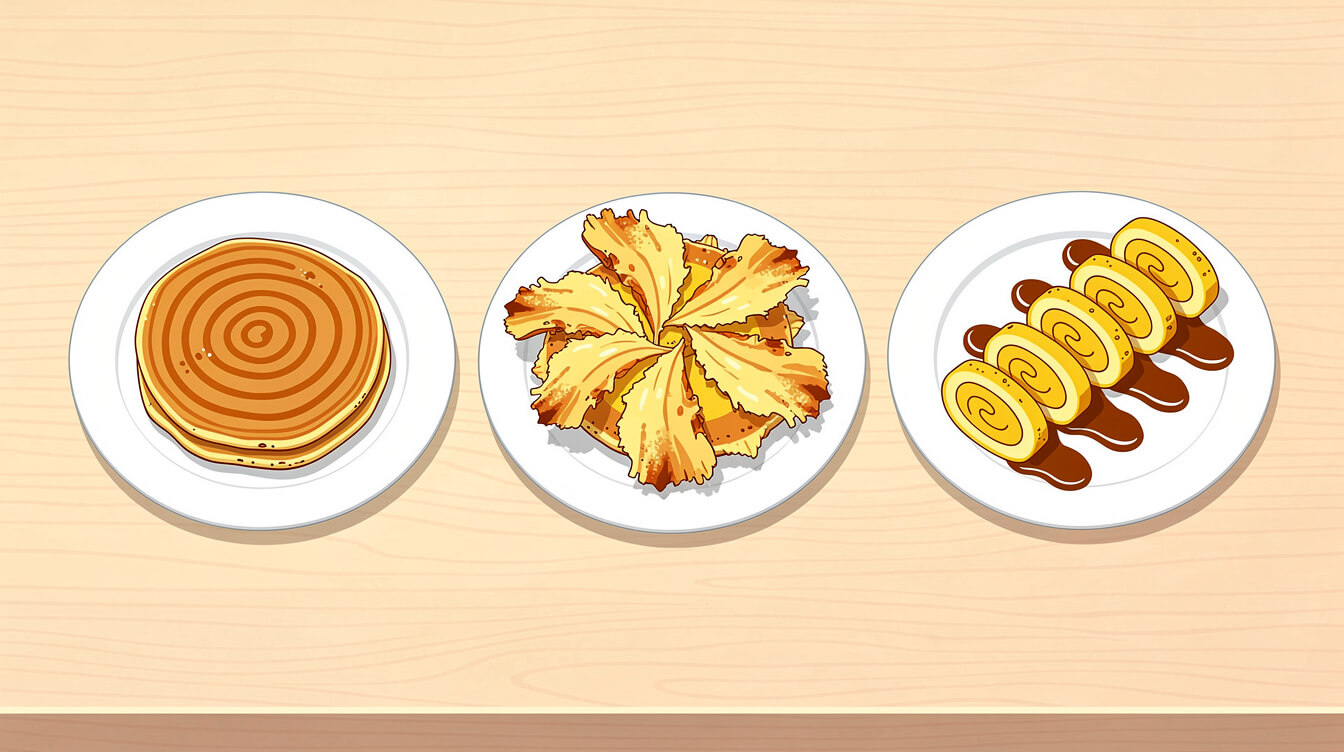
English menus often translate all three of these as “scallion pancake,” which is why travelers get confused. Here’s how to tell them apart.
蔥油餅 (cōng yóu bǐng): the classic scallion pancake
The original. It’s a coiled, laminated disc that’s pan-fried flat and usually served in wedges or folded around an egg. Layers are visible but stay fairly compact. In Yilan the same name covers a puffier, half-deep-fried version (more on that below).
蔥抓餅 (cōng zhuā bǐng): the “grabbed” scallion pancake
Zhuā means “to grab.” The dough is rolled with more oil and more coils, then pushed together with two spatulas as it cooks, so it bursts into ragged, flaky shreds. It’s the version you’ll see at most night markets and roadside carts in Taiwan, and the frozen discs sold in Asian supermarkets are usually this style. Expect it to be flakier and slightly greasier than a 蔥油餅, and ideal for stacking with fillings.
蛋餅 (dàn bǐng): the breakfast egg crepe
This is the one people confuse most. Danbing is a thin, soft wrapper rolled around a fried egg, cut into pieces and drizzled with soy paste. It’s sold at breakfast shops, not night markets. It may have scallions in it, but it isn’t laminated and isn’t flaky. Our guide to Taiwan breakfast food covers the full breakfast-shop menu if you want to go deeper.
| 蔥油餅 Cong you bing | 蔥抓餅 Cong zhua bing | 蛋餅 Dan bing | |
|---|---|---|---|
| Texture | Crisp outside, chewy layers | Very flaky, shredded | Soft, slightly chewy |
| Where | Street stalls, Yilan specialty shops | Night markets, carts | Breakfast shops |
| When | Afternoon snack | Evening snack | Breakfast |
| Typical add-on | Fried egg | Egg, cheese, basil, ham | Corn, tuna, bacon, cheese |
Yilan-Style Fried-Egg Scallion Pancakes and Where to Eat Them

Yilan’s signature style is the 炸蛋蔥油餅 (zhá dàn cōng yóu bǐng), the “fried-egg scallion pancake.” Instead of pan-frying the dough flat, vendors cook it in a shallow pool of hot oil, somewhere between pan-frying and deep-frying, until it puffs up like a pillow. Then they crack an egg into it, add a big spoonful of chopped Sanxing scallion, drain it, and brush it with house sauce and chili. You get a crackly shell, a soft, steamy middle and a runny-edged egg, and it shouldn’t feel heavy.
The style changes from stall to stall. Toucheng is known for puffy, airy pancakes, while at least one well-known Luodong shop makes a chewier dough on purpose. Some places tuck in extras. That Luodong shop adds pickled mustard greens, pickled radish and a whole Taiwanese sausage. Speaking of sausage, our 黑橋牌 Black Bridge Taiwan Sausage T-Shirt is for anyone who thinks every snack is better with one inside.
Yilan stalls worth the trip
These are Yilan’s best-known names as profiled by the Taiwanese food show Supertaste (食尚玩家) in 2023. Prices below are from those reports. Expect a few NT dollars more in 2026, and check each shop’s latest hours before you go. Hours change, and many close when the dough runs out.
- 柯氏蔥油餅 (Ke’s Scallion Pancake), Jiaoxi. The most famous name in the county, with queues even in the rain. Reported at NT$35 plain and NT$40 with egg in 2023. It’s an easy add-on to a Jiaoxi hot-spring day.
- 阿嬤蔥油餅 (Grandma’s Scallion Pancake), Toucheng. Ke’s main rival, known for a well-loved chili sauce. About NT$45 with egg.
- 龍潭日香炸蛋蔥油餅, Jiaoxi. A big, puffy pancake (about NT$40) with free black tea while you wait.
- 羅家蔥捲餅 (Luo Family Scallion Roll), Sanxing. In Sanxing itself. They use whole lengths of scallion they grow themselves rather than chopped green onion, so you get crunch and sweetness in every bite. NT$40, or NT$50 with egg.
- 金珠蔥油餅 (Jin Zhu), Dongshan. Started as a food truck near Dongshan Station, now a queue-worthy shop. About NT$45.
- 林場三星蔥曾氏炸蛋蔥油餅, Luodong. Near the Luodong Forestry Culture Park. The one with pickles and a whole sausage inside, about NT$80 loaded.
Not heading to Yilan? Every night market on the island has a 蔥抓餅 cart. Our Taiwan night market guide will help you find the good ones.
How to Order a Taiwan Scallion Pancake at a Street Stall

Ordering a Taiwan scallion pancake from a cart is quick once you know the pattern: base, add-ons, sauce. Most stalls have a picture menu, and pointing works fine. These words will get you exactly what you want.
Add-ons
- 加蛋 (jiā dàn): add egg. The default for most locals.
- 九層塔 (jiǔ céng tǎ): Thai basil. Fragrant, peppery, and a very Taiwanese touch.
- 起司 (qǐ sī): a slice of cheese, melted in.
- 火腿 (huǒ tuǐ): ham. 培根 (péi gēn): bacon.
- 玉米 (yù mǐ): corn, usually paired with cheese.
Sauces
- 醬油膏 (jiàng yóu gāo): thick, sweet soy paste. The classic.
- 辣椒醬 (là jiāo jiàng): chili sauce. Stalls often make their own, and it can be hot.
- 胡椒 (hú jiāo): a dusting of white pepper.
- 不要辣 (bú yào là): “no spicy.” 小辣 (xiǎo là): “a little spicy.”
A full order sounds like this: “蔥抓餅加蛋加九層塔,小辣” (cōng zhuā bǐng jiā dàn jiā jiǔ céng tǎ, xiǎo là), a grabbed pancake with egg and basil, a little spicy. Prices vary by city and stall. A plain pancake is usually around NT$40–60, and each add-on is typically about NT$10–20. Bring coins and small notes, because many carts are cash only.
Two etiquette notes: it’s normal to stand and wait while yours is made, and the vendor will usually ask whether you want it cut (切 qiē) or left whole in the bag. Cut is easier to eat while walking. If you’re building a whole snack crawl, our city-by-city Taiwan street food guide shows where each region’s specialties are.
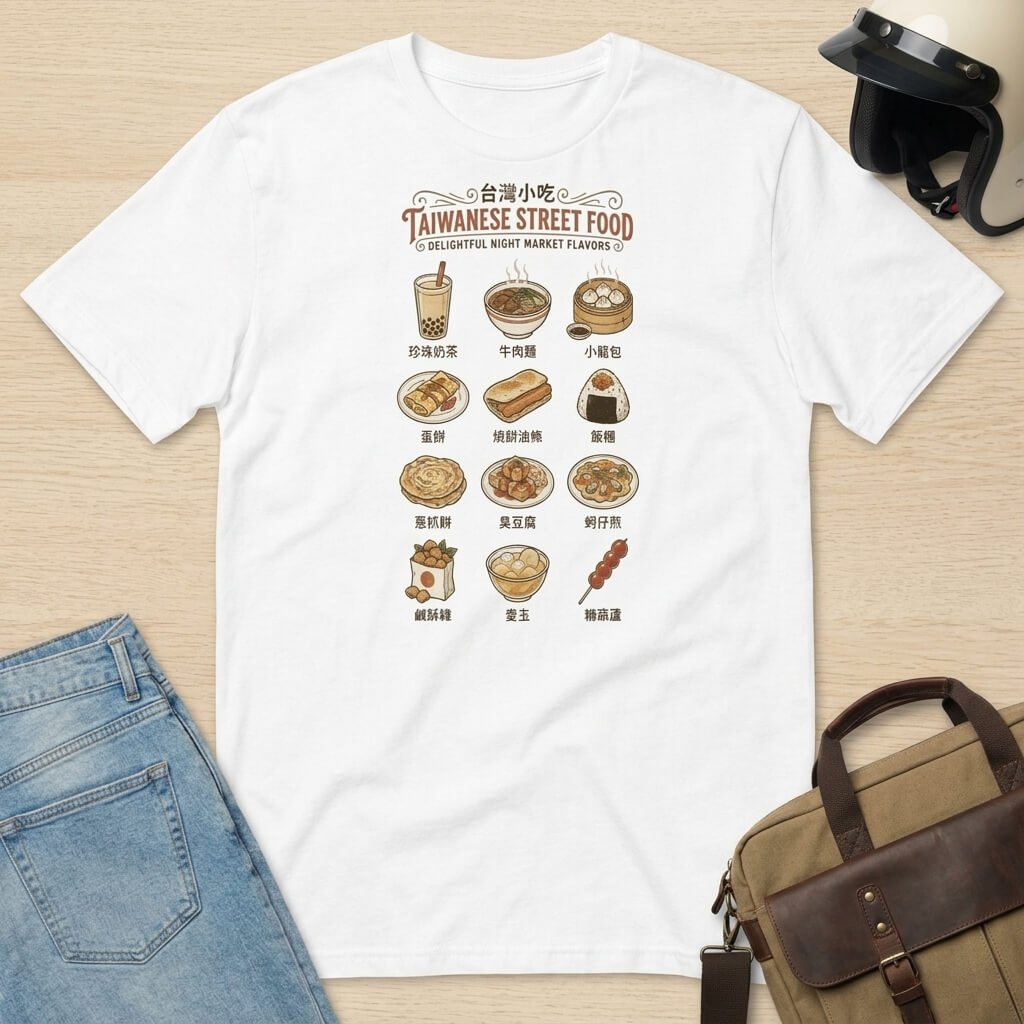
Wear Your Night Market Order
Our Taiwanese Street Food Guide tee is a vintage-poster menu of the island’s classic street eats. Good for anyone who plans trips around snack carts.
Taiwan Scallion Pancake Recipe (Hot-Water Dough)
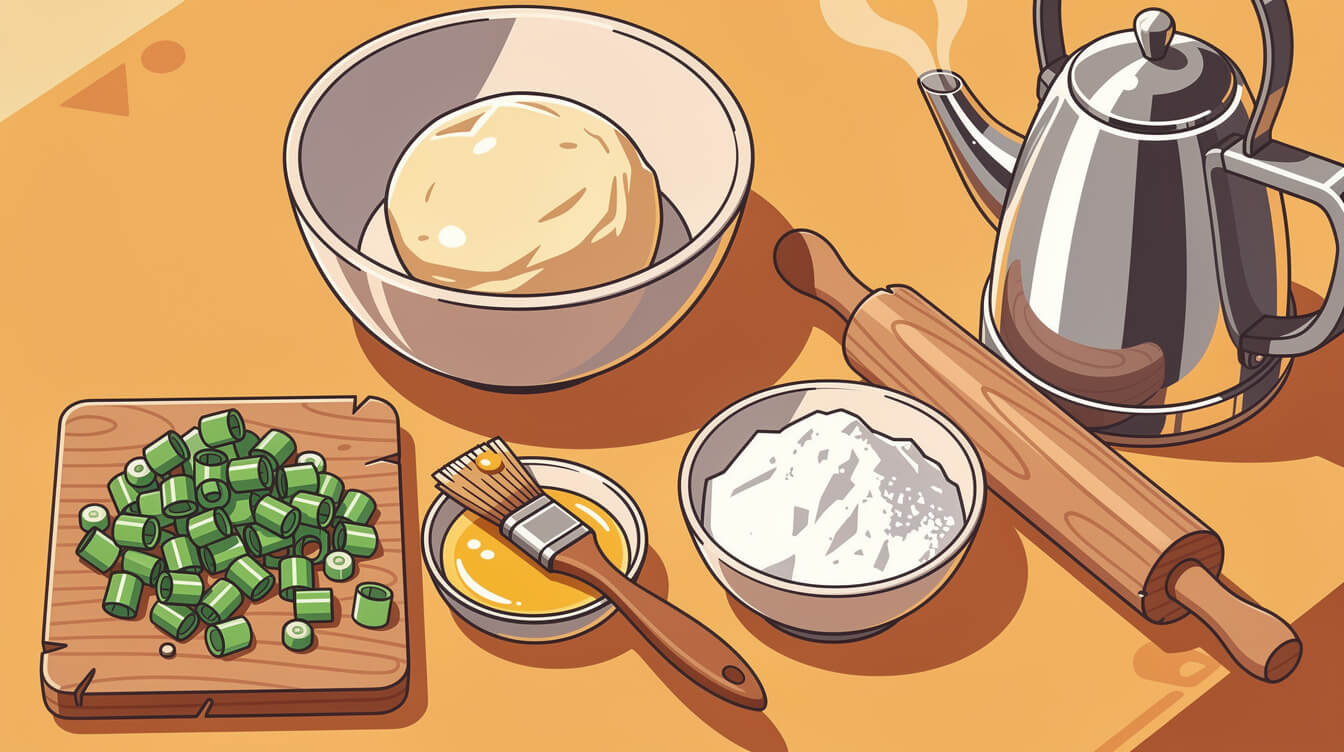
This recipe makes the classic coiled 蔥油餅, with a note at the end for turning it into a street-style “grabbed” pancake or a Yilan-style egg pancake. It uses a hot-water dough, which is what makes it tender enough to roll thin. For more dishes in the same spirit, see our 15 Taiwanese recipes to make at home.
Makes: 4 pancakes · Active time: 30 minutes · Resting: 45 minutes
Ingredients
Dough
- 300 g (about 2⅓ cups) all-purpose flour
- ½ tsp salt
- 120 ml (½ cup) boiling water
- 60–80 ml (¼–⅓ cup) cold water
Filling
- 3 tbsp neutral oil (or lard, for an old-school flavor)
- 2 tbsp flour
- ½ tsp salt and a pinch of white pepper
- 6–8 green onions, thinly sliced (about 1½ cups), white and green parts
- Oil for frying
Method
- Make the hot-water dough. Mix the flour and salt in a bowl. Pour in the boiling water and stir with chopsticks until shaggy. Add the cold water a little at a time and knead into a soft, smooth dough, about 5 minutes. Cover and rest for 30 minutes.
- Make the oil paste. Stir the oil, 2 tbsp flour, salt and pepper together. This paste keeps the layers apart and seasons every one of them.
- Roll and fill. Divide the dough into 4. Roll one piece into a thin rectangle about 25 × 18 cm (10 × 7 in). Spread with a quarter of the oil paste and scatter a quarter of the scallions over it.
- Roll, then coil. Roll it up tightly from the long side into a rope. Gently stretch it a little longer, then coil it into a snail shape and tuck the end underneath. Repeat with the rest and let the coils rest for 15 minutes.
- Flatten. Press each coil flat with your palm, then roll gently to about 18 cm (7 in) across. A few scallions breaking through is fine.
- Fry. Heat 1 tbsp oil in a skillet over medium heat. Fry for 3–4 minutes per side until deep golden and crisp, adding a little more oil when you flip.
- Fluff it. Off the heat, push the pancake inward from both sides with two spatulas a few times. This “grabbing” motion separates the layers. Cut into wedges and serve hot with soy paste or chili sauce.
Variations
- Street-style 蔥抓餅: roll the dough thinner, use more oil paste, and scrunch harder in step 7 until it shreds.
- With egg: after flipping, push the pancake aside, pour a beaten egg into the pan and lay the pancake on top of it. Cook 1 minute until the egg sets onto it, then flip and fold.
- Yilan-style: fry in 1–2 cm of oil over medium-high heat, spooning oil over the top until it puffs. Crack an egg into the center, add a handful of extra scallions, then drain and brush with sauce.
No Sanxing scallions? Here’s how to compensate
Supermarket green onions in the US usually have short white ends and long, thin green tops, so they have less sweetness and less juice than Sanxing scallions. Three fixes help:
- Use more, and keep the whites. Add 1–2 extra stalks and slice the pale parts thinly rather than discarding them.
- Dry them well. Wet scallions steam the dough and tear it. Wash, then pat dry or air-dry for 20 minutes before slicing.
- Add a little sweetness. A few thin slices of the white part of a leek, or a small pinch of sugar in the oil paste, gets you closer to the rounded sweetness of a Yilan pancake.
What to Eat With Scallion Pancakes and How to Reheat Them
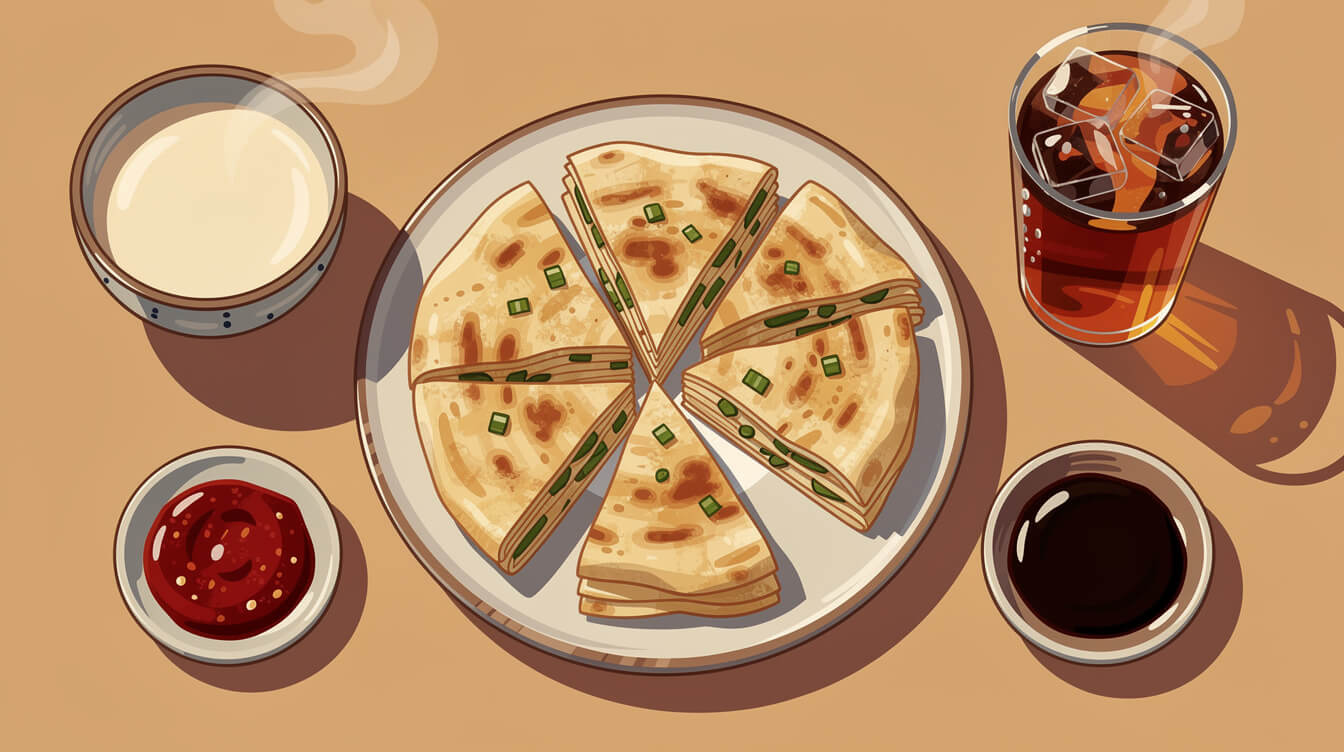
Classic pairings
In Taiwan, a scallion pancake is a snack you eat with your hands, so pairings are simple:
- Black tea (紅茶). Sweet and iced, from the drink stand next door. One Jiaoxi stall even pours it free while you wait. The tannins cut the oil.
- Soy milk (豆漿). Warm and lightly sweet, the way it’s served at breakfast. It’s a natural pairing if you’re making pancakes for a weekend brunch alongside the dishes in our Taiwanese breakfast culture guide.
- A bowl of soup or noodles. At home, wedges of scallion pancake work like garlic bread next to beef noodle soup or hot-and-sour soup.
- Night market sides. Pair with a grilled sausage, or a gua bao if you want a full street-food spread.
How to reheat a scallion pancake
- Skillet (best): dry pan over medium-low heat, 2–3 minutes per side, lid on for the first side so the middle warms through.
- Air fryer: 180°C / 360°F for 4–6 minutes, flipping once.
- Oven: 200°C / 400°F for 8–10 minutes on a rack.
- Avoid the microwave. It turns the layers rubbery and soggy.
Cooked pancakes keep 2–3 days in the fridge. Uncooked coils freeze well. Flatten them, freeze between squares of parchment, and fry straight from frozen over medium-low heat, adding a minute per side. That’s exactly how the frozen 蔥抓餅 in Asian supermarkets are meant to be cooked.
Taiwan Scallion Pancake FAQ
How do you say scallion pancake in Mandarin?
蔥油餅, cōng yóu bǐng (tsong yo bing). The flaky street version is 蔥抓餅, cōng zhuā bǐng, and the breakfast egg crepe is 蛋餅, dàn bǐng.
What’s the difference between a Taiwanese and a Chinese scallion pancake?
They share a family tree. The laminated scallion flatbread came to Taiwan with northern Chinese cooks. The Taiwanese differences are in the street culture: the “grabbed” 蔥抓餅, egg, basil and cheese add-ons, sweet soy paste, and Yilan’s puffy fried-egg style built around Sanxing scallions.
Is it the same as Korean pajeon?
No. Pajeon is made from a pourable batter, often with seafood, and cooks like a thick crepe. A scallion pancake is a rolled, layered dough, so it’s flaky and chewy rather than soft.
Are Taiwanese scallion pancakes vegetarian?
The basic dough is usually just flour, water, oil, salt and scallion. Some old-school shops use lard, though, and many add-ons are meat. If it matters, ask 有豬油嗎?(yǒu zhū yóu ma?), “is there lard?” Our vegan Taiwan guide has more ordering phrases.
How much does a scallion pancake cost in Taiwan?
Expect roughly NT$40–60 for a plain one at most stalls, with add-ons around NT$10–20 each. Yilan’s famous shops were charging NT$35–50 in 2023 reports, and loaded versions with sausage run about NT$80.
When is the best time to eat one in Yilan?
Afternoon, before the dough sells out. In season, the cooler months from late autumn through spring are when Sanxing scallions are at their best.
Final Thoughts
The Taiwan scallion pancake looks like the simplest thing on the street, just flour, water, oil and green onion. But it tells you a lot about Taiwan: a northern Chinese dough that became island street food, a farm township whose scallions are famous enough to be ordered by name, and vendors who keep finding new things to fold inside. Eat one in Yilan if you can. If you can’t, make the hot-water dough at home, use more scallion than seems reasonable, and give it a good scrunch before you serve it.
Hungry for more? Our night market food guide and Taiwan breakfast food guide are good next bites.

A Postcard From Taiwan, Every Week
Street food stories, recipes and the little Taiwan details worth knowing, straight to your inbox. No spam, unsubscribe anytime.

Grab a Free Taiwan Sticker!
Drop your email and we’ll send you a limited-edition Taiwan sticker — plus insider access to new merch drops and island vibes.
No spam. Unsubscribe anytime.