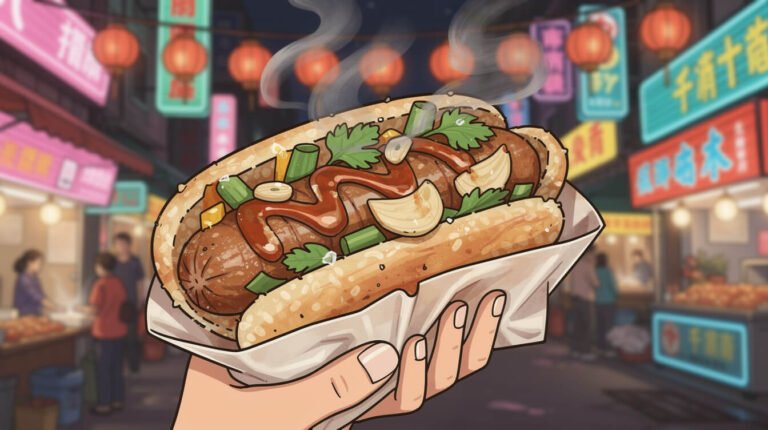
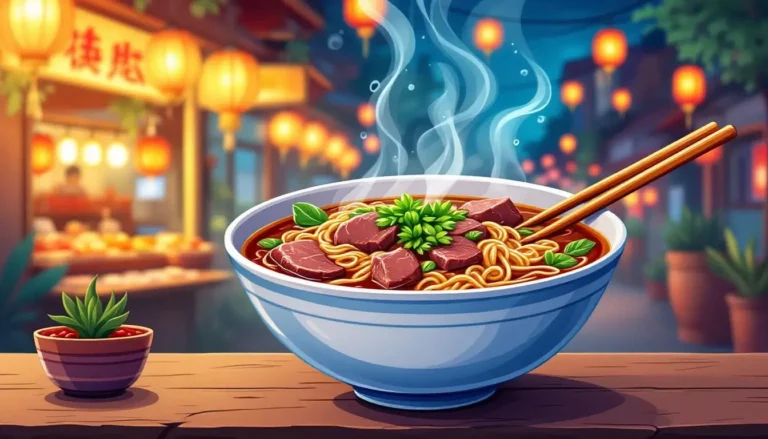
Taiwan Popcorn Chicken (Yan Su Ji): How to Order It at the Night Market — and Make It at Home
Somewhere in Taiwan right now, a stainless steel basket is being lowered into hot oil, and forty seconds later a fistful of basil is going in after it. If you searched popcorn chicken Taiwan and landed on a stack of recipe cards, you got half the answer. The recipe is the easy part. The part nobody writes down is what happens at the stall — the tongs, the basket, the two questions the vendor will ask you, and the little steel shaker that finishes the whole thing in three seconds flat.
This guide does the stall first and the recipe second. By the end you will know exactly what Taiwan popcorn chicken is actually called and why three different names point at the same paper bag, how to order it in Taiwan without freezing up, what else you are allowed to throw in the basket besides chicken, and — yes — how to make a genuinely close version in your own kitchen. Consider it the missing manual.
Yan Su Ji, Salty Crispy Chicken, Popcorn Chicken: What You’re Actually Looking For
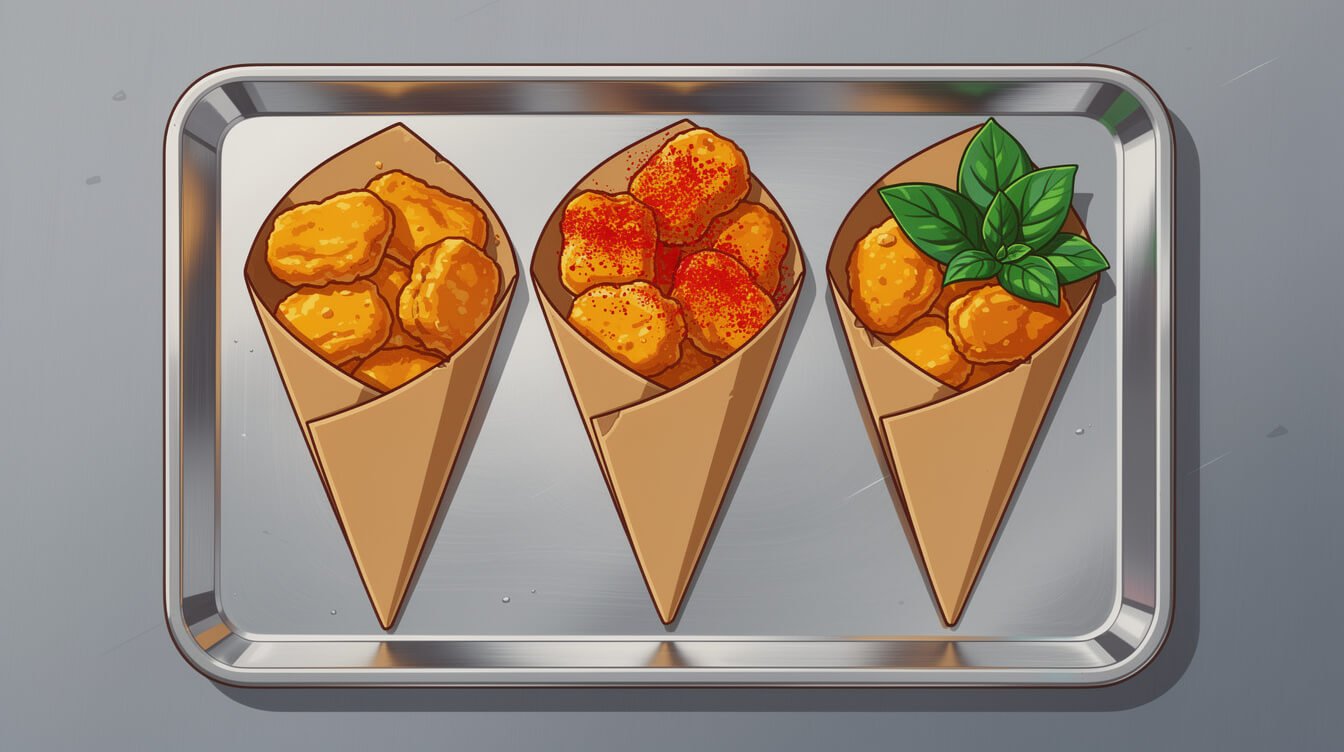
Here is the Taiwan popcorn chicken naming mess, cleared up once. The dish is written two ways in Chinese and they are used interchangeably: 鹽酥雞 (yán sū jī, “salt crispy chicken”) and 鹹酥雞 (xián sū jī, “salty crispy chicken”). Different first character, same snack, same stall. Which one you see painted on the awning depends on the vendor, not on the food. Menus in English then translate it as salt and pepper chicken, salty crispy chicken, or — overwhelmingly, in the West — Taiwanese popcorn chicken.
That last translation is the one causing all the confusion, because American popcorn chicken is a fast-food product: uniform nuggets, wheat-flour breading, a soft sandy coating, eaten with a dipping sauce. Yan su ji shares only the bite-size format. Everything else is different. The pieces are irregular, cut from marinated chicken thigh rather than breast. The coating is coarse sweet potato starch, not flour, which fries into a craggy, glassy shell with actual ridges on it. And it arrives dry-seasoned from a shaker, not wet-sauced — there is no dip, because there does not need to be one.
One more distinction worth having in your head before you travel, because it trips up almost everyone: yan su ji is not the giant fried chicken cutlet. That is 大雞排 (dà jī pái), a single butterflied chicken breast the size of your face, sold from its own dedicated stalls and eaten out of a paper sleeve like a slice of pizza. Both are Taiwanese fried chicken. They are different orders, from different vendors, and asking for one at the other’s stall is the fastest way to get a confused look. We covered the basics of the small version in our earlier note on Taiwan’s salty crispy chicken; this guide is the full version.
As for when it was invented — genuinely, nobody knows. Unlike bubble tea, which has two Taichung tea houses still arguing over the credit, yan su ji has no founding myth and no origin stall. Food historians place it as a relatively recent dish that spread fast through night-market competition, with vendors one-upping each other on seasoning blends until mild, medium and extra-spicy hardened into a standard. Seaweed powder, mustard powder, allspice, cheese powder and honey glazes have all had their moment. The dish evolved in public, which is very Taiwanese.
How to Order Taiwan Popcorn Chicken at a Night Market Stall
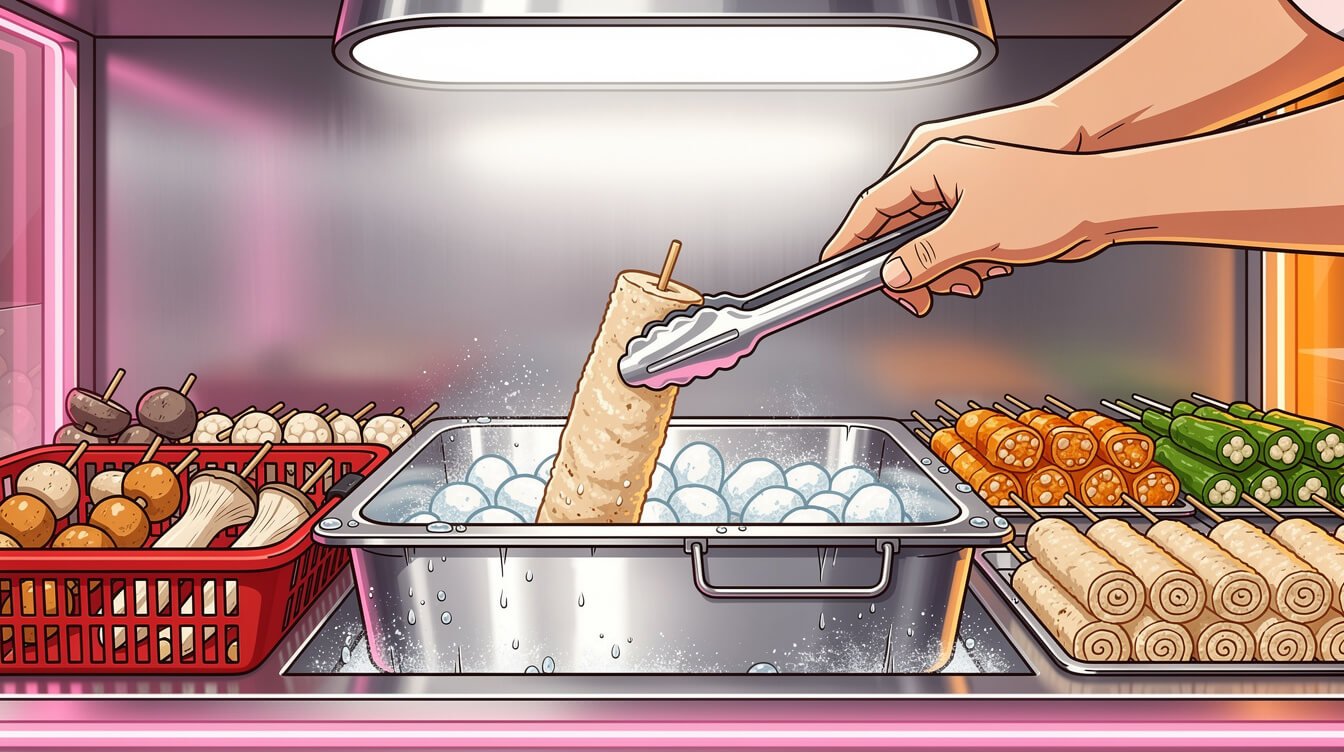
This is the section the recipe blogs skip, and it is the one that actually matters if you are standing in front of a Taiwan popcorn chicken stall at half past ten at night. The good news: the whole transaction takes ninety seconds and requires roughly four words of Mandarin. Here is the sequence, start to finish.
1. Take a basket and a pair of tongs
They are stacked at the front of the stall — usually a small red or blue plastic basket and a set of long steel tongs. You do not wait to be served and you do not point at things while the vendor watches. You serve yourself. This is a self-select display, and standing politely to one side waiting for attention is the single most common tourist mistake.
2. Fill the basket from the chilled display
Everything sits raw in ice-chilled stainless trays: the chicken pieces, and then a long row of vegetables, mushrooms, tofu products and seafood, much of it pre-skewered onto bamboo sticks for exactly this reason. Take what you want. There is no minimum, no set combination, and no wrong answer. One bag of chicken and two sticks of something green is a perfectly normal order.
3. Hand it over
Pass the basket across. The vendor will weigh or eyeball the chicken, tip everything into the fryer in the right order — dense items first, delicate ones last — and start the clock. Nothing is pre-fried. This is the whole point, and it is why there is a wait.
4. Answer two questions
You will be asked, in some form:
- “要不要加九層塔?” (yào bú yào jiā jiǔ céng tǎ?) — “Do you want basil added?” The answer is yes. We will get to why in a moment, but the answer is yes.
- “要辣嗎?” (yào là ma?) — “Do you want it spicy?” Say yào (yes) or bú yào (no). Taiwanese stall chilli is warm rather than punishing; if you eat chilli at all, say yes.
If you speak no Mandarin, nodding at the basil and pointing at the chilli shaker works fine. Vendors have this conversation four hundred times a night.
5. Wait for the double fry, then the shake
Your order goes through two oil temperatures — hotter first to seal and colour, cooler after to cook through without drying out, or some vendors reverse and finish hot for crunch. Either way it is two stages, which is why nobody can hand you a bag instantly. Then comes the finish: everything is tipped into a large steel bowl, the shaker comes out, and the vendor shakes — a hard rattling toss that coats every surface evenly. That sound is the sound of the dish being finished. Bag, toothpicks or a bamboo skewer, done.
Expect to wait three to five minutes at a busy stall, and expect to pay a modest sum by any international standard — a bag of chicken plus a couple of vegetable sticks lands comfortably in snack territory rather than meal territory. Prices drift, so treat any number you read online as a rough guide rather than a quote.
What Else Goes in the Basket — The Full Fried-Snack Menu
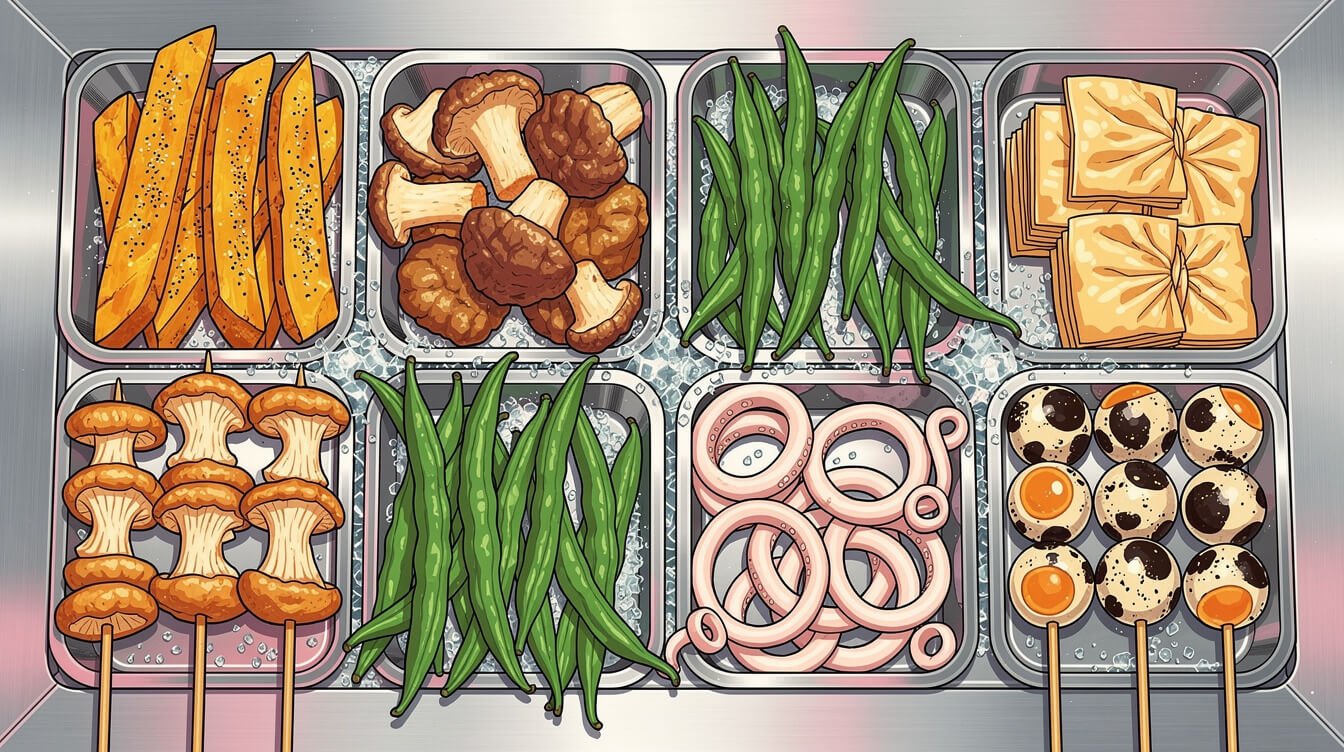
Here is the thing every recipe post gets wrong by omission: a yan su ji stall is not a chicken stall. It is a fried-snack system, and Taiwan popcorn chicken is simply its most famous component. Order only chicken and you have ordered one instrument from an orchestra. The display is the menu, and this is what is usually on it.
- Sweet potato (地瓜) — thick batons, fried until the outside caramelises and the inside goes molten. The single best thing on most displays and the one locals grab without thinking. Non-negotiable.
- King oyster mushroom (杏鮑菇) — cut into chunks or thick coins. Meaty, juicy, absurdly good with pepper salt. If you are travelling with a vegetarian, this is the order.
- Four-season beans (四季豆) — long green beans that blister and wrinkle in the fryer and stay snappy inside. The closest thing to a vegetable virtue signal available at 11pm.
- Tofu skin (豆皮) — folded sheets that fry into something between a crisp and a pastry. Light, shattery, addictive.
- Squid and squid rings (魷魚) — usually skewered. Chewy in the good way, and the seasoning clings to it beautifully.
- Quail eggs (鳥蛋) — three or four to a skewer, fried until the outsides blister. A texture experience more than a flavour one, and a childhood staple for most Taiwanese adults.
- Tempura / 甜不辣 — sliced fish cake, despite the borrowed name. Chewy, savoury, cheap, everywhere.
- Enoki mushrooms, okra, broccoli, chicken skin, intestine, garlic cloves — depending on the stall and how adventurous you are feeling.
The rule of thumb locals use: one protein, one starch, one green. Chicken, sweet potato, four-season beans. That combination costs very little, feeds two people walking, and hits every texture the fryer can produce. If you are building a wider night-market plan, our guide to Taiwanese street food and our roundup of classic Taiwan snacks will fill in what to eat before and after.
The Basil Moment and the Seasoning Shake
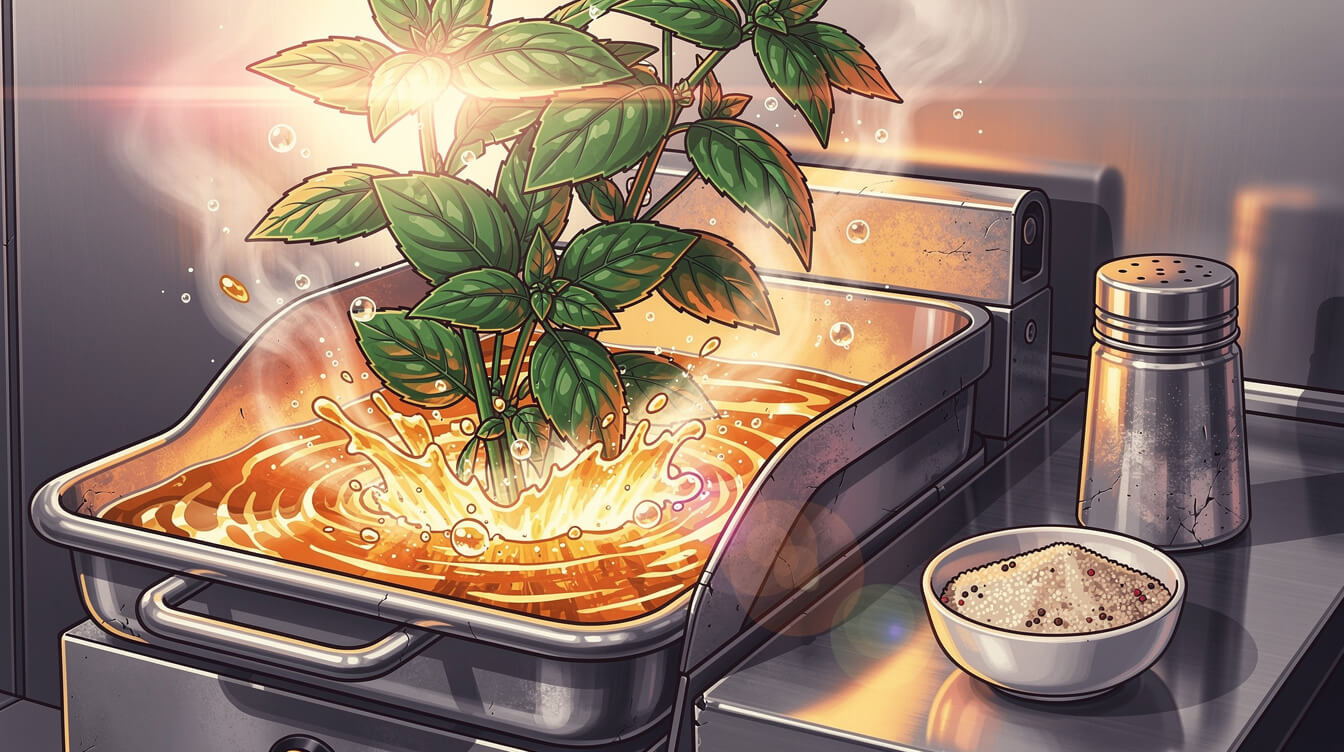
Two things separate a great bag of Taiwan popcorn chicken from a mediocre one, and neither of them is the chicken.
Nine-layer tower, and why it is not Italian basil
In the last few seconds of the fry, the vendor grabs a fistful of 九層塔 (jiǔ céng tǎ, “nine-layer tower”) and throws it straight into the oil. It hisses violently, goes translucent and dark, and comes out crackling. Those leaves get tipped into the bag with everything else, and they are not a garnish — they are a seasoning delivered as a texture.
Nine-layer tower is Taiwanese basil, and it is not interchangeable with the sweet basil on a Caprese salad. The leaves are smaller, darker and sturdier, the stems are purple-tinged, and the flavour runs towards anise and clove rather than soft green sweetness. Italian basil dropped into 180°C oil disintegrates into bitter fragments. Nine-layer tower holds its shape, crisps, and releases a perfume that fills the whole bag on the walk home. If you want the full story on the herb — including where to find it and what to substitute when you cannot — we wrote about nine-layer tower, Taiwan’s essential basil in detail.
What is actually in the shaker
The finishing powder is commonly called 胡椒鹽 (hú jiāo yán), pepper salt, and the working formula is simple: fine salt, a generous amount of white pepper, and five-spice powder — star anise, cinnamon, clove, fennel seed and Sichuan peppercorn. Chilli powder goes in separately if you asked for it. Some stalls add MSG, some add sugar, some add garlic powder, and every vendor believes their blend is the reason people queue.
White pepper is the load-bearing ingredient and the one Western cooks under-use. It is floral, slightly fermented and warm at the back of the throat, and swapping in black pepper produces something that tastes obviously wrong without you being able to say why. The five-spice is what makes the snack read as unmistakably Taiwanese rather than generically fried — the same aromatic family you meet in so much of the island’s home cooking.
Where to Find the Best Popcorn Chicken in Taiwan
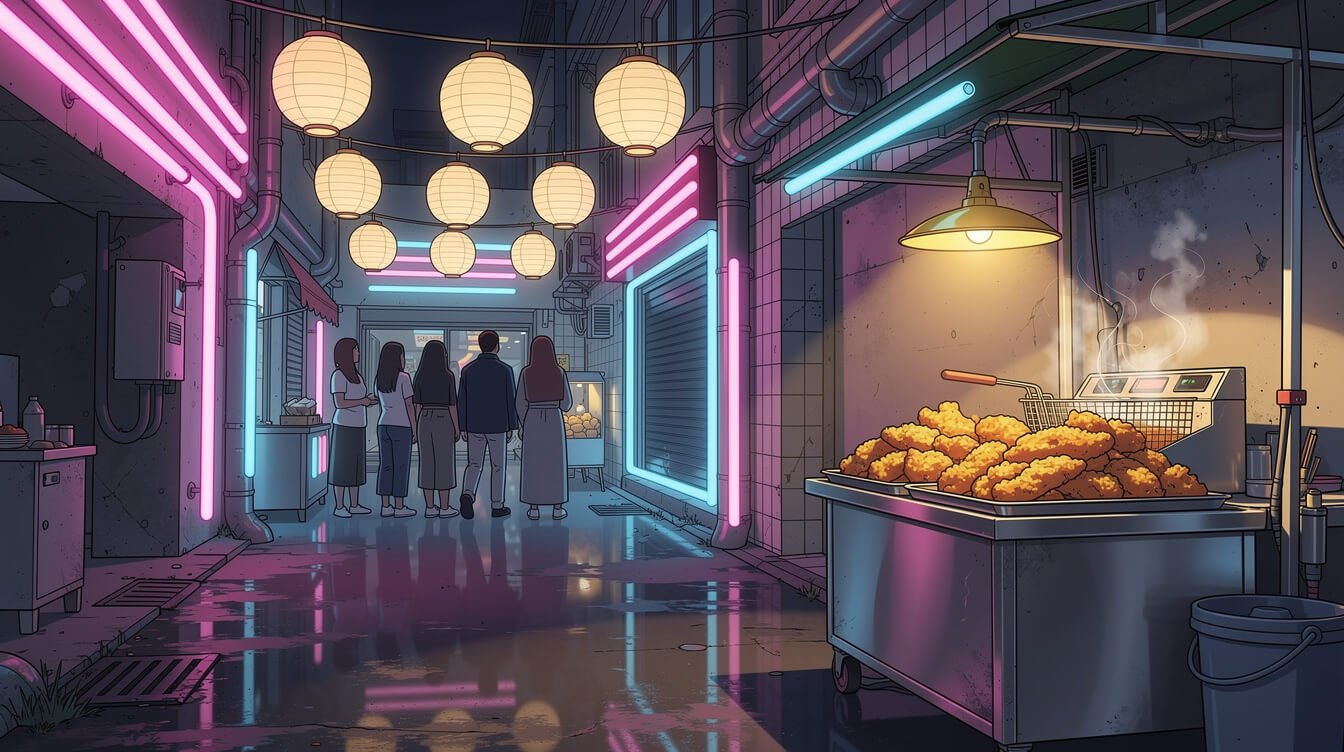
The honest answer is that the best yan su ji in Taiwan is almost certainly not in a night market at all. It is the unnamed stall three minutes from wherever you are sleeping, open from about six in the evening until whenever the oil gives out. But since you are probably visiting, here is how to play it.
The big night markets
Shilin is the biggest and the most famous, and it is a genuinely good place to eat fried chicken because the competition is brutal — underperforming stalls do not survive a season there. Raohe Street is tighter, more walkable and less exhausting, and you can work your way down the whole lane in an evening; we mapped it out in our Raohe Night Market guide. Ningxia is the food-first choice — smaller, denser, almost entirely about eating rather than shopping, which our Ningxia guide covers in full. For the wider picture, start with our complete Taiwan night market guide.
The neighbourhood-stall rule
Away from the tourist circuits, use this heuristic and you will rarely go wrong:
- Follow the queue at 11pm. A line of local office workers and students after ten at night is the most reliable quality signal in Taiwanese street food. Nobody waits twelve minutes out of habit.
- Look near MRT exits and school gates. Yan su ji is a transit-adjacent snack. Stalls cluster where people emerge hungry on the way home.
- Check the oil. Dark, murky, heavily foaming oil means low turnover. Clear oil means volume, and volume means freshness.
- Watch whether the basil is fresh. A vendor pulling leaves off a live bunch is a vendor who cares. Pre-fried basil sitting in a tray is a warning sign.
- Nothing should be sitting pre-fried. If the chicken is already cooked and waiting under a lamp, walk on.
And a scheduling note: this is night food. Most stalls do not open until late afternoon at the earliest, and plenty do not light the fryer until dusk. If your only free slot is lunchtime, you are looking for the dà jī pái cutlet or a fried chicken shop instead. If your love language is a paper bag of yan su ji at midnight, we made a Taiwanese Boba Tea & Fried Chicken Duo T-Shirt for exactly that — the two things that end every good night in Taipei, on one tee.
How to Make Taiwan Popcorn Chicken at Home: The Authentic Method
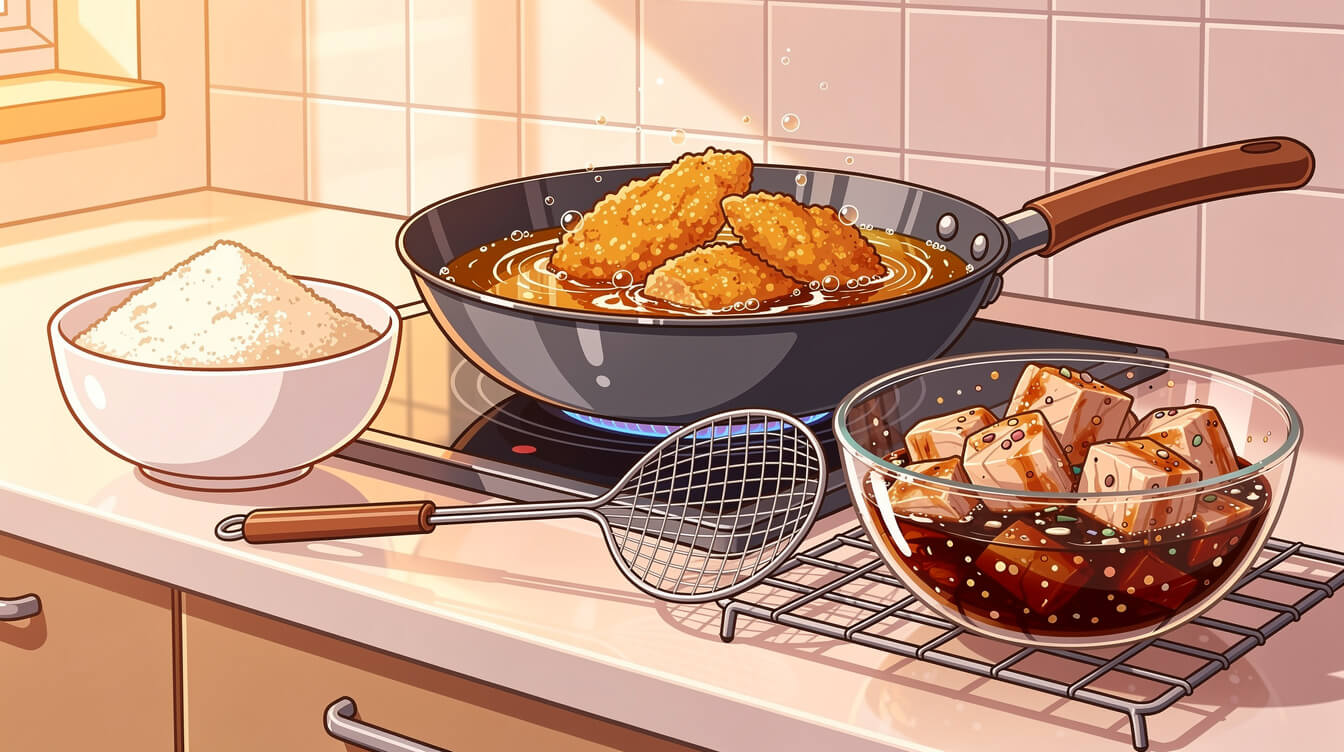
You can get genuinely close to real Taiwan popcorn chicken at home. Four decisions do almost all the work, and three of them are the ones home cooks get wrong.
Use thigh, not breast
Boneless chicken thigh, skin on if you can get it, cut into rough two-centimetre pieces. Irregular is correct — the uneven edges are what create the craggy crust. Breast meat dries out in the second fry and gives you a texture closer to the fast-food version you are trying to escape.
Marinate properly, and give it an hour
The working marinade for about 500g of thigh: two tablespoons soy sauce, one tablespoon rice wine, two to three cloves of garlic crushed to a paste, half a teaspoon of five-spice, half a teaspoon of white pepper, a teaspoon of sugar. Mix, cover, refrigerate for at least one hour — overnight is better. Some cooks add a beaten egg before dredging; it helps the starch grip. Under-marinating is the most common home failure, and no amount of finishing powder rescues bland meat.
Sweet potato starch is not optional
This is the single biggest difference between a home attempt that tastes Taiwanese and one that tastes like generic fried chicken. Use coarse sweet potato starch (地瓜粉) — the kind that looks like fine gravel, not powder. Cornstarch gives a thin, smooth, almost tempura-like shell. Wheat flour gives a soft crust that goes soggy in ten minutes. Sweet potato starch gives you the ridged, shattering, stays-crunchy-on-the-walk-home coating that defines the dish. Dredge each piece, press the starch on, and — crucially — let the coated pieces rest for five minutes so the starch hydrates and grips before it hits the oil.
Double fry, and finish with basil
First fry at around 160°C for three to four minutes, until pale gold and cooked through. Lift out and rest for at least five minutes. Then raise the oil to roughly 190°C and fry again for thirty to forty-five seconds, until deep gold and audibly crisp. In the final ten seconds, drop in a large handful of dry nine-layer tower leaves — stand back, because they will spit — and pull everything out together. Drain briefly, tip into a large bowl, add your pepper salt, and toss hard. Do not skip the tossing; the shake is the recipe.
The air-fryer answer, honestly
An air fryer will give you a good crunchy piece of seasoned chicken. It will not give you yan su ji. The coarse starch crust needs immersion in hot oil to puff and shatter, and an air fryer produces a denser, drier shell instead. Spray the coated pieces generously with oil, cook at 200°C for around twelve minutes with a shake halfway, fry the basil separately in a small pan of oil, and season at the end. It is a worthwhile weeknight compromise, not a substitute — and it is fine to hold both of those thoughts at once.
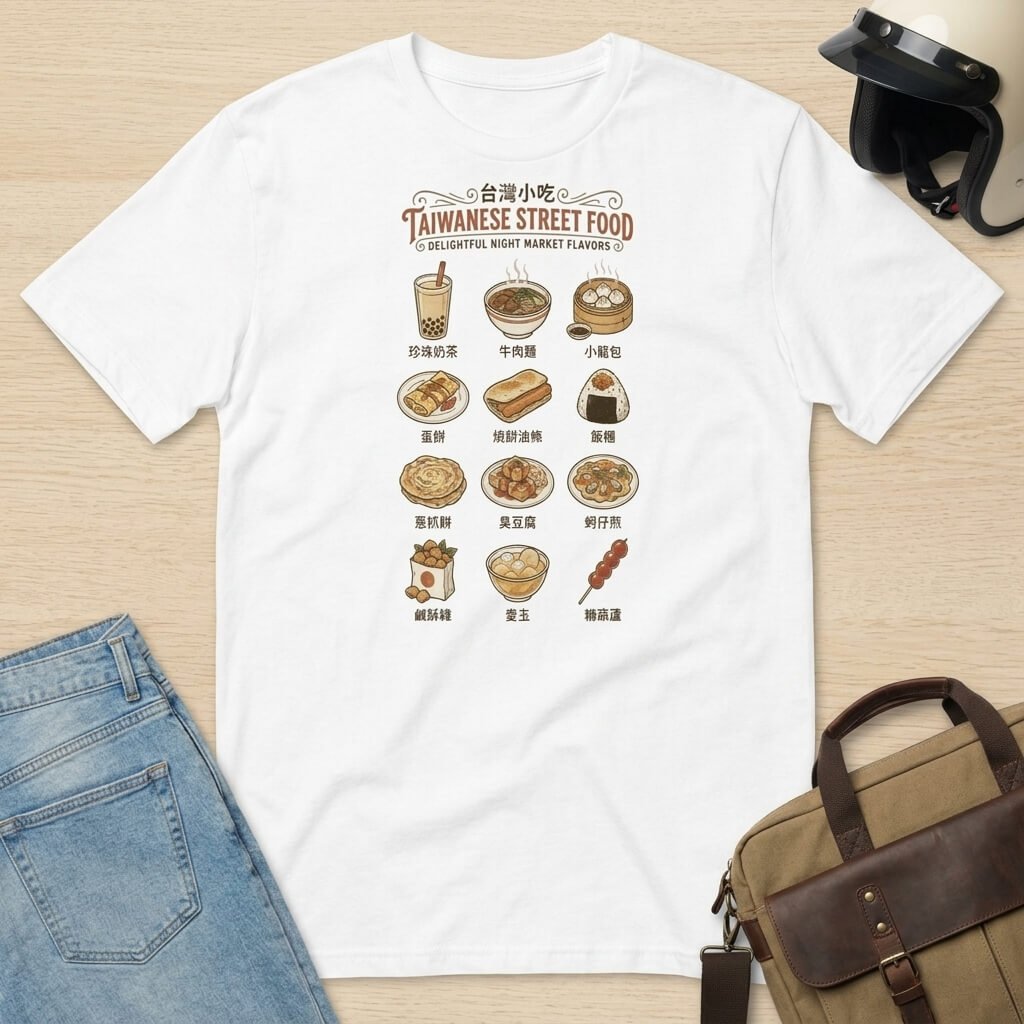
Wear the Whole Night Market
Our Taiwanese Street Food Guide tee puts yan su ji and the rest of the lane on one vintage food-poster design. Original art, printed on demand, shipped worldwide.
Yan Su Ji After Dark: Late Nights, Boba, and a Design Motif
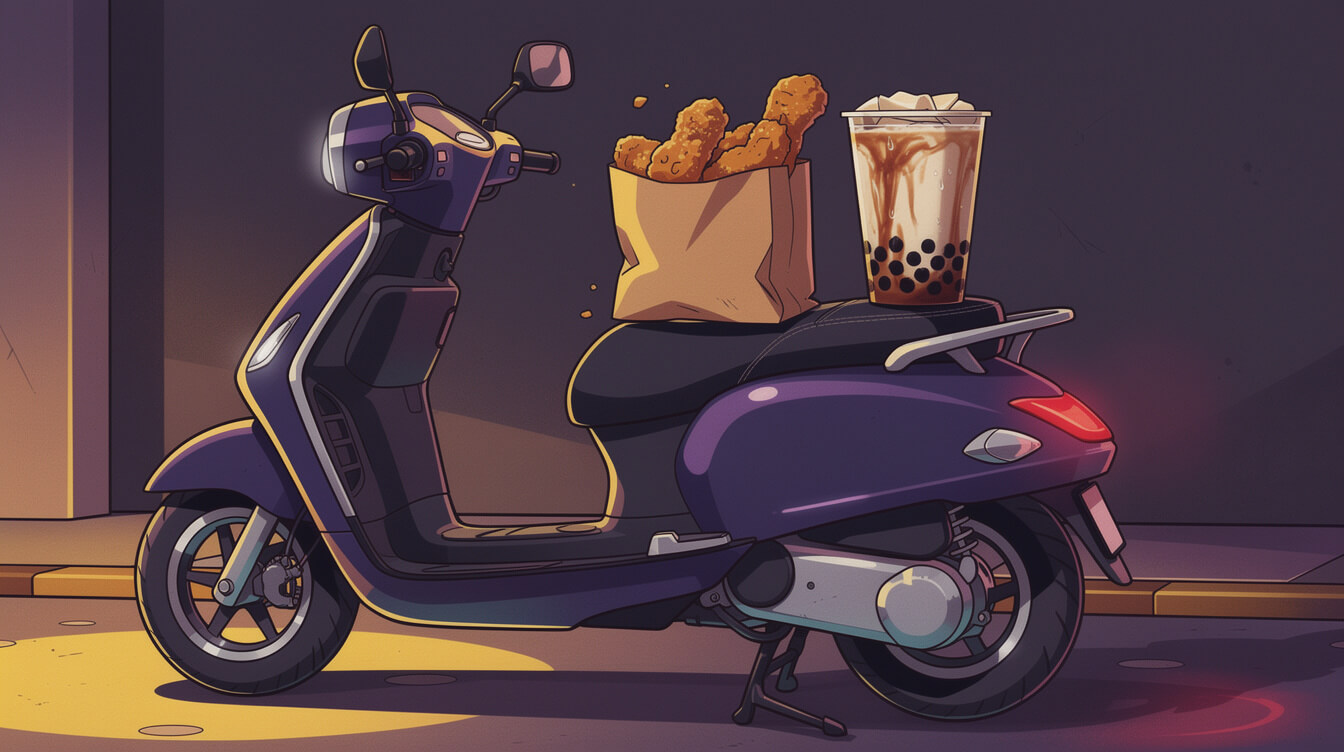
Ask a Taiwanese person abroad what they miss and the answer is rarely a restaurant. It is more often this: the walk home from the MRT at eleven at night, a warm paper bag in one hand, oil slowly darkening the paper, and the smell of fried basil arriving about half a step before you do.
Yan su ji occupies a specific slot in Taiwanese life that has no clean Western equivalent. It is not dinner and it is not really a takeaway — it is the thing you buy after the thing. After the night shift, after the study session, after karaoke, after the baseball game. It is shared out of the bag while walking, with toothpicks, by people who did not plan to be eating. Nobody sits down for it.
And it travels with a partner. The chicken-and-boba pairing is so standard that stalls often sit within a few metres of a tea shop, and plenty of drink shops sell fried chicken directly from the counter for exactly this reason — hot, salty, crunchy against cold, sweet, chewy. It is a texture argument as much as a flavour one, and it is why the two show up together constantly in Taiwanese illustration, merch and memes. If you want the other half of that pairing properly explained, our guide to Taiwan drinks is the place to start.
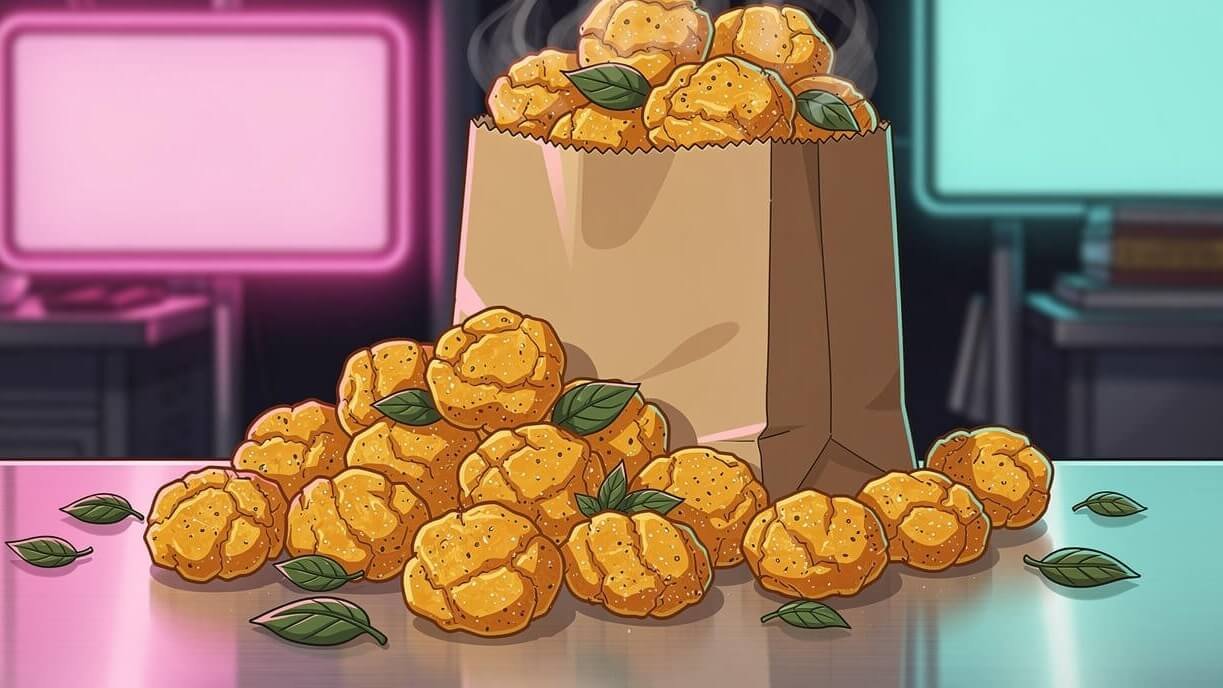
That cultural weight is also why yan su ji has become a design motif rather than just a food. A paper bag of gold-brown nuggets with a few dark basil leaves on top is instantly legible to anyone who has lived in Taiwan, and completely mysterious to everyone else — which makes it perfect insider shorthand. It signals late nights, a specific street, a specific smell, and a very specific kind of homesickness. Food that does that stops being food and starts being a flag.
Frequently Asked Questions About Taiwan Popcorn Chicken
Is Taiwanese popcorn chicken the same as American popcorn chicken?
No. They share the bite-size format and nothing else. Taiwanese yan su ji uses marinated thigh meat, a coarse sweet potato starch coating, a double fry, dry pepper-salt seasoning and fried basil. American popcorn chicken is typically breast meat in a wheat-flour breading, eaten with a dipping sauce. “Popcorn chicken” is a translation of convenience, not a description.
What does yan su ji taste like?
Savoury and aromatic rather than sweet or hot. The dominant notes are white pepper and five-spice over well-marinated dark meat, with a crust that shatters audibly and a strong anise-clove perfume from the fried basil. If you asked for chilli, add a gentle warmth on top rather than real heat.
Is Taiwan popcorn chicken spicy?
Only if you ask for it. Chilli powder is added at the finishing stage, so the default order is not spicy at all. Stall chilli in Taiwan is moderate by most standards — if you routinely eat spicy food, say yes.
Can I eat at a yan su ji stall as a vegetarian?
Largely yes, with one caveat. The vegetable, mushroom and tofu options are extensive and genuinely excellent, but almost every stall fries everything in the same oil as the chicken and seafood. If shared oil is a dealbreaker, this is not the snack for you. If it is not, order king oyster mushroom, sweet potato, four-season beans and tofu skin and you will eat extremely well.
Why is my homemade version not crunchy?
Three usual suspects. You used cornstarch or flour instead of coarse sweet potato starch; you skipped the rest between dredging and frying, so the coating never gripped; or you skipped the second high-temperature fry. The second fry is what drives out surface moisture and locks in the crunch — a single fry always goes soft.
What can I use instead of nine-layer tower basil?
Thai holy basil or Thai sweet basil are the closest widely available substitutes, in that order, because they share the anise backbone and hold up to hot oil. Italian sweet basil is the last resort — it burns fast and turns bitter. Many East and Southeast Asian grocers stock nine-layer tower fresh, and it grows easily from cuttings on a windowsill.
What time do yan su ji stalls open?
Most run from late afternoon or early evening until late at night, with the sweet spot between about 8pm and midnight. Neighbourhood stalls often close when the day’s chicken runs out rather than at a fixed hour, so later is riskier than it looks.
How do I order if I don’t speak Mandarin?
You barely need to. Take a basket, fill it yourself, hand it over, then nod yes to basil and answer yes or no to chilli. Pointing works. The entire transaction is designed to be non-verbal, which is part of why it scales to hundreds of orders a night.
Final Thoughts
Every page on the first results screen for this dish will teach you to cook it. Almost none will teach you to buy it, and buying it is the version most people will actually experience — standing on a pavement in Taipei or Tainan with a plastic basket in one hand, deciding between sweet potato and tofu skin while the fryer roars behind the counter.
So take the basket. Put in more than chicken. Say yes to the basil. Stand there for the four minutes it takes, listen for the rattle of the shaker, and eat the first piece too hot, out of the bag, on the walk to wherever you are going next. Then come home and make it — thigh meat, coarse sweet potato starch, one hour of marinade, two fries and a fistful of nine-layer tower — and you will find the smell alone puts you back on that street.
That is the real trick of Taiwan popcorn chicken. It is not a complicated dish. It is a very specific ninety seconds of a very specific evening, and the recipe is just the way you get to have it twice.
A Postcard From Taiwan, Every Week
Culture stories, food deep-dives, travel tips, and first looks at new designs — straight to your inbox. No spam, just Taiwan.

Grab a Free Taiwan Sticker!
Drop your email and we’ll send you a limited-edition Taiwan sticker — plus insider access to new merch drops and island vibes.
No spam. Unsubscribe anytime.