What to Put in a Taiwan Care Package: What Actually Survives the Journey
There is a particular silence that comes over a Taiwanese person abroad when they open a box and find a packet of their childhood instant noodles inside. Not the expensive thing. Not the thoughtful thing from the gift shop. The two-dollar thing they used to eat after cram school. A good Taiwan care package is built out of that silence, and almost nobody writes about how to get it there intact.
Most care-package guides are lists of comforting objects: the silk eye mask, the nice socks, the artisanal tea. Lovely. Useless for this. The problem with sending Taiwan somewhere is not choosing items — it is that the island’s best food is humid, custardy, vacuum-dependent and frequently made of pork, and it has to survive six weeks in a container ship or a border officer’s hands. So this guide is organised around a single question asked of every item: does it actually arrive?
This is written for two people at once. If you are outside Taiwan assembling a box for a homesick Taiwanese friend, partner or student, you are here. And if you are Taiwanese, or you have just come back from a trip, and you are posting a box of home to someone far away — you are the other half, and most of the hard-won knowledge below came from your side of the post office counter.
Why a Taiwan Care Package Is Different From Any Other Care Package
Three things make a box from Taiwan behave differently from a box from, say, Denmark.
The climate is in the food. Taiwan’s signature baked goods are engineered for a subtropical island where you buy a box of pastries in the morning and eat them by Thursday. Sun cakes shatter. Mochi hardens. Egg-yolk pastries are built around a cooked salted yolk wrapped in a short, fatty crumb, and they are not designed to spend a month at ambient temperature in the hold of a ship. The things Taiwan is proudest of are often the things that travel worst, which is exactly the trap a first-time sender falls into.
The savoury canon is meat-based. Pork floss. Dried pork slices. Braised-beef noodle packs with actual beef in the sachet. This is the deepest comfort-food layer in Taiwanese eating and it is also the category that destination countries restrict most aggressively. More on that below, with the actual authorities named, because this is the one section where being wrong costs someone their box.
Mail is not treated like luggage. This is the single most useful fact in this article and it surprises nearly everyone. Under the US Department of Agriculture’s Animal and Plant Health Inspection Service (APHIS), the relaxed rules you may have used when carrying snacks home in your suitcase do not apply to a posted parcel. APHIS states it plainly on its traveller guidance for meats, poultry and seafood: commodities intended for “personal use” are those in passenger baggage or passenger vehicles, while “commodities sent by mail are regulated as ‘commercial’ use.” Your care package is, legally, a tiny import business. Pack it accordingly.
Everything that follows is grouped the way you should actually pack: sweet, savoury, drinkable, and the objects that carry no calories but do most of the emotional work.
The Sweet Shelf: What Survives and What Arrives as Crumbs
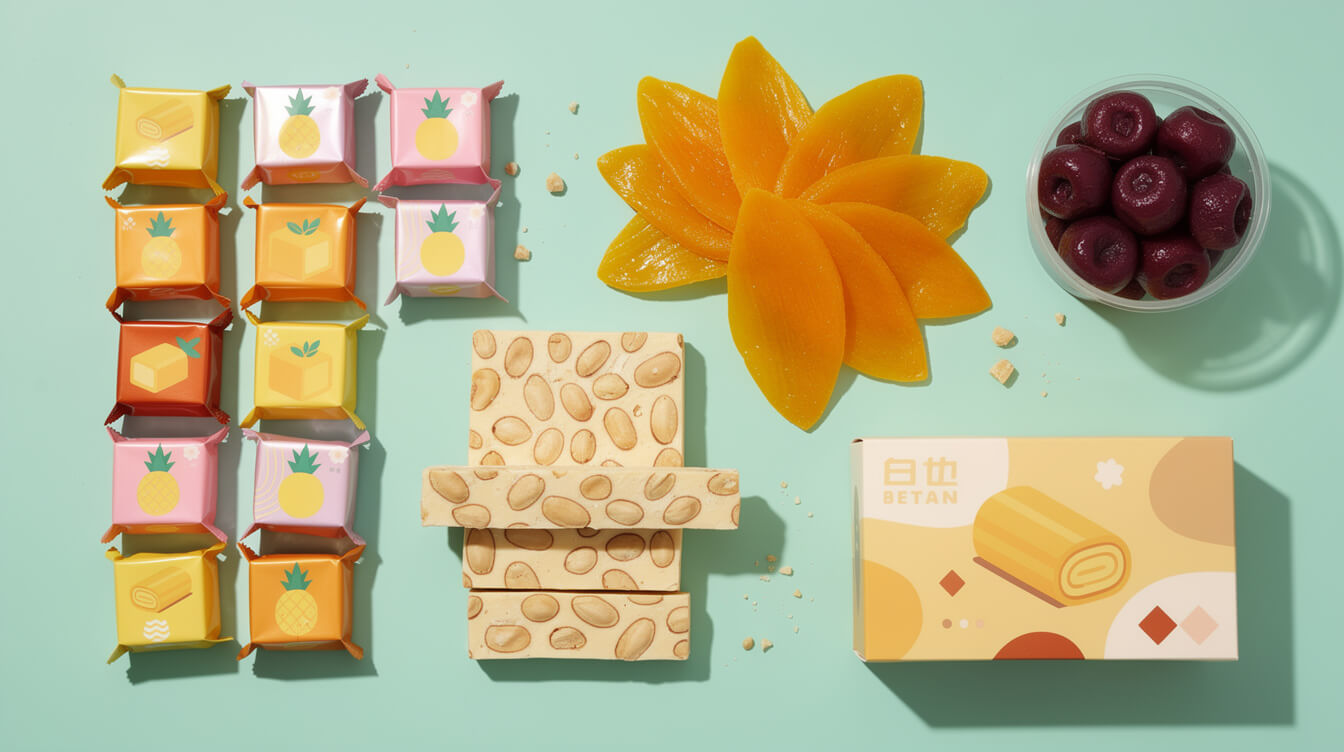
Pineapple cake (鳳梨酥) — travels well. The commercial, individually foil-wrapped kind is close to a perfect shipping food: low moisture, dense, sealed one piece at a time so a crushed corner costs you one cake rather than the box. It is the default for a reason. Read the printed date on the box before you pack it and compare it against your shipping method, not against today — a surface-mail box can eat a surprising share of a short shelf life before it lands. If you want to pick a brand rather than grabbing airport stock, our complete guide to Taiwan pineapple cake breaks down who makes what and why the tart ones cost more.
Nougat (牛軋糖) — travels well, with one caveat. Milk nougat studded with peanuts is sturdy, individually wrapped and genuinely hard to ruin. The caveat is heat: nougat does not spoil, it fuses. A box that sits on a loading apron in July arrives as one affectionate brick. Not dangerous, just sad. Send it in the cooler half of the year if you can choose.
Preserved plums and candied fruit (蜜餞) — travels well. Salted plums, preserved mango, candied kumquat. These are built for exactly this: sugar and salt as preservatives, no refrigeration, strong flavour that survives a long trip. They also happen to be intensely nostalgic in a way nothing else in the box will be.
Dried fruit — travels well. Dried mango, dried guava, dried pineapple. Lightweight, flat, forgiving. Worth noting that dried fruit is still plant material, so it belongs on your customs declaration even though it is almost always fine.
Egg rolls, rice crackers and sealed biscuit tins — travels well, packs badly. Shelf-stable, yes. Crush-resistant, absolutely not. These need to ride in the middle of the box, buffered by the soft things, or you are mailing someone a bag of sweet gravel.
Sun cakes (太陽餅), mochi (麻糬), egg-yolk pastries (蛋黃酥), fresh mooncakes — do not send. Sun cakes are flaky to the point of structural dishonesty. Mochi goes hard and, in the chilled versions, is perishable outright. Anything built on a custard, a fresh egg yolk or a short-dated bakery filling will either spoil or arrive as a food-safety question nobody wants to answer. Buy these for people in Taiwan. Mail the shelf-stable half of the canon.
Savoury and Shelf-Stable: Where Most Boxes Go Wrong
This is the section that separates a box assembled by someone who has done it before from one assembled off a listicle.
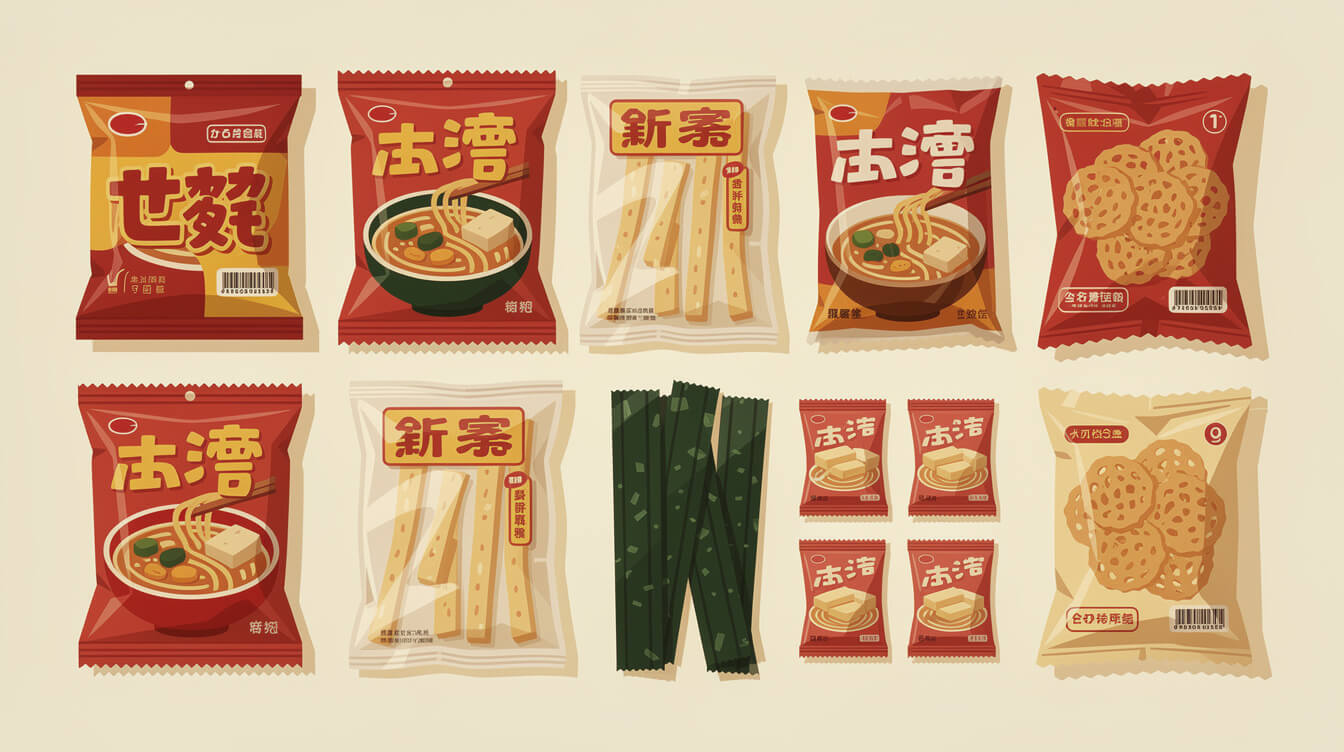
Instant noodles — the heart of the box, with a catch. Taiwanese instant noodles are not a joke food. Dry noodle packs with scallion-oil or sesame-paste sachets, braised-beef bowls, spicy sesame — these are the single most reliable “I am home” trigger you can buy for pocket change. The catch is the sachet. Several of the most beloved premium bowls contain genuine retort-pouched beef or pork, which moves the whole package from the snack category into the meat category in the eyes of a destination country. Turn the pack over and read the ingredients. A vegetarian dry-noodle pack is an easy send. A bowl with real braised beef in it is a gamble, and a gamble that can get the whole parcel held rather than just that item.
Dried tofu (豆干) and seaweed snacks — travels well. Vacuum-sealed, strongly flavoured, light. Check that the tofu you bought is the ambient-shelf kind rather than the chilled kind; the two sit near each other in the supermarket and only one of them survives a month in a box.
Soup bases, sauce sachets and dry seasoning — travels well. A sachet of beef-noodle soup base or a bottle of good soy paste does more for a homesick cook than any snack, because it lets them make the thing themselves. Double-bag any liquid. Pressure changes and a thirty-kilo box stacked on top of yours are not kind to glass or to screw caps.
Pork floss (肉鬆), dried pork slices (肉乾), meat-filled anything — do not send. This is the classic confiscation and it breaks hearts every year, because pork floss on rice porridge is arguably the taste of a Taiwanese childhood. It is still a meat product crossing a border in a parcel that, per APHIS, is judged as a commercial import. Leave it out. If you want the texture without the risk, seaweed and dried tofu do a surprising amount of the same work.
For a much deeper tour of what is actually worth buying before you start packing — brands, flavours, the difference between the tourist shelf and the shelf locals buy from — our ultimate guide to Taiwanese packaged snacks is the item-level companion to this article. And a genuine shortcut: a lot of the best box-fillers are sitting in a Taiwanese 7-Eleven at two in the morning, which is usually when you remember you are flying out.
Tea and Drinks: Vacuum-Packed Wins, Loose Leaf Loses
Tea is the most giftable thing Taiwan makes and the easiest to ruin in transit.
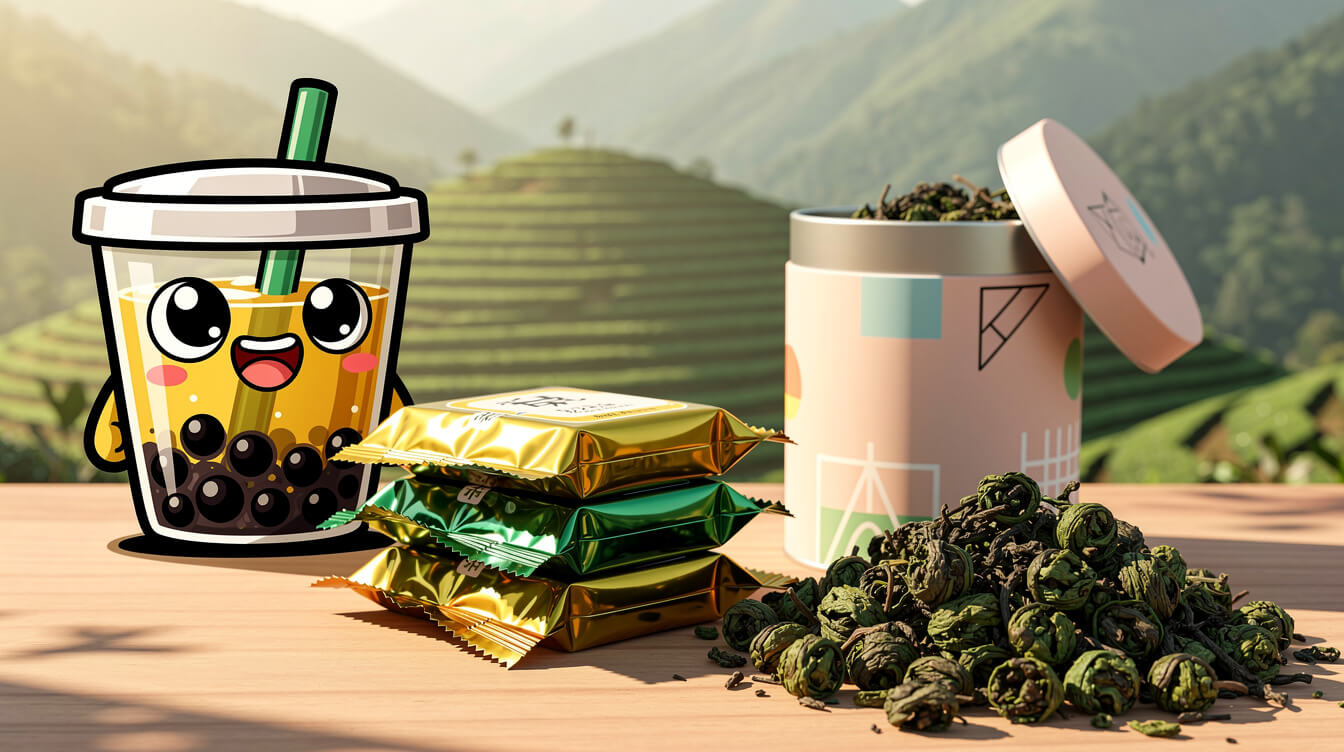
Send vacuum-sealed foil. The small flat bricks of nitrogen-flushed or vacuum-packed oolong that tea shops sell by the 150-gram unit are the correct format. They are rigid, they are airtight, they are already portioned, and they arrive tasting the way they did on the mountain. Oxygen and humidity are what degrade tea, and a vacuum brick solves both.
Do not send loose leaf in a paper bag. The beautiful hand-wrapped paper packet the tea farmer gave you is a travelling container for a car ride, not for a shipping lane. Rolled oolong is brittle. Six weeks of vibration under the weight of other parcels turns whole leaf into fannings, and fannings brew bitter. If you only have loose leaf, decant it into a hard tin and tape the lid.
Tea bags are not a downgrade here. Triangle-mesh bags of decent high-mountain oolong are compact, crush-proof and ready to drink in a dorm kitchen with no teaware at all. For a student abroad this is often the kinder choice.
If you are choosing between a dozen mountains and four grades of oxidation at the counter, our Taiwan oolong tea buying guide explains what the labels mean and what you are paying for.
What to leave behind: bottled drinks (weight, leak risk, and most of the charm is the chill), anything with fresh dairy, and alcohol. Kaoliang is a wonderful gift and a terrible parcel — alcohol in international mail is restricted or outright prohibited by most postal operators and couriers, and the rules differ by route. If you want to send spirits, ask the carrier first rather than discovering the answer at the counter.
Everyday Objects, Textiles, and the Small Handmade Things

Here is the part the food-focused guides miss entirely. The items that produce the strongest reaction are frequently not edible, because food gets eaten and objects stay.
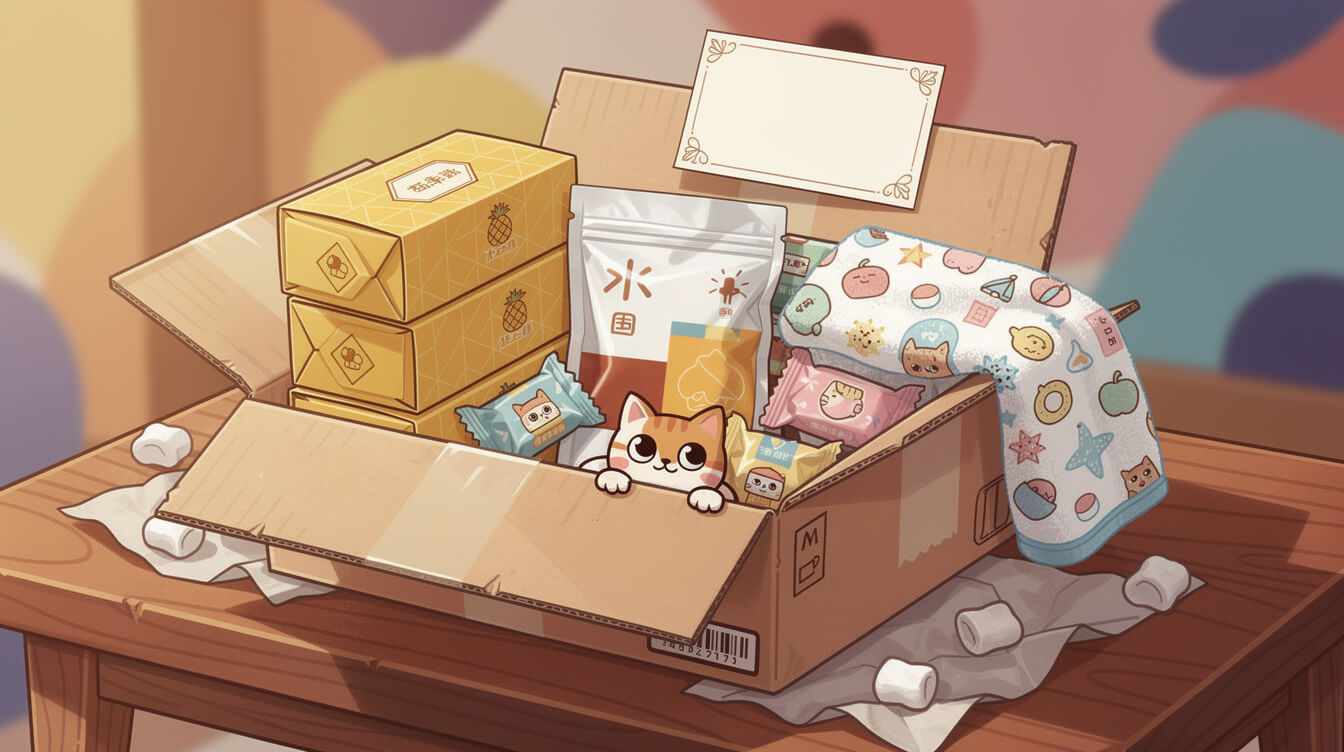
A good hand towel. Unglamorous and devastatingly effective. Taiwanese households run on a specific kind of soft cotton face towel, and it is one of those objects people abroad never think to replace with the same thing. Weighs nothing. Fills gaps. Protects your biscuit tin.
Small ceramics and enamelware. A single teacup, a chopstick rest, a little bowl. Buy one, not a set, and wrap it in the towel. Yingge ceramics travel beautifully if you treat them as the fragile centre of the box rather than an afterthought at the top.
Stationery, stickers and the stupid cute thing. Taiwan’s convenience-store character collaborations, sticker sheets and notebook stationery cost almost nothing, weigh almost nothing, and read instantly as home in a way an expensive object cannot fake.
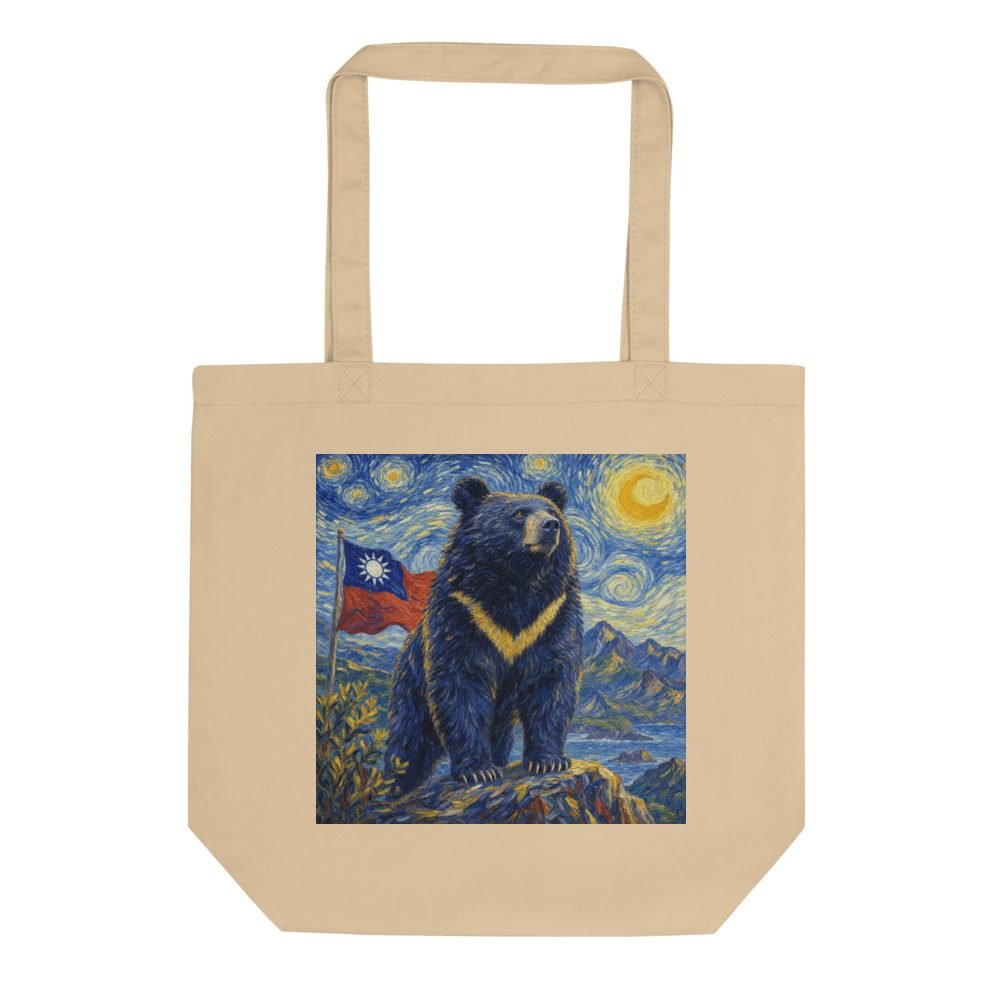
Something wearable. A folded tee or a tote occupies the useful middle ground between “gift” and “thing I will actually use on Tuesday.” A tote is the sleeper pick for a care package specifically because it folds to nothing on the way out and then becomes the bag your friend carries groceries in for the next three years. Our Formosa Black Bear eco tote is the one we end up putting in boxes ourselves — flat, light, and unmistakably from the island without shouting about it.
A note on taste, since this is a gift and not a logistics exercise: the rules about how Taiwanese people give things — even numbers, what colours of wrapping to avoid, which objects carry bad puns — are real and worth knowing. We have written those up separately in our guide to Taiwanese gift-giving etiquette, and if you are sending to a family rather than a friend, read it before you tape the box.
What Not to Put in a Taiwan Care Package — and the Authorities That Decide
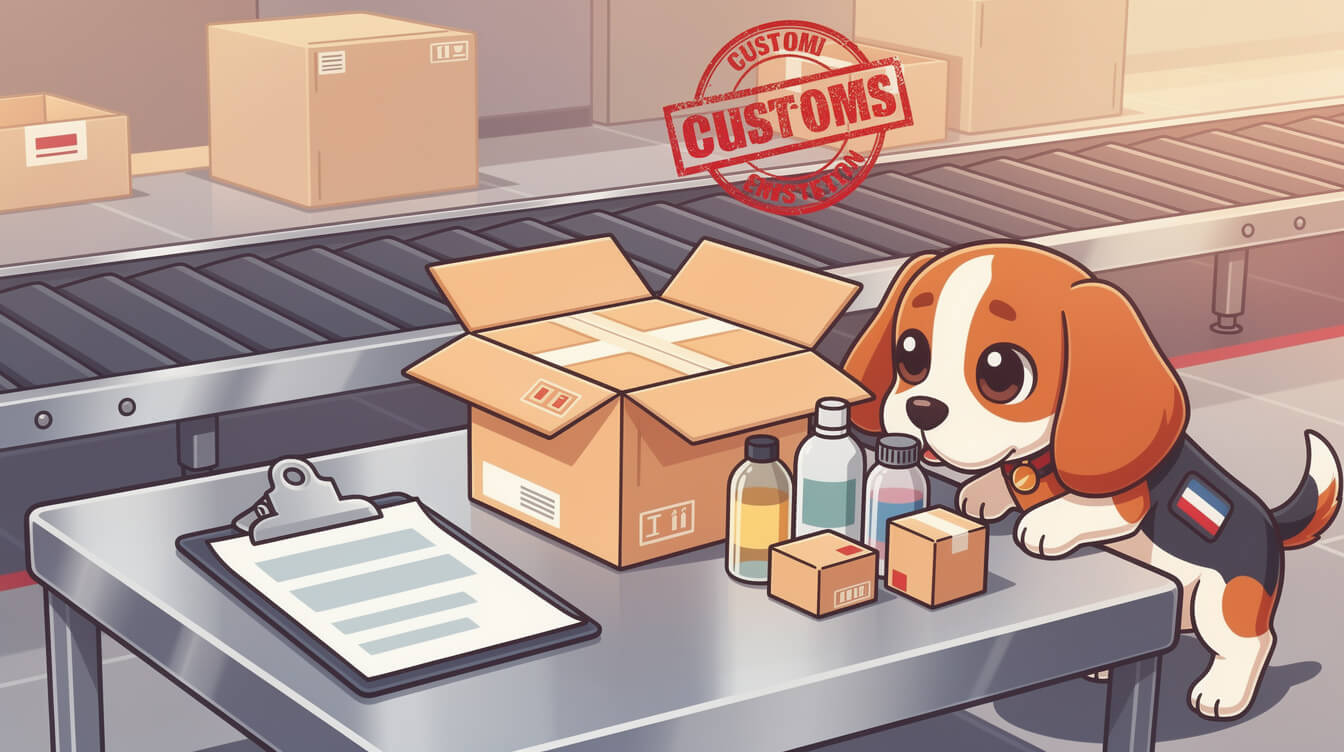
Rules vary by destination, change without warning, and are enforced on the parcel in front of the officer rather than on the guide you read. What follows is sourced and attributed so you can check it yourself — and you should, because the single most important habit is verifying against your destination’s own agriculture or border agency on the day you post.
United States
Two things matter. First, the mail rule already quoted: APHIS treats posted food as a commercial import rather than personal use, so the forgiving suitcase standard is not available to you.
Second, Taiwan’s standing on APHIS’s own animal-health status lists. Checking that list directly on 2 October 2026, Taiwan appears three times: as “controlled risk” for bovine spongiform encephalopathy, as “affected” for highly pathogenic avian influenza, and as “affected” for screwworm. Taiwan does not appear on the list of regions APHIS recognises as free of foot-and-mouth disease. The practical translation: pork, beef and poultry products from Taiwan — pork floss, dried meat, chicken floss, meat sachets — are the wrong thing to put in a US-bound parcel, and that conclusion does not depend on any one disease headline.
Which brings up a trap worth naming. In October 2025 Taiwan recorded its first case of African swine fever on a Taichung farm, and APHIS issued an import alert restricting porcine commodities from Taiwan. Taiwan then eliminated the outbreak and regained its self-declared ASF-free status with the World Organisation for Animal Health, announced on 6 April 2026 — and Taiwan no longer appears on APHIS’s African swine fever affected list. But that October 2025 import alert is still sitting on the APHIS website. If you search for Taiwan pork rules you will probably find it and conclude something that stopped being true months ago. Read the agency’s current status list, not an old alert. That habit is worth more than any list of items.
Australia
Australia is stricter than most senders expect, and it separates into two agencies: the Australian Border Force for what may legally enter, and the Department of Agriculture, Fisheries and Forestry for biosecurity conditions, which maintains a searchable database called BICON. Check BICON for your specific item rather than trusting any article, including this one.
From the Border Force’s own plain-language guidance, two verdicts matter here. Fresh fruit — “apples, mandarins, oranges, and other fresh fruit” — is listed flatly as “don’t bring.” And homemade food, defined as “meals, cakes or anything you made yourself,” is also “don’t bring,” because it carries no commercial labelling, no ingredient list and no processing guarantee. That second one is the painful one for care packages: your grandmother’s home-baked pineapple cakes are a harder sell at the Australian border than a sealed commercial box of the same thing. The Border Force is also explicit about consequences, warning that prohibited goods sent without permission may be seized and that penalties can run “up to 2,500 penalty units or 10 years imprisonment, or both.”
The universal rules
- Declare the contents honestly and specifically. Write “dried mango, boxed pineapple cake, packaged oolong tea” — not “gift,” not “food.” A vague declaration invites an inspection; an accurate one usually ends it. APHIS makes the incentive explicit for travellers: declare agricultural products and you face no penalty even if an item turns out to be inadmissible.
- Leave out all fresh produce. Pomelo, wax apple, custard apple, pineapple, mango. Taiwan’s fruit is a genuine wonder of the world and it is not going in a box.
- No seeds, plants, soil or raw plant material. Including the pretty seed pod you picked up on a hike.
- Keep commercial packaging and labels intact. Do not decant snacks into unlabelled bags to save space. The label is what proves what the thing is.
- Check whether a sachet contains meat. It is the most common way an otherwise clean box becomes a problem.
Timing, Shipping, and Why a Lunar New Year Box Leaves in December
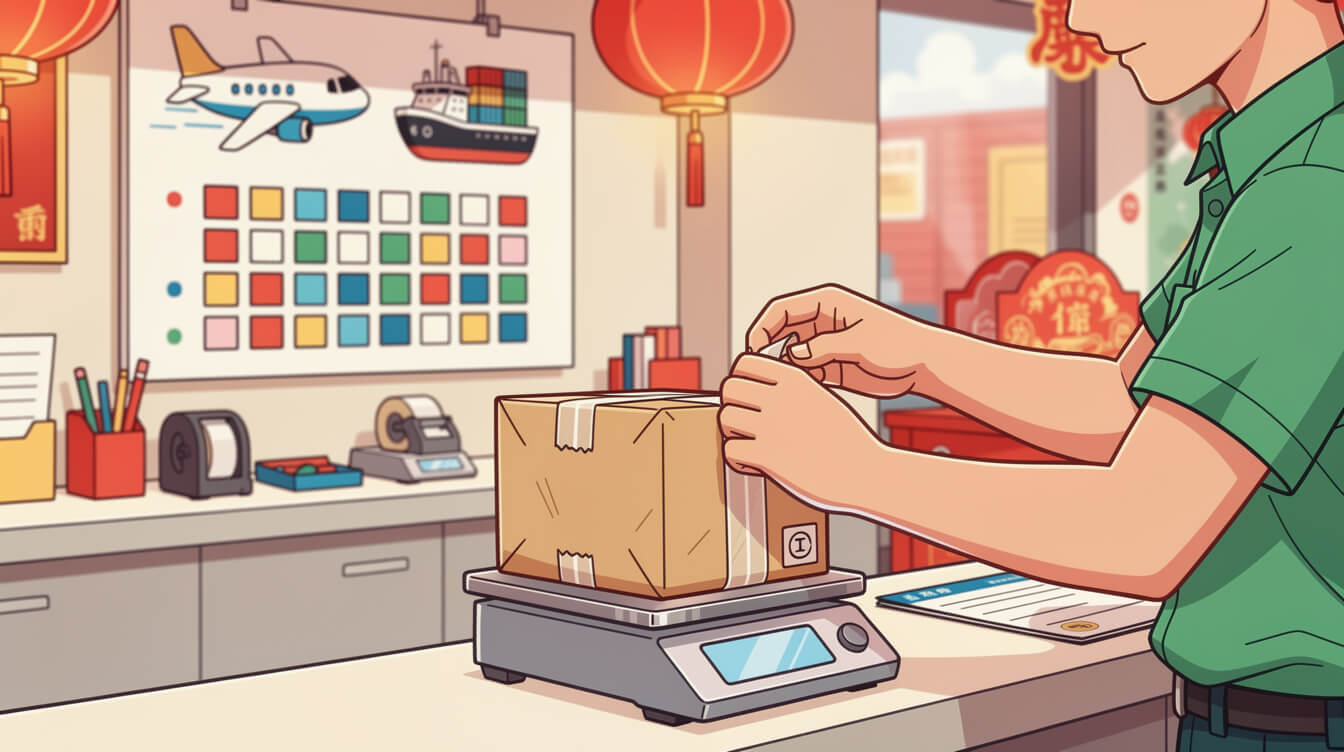
You have two real choices at the Chunghwa Post counter, and they are not just a price difference — they are different products.
Air costs considerably more and lands in a timeframe measured in days to a couple of weeks. Use it for anything with a date printed on it, anything that can fuse or soften, and anything that needs to arrive by something.
Surface or sea mail is dramatically cheaper and slow in a way people consistently underestimate — think in terms of many weeks, sometimes stretching toward a couple of months on long routes. It is excellent for textiles, ceramics, stationery and heavily shelf-stable sweets. It is the wrong choice for anything whose printed date is close. Confirm the current service options and transit estimates for your destination with Chunghwa Post or your courier when you post, because routes and timings change.
Then there is the calendar. If the box is meant to land for Lunar New Year, work backwards and be brutal about it. Lunar New Year 2027 falls as a holiday block from Thursday 4 to Wednesday 10 February 2027. A surface-mail parcel aiming at that window should be leaving Taiwan around early December, not January — and the weeks immediately before the holiday are also when Taiwan’s own postal and courier network is at its most congested, because the entire island is sending things to each other. Our guide to what actually happens on the island during Lunar New Year covers the shutdown in detail; for present purposes, treat the holiday as a wall and post well before it.
A few packing habits that repay themselves:
- Soft things on the outside, fragile things in the middle. The towel and the tee are structural.
- Bag anything that could leak, then bag it again.
- Fill the voids. A box that rattles is a box that breaks. Snack packets are excellent padding.
- Photograph the packed box before you seal it. If anything is queried or removed, you know exactly what was in there.
- Keep the receipt and the tracking number somewhere other than the pocket of the jacket you are about to stop wearing.
The Thing in the Box They Keep
Folds flat on the way out, carries groceries for years once it lands. Taiwan-themed tees, totes and small things designed to survive the journey — and the homesickness.
Taiwan Care Package: Frequently Asked Questions
Can I send pineapple cake overseas?
Yes — commercially boxed, individually wrapped pineapple cake is one of the best things you can send. Check the printed date against your shipping method and keep the original box and label intact. Homemade versions are a different matter; Australia’s Border Force lists homemade cakes among the things not to bring.
Why does pork floss keep getting confiscated?
Because it is a meat product, and posted food is assessed as a commercial import rather than as personal baggage. Taiwan is not on the USDA APHIS list of regions recognised as free of foot-and-mouth disease, and is listed as affected for highly pathogenic avian influenza, so pork, beef and poultry products are the wrong category for a US-bound parcel regardless of how well sealed they are.
Is Taiwanese pork still banned because of African swine fever?
Taiwan regained its self-declared ASF-free status with the World Organisation for Animal Health in an announcement on 6 April 2026, following the single October 2025 outbreak, and no longer appears on the APHIS African swine fever affected list. The 2025 US import alert is nonetheless still published online, which misleads a lot of searchers. Separately, meat products in the mail remain restricted for the reasons above — so the practical advice does not change.
How early should I post a Lunar New Year care package?
For the 4–10 February 2027 holiday, send by air in January or by surface mail around early December. Taiwan’s own postal network is heavily congested in the weeks immediately before the holiday.
What is the single best item to include?
Whatever is cheap, specific and theirs. A packet of the exact instant noodles they ate as a teenager outperforms an expensive gift set almost every time, because the point is recognition, not value.
Do I have to declare food on the customs form?
Yes, and in specific terms. List the actual items rather than writing “gift.” An accurate declaration is the cheapest insurance in the whole process, and agencies explicitly reward it — APHIS tells travellers that declared agricultural products carry no penalty even when an item cannot enter.
The Note That Makes It a Taiwan Care Package and Not a Parcel
Everything above is logistics, and logistics is the part that can be got wrong. But the reason anyone does this is not logistics.
Put something handwritten in the box. Not a card with a printed sentiment — a note, on whatever paper is nearby, that mentions something only the two of you would know. The food will be gone in a fortnight. The towel will fade. The note tends to end up taped inside a cupboard door in a flat eleven time zones away, and it is still there years later.
And resist the urge to make the box impressive. The instinct, especially when you feel guilty about distance, is to send the premium version of everything: the good tea, the beautiful ceramics, the gift-boxed pastries. Send one of those, by all means. But the items that undo people are the ordinary ones — the convenience-store snack, the right brand of noodles, the soft familiar towel — because those say I remember what your actual life was like, which is a much harder thing to say and a much better gift than money.
Pack the shelf-stable things. Leave the meat at home. Declare it honestly, post it earlier than feels necessary, and put the note on top where they will find it first. 路上小心 — safe travels, little box.

Grab a Free Taiwan Sticker!
Drop your email and we’ll send you a limited-edition Taiwan sticker — plus insider access to new merch drops and island vibes.
No spam. Unsubscribe anytime.