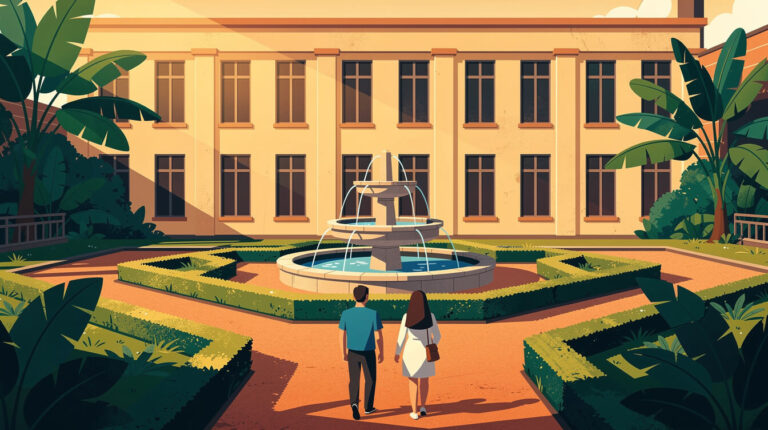
Things to Do in Taichung, Taiwan: The Neighborhood-by-Neighborhood Guide for 2026
If Taipei is Taiwan’s confident capital and Kaohsiung is its salt-air port, then things to do in Taichung sit in the most surprising sweet spot on the island. This is the city that gave the world bubble tea, where Japanese-colonial brick warehouses now serve flat whites, where one painter saved his entire village by covering it in rainbows, and where the most futuristic opera house in Asia rises out of a quiet residential block. Taichung rewards travelers who get past the day-trip mindset and actually settle in for two or three nights.
This guide is the local way to see Taichung — broken down neighborhood by neighborhood instead of as a flat top-20 list. We’ll move from the Central District’s heritage markets to the West District’s art enclaves, sprint through the night markets of the north, and finish with the coastal wetlands and mountain day trips that bookend any real Taichung stay. Whether you have one day or one week, you’ll know exactly where to point your scooter.
Why Taichung Deserves More Than a Day Trip
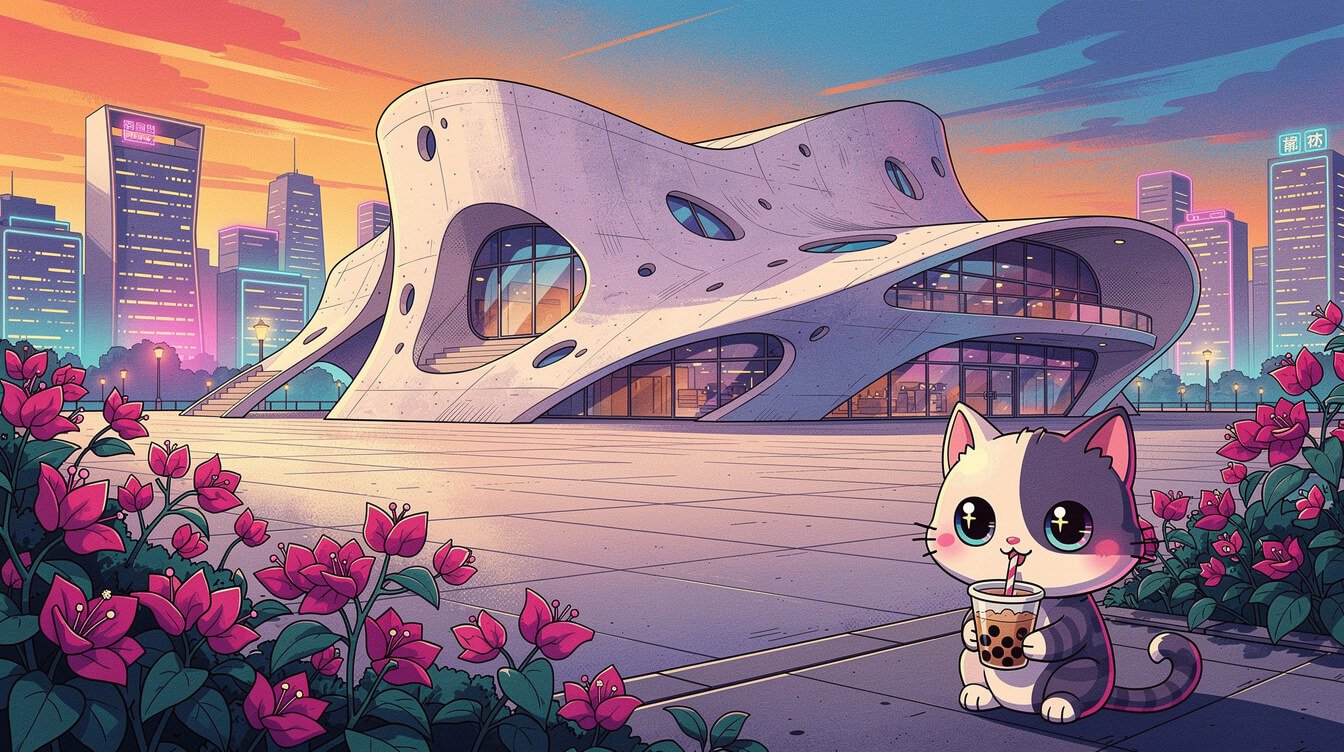
Taichung is Taiwan’s second-largest city by population, sitting smack in the middle of the west coast about an hour south of Taipei on the high-speed rail. For decades it carried a reputation as an industrial pass-through — somewhere you stopped on the way to Sun Moon Lake or Alishan. That reputation is now badly out of date. Since the 2014 opening of the National Taichung Theatre, the city has been on a steady creative trajectory: old commercial buildings repurposed into independent bookshops, a riverside that was a concrete sewer ten years ago now lined with cafes, and a craft beer scene that punches well above Taipei’s.
The other reason Taichung deserves more time is the weather. Sheltered from the worst of the typhoon season by the Central Mountain Range, Taichung gets the most sunny days of any major Taiwanese city. From October through April it’s the most consistently pleasant place on the island — warm afternoons, cool evenings, and almost zero of the sticky humidity that makes Taipei a slog in summer.
The easiest way to get here is the Taiwan High-Speed Rail from Taipei to Taichung HSR Station in about 60 minutes (~NT$700 / US$22). From the HSR station, take the local TRA shuttle into central Taichung in another 10 minutes. The city itself has a small MRT Green Line plus an excellent and cheap bus network where the first 10km of every ride is free with an EasyCard. For everything outside the city center — Gaomei Wetlands, Rainbow Village, the mountain day trips — renting a scooter or grabbing a taxi is the way to go.
Central District: Boba’s Birthplace and Old Taichung Soul
Start your Taichung visit in the Central District — the city’s historical heart and the one neighborhood you can comfortably walk in a single morning. The anchor is Taichung Train Station, a beautifully restored 1917 Japanese Renaissance-revival building now repurposed as a cultural park. The original station building hosts rotating exhibitions and weekend craft markets, while the surrounding Railway Cultural Park preserves old freight platforms, vintage rail cars, and elevated walkways with great photo angles back toward the city.
From the station, walk five minutes north to Miyahara, easily the most photographed building in Taichung. The 1927 ophthalmology clinic was rescued from demolition in 2010 and reimagined as a Harry-Potter-meets-Hogwarts library-themed ice cream parlor by the local Dawn Cake company. The interior is unreal — soaring shelves, leather-bound prop books, brass railings, and a 50-flavor ice cream counter where you can pile scoops onto a freshly-baked cone with up to three toppings.
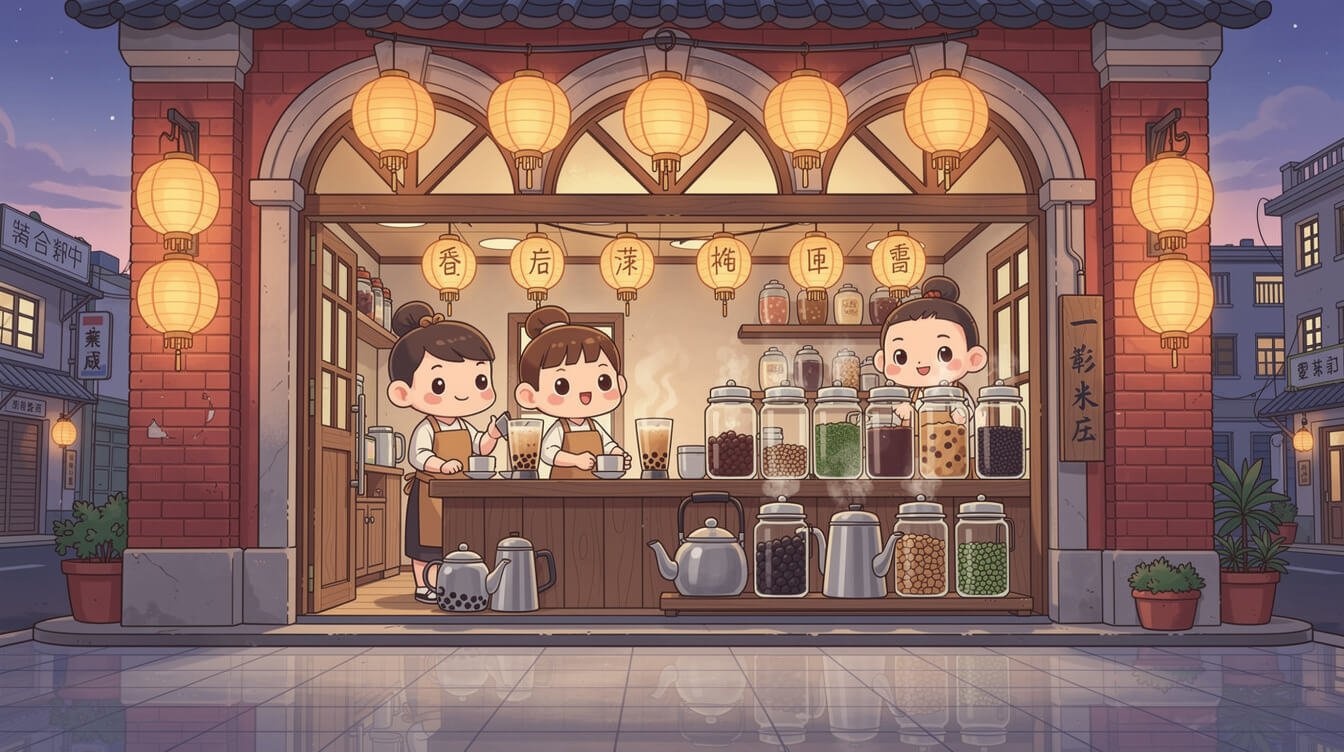
The real reason to detour through Central District, though, is Chun Shui Tang. The original teahouse on Siwei Street is the room where, in 1986, manager Lin Hsiu-hui dropped tapioca pearls from a Japanese dessert recipe into a cup of iced milk tea on a whim during a staff meeting. Pearl milk tea — boba — was born right here, and the original branch is still operating with the same recipe. Order the Pearl Milk Tea (珍珠奶茶) the classic way and pair it with their famous tea-smoked egg noodles. The teahouse takes lunch seriously and the menu is far more interesting than any boba chain you’ll find back home.
Round out the Central District with the Second Market (Taichung’s oldest traditional wet market, dating to 1917), the gilded Fourth Credit Union co-op building (now also a Dawn Cake dessert shop with elaborate parfaits), and a slow walk along the revitalized Liuchuan Riverside Walk, where the formerly polluted Liuchuan River was turned into a tree-lined canal promenade with cafes, bridges, and evening light installations. For a sense of the depth of Taichung’s food culture, our guide to Taiwan’s traditional food covers the regional dishes you’ll spot on every market lane here.
West District: Art, Calligraphy Greenway, and the Pearl Opera House
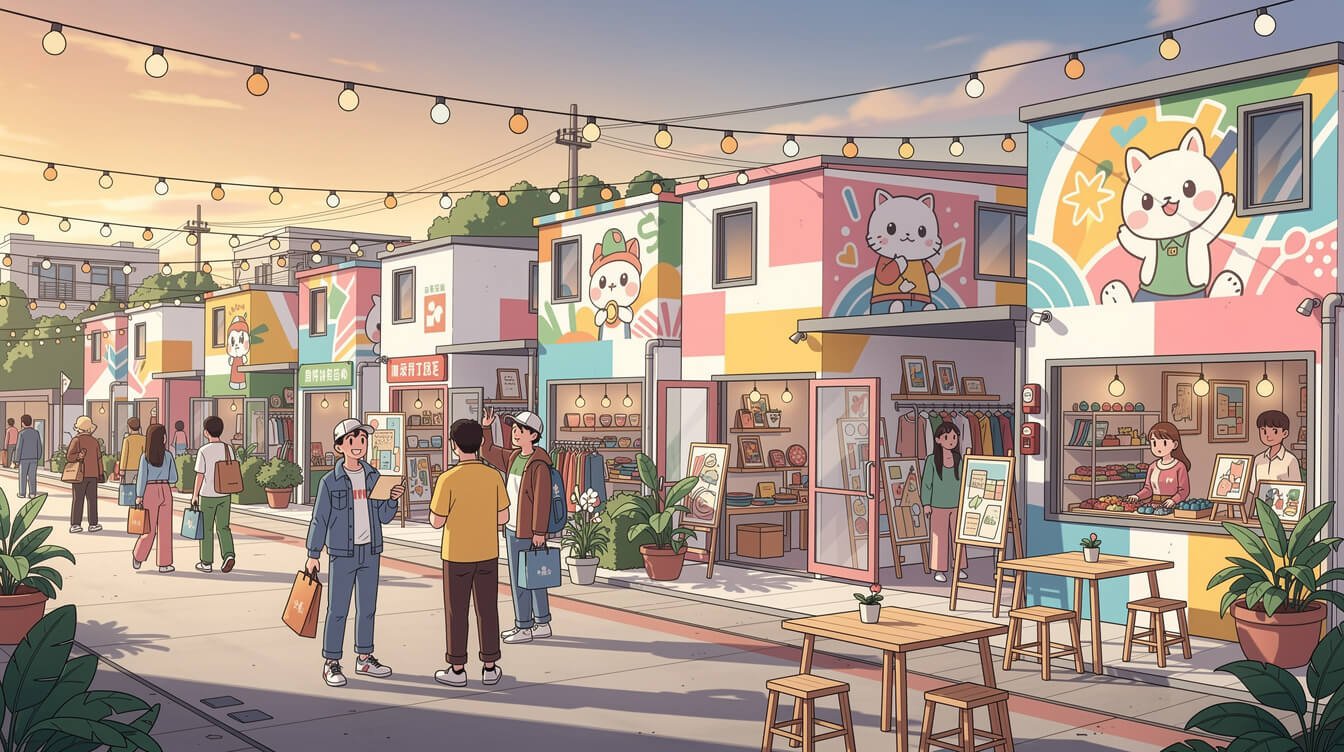
West District is where Taichung’s creative class lives, works, and drinks. Spend an afternoon here and you’ll understand why people who move from Taipei almost never go back. Start at the Calligraphy Greenway, a 3.6-kilometer linear park that runs through the heart of the district. Designed in the early 2000s to connect the city’s major cultural institutions, the Greenway is now lined with public sculptures, indie bookshops, specialty coffee roasters, and weekend art markets. The National Taiwan Museum of Fine Arts anchors the southern end; the National Museum of Natural Science holds down the north.
Halfway along the Greenway, duck into Shen Ji New Village. Originally built in the 1960s as housing for Taiwan Provincial Government employees, the cluster of low-rise apartments was abandoned for decades and slated for demolition before a city program turned it into a creative residency in 2016. The result is one of the most charming spots in Taiwan — independent ceramicists, leather workers, illustrators, and coffee shops occupying the original apartments, with shared courtyards full of plants, murals, and weekend live music. Saturday afternoons there’s usually a flea market under the trees.
Then there’s the National Taichung Theatre, the building that put Taichung on every architecture magazine’s bucket list. Designed by Japanese architect Toyo Ito and opened in 2016, the entire building is built from curving “sound caves” — there isn’t a single straight wall in the structure. You don’t need a show ticket to visit; the public spaces include a rooftop garden with sweeping city views, a basement bookshop and cafe, and the famous Curve Cafe where you can order coffee inside what looks like a hollow stalactite. Catch a free lobby concert if the schedule allows (check their website for “Lobby Music” events, usually Friday evenings).
Just south of the theatre is Maple Garden, a small but stunning Japanese-style garden with red-leafed maples, koi ponds, and tea pavilions — beautiful any time of year but especially gorgeous in late November when the maples turn. Wrap up the afternoon with sunset over the Taichung skyline from a rooftop bar in the surrounding Qiguang area.
North & Beitun: Night Markets and University Energy
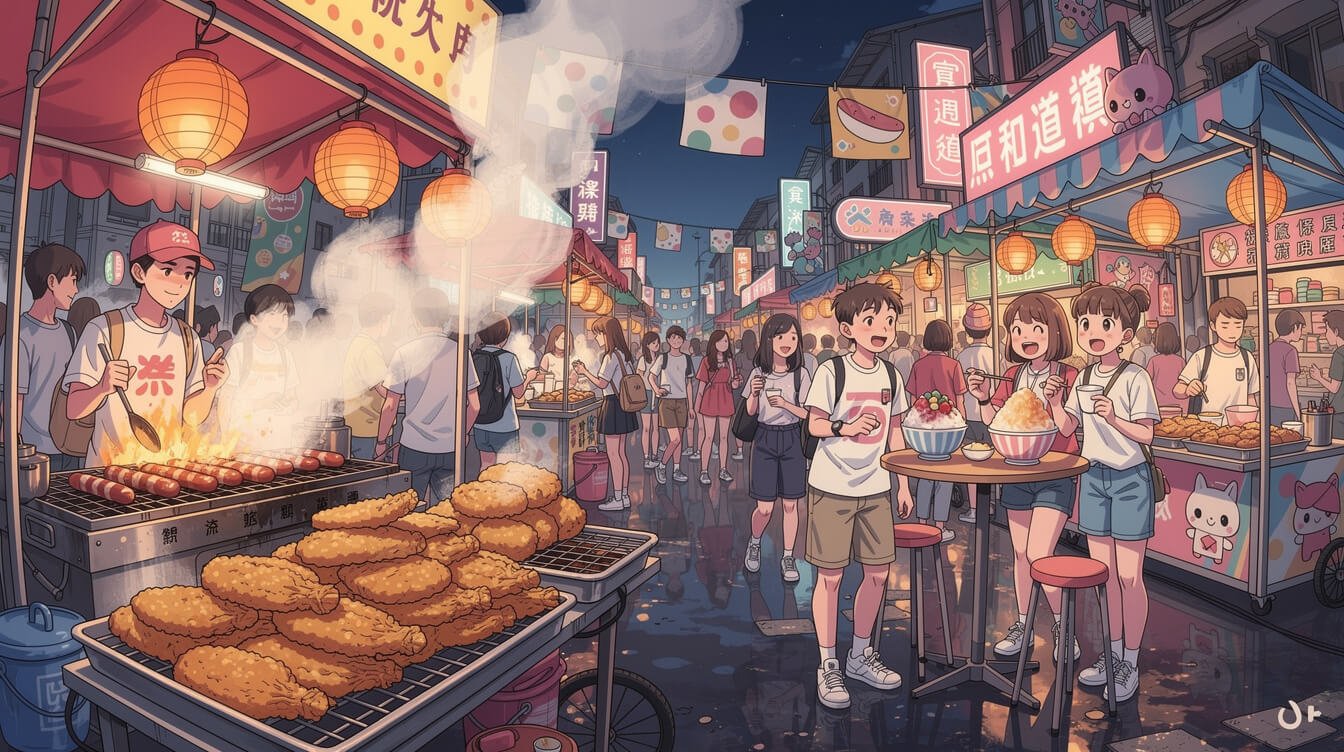
Things to do in Taichung after dark take place in the north. The student-driven energy of Feng Chia University fuels Taiwan’s most ambitious night market, and Beitun’s mix of universities, hot springs, and parks gives the district a separate identity from anywhere else in the city.
Feng Chia Night Market is the heavyweight: roughly 1,000 stalls spread across multiple lanes around the university, drawing 100,000 visitors on weekend nights. This is where Taiwan’s most famous night-market dishes were either invented or perfected — including the giant fried chicken cutlet (大雞排), grilled milkfish belly, oyster vermicelli, and Korean cheese corndogs. Skip dinner and grab one bite from at least eight different stalls. Speaking of bubble tea and fried chicken — the iconic Taichung pairing — our Taiwanese Boba Tea & Fried Chicken Duo T-Shirt captures the night market love affair that started right here.
For a less touristy option, head to Yizhong Street Night Market closer to downtown, in the One Central commercial zone. Yizhong is more compact and skews younger — it’s where local high school students hang out — but the food and drink lineup is just as serious. Try the cube toast, mango shaved ice, and any of the half-dozen specialty bubble tea stands that compete on flavor experimentation.
Beitun also holds two of Taichung’s quirkier nighttime attractions. Fourth Nuclear Power Plant Park sounds like a joke until you visit — it’s actually a children’s park built around decommissioned industrial equipment with neon lighting installations. And the Taichung Confucius Temple, sitting peacefully in the middle of all this, is one of Taiwan’s most authentic Northern Song dynasty-style temples. Locals visit before exams; the courtyard is silent even on Saturday nights.
To balance the food blowouts, plan an early-morning walk in Wenhua Park or Taichung Park. Both feature lotus ponds, traditional pavilions, and the morning tai chi crowd that makes Taiwanese public parks feel timeless.
The Iconic Outliers: Rainbow Village, Gaomei Wetlands, and the Coast
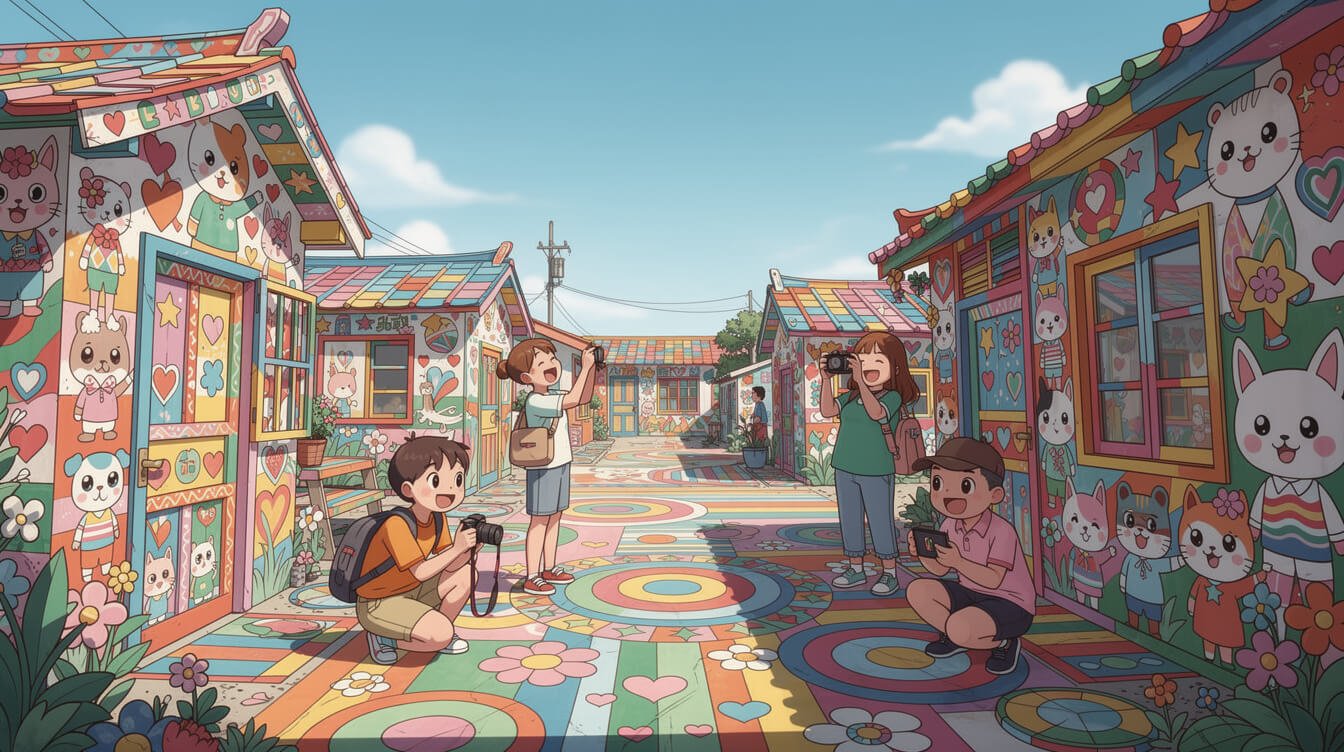
Taichung’s two most photographed attractions don’t fit neatly into any neighborhood — they’re spread across the southern and western edges of the city — but no list of things to do in Taichung is complete without them.
Rainbow Village (彩虹眷村, Caihong Juancun) might be the most heartwarming story in modern Taiwan. The village was an aging military dependents’ settlement scheduled for demolition in 2008 when one resident — Huang Yung-fu, a then-86-year-old retired KMT soldier from mainland China — started painting the walls of his house and neighbors’ homes to keep himself busy. The whimsical figures, animals, and folk characters that emerged caught the attention of local university students, who started a petition to save the village. The government relented; Huang became “Grandpa Rainbow”; and the village is now a protected cultural site that he continues to paint into his late 90s. Visit before 10am to beat the tour buses, and bring small change if you want to buy a postcard directly from Grandpa Rainbow himself.
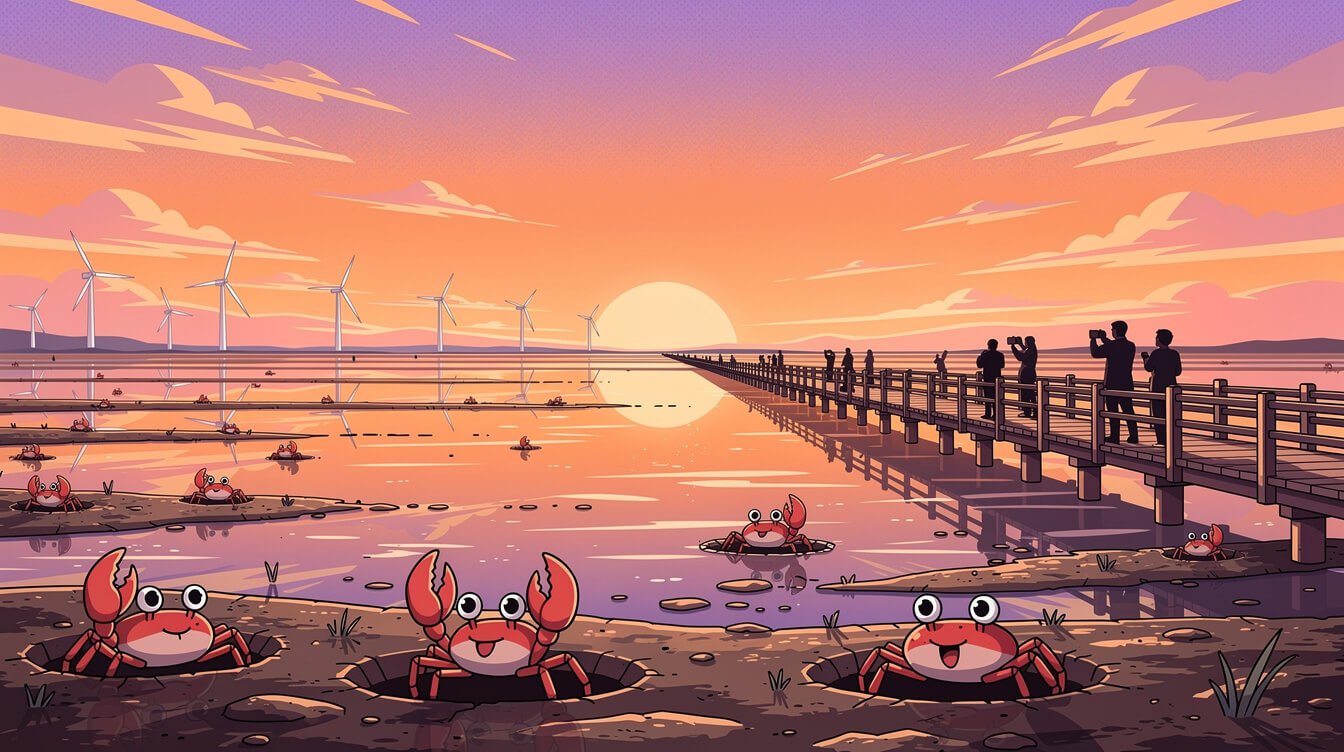
Forty minutes west of central Taichung, on the Taiwan Strait coast, sit the Gaomei Wetlands — a vast tidal flat that becomes a mirror at low tide and a magnet for thousands of fiddler crabs, mudskippers, and migratory birds. There’s a wooden boardwalk that takes you several hundred meters into the wetland. The trick is timing: arrive 30-60 minutes before sunset on a low-tide day, when the sky reflects off the wet sand and the row of offshore wind turbines becomes a perfect silhouette. Local tide tables (search “Gaomei tide” before your visit) make all the difference.
Combine Gaomei with a stop at the Qingshui Astronomical Park on the coast (sunset viewpoints from a hill above the strait) or the Wuqi Fishing Harbor for fresh seafood — the harbor’s outdoor seafood market does live oysters, grilled milkfish, and tempura squid for a fraction of city prices.
Back in the city, two more outliers worth squeezing in: PARK2 Caowu Square in central Taichung — a converted parking structure now hosting plant-filled cafes, a craft beer hall, and weekend pop-ups — and the surprising Carton King Creativity Park, an entire restaurant complex constructed almost entirely from corrugated cardboard, including the tables, chairs, walls, and serving trays. Yes, the noodles arrive in cardboard bowls. Yes, somehow it works.
Day Trips from Taichung: Sun Moon Lake, Lukang, and the Mountains
Taichung’s central location makes it the best base for day trips in central Taiwan. Three trips in particular justify staying an extra night.
Sun Moon Lake is 90 minutes south of Taichung by direct bus (Nantou Bus #6670 from Taichung Gancheng Station, NT$200/US$6.40 each way). The largest natural lake in Taiwan sits at 748 meters in the central mountains, ringed by the Thao indigenous community, hot spring resorts, and a 30-kilometer cycling trail. The classic day trip is the lakeside cable car to the Formosan Aboriginal Culture Village plus a boat ride between Shuishe Pier and Ita Thao. Our deep dive into the lake’s Thao legend and cultural history is the right pre-read.
Lukang Old Town is 45 minutes southwest by train, and it’s the single best preserved Qing dynasty town in Taiwan. The narrow lanes around Lukang Tianhou Temple still feel like the 1800s, with traditional shops selling moonlight cakes, hand-painted lanterns, and Tin Lung Lou ox-tongue cakes. Spend a half-day wandering the Old Street, the Nine-Turns Lane, the Lukang Folk Arts Museum, and Longshan Temple. Easy to combine with a stop in Changhua for the famous Bagua Mountain Big Buddha on the way back.
For mountain country, head an hour east to Dakeng Scenic Area — a network of bamboo plank trails on the forested slopes that loom over Taichung. There are nine numbered trails of varying difficulty; trails 4-5 take 90 minutes round-trip and reward you with city views all the way to the coast. Combine with a soak at one of the nearby hot springs in Guguan, three hours’ drive deeper into the mountains, for a proper two-day weekend escape.
The biggest excursion of all is Cingjing Farm, a high-altitude grassland and sheep ranch about 2.5 hours from Taichung in Nantou County. The “Little Swiss Garden” sits at 1,750 meters with cool air, hiking trails, and sheep shearing shows during peak season. Plan an overnight if you go — it’s too good to rush.
Things to Do in Taichung: Where to Eat, Stay, and Visit
A few practical notes to tie the trip together — the questions every first-time Taichung visitor ends up asking.
When is the best time to visit Taichung? October through April. The city sits in Taiwan’s central rain shadow, so it gets significantly fewer rainy days than Taipei or Hualien, especially during the autumn and winter months. December and January average highs of 22°C (72°F) with crisp, cloudless days — ideal walking weather. Avoid July and August unless you can’t help it; temperatures push 35°C (95°F) with afternoon thunderstorms.
How long do I need in Taichung? Three nights is the sweet spot. One day for Central District + West District, one day for night markets and northern outliers, one full day for Rainbow Village + Gaomei Wetlands or a longer day trip to Sun Moon Lake. Do not, under any circumstances, attempt Taichung as a single day trip from Taipei — you’ll see one neighborhood at best, miss every sunset, and leave wondering what the fuss was about.
Where should I stay? Three areas work depending on your style. The HSR Station area (Wuri District) is convenient if you’re heading directly to mountain day trips. The West District is best for walkability, indie cafes, and access to the theatre/museums. Central District near Taichung Train Station is the most atmospheric and the cheapest, with restored colonial-era guesthouses for under NT$2,000 (US$64) per night.
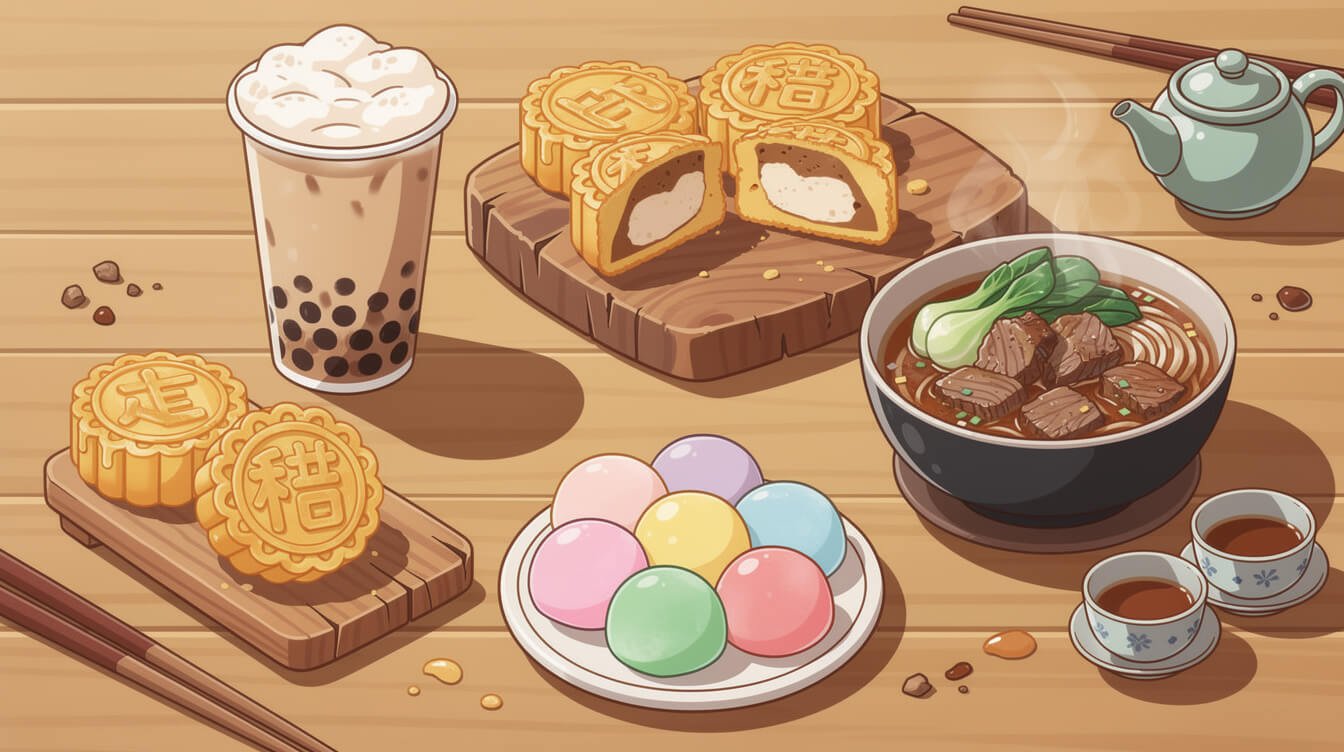
What’s the must-try Taichung food I’ll regret missing? Pearl milk tea at Chun Shui Tang (the original, not a chain branch), suncakes (太陽餅) from Tai Yang Tang Bakery on Ziyou Road, mango shaved ice during summer at Mr. Mark Mango Shaved Ice, and Taichung-style beef noodle soup from any of the small shops around the Second Market. Pair this with our guide to Taiwan’s bubble tea origin story for the full background.
Is Taichung worth visiting if I only have one week in Taiwan? Yes — but only as part of a Taipei → Taichung → Tainan or Kaohsiung loop. Use Taichung as the middle base for two nights, hit one mountain day trip, and continue south. The alternative pattern — Taipei → Taroko → Hualien → Kaohsiung — skips Taichung entirely and misses the most interesting creative city on the island. Don’t make that mistake.

Wear the Iconic Taichung Pairing
Bubble tea and fried chicken were both perfected in Taichung’s night markets. Our Boba Tea & Fried Chicken Duo Tee captures the love affair that started right here at Feng Chia.
Final Thoughts: Why Taichung Is Worth a Real Visit
Most travelers see Taichung from a train window and never come back. Don’t be most travelers. The city is the rare combination of food capital, art capital, and gateway to the mountains, and it’s the only Taiwanese city where you can have breakfast at the literal birthplace of bubble tea, lunch under the curving roof of a Toyo Ito opera house, and dinner at the loudest night market in Asia — all without taking a single taxi outside the city limits.
Three nights is enough to fall for it. A week, and you’ll be looking up rental prices in the West District. Either way, things to do in Taichung will keep showing up long after you think you’ve checked them all off — that’s the secret the locals already know.
Grab a Free Taiwan Sticker!
Drop your email and we’ll send you a limited-edition Taiwan sticker — plus insider access to new merch drops and island vibes.
No spam. Unsubscribe anytime.