Oolong Caffeine: How Much Is in Your Cup, and Why Taiwan’s Roast and Gongfu Brewing Change the Answer
Ask how much oolong caffeine is in a cup and most answers hand you one tidy number. The honest answer is a range, and on an island that grows a dozen styles of oolong, that range is the interesting part. A pale, flowery Baozhong from the hills above Taipei, a charcoal-roasted Dong Ding from Nantou and a bottle of iced oolong from 7-Eleven are all “oolong.” They don’t all hit the same way.
This guide gives you the numbers first, with named sources and stated cup sizes, because caffeine figures without a cup size are just vibes. Then it gets into what actually moves the dial: the leaf, the way Taiwan brews it in a tiny pot, the roast, and the bottles and drink-shop cups where most people meet oolong today. A couple of popular myths don’t survive the trip.
Oolong Caffeine at a Glance: How Much Is in a Cup?

Here’s the short version. The USDA’s FoodData Central database lists brewed oolong tea at 16 mg of caffeine per 100 g of tea (FDC 174120). An 8 fl oz cup weighs about 237 g, so that works out to roughly 38 mg per 8 oz cup. That’s our arithmetic on the USDA’s per-100 g figure. The USDA doesn’t publish a per-cup number for oolong, and neither do the FDA or Mayo Clinic charts.
For context, here’s the same USDA database, scaled the same way:
- Brewed coffee: 40 mg per 100 g, about 95 mg per 8 oz
- Brewed black tea: 20 mg per 100 g, about 47 mg per 8 oz
- Brewed oolong tea: 16 mg per 100 g, about 38 mg per 8 oz
- Brewed green tea: 12 mg per 100 g, about 29 mg per 8 oz
Mayo Clinic’s caffeine chart lands in the same neighborhood: 96 mg for 8 oz of brewed coffee, 48 mg for black tea and 29 mg for green tea (Mayo Clinic). Oolong isn’t on Mayo’s list at all.
Treat 38 mg as a midpoint for oolong caffeine, not a promise. Lab studies of brewed tea find big swings within a single category, so your actual cup depends on how much leaf you use, how hot the water is and how long it steeps. The rest of this guide is about those swings.
Is Oolong Caffeinated? Oolong vs Green, Black and Coffee

Yes. Oolong comes from Camellia sinensis, the same plant as green, black, white and pu’er tea, and every tea from that plant carries caffeine. If you want a caffeine-free “oolong,” you’re really after a roasted grain or herbal infusion that isn’t tea at all. We sort those out in our guide to which boba drinks have caffeine.
“Somewhere between green and black” is half true
You’ll often read that oolong sits between green and black tea for caffeine. There’s real evidence for that, but it’s narrower than it sounds. A 2003 study by researchers at National Taiwan University, working with Taiwan’s tea research station, took the same fresh leaves and processed them three ways. Caffeine came out in the order black > oolong > green (Lin et al., Journal of Agricultural and Food Chemistry, 2003).
That ranking holds when the leaf is identical. On a store shelf it isn’t. When researchers brewed 20 retail teas, the white, green and black teas ranged from 14 to 61 mg per serving, “with no observable trend in caffeine concentration due to the variety of tea,” while steep time clearly mattered (Chin et al., Journal of Analytical Toxicology, 2008). In other words, a strong-brewed oolong can beat a weak black tea easily.
Does oolong tea have more caffeine than coffee?
No, not cup for cup. Even a generous mug of oolong usually lands well under half of a regular brewed coffee. By the USDA figures above, you’d need about two and a half 8 oz cups of oolong to match one cup of coffee. The FDA uses 400 mg a day as the amount “not generally associated with negative effects” for most healthy adults (FDA). That’s a lot of oolong.
Taiwan’s Oolong Spectrum, Style by Style

Taiwan makes oolong across almost the whole oxidation range, from barely-oxidized to nearly black. Here’s one honest caveat before the tour: no published study gives a reliable milligram figure for each Taiwanese style, and anyone who prints a neat per-style table is guessing. What the research does tell us is which factors push oolong caffeine up or down, so you can read a style by its leaf and its processing.
The single biggest leaf factor is age. The 2003 National Taiwan University study found that “old tea leaves contain less caffeine” than young ones. Tea plants seem to concentrate caffeine in tender new growth, partly as a natural defense against insects. So the more buds and young leaves in your tea, the higher it tends to sit.
Baozhong (包種), Pinglin and Wenshan
Baozhong is Taiwan’s lightest oolong, loosely twisted rather than rolled and intensely floral. Light oxidation keeps it close to green tea in character. By the same-leaf ranking above, that nudges it toward the lower end. But the leaf and how you brew it matter more than the label.
High-mountain oolong (Alishan, Lishan, Shanlinxi)
Rolled into tight balls and lightly oxidized, high-mountain teas are usually brewed with a lot of leaf in a small pot, which is exactly how you end up with a strong first infusion. Our Alishan oolong guide covers where they grow and why they taste so creamy.
Dong Ding (凍頂) and Muzha Tieguanyin (木柵鐵觀音)
These are Taiwan’s classic roasted oolongs: Dong Ding from Lugu in Nantou, and Tieguanyin from the Muzha hills on Taipei’s southern edge, below Maokong. People often assume the roast makes them gentler. The next sections explain why that isn’t safe to assume.
Oriental Beauty (東方美人)
Oriental Beauty is heavily oxidized and made from leaves that tiny leafhoppers have nibbled, and it’s picked with plenty of tips and buds. We couldn’t find a study measuring its caffeine directly. Its bud-heavy pluck suggests it leans higher, so treat it as a daytime tea until someone measures it. Our Oriental Beauty explainer tells the leafhopper story.
GABA oolong
GABA oolong is processed in a low-oxygen environment to raise its gamma-aminobutyric acid content. A 2021 study of 19 teas found GABA oolongs had lower caffeine than ordinary oolongs (Sobolev et al., Molecules, 2021). It didn’t report milligrams per cup, so “lower” is all we can honestly say.
For the full flavor map of each style, our complete Taiwan oolong tea guide and oolong buying guide go much deeper.
Gongfu Brewing: Why Your Fifth Steep Isn’t Your First
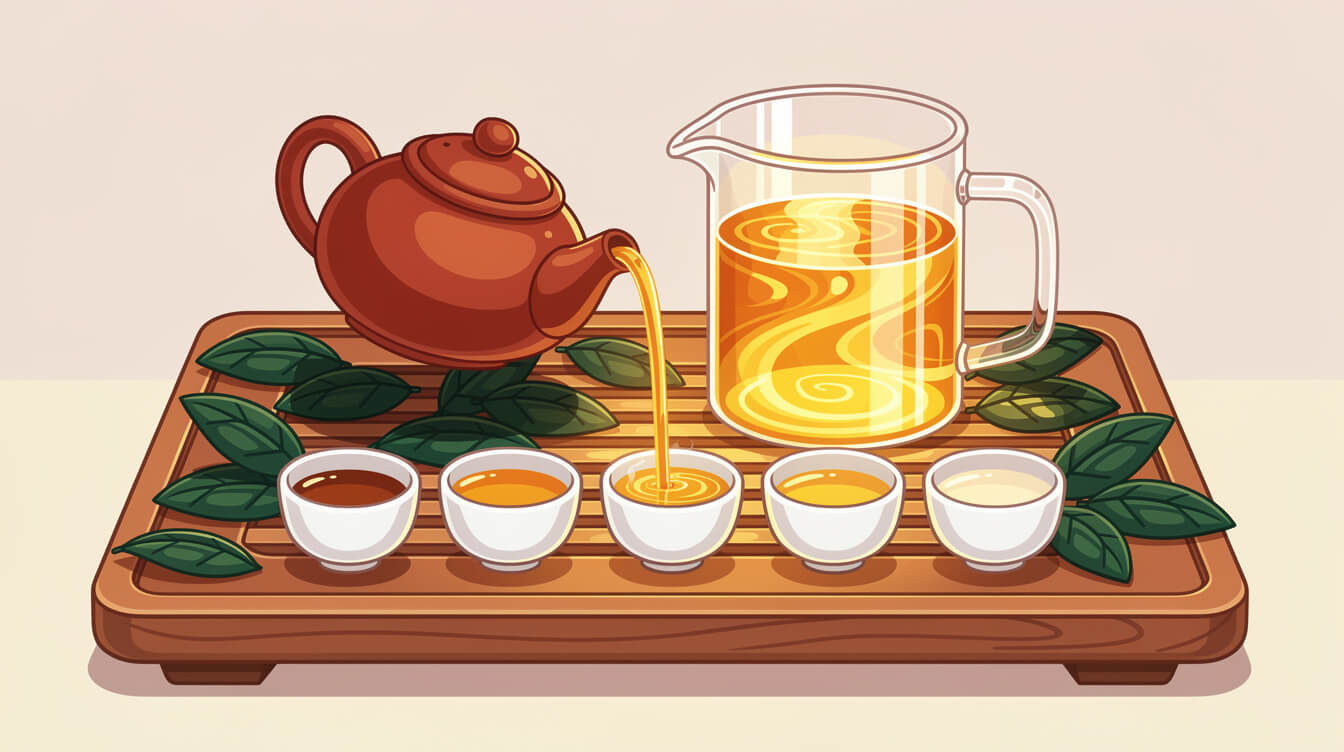
In Taiwan, oolong is often brewed gongfu style (老人茶, “old man’s tea,” in local slang): a small pot packed with leaf, very short steeps, and many rounds. That changes the oolong caffeine story completely, because the caffeine doesn’t come out evenly.
The infusion curve
A 2020 study in Scientific Reports brewed a Wuyi oolong (Dahongpao) gongfu style: 5 g of leaf, 110 ml of boiling water, 14 rounds. It found that “about 70% of caffeine leached during the 1–3rd brew, and after 5th, there was almost no caffeine detected” (Zhang et al., 2020). That’s a Chinese oolong, not a Taiwanese one, but the chemistry is the same.
So a gongfu session front-loads its oolong caffeine. Your first three small cups carry most of the caffeine. The sixth through tenth cups are mostly flavor, warmth and conversation. If you’re sensitive, you can join a session late, or let someone else take the early rounds.
The “rinse” myth
Many tea drinkers in Taiwan do a quick first rinse (洗茶) to wake up tightly rolled leaves. That’s a fine thing to do for flavor. It’s not a decaf method. A 1996 study in Food Research International (Hicks, Hsieh and Bell) looked at how caffeine extracts over time, and the figure widely reported from it is that a 30-second steep pulls out only around 9% of the caffeine. Most comes out over the following minutes. A rinse takes a small slice off the top and leaves the rest in your pot.
Four things that actually change your cup
- Leaf-to-water ratio: gongfu uses far more leaf per ml than a Western mug, so early cups are concentrated.
- Steep time: the 2008 retail-tea study found steep time affected caffeine more than tea type did.
- Water temperature: hotter water extracts caffeine faster. Roasted oolongs are usually brewed hotter than green-leaning ones.
- How many rounds you drink: the curve above means stopping at round three versus round eight barely changes your total, but skipping round one does.
Does Roasting or Ageing Lower Oolong Caffeine?

This is the most repeated claim in oolong circles: roasted oolong is “low caffeine” because the fire burns it off. It feels right, since the tea tastes darker and mellower. The evidence points the other way.
What a Taiwanese roasting study found
A 2010 master’s thesis at National Taiwan University roasted Baozhong at 80, 100 and 120°C for 1 to 12 hours, one to four times, and measured the results. Its finding: caffeine content increased as roasting temperature went up (Fan, NTU, 2010). The likeliest explanation is that roasting drives off moisture and other compounds, so each gram of finished leaf holds a little more caffeine. Even a dedicated low-pressure treatment designed to strip caffeine removed only about 26%.
It’s a thesis rather than a peer-reviewed paper, so don’t build your health plans on its exact numbers. But it’s enough to retire the myth. A heavy charcoal roast changes the flavor dramatically. There’s no good evidence it cuts oolong caffeine in any meaningful way.
What about aged oolong?
Taiwan has a proud tradition of aged oolong (老茶), cellared for years and often re-roasted along the way. One tea site, summarizing a chart that combines the 2003 Taiwan data with two other studies, reports that a Taiwan oolong had “40% less caffeine upon 4 years of maturing” than a newer one (Tea Guardian). That’s one comparison of two samples, and the same page warns its samples aren’t comprehensive enough to generalize from. In that same chart, a 20-year-old pu’er had more caffeine than a young one. Ageing may lower caffeine in some teas, but nobody has shown it reliably does.
The bottom line: choose roasted and aged oolongs because you love how they taste, not as a caffeine workaround.
Oolong Caffeine in Taiwan: Bottled Tea, Drink Shops and the Color Label

Plenty of people in Taiwan drink more oolong from a bottle or a sealed plastic cup than from a teapot. That’s where the biggest oolong caffeine surprises hide, because the serving sizes are big.
Bottled oolong
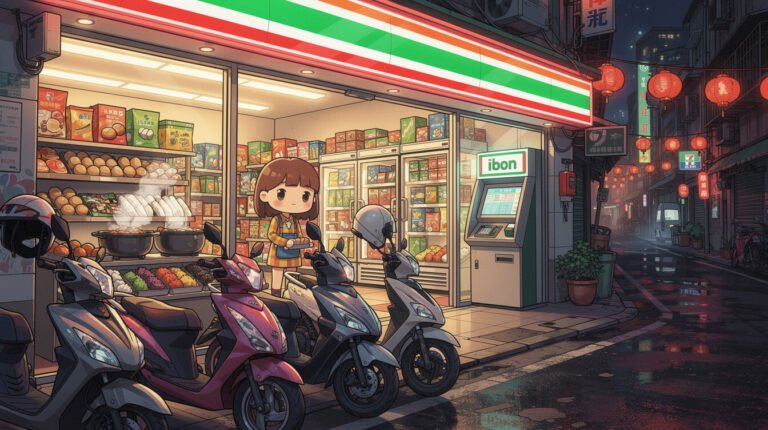
Convenience-store fridges across Taiwan and Japan are stacked with unsweetened bottled oolong. Taiwanese brands don’t make it easy to find their caffeine figures in English, but Japan’s best-known bottled oolong is a useful benchmark. Suntory lists its regular Oolong Tea at about 20 mg of caffeine per 100 ml (Suntory). A 500 ml bottle at that rate is about 100 mg, more than two cups of home-brewed oolong by the USDA figure. Suntory’s Black Oolong is listed at about 10 mg per 100 ml.
If your go-to “light” drink is a big bottle of oolong, you may be drinking more caffeine than you think.
Drink-shop oolong and the red, yellow, green label
Order an oolong milk tea (烏龍奶茶) or a plain iced oolong at a Taiwanese chain drink shop and the caffeine is on the menu. Since January 1, 2023, chain drink shops, convenience stores and fast-food chains have had to label caffeine in drinks made to order. They can print the maximum milligrams per cup, or use a color code: green for 100 mg or less, yellow for 101–200 mg, red for 201 mg or more (CNA). The rule covers drinks made on the spot. It doesn’t cover the bottled tea in the fridge.
We broke the labeling rule down in detail in our boba caffeine guide, including why a large cup can land in the yellow band. For oolong drinkers, the practical tip is simple: in Taiwan, look at the color dot before you choose a size.
Feeling nostalgic about convenience-store drinks? Our 麥香 Taiwan Vintage Milk Tea Can tee is a love letter to the boxed and canned teas generations of Taiwanese kids grew up on, long before boba took over.
A Mug for Your Afternoon Oolong
Not every oolong session needs a gongfu tray. Our Taiwan Cultural Mosaic mug wraps the island’s icons around a glossy black cup, perfect for a big Western-style brew at your desk.
Drinking Oolong at Night, While Pregnant, or When You’re Caffeine-Sensitive

Oolong caffeine is moderate, but moderate isn’t zero. Here’s how to think about it in the situations people ask about most. This is general information, not medical advice. Your doctor knows your situation better than any chart.
Oolong at night
A small cup of a light oolong after dinner is a gentler choice than coffee, but it’s still caffeine. If you’re sensitive, try a late-round gongfu cup (most of the caffeine has already gone), a GABA oolong, or switch to a true caffeine-free infusion like roasted barley tea.
Oolong during pregnancy
The American College of Obstetricians and Gynecologists says that moderate caffeine consumption, less than 200 mg per day, “does not appear to be a major contributing factor in miscarriage or preterm birth” (ACOG Committee Opinion No. 462). At roughly 38 mg per 8 oz home-brewed cup, a few cups of oolong fit under that. But a 500 ml bottled oolong could use up half the daily figure by itself. Count every source, and check with your provider.
If caffeine makes you jittery
- Brew with less leaf and shorter steeps.
- Pour off the first infusion if you’re doing gongfu and you’re very sensitive. It removes only a small share, but every bit helps.
- Pick GABA oolong, which tested lower than ordinary oolongs in the 2021 study.
- Don’t rely on a dark roast to save you.
Oolong Caffeine FAQ
How much caffeine is in oolong tea?
About 38 mg per 8 oz cup, based on the USDA’s figure of 16 mg per 100 g of brewed oolong. Real cups vary widely with leaf amount, water temperature and steep time.
Does oolong tea have more caffeine than a cup of coffee?
No. Brewed coffee averages roughly 95 mg per 8 oz by the same USDA data, about two and a half times a typical cup of oolong.
Is oolong caffeinated?
Yes. All oolong comes from the tea plant, Camellia sinensis, and contains caffeine. Caffeine-free “teas” are herbal or grain infusions.
Which oolong has the least caffeine?
No study ranks Taiwanese oolong styles reliably by caffeine. GABA oolongs tested lower than regular oolongs in a 2021 study, and older, more mature leaves generally carry less caffeine than buds. Roasting doesn’t reliably lower it.
Does rinsing oolong remove the caffeine?
Only a small amount. A 30-second steep is widely reported to extract around 9% of the caffeine. Rinse for flavor, not for decaf.
How much caffeine is in bottled oolong tea?
Suntory lists its regular bottled Oolong Tea at about 20 mg per 100 ml, or about 100 mg in a 500 ml bottle. Check your brand’s label.
Final Thoughts: Drink the Oolong, Know the Curve
The useful truth about oolong caffeine is that the label matters less than the leaf and the brewing. A typical 8 oz cup sits around 38 mg, well under coffee. Gongfu sessions front-load the caffeine into the first few rounds. Roasting doesn’t burn it off. And the biggest single dose most people get is a big bottle from the convenience-store fridge.
Taiwan’s tea culture already has the right instincts here: small cups, slow sessions and, in drink shops, a color dot that tells you what you’re getting. If you want to taste your way through the styles, start with our Taiwan tea guide. Or plan a trip to the tea houses of Maokong, where a pot of Muzha Tieguanyin and a view over Taipei is the best afternoon caffeine on the island.

A Postcard From Taiwan, Every Week
Tea stories, food finds and the little Taiwan details worth knowing, straight to your inbox. No spam, unsubscribe anytime.
Grab a Free Taiwan Sticker!
Drop your email and we’ll send you a limited-edition Taiwan sticker — plus insider access to new merch drops and island vibes.
No spam. Unsubscribe anytime.