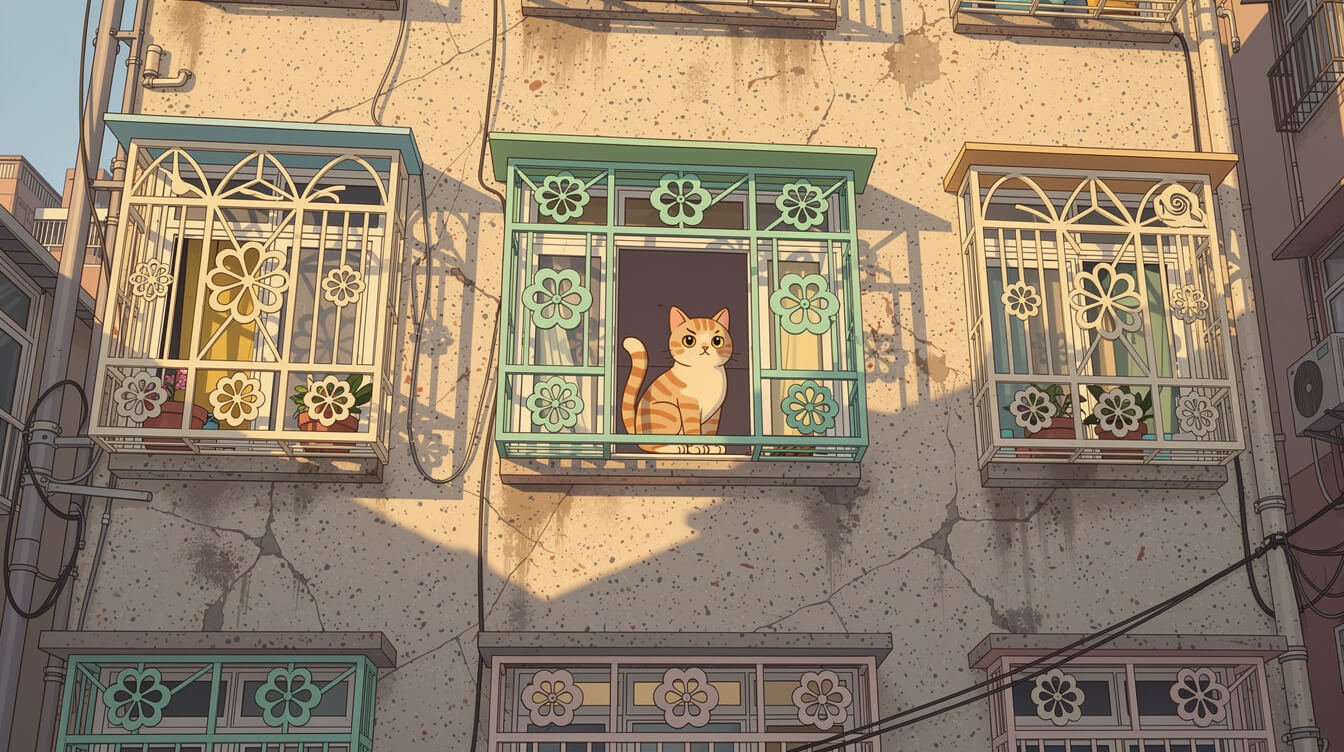
Taiwan Iron Flower Windows (鐵窗花): The Vanishing Street-Level Art You’ll Walk Past on Every Old Taipei Block
Look up next time you walk through Dadaocheng, Wanhua, or basically any neighborhood in Taipei that predates the 1980s. Those decorative metal grilles curling across every second-floor balcony and kitchen window aren’t random security bars. They’re tiěchuānghuā (鐵窗花) — literally “iron flower windows” — and they’re one of the most quietly beautiful things about Taiwanese vernacular design.
Where They Came From
Iron flower windows exploded in popularity during Taiwan’s postwar economic boom, roughly 1950 through the late 1970s. Home ownership was rising, concrete apartment buildings were going up fast, and Taipei had a genuine burglary problem. The pragmatic solution was iron bars over every ground-floor and low-balcony opening.
The Taiwanese solution was to make them art.
Local blacksmiths — often family-run shops working with hand-bent mild steel rod — turned a security feature into a personal expression. Homeowners would commission custom patterns: plum blossoms (梅花) for resilience, bamboo (竹) for integrity, geometric diamonds and interlocking circles for prosperity, family surnames rendered in stylized calligraphy, even koi fish and phoenixes for the truly baller households. Each window became a signature.
How to Read One
Once you start noticing them, patterns emerge:
- Floral motifs (plum, cherry, chrysanthemum) — most common, usually mid-century middle-class homes
- Geometric grids (diamonds, squares, radiating fans) — Art Deco influence, often 1960s
- Character motifs (福 fú, 壽 shòu, family names) — traditional families, often northern Taiwan
- Radiating sunbursts — 1970s optimism, very common on kitchen windows
- Wavy “wind and water” curves — southern Taiwan, especially Tainan
Colors are diagnostic too. Mint green, cream, and pale blue mean the window was probably painted in the 1960s and never touched. Rust-orange means it’s never been repainted at all. Fresh white means the current owner cares.
Why You Should Notice Now
Here’s the bittersweet part: iron flower windows are disappearing. Old buildings get torn down for new towers. Aluminum sash windows replace them. The blacksmiths who made them are aging out with no apprentices — modern buildings use factory-cut steel bars with zero ornamentation.
A small preservation movement is documenting them before they vanish. The photographer Yang Chao-Ching’s book Taiwan Iron Window Flowers (老屋顏鐵窗花) has become a cult item. Young Taiwanese designers are re-releasing the patterns as tote bags, jewelry, and — yes — apparel prints.
The takeaway: Next time you’re walking around an older Taipei neighborhood — Dihua Street, Yongkang, the alleys behind Longshan Temple — look up. Every iron flower window is a tiny piece of postwar Taiwan telling you what a family valued sixty years ago. They won’t all be there in another decade.
Want more of Taiwan’s quiet cultural details? Our Taiwan Culture guide covers the traditions, aesthetics, and everyday rituals that make the island unmistakably itself.
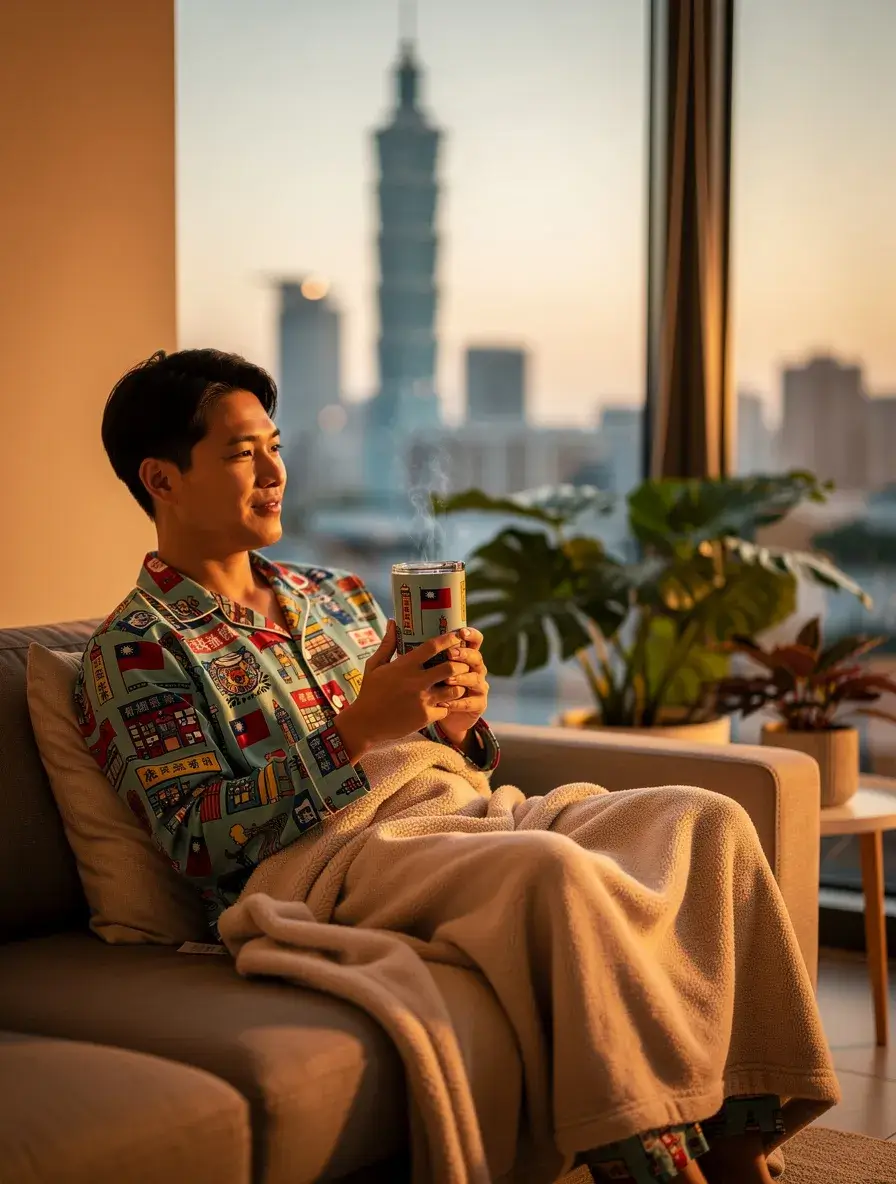
Grab a Free Taiwan Sticker!
Drop your email and we’ll send you a limited-edition Taiwan sticker — plus insider access to new merch drops and island vibes.
No spam. Unsubscribe anytime.