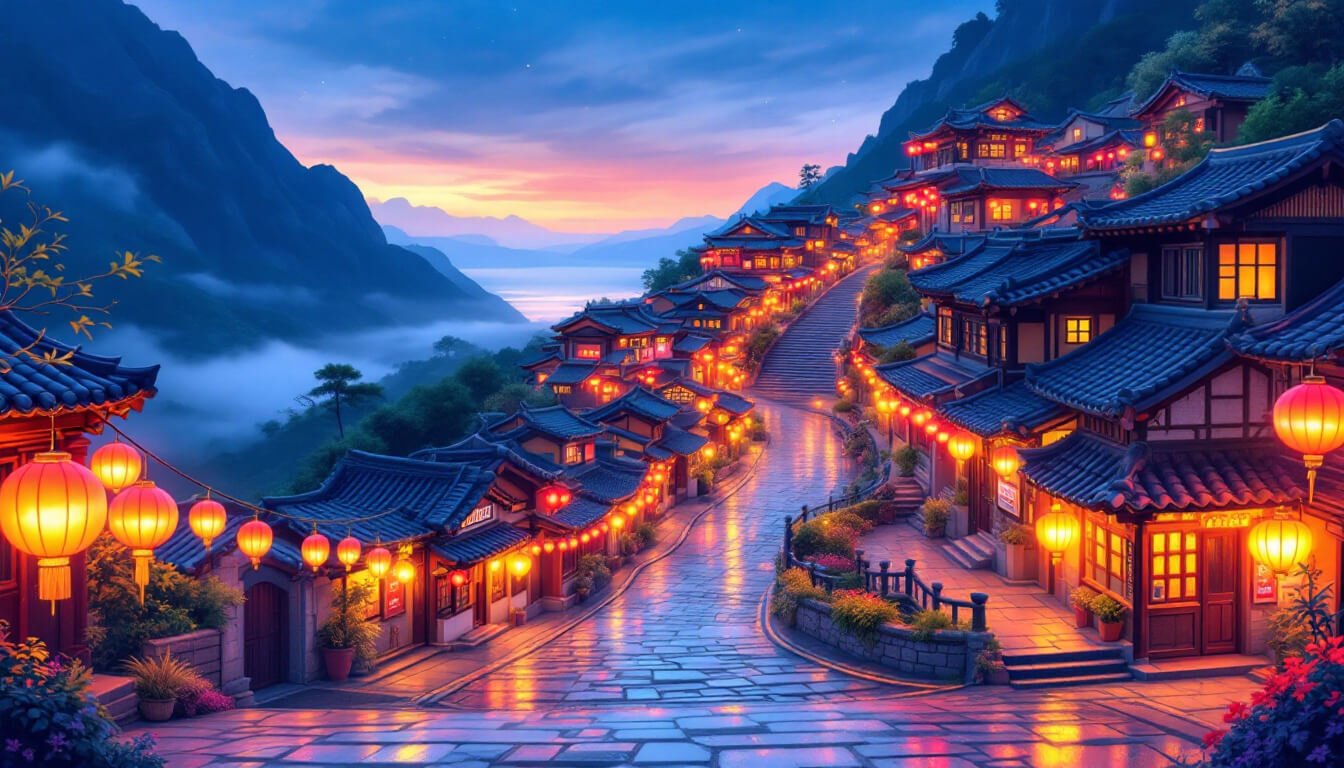
Jiufen, Taiwan: The Real Story Behind the Lanterns — Gold Rush, A City of Sadness, and Why It’s Not Actually Spirited Away
If you have spent more than five minutes researching Jiufen, Taiwan, you have probably heard the legend: this tiny mountain town clinging to a hillside above the Pacific is supposedly the inspiration for Hayao Miyazaki’s Spirited Away. It is the most repeated fact on the internet about Jiufen, and it is almost certainly not true. Miyazaki has flat-out denied it.
The real story of Jiufen is far more interesting than a movie rumor. It is the story of a Qing-dynasty village of nine households, a railway construction crew who literally tripped over a gold seam in 1890, a Japanese colonial mining boom, a postwar collapse that turned the whole hillside into a ghost town, and a single 1989 arthouse film — A City of Sadness — that brought it back from the dead. By the time the lanterns started showing up on every Instagram feed, Jiufen had already lived three lives.
This guide tells you all of it: the real history, the cinema connection that matters, what to actually do when you get there, how to escape the day-tripper crush, and the smartest way to visit in 2026. If you only have time for one mountain town outside Taipei, make it Jiufen — but go knowing the whole story.
Where Is Jiufen, Taiwan? The Mountain Town Above the Sea
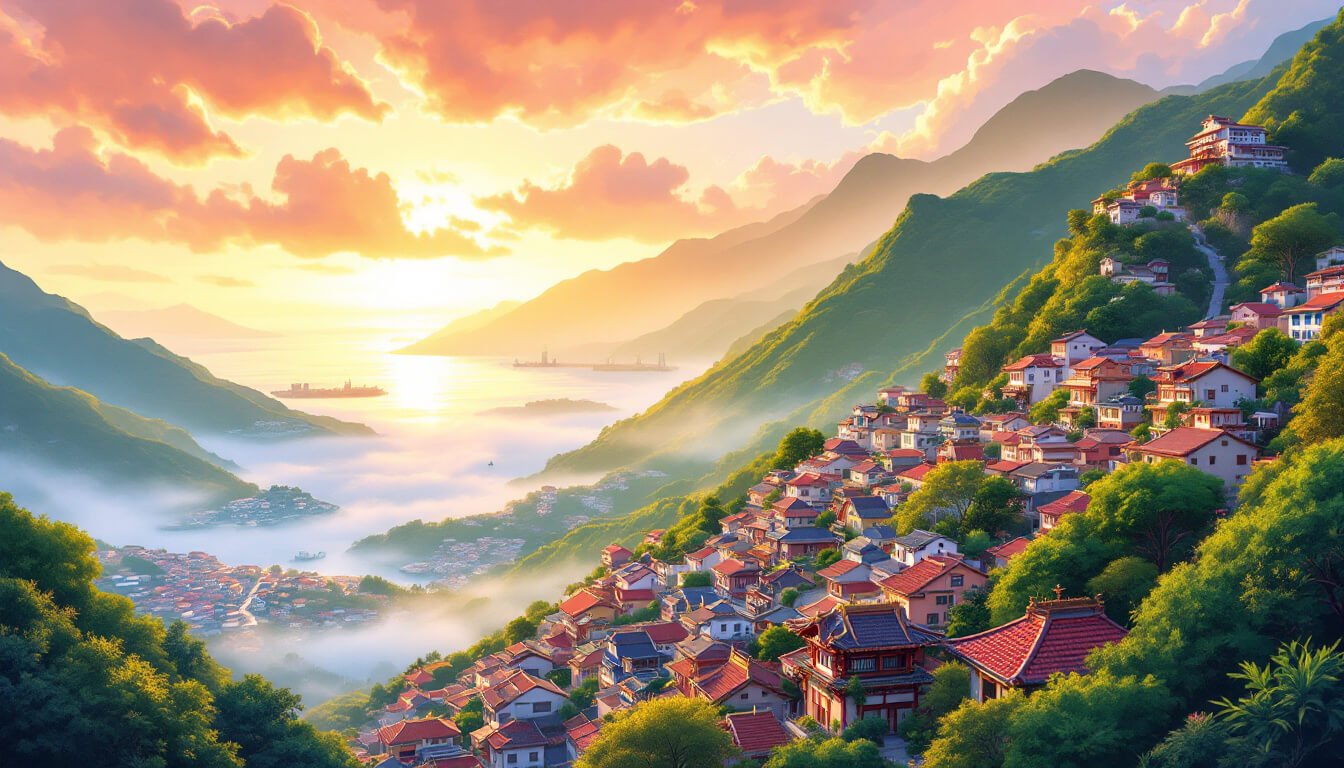
Jiufen sits in Ruifang District of New Taipei City, about 35 kilometers northeast of central Taipei. It is technically not its own municipality — it is a mountain area perched between Keelung Mountain (Jilong Shan) and the Pacific, looking down on the working harbor city of Keelung. On a clear day, the view from any teahouse balcony in Jiufen takes in the curve of the East China Sea, the lighthouse on Keelung Islet, and the green ridgelines of the Yangmingshan and Snow Mountain ranges receding into the haze.
The name 九份 (Jiǔfèn) literally means “nine portions.” During the early years of the Qing dynasty, the isolated hillside was home to just nine households. Whenever a shipment of rice, salt, or other supplies arrived from the lowlands, the villagers asked the trader to divide it into — you guessed it — nine portions. The Hokkien name Káu-hūn-á stuck, was eventually rendered into Mandarin as Jiufen, and that is the name the town carries today. It is one of the more literal place names in Taiwan, and it tells you everything you need to know about how remote and self-sufficient the original community was.
The geography matters because it shapes the entire visitor experience. Jiufen is steep. There is essentially one main pedestrian artery — Jishan Street, or “Jiufen Old Street” — that snakes along the contour of the hillside, with a famous staircase (Shuqi Road) cutting down through it like a seam. Buses can drop you near the top, but everything from there is on foot, and on stairs. Comfortable shoes are not a suggestion; they are a requirement. For first-timers planning their whole trip, our complete Taiwan travel itinerary guide covers exactly where Jiufen slots into a 7, 10, or 14-day route.
The Gold Rush That Built Jiufen: From 1890 Discovery to Ghost Town
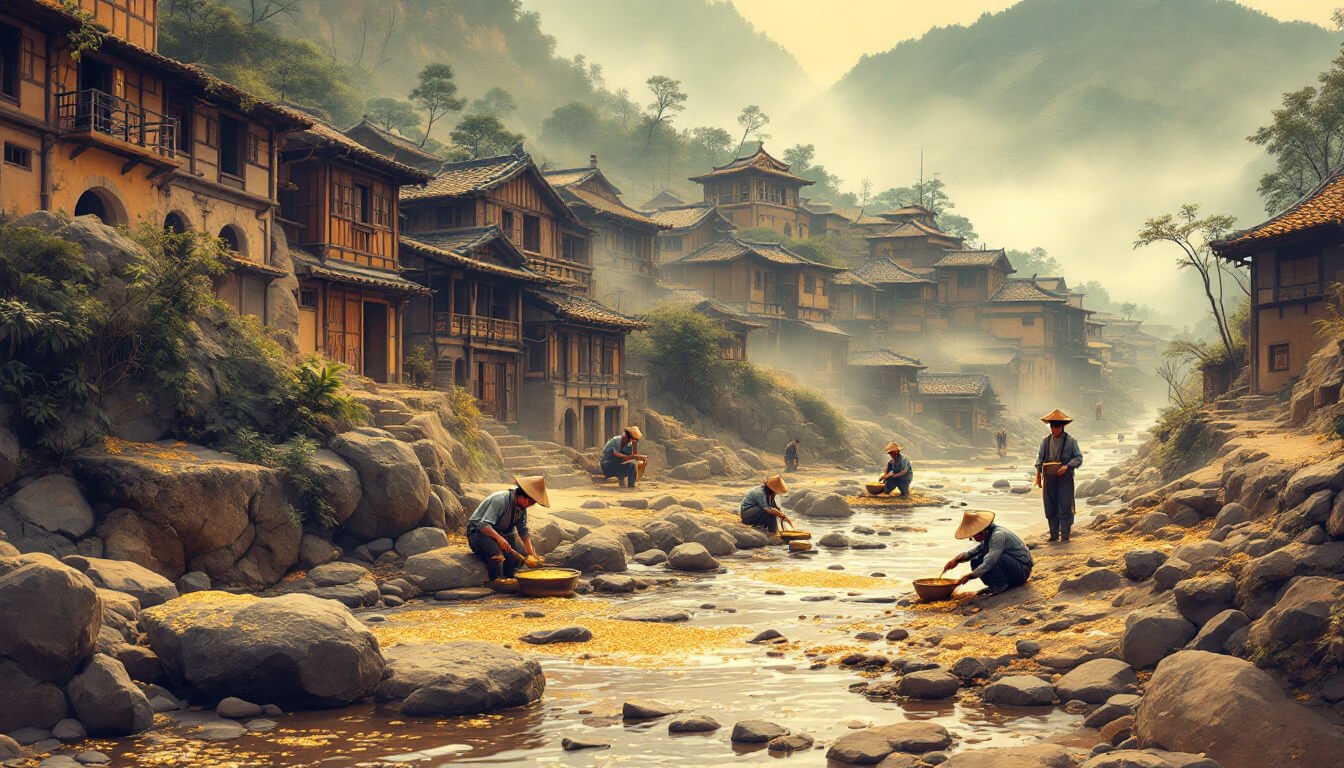
For 200 years after its founding, Jiufen was a nothing village. That changed in 1890, when crews building the new Taipei–Keelung railway noticed flakes of gold in the Kawanami River, just downstream from the Jiufen hillside. Within months, the news ran up the valley. By the time Taiwan fell under Japanese colonial rule in 1895, Jiufen and its neighboring village Jinguashi were the heart of a full-blown gold rush — one of the most productive gold-mining operations in the entire Japanese Empire.
The Japanese administration consolidated the mines under the Fujita Group, then later under Tanaka Mining. At its peak in the 1930s, Jiufen housed thousands of miners and their families, a movie theater, dozens of restaurants and brothels, and enough income flowing through it to earn the nickname “Little Shanghai” and “Little Hong Kong.” Stone steps were carved into the hillside to connect the mine entrances, the housing terraces, and the supply stores along Jishan Street. Those steps are the same ones you climb today.
Then it all collapsed. After World War II and the handover to the Republic of China, the mines were nationalized under Taiwan Metal Mining Corporation. By the late 1950s, the easy gold was tapped out, the operations were running at a loss, and the workers started leaving. The last mine closed in 1971. Within a decade, Jiufen had become a textbook ghost town — empty wooden houses, abandoned mine shafts, vines growing through teahouse windows. The population dropped from over 40,000 at peak to a few thousand stubborn holdouts. If you had visited Jiufen in 1985, you would have walked through a beautiful, dilapidated relic that nobody outside Ruifang had any reason to think about.
How “A City of Sadness” Saved Jiufen from Oblivion
The single most important thing that ever happened to Jiufen was a movie. In 1989, Taiwanese director Hou Hsiao-hsien chose the abandoned hillside as the primary location for A City of Sadness (悲情城市) — a quiet, devastating family drama set against the backdrop of the 228 Incident, the 1947 massacre of Taiwanese civilians by the incoming Kuomintang government. The film was the first work to address 228 publicly after decades of White Terror censorship, and it won the Golden Lion at the Venice Film Festival that year, the first Taiwanese film ever to take a top prize at a major international festival.
The film’s success did something nobody expected: it sent waves of Taiwanese audiences up the winding road to see the place where it was shot. Jiufen’s crumbling architecture, narrow stairs, and sea-mist atmosphere — which had felt like decay in 1985 — suddenly looked like heritage. Tea-shop owners reopened. Old wooden houses were restored. Within five years, Jiufen had reinvented itself as a teahouse-and-nostalgia destination, the first stop on any Taiwanese tourist’s pilgrimage of memory.
This matters because almost every Western travel article about Jiufen skips over A City of Sadness entirely and jumps straight to Spirited Away. It is the wrong story. Hou Hsiao-hsien’s film is the actual reason Jiufen exists as a tourist town today. The teahouse that became the visual icon of Jiufen — Amei Teahouse, with its three-story balcony and ten-thousand red lanterns — was renovated in 1991 specifically to ride the post-City of Sadness wave. Knowing this changes how you experience the place. You are not walking through a Studio Ghibli set; you are walking through a town that was nearly lost and was saved, on purpose, by Taiwan deciding its own history was worth remembering. To go deeper on Taiwanese cultural identity, see our complete guide to Taiwan culture.
The Spirited Away Myth (And What Miyazaki Actually Said)
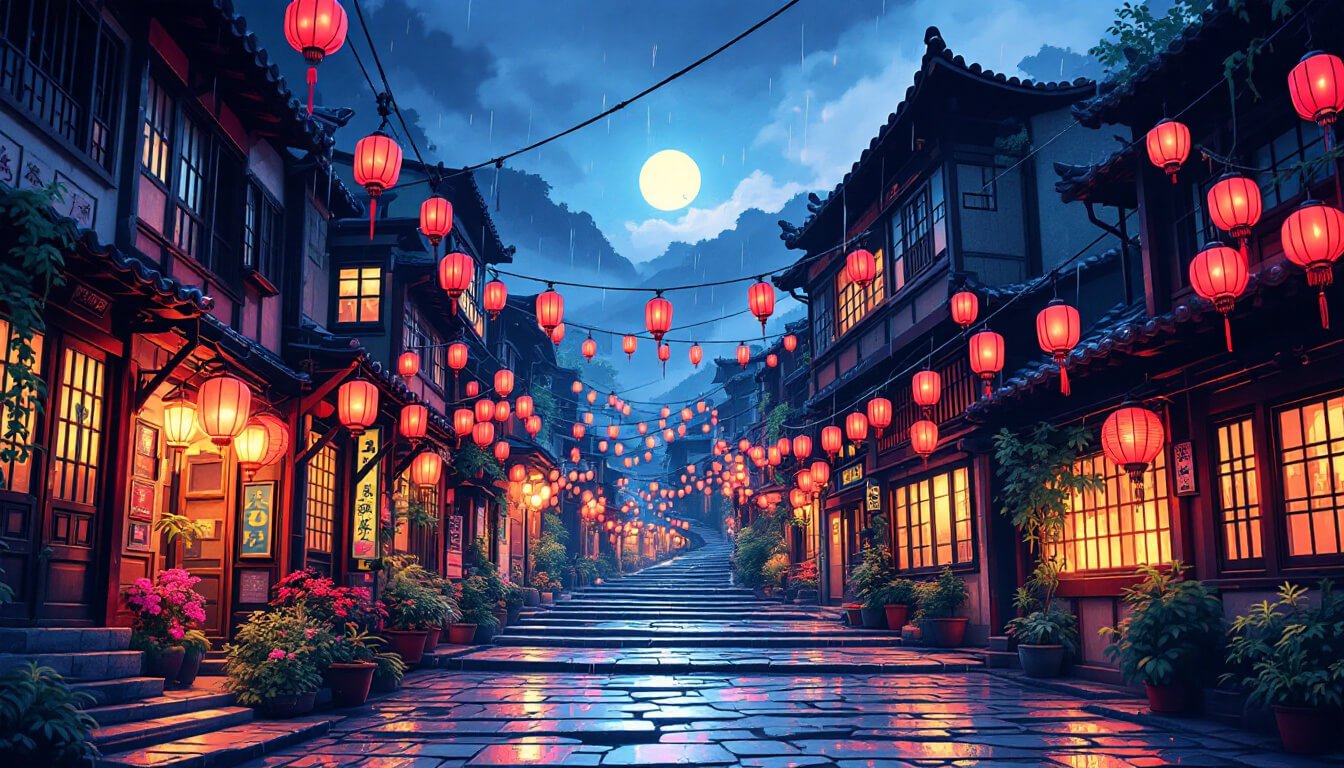
Now to the elephant in the alley. Roughly nine out of ten English-language articles about Jiufen claim it inspired the bathhouse town in Hayao Miyazaki’s 2001 masterpiece Spirited Away. Travel companies use it as a marketing line. Tour guides repeat it. Bloggers reprint it. There is one small problem: Miyazaki has explicitly denied it.
In multiple interviews, both Miyazaki and Studio Ghibli have stated that the setting of Spirited Away is a composite of many places and is largely a product of Miyazaki’s imagination. Specific influences he has named include the Edo-Tokyo Open Air Architectural Museum in Tokyo, the Dōgo Onsen bathhouse in Ehime Prefecture (which he visited as a child), and Notoyaryokan in Yamagata. None of his publicly named references is Jiufen. The Taiwanese aesthetic similarity — winding stone steps, paper lanterns, terraced wooden teahouses — is real, but it is parallel, not derivative.
So why does the rumor persist? Two reasons. First, Jiufen genuinely does look like the film, especially Amei Teahouse at night with its cascading red lanterns. The visual resonance is uncanny. Second, the claim is great for tourism, and once a story like that takes hold online it becomes self-perpetuating. The town’s own marketing has occasionally leaned into the comparison without ever quite endorsing it, which is the polite way to ride a wave you did not create.
Here is the honest take: visit Jiufen because it is beautiful, because the history is genuinely fascinating, and because the taro balls are extraordinary. If you happen to feel like you have wandered into a Ghibli film while you are there, fine — that is your eyes responding to a real visual likeness. But do not visit because you think you are walking onto Miyazaki’s actual location scout. The town deserves to be experienced as itself.
What to Do on Jiufen Old Street: Lanterns, Taro Balls and Amei Teahouse
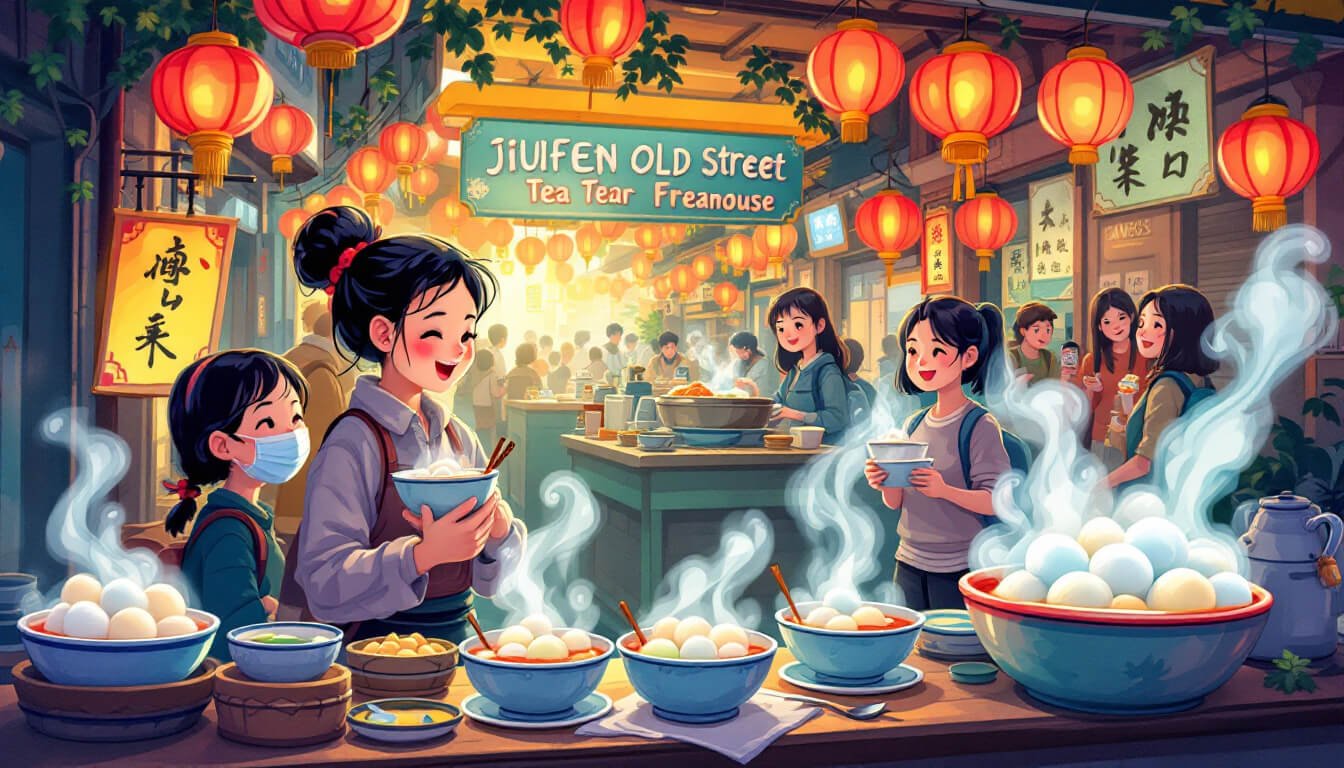
Jiufen Old Street — the locally signposted name is Jishan Street (基山街) — is the main pedestrian artery and the place you will spend 80% of your visit. It is roughly 400 meters of covered alleyway snaking along the contour of the hillside, packed shoulder-to-shoulder with food stalls, tea shops, souvenir vendors, and the occasional indie design store. Here is what is actually worth your time.
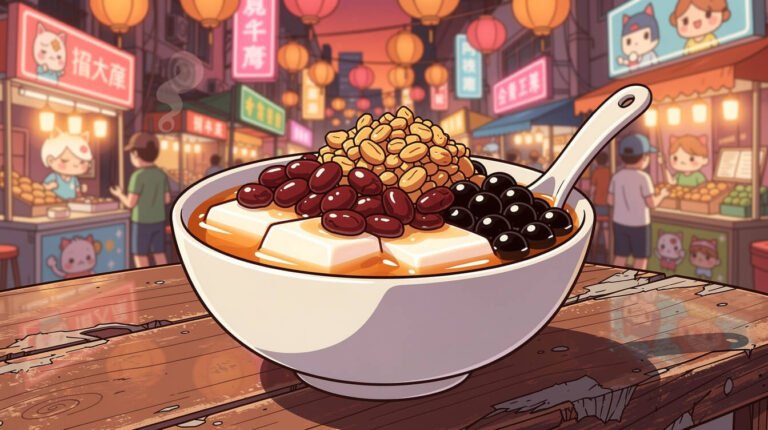
Taro balls (芋圓 yùyuán). Jiufen is widely considered the birthplace of the modern taro-ball dessert, and two competing shops — Grandma Lai’s Taro Balls (賴阿婆芋圓) and Ah Gan Yi Yu Yuan (阿柑姨芋圓) — anchor the food pilgrimage. Both serve chewy hand-rolled taro, sweet potato, and green-tea balls in either hot ginger syrup (winter) or shaved ice with red beans (summer). Ah Gan Yi has the better view; Grandma Lai’s has the slight edge on texture. Try both if you have stomach space.
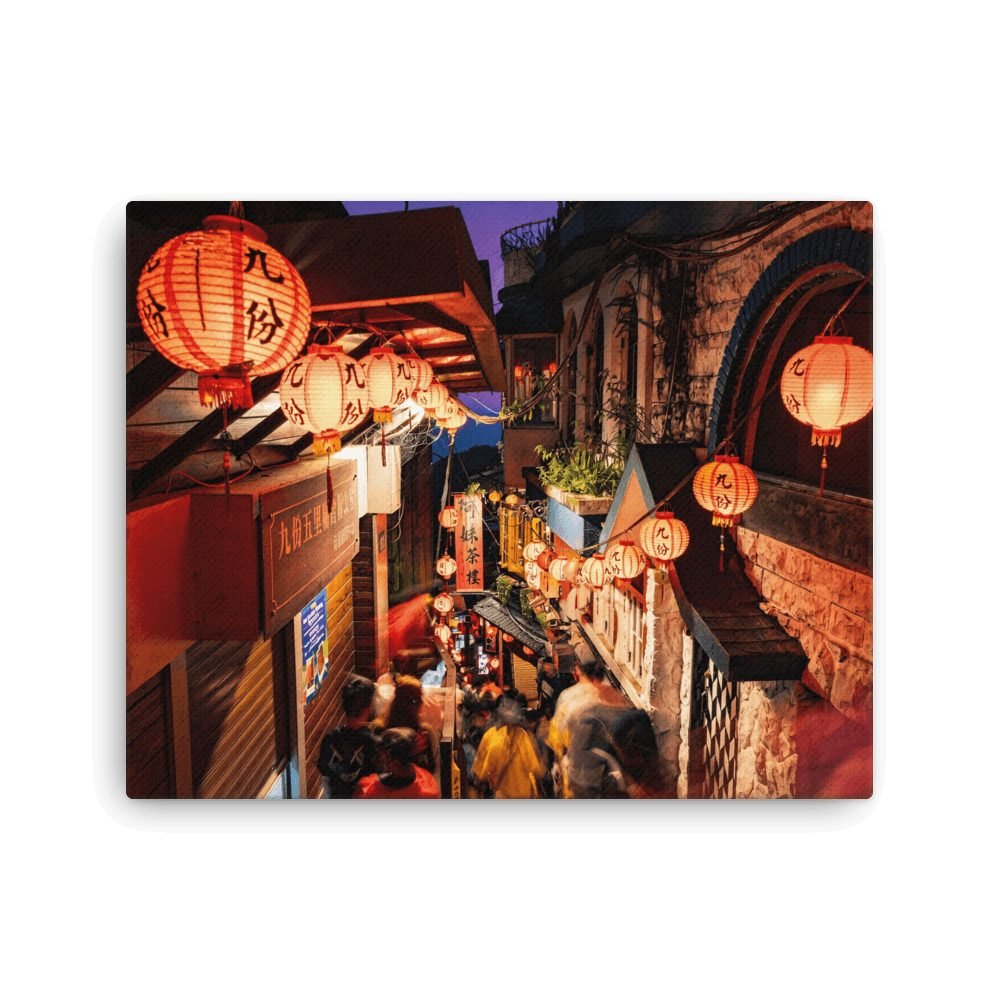
Amei Teahouse (阿妹茶樓). The three-story building cascading down the staircase at the Shuqi Road junction, hung with hundreds of red lanterns. It is the most photographed spot in Jiufen and rightfully so. You do not have to buy tea to take a picture, but if you do go in, sit on the third-floor balcony — the view across to Keelung Mountain is worth the markup. Order a pot of high-mountain oolong and they bring you tea snacks and the equipment to brew it traditionally.
Shengping Theater (昇平戲院). The restored 1934 cinema where A City of Sadness screened locally. Free to enter, with a small museum about Jiufen’s mining history and the film’s production. Most tourists walk straight past it. Do not be most tourists.
Other essentials. Fish-ball soup at Zhang Ji (張記), peanut-ice-cream spring rolls (a savory-sweet wrap with peanut brittle and cilantro that you have to try at least once), and Wu’s Pastry for traditional sun cakes to take home.
If you want to bring a little piece of Jiufen home that is not in a snack bag, our Jiufen Taiwan Night Market Canvas Wall Art captures the staircase-lantern view that you will spend half your visit trying to photograph — and it actually looks good on a wall.
Bring Jiufen’s Lanterns Home
Our Jiufen Taiwan Night Market canvas captures the iconic Amei Teahouse staircase at dusk — golden lanterns cascading down weathered stone steps, exactly the view that made you fall in love with the place.
How to Get to Jiufen from Taipei (Bus, Train, Tour)
Jiufen is roughly 35 kilometers from central Taipei, but the drive takes about 60–90 minutes depending on traffic and how the winding road behaves on weekends. There are three sensible ways to get there and one expensive way.
Option 1: Direct bus (cheapest, easiest). Take Keelung Bus #1062 from Zhongxiao Fuxing MRT Station Exit 1. It runs every 15–30 minutes from around 6:00 a.m. to 10:00 p.m., costs roughly NT$110 one-way (about US$3.50), and drops you at the Jiufen Old Street bus stop. Pay with an EasyCard. Sit on the right side of the bus on the way out for ocean views, and grab a window seat — once the road starts climbing, the scenery is exactly what you came for.
Option 2: TRA train + local bus (best for combining with Shifen). Take a regular TRA train (not the high-speed THSR, which does not serve this route) from Taipei Main Station to Ruifang Station (about 40 minutes, NT$76). From Ruifang, walk two minutes to the bus stop opposite the police station and catch bus #788, #825, or #856 up to Jiufen (15 minutes, NT$15). This is the right choice if you also want to visit Shifen — Pingxi line trains depart from Ruifang. For more on Taiwan’s rail network see our Taiwan high-speed rail map guide.
Option 3: Group tour from Taipei. Klook, KKday, and most Taipei hostels sell a “Northeast Coast Day Tour” that combines Jiufen, Shifen, Yehliu, and sometimes Houtong Cat Village for around US$50–80. Convenient if you want to hit four destinations in one day, but you trade flexibility — you get exactly 90 minutes in Jiufen, which is barely enough.
Option 4: Private driver. Around NT$3,000–4,500 for a half-day. Worth it if you are traveling with elderly parents or in a group of four. Not worth it solo.
Best time to visit. Weekday late afternoons, hands down. Aim to arrive around 3:00 p.m., explore in daylight, watch the lanterns come on at dusk, eat dinner on Old Street, and catch a bus back to Taipei by 8:30 p.m. Weekends from 11:00 a.m. to 5:00 p.m. are brutally crowded — the steep staircase becomes a single-file slow-shuffle and the food queues can run 30 minutes. November through February is moody and atmospheric (cool, often misty, fewer crowds); March through May is plum-rain season; June through September is hot, humid, and prone to afternoon typhoons. The shoulder weeks of late October and mid-March are arguably perfect. For the full island-wide picture, see our best time to travel to Taiwan guide.
Where to Stay in Jiufen (And Whether You Should)
Most visitors do Jiufen as a day trip from Taipei, and that is the right choice 80% of the time. But there is a real case for staying one night, and it comes down to this: between roughly 9:00 p.m. (when the last day-tripper buses leave) and 9:00 a.m. (when the first ones arrive), Jiufen is yours. The Old Street is quiet. The lanterns are still on. The teahouse staff have time to talk to you. The cats come out. It is a completely different town.
If that sounds worth it, look at Jiufen’s small guesthouses — there are about 25 of them on and around the hillside, mostly converted homes with three to eight rooms each. Hot tier picks for 2026: Ji-Shan Hotel (modern rooms, ocean view balconies, walk-in from Old Street); The Gold Inn (boutique, design-forward, near Shengping Theater); Jiufen Cha-Fang (traditional, run by a third-generation family, includes breakfast). Expect to pay NT$3,000–6,000 per night (US$95–185), more on weekends and during Lunar New Year.
A few honest warnings. Cars cannot reach most guesthouses — you walk in with luggage, sometimes up a steep flight of stairs. Rooms are small. Nightlife is essentially zero past 10 p.m. (the town goes to sleep). If you are the kind of traveler who needs convenience, restaurants open past 9 p.m., and elevators, Jiufen overnight is not for you. If you are the kind who wants a foggy morning, hot tea on a balcony, and a town to yourself, book the night.
Jiufen FAQ: Everything First-Time Visitors Ask
Is Jiufen worth visiting in 2026?
Yes — but go on a weekday and stay until after sunset, when the lanterns come on. Weekend midday Jiufen is a victim of its own popularity. Weekday-evening Jiufen is one of the most atmospheric places in Taiwan.
How long should I spend in Jiufen?
Three to five hours is the sweet spot for a day trip. Arrive around 3:00 p.m., explore Old Street, eat dinner, see the lanterns turn on, and leave by 8:00 p.m. Stay overnight if you want the quiet morning.
Is Jiufen the inspiration for Spirited Away?
No. Miyazaki has denied it directly. The aesthetic similarity is real but coincidental. Studio Ghibli has named Dōgo Onsen, the Edo-Tokyo Open Air Museum, and Notoyaryokan as actual influences. Visit Jiufen for itself.
Is Jiufen part of Taipei?
Technically no. Jiufen is in Ruifang District of New Taipei City, which is a separate municipality from Taipei City proper. But it is close enough that everyone treats it as a Taipei day trip.
Can I combine Jiufen with Shifen and Houtong in one day?
Yes, but it will be rushed. The smart combination is Jiufen + Shifen (sky lanterns) — both are reachable via Ruifang Station. Adding Houtong Cat Village or Yehliu Geopark on the same day means 90 minutes max per stop. Better to pick two and do them properly.
Is Jiufen safe?
Extremely. Taiwan is the 4th safest country in the world by the 2026 Numbeo Safety Index, and Jiufen specifically is a small, well-policed tourist village. The only real risk is slipping on wet stone stairs after rain. Wear grippy shoes. See our Taiwan safety guide for the full picture.
Do I need cash in Jiufen?
Yes. Most food stalls and small teahouses are cash-only. There is an ATM at the 7-Eleven near the main bus stop and another at the Family Mart on Qiche Road, but bring NT$1,500–2,500 in small bills to be safe.
What should I wear?
Comfortable shoes with grip — non-negotiable. A light jacket year-round (the mountain is 10°C cooler than Taipei and the sea breeze is real). An umbrella from November through May. Avoid heels, leather-soled shoes, and anything you would not want to get wet.
Final Thoughts: Why Jiufen Is More Than a Movie Lookalike
Jiufen is the rare tourist town that earns its reputation. Strip away the Spirited Away marketing and what is left is genuinely remarkable: a hillside that went from nine households to gold-rush boomtown to ghost town to film set to Taiwan’s most beloved heritage village, all in about 130 years. The lanterns are real. The taro balls are real. The view across to Keelung Mountain from Amei Teahouse’s balcony is the kind of thing that makes you stop talking for a minute.
Go on a weekday. Bring cash. Wear good shoes. Stay until the lanterns turn on, watch the sea-mist roll up from Keelung harbor, and have one more bowl of taro balls before you catch the last bus home. And when somebody asks you about Spirited Away, you can give them the real story — Jiufen does not need a Miyazaki connection to be worth the trip.
For more places to anchor your Taiwan itinerary, see our guides to the best places to travel in Taiwan and things to do in Taipei.
A Postcard from Taiwan, Weekly
Get one short, story-rich email each week — Taiwanese food culture, hidden corners, artisan profiles, and the occasional drop of new Taiwan-themed merch. Free, no spam, unsubscribe whenever.
Grab a Free Taiwan Sticker!
Drop your email and we’ll send you a limited-edition Taiwan sticker — plus insider access to new merch drops and island vibes.
No spam. Unsubscribe anytime.