Beitou Hot Spring: The Volcanic Sulfur Story Behind Taipei’s 80°C Bath District
Taipei is one of the only capital cities in the world where you can step off a metro train, walk fifteen minutes uphill, strip down to a swimsuit, and lower yourself into water that’s bubbling up at 80°C straight from a dormant volcano. Welcome to Beitou Hot Spring — Taiwan’s most accessible geothermal district, hiding inside the northern tip of Taipei City on the Tamsui-Xinyi MRT pink line.
Most guides to the area read like checklists: hit Thermal Valley, see the museum, soak somewhere, eat at the night market, train back. They miss the part that makes Beitou actually interesting. The springs here exist because Taiwan sits on the Pacific Ring of Fire and the entire neighborhood is built directly on top of an active volcanic system that last erupted around 6,000 years ago. The Japanese colonial government turned the place into Taiwan’s first onsen town in 1896. The water comes in three completely different chemical signatures depending on which side of the valley you tap into. And the bathing rules vary so wildly between venues that wearing the wrong thing in the wrong pool will get you politely escorted out.
This guide explains what the SERP doesn’t: why the springs are here, what’s actually in the water, and how to bathe without committing an etiquette crime. By the end you’ll know the difference between white sulfur and green sulfur springs, why one bathhouse insists on full nudity while another bans tattoos, and exactly how to spend a half day in Beitou without queueing behind a tour bus.
The Volcano That Made Beitou: Datun Group Geology Explained
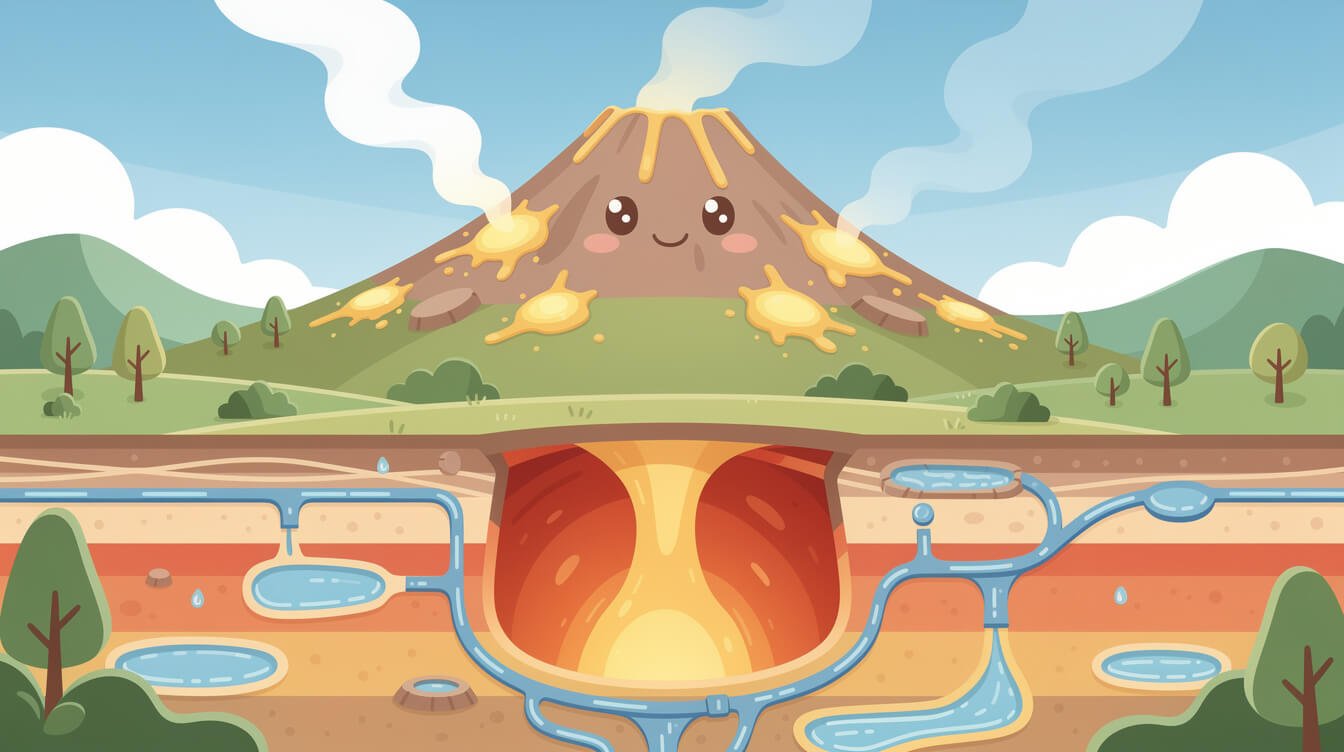
Beitou’s hot water isn’t decorative geology. It’s an active hydrothermal system, fed by the Datun Volcano Group — a cluster of more than twenty stratovolcanoes and lava domes that make up most of Yangmingshan National Park, just north of Taipei City. The Datun system is geologically young, formed during the late Pleistocene, and although its last confirmed eruption was roughly 6,000 years ago, recent seismic studies have detected a shallow magma chamber sitting about three to five kilometers beneath the surface. Taiwan’s central weather bureau still classifies the entire group as “active but currently dormant.”
That magma chamber is the engine. Rainwater and groundwater percolate down through fractured andesite bedrock until they hit hot rock around 200°C, flash to steam, dissolve sulfur compounds from the surrounding mineral deposits, and rise back up under pressure through fault lines that ring the volcano’s flank. By the time the water emerges at the surface in Beitou — at altitudes ranging from sea level up to about 250 meters — it’s still carrying temperatures between 50°C and a brutal 100°C, depending on the spring’s depth and proximity to the source vent.
This is the same plate-tectonic logic that produces every famous hot spring district on Earth — Iceland’s Blue Lagoon, Japan’s Beppu, New Zealand’s Rotorua. Taiwan just happens to have its version sitting on the doorstep of a metro system. If you want the wider regional context, our complete guide to Taiwan’s hot springs maps out the rest of the island’s volcanic bathing destinations from Wulai to Guanziling.
The Three Sulfurs of Beitou: White, Green, and Iron Springs
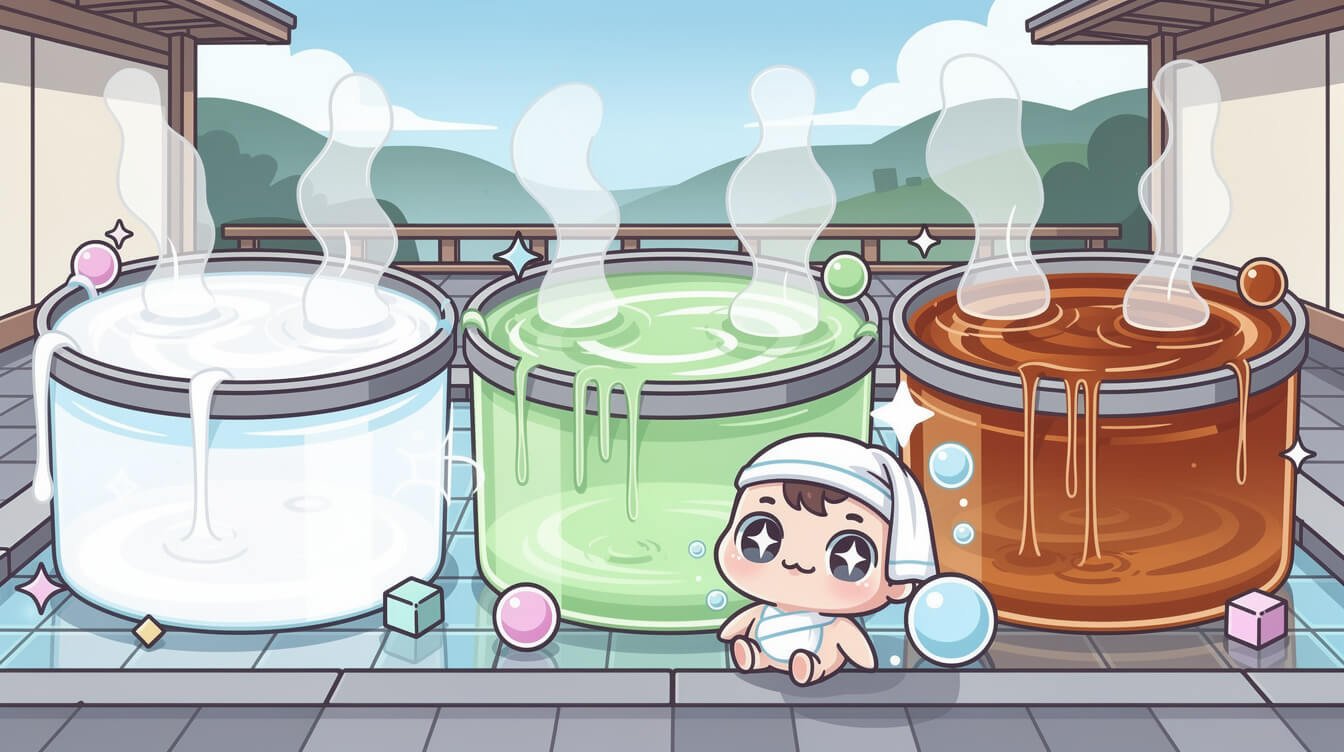
Most travelers assume hot spring water is hot spring water. In Beitou, it isn’t. The district produces three chemically distinct spring types, and locals will tell you flat-out that each one feels different on the skin and is reputed to help with different things.
White Sulfur Springs (白磺泉)
The most common variety in Beitou. White sulfur springs run milky and opaque, with a pH between 4 and 5 — mildly acidic — and a sulfur dioxide concentration that gives the air around them that distinct rotten-egg edge. The temperature at the source ranges from 50°C to 75°C. Traditional Taiwanese hot-spring lore credits white sulfur with helping skin conditions, joint stiffness, and circulation. Modern Japanese onsen medicine classifies similar waters as “kotanjun-sen” and links them to mild antibacterial effects, though the clinical evidence is thin. Most public bathhouses in Xinbeitou pump white sulfur water.
Green Sulfur Springs (青磺泉)
Rarer and more aggressive. Green sulfur water is clear-to-pale-jade with a pH that can drop as low as 1.4 — making it one of the most acidic natural hot springs on Earth. The defining feature is its dissolved iron content combined with sulfuric acid, which produces a sharp astringent feel. These springs run hotter, often 75°C to 90°C at source, and are concentrated in the upper Thermal Valley area. You can’t soak in raw green sulfur water directly; venues that use it dilute it significantly. Green sulfur is also the geological context for Beitou’s most famous mineral, hokutolite — a radium-bearing barium sulfate crystal that grows only in two places on the planet: Beitou’s Thermal Valley and the Tamagawa hot springs in northeastern Japan.
Iron (Tieh) Sulfur Springs (鐵磺泉)
The third variety, and the least common in Beitou proper. Iron sulfur springs run a rust-orange color due to oxidized ferrous compounds, with a milder pH around 6 and lower temperatures (40°C to 60°C). A handful of resort hotels on the Beitou-Yangmingshan border tap iron sulfur sources. The water is considered gentler on the skin and is sometimes recommended for first-time bathers who find white sulfur too pungent.
If you only have time for one variety, white sulfur is the iconic Beitou experience — it’s what the district smells like and what filled the first Japanese-era bathhouses. Green sulfur is for the geology nerds and the masochists.
From Japanese Spa Town to Modern Taipei District: The 1913 Bathhouse Legacy
Beitou’s bathing history didn’t start with the Japanese, but the modern district absolutely did. The Ketagalan, the lowland indigenous people who occupied this part of northern Taiwan before Han Chinese settlement, called the area Patauw — “place of the witches” — a reference to the steaming, sulfurous valleys that they considered both sacred and dangerous. The name “Beitou” is a direct phonetic borrowing from Patauw.
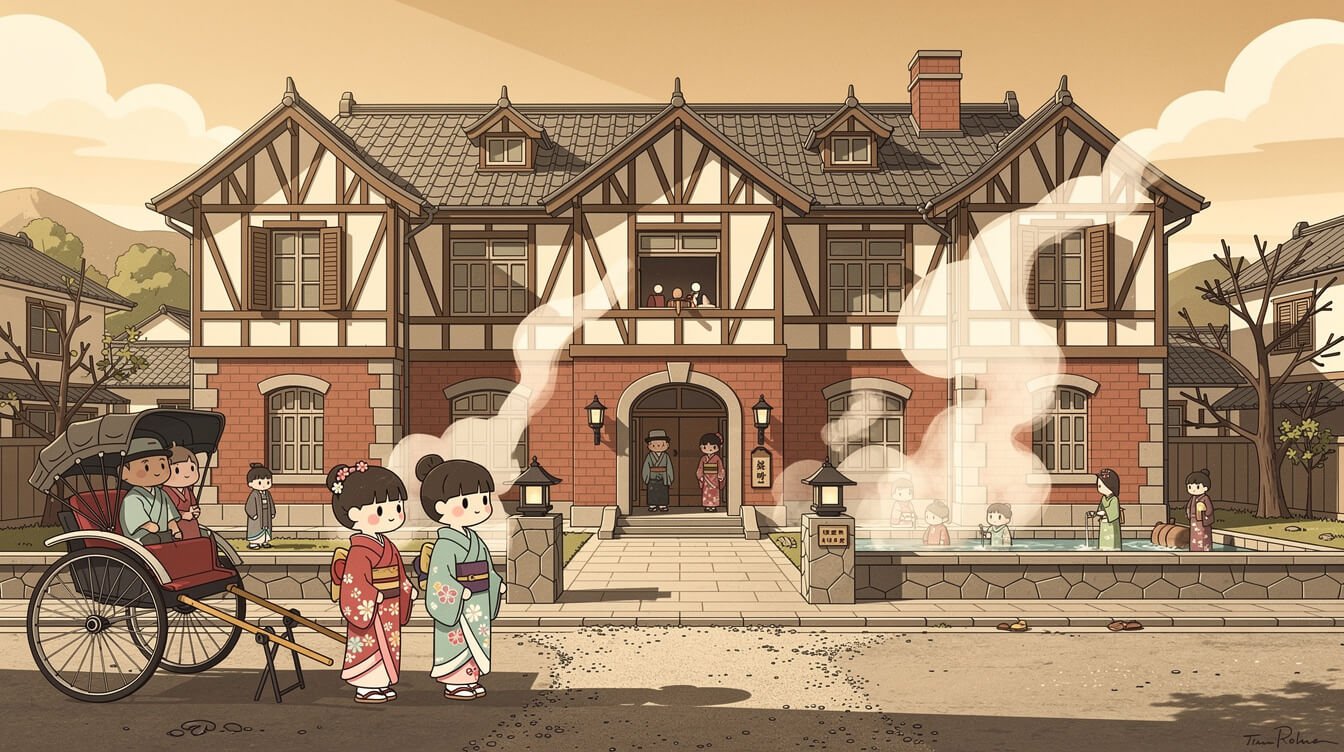
The transformation into a bathing destination came in 1894, the year before Japan took Taiwan as a colony following the First Sino-Japanese War. A German merchant named Ouely opened a small bathhouse using the local sulfur water. After the 1895 Treaty of Shimonoseki transferred Taiwan to Japanese rule, the new colonial administration recognized the springs’ resemblance to onsens back home and moved quickly to develop the area. Japanese officials and military officers built villas, and in 1913 the Taihoku Prefecture government opened a grand public bathhouse modeled on the famous Izusan Hot Spring resort in Shizuoka — the building that still stands today as the Beitou Hot Spring Museum.
That museum is one of the best-preserved pieces of Showa-era architecture in Taiwan: a two-story timber-and-brick hybrid with a Tudor-style upper level, tatami-mat rest rooms, and the original Roman-bath-inspired tiled soaking pool downstairs. Admission is free. Closed Mondays. You’ll spend 30 to 45 minutes there if you read the displays carefully, and it’s the single best primer on why this small district matters historically.
The other architectural survivors include the 1913 Puji Temple (a rare Pure Land Buddhist temple built in Japanese style during the colonial period), the Marshal Zen Garden (originally a Japanese officer’s villa), and the green-roofed Xinbeitou MRT station building, which was rebuilt in 1916 wooden style after the original was preserved and relocated. To understand how this neighborhood fits into Taipei’s larger geography of historic districts, our Taipei district map guide covers the rest of the city’s distinct neighborhoods on a single map.
Thermal Valley and Beitou Hot Spring Museum: The Two Must-See Free Stops
You can’t soak in either of these. They’re both purely sightseeing. But skipping them is missing the point of why you came to Beitou in the first place.
Beitou Thermal Valley (地熱谷)
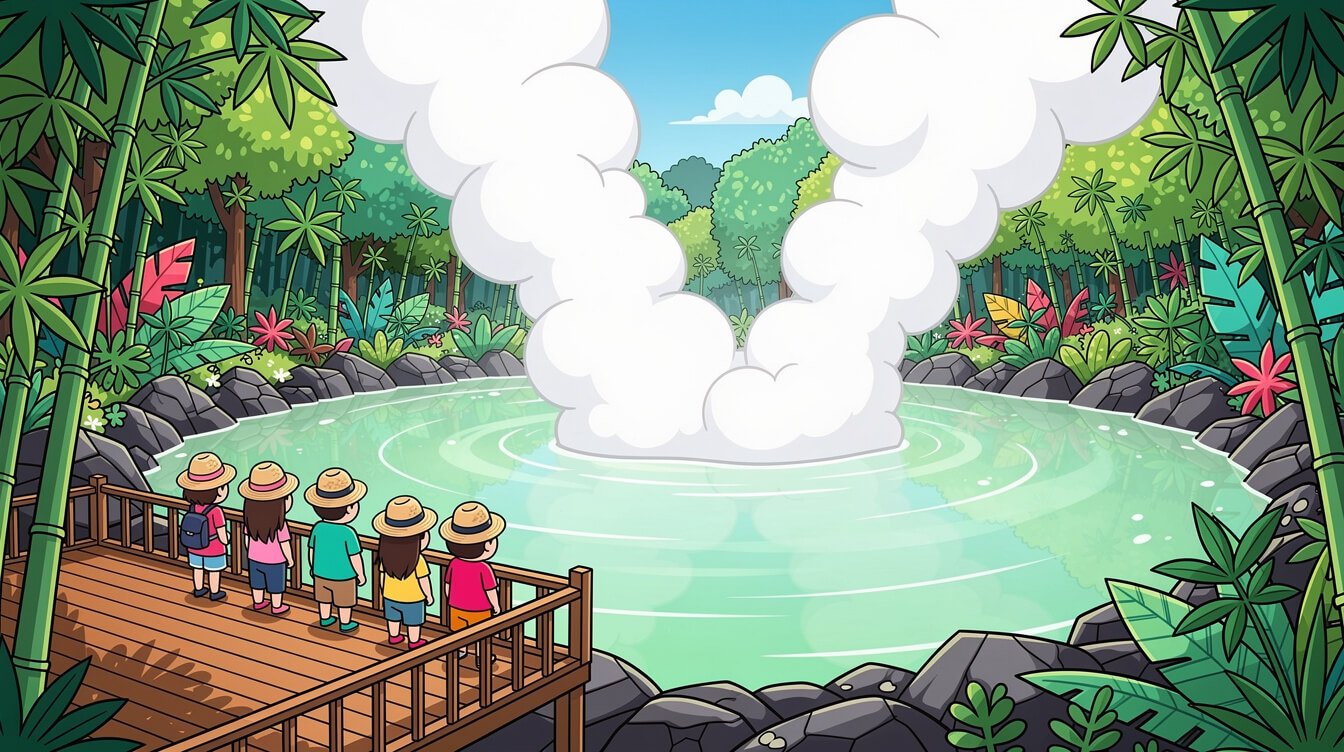
Locally nicknamed “Hell Valley” (Diyu Gu) for its 90°C-plus surface temperatures, milky-blue-green sulfur lake, and constantly billowing steam, Thermal Valley is the source vent for most of Beitou’s green sulfur springs. The lake itself is a crater-shaped depression about 30 meters across, filled with water that emerges from the bedrock at near-boiling temperatures and slowly cools as it flows downstream into the Beitou Creek. A boardwalk loops around the rim, and on a humid Taipei morning the steam plume can be visible from three streets away.
Until the 1990s tourists used to dip eggs into the water on bamboo skewers to soft-boil them. The practice was banned after several scalding accidents. The lake water is also where hokutolite crystals grow on the underlying rock, though you won’t see them directly — the mineral was so prized for its radioactive properties in the 1920s that Japanese researchers extracted most accessible deposits, and what remains is a protected natural monument.
Open daily 09:00–17:00. Free entry. Closes during typhoons — and given Taiwan’s summer typhoon season, it’s worth checking our Taiwan typhoon season guide if you’re visiting between July and October.
Beitou Hot Spring Museum (北投溫泉博物館)
Five minutes uphill from Thermal Valley, the 1913 bathhouse turned museum is the cultural heart of the district. The main attractions are the original tiled grand bath — a sunken Roman-style pool ringed with stained-glass windows — and the upstairs tatami room overlooking the valley. Exhibits cover the Datun volcanic geology, the colonial-era bathing culture, Ketagalan history, and a small section on the post-war revival of Beitou as a Taiwanese-led spa destination.
Open Tuesday–Sunday 09:00–17:00. Closed Mondays and Chinese New Year. Free entry. Bring socks or thin slippers — you’ll be asked to leave outdoor shoes at the entrance.
Where to Actually Bathe in Beitou: Public Pools, Private Onsens, and Hotel Day-Pass Options
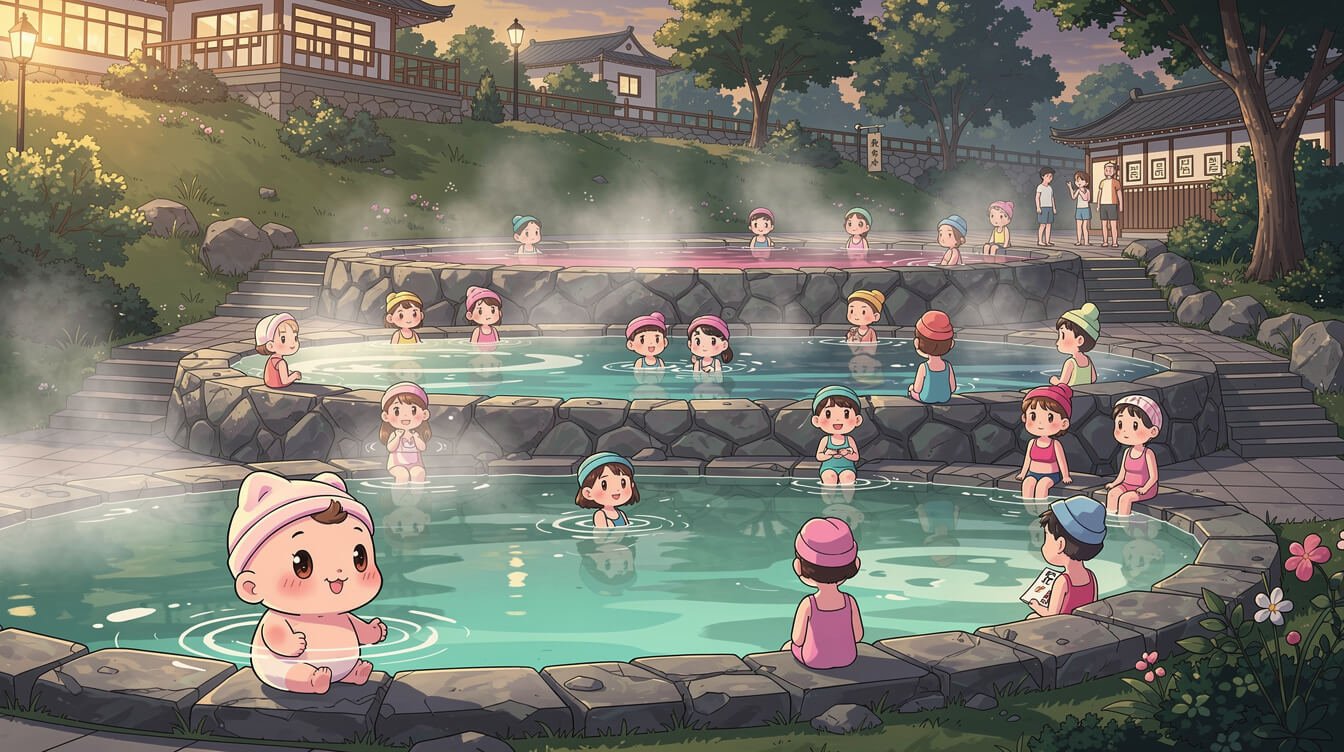
Beitou has three distinct tiers of bathing experience, and which one you choose dictates almost everything else about your visit — including whether you wear a swimsuit, whether you can bring a phone, and how much you spend. If you’re already getting practical about a Taipei itinerary, this is the kind of side trip that pairs naturally with apparel that commemorates the city — the Boba Shiba Inu Taipei Metro tee is a fitting low-key souvenir of the same pink-line ride that brings you to the springs.
Tier 1: Millennium Hot Spring Public Bath (千禧湯)
The budget option. Outdoor, terraced stone pools at six different temperatures (38°C to 45°C), sex-mixed, swimsuits required, bathing caps required. Cost: NT$60 per session, NT$80 on weekends. Sessions are roughly 2.5 hours each and run from 05:30 to 22:00, with the bathhouse cleared between sessions for cleaning. Lines on weekends can hit 30 minutes during peak winter hours. This is where locals actually go.
Tier 2: Mid-range bath houses
Establishments like Longnice Hot Spring, Beitou Spring City, and the various small hot spring inns offer private rooms with personal tubs filled with fresh white sulfur water. Pricing ranges from NT$400 to NT$1,500 per hour depending on the venue and whether you’re using a single tub or a two-person room. Nudity is standard — you’re alone or with whoever you booked the room with. Many of these venues also offer hourly day-use rates without overnight stays, which is the sweet spot for travelers who want the authentic onsen experience without committing to a hotel.
Tier 3: Hotel onsen day passes
Resort hotels like Grand View Resort Beitou, Spring City Resort, Volando, and Gaia Hotel all sell day passes ranging from NT$800 to NT$2,500 that include access to gender-separated nude onsen wings, mixed swimsuit pools, locker rooms with full amenities, and sometimes a meal. This is the most polished experience and the closest you’ll come in Taiwan to a Japanese ryokan-style bath. Booking ahead online usually saves 10-20%.
One important practical detail: many hotel onsen wings still observe traditional Japanese rules and refuse entry to bathers with visible tattoos. Mid-range bathhouses and the Millennium public bath are generally flexible. Always ask before paying if you have ink.
Beitou Bathing Etiquette: What to Wear, What to Skip, and What Not to Do
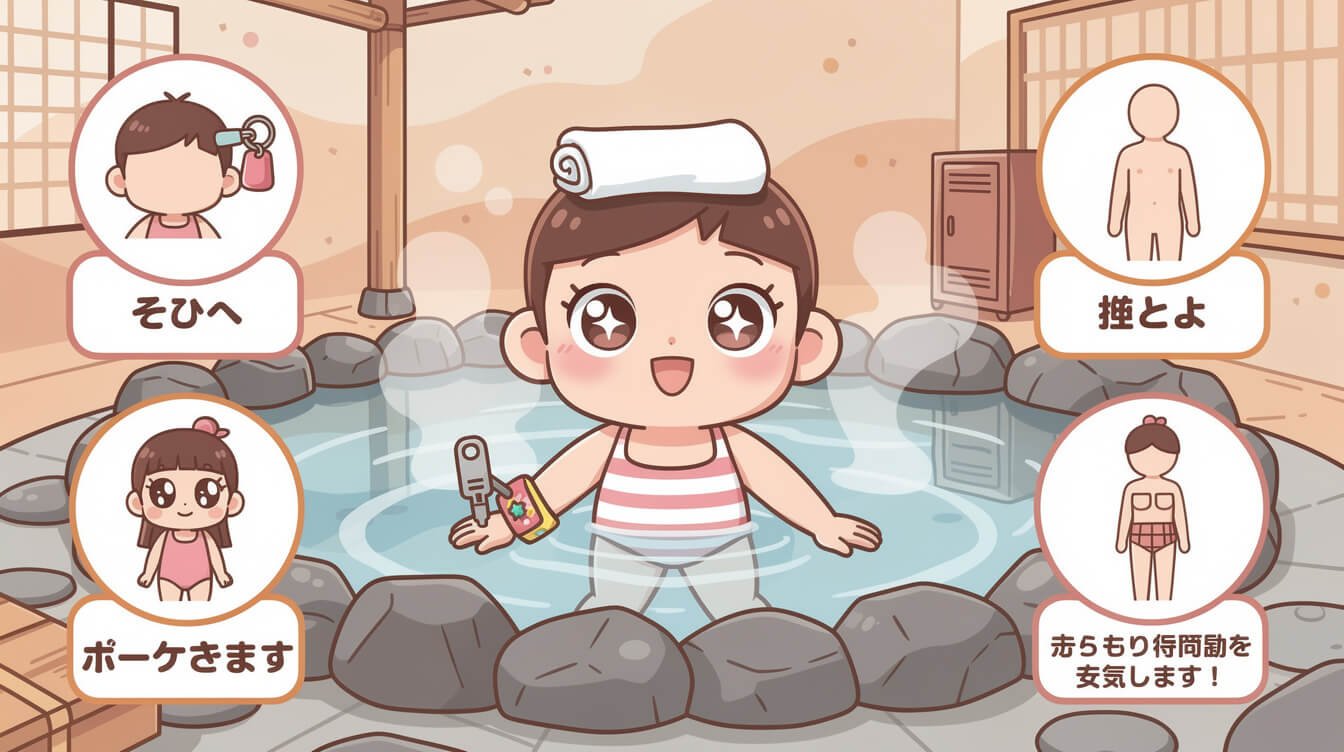
Hot spring etiquette in Beitou follows the Japanese onsen tradition with a few Taiwanese modifications. Get it wrong and you won’t be yelled at — Taiwanese people don’t yell — but you will feel the silent disapproval of every other bather in the pool, which somehow is worse.
The wash-before-soak rule
You must shower thoroughly before entering any hot spring pool, public or private. This is non-negotiable across all tiers. Bathhouses provide showers, soap, and shampoo. Scrub everything. The point of the pre-soak shower isn’t just hygiene — sulfur water reacts with soap residue and skin oils, and clean skin absorbs the mineral benefits better.
Swimsuit vs naked
The rule depends entirely on the venue:
- Public outdoor pools (Millennium, hotel mixed-pools): Swimsuits and bathing caps required. No exceptions.
- Hotel onsen wings (gender-separated indoor pools): Fully nude. Swimsuits are not allowed in these wings — they’re considered unhygienic.
- Private room baths: Wear whatever you want or nothing at all. You’re alone.
Towels, phones, and silence
Bring a small towel for drying off between dips and a larger one for after. In nude wings, the small towel is used to maintain modesty when walking between pools — fold it on top of your head while soaking, never let it touch the bath water. Phones are forbidden in all changing rooms and bathing areas at every venue in Beitou. Speak quietly. Don’t soak in any single pool for more than 15 minutes without cooling off — sulfur water dehydrates faster than ordinary hot water, and locals will move between pools and the cold-water station every few minutes.
Tattoos
As mentioned in the bathing tier section, many hotel onsens still ban visible tattoos. Smaller bathhouses and the Millennium public pool are usually flexible. Larger pieces can sometimes be covered with waterproof patches sold at convenience stores in Xinbeitou. When in doubt, ask at the front desk before paying.
Time of day
Locals avoid the 14:00–17:00 weekend slot, which gets jammed with tour groups. Early morning (06:00–08:00) and late evening (19:00–21:00) are when the regulars come, and the atmosphere is the most authentic.
How to Get to Beitou: The Pink-Line MRT and Half-Day Pacing
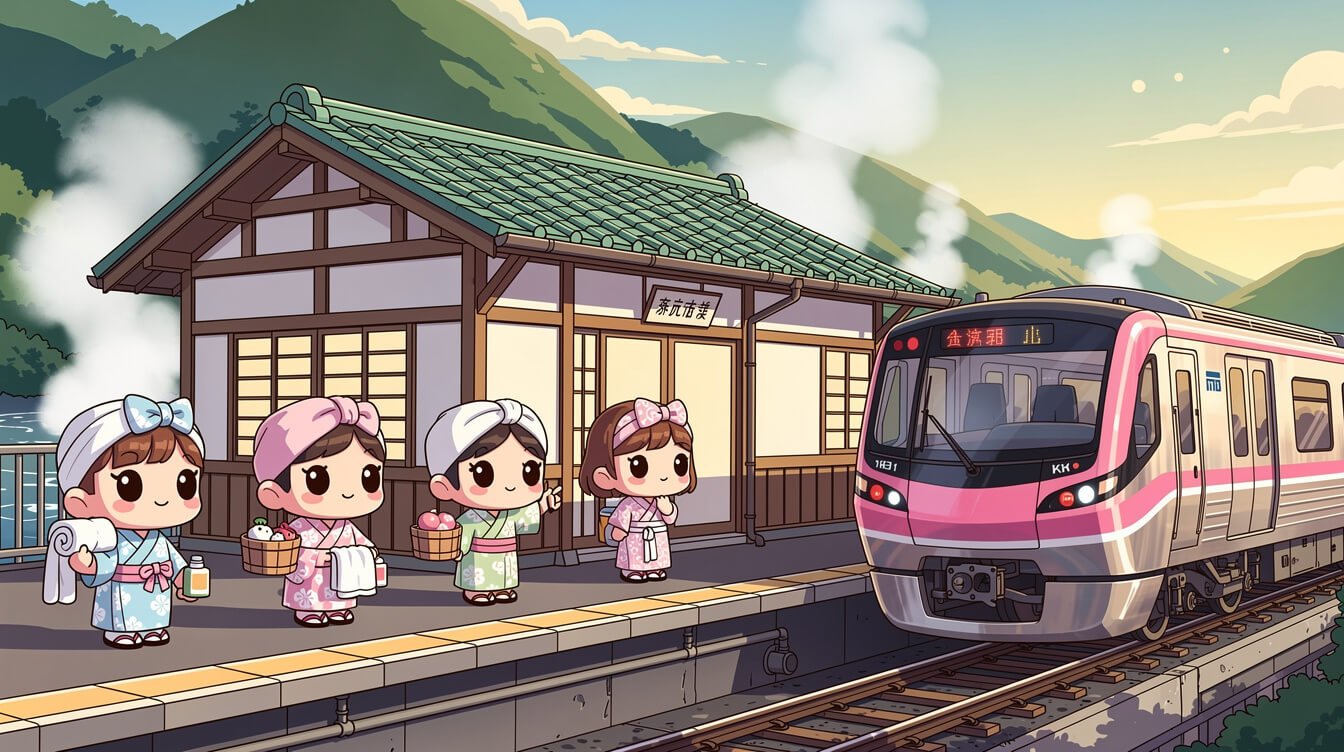
The biggest reason Beitou outperforms every other Taiwanese hot spring destination on tourist convenience is the metro. You can wake up in Ximending, sip a coffee, and be soaking in a sulfur pool 40 minutes later without ever touching a taxi.
The route
From any central Taipei MRT stop, ride the Tamsui-Xinyi (Red) Line north to Beitou Station. Transfer at Beitou to the Xinbeitou Branch Line — a single-stop pink shuttle train that runs every 6 to 8 minutes — and ride one stop to Xinbeitou Station. Total travel time from Taipei Main Station: about 30 minutes. Total cost: NT$30 to NT$45 with an EasyCard.
Xinbeitou Station is the heart of the hot spring district. Everything mentioned in this guide — Thermal Valley, the Hot Spring Museum, Millennium public bath, Puji Temple, the bathhouses, the resort hotels — is within a 15-minute uphill walk from the station exit. Pick up a paper map at the visitor information desk just outside the station turnstile.
Half-day pacing (4–5 hours)
For a focused half-day trip, this sequence works best:
- 09:30 — Arrive Xinbeitou Station. Walk uphill (~10 minutes) along Zhongshan Road.
- 09:45 — Beitou Hot Spring Museum (45 minutes).
- 10:45 — Beitou Public Library — Taiwan’s first green-certified library, worth a 15-minute look from the outside even if you don’t go in.
- 11:00 — Plum Garden (former residence of calligrapher Yu Yu-Jen). 20 minutes.
- 11:30 — Thermal Valley. 30 minutes for photos and the boardwalk loop.
- 12:00 — Lunch at one of the small restaurants along Quanyuan Road.
- 13:00–14:30 — Soak at Millennium public bath or a private room booking.
- 15:00 — Train back to Taipei.
Full-day pacing
If you want to stretch the visit to a full day, add a sunset trip up to Yangmingshan National Park (accessible by bus 230 from the Xinbeitou Station bus stop), or check into a Beitou hotel for the night and do a long-form onsen-and-dinner ryokan experience.
When to Visit Beitou Hot Spring: The Seasonal Reality
If you’re planning a trip from abroad, the timing question matters more than most travel guides admit. Beitou’s peak season is the opposite of what tourists usually assume.
Winter (December–February) is the absolute best time. Air temperatures in Taipei drop to 14–18°C, the contrast with the 40°C bath water is exactly what hot springs are designed for, and locals fill the bathhouses every weekend. Plum blossoms bloom in the Plum Garden in January. This is when Beitou feels most alive.
Spring (March–May) is the second-best window. Mild weather, fewer crowds than winter, and the seasonal humidity hasn’t hit yet. Reliable weather and clear views of the Datun mountains.
Summer (June–August) is the worst time. Daytime temperatures in Taipei push above 35°C with brutal humidity, and the idea of submerging yourself in 40°C sulfur water becomes a thermal regulation challenge. Locals avoid Beitou in summer. If you must visit, go very early (06:00 sessions at Millennium open in summer) or go directly to an air-conditioned hotel onsen.
Autumn (September–November) is a recovery window. The typhoon tail-end of September can close Thermal Valley intermittently, but October and November are excellent — cooling air, low humidity, and the bath water still feels indulgent.
If you only have one shot, plan for a winter weekday morning. That’s when the district shows its real face.
Final Thoughts: Why Beitou Hits Different
There are bigger, hotter, more dramatic hot spring destinations on this planet. Iceland has higher-rated soaks, Japan has more polished onsens, New Zealand has more spectacular geothermal landscapes. What Beitou has that none of those places can match is access. The fact that a 30-minute metro ride from one of Asia’s densest urban cores drops you directly into a working geothermal system — with 100-year-old colonial architecture, three distinct sulfur water chemistries, and a public bath that costs less than a fancy coffee — is something only Taipei can offer.
That, and the fact that the springs are still functional. Beitou isn’t a museum of bathing. It’s a place where elderly Taiwanese show up at 6 a.m. with their own towels and their own bathing caps and their own quiet routines, and where young Taipei professionals come for an after-work soak on a winter Tuesday. The cultural continuity is what makes the visit feel real rather than performative.
Go in winter. Take the pink line. Shower thoroughly before you soak. Move between pools every 15 minutes. Bring a small towel for your head. Drink the water you can’t see — Beitou’s sulfur springs are 75% mineral, 25% story, and 100% worth a half-day of your Taipei itinerary.

Commemorate Your Beitou Bath Day
The pink-line MRT ride to Xinbeitou is one of Taipei’s best small commutes. Wear the city you soaked in — our Boba Shiba Inu Taipei Metro tee is a kawaii nod to the exact transit network that gets you to the springs.
More Stories From Taiwan, Straight to Your Inbox
Join the Taiwan Merch newsletter for cultural deep-dives, night-market intel, and new merch drops — sent once a week with zero filler.
Grab a Free Taiwan Sticker!
Drop your email and we’ll send you a limited-edition Taiwan sticker — plus insider access to new merch drops and island vibes.
No spam. Unsubscribe anytime.