Yongkang Street, Taipei: The Route That Actually Works (Hours, Mango Season, and What Order to Eat In)
Most guides to Yongkang Street, Taipei, give you a list: twenty-three places to eat, ranked, numbered, photographed. Follow that list in order and you’ll find a lot of metal shutters. The scallion-pancake stall opens at 8 a.m. The beef noodle shop closes for a mid-afternoon break. Dumplings stop at 2 p.m. and start again at 5. The street’s most famous dessert is a summer fruit that you can still order in December, but it isn’t the same fruit.
So this guide treats Yongkang Street, Taipei, as a plan rather than a list. You’ll get the order to eat in, the hours that decide that order, what changes between mango season and the rest of the year, and why a quiet residential neighborhood ended up as one of Taipei’s best food streets. Hours were checked in October 2026 against the shops’ own listings and recent Taiwanese food press. Hours change, so give anything you’ve set your heart on a quick check on Google Maps the day before.
What Yongkang Street, Taipei, Actually Is (and Why It Isn’t a Night Market)
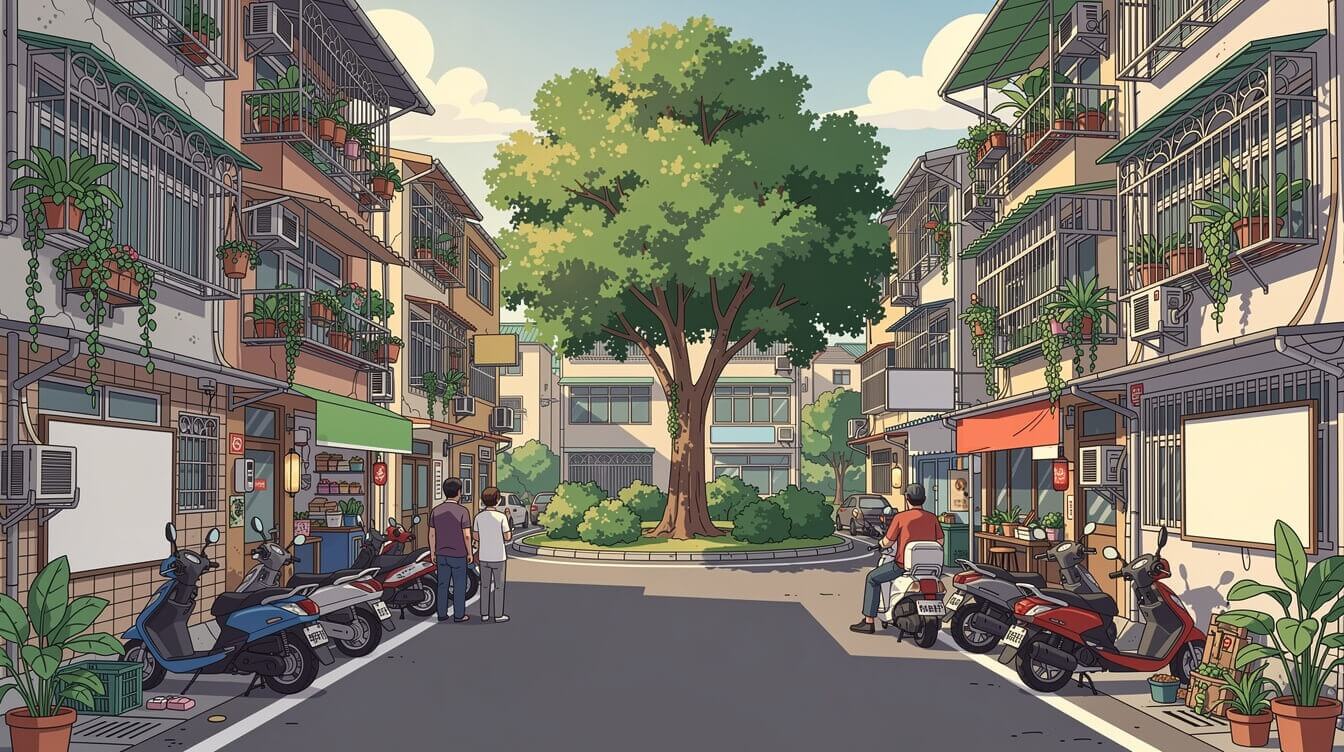
First, the expectation reset. Yongkang Street (永康街, Yǒngkāng Jiē) is not a night market. There are no rows of carts and no midnight crowds, and you won’t be shuffling shoulder to shoulder past grilled squid. Taipei’s tourism office files it as a “themed shopping area”, and the city’s own district history describes it as a neighborhood that grew out of housing. It still looks like one: low apartment blocks with iron window grilles, scooters nosed into the curb, potted plants on every balcony, and restaurants tucked into ground floors.
The street itself runs south from Xinyi Road in Da’an District. The “Yongkang area” that people actually mean also takes in the lanes off it, plus neighboring Lishui, Qingtian and Jinhua streets, where the cafés and tea rooms thin out the crowds. The official Taipei Travel page calls it “the origin of Taipei alley culture”, which is a grand way of saying the best things here are often down a side lane.
That matters for how you plan a day on Yongkang Street, Taipei. A night market is open all at once, so a list works fine. Yongkang Street is a row of independent shops keeping their own hours: breakfast places, lunch-and-dinner noodle counters with an afternoon break, dessert shops that run late. You’re not picking stalls so much as fitting a day around them.
If you’re building a wider Taipei trip, Yongkang slots neatly into our guide to things to do in Taipei, and it’s one of the anchor neighborhoods in our district-by-district Taipei restaurant playbook.
Getting There: Dongmen MRT, and the Walk From CKS Memorial Hall

This is the easy part. Take the MRT to Dongmen Station, which sits where the Red (Tamsui–Xinyi) and Orange (Zhonghe–Xinlu) lines cross, and leave by Exit 5. You surface on Xinyi Road and the mouth of Yongkang Street is about two minutes’ walk away. If the color-coded system is new to you, our Taipei MRT map guide walks through every line.
Exit 6 is the one to remember if you’re heading for the sit-down Din Tai Fung (more on that below), which is a short walk east along Xinyi Road.
The other good approach is on foot from Chiang Kai-shek Memorial Hall, which is a short walk west along Xinyi Road. Pairing the two is the classic half-day: the memorial hall and its plaza in the morning, then Yongkang for lunch. Our CKS Memorial Hall guide covers the changing of the guard and the best photo spots.
From the other side, Da’an Forest Park is a pleasant walk south, which makes a good finish if the weather’s kind. Don’t drive. Parking in these lanes is very limited, and you’ll want your hands free for food.
The Timing Problem: Why a List Doesn’t Work on This Street

Here are the opening hours of the street’s best-known places, as listed in October 2026. Read across and the problem is obvious.
- Tianjin scallion pancake (天津蔥抓餅), Lane 6: about 8:00–22:00. The early bird.
- Smoothie House (思慕昔), No. 15: 10:30–22:00 Monday to Thursday, until 22:30 Friday, Saturday and holidays, and 10:00–22:00 on Sunday.
- Din Tai Fung Xinyi, 194 Xinyi Rd Sec 2, which is the original shop and now takeout only: 11:00–20:30 on weekdays, from 10:30 at weekends.
- Yongkang Beef Noodles (永康牛肉麵), Jinshan S. Rd: 11:00–15:30, then 16:30–21:00.
- Dongmen Dumpling House (東門餃子館), Jinshan S. Rd: weekdays 11:00–14:00, then 17:00–20:40; weekends 11:00–14:30 and 17:00–21:00.
Three patterns fall out of that list, and they’re what your plan has to work around:
- Mornings are thin. Before about 10:30, the scallion pancake stall is nearly the only famous name serving. Come at 9 a.m. expecting a food crawl and you’ll eat one pancake and wait.
- The afternoon has a hole in it. The traditional noodle and dumpling shops take a break somewhere between 2 p.m. and 5 p.m. Dongmen Dumpling House is closed from 2:00 to 5:00 on weekdays. A list-follower arriving at 3 p.m. finds the savory half of the street resting.
- Dessert runs latest. Shaved ice and the cafés keep going until 10 p.m. or later, long after the dumpling shops have shut.
So the rule is simple: savory before 2, sweet and shopping in the gap, savory again after 5. Every route below is built on it.
Lines, and when to beat them
Queues follow mealtimes. Expect lines at the noodle and dumpling shops from noon to about 1:30 p.m. and from 6 to 7:30 p.m., at the Din Tai Fung takeout window all day, and at the scallion pancake stall almost always. It’s quick, though, because they’re cooking one thing. Arrive at 11:00 sharp or just after 1:30, and the lunch lines are a fraction of the peak. Weekends are busier across the board, and weekday mornings are the calmest the street ever gets.
The Route: Morning, Afternoon and Evening Versions of Yongkang Street
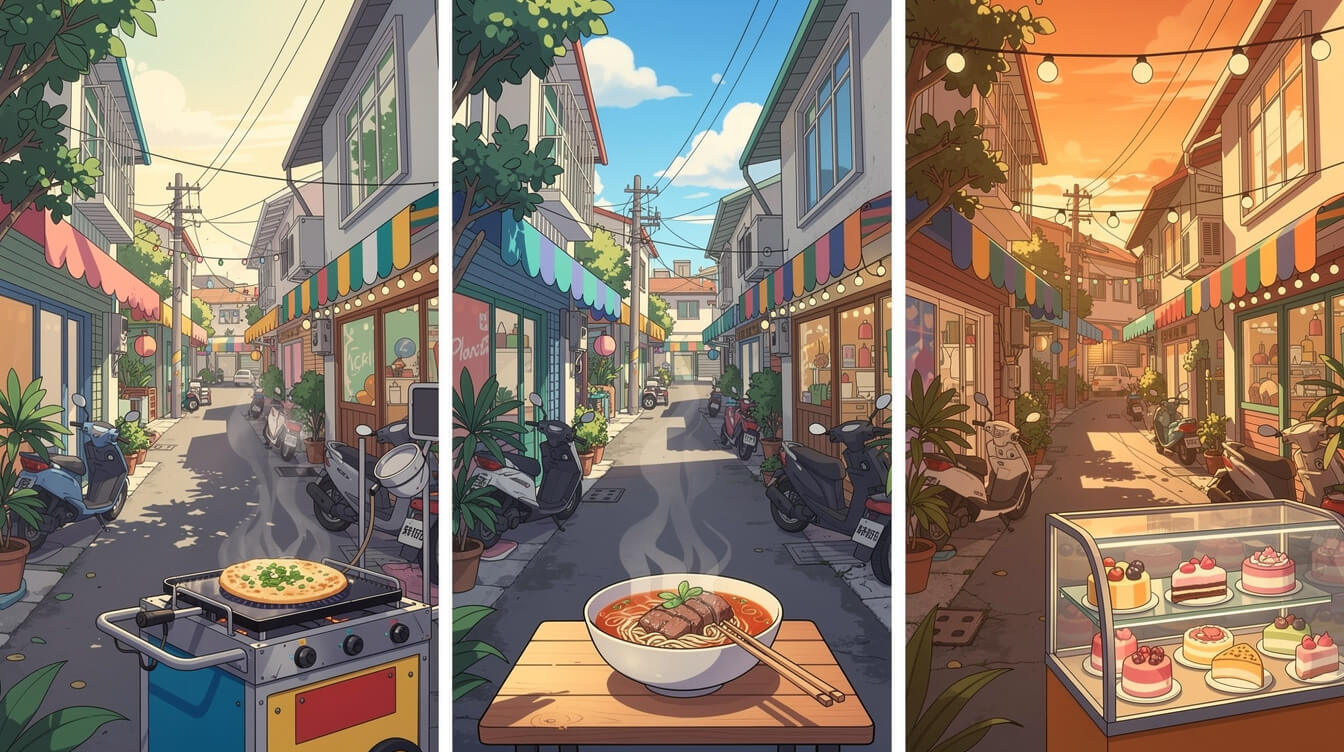
Pick the version of Yongkang Street, Taipei, that matches when you’ll actually be there. Each one fits about three hours.
The morning version (arrive about 10:00)
- Scallion pancake first. Join the line at Lane 6. The favorite order is the basil-and-egg version (九層塔蛋), which is crisp, flaky and a little greasy in the right way. Eat it standing.
- Walk it off in Yongkang Park while the rest of the street opens. It’s the leafy square just off the street, and it has a story (see the history section).
- Smoothie House at opening (10:30, or 10:00 on Sundays), before the queue builds. Shaved ice at 10:30 a.m. is entirely normal on a hot Taipei day.
- Beef noodles at 11:00 when Yongkang Beef Noodles opens, or dumplings at Dongmen Dumpling House. You’ll be early for lunch and seated without a fight.
The afternoon version (arrive about 13:30)
- Late lunch before the break. Beef noodles until 15:30, or dumplings until 14:00 on weekdays (14:30 at weekends). Arriving after the lunch rush means shorter lines.
- Use the gap for tea and shopping. This is when the side lanes earn their keep. Browse, sit in a tea room, and let your stomach recover.
- Dessert to finish at Smoothie House, or tofu pudding if it’s cold out.
The evening version (arrive about 17:00)
- Dumplings as the doors reopen at 17:00, before the 6 p.m. dinner wave.
- Pick up Din Tai Fung xiaolongbao to go from the original Xinyi Road shop, which takes orders until 20:30.
- Scallion pancake as a second dinner, then dessert last, because the dessert shops are the last things open.
Whichever version you pick, eat small. Share a bowl, split a dish of dumplings and take the half-portion when it’s offered. The street works best as a sequence of small plates, not one big meal.
What to Eat on Yongkang Street, in What Order
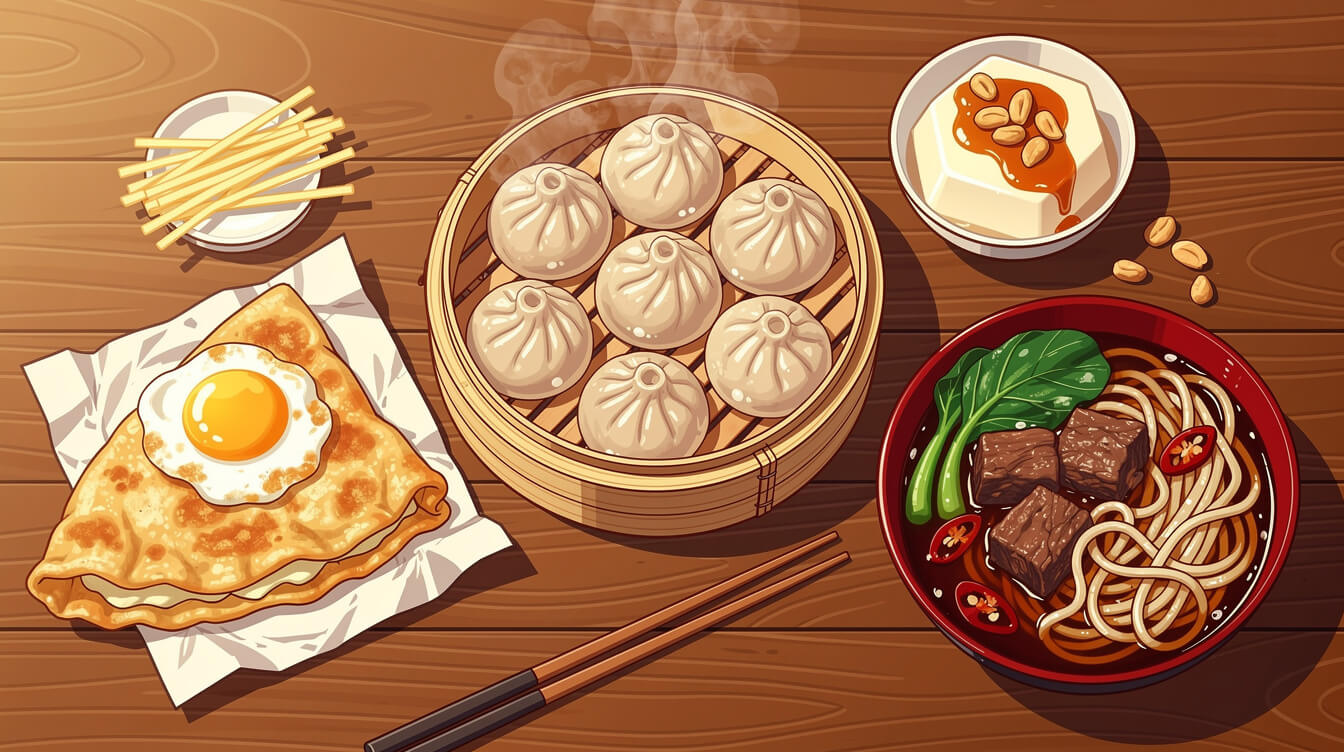
These are the names that come up on every list, with the practical notes the lists tend to leave out.
1. Tianjin scallion pancake (天津蔥抓餅)
No. 1, Lane 6, Yongkang Street. A street stall: you order at the window and eat on the pavement. It’s open from 8:00, which makes it the only reliable breakfast stop among the big names. Bring coins and small notes. This is the place where the line looks worst and moves fastest.
2. Yongkang Beef Noodles (永康牛肉麵)
No. 17, Lane 31, Section 2, Jinshan South Road, just around the corner from Yongkang Street proper. It has been open since 1963 and holds a Michelin Bib Gourmand. Expect shared tables at peak, and pay with cash or mobile pay, not a foreign card. Note the break between 15:30 and 16:30. Spicy braised is the classic order. If you want to know how this bowl fits into the bigger picture, our guide to Taiwanese noodles covers beef noodle soup’s own postwar origin story. (If you’re the kind of person who’d wear the bowl, our Taiwanese Beef Noodle Cat sweatshirt was made for you.)
3. Dongmen Dumpling House (東門餃子館)
No. 37, Lane 31, Section 2, Jinshan South Road. It’s about sixty years old and now run by the family’s fourth generation. Boiled dumplings, side dishes and soups. Mind the afternoon break: on weekdays it shuts at 14:00 and reopens at 17:00.
4. Din Tai Fung: know which door you’re walking through
This trips up a lot of visitors. The shop at 194 Xinyi Road, at the top of Yongkang Street, is where Din Tai Fung began. It opened as a cooking-oil shop in 1958 and switched to xiaolongbao around 1972. Today it’s takeout only. The sit-down restaurant is the multi-floor branch at 277 Xinyi Road, a short walk east (Dongmen Exit 6). That’s the one Michelin lists. We’ve already compared every Taipei branch in our Din Tai Fung Taipei ranking, so the short version here is: takeaway from the original if you’re crawling, sit down at 277 if you want the full experience.
5. Smoothie House (思慕昔)
No. 15 Yongkang Street, with a renovation completed in spring 2025. It’s the mango shaved ice everyone photographs: a mountain of milky shaved snow, fresh mango cubes and a scoop of mango sorbet. Read the mango-season section below before you order. For the dish itself, see our mango shaved ice explainer, and our Taiwan shaved ice guide covers the different styles of ice.
6. Tofu pudding in the lanes
There’s usually a douhua (豆花) shop or two in the lanes off Yongkang Street, but the individual shops’ hours and rest days shift often enough that we won’t promise you a name. Look for it in the afternoon gap. It’s the warm-weather-or-cold dessert, and our douhua explainer tells you how to order toppings.
A name you’ll see on older lists: Kao Chi
Kao Chi (高記), famous for pan-fried buns and xiaolongbao, was founded on Yongkang Street in 1949, but it left the street in 2020. It has since reopened nearby, including a branch beside Dongmen Station, but not on the street itself. If a guide sends you to Kao Chi “on Yongkang Street”, that guide is out of date. It’s a good test for the rest of its advice too.
Mango Season vs Everything Else: When to Come for Shaved Ice
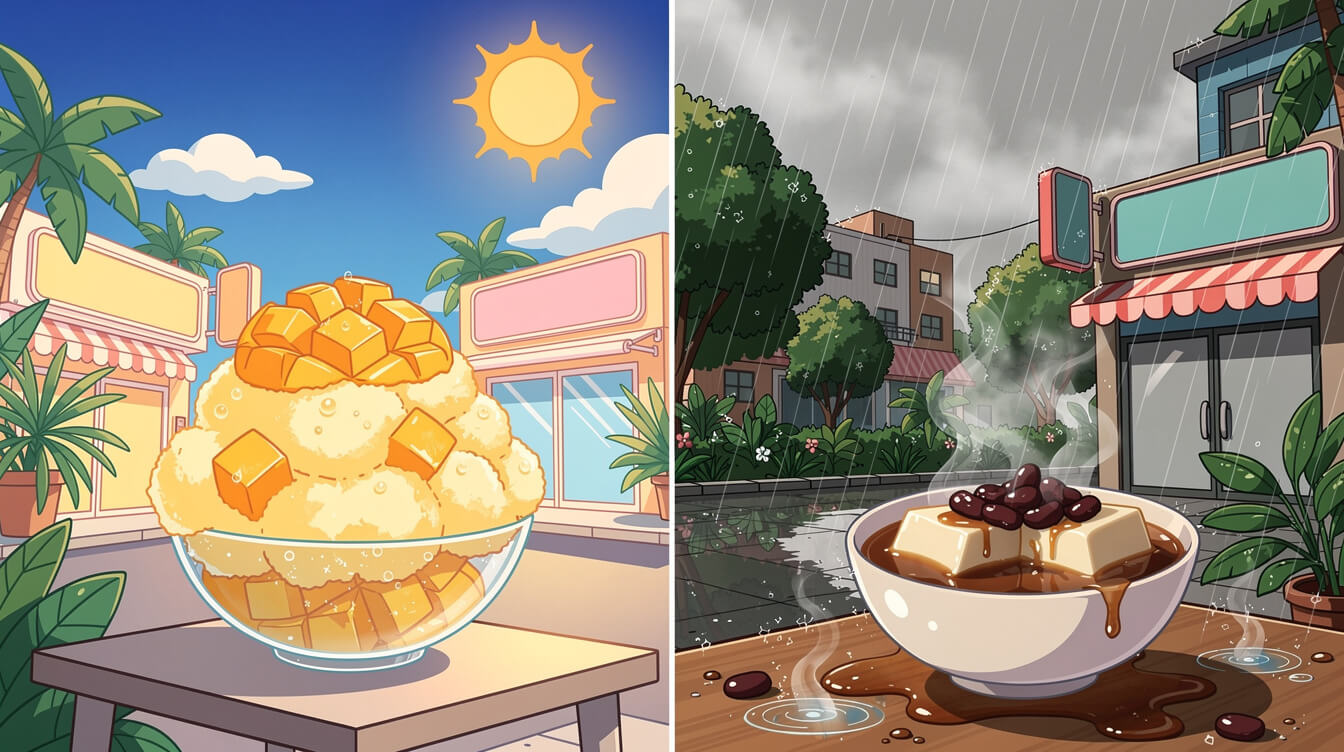
The signature photo of Yongkang Street, Taipei, is a bowl of mango shaved ice. Taiwan’s mango is a summer fruit, and that one fact changes the street more than any list admits.
Taiwan’s star mango is the Irwin, or Aiwen (愛文). The harvest starts in Pingtung in the south around May and moves north through Tainan and Kaohsiung, peaking in June and July. Taiwan’s Ministry of Agriculture puts Pingtung’s Irwin harvest in May and June, with Tainan and Kaohsiung following. Our Aiwen mango season explainer has the full calendar and the varieties that close out the summer.
So what happens in October, or December? The bowl is still on the menu. The difference is the mango. Outside the season, shops serve frozen fruit. Taiwanese food press reported a customer noting that Smoothie House tells you so up front, and other ice shops in Taipei go as far as closing for the winter rather than use frozen fruit. Frozen mango is still sweet and still good on a hot afternoon, but it’s softer and less fragrant than a fresh June Irwin.
How to plan around it
- Visiting June to August: mango shaved ice is the main event. Go at opening or late evening to dodge the midday heat and the queue.
- Visiting September to May: order it if you’ve always wanted the photo, but don’t build the trip around it. Lean into the street’s winter strengths: hot beef noodle soup, dumplings, and warm douhua with ginger syrup.
- Either way: one bowl serves two or three people. Share it.
That’s the real seasonal difference: a July visit and a December visit are different streets. In summer you come for the ice. In winter you come for the soup, and that’s no lesser trip.

Wear the Food Crawl Home
Our Taiwanese Street Food Guide tee is a vintage-poster menu of the island’s best bites. It’s the one souvenir from Yongkang that won’t melt.
The Backstory: From Japanese-Era Housing to Taipei’s Food Lane
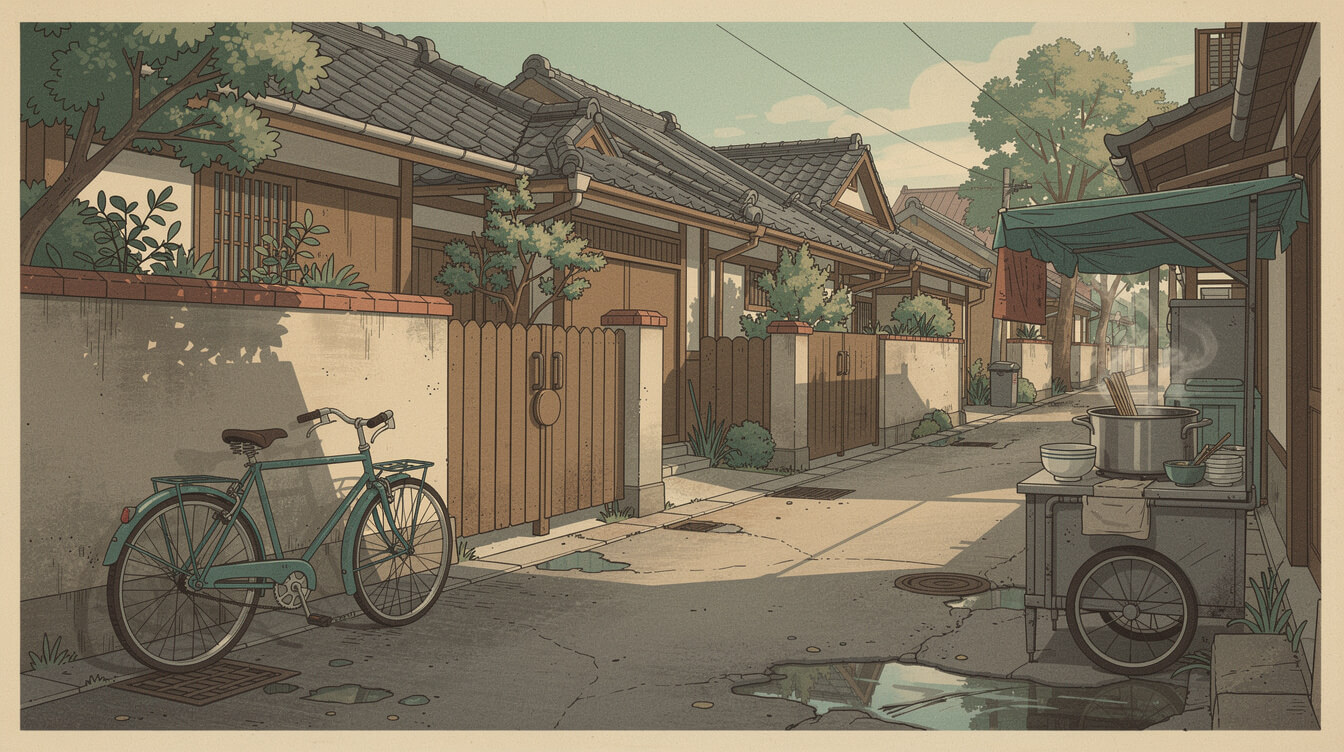
Why is a quiet residential pocket one of the city’s great places to eat? The answer is about a century of who lived here.
Official housing (1920s–1945)
Under Japanese rule the area was planned as housing for government officials, handy for the Governor-General’s Office and the ministries nearby. The neighborhood fell inside the Japanese-era districts of Shōwa-chō (昭和町) and Fukuzumi-chō (福住町), according to the government magazine Taiwan Panorama. After 1945 many of the houses passed to staff of National Taiwan University, National Taiwan Normal University and government agencies.
A name from Zhejiang (1947)
The name itself is a map. In 1947 Taipei’s streets were renamed after places in mainland China, roughly arranged to mirror their geography. The Da’an District gazetteer published by the Taipei City Government records that Yongkang Street takes its name from Yongkang in Zhejiang Province. Its neighbors Lishui, Jinhua and Wenzhou streets are Zhejiang names too, so a walk around the block is a tiny tour of one province.
Veterans, noodles and students (after 1949)
The same gazetteer explains the food. Soldiers who came to Taiwan with the government in 1949 often retired without a trade, and many started cooking the food of their home regions. Beef noodle soup was cheap and filling, and students from the nearby universities and high schools kept the shops busy. The neighborhood also housed many civil servants and teachers from northern China, which helps explain why dumplings and wheat-flour dishes are so strong here.
Growth, and a park that nearly vanished
Taiwan Panorama traces the next shift to the late 1970s and 1980s, when many longtime residents emigrated and rented or sold their homes, and new businesses moved in. Then in 1995 the city planned to cut back Yongkang Park and remove dozens of its old trees to widen a road. As CommonWealth Magazine reported at the time, a university student organized a petition of more than 500 signatures, the city halted the work, and residents formed a “Friends of Yongkang Park” group. The shady square you eat your scallion pancake in exists because the neighborhood fought for it.
Knowing all this changes how the street reads. The best-known shops aren’t tourist inventions. They’re the descendants of home cooking, still sitting among the homes.
Shopping Yongkang: Tea Rooms, Cafés and Souvenir Stops

On Yongkang Street, Taipei, shopping is what you do in the afternoon gap, and the side lanes are where it happens. Don’t expect a mall. The appeal here is small, owner-run shops: tea rooms, ceramics, little design stores and cafés, each with its own character.
- Tea: the official Taipei Travel page singles out Yeh Tang (冶堂), a tea house focused on traditional Taiwanese tea culture in the lanes off Yongkang Street. It’s an afternoon opener, so time it for the gap. More generally, the lanes around Yongkang, Qingtian and Longquan streets are known for tea shops and cafés.
- Edible souvenirs: pineapple cakes, tea leaves and dried fruit are easy to find in the area, and they travel well.
- Design and gifts: independent shops come and go faster than restaurants here, so browse rather than hunt for a specific name from an old guide.
For a broader shortlist of what’s worth bringing home from Taiwan, our guide to what Taiwan is famous for buying covers the classics and how to pack them.
Yongkang in the Rain, and the Rest-Day Question

Taipei gets a lot of rain, and Yongkang Street handles it better than most. Many of the buildings have covered arcade walkways (騎樓) along their fronts, so you can hop between shops with only short dashes in the open. The trade-offs are that outdoor seating disappears and lines bunch up indoors. A rainy weekday is often the quietest time to visit.
On rest days: you’ll read that “everything on Yongkang Street closes on Monday”. We couldn’t find evidence of a street-wide closing day. The places in this guide list no weekly rest day at all. Smaller shops do pick their own, and they vary. Some close Monday, some midweek. The honest advice is to check the specific shop you care about rather than trusting a blanket rule, and to keep a backup in mind. On this street there’s always one within a hundred meters.
Public holidays are the other variable. Holiday hours generally follow weekend patterns, and lines get longer, especially at Lunar New Year, when some family-run places close for several days.
Yongkang Street, Taipei: Frequently Asked Questions
What is Yongkang Street famous for?
Food, above all: the original Din Tai Fung shop, mango shaved ice at Smoothie House, Michelin-recognized beef noodles, dumplings and flaky scallion pancakes. It’s also known for tea houses, cafés and a calm, residential feel that’s very different from Taipei’s night markets.
What time does Yongkang Street open for shopping?
There’s no single opening time, because every shop keeps its own hours. The scallion pancake stall starts around 8:00, Smoothie House at 10:00–10:30, and most restaurants at 11:00. Tea rooms tend to open around midday or early afternoon. Most places close between about 8:30 and 10:30 p.m.
Where should I eat on Yongkang Street?
For a first visit: scallion pancake, a bowl at Yongkang Beef Noodles, dumplings at Dongmen Dumpling House, and mango shaved ice at Smoothie House. Add Din Tai Fung xiaolongbao to go from the original Xinyi Road shop, or sit down at its Xinsheng branch at 277 Xinyi Road.
What is the most famous street in Taipei?
It depends what you’re after. For food in a neighborhood setting, Yongkang Street is a strong contender. For night-market energy, Shilin and Raohe are the big names, and Dihua Street is the classic for old shophouses and dried goods. Our Taipei things-to-do guide puts them side by side.
Is Yongkang Street a night market?
No. It’s a residential neighborhood with restaurants, cafés and shops in it. It’s busiest at lunch and dinner and quiets down after 10 p.m.
How do I get to Yongkang Street from Taipei Main Station?
Take the Red line toward Xiangshan three stops to Dongmen and leave by Exit 5. The street starts about two minutes’ walk away.
Do shops on Yongkang Street take credit cards?
Some do and some don’t. Street stalls are cash, and Yongkang Beef Noodles takes cash or mobile pay. Carry small notes and you’ll never be stuck.
Final Thoughts: Eat Yongkang Street, Taipei, in the Right Order
Yongkang Street rewards a little planning more than almost anywhere in Taipei. Not because it’s hard, but because it’s a real neighborhood, keeping real neighborhood hours. Do it in the right order: savory before 2, tea and browsing in the gap, savory again after 5, dessert last. Then the street does what the lists promise.
Come in June for the fresh mango. Come in January for the beef noodles. Either way, take the takeout bag from the shop where Din Tai Fung began, and sit for ten minutes in the park the neighbors saved. That’s Yongkang Street, Taipei, at its best: a block of home cooking with seventy-odd years of history behind it, and still very much someone’s home.
A Postcard From Taiwan, Every Week
Food streets, day trips, culture and the occasional very good cat, straight to your inbox. No spam, unsubscribe anytime.

Grab a Free Taiwan Sticker!
Drop your email and we’ll send you a limited-edition Taiwan sticker — plus insider access to new merch drops and island vibes.
No spam. Unsubscribe anytime.