Danzai Noodles (擔仔麵): The Tiny Bowl of Noodles Born in a Tainan Typhoon
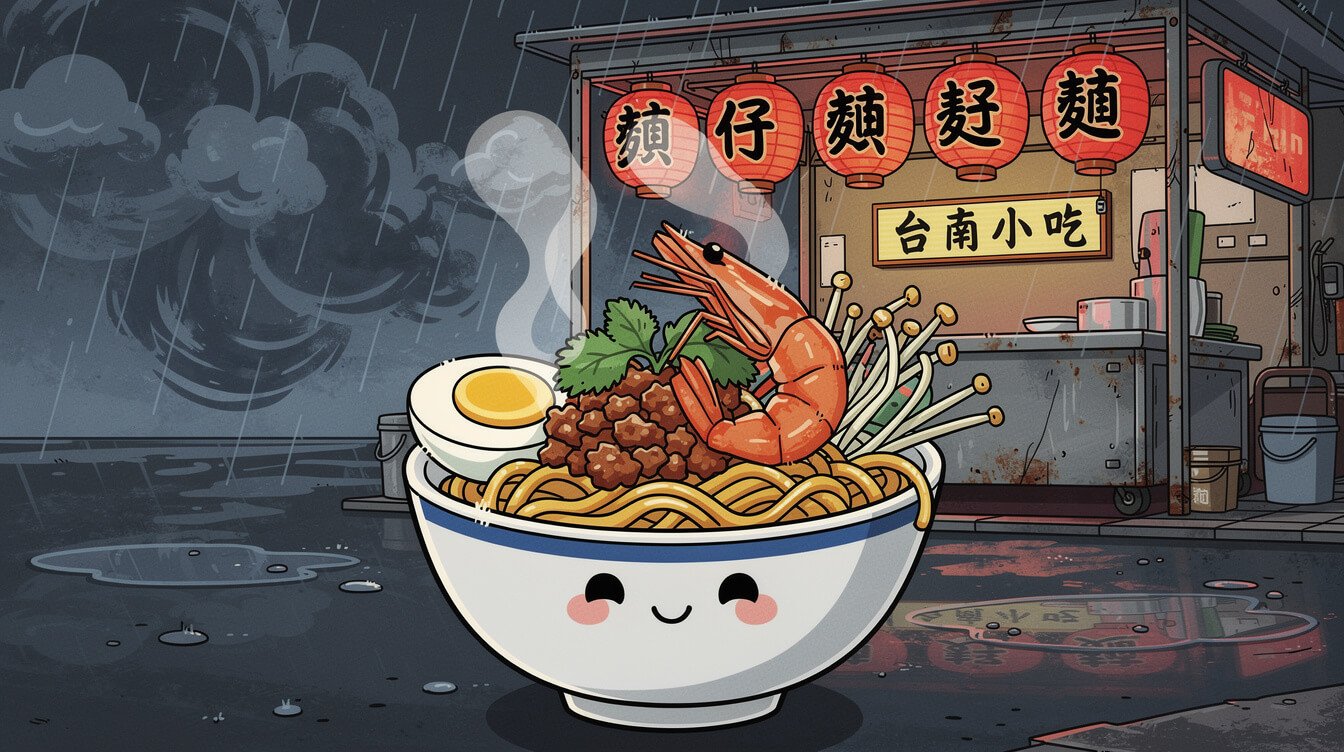
Here is the strangest thing about danzai noodles (擔仔麵, dānzǎi miàn — literally “shoulder-pole noodles”): they come in a bowl barely bigger than your palm, with maybe a dozen springy oil noodles, a single spoon of fragrant minced pork sauce, half a soft-boiled egg, one shrimp, and a sprinkle of cilantro. It looks like a sample portion. It costs about NT$60 (US$2). And it is, hands down, the most important dish to come out of Tainan — Taiwan’s old capital and unofficial food kingdom.
The reason it’s so small? It was invented during typhoon season.
The Fisherman Who Couldn’t Fish
The year was 1895. A fisherman from Tainan named Hong Yu-tou (洪芋頭) noticed something every coastal Taiwanese knows in their bones: from roughly May through October — peak typhoon season — the seas around the island get angry. Sometimes too angry to fish. For weeks at a time, boats stayed beached and families went hungry.
Hong needed a side hustle that didn’t depend on the weather. So he loaded a shoulder pole (擔仔, dānzǎi) with a small charcoal stove on one end and a pot of noodles on the other, and started walking the streets of Tainan selling a quick, cheap bowl of noodles to other locals having the same lean month. The word dānzǎi literally means the pole he carried the stove on — the dish is named after the delivery method, not the dish.
The portion was tiny because he was selling to people pinching coins until the storms passed. The flavor had to be unforgettable, because tomorrow they had to want it again.
What Makes the Bowl
The whole dish hinges on the ròu zào (肉燥) — a slow-cooked, deeply savory minced pork sauce. The good versions simmer for hours with soy sauce, shallots, rice wine, rock sugar, and five-spice until the fat turns silky and the meat melts into a glossy ragu. One spoonful is enough to coat the entire bowl of noodles.
The rest of the cast: oil noodles (油麵), a shrimp from the Tainan coast (sometimes a single one, perched right on top), half a hard-boiled or tea-boiled egg, garlic, black vinegar, and fresh cilantro. A splash of shrimp broth pools at the bottom. That’s it. No filler, no rice, no dumplings. The whole bowl disappears in about eight bites.
The Original Stall Is Still There
Hong’s descendants opened a restaurant in 1922 called Du Hsiao Yueh (度小月) — which roughly translates to “surviving the slow months,” a direct nod to the typhoon-season origin. The original shop on Zhongzheng Road in Tainan is still open, now over 130 years old, still serving the same tiny bowls from low wooden stools, with a charcoal stove burning out front for show.
A second location in Taipei’s Yongkang Street neighborhood lets you try it without the train ride south, but Tainan loyalists will tell you the broth tastes different when you’re not eating it under a 1920s wooden ceiling fan.
Why This Bowl Still Matters
Danzai noodles are a five-minute history lesson disguised as lunch. They tell you about Taiwan’s typhoon season and how locals have always worked around it. They tell you about Tainan’s identity as Taiwan’s food capital, born out of resourcefulness rather than abundance. And they tell you why Taiwanese street food is the way it is: small, intense, and engineered to be unforgettable on a fisherman’s budget.
Next time you’re flipping through a Taiwan street food list and see danzai noodles near the bottom because it doesn’t look impressive in photos — order it first. The size is the whole point.
Tomorrow: we’re heading north for a coffee-shop tradition Taiwan stole from Japan and made better.

Grab a Free Taiwan Sticker!
Drop your email and we’ll send you a limited-edition Taiwan sticker — plus insider access to new merch drops and island vibes.
No spam. Unsubscribe anytime.