Keelung Miaokou Night Market: The Numbered-Stall Guide (2026)
Keelung Miaokou Night Market is the one Taiwan night market where you can walk in knowing exactly what to order and where to find it. Every stall along the main strip carries a number, the menus are posted in Chinese, English and Japanese, and some of the families behind the woks are on their third generation. It sits around a 150-year-old temple in a working harbor city, about 40 minutes from Taipei, and it is built almost entirely around food.
This guide covers the things other Keelung night market guides skip. It explains how the stall numbers actually work (including the dash numbers like 27-2 and 43-1), which stalls are worth the queue and what each one sells, why “Miaokou opens at 5pm” is only half true, the closure days that catch visitors out, and how to get there from Taipei or the cruise terminal. We checked stall numbers against Keelung City Government’s own published stall map rather than copying them from other blogs, because blogs disagree.
What Is Keelung Miaokou Night Market?
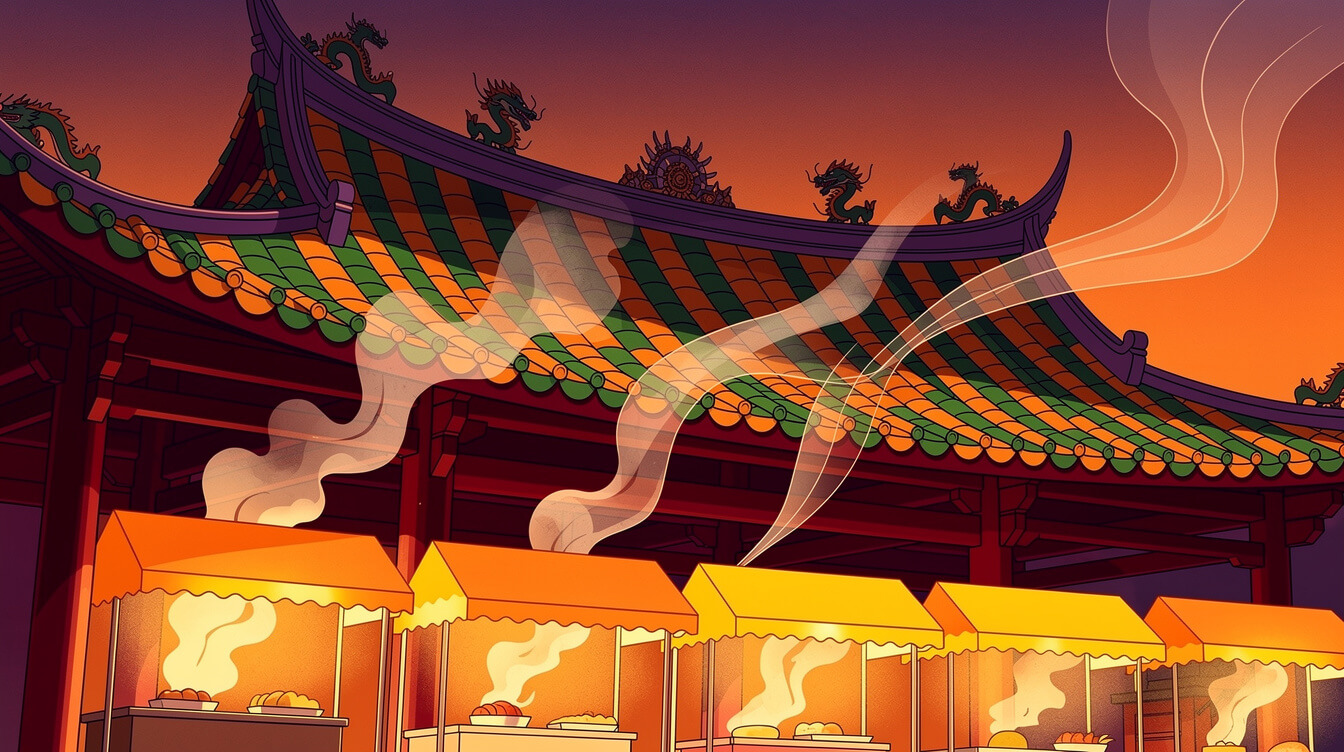
Miaokou (廟口) means “temple mouth,” the open square in front of a temple’s gate. The temple here is Dianji Temple (奠濟宮), which honors Kaizhang Shengwang (開漳聖王), the deified Tang dynasty general Chen Yuanguang, patron god of migrants from Zhangzhou in Fujian. Locals also call it the Sheng Wang Temple, and it counts as one of Keelung’s three great temples. Even the founding date has two versions. Keelung’s own tourism pages say the temple was built in 1873, while Wikipedia’s Chinese entry gives 1875. Either way, it has stood here through the 1884 Sino-French War (when a booby-trap explosion badly damaged it) and more than a century of the city growing around it.
The food came later. Keelung City Government’s account dates the market to the years after World War II, when vendors set up on the temple forecourt to feed worshippers, dockworkers and fishermen. A government film crew shot the square in 1971 and recorded about 60 stalls. Today the city counts close to 200 stalls packed into a few hundred meters, centered on Ren 3rd Road (仁三路) between Ai 3rd and Ai 4th Roads, with the temple sitting right in the middle of the food.
Two pieces of recognition come up a lot. In 2010, Taiwan’s tourism authority gave Miaokou its “most delicious night market” and “friendliest night market” awards. In December 2021, Tatler named it one of the world’s 20 great markets, the only one from Taiwan, alongside Seattle’s Pike Place, Tokyo’s Tsukiji, Florence’s Mercato Centrale, Seoul’s Gwangjang and Thailand’s Amphawa floating market.
What makes Keelung Miaokou Night Market different from Taipei’s big markets is focus. There are few carnival games or phone-case aisles on the main strip. It is a dining street. Keelung is a fishing port, so the menus lean on seafood: crab soup, fish-paste tempura, squid, eel. If you have already done Shilin and Raohe, this is the market that shows you what a night market looked like before the tourist circuit took over.
How Miaokou’s Numbered Stalls Work
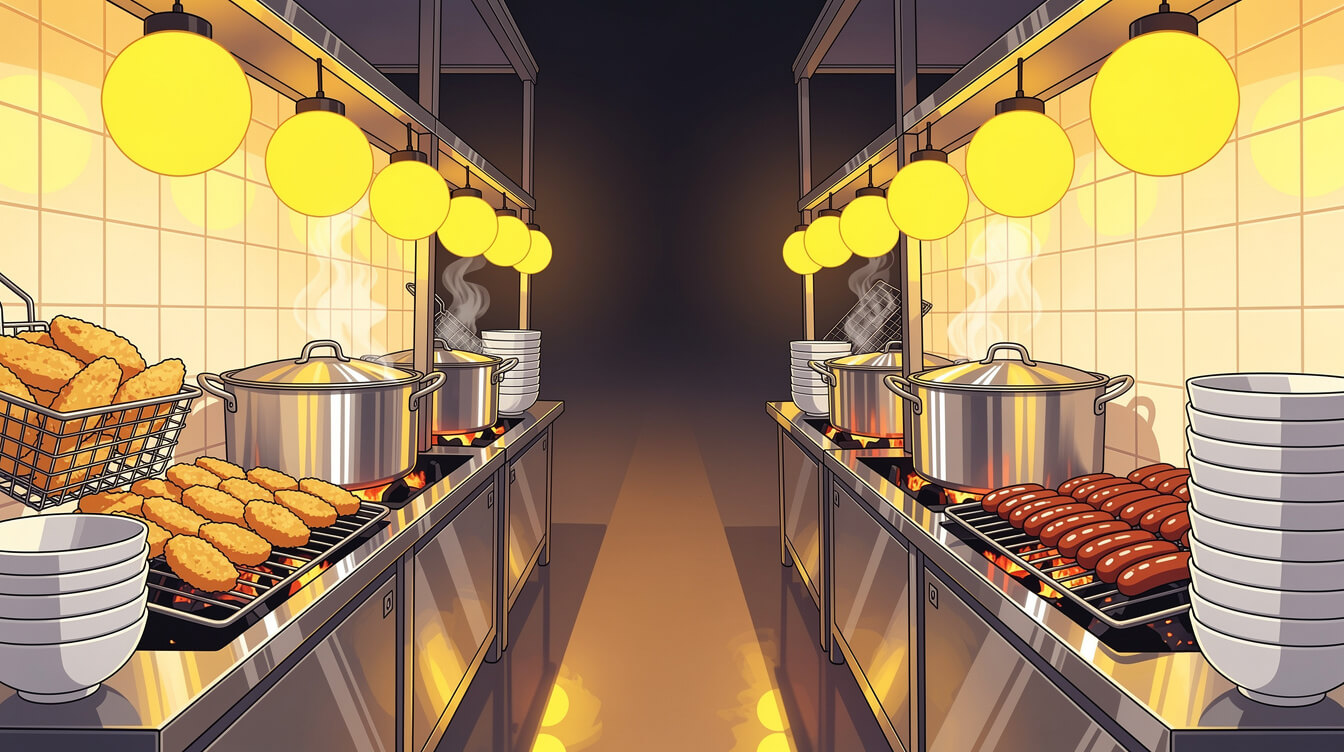
This is the feature that makes Miaokou the easiest night market in Taiwan for first-timers. After a city-led renovation, the vendors adopted a uniform signboard system. Every stall on the main strip has a matching yellow lantern-style sign with its stall number and its signature dishes in three languages. Keelung City Government’s English page calls it an “exclusive signboard design” that puts “their wares clearly present in front of the tourists,” and it does exactly that. You can find a stall from a number on your phone without reading a word of Chinese.
A few things about the numbers that will save you confusion:
- Odd and even numbers sit on opposite sides. On the city’s published map, even numbers line one side of Ren 3rd Road and odd numbers the other. If you can’t find 58, try the other side.
- Dash numbers are real stalls. 27-1, 27-2, 35-1, 43-1 and 62-1 are separate businesses that split or squeezed in beside an original pitch. The famous one-bite sausage stall is 43-1, right next to the one-bite tempura at 43.
- Some numbers change hands at sunset. The city’s map lists stall 30 with two menus: a day menu of squid rice noodles, seafood congee and fish soup, and a night menu of shrimp thick soup and braised pork rice. Same pitch, different shift.
- Blogs disagree, so trust the sign. One popular English guide puts the one-bite sausage at stall 45. The city map and older guides both say 43-1. Stalls move over the years. Use numbers to get close, then look for the dish.
One more thing to know before you go: Miaokou is actually two markets side by side. The numbered, temple-centered strip on Ren 3rd Road is Miaokou proper. Around the corner on Ai 4th Road (愛四路) is a separate traditional night market with its own vendors, louder hawkers and more snacks-and-shopping energy. The city describes it as “a traditional night market at Ai 4th road” next to Miaokou. Many visitors walk both without noticing the join. Some Miaokou favorites, like the charcoal-grilled sandwich stall and Ji’s pork knuckle (紀家豬腳), actually have Ai 4th Road addresses.
What to Eat at Keelung Miaokou Night Market: The Stall-by-Stall Shortlist
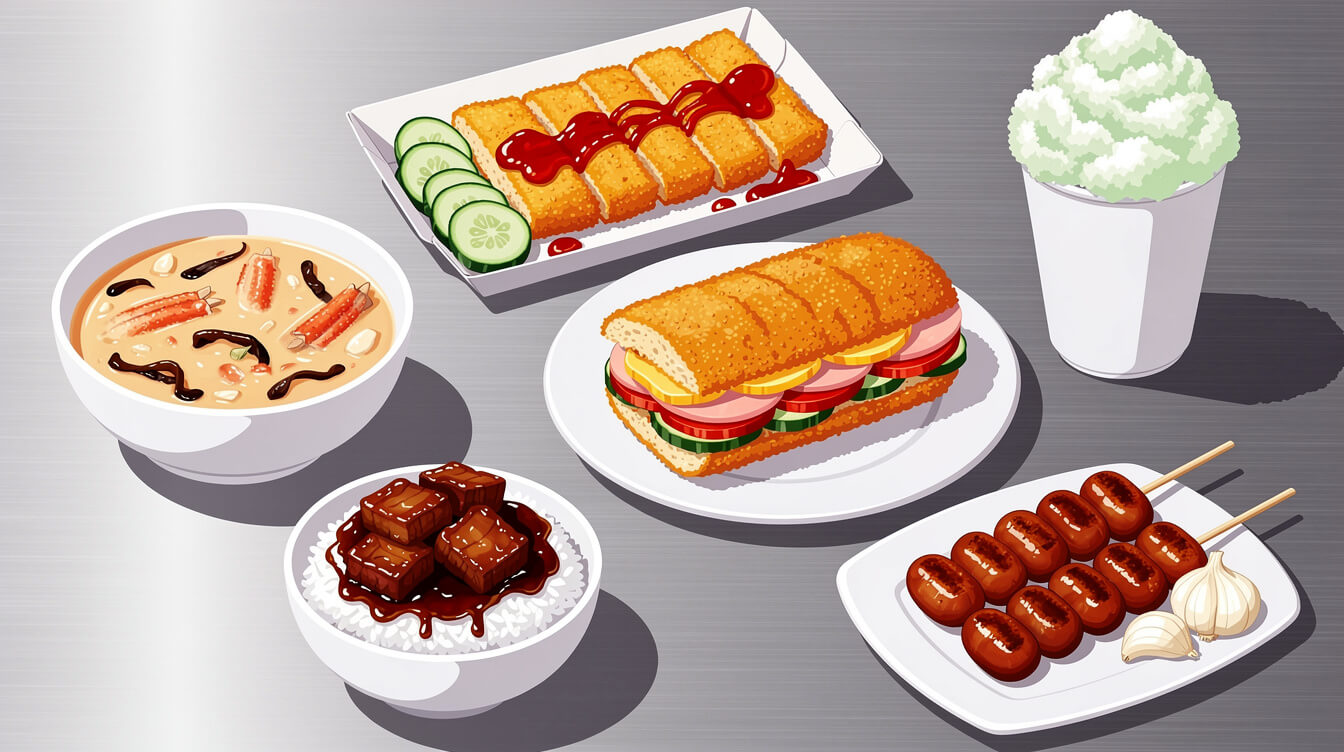
Here’s what to eat at Keelung Miaokou Night Market, with stall numbers from Keelung City Government’s stall map (published in its December 2021 city magazine) cross-checked against a January 2026 local food guide. Where they differ, we say so. Prices move, so we’ve left most of them out. Budget roughly NT$50 to NT$100 a dish and bring cash.
Stall 16: Wang’s Tempura (王記天婦羅)
Start here. Keelung tempura is not Japanese battered shrimp. It’s fish paste, shaped by hand and fried to order until it puffs, then cut into pieces and served with tangy pickled cucumber and a sweet chili sauce. The name came over from Japanese and stuck. In Taiwanese Hokkien it’s tiān-puh-lah, a word we unpack in our guide to the languages of Taiwan. According to the city, Wang’s has been frying for about 70 years, now run by the third generation, using paste made from shark meat. Stall 43, One-Bite Tempura (一口吃天婦羅), is the other big name if 16’s line is long.
Stall 58: The “Nutritious Sandwich” (營養三明治)
The most photographed snack at Miaokou and the most ironically named. A soft bread roll is deep-fried, split, and stuffed with ham, tomato, cucumber, egg and a sweet mayonnaise. It’s rich, a little greasy and very good. Expect a queue, sometimes managed with number tickets, and order two if you’re sharing, because one won’t make it back to your friend.
Stall 5: Wu’s Crab Thick Soup and Oily Rice (吳記螃蟹羹)
Keelung’s signature pairing. The geng (羹), or thick soup, is loaded with crab leg meat, bamboo shoot, black moss and daylily buds, with a peppery edge. You eat it with a bowl of youfan, sticky rice cooked with mushroom, pork and dried shrimp, topped with sweet chili sauce. The city says Wu’s has held stall 5 for more than 30 years.
Stalls 25 and 27-2: Ding Bian Cuo (鼎邊趖)
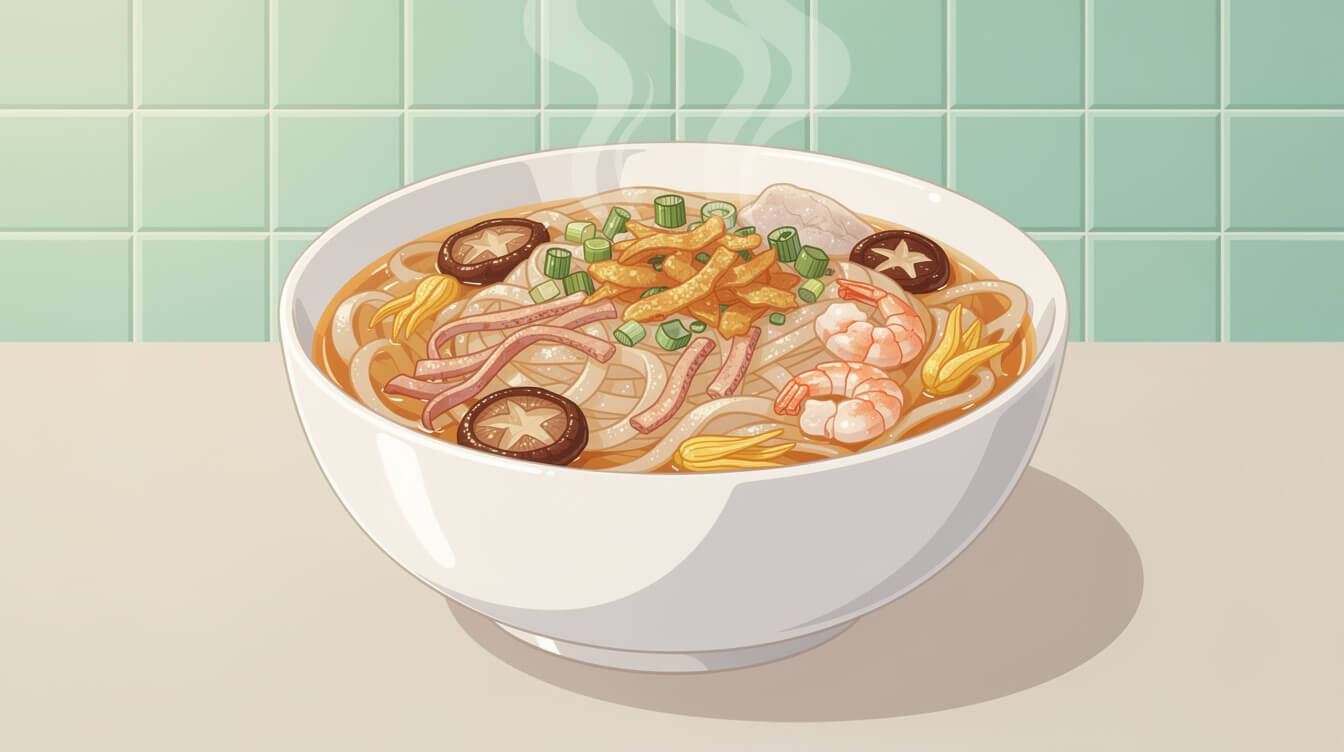
Ding bian cuo is a Fuzhou-style dish. Rice batter is poured around the rim of a hot wok so it sets into thin, curly sheets, which then go into a broth made with dried squid, shiitake and daylily buds, topped with pork or shrimp geng. Our Taiwan noodles guide calls Miaokou the place to eat it, and it’s still true. Two stalls lead: Wu’s (吳家鼎邊趖), which the city calls one of the market’s original handful of stalls, now third-generation, in the 27 cluster beside the temple, and Xing’s (邢記) at 25. The 2026 guide calls Xing’s lightly seasoned but generous with toppings.
Stalls 37 and 41: Paopao Ice (泡泡冰)
This is Keelung’s signature dessert. Paopao bing (“bubble ice”) is shaved ice that is whipped by hand with its flavoring (peanut, or mung bean with milk) until it turns into something between sorbet and mousse. It’s lighter than ice cream and much denser than snowflake ice. Shen’s (沈記) at 37 and Chen’s (陳記) at 41 are the two famous names, and Chen’s bills itself as the original. Peanut is the classic order. If you’d like to compare it with other styles, see our guide to Taiwan shaved ice.
Stall 43-1: One-Bite Sausages (一口吃香腸)
Thumb-sized pork sausages, charcoal-grilled and sold by the piece. The city’s account says the owner started in 1990 at NT$5 a sausage so kids could afford them. The price has gone up since, but they’re still one of the cheapest snacks on the strip. Locals eat them with a raw garlic clove. If you want the full-sized version, read up on da chang bao xiao chang.
Also worth a stop
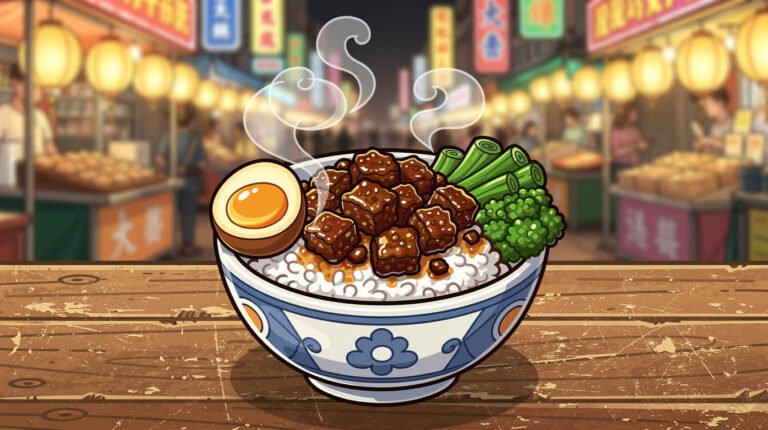
- Stall 31, Tian Yi Xiang (天一香): lu rou fan with a braised egg and a bowl of pork thick soup, the combo the city calls Keelung’s favorite. It keeps late hours, past midnight.
- Stall 36, charcoal oyster omelette: a smokier take on the classic oyster omelette, cooked over charcoal instead of a flat griddle.
- Zhen Ji (圳記) red-braised eel thick soup: since 1965, according to the city. Fried eel colored with red yeast rice in a sweet, clear broth. It sells only eel soup and braised pork rice.
- Butter crab (奶油螃蟹): look for it on the stall signs. It’s the splurge dish of the market, especially in crab season.
- Black sesame tangyuan: a 50-plus-year-old stall (全家福元宵) that only makes one flavor, by hand. It’s the line you’ll see at Winter Solstice.
Day vs Night: When Miaokou Is Actually Open
You’ll find two contradictory claims online. Keelung City Government lists Miaokou as an “open space” with “no time limit” and its English page says “open 24 hours daily.” Some English travel blogs say the “proper” market doesn’t start until about 5pm and isn’t a lunch spot. Both are partly right.
Here’s how it actually works. Miaokou runs in shifts. A core of stalls opens in the morning or at lunch: the January 2026 guide lists stall 11 (braised pork rice and pork rib soup) at 6am to 7pm, stall 52 (sushi and raw-fish rice) from 9am, and the crab soup at stall 5 from 11am. Stall 30 swaps its day menu for a night one. Then, from late afternoon, the night-only vendors roll out, the yellow signs light up, and the strip fills. Keelung’s tourism site recommends arriving from dusk to about 9pm, when the most stalls are open, and that’s the window we’d aim for too.
If your idea of a perfect Miaokou night is butter crab and a cold beer at a folding table, our Taiwan Beer Draft 18 Days Icon T-Shirt is basically the official uniform.
The closure days that catch visitors out
- The annual drain-cleaning day. Once a year, in May or June, the city’s environmental bureau clears and disinfects the drains under the market, and the vendors close for the day. On June 2, 2026, Taiwan’s Central News Agency reported visitors turning up to a shut market. The vendors’ committee had posted it on the market’s scrolling LED sign a month ahead. If you’re visiting in May or June, look for that notice or ask your hotel.
- Typhoons. On storm days, only a handful of stalls open. One typhoon-day news report counted five stalls trading at lunchtime. Check the Central Weather Administration forecast before making the trip from Taipei.
- Quiet weeknights. Individual families take their own days off. If one stall is your reason for coming, weekend evenings are the safest bet.
- History’s longest closure was during Taiwan’s Level 3 COVID alert in 2021, more than two months. The vendors used it to replace the water pipes and repave the street, which is partly why the market looks as tidy as it does now.
Getting to Miaokou From Taipei or the Cruise Port

Keelung is an easy half-day trip from Taipei, and the market is in the middle of downtown, so you don’t need a taxi at the other end.
- By train: take a Taiwan Railway train from Taipei Main Station to Keelung Station, the end of the line, roughly 40 to 60 minutes depending on the service. From the station, the city’s directions are: walk straight along Zhong 1st Road, then turn right onto Ai 3rd Road for the front of the market, or onto Ai 4th Road for the Ai 4th Road side. About 10 minutes on foot. Tap in with an EasyCard.
- By bus: Kuo-Kuang route 1813 runs from Taipei Main Station (East Gate 3) to Keelung Transfer Station, beside the train station. It can beat the train from parts of Taipei, but not in rush-hour traffic.
- By city bus or shuttle: any Keelung city bus to the Second Credit (二信) loop stop leaves you a 3-minute walk away. The T99 Taiwan Tourist Shuttle has a stop named for the market.
- From the cruise terminal: Keelung is a major cruise port, and the terminal is in downtown Keelung. Princess Cruises puts the walk at 10 to 15 minutes along the harbor. That makes it one of the easiest port-day meals in Asia. Change money onboard or at a bank first, because the stalls take cash.
- By car: don’t, unless you have to. If you do, the city suggests the Breeze East Coast (微風東岸) mall car park or nearby public lots, about 5 minutes away on foot.
Payment: Keelung’s tourism listing gives cash as the payment method, and that matches what you’ll find at almost every stall. Bring small notes and coins. A few NT$100 notes and a pocket of NT$10 coins go a long way.
Make a Night of It: The Temple, the Harbor and Kanziding Fish Market
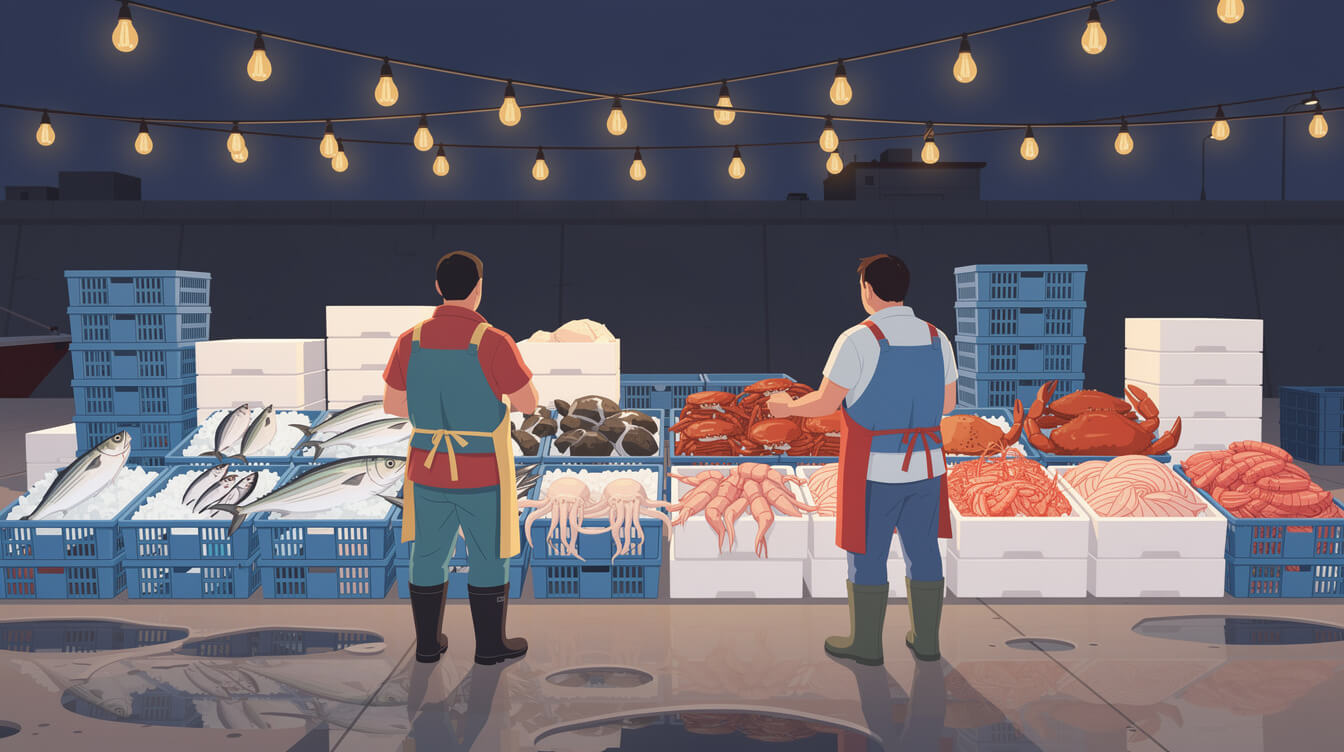
Most people eat and leave. A better Keelung evening has three parts.
1. Step into Dianji Temple. It’s the reason the market exists, and it’s still an active temple in the middle of the food. Go in between courses: quietly, with your snacks finished, and without blocking the people who are there to pray. Our Taiwan temple culture guide covers the basics of what you’ll see, from the incense burners to the offering tables.
2. Walk the harbor. Keelung’s tourism site suggests pairing the market with the waterfront: Ocean Plaza (海洋廣場) at the head of the harbor, the West Coast harbor walk, and the Hsu Tzu-sang Old House (許梓桑古厝), a beautifully decaying 1930s mansion on the hillside steps above the market. If you’ve come out early, the north coast is close: Yehliu Geopark and Jiufen both make classic daytime pairings with a Keelung dinner.
3. Stay up for Kanziding. If you’re sleeping in Keelung, set an alarm. Kanziding Fish Market (崁仔頂漁市), a few minutes’ walk from Miaokou along Xiao 1st Road, is a wholesale fish market that runs in the middle of the night. Keelung’s tourism site lists it as daily, 1am to 7am, with an annual table of closure dates. Wholesale trading starts first, and buyers’ guides suggest the small hours, around 2:30 to 4:30am, as the friendliest time for regular visitors. Expect wet floors, fast-moving carts and auctioneers shouting prices. Wear shoes you don’t mind soaking and stay out of the way of the workers. It’s the other half of what makes Miaokou taste the way it does: the seafood in your evening soup came through here. For another side of Taiwan’s fishing towns, read our piece on Nanfang’ao, where most of Taiwan’s mackerel comes in.
Wear the Menu Home
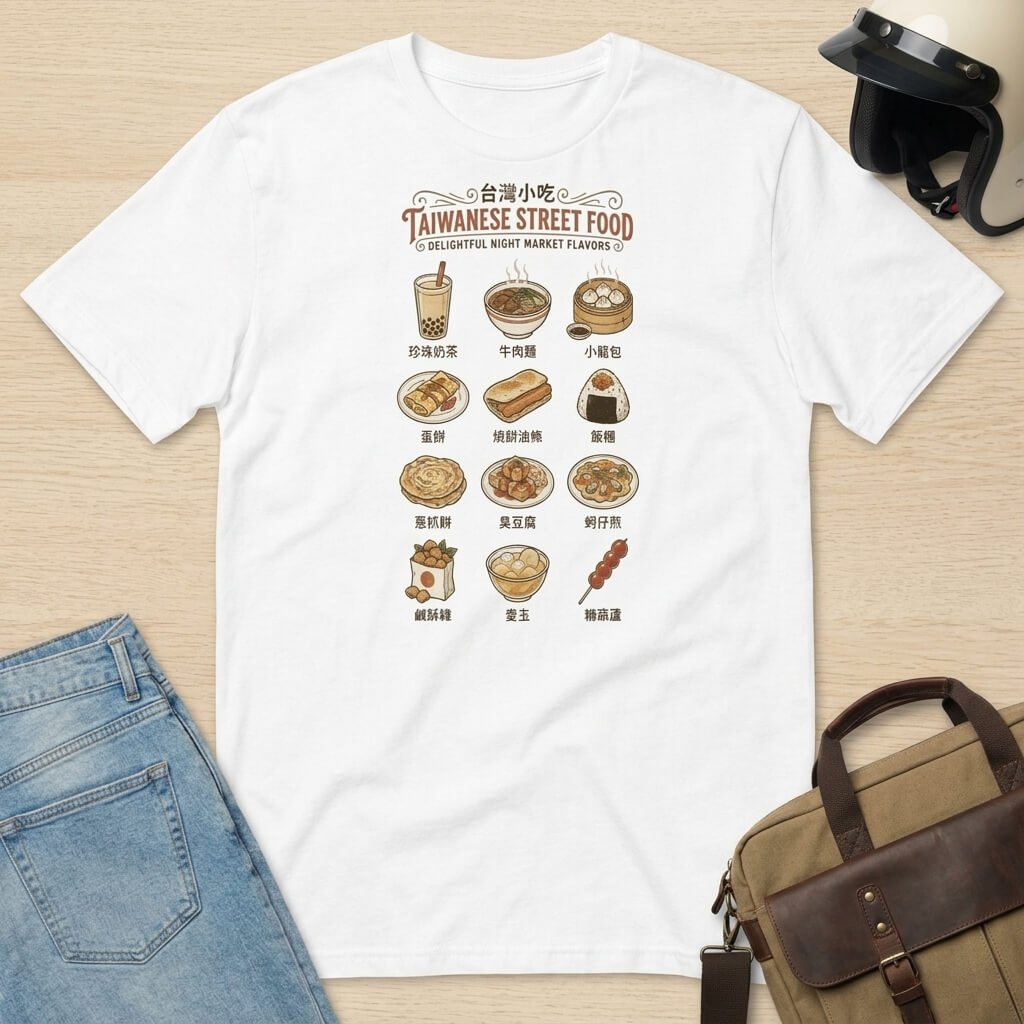
Our Taiwanese Street Food Guide tee is a vintage-poster tribute to the night-market classics, from oyster omelettes to shaved ice. It’s for the friend who plans whole trips around stall numbers.
Keelung Miaokou Night Market FAQ

Is Keelung Miaokou Night Market worth the trip from Taipei?
Yes, if food is the reason you go to night markets. It’s smaller than Shilin but more concentrated, with more seafood, more long-running family stalls, and easier navigation thanks to the numbered signs. If you want games, shopping and a huge crowd, stay in Taipei. For everything else, see our complete Taiwan night market guide.
What time should I go to Keelung Miaokou Night Market?
Aim for dusk to about 9pm for the most open stalls. That’s the window Keelung’s own tourism site recommends. Weekday evenings around opening time are the least crowded. Lunch works if you stick to the day stalls, and a few places, like stall 31, stay open past midnight.
Is the market open every day?
The market itself has no fixed closing day. Individual stalls take their own days off, and the whole strip closes for one day a year (in May or June) for drain cleaning. Typhoons also shut most stalls.
Do stalls take cards or mobile payment?
Plan on cash. Keelung’s tourism listing gives cash as the payment method, and very few stalls take cards. Bring small notes and coins.
How long do I need?
Ninety minutes to two hours is enough to eat at five or six stalls without rushing. Add an hour if you’re also walking the harbor or visiting Dianji Temple properly.
Is there vegetarian food at Miaokou?
Some, but it takes care. The market is seafood-heavy, and many of the soups and thick broths use fish stock even when nothing fishy floats in them. Fruit, paopao ice, black sesame tangyuan and some fried snacks are safer bets. Our vegan Taiwan guide explains how to ask for 素 (vegetarian) food.
Which is the famous dish at Keelung Miaokou Night Market?
Three dishes come up again and again: fish-paste tempura (stall 16 or 43), the deep-fried “nutritious sandwich” (stall 58), and paopao ice (stall 37 or 41). Add crab thick soup with oily rice (stall 5) and ding bian cuo and you’ve covered what locals would call the essentials.
Final Thoughts
Keelung Miaokou Night Market rewards a little planning. Pick five numbers before you go: 16, 58, 5, 27-2 or 25, and 37 or 41 make a good first night. Arrive around sunset, eat your way along Ren 3rd Road, then wander onto Ai 4th Road for whatever you still have room for. Bring cash, check for a closure notice in May and June, and give the temple at the center a minute of your time. It’s the reason any of this is here.
Then, if you can, stay the night in Keelung and walk down to Kanziding before dawn. That’s where the market’s story starts. For more food-first trips around the island, our city-by-city Taiwan street food guide and our Taiwan travel itinerary both have a Keelung day built in.
A Postcard From Taiwan, Every Week
Night-market finds, food deep dives and the stories behind Taiwan’s best-loved snacks, straight to your inbox. No spam, unsubscribe anytime.
Grab a Free Taiwan Sticker!
Drop your email and we’ll send you a limited-edition Taiwan sticker — plus insider access to new merch drops and island vibes.
No spam. Unsubscribe anytime.