Taiwan National Palace Museum: The Complete Visitor’s Guide to 8,000 Years of Treasures
If you only have time for one museum visit in Taiwan, make it the Taiwan National Palace Museum. Tucked into the leafy hills of Taipei’s Shilin district, this is the museum that holds the largest and arguably most important collection of Chinese imperial art on the planet — almost 700,000 pieces spanning 8,000 years of history, from neolithic jade carvings to the personal calligraphy of Qing dynasty emperors. It is also one of the strangest, most romantic stories in museum history: most of these treasures only ended up in Taiwan because a small team of scholars hid them in caves, hauled them on ox carts, smuggled them by boat, and protected them through a world war and a civil war so they would survive.
This guide is the cultural-context-plus-practical-visit walkthrough we wish we’d had on our own first visit. We’ll cover the history, the must-see treasures, the wildly underrated Southern Branch in Chiayi, ticket-and-time logistics, and the small but crucial tips that turn a confusing two-hour drop-in into one of the best half-days of your entire Taiwan trip.
A Museum Holding 8,000 Years of Chinese History
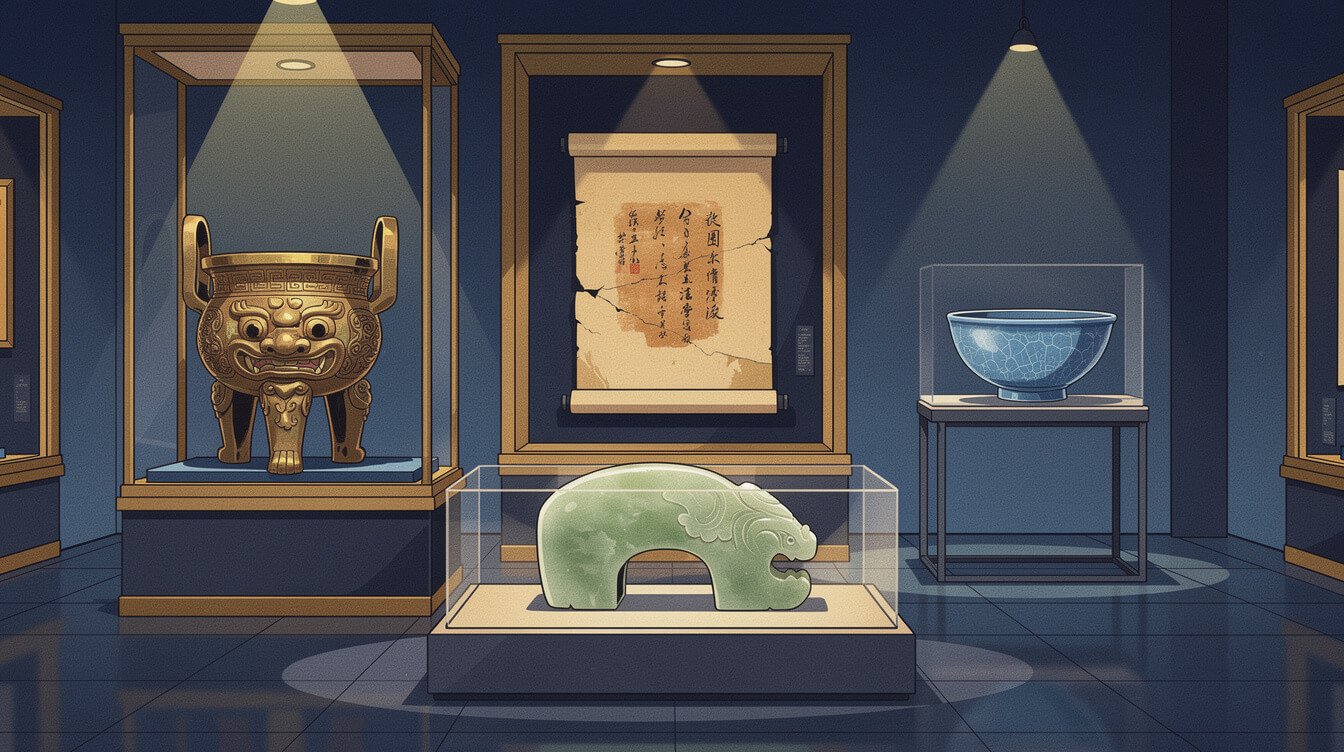
The numbers are genuinely hard to wrap your head around. The permanent collection contains roughly 698,000 individual artifacts, organized into broad categories that read like a syllabus for all of Chinese material culture: 25,623 ceramics, 13,589 jades, 6,762 paintings, 6,280 bronzes, 6,958 ancient coins, 3,745 works of calligraphy, 2,520 enamel wares, 308 tapestries and embroideries, plus carvings, lacquerware, fans, rubbings, rare books, and imperial documents. Even at a brisk pace, you couldn’t physically look at every piece in a year — which is why the museum rotates exhibitions roughly every three months and keeps the vast majority of the collection in climate-controlled storage.
What makes the collection extraordinary isn’t just the size, it’s the depth. Most great world museums hold imperial Chinese art that was bought, exchanged, or in many cases looted during the 19th century. The Taiwan National Palace Museum’s collection came directly from the imperial vaults of the Forbidden City — the actual personal property of the Ming and Qing dynasty emperors, accumulated and curated by them across centuries. When you stand in front of a Song dynasty Ru ware bowl here, you are looking at an object that lived in the emperor’s hand. That provenance is irreplaceable, and it is the reason scholars from Beijing, Tokyo, Paris, and New York make pilgrimages to Shilin to study pieces they can find nowhere else.
The museum was originally founded in 1925 as the Palace Museum inside Beijing’s Forbidden City, two years after the boy emperor Puyi was finally expelled from the palace he had nominally still inhabited. For a brief moment, the imperial collection was finally available to ordinary citizens — and then almost immediately, the threat of war put it all in danger again.
The Wild Journey That Brought the Treasures to Taiwan
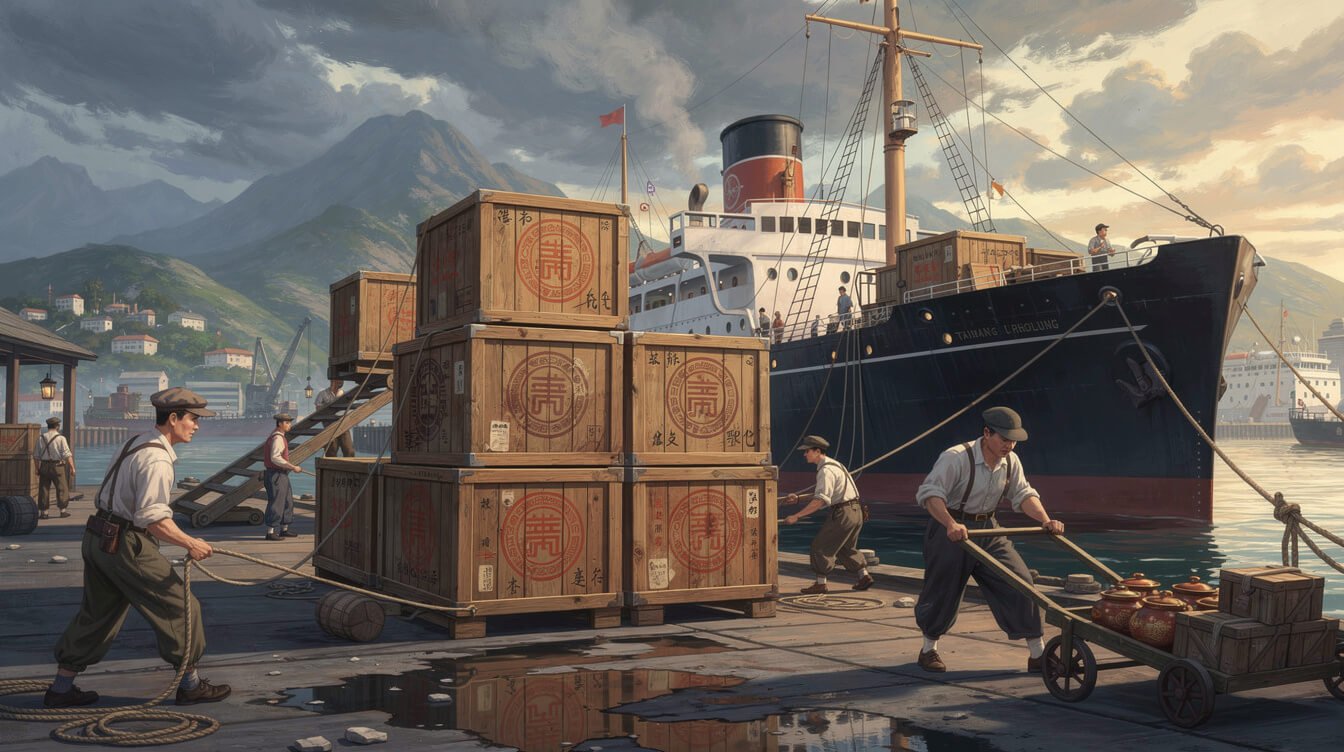
The story of how this collection ended up in Taiwan is one of the great epics of 20th century cultural preservation, and it is worth knowing before you walk through the doors. In 1933, with the Imperial Japanese Army advancing through northeast China after the Mukden Incident, the Nationalist Government ordered the museum to pack the most valuable pieces and move them south. Between February and May of that year, staff packed 13,491 crates from the Palace Museum and another 6,066 crates from other imperial institutions and shipped them in five waves to Shanghai. From Shanghai they moved to Nanjing. From Nanjing — as the war deepened — they moved again, this time inland on three separate routes, eventually finding refuge in mountain monasteries and caves in places like Anshun, Leshan, and Emei.
For more than a decade, scholar-curators slept beside the crates. They hauled them by train, river barge, ox cart, and on their own backs. Boats were strafed. Trucks broke down on muddy roads. Crates were submerged in floods and dug back out. The official record notes that not a single significant piece was lost. After Japan surrendered in 1945, the crates went back to Nanjing — and then, as the Chinese Civil War reignited, Chiang Kai-shek’s government made the decision to send the most prized items to Taiwan rather than risk them falling into Communist hands.
Between December 1948 and February 1949, the museum’s collection was moved in three shipments from Nanjing to the harbor at Keelung. In total, around 2,972 crates from the National Beijing Palace Museum — roughly 22% of what had originally moved south, but representing the very best pieces — made it across the Taiwan Strait. They were stored temporarily in a sugar warehouse in Taichung, then in a purpose-built mountain vault at Beigou. The treasures finally found their permanent home in 1965, when the current museum building in Shilin opened to the public. Every piece you see on display is a survivor of that journey. Knowing the backstory makes the actual artifacts hit completely differently.
The Top Treasures You Absolutely Must See
If you only have an hour, you can still see the three pieces every Taiwanese schoolchild grows up knowing — the unofficial “national treasures” of the collection. They are usually clustered together in a single gallery, and the museum is generous about signage, so you won’t have to hunt.
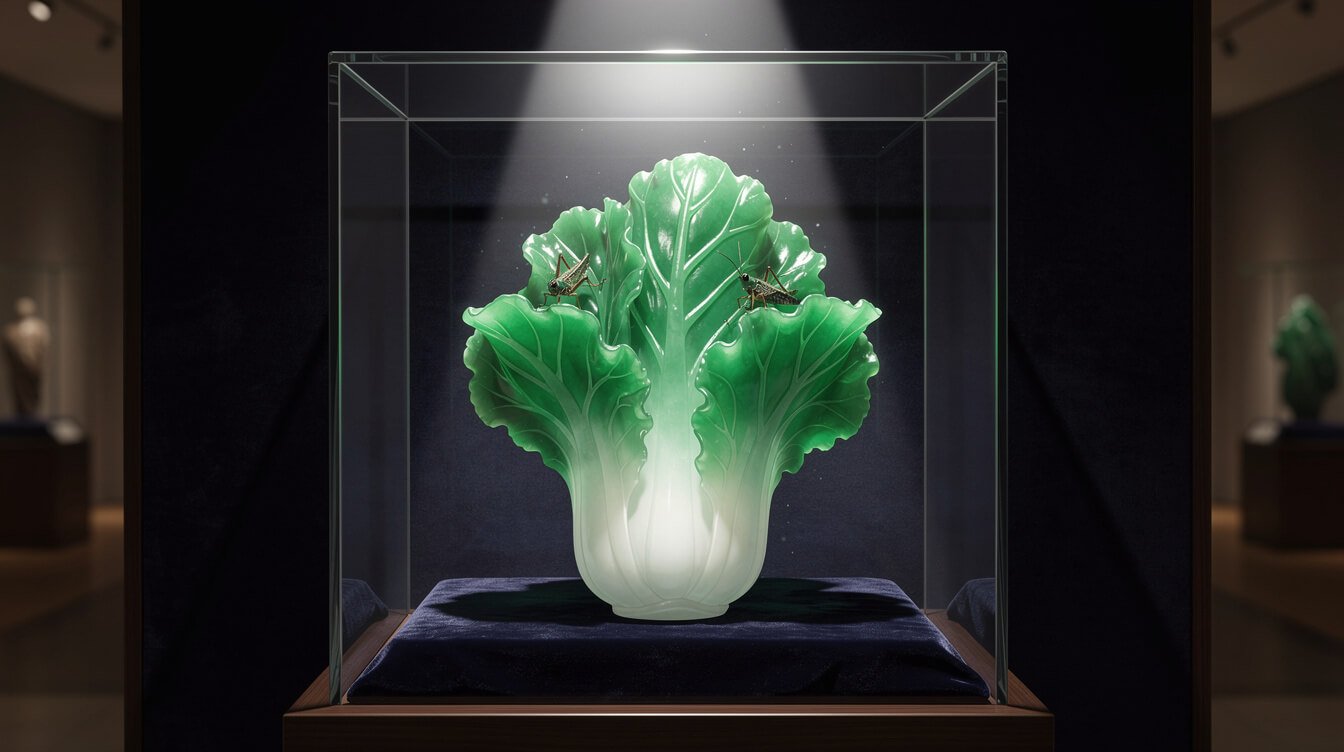
The Jadeite Cabbage is the celebrity. It’s a single piece of jadeite carved in the late Qing dynasty into a perfect cabbage head, exploiting the natural color variation of the stone so that the leaves are vivid green and the stem is a creamy white. Look closely and you’ll spot two tiny grasshoppers camouflaged in the leaves — symbols of fertility, supposedly added as a wedding gift from Emperor Guangxu to Consort Jin. It’s not the largest piece in the museum, but it stops every visitor cold. Plan on a small crowd around the case.
The Meat-Shaped Stone is almost always displayed beside the cabbage and is the most fun piece in the entire museum. It’s a chunk of banded jasper carved and dyed to look exactly like a piece of dongpo pork — a hunk of pork belly braised in soy sauce, with visible layers of skin, fat, and lean. The surface even has tiny stippled “pores” that mimic the skin of cooked pork. You will see people lean in, then laugh out loud. It’s genuine Qing dynasty craftsmanship, but the joke lands across centuries.
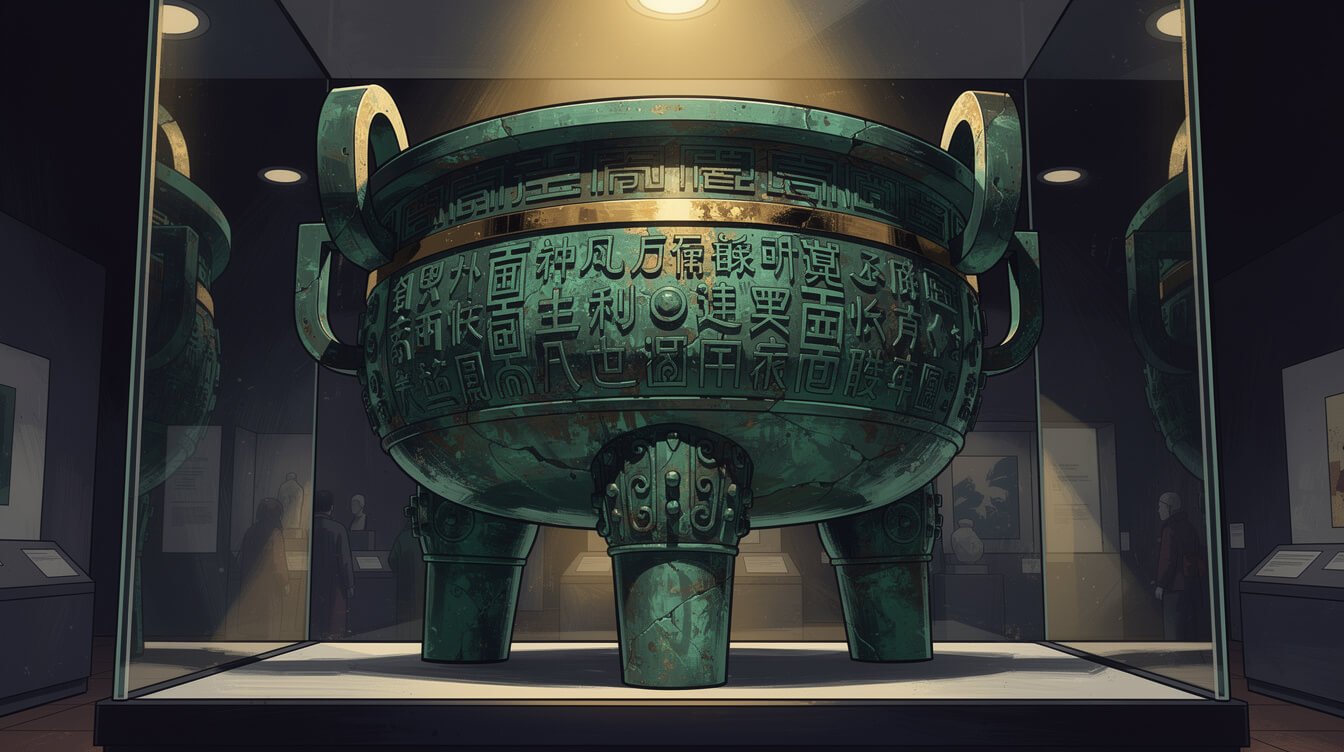
The Mao Gong Ding is the deep cut for the bronze nerds and the centerpiece of the bronze hall. It’s a three-legged ritual cauldron from the late Western Zhou dynasty (1046–771 BCE), and its interior is carved with a 500-character inscription — the longest piece of bronze writing yet found from ancient China. The inscription is, essentially, a contract between a Zhou king and a duke named Mao, granting him territory and responsibilities. To read it is to read an actual document from nearly 3,000 years ago, in the original. The vessel itself is over 53 cm tall, weighs nearly 35 kg, and looks both massive and oddly delicate under the gallery lighting.
If you have more time, the museum’s deeper Taiwan culture context will help you make sense of the smaller treasures around these headliners — but even a quick walkthrough of the big three is enough to understand why the collection matters.
Beyond the Big Three: Bronzes, Ceramics, and Calligraphy You Shouldn’t Miss
Most first-time visitors stop after the celebrity pieces, which is a shame, because the real soul of the museum lives in the quieter halls. If you give yourself even one extra hour, here is where to spend it.
The bronze galleries hold one of the most complete collections of ancient Chinese ritual bronzes anywhere in the world. These are not decorative objects — they were used in Shang and Zhou dynasty ancestor worship, cast in elaborate molds, and inscribed with the names of the people they honored. The Sanyou tripod, the Hu Father Gui, and the Western Zhou ritual sets are particularly worth slow looking. Bronzeworking peaked in technical ambition during the 12th to 8th centuries BCE, and the National Palace Museum’s holdings let you trace the evolution piece by piece.
The ceramic galleries are where the museum’s wealth becomes almost embarrassing. The collection holds 21 surviving pieces of Ru ware — one of the rarest categories of Chinese ceramic, made exclusively for the Northern Song imperial court between 1086 and 1106. Fewer than 100 Ru ware pieces are known to exist worldwide; the museum holds roughly a quarter of them. Ru ware glaze is a soft, cloudy sky-blue with a subtle crackle, and seeing a real piece in person feels like looking at a small piece of fog. Beyond Ru, the galleries cover everything from neolithic painted pottery to Ming dynasty blue-and-white and Qing imperial porcelain.
The painting and calligraphy galleries rotate the most frequently because traditional Chinese paintings are extraordinarily light-sensitive. On any given visit you might see a Song dynasty landscape by Fan Kuan, an album leaf by Zhao Mengfu, or a piece of personal calligraphy by the Qianlong Emperor. If a single famous piece is on display when you visit, like Fan Kuan’s Travelers Among Mountains and Streams, the staff will signpost it heavily — those rotations are once-in-a-blue-moon viewings.
If you’re already enamored of Taiwan’s mash-up of classical Chinese culture and modern island identity, our Formosa Black Bear Van Gogh-style Eco Tote Bag brings that same East-meets-West energy to something you can carry around the museum and beyond — a small love letter to Taiwan’s wild heart in painterly form.
The Often-Overlooked Southern Branch in Chiayi
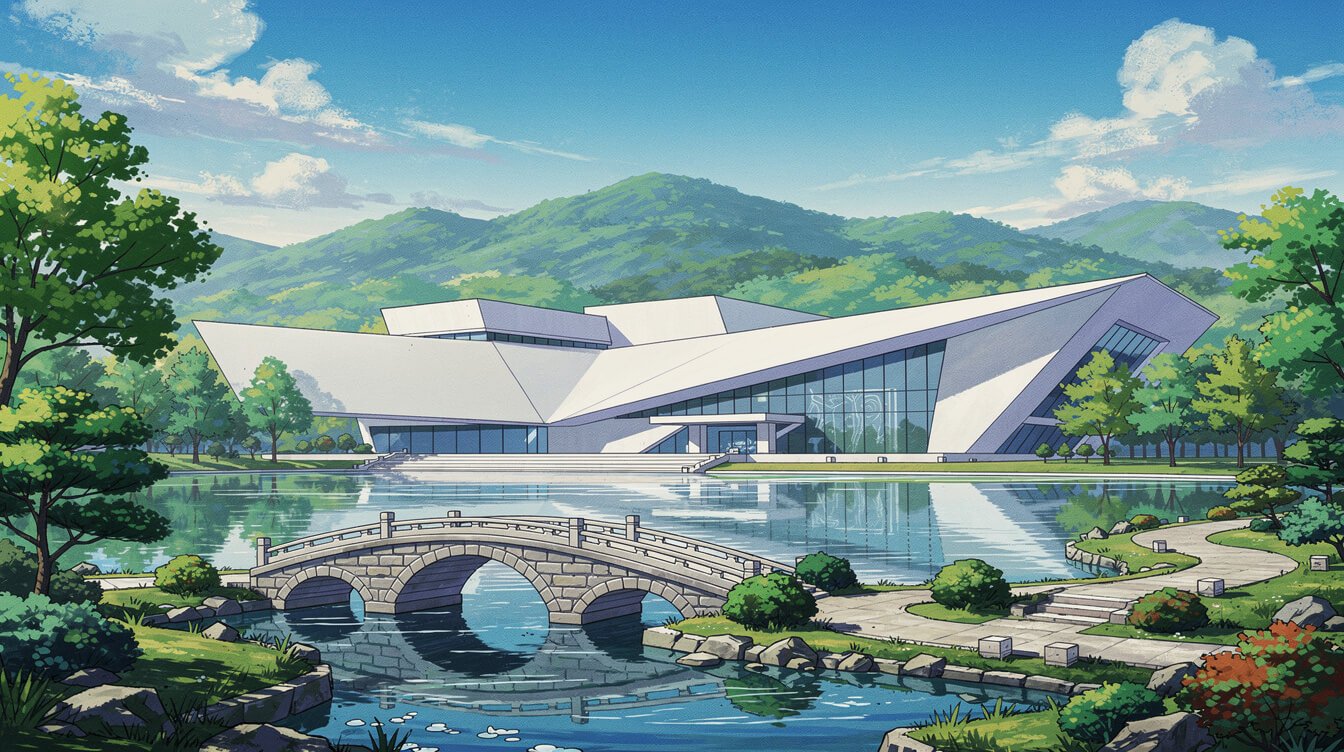
Most visitors to Taiwan never realize the museum has a second campus. The Southern Branch, in Taibao City, Chiayi County, opened in 2015 on a 70-hectare site that includes an ornamental lake, an Asian-style garden, and a striking modernist building by Taiwanese architect Kris Yao. It is roughly two hours south of Taipei by High Speed Rail, and it is unlike the Shilin branch in nearly every way.
Where the main museum focuses on the imperial Chinese tradition, the Southern Branch was designed from the start as a museum of Asian art more broadly. Its permanent galleries cover Buddhist art from across Asia, Asian textiles, Asian tea culture, and Asian ceramics — bringing pieces from Korea, Japan, India, Tibet, Persia, and Southeast Asia into conversation with the Chinese works the museum is famous for. It also runs more rotating exhibitions, often more contemporary and more multimedia in feel.
For travelers who are already heading south to Tainan, Kaohsiung, or the Alishan area, the Southern Branch is a genuinely beautiful half-day stop. The building’s reflecting lake and the gardens around it are designed for slow walking, and the on-site cafe with a view across the water is one of the more peaceful corners in southern Taiwan. If you are planning a fuller Taiwan loop, slot the Southern Branch into a day that also includes Chiayi’s chicken rice and the start of the Alishan Forest Railway — it pairs naturally with the wider region.
Visiting the Taiwan National Palace Museum: Tickets, Hours, and Insider Tips
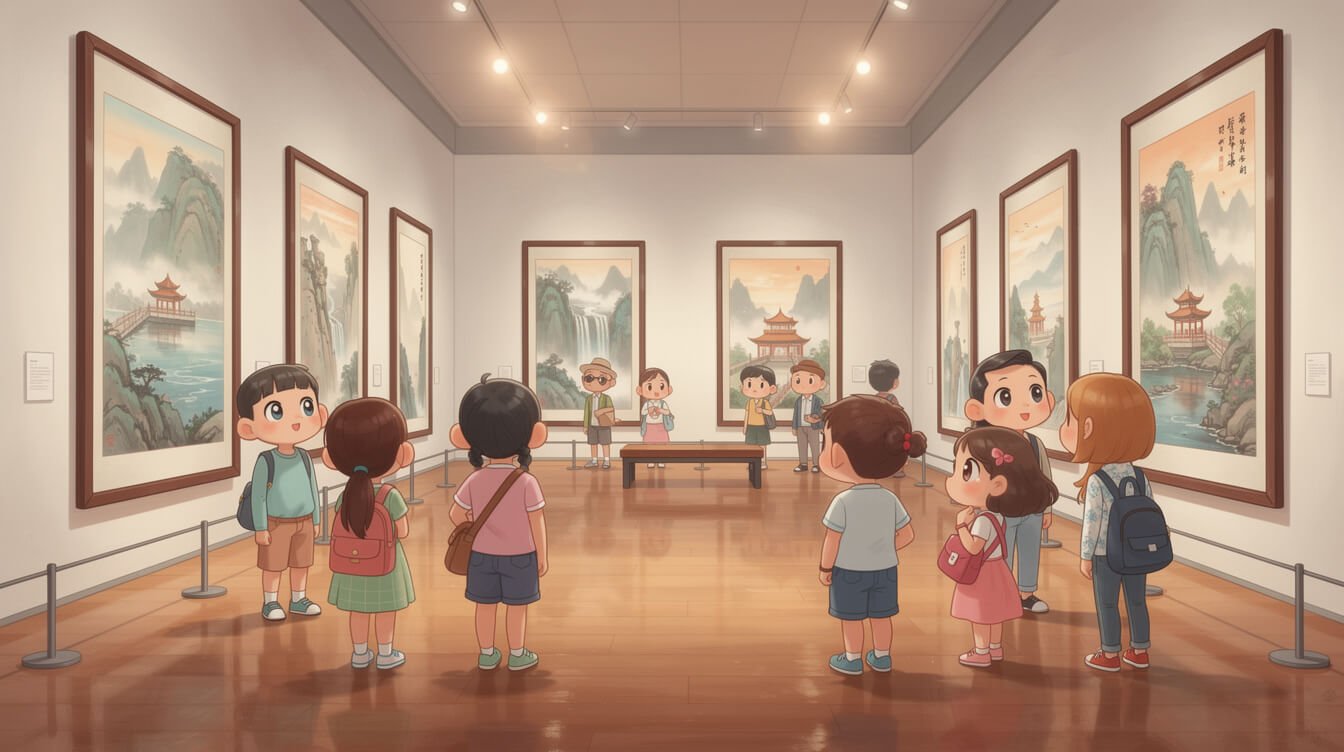
The practical side of visiting the Taiwan National Palace Museum is genuinely simple, but a few small tips can transform the experience.
Getting there. The main museum is on Zhishan Road in Shilin district, on the north side of Taipei. The easiest path from central Taipei is to take the Tamsui–Xinyi Red Line MRT to Shilin Station (the same station you’d use for Shilin Night Market), then transfer to one of the buses that climb up to the museum entrance — bus 255, 304, R30, or M30 all stop directly at the museum. The whole trip takes 35–45 minutes from Taipei Main Station. A taxi from the Shilin MRT exit costs about NT$150 and takes 10 minutes. If you’re using the broader Taipei itinerary, pair the museum with the nearby Shilin Official Residence Park or an evening at Shilin Night Market.
Hours. The Shilin branch is open daily from 9:00 AM to 5:00 PM, with extended hours on Fridays and Saturdays to 9:00 PM. Closed only on Lunar New Year’s Eve and Lunar New Year’s Day. The Southern Branch is open Tuesday through Sunday, 9:00 AM to 5:00 PM, closed on Mondays — different from the main museum, so check before you make the trip south.
Tickets. General admission to the Shilin branch costs NT$350 for foreign visitors, NT$150 for ROC nationals, and free for children under 12 and seniors over 65. The Southern Branch is NT$150 for adults. Buying tickets online in advance is faster than the on-site queue during peak season, and the museum sells combined tickets that cover both branches if you plan to visit each.
The single best tip. Go early on a weekday, ideally Tuesday or Wednesday morning, and head straight to the Jadeite Cabbage gallery before the tour buses arrive. By 11:00 AM the case is six-deep with school groups. By 9:30 AM it’s nearly empty, and you can look at the grasshoppers for as long as you like.
Audio guides and tours. The English audio guide (NT$150) is genuinely good and worth the small extra cost — it covers about 80 of the highlight pieces in adequate depth. The museum also runs free English-language guided tours at 10:00 AM and 3:00 PM most days, departing from the main lobby information desk; arrive 10 minutes early to grab a spot. If you want a deeper dive, several private tour companies in Taipei run small-group museum tours led by art historians for around NT$2,000–3,500 per person.
Photography. Personal photography without flash is allowed throughout most galleries, with a few exceptions (clearly signposted) on extremely light-sensitive paintings. Tripods, selfie sticks, and commercial photography are not permitted.
Eat at Silks Palace. The on-site restaurant, Silks Palace, is run by the same hospitality group behind the Regent Taipei hotel and serves seriously good dim sum — including a fun “treasure” set that recreates the Jadeite Cabbage and Meat-Shaped Stone as actual edible dishes. It’s a nicer lunch than you’d expect at a museum, and reservations are recommended on weekends.

Carry Taiwan’s Wild Heart Home With You
Our Formosa Black Bear Eco Tote pairs Taiwan’s iconic native bear with swirling Van Gogh-inspired brushwork and golden sunflowers — East-meets-West energy you can carry through every museum hall on the island.
Frequently Asked Questions About the Taiwan National Palace Museum
Is the Taiwan National Palace Museum better than the one in Beijing?
“Better” depends entirely on what you mean. The Palace Museum in Beijing is the original Forbidden City complex — you visit it for the architecture and the imperial setting itself. The Taiwan National Palace Museum holds the imperial collection — specifically the pieces the Nationalists prioritized as the most important when they evacuated during the civil war. Most art historians would tell you that for sheer quality of moveable objects (paintings, jades, bronzes, ceramics), the Taipei holdings are superior. For experiencing the palace as a built environment, Beijing wins.
How long do I need to spend at the museum?
The honest answer is anywhere from 90 minutes to a full day, depending on your interest level. We recommend a minimum of three hours: 30 minutes for the celebrity pieces, two hours for a slow walk through the bronze, ceramic, and painting halls, and 30 minutes for the museum shop and a tea or coffee break. Serious art lovers regularly spend a full eight-hour day inside and still feel rushed.
Can I see the Jadeite Cabbage on every visit?
Almost always, yes. The Jadeite Cabbage and Meat-Shaped Stone are part of the permanent showcase and are rotated out only rarely — typically when they travel abroad for special exhibitions. The museum announces those rotations months in advance on its official website. If a celebrity piece is on tour during your visit, the gallery will have a sign and the staff will tell you what’s currently in its place.
Is photography allowed inside the Taiwan National Palace Museum?
Personal photography is allowed throughout most galleries, with no flash and no tripods. A handful of light-sensitive paintings and rare scrolls are signed “no photography” — those signs are strict, and the gallery staff will politely intervene if anyone gets close. Selfie sticks are banned everywhere inside, and commercial filming requires advance written permission from the museum.
Are there any food or drink options on site?
Yes. Silks Palace, the on-site restaurant, serves a serious dim sum lunch and dinner. There is also a more casual cafe on the museum grounds that does tea, coffee, and light bites. Outside food and drink are not allowed in the galleries — even bottled water has to stay in lockers.
Is the Southern Branch worth the trip from Taipei?
If you’re already going south — yes, easily. If you’d be making a special round trip from Taipei just for the Southern Branch, probably not unless you have a specific interest in pan-Asian art or contemporary curation. The architecture, lake, and grounds are stunning, but the Shilin branch holds the famous pieces and the bulk of the imperial collection.
Final Thoughts: Why You Can’t Skip This Place
The Taiwan National Palace Museum is, more than almost any other single site, the reason serious art historians come to Taiwan. It is also one of the easiest cultural wins for any traveler — a short MRT-and-bus ride from central Taipei, an affordable ticket, English signage throughout, and a collection that genuinely cannot be matched anywhere else in the world. Whether you give it two hours or two days, you leave understanding something about Chinese history that no book or documentary can quite deliver: the weight, the patience, and the strangeness of objects that have survived empires, wars, and ocean crossings to end up here, on a small island in the Pacific, waiting for you to look at them.
Go early, take your time at the cabbage, eat dim sum, and let the Mao Gong Ding remind you that someone wrote a 500-character contract in bronze before there was such a thing as paper. Then walk out into the Shilin hills, grab a bowl of beef noodles, and start planning your next visit. There’s already more here than you saw.
More Taiwan in Your Inbox
Get our best Taiwan culture, food, and travel guides delivered every week — plus first-look access to new merch drops and quiet-tip insider notes from the island.

Grab a Free Taiwan Sticker!
Drop your email and we’ll send you a limited-edition Taiwan sticker — plus insider access to new merch drops and island vibes.
No spam. Unsubscribe anytime.