Boba Meaning: Where the Word Really Comes From (and What It Means on a Taiwan Menu)
Order “a boba” in Los Angeles and you’ll get a milk tea with chewy tapioca pearls. Say the same word at a tea shop in Taipei and the staff will most likely hand you exactly what you asked for: the big pearls. That small difference is the whole story of the boba meaning. It started as a cheeky bit of Hong Kong slang, turned into a size on Taiwanese menus, and became the American name for an entire drink.
Here’s the short version, then the full one. We’ll cover where the word actually comes from (yes, the slightly rude part too), what 波霸, 珍珠 and 粉圓 mean when you’re standing in front of a menu in Taiwan, why the US says “boba” while most of Taiwan says “pearl milk tea,” and a quick glossary so you can decode any drink-shop menu.
Boba Meaning: The Short Answer
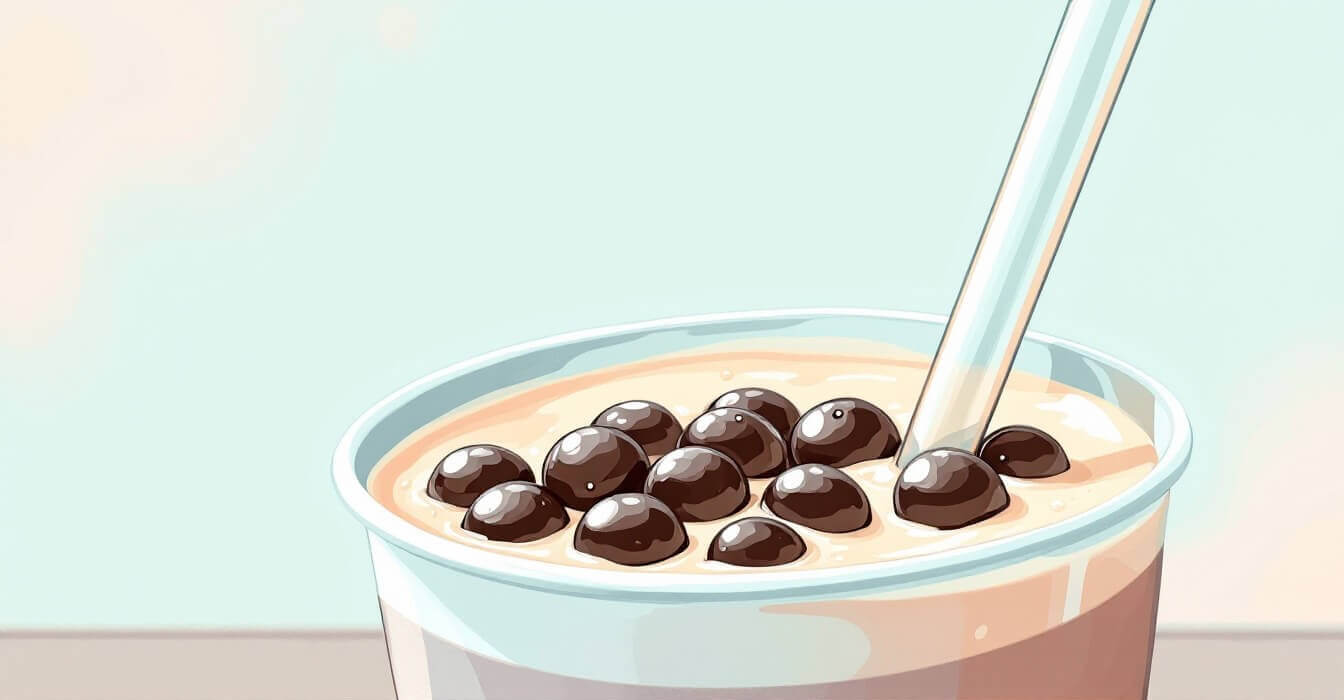
In American English, boba means two things. Merriam-Webster lists both. The first is the drink itself: tea, usually with milk, plus chewy tapioca balls, served hot or cold. It’s a synonym for bubble tea. The second is the tapioca balls themselves, which is why you’ll hear people say “extra boba.” The dictionary gives the plural as boba, or sometimes bobas.
The word comes from Mandarin 波霸 (bōbà). In Taiwan, 波霸 is the name for the larger tapioca pearls and for milk tea made with them, 波霸奶茶. The term itself is borrowed slang from Hong Kong. 波 (literally “wave,” Cantonese slang for “ball”) and 霸 (“champion”) together mean something like “big-busted.” It was the famous nickname of a Hong Kong actress, and a Taiwanese tea seller borrowed it as a joke about big round pearls.
So the boba meaning depends on where you are:
- In the US and much of the English-speaking world: boba = the whole drink, or any tapioca pearl.
- In Taiwan: 波霸 = specifically the big pearls. The everyday name for the drink is 珍珠奶茶 (zhēnzhū nǎichá), “pearl milk tea.”
- In Cantonese slang: 波霸 is still mostly what it was before anyone put it in a cup.
Two of the biggest English dictionaries have made it official. Merriam-Webster’s unabridged dictionary added boba in 2016. The Oxford English Dictionary added it in its first update of 2018 and traces the Cantonese slang in its etymology. The OED’s earliest English citation is from the Los Angeles Times on January 5, 2000, which is a clue to how the word traveled. We’ll get to that.
The Real Boba Origin: 波霸, Hong Kong Slang and a Tainan Street Stall

To understand the boba meaning, start with the drink, which is older than the word. Tapioca pearls went into milk tea in Taiwan in the 1980s. Taichung’s Chun Shui Tang and Tainan’s Hanlin Tea Room both still claim to have done it first, a rivalry we unpack in our story of how bubble tea was invented in Taiwan. At that point the drink was simply 珍珠奶茶, pearl milk tea, because the cooked pearls looked glossy like pearls.
Enter Amy Yip
In the late 1980s and early 1990s, Hong Kong actress Amy Yip (葉子楣) was a big star in Hong Kong film, and very popular in Taiwan too. She was known for her curves, and the tabloid nickname that followed her everywhere was 波霸. It’s Cantonese slang: 波 is the Cantonese word for “ball,” and here it means breasts. 霸 means overlord or champion. Put together, it’s roughly “the queen of big busts.” It’s crude, but it isn’t obscene. Think of it as the kind of thing a tabloid headline or a cheeky uncle would say.
The Tainan vendor who made it a drink
The most specific account comes from Tainan local historian Cheng Tao-tsung (鄭道聰), as cited in the Chinese-language Wikipedia article on pearl milk tea. A small vendor on Hai’an Road in Tainan, known as 草蜢 (“Grasshopper”), started selling his pearl milk tea as 波霸奶茶 at the height of Amy Yip’s fame. The bigger pearls were the joke: round, generous, impossible to miss. The same source says the name was probably coined around 1990 or 1991, and that by the summer of 1991 plenty of shops in Tainan were selling 波霸奶茶.
One caveat: this is a local-history account, not a dated document, so treat the exact year and the vendor’s name as the best available version rather than settled fact. What nobody disputes is the core of it. The name came from Amy Yip’s nickname, it started in Taiwan, and it was a pun on pearl size.
The English word “boba” is, quite literally, a 1990s Taiwanese joke about a Hong Kong movie star. The joke traveled, and the context didn’t.
That’s also why you’ll sometimes see the theory that “boba” is just a mispronunciation of “bubble.” Merriam-Webster’s unabridged dictionary specifically rejects that idea and traces the word to Taiwanese Mandarin 波霸 instead.
Boba vs Pearls: What Taiwan Menus Actually Say
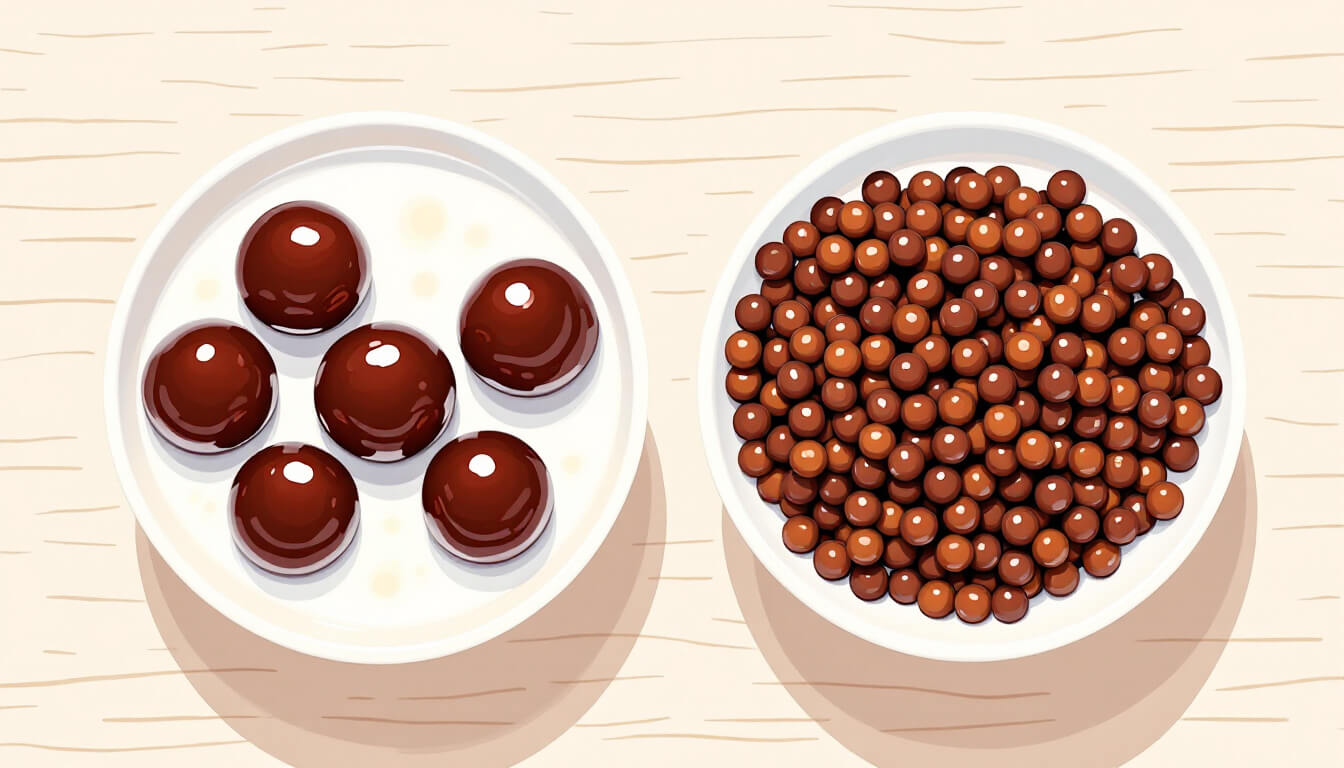
This is the part of the boba meaning most English explainers skip, and it’s the part you’ll actually use. On a Taiwanese drink menu, 波霸 and 珍珠 are not two names for the same thing. They’re two sizes.
- 波霸 (bōbà): the large pearls. Big, very chewy, and slower to cook. 波霸奶茶 is milk tea with big pearls.
- 珍珠 (zhēnzhū): literally “pearl.” At shops that sell both, this means the smaller pearls. Some menus write 小珍珠 (“small pearls”) to make it obvious.
- 混珠 (hùnzhū): “mixed pearls,” a little of both. Not every shop offers it.
- 粉圓 (fěnyuán): the older, plainer word for tapioca balls, literally “starch rounds.” You’ll still see it at traditional dessert shops and on shaved-ice menus.
50嵐 (50 Lan), one of Taiwan’s biggest drink chains, is the classic example. Its menu lists both 波霸奶茶 and 珍珠奶茶. Taiwanese food sites describe the first as the big, chewy pearl and the second as the smaller one, and regulars order them by size preference. Plenty of other shops only stock one size and just call it 珍珠, so if you ask for 波霸 at a shop that doesn’t carry it, you’ll simply get their standard pearls.
So what should you say in Taiwan?
For the drink in general, say 珍珠奶茶. Every shop on the island understands it. Locals also shorten it to 珍奶 (zhēn nǎi). If you want big pearls, look for 波霸 on the menu. If you say “boba” in English, staff at tourist-area shops will usually understand you. Just don’t be surprised if the word sounds a bit retro, or a bit funny, to older Taiwanese ears.
For the rest of the order, sugar and ice levels, our complete guide to Taiwan boba tea has the exact phrases. If you’re wondering what the pearls are actually made of, we read the real ingredient labels in what is boba made out of.
Why Americans Say Boba and Taiwanese Say Pearl Milk Tea

If the boba meaning in Taiwan is just “big pearls,” how did it become the American word for the whole drink? The short answer: it depends on which shops reached which cities first, and what they put on their signs.
In Southern California, the drink spread through Taiwanese-American communities in the late 1990s, especially in the San Gabriel Valley east of Los Angeles. Tapioca Express opened its first store there in 1999, and Lollicup opened in San Gabriel in 2000. Shops like these sold the big-pearl style, and “boba” was the catchy, easy-to-say name on the menu. It fits that the OED’s first English citation is an LA Times article from January 2000. Once a generation of West Coast teenagers grew up saying “let’s get boba,” the word stuck.
“Bubble tea” is the older English name. The OED added it in 2005, with its earliest citation dating to September 1993. Most accounts say the “bubbles” were originally the foam on top of a shaken tea, not the pearls. That name became more common in places such as Canada, the UK, Australia and much of the US East Coast. Today the line is blurry, and plenty of Americans use both.
Meanwhile, back in Taiwan, nobody needed a new word. 珍珠奶茶 was already the everyday name, and 波霸 stayed what it had always been on the menu: one size option among several. It’s a lovely bit of linguistic irony. The English-speaking world named the drink after a Taiwanese menu option, and in doing so it kept alive a 1990s Hong Kong celebrity joke that has mostly faded at home. Some fans even lean into the local name on purpose. Our 麥香 Greater Than Boba Taiwan Pride T-Shirt is a nod to the boxed milk tea a lot of Taiwanese kids drank long before boba became a global trend.
Is “boba” the right word to use?
Yes. Language changes as words travel, and “boba” is now standard English, recorded in the major dictionaries. Knowing the boba meaning back in Taiwan just gives you a better story to tell, and it helps you order more precisely when you’re actually there.
A Boba Glossary: QQ, 粉圓, Popping, Crystal and More
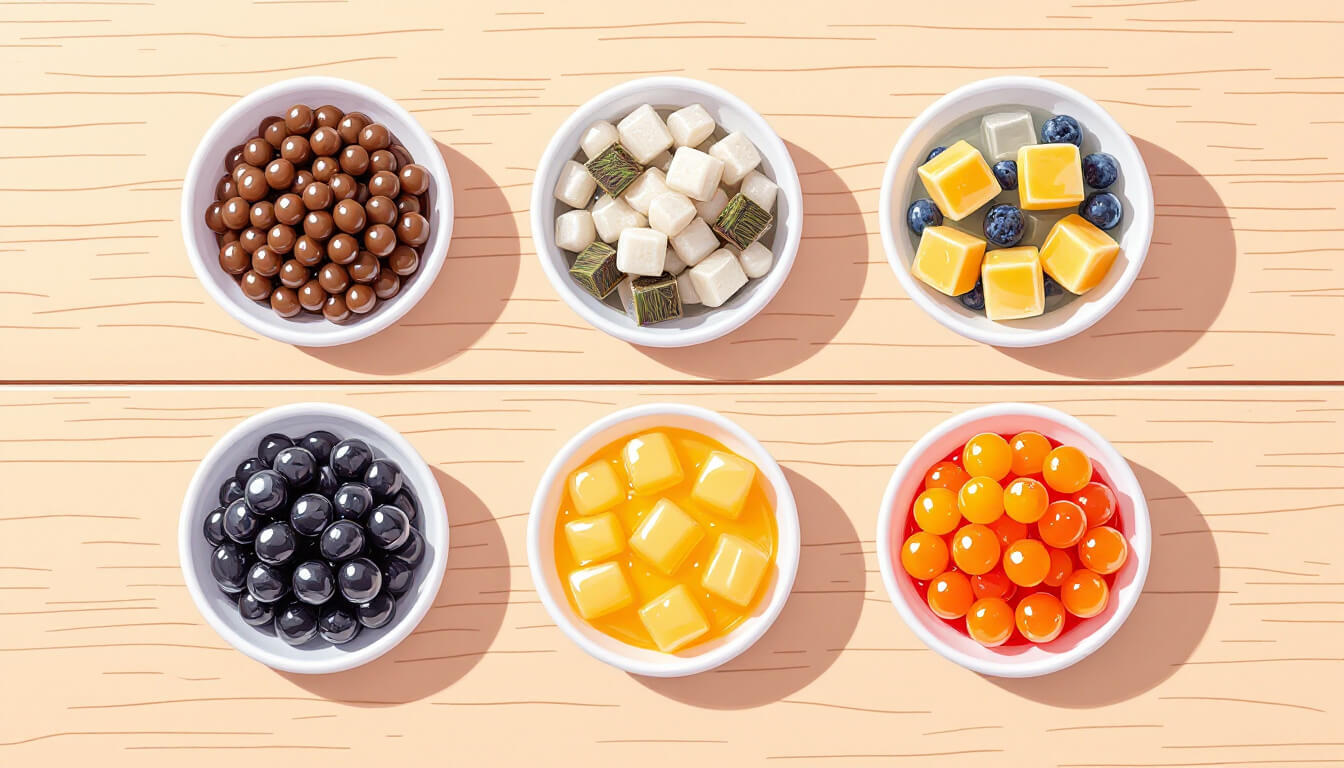
Once you know the boba meaning, the rest of the menu gets easier to read. Here are the words you’ll meet most often, in English and in Mandarin.
- Boba / 波霸: In the US, the drink or any tapioca pearl. In Taiwan, the large pearls.
- Pearls / 珍珠: Tapioca pearls. In Taiwan, often the smaller size when a shop sells both.
- 粉圓 (fěnyuán): The traditional term for tapioca balls, common in desserts and shaved ice.
- Bubble tea: The other English name for the drink. Originally the “bubbles” were foam from shaking.
- 珍奶 (zhēn nǎi): Casual Taiwanese shorthand for pearl milk tea.
- QQ: The springy, bouncy chew Taiwanese people want in pearls, noodles and fish balls. A great pearl is “very QQ.” If you want to make that texture yourself, start with how to make boba pearls the Taiwanese way.
- White pearls / 白玉珍珠: Tapioca pearls without the caramel color. They’re chewy and lighter in flavor.
- Crystal boba / 寒天晶球: Clear, jelly-like balls. Despite the “agar” name some brands use, the labels we’ve read list konjac and seaweed gums. Our crystal boba explainer quotes them.
- Popping boba / 爆爆珠: Thin-skinned spheres of juice that burst when you bite. They’re more common in fruit teas and slushies than in milk tea. See how to make popping boba.
- Brown sugar boba / 黑糖珍珠: Pearls simmered in dark brown sugar syrup, the base of the famous tiger-stripe drink. We cover it in our brown sugar milk tea guide.
- 仙草 (xiāncǎo): Grass jelly. Dark, herbal and slightly bitter.
- 布丁 (bùdīng): Egg pudding, a creamy topping that’s popular in milk tea.
- Boba tea: In the US, just a fuller way of saying boba. In Taiwan, you won’t see it on menus.

Team 珍珠 or Team 波霸?
Our Pearl Gang 珍珠幫 tee is for anyone who knows the pearls are the best part. It’s a cute, kawaii salute to Taiwan’s favorite drink, whatever you call it.
Boba Meaning FAQs
What is the boba meaning in Chinese?
Boba comes from 波霸 (bōbà), a Cantonese slang term roughly meaning “big-busted.” In Taiwan, 波霸 is used on drink menus for the larger tapioca pearls. The everyday Mandarin name for the drink is 珍珠奶茶, pearl milk tea.
Is boba a bad word?
Not really. The original Hong Kong slang is cheeky, like a tabloid nickname, but it isn’t a swear word. On a Taiwanese menu it simply means big pearls, and in English it just means the drink. Some older Hong Kong and Taiwanese speakers may still smile at it.
Who was boba named after?
Hong Kong actress Amy Yip (葉子楣), whose nickname in the late 1980s and early 1990s was 波霸. According to a Tainan local historian, a Hai’an Road tea vendor renamed his pearl milk tea 波霸奶茶 around 1990 or 1991, and the name spread from there.
What is the difference between boba and pearls?
In the US, nothing. Both words mean tapioca pearls. In Taiwan, at shops that sell both, 波霸 means the large pearls and 珍珠 means the smaller ones.
Is boba the same as bubble tea?
Yes, in everyday English. “Boba” is more common on the US West Coast, while “bubble tea” is more common in places like Canada, the UK and Australia. Both describe the same Taiwanese drink.
What is the plural of boba?
Merriam-Webster gives the plural as boba, with bobas as an accepted alternative. “I’ll have two boba” and “two bobas” are both fine.
How do you pronounce boba?
In English, “BOH-buh.” In Mandarin, 波霸 is bō-bà: a high, flat first syllable and a falling second one.
Does boba have caffeine?
The pearls don’t, but the tea usually does. Our guide to whether boba milk tea has caffeine explains how Taiwanese shops label it.
Final Thoughts: A Word That Traveled Further Than Its Joke
The boba meaning is a perfect little snapshot of Taiwan’s place in the world. A Hong Kong film star’s nickname became a Tainan vendor’s pun, the pun became a pearl size, and the pearl size became the English name for one of Taiwan’s most famous exports. Along the way, the joke mostly got lost, but the word stuck.
So next time you’re in Taiwan, try ordering a 珍珠奶茶 and watch which pearls show up. If you’re feeling bold, ask for 波霸. Now you know exactly what you’re saying, and why it’s a little bit funny.
A Postcard From Taiwan, Every Week
Word origins, drink-shop secrets and the stories behind Taiwan’s favorite foods, straight to your inbox. No spam, unsubscribe anytime.

Grab a Free Taiwan Sticker!
Drop your email and we’ll send you a limited-edition Taiwan sticker — plus insider access to new merch drops and island vibes.
No spam. Unsubscribe anytime.