Taiwan Black Bear: The Island’s Only Bear, the White V, and the Count That Just Tripled
The Taiwan black bear is the only bear that has ever lived wild on this island, the largest land animal in the country, and the single most recognisable animal motif in Taiwanese design. It is also, until very recently, one of the most badly counted large mammals in Asia. For a decade the accepted figure was somewhere between 200 and 600 animals — a number repeated in guidebooks, on museum placards and in almost every English-language article you can find. In March 2026 Taiwan’s Forestry and Nature Conservation Agency published a nationwide monitoring estimate that put the real figure at roughly 1,200.
That is not a small correction. It is a doubling-to-tripling of the entire known population of a species people had quietly filed under “probably doomed.” And it changes how you should read almost everything written about the Taiwan black bear before this year.
This guide goes deep on the animal itself — what makes it genetically its own thing, what that white chest marking actually is, where in the mountains it lives and why, the snare crisis that has cost more than half of studied bears a paw or toes, and the researcher who spent twenty years walking into the most remote valley in Taiwan to find all this out. If you want the two-minute version first, we covered the headline facts in our short piece on Taiwan’s only bear and its white V. This is the long version, with the numbers re-sourced and the contradictions resolved rather than repeated.
One thing worth saying up front: we sell a lot of bear designs, and we are not going to pretend otherwise. But the bear is on half the merchandise in Taiwan because of what it means, and what it means only makes sense once you know the actual story. So let’s do the story properly.
The Taiwan Black Bear Exists Nowhere Else on Earth
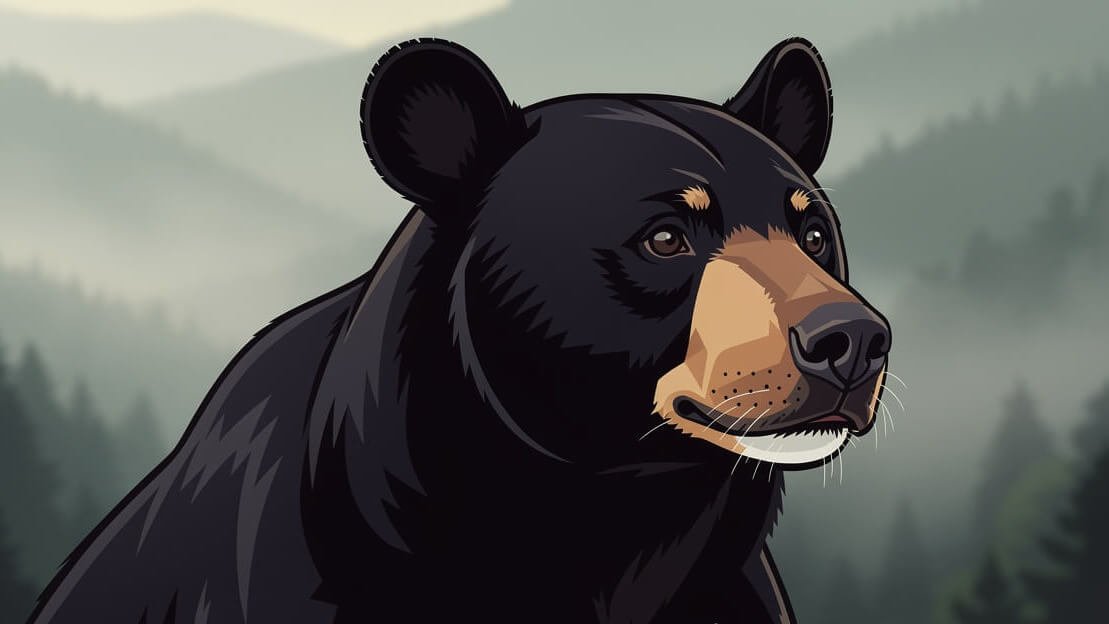
Formally, the Taiwan black bear is Ursus thibetanus formosanus — a subspecies of the Asiatic black bear, first described scientifically by the British naturalist and diplomat Robert Swinhoe in 1864. In Mandarin it is 臺灣黑熊, literally “Taiwan black bear,” and that name is used with a kind of proprietary affection that is hard to overstate.
“Subspecies” is doing real work in that sentence. Asiatic black bears range across an enormous arc of Asia, from Iran through the Himalaya to Japan and the Russian Far East. The Taiwanese population was cut off from the mainland when sea levels rose at the end of the last glacial period, and it has been evolving alone on a single island ever since. That isolation is the whole point: every Taiwan black bear alive today descends from a founding population that has had no genetic input from outside for thousands of years. Researchers sequenced the complete mitochondrial genome of the subspecies in 2009, confirming what the morphology already suggested — this is a distinct, island-endemic lineage, not a stray population of mainland bears.
Physically, the Taiwan black bear is compact and powerfully built, with a round head, a short thick neck, small eyes and a notably long snout. The head measures roughly 26–35 cm long, the ears 8–12 cm, and the tail is almost comically short — usually under 10 cm. Adults weigh anywhere from 50 to 200 kg. The coat is coarse, glossy and jet black, growing over 10 cm long around the neck into a kind of ruff.
That long snout has earned it a nickname: 狗熊, “dog bear.” Stand a Taiwan black bear next to a brown bear and the profile is unmistakably canine rather than bearish — which is part of why the animal reads as approachable in illustration, and part of why designers reach for it so readily. It is the same visual logic that makes the Formosan mountain dog so easy to stylise: a long muzzle and small round eyes are a gift to anyone drawing with a thick pen.
A few things about the Taiwan black bear are genuinely unusual among bears worldwide. It does not hibernate. Taiwan’s mountains are cold but not severe enough to require it, so instead of denning up for winter the bears simply move downhill to find food. It is a strong swimmer and an excellent climber, and it can run at 30–40 km/h — comfortably faster than any human who has ever laced a boot. And it builds temporary nests in trees, bending branches into a platform while feeding on nuts, a behaviour not documented in most other bear populations.
The Taiwan black bear is also the last of its kind in a very literal sense. Taiwan once had two large predators: the black bear and the Formosan clouded leopard. The leopard is gone, declared extinct after decades of failed surveys. The bear is still here. When Taiwanese people talk about the bear as the “soul of the mountains,” that is not entirely sentimental — it is the last large carnivore the island has left.
The White “V”: What It Actually Is, and Why No Two Are the Same
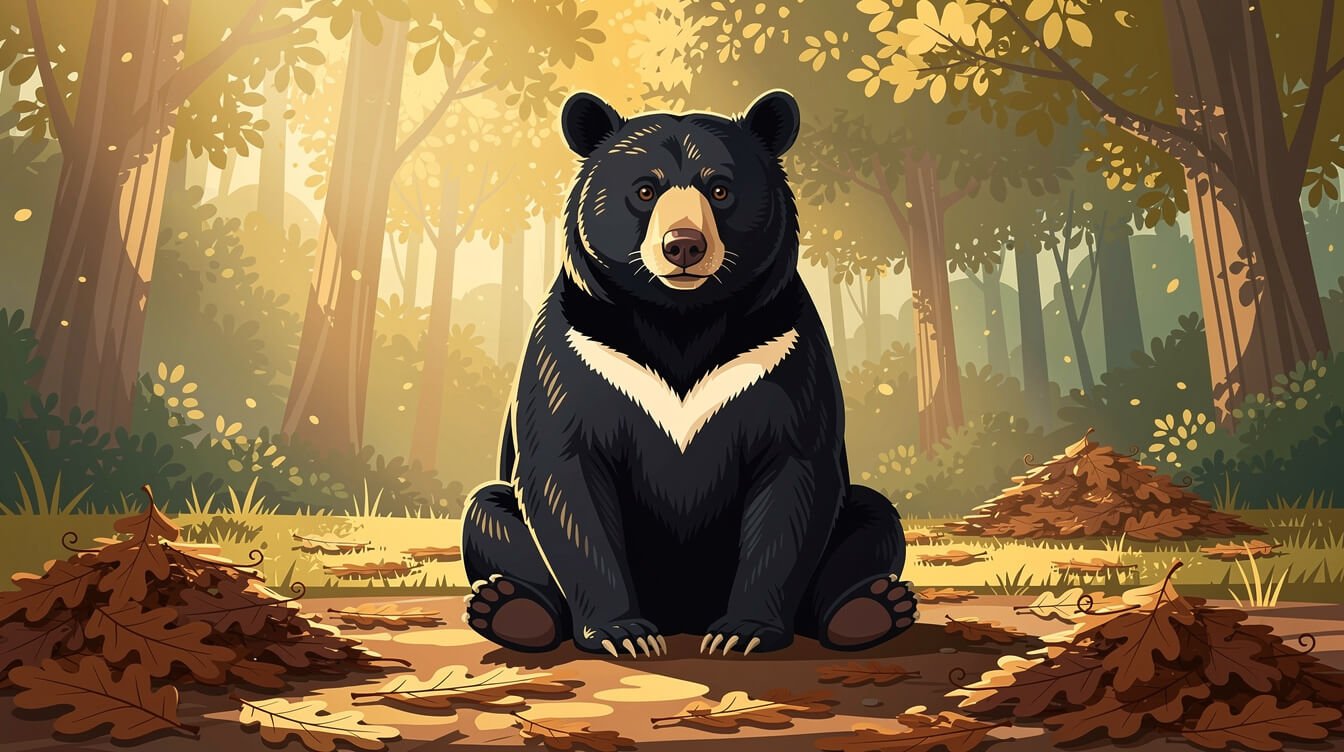
The white chest marking is the reason you can identify a Taiwan black bear from a silhouette, and it is the single design element that carried the animal from the forest onto flags, mascots, beer labels and t-shirts.
Biologically, the Taiwan black bear’s chest marking is a patch of pale fur — usually creamy white, sometimes closer to yellow — sitting across the upper chest of an otherwise uniformly black animal. Across the wider Asiatic black bear species, this marking is generally crescent-shaped, which is why the species as a whole is known internationally as the moon bear or lunar bear. In Taiwan the marking tends to sit as a sharper, more angular V, and that is the form that entered the national imagination. There is usually a second, much smaller white patch at the tip of the chin, which almost nobody draws.
Here is the part that gets lost in the merchandising: the marking is individual. The exact width of the arms, the angle they open at, whether they meet cleanly or trail off, whether the whole thing sits high on the sternum or low — all of that varies bear to bear. Field researchers use chest-marking photographs the way other biologists use tiger stripes or whale flukes, as a natural identity card. Camera-trap surveys across Taiwan depend on it: when the Forestry and Nature Conservation Agency produced its 2026 population estimate, the core methodological step was going through nationwide monitoring images and removing repeat sightings of the same individual — which is only possible because each bear’s V is its own.
So the stylised V you see on a keyring is a real thing rendered as a symbol. The actual animal wears something closer to a fingerprint.
Why does it exist at all? The honest answer is that nobody is certain. The leading hypothesis is threat display: a black bear that rears onto its hind legs presents the pale marking at chest height to whatever is in front of it, making the animal look larger and more frontal than it is. Other researchers point to species recognition — a way for bears, who are solitary and generally avoid one another, to identify their own kind at distance in low forest light. Both explanations are plausible, neither is settled, and anyone telling you definitively which one is right is going beyond the evidence.
What is not in doubt is the cultural afterlife. The V is legible at any size, works in one colour, reads instantly on a dark background, and carries an unambiguous national association. That is a designer’s dream, and it is why the marking has spread far past wildlife contexts into sports branding, tourism campaigns and street art.
How Many Taiwan Black Bears Are Left? The Number Just Tripled
This is the section where most articles about the Taiwan black bear go quietly wrong, and it is worth walking through slowly, because the disagreement between sources is not sloppiness — it is a genuine methodological problem that took thirty years to solve.
Counting Taiwan black bears is brutally hard. They are solitary, they actively avoid humans, they live at elevations most people never reach, and they range across terrain where a single animal might use anywhere from 30 to 100 square kilometres — with some individuals ranging over 200 km², roughly a fifth of the entire area of Yushan National Park. You cannot count them by walking around looking.
So the historical figures were extrapolations, and they varied wildly depending on who was extrapolating. Here is the honest timeline:
- Around 2010 — island-wide estimates from early survey work put the total at roughly 300–800 animals, based on habitat modelling and sign surveys in forests without established trails.
- Through the 2010s — the widely cited figure hardened into 200–600, the number that still appears on Wikipedia, in most guidebooks, and in essentially all English-language coverage written before this year.
- March 2026 — the Forestry and Nature Conservation Agency (FANCA) released an estimate drawn from nationwide camera-trap monitoring, with duplicate images of the same individual removed, putting the population at roughly 1,200.
Two independent pieces of evidence support the idea that this reflects a real increase and not just better arithmetic. Between 2011 and 2017, bears were recorded in 17 townships across 11 cities and counties. Between 2018 and 2025, that rose to 27 townships. And reported human–bear encounters went from an average of just over two per year between 2014 and 2022, to more than eleven per year from 2023 to 2025, with five recorded in the first four months of 2026 alone.
Bears turning up in more places, more often, is exactly what a recovering population looks like. It is also exactly what a displaced population looks like, which is why the conservation community is not uniformly celebrating.
The practical rule: if a source about the Taiwan black bear says “fewer than 600,” check its date. That figure was the best available estimate for roughly a decade, and it is now superseded.
What has not changed is the legal status. The Taiwan black bear has been listed as an endangered species under Taiwan’s Wildlife Conservation Act (野生動物保育法) since 1989, and is additionally protected under the Cultural Heritage Preservation Act. Internationally, the entire Asiatic black bear species sits on CITES Appendix I, which bans all commercial international trade in the animal or its parts. Note one nuance that trips people up constantly: the IUCN Red List assesses Ursus thibetanus at species level as Vulnerable. The Taiwanese subspecies is not separately assessed, so “IUCN Vulnerable” and “endangered in Taiwan” are both correct statements about different things.
Where Taiwan Black Bears Actually Live: The Elevation Band That Shapes Everything
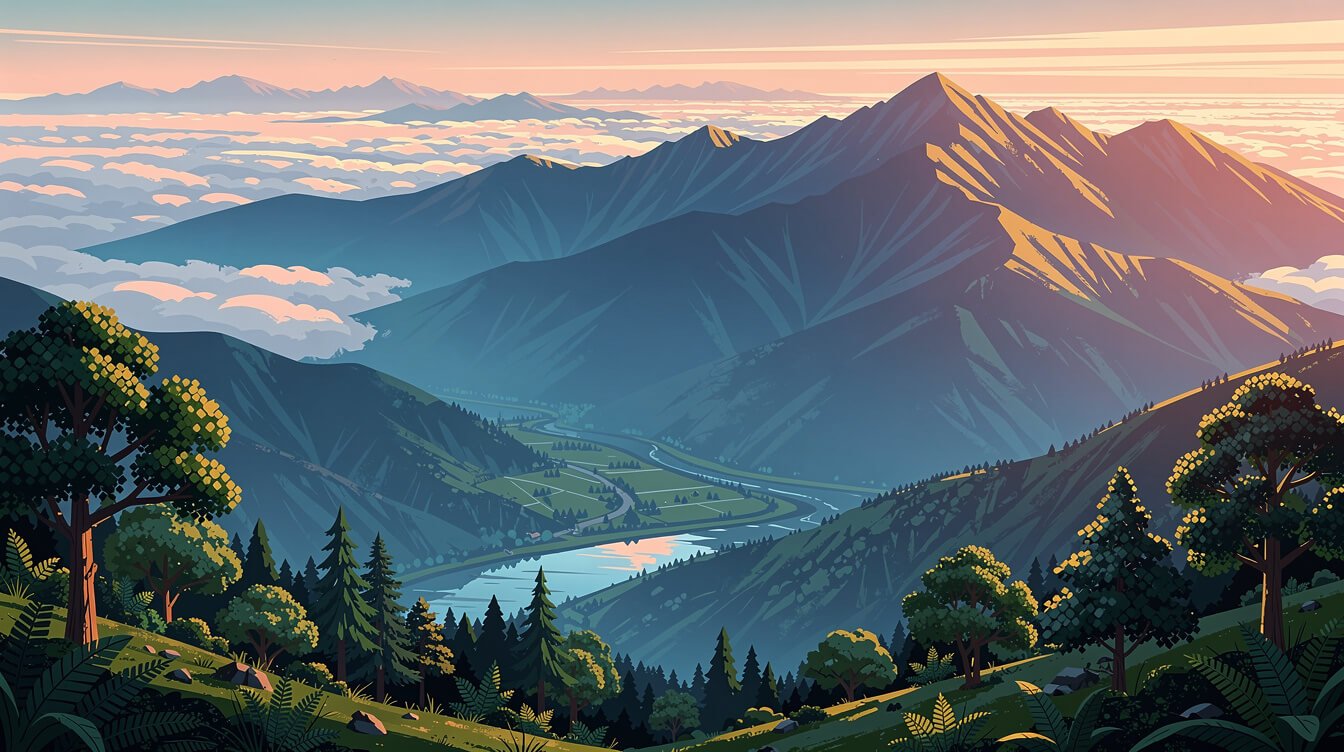
Taiwan black bears are mountain animals, but not in the vague way that phrase usually gets used. They occupy a specific elevation band, and understanding that band explains their diet, their seasonal movement, and the entire current conflict with people.
Broadly, the subspecies is restricted to rugged, remote terrain across the eastern two-thirds of the island, generally between 1,000 and 3,000 metres, with some sources extending the upper bound to 3,500 m. But radio-tracking data from the Yushan population narrowed it considerably: the majority of actual bear activity happens between 1,000 and 2,500 metres. That is the mid-elevation broadleaf forest zone — the misty, oak-dominated belt that sits above the subtropical lowlands and below the high conifer and alpine country.
The known strongholds run along the spine of the island: the Central Mountain Range and the Snow Mountain Range, with notable populations around Lala Mountain in the Chatienshan Reserve, the Snow Mountain area in Shei-Pa National Park, Taroko National Park, and southward through Yushan National Park to the Tawushan Reserve. If you have hiked any of Taiwan’s high routes, you have walked through Taiwan black bear country, almost certainly without knowing it. (Yushan itself, incidentally, is taller than Mount Fuji, which is the fact most visitors find hardest to believe.)
The animal that governs the Taiwan black bear’s whole system is not the bear. It is the oak.
Taiwan black bears are omnivores with a heavy seasonal dependence on acorns, particularly those of the Japanese blue oak (青剛櫟). In autumn and early winter, when the Fagaceae mast, bears converge on productive oak stands and gorge. Their activity pattern flips to match: they are active for 54–57% of the day year-round, mostly diurnal in spring and summer, but shifting increasingly nocturnal in autumn and winter when the acorns are on the trees. They are busiest in summer and autumn (around 60% of the day active) and least busy in spring (47%).
Long-term surveys found a direct correlation between acorn abundance and bear activity in a given year. In heavy mast years the bears stay put, concentrated in the oak groves. In poor mast years they wander — often right out of the protected area. This is the mechanism that connects a tree’s reproductive cycle to a chicken coop raid forty kilometres away.
And that band is shifting. FANCA sighting data from 2018 to 2025 shows increased records both above and below 1,200 metres, which points to dispersal rather than pure food shortage: as the mountain population grows, young bears push outward looking for unoccupied range. Conservationist Chiang Po-jen, who founded the Formosan Wild Sound Conservation Science Center, notes that mountain habitat is not yet saturated — there is not too little food for too many bears — and that bears are extremely mobile, capable of covering more than 10 kilometres in a single day. Once a young bear starts moving, a work shed or an apiary is not far away. And bears, as Chiang puts it, have very strong memories: a food source found once is a food source revisited.
One professor at Tunghai University has warned that within five years bears could be routinely moving below 1,000 metres, into farms and livestock operations. That is the planning horizon Taiwan is working against.
The Snare Problem: Why More Than Half of Tagged Bears Were Missing Toes
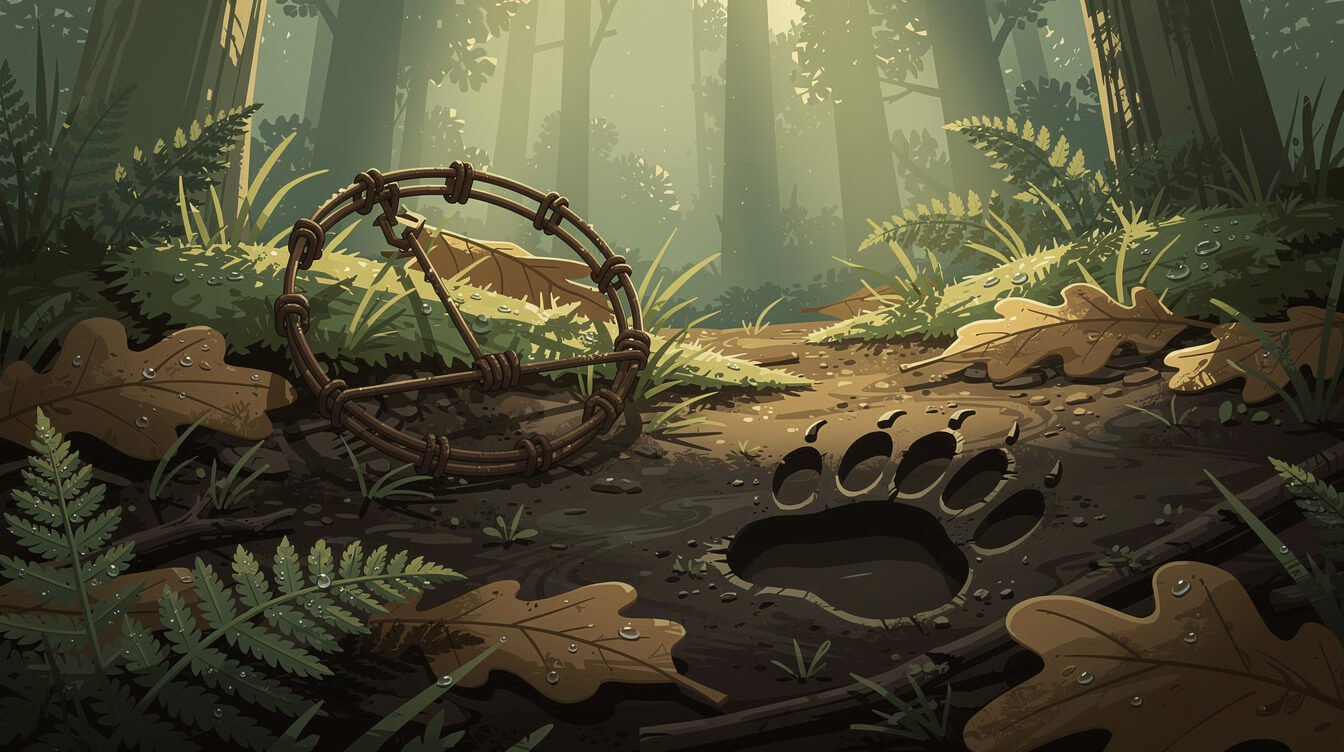
Between 1998 and 2000, a research team working in the Dafen area of Yushan National Park captured and radio-collared 15 Taiwan black bears. It remains one of the most important datasets ever gathered on the subspecies, and it produced one finding that reframed the entire conservation conversation.
Of those 15 bears, two had lost an entire paw and six others were missing toes. That is eight of fifteen animals — an injury rate of 53%.
Sit with that number for a second. These were not bears from a degraded lowland fragment. This was inside a national park, in one of the most remote and least accessible valleys in Taiwan, a three-day walk from the nearest trailhead. More than half of the bears in the best-protected habitat the country has were carrying permanent injuries from human traps.
For the Taiwan black bear, the critical detail is what kind of traps.
These are overwhelmingly steel wire snares — cheap, anonymous, set on the ground and left. And crucially, they are mostly not set for bears at all. They are set for wild boar, muntjac and other game, and a bear simply walks into one. The snare tightens on a paw, the bear is far too powerful to be held by it, and it tears free — leaving toes, or the whole paw, behind. The trapper often never knows. The bear survives, three-legged or short a few digits, and carries on.
This is why the researcher who led that work has consistently argued that illegal hunting causes more damage to the Taiwan black bear than habitat loss does — and why a purely punitive approach was always going to fail. If the traps are not aimed at bears, prosecuting the trapper after the fact does not prevent the next injury. You have to change the traps.
There is also a cultural dimension here that deserves care rather than caricature. Indigenous hunting traditions in Taiwan are not the villain of this story. Research from the Institute of Wildlife Conservation has actually suggested the opposite — that traditional taboos among some Indigenous peoples around killing bears may be part of why the bear survived on this island while the clouded leopard did not. Bunun hunters were the people who told researchers where the bears congregated in the first place, and Bunun guides made the original Dafen fieldwork physically possible. One Bunun hunter’s line about the bears is quoted often enough in Taiwan to have become proverbial: if there were no bears in the mountains, the forest would look empty, and he would feel lonely.
Since 2022, FANCA has run the Taiwan Black Bear Ecosystem Service Payment Pilot Program, which takes the practical route rather than the punitive one. It pays an “ecological salary” to communities for conservation outcomes: financial incentives for reporting accidental captures and bear intrusions, for clearing unidentified traps from the landscape, for removing food-waste attractants, for monitoring, and for switching to improved trapping devices that release non-target animals. Critically, people who accidentally trap a bear and report it are no longer prosecuted — which removes the single biggest incentive to quietly walk away from a snared bear. Some 50 community bear-patrol teams have been established across Taiwan under the program.
It is a genuinely smart piece of policy design, and it came directly out of understanding why the injuries were happening.
Black Bear Mama: The Researcher Who Walked 40 Kilometres to Count Them
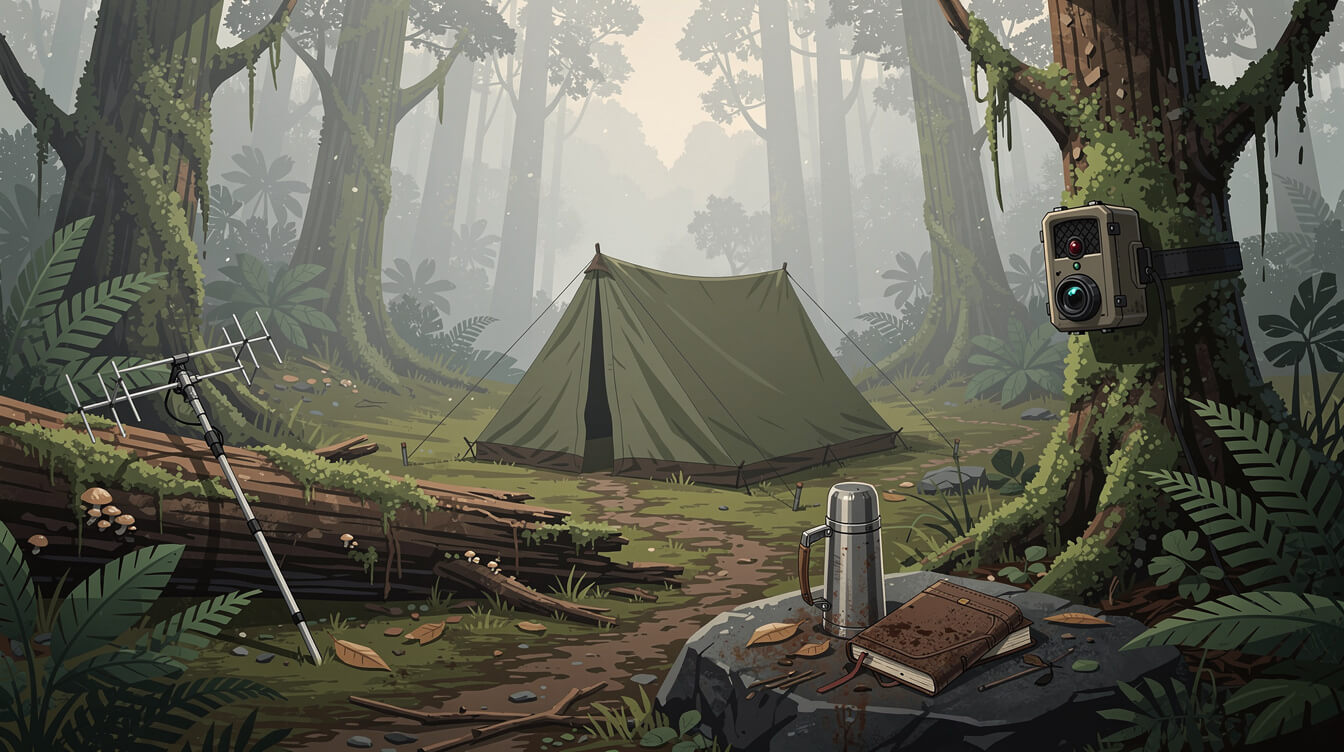
Almost everything reliable we know about wild Taiwan black bear behaviour traces back to one person: Hwang Mei-hsiu (黃美秀), of the Institute of Wildlife Conservation at National Pingtung University of Science and Technology — known across Taiwan as 黑熊媽媽, “Black Bear Mama.”
Hwang went to the United States in 1996 intending to continue work on the crab-eating mongoose. She switched to bears after encountering the work of the ursologist David Garshelis, completed her PhD at the University of Minnesota in 2003, and came back to Taiwan to do the thing nobody had managed: study the Taiwan black bear in the wild rather than in a zoo.
Her first attempts failed. She baited more than 60 locations across Mount Lala, Mount Chuyun and Yushan National Park, in areas where bears were known to occur, and caught essentially nothing. It was Bunun hunters who gave her the answer, and they all gave the same one: if you want to find bears, go to Dafen.
Dafen (大分) sits in the eastern part of Yushan National Park, in the middle reaches of the Lakulaku River, at the junction of the northern and southern sections of the Central Mountain Range. The only access is the eastern section of the Japanese-era Batongguan Trail — 40 kilometres from the trailhead, roughly three days’ walk each way, through terrain where “trail” is doing generous work. There is a cabin on the third of nine natural terraces, on the site of a Japanese-era police station; above it are the flagstone ruins of Bunun houses, below it a Japanese-era school and clinic. It is one of the emptiest places in Taiwan, and the hunters were right: every winter the bears gather there for the Japanese blue oak acorns. Hwang found scat, claw marks, footprints and feeding sign immediately.
Over more than two years of doctoral fieldwork, working with Bunun collaborators and park ranger Lin Yuan-yuan, the team trapped 15 bears — far more than anyone expected. Then came the harder part: tracking them. Radio telemetry in that terrain requires two teams working from two separate positions with receivers, triangulating a signal that speeds up when the animal moves and slows when it settles, across ridgelines that block everything. Years of that produced the activity budgets, the elevation data, the home-range figures and the injury statistics that every subsequent paper cites.
The work did not stop with the collars. Since 2006, when Yushan National Park formally commissioned a black bear research program, Hwang’s students and volunteers have made the Dafen journey repeatedly, counting acorns in seed-trap transects strung between trees every 50 metres, collecting hair from scent-baited hair traps, mapping claw marks, running camera traps, and analysing DNA from faeces to identify individuals. It is the long, unglamorous, funding-starved kind of science that produces the baselines everything else depends on.
And funding-starved is not a figure of speech. Hwang has described government research grants capped at around NT$1 million over a single year with a limit of one research assistant — for work that requires a full team, seven days of travel per round trip, and students willing to add a year or two to their degree. She has spoken openly about the burden of sending students into terrain where a typhoon can strand them, and about being nearly killed herself by a falling rock loosened above a cliff traverse.
Her most quoted line explains why she kept doing it anyway: “We do not wish to lose this soul of Taiwan’s mountains. We do not wish our offspring to see them only in the zoo or in history books.”
The 2026 population revision is, in a real sense, the harvest of that groundwork. You cannot deduplicate a national camera-trap dataset by chest marking unless someone first proved chest markings identify individuals, in the field, in the rain, forty kilometres from a road.
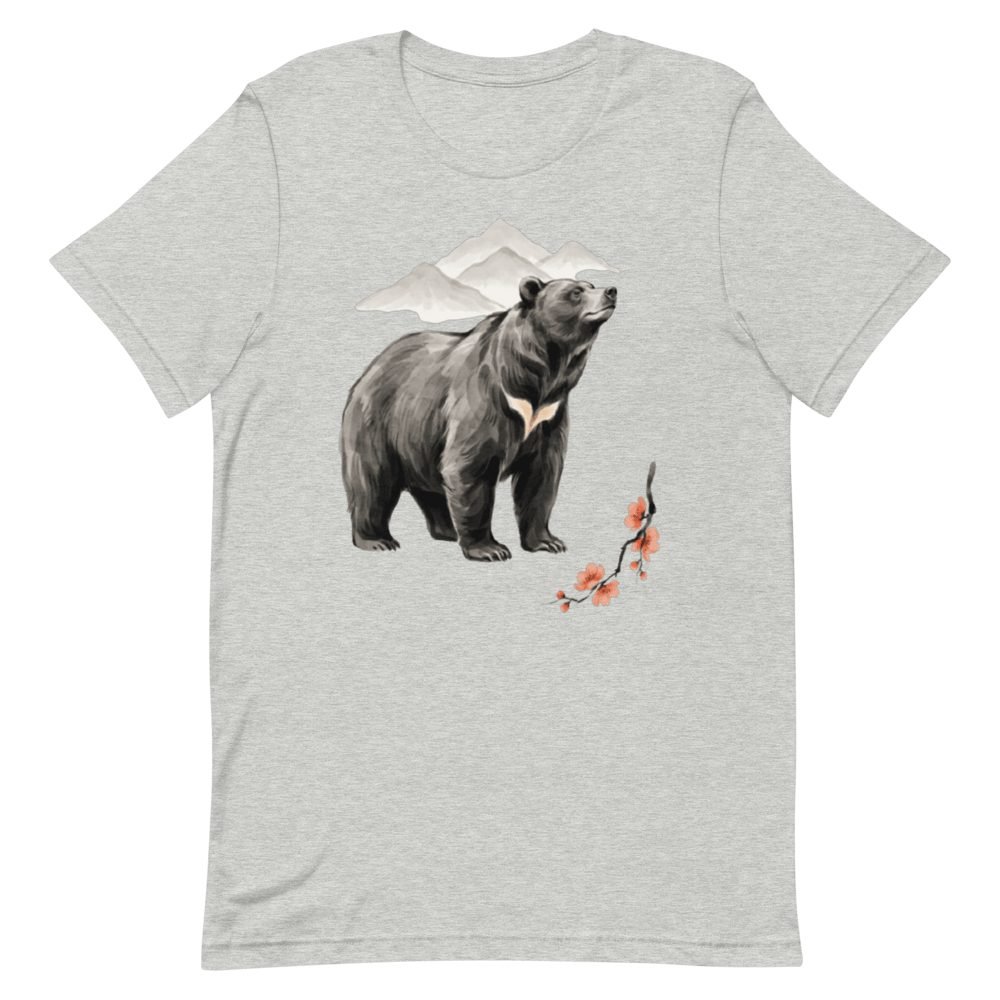
Wear the Bear That Only Exists Here
Our Formosa Black Bear tee puts the white V and a clean mountain silhouette on soft everyday cotton — one bear, one island, no explanation needed.
From Forest to Logo: How the Bear Became Taiwan’s Most-Merchandised Animal
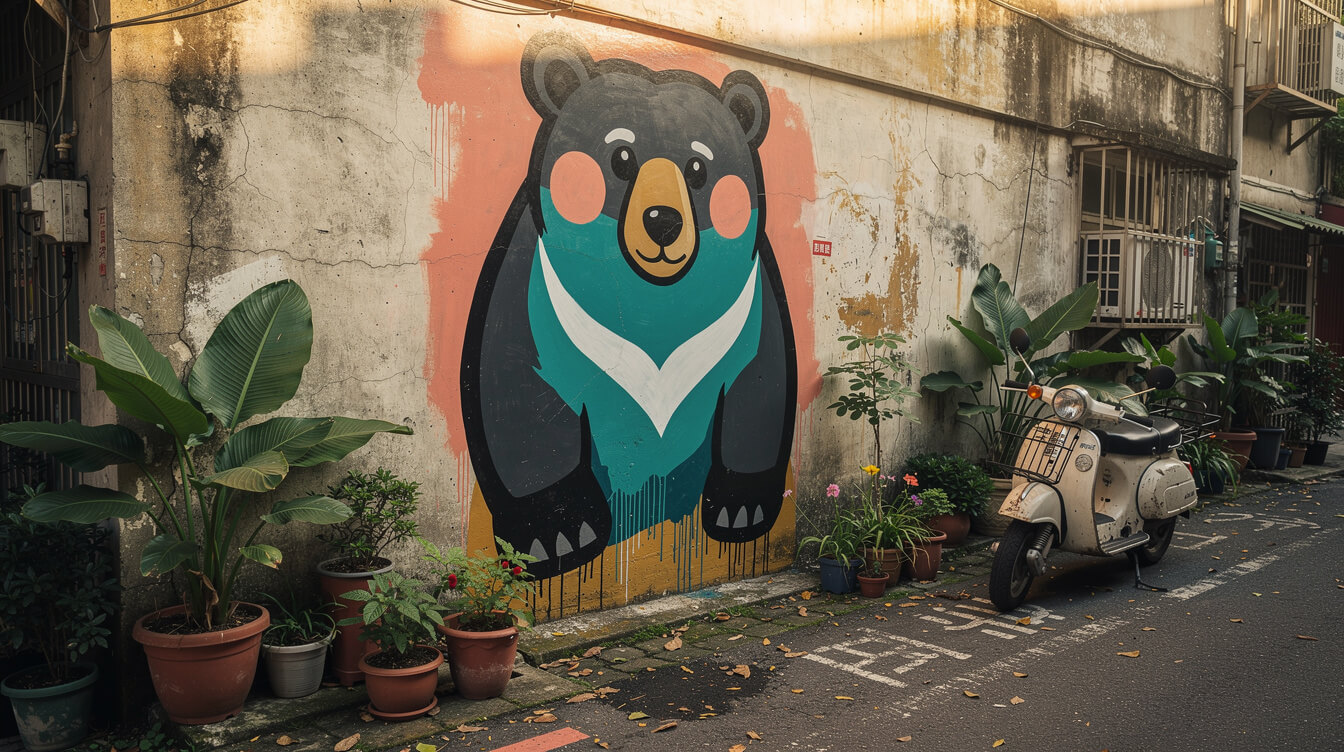
There is a strange inversion at the heart of this story. The Taiwan black bear is one of the least-seen large mammals in Asia — encounters ran at about two per year nationwide for most of the 2010s — and simultaneously one of the most-seen images in Taiwan. You are vastly more likely to meet the bear on a tote bag than on a trail.
Two Taiwan black bear mascots did most of the heavy lifting. OhBear (喔熊組長), introduced by Taiwan’s tourism authority in 2014, is a Formosan black bear with an exaggerated white chest V who has fronted national tourism campaigns ever since. Bravo (熊讚), created for the 2017 Taipei Summer Universiade, is another black bear and went on to become a semi-permanent Taipei City mascot. Between them they normalised the bear as a friendly, rounded, sticker-ready character rather than a 200-kilogram carnivore — and once that visual language existed, everything else followed: convenience-store tie-ins, sports kit, airline livery art, craft beer labels, LINE sticker packs, murals on the sides of buildings in Taipei back alleys.
Why the Taiwan black bear and not another animal? Partly the design logic already mentioned: black silhouette, one high-contrast marking, legible at thumbnail size. Partly the “dog bear” snout, which makes it read as gentle. But mostly it is the endemism. A Taiwan black bear cannot be anything other than Taiwanese. The Formosan rock macaque and the island’s butterflies carry some of the same charge, but neither has the bear’s scale or its silhouette. When you need one image that says “this island, specifically,” the bear does the job without a single word of text — which is exactly why it dominates the shelves in any souvenir shop in Taiwan.
That ubiquity is not uncomplicated. A cartoon bear with rosy cheeks is a long way from an animal with three functioning paws, and there is a real risk that the mascot version quietly replaces the wild one in public imagination — the cuddly icon as a substitute for the thing it depicts rather than an advertisement for it. The 2018 story of “Mei-zai,” a cub that appeared on the Nanan Waterfall Trail in Zhuoxi Township, Hualien, and set off a nationwide wave of conservation enthusiasm, shows the upside of that emotional connection. The 2025 killing of a bear designated BB02 in the same township, after it took chickens and dogs and appeared to threaten people, shows how fast public affection can turn when a real bear behaves like a real bear. Another bear, Alyman Siken, raided chicken coops repeatedly, was released twice, and was finally taken into permanent care at Taipei Zoo in January 2026.
Our own take is that the icon earns its keep when it points back at the animal. If you want the smallest possible version of that, the Formosa Black Bear Taiwan Flag Sticker is the one that ends up on laptops and water bottles — and it is a reliable conversation-starter with anyone who has hiked here.
Taiwan Black Bear: Frequently Asked Questions
How many Taiwan black bears are there?
Roughly 1,200, according to the Forestry and Nature Conservation Agency’s March 2026 estimate based on nationwide camera-trap monitoring with duplicate individuals removed. Older sources commonly say 200–600; that figure was the accepted estimate for about a decade and is now superseded. Earlier survey work around 2010 suggested 300–800.
Is the Taiwan black bear endangered?
Yes, within Taiwan. It has been listed as an endangered species under Taiwan’s Wildlife Conservation Act since 1989 and is also protected under the Cultural Heritage Preservation Act. At species level, the IUCN Red List assesses the Asiatic black bear as Vulnerable; the Taiwanese subspecies is not separately assessed.
What is the white V on a Taiwan black bear’s chest?
A patch of pale cream or yellowish fur on the upper chest. Across the broader Asiatic black bear species it is usually crescent-shaped, which is why the animal is known internationally as the moon bear. In Taiwan it typically forms a sharper V. The shape is individually variable and is used by researchers to identify specific bears in photographs.
Are Taiwan black bears dangerous to hikers?
Very rarely. Bears almost always retreat from people, and Taiwan has nothing resembling Japan’s situation, where 13 people died and 225 were injured in bear attacks in 2025. Encounters in Taiwan averaged just over two a year from 2014 to 2022, rising to more than eleven a year from 2023 to 2025. Attacks essentially only occur when a bear is cornered, injured or defending cubs.
Where can I see a Taiwan black bear?
Realistically, at Taipei Zoo. Wild Taiwan black bear sightings are a matter of luck across the mid-elevation forests of Yushan, Shei-Pa and Taroko national parks, and seeking bears out is not an appropriate goal for a hike. Lowland parks such as Kenting are outside the bear’s range entirely.
Why do Taiwan black bears have missing toes?
Steel wire snares. In the Yushan radio-collaring study of 15 bears, two had lost a paw and six were missing toes — a 53% injury rate. The snares are generally set for boar and other game rather than for bears, and the bear tears free, leaving toes behind. Reducing these injuries is the main goal of Taiwan’s community trap-clearing and reporting incentive programs.
Do Taiwan black bears hibernate?
No. Taiwan’s winters are not severe enough to require it. Instead the bears move to lower elevations in winter to find food, which is one reason their range overlaps with human activity in the colder months.
What do Taiwan black bears eat?
They are omnivores, but acorns — especially from the Japanese blue oak — drive the annual cycle. Bear activity correlates directly with acorn abundance: in heavy mast years bears concentrate in productive oak stands, and in poor years they range much further, including outside protected areas.
Final Thoughts
For most of the last thirty years, the story of the Taiwan black bear was a countdown. A few hundred animals, an injury rate above 50% inside a national park, one researcher and a handful of underfunded students walking three days each way to gather the data, and the constant background awareness that the clouded leopard had already gone.
The 2026 number does not end that story, but it changes its shape. Roughly 1,200 bears, in 27 townships instead of 17, is a population doing something other than disappearing. The new problem — bears in chicken coops, bears below 1,200 metres, bears that have to be captured or shot — is a problem of recovery, and it is a much better problem to have than the last one. It is also harder, because it requires people to live alongside an animal they have spent a generation loving mostly in cartoon form.
That is the thing worth carrying away from all of this. The white V on your sticker is the same marking a field researcher photographs to tell one bear from another, forty kilometres from the nearest road, in the rain. The icon and the animal are the same animal. Keep the second one in mind when you see the first.
A Postcard From Taiwan, Every Week
Culture stories, food deep-dives, travel tips, and first looks at new designs — straight to your inbox. No spam, just Taiwan.

Grab a Free Taiwan Sticker!
Drop your email and we’ll send you a limited-edition Taiwan sticker — plus insider access to new merch drops and island vibes.
No spam. Unsubscribe anytime.