Wulai Day Trip from Taipei: Hot Springs, Atayal Food, the Trolley and the Falls (Winter 2026–27)
Forty minutes past the last stop on Taipei’s green MRT line, the city drops away and a turquoise river cuts through a deep green gorge. Steam drifts off the hotel balconies, a toy-sized train rattles along a cliff toward an 80-meter waterfall, and the smell of grilled boar sausage fills a short, busy old street. This is Wulai, the Atayal hot spring town that most Taipei visitors can reach on one bus.
This Wulai guide is built for a winter 2026–27 day trip, and it was checked against operator and government sources in the week it was written. You’ll get a status table for the trolley, cable car and museum with current hours and NT$ prices. You’ll also learn how to get there on bus 849, where you can actually soak now (the free riverside pools are gone), what to eat on Wulai Old Street, the Atayal culture behind the town’s name, and how a Wulai day compares with a Beitou hot spring trip.
Wulai at a Glance: What’s Open in Winter 2026–27
Wulai (烏來) is a mountain district in the far south of New Taipei City, home to the Atayal people and known for clear, odorless hot springs, a 1.5 km scenic trolley, the roughly 80-meter Wulai Falls and Taiwan’s first tourist cable car. It’s about an hour from central Taipei by bus.
Most English guides to Wulai were written before 2026, and several of their prices and hours are out of date. Here’s what we confirmed with the operators themselves (checked November 20–21, 2026):
| Attraction | Status | Hours | Price (NT$) | Source |
|---|---|---|---|---|
| Wulai Scenic Trolley (烏來台車) | Running normally | 09:00–17:00 (09:00–18:00 in July and August) | 50 one way (ages 13–64); 30 for ages 7–12 and 65+; free under 7 | Forestry and Nature Conservation Agency, Hsinchu Branch |
| Yun Hsien Resort + cable car (雲仙樂園) | Open | Cable car 09:00–17:00 weekdays, to 17:30 on holidays | 250 weekdays, 300 weekends and holidays (includes round-trip cable car) | Yun Hsien price table, updated July 1, 2026 |
| Wulai Atayal Museum (烏來泰雅民族博物館) | Open | 09:30–17:00 weekdays, 09:30–18:00 weekends | Free | New Taipei City museum site |
| Neidong Forest Recreation Area (內洞) | Reopened after the late-October typhoon closure | Check before you go | Check before you go | Forestry and Nature Conservation Agency |
| Fuba and Hapen trails (福巴 / 哈盆) | Closed (typhoon damage) | Closed until the end of 2027 | — | Forestry and Nature Conservation Agency |
Three dates and rules worth knowing:
- The trolley stops once a month for maintenance, usually the first Tuesday of the month (pushed back a day after a public holiday). The next published stop is Tuesday, December 1, 2026. Don’t plan a trolley day on those dates.
- The museum closes on the first Monday of every month, plus Lunar New Year’s Eve and the first day of Lunar New Year, election days and government-declared typhoon days.
- Typhoons close things fast. When Typhoon 薔琵 approached on October 23, 2026, the trolley and Neidong were both suspended the same day. If a storm is forecast, check before you leave (our Taipei typhoon guide explains how the alerts work).
Got a winter weekend free? Wulai fits neatly into a December trip. Our Taiwan in December guide covers the weather and what else is happening that month.
How to Get to Wulai from Taipei

No train or MRT line goes to Wulai, but one city bus does the whole job. Bus 849 (run by Hsin Tien Bus, 新店客運) goes between Taipei Main Station (Qingdao Road side) and Wulai. It passes Guting, Gongguan, Jingmei and Dapinglin before stopping at MRT Xindian Station (Beixin Road) and climbing along the river through Bitan and Qucheng.
The easy way: MRT to Xindian, then bus 849
- Take the green Songshan–Xindian line to the end, Xindian Station.
- Exit toward Beixin Road and find the 849 stop for 捷運新店站(北新路), which is right by the station. On weekends you’ll usually just follow the queue.
- Ride to the last stop, 烏來 (Wulai). It’s roughly 30–40 minutes on a quiet weekday and longer on a busy weekend morning.
Fare: Bus 849 is a three-section route, and the section break sits just before Xindian Station. That means Xindian to Wulai should cost a single section, NT$15. Tap your EasyCard when you board and again when you get off, so the system can charge the right number of sections. If you ride all the way from Taipei Main Station you’ll pay more, and the journey through city traffic is much slower. The MRT-plus-bus route is quicker almost every time.
Frequency: Buses run about every 15–20 minutes, from early morning (the first departure is at 05:30) into the late evening, with the last departures between about 21:40 and 22:30 depending on direction. Check live arrival times on the 5284 site or a Taipei bus app before you head home, and expect a queue for the return bus on weekend afternoons.
Taxi, private car or tour
A taxi from Xindian Station takes about half an hour along Provincial Highway 9A and saves the queue, which helps if you’re carrying hot spring gear or traveling with grandparents. Some hot spring hotels also run their own shuttles from Xindian Station for guests, so ask when you book. Organized day tours from Taipei bundle Wulai with transport, but the bus is so simple that most independent travelers don’t need one.
Wulai Hot Springs: Where You Can Actually Soak in 2026
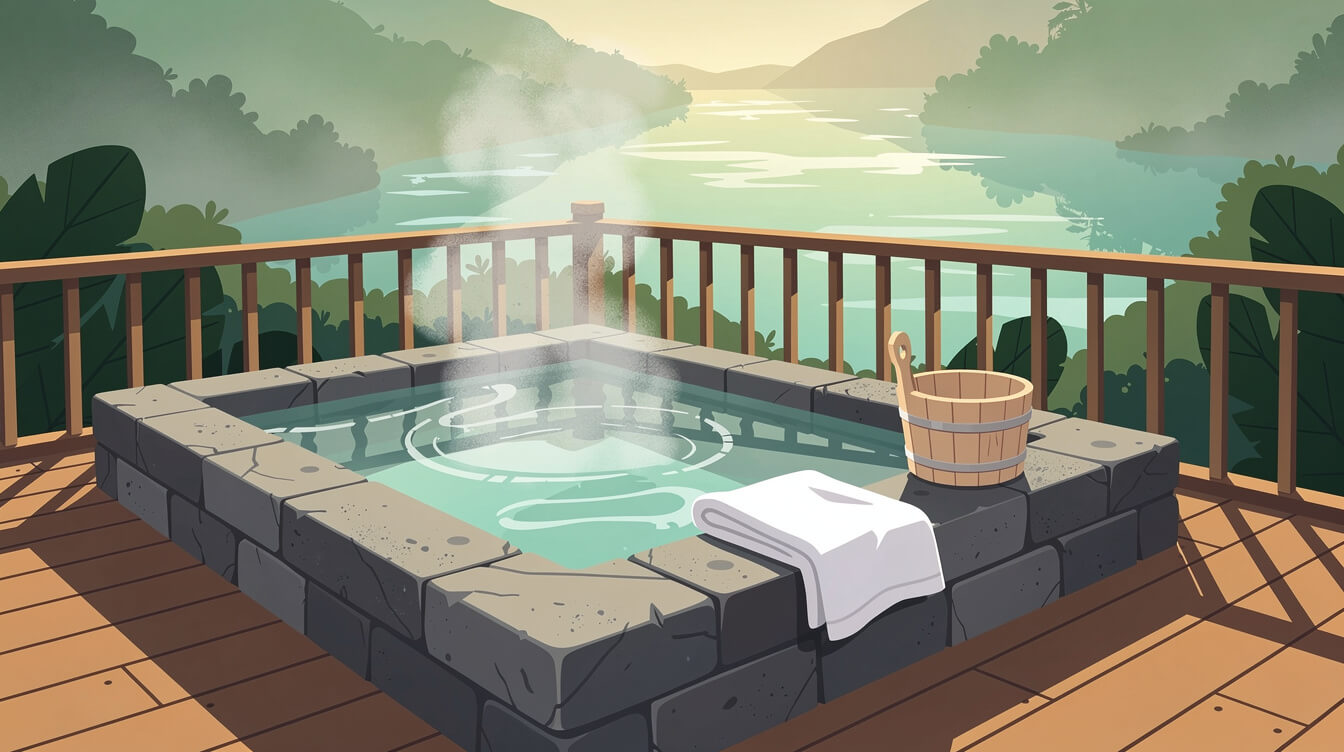
The town’s name tells you what it’s for. The Wulai District Office explains that Ulay means “hot spring” in the Atayal language. The story goes that hunters who found steam rising from the river shouted ulai kirofu, “a steaming hot spring!”
Wulai hot spring water is weakly alkaline sodium bicarbonate, according to Taiwan’s tourism agency. It’s clear, colorless and odorless, nothing like the sulfur steam of Beitou. Locals call it a 美人湯 (měirén tāng), or “beauty bath,” because it leaves your skin feeling smooth. If you’ve only soaked in sulfur springs, it’s a gentler, cleaner-feeling bath. Our guide to Taiwan’s hot springs explains the different spring types.
The free riverside pools are gone, and they’re not coming back
Older blogs and a few current ones still describe free, open-air pools on the riverbank below Old Street. They no longer exist. On May 18, 2017, New Taipei City demolished the riverside bathing area on the west bank of the Nanshi River. It had been built illegally inside a water-quality protection zone, which breaks Taiwan’s Water Act. By then the pools had already been battered by Typhoon Soudelor in August 2015. Local reports also counted at least two bather deaths there in 2015, which added to the case for removing them.
You may still see people dipping their feet along the river, but there’s no managed pool, no lifeguard and no shelter from the river when it rises after rain. Don’t plan your day around it. Every legal soak in Wulai today is paid, and there are three ways to do it.
Option 1: Public bath (大眾池), nude and gender-separated
Many Wulai hotels and bathhouses run Japanese-style public baths. Men and women bathe separately and without swimsuits. This is the classic Taiwanese hot spring experience, and also the one that worries first-timers most. One verified example: Volando Urai Spring Spa (馥蘭朵烏來) runs gender-separated nude baths and doesn’t admit children under 12. In peak season (October to March) a soak costs NT$850 on weekdays and NT$1,000 on weekends. Smaller bathhouses on and around Old Street charge less, but check each one’s prices directly, because they change by season.
Option 2: Private room (湯屋), swimsuit optional
The most popular choice for couples, families and anyone shy about public bathing. You rent a private room with its own tub, usually for 60–90 minutes, and fill it with spring water. What you wear is up to you. Prices depend on the view and the day of the week, and weekday afternoons are the best value. Book ahead for weekends between December and February.
Option 3: Resort pools, swimsuits required
Some resorts have mixed outdoor pools where everyone wears a swimsuit and often a swim cap. This is the easiest option for mixed groups and families with kids. You’ll usually pay more, and it feels more like a spa day than a traditional soak.
Wulai hot spring etiquette in 60 seconds
- Shower first, thoroughly, before you get into any shared pool.
- Nude means nude in a public bath. A swimsuit there is the faux pas, not the other way around.
- Keep your small towel out of the water. Fold it on your head or leave it on the edge.
- Tie up long hair and keep your phone in the locker.
- Soak in short rounds of 10–15 minutes and drink water between them. Skip it if you have heart problems or high blood pressure, or after drinking alcohol.
- Bring your own big towel. Many places charge for towels or hand out tiny ones. Our Taiwan 2000 NTD Banknote Beach Towel, with the Formosan salmon from the NT$2,000 note, is big enough to wrap up in between soaks, and it’s a conversation starter in the changing room.
Wulai Old Street: What to Eat

Wulai Old Street (烏來老街) is short enough to walk in minutes if you don’t stop, and stopping is the point. It runs from the bus terminus toward the bridge over the Nanshi River, and it’s packed with grills, snack stalls and souvenir shops. Come hungry and graze rather than sitting down for one big meal.
The essentials
- Mountain boar sausage (山豬肉香腸, shānzhū ròu xiāngcháng). The street’s signature. It’s chewier and gamier than a regular Taiwanese sausage, grilled over charcoal and eaten with a raw garlic clove. A stall called 雅各山豬肉香腸 is one of the queues that local media single out.
- Bamboo tube rice (竹筒飯, zhútǒng fàn). Sticky rice, sometimes with pork or mushrooms, steamed inside a length of bamboo. The vendor splits it open so you can eat straight from the tube. It’s the dish most associated with Indigenous mountain cooking in Taiwan.
- Grilled mochi (烤麻糬, kǎo máshǔ). Chewy rice cakes toasted on sticks and rolled in peanut powder or sesame. Great for walking.
- Millet wine (小米酒, xiǎomǐ jiǔ). Millet is central to Atayal farming and ritual, and the sweet, milky millet wine sold here is the town’s most popular take-home. Hold off until after your soak, since alcohol and hot water don’t mix.
- Maqaw (馬告, mǎgào). The Atayal mountain pepper, a lemony, gingery berry you’ll find in sausages, chicken soup and even ice cream. If you see a maqaw dish, try it, because you won’t find it in many places outside Taiwan’s mountains.
- Rice blood cake (米血糕, mǐ xiě gāo). Sticky rice set with pig’s blood, cut into squares and dipped in peanut powder. It’s a pan-Taiwanese snack rather than an Atayal one, but it’s another long line on this street.
Prices are night-market level, and most single snacks cost less than a bowl of noodles. Cash is easiest, since many stalls don’t take cards. For a sit-down lunch, several Old Street restaurants serve Atayal-style set menus with wild vegetables, maqaw chicken and stir-fried mountain greens, a good chance to try dishes you won’t find in Taipei.
The Wulai Trolley, Wulai Falls and the Cable Car

Cross the bridge at the end of Old Street, climb the steps, and you’ll reach the station of Wulai’s most photographed ride.
The Wulai Scenic Trolley (烏來台車)
The little carts began as a working logging railway, and the first carts were pushed by hand. Today the line is run by the Forestry and Nature Conservation Agency, which says it runs about 1.5 km from town to the waterfall. That’s a little shorter than the 1.6 km you’ll see in many guides. The ride takes only a few minutes along a ledge above the river, .
- Hours: 09:00–17:00 daily (09:00–18:00 in July and August). There’s no timetable, and trains leave whenever enough people are waiting.
- Fares (one way): NT$50 for ages 13–64; NT$30 for children aged 7–12 and seniors 65+ with ID. Free for children under 7 (up to two per paying adult), visitors with disabilities plus one companion, and Atayal residents registered in Wulai.
- Maintenance day: about once a month, usually the first Tuesday. Next: December 1, 2026.
On weekends the queue can take longer than the ride. A good plan is to ride one way and walk the other along the road. The walk takes 20 minutes or so and gives you better views of the gorge.
Wulai Falls (烏來瀑布)
According to the forestry agency, the falls are about 80 meters high and 10 meters wide, dropping off the cliff opposite the trolley terminus. You can see them for free from the viewing area across the gorge. After rain they’re a thundering white curtain, and in a dry spell they thin to silver threads. Either way, it’s one of the easiest big waterfalls to reach from Taipei. If you’re collecting waterfalls, Shifen Waterfall is the wide, Niagara-style contrast on the other side of the city.
The cable car and Yun Hsien Resort (雲仙樂園)
Above the falls, red gondolas cross the gorge to Yun Hsien Resort, a wooded hilltop park with walking paths, a small lake for boating and a hotel. The cable car began running in 1967 and was Taiwan’s first tourist cable car. The cabins you’ll ride today are its sixth generation, and the climb covers about 180 meters of elevation.
The cable car is the only way up, so you pay one ticket that covers both the ride and the park: NT$250 on weekdays and NT$300 on weekends and holidays. Students under 19 and children aged 3–11 pay NT$230, seniors 65+ and visitors with disabilities pay NT$150, and children 3 and under ride free. Older blogs quote NT$220 or NT$295, but the operator’s price table was last updated on July 1, 2026, so use these figures. Paid activities inside the park cost extra. Allow at least an hour up top.
Atayal Wulai: The Culture Behind the Town

Wulai isn’t just a hot spring resort that happens to sit in the mountains. It’s a homeland. The Atayal (泰雅族) are one of Taiwan’s largest Indigenous peoples, and their villages run along the rivers of the northern mountains. If you’re new to Taiwan’s Indigenous nations, our guide to Taiwan’s Indigenous peoples and our introduction to Taiwan Indigenous culture are good places to start.
The Wulai Atayal Museum
Give the free Wulai Atayal Museum an hour, ideally before you eat your way down Old Street, because it makes everything else make sense. It covers Atayal history, hunting, millet farming, weaving and the town’s own story. It’s open 09:30–17:00 on weekdays and until 18:00 on weekends, and closed on the first Monday of each month.
Facial tattoos (ptasan)
The most striking thing in the museum is the history of Atayal facial tattooing. According to elders interviewed by Taiwan’s Central News Agency, a man’s tattoo marked strength and maturity. A woman earned hers after her first period and once she had mastered farming and weaving. Traditionally, you couldn’t marry without one. Japanese colonial authorities began banning the practice from 1913 and later confiscated the tattooing tools. The last generation of tattooed elders has now almost entirely passed away, which is why the photographs and recorded voices in the museum matter so much.
Weaving and millet
Atayal women are famous weavers. Their red-dominant cloth, woven on backstrap looms with intricate diamond patterns, was once a measure of a woman’s skill and standing. We wrote about the craft in our piece on Indigenous Taiwanese textiles. Millet, meanwhile, structured the farming year and its rituals, which is why millet wine is on every second shop shelf.
Visiting respectfully
- Buy from Atayal makers where you can. Ask who made a piece of weaving or carving before you buy it.
- Ask before photographing people, especially elders and performers.
- Use the right names. Say “Atayal” or “Indigenous,” not “aborigine” or “mountain people,” which carry old colonial baggage.
- Remember people live here. Wulai is someone’s hometown first and a day trip second.

Hooked on Taiwan’s Gorges?
If Wulai’s river canyon got you, Taroko is the big one. Our vintage topo-map tee traces every switchback above the Liwu River, a souvenir for anyone who likes their trips with a little altitude.
A Winter Day in Wulai: Sample Itinerary (and When the Cherry Blossoms Come)

Winter is Wulai’s best season. Cool, damp days make the hot water feel earned, the summer crowds who come to splash in the river are gone, and the gorge often fills with low cloud. Here’s a relaxed day that works from December through February:
- 09:00 MRT to Xindian, then bus 849. Go early on weekends to beat the queue.
- 10:00 Wulai Atayal Museum (free). Get the context first.
- 11:00 Graze Old Street: boar sausage, bamboo tube rice, grilled mochi.
- 12:30 Cross the bridge and ride the trolley to Wulai Falls (NT$50).
- 13:00 Cable car up to Yun Hsien Resort (NT$250/300), with an hour on top.
- 14:30 Walk back along the road to town and pick up some millet wine to take home.
- 15:30 Soak: a public bath or a private room for an hour as the light fades.
- 17:30 Dinner on Old Street, then bus 849 back to Xindian.
On a wet day, swap the order: soak in the late morning while the rain falls, then do the museum and Old Street once it eases.
Wulai cherry blossom season
Wulai is one of the closest cherry blossom spots to Taipei. The Forestry and Nature Conservation Agency describes a cherry blossom season from January to March. Deep pink Taiwan mountain cherries open first, from late January, especially along the hill roads above town. Paler Yoshino cherries follow toward March. No 2027 festival dates had been announced when we wrote this, so follow local news from mid-January, and expect heavy weekend crowds and queues for bus 849 at peak bloom.
Wulai vs Beitou: Which Hot Spring Day Trip?
Taipei has two classic hot spring escapes, and they’re very different days out. Here’s the comparison nobody else seems to make:
| Wulai | Beitou | |
|---|---|---|
| Water | Clear, odorless sodium bicarbonate (“beauty bath”) | Sulfur springs, including green sulfur, with a strong eggy smell |
| Getting there | MRT + bus 849, about an hour from central Taipei | MRT straight to Xinbeitou, around 30–40 minutes |
| Setting | Mountain gorge, river, waterfall, forest | Urban valley with parks and hotels, inside the city |
| Culture | Atayal homeland, Indigenous food and museum | Japanese-era bathhouse history |
| Extras | Trolley, waterfall, cable car | Thermal Valley, foot baths |
| Winter 2026–27 caveats | Trolley maintenance days; two backcountry trails closed | Hot Spring Museum closed until about October 2027; the Millennium public bath still not reopened |
| Best for | A full nature day with a soak at the end | A half-day soak you can fit around city plans |
The short version: choose Beitou if you have half a day and want the full sulfur experience. Choose Wulai if you want to get out of the city, see a waterfall and eat boar sausage between baths. Our Beitou hot spring guide covers what’s open there right now, and Beitou beyond the hot springs fills out the rest of that day.
Wulai FAQ

How do I get from Taipei to Wulai?
Take the MRT green line to Xindian Station, then bus 849 to the last stop. The bus takes about 30–40 minutes and costs NT$15 by EasyCard from Xindian. Bus 849 also runs direct from Taipei Main Station, but it’s slower through city traffic.
How long does it take to get to Wulai from Taipei?
About an hour door to door from central Taipei by MRT and bus, and longer on weekend mornings. A taxi from Xindian takes about 30 minutes.
Is Wulai worth visiting?
Yes, especially in winter. In one easy day you get a hot spring soak, a waterfall, a cable car, Indigenous food and real mountain scenery. It’s busy on weekends, so go on a weekday if you can.
What is Wulai famous for?
Hot springs, Atayal culture, Wulai Falls, the scenic trolley and its cherry blossoms. The name itself comes from the Atayal word for hot spring.
Are there still free hot springs in Wulai?
No. The free open-air riverside pools were demolished by New Taipei City in May 2017. Every legal soak now is in a hotel, bathhouse or private room.
Do I need a swimsuit at a Wulai hot spring?
It depends where you soak. Gender-separated public baths are nude (no swimsuits). In a private room it’s up to you, and mixed resort pools require swimsuits.
Is the Wulai trolley running?
Yes, it was running normally as of November 21, 2026, from 09:00 to 17:00 for NT$50 one way. It stops about once a month for maintenance, with the next stop on December 1, 2026, and it can be suspended during typhoons.
Can I do Wulai in half a day?
You can see Old Street, the trolley and the falls in about four hours. Add a soak and the cable car and it becomes a full day, which is how most people end up doing it.
Final Thoughts: Go for the Soak, Stay for the Gorge
Wulai is the rare day trip that does almost everything well. In one afternoon you can soak in a clear, gentle hot spring, ride a tiny train to an 80-meter waterfall, float over the gorge in Taiwan’s first cable car and eat your way down an Atayal old street. Just do it with current information: the free river pools are history, the trolley has maintenance days, and the cable car now costs NT$250–300.
Go on a winter weekday, start at the museum, and save the soak for last as the mist settles into the valley. For more steam, read our quick guide to Taiwan’s 130-plus hot spring areas. And when you’re back in the city, you’ll understand why Taipei people speak of Wulai the way other cities speak of their favorite mountain weekend.
A Postcard From Taiwan, Every Week
Day trips, hot springs, street food and the little Taiwan details worth knowing, sent straight to your inbox. No spam, and you can unsubscribe anytime.

Grab a Free Taiwan Sticker!
Drop your email and we’ll send you a limited-edition Taiwan sticker — plus insider access to new merch drops and island vibes.
No spam. Unsubscribe anytime.