How to Make Boba Pearls: The Taiwanese Way (Q Texture, Pearl Sizes and the Shop Clock)
If you have ever tried to figure out how to make boba pearls at home, you probably know the feeling: they look right, they taste fine, and then something is off. Too soft. Too hard by the second sip. A strange chalky dot in the middle. Rock-solid by morning. The pearls in a Taiwanese drink shop are made from almost exactly the same three ingredients you have on the counter, so the difference isn’t the recipe. It’s a handful of habits Taiwanese shops treat as non-negotiable, and a texture standard most English recipes never name.
That standard is called Q, and once you know what it means, every other step makes sense. This guide walks you through the full method (dough, rolling, cooking, syrup), then the parts that decide whether your boba tastes like Taipei or like a science fair: the Q test, the shop clock, and why the fridge ruins everything.
We’ll keep the origin story short. If you want the full Chun Shui Tang vs. Hanlin rivalry, our complete guide to Taiwan boba tea covers it, along with how to order like a local.
What Boba Pearls Actually Are: 粉圓, 珍珠 and 波霸
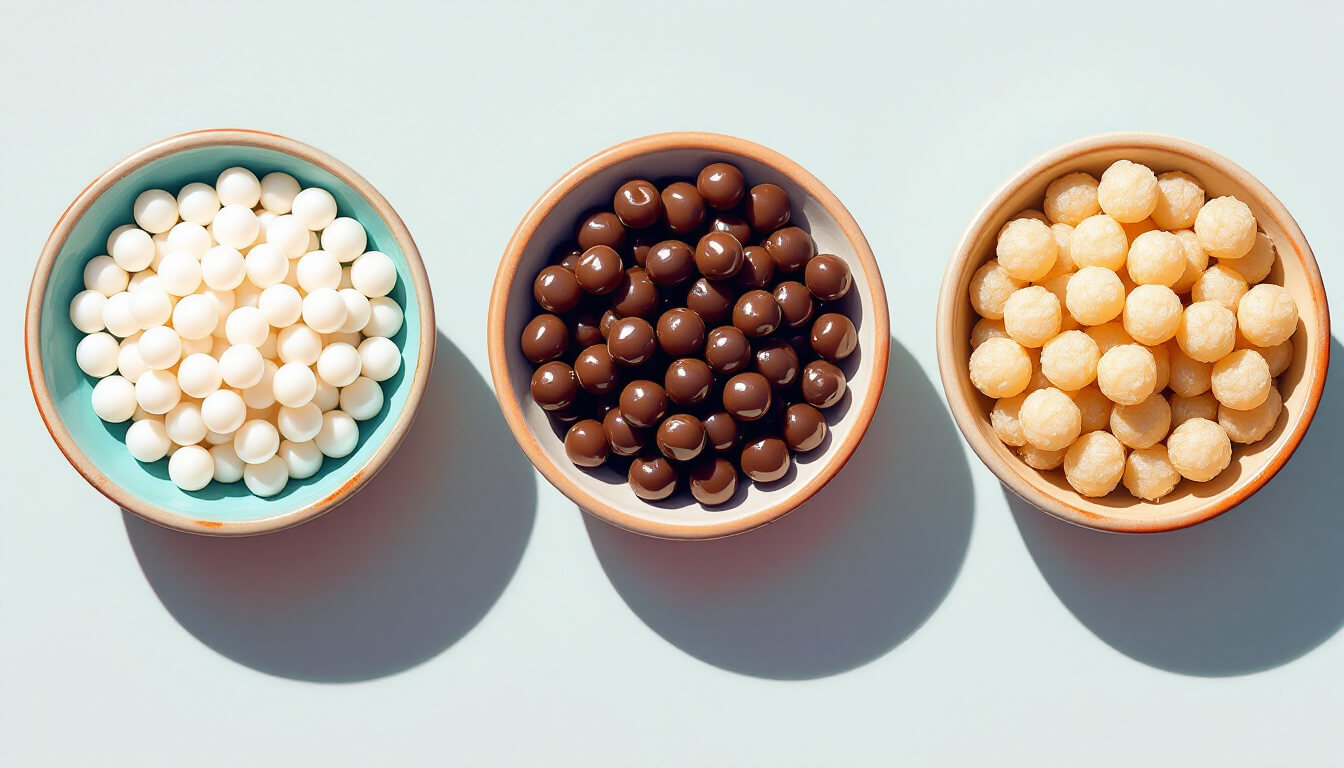
Boba pearls are small balls of cassava (tapioca) starch dough, boiled until they turn chewy and glossy. Store-bought pearls get their dark brown-black color from hēitáng (黑糖, Taiwanese dark sugar) or from caramel coloring. The starch on its own is white, and plain homemade pearls cook up almost clear.
In Taiwan you’ll run into three names, and they aren’t quite interchangeable:
- 粉圓 (fěnyuán) is the older, plain word for tapioca balls. You’ll still see it on traditional dessert-shop menus, where the pearls go on shaved ice and sweet soups. Literally it’s “starch rounds.”
- 珍珠 (zhēnzhū) means “pearl.” The drink got the name because cooked white 粉圓 turn translucent and shiny, like pearls. That’s why the drink is 珍珠奶茶, pearl milk tea.
- 波霸 (bōbà) is where the English word “boba” comes from. At chains that sell both, 波霸 means the bigger pearl and 珍珠 the smaller one.
The 波霸 story is great. According to Tainan local historian Cheng Tao-tsung, cited in the Chinese-language Wikipedia entry for pearl milk tea, the bigger pearls arrived around the same time Hong Kong actress Amy Yip’s nickname “波霸” (a cheeky slang term for a buxom woman) was everywhere. A street vendor on Hai’an Road in Tainan renamed his drink 波霸奶茶, and by summer 1991 plenty of Tainan shops were selling it under that name. The joke traveled overseas, lost its context, and became the generic English word for the whole drink.
Why this matters when you’re learning how to make boba pearls: size changes cooking time more than anything else. A recipe that says “cook 15 minutes” was written for one size. Pick your size first (see the rolling section below) and expect to adjust.
The Ingredients: Tapioca Starch, Dark Sugar and Truly Boiling Water
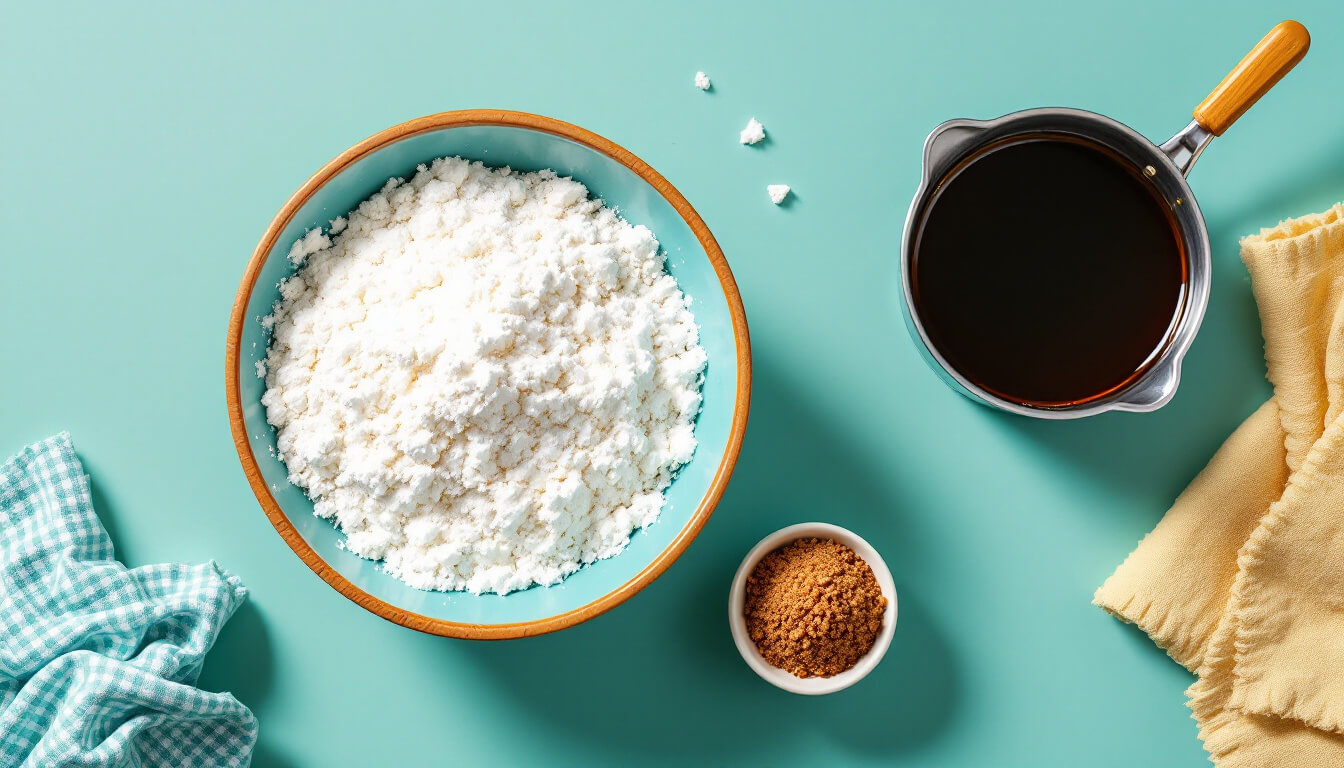
Homemade boba needs only three ingredients, so each one does a lot of work.
Tapioca starch (not cassava flour)
Use tapioca starch, sometimes labeled tapioca flour. In Taiwanese and Southeast Asian groceries it may be sold as 樹薯粉 or 木薯粉. Don’t swap in cassava flour, which is the whole ground root and contains fiber. It won’t form the same stretchy dough. Don’t use cornstarch or potato starch on their own either. Some recipes blend in a little potato starch for a softer chew, which is fine as a tweak, but tapioca has to be the base. It’s the starch that gives you the bounce.
Dark sugar
Taiwanese shops lean on 黑糖, an unrefined dark sugar with a smoky, almost molasses-like depth. Outside Taiwan, the best substitutes are muscovado or dark brown sugar. The sugar adds color and flavor, and it keeps the pearls from tasting bland and starchy. You’ll use it twice: a little in the dough and a lot in the syrup.
Water that is actually boiling
This is the ingredient people get wrong. Tapioca starch mixed with cold or warm water just makes a crumbly, oobleck-like mess. It only forms a workable dough when some of the starch gelatinizes, meaning the granules swell and turn into a sticky gel that holds everything together. That needs water at a full rolling boil, poured in immediately. Water that boiled a minute ago and has been sitting in a measuring cup is not hot enough.
How to Make Boba Pearls, Step by Step: The Dough
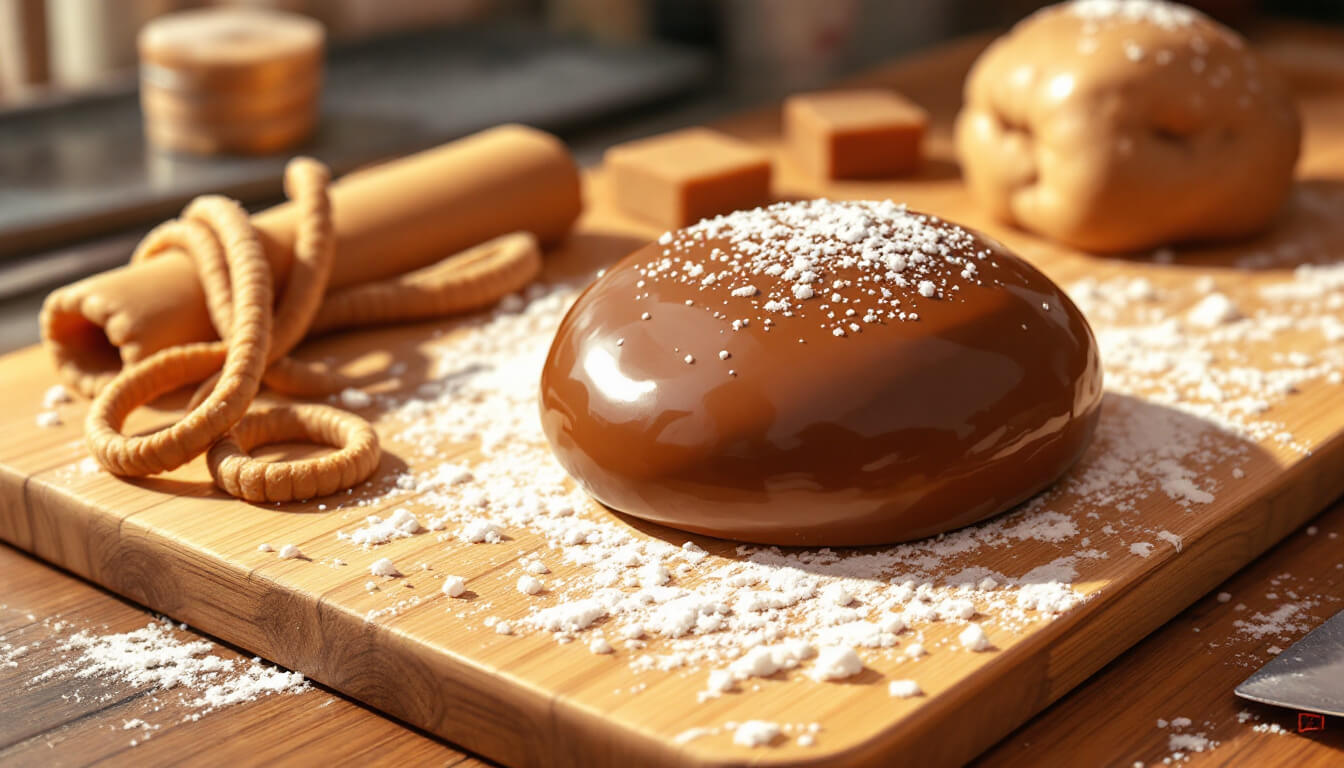
This is a small batch, enough for about four drinks. Make it once before you scale up, because the dough behaves differently in bigger amounts and cools faster than you expect.
Ingredients
- 100 g tapioca starch, plus extra for dusting
- 45 g dark sugar (黑糖, muscovado or dark brown sugar)
- 60 g water (about 1/4 cup)
Method
- Make a hot sugar base. Put the water and sugar in a small saucepan and bring it to a hard boil, stirring until the sugar dissolves.
- Scald part of the starch. Keep the pan on low heat and add about 20 g (roughly 2 tablespoons) of the starch. Stir fast. Within seconds it turns into a thick, glossy, slightly translucent paste. This is the gelatinized “glue” that holds the dough together. Taiwanese home cooks call this scalding technique 燙麵, the same idea used for some dumpling doughs.
- Add the rest of the starch off the heat. Take the pan off the stove and add the remaining 80 g of starch. Stir with a spatula until it looks like shaggy crumbs held together by the paste.
- Knead while it’s hot. As soon as you can handle it (use gloves if you need to), tip it onto a starch-dusted board and knead. Within a minute or two it should turn smooth and glossy, like play dough. If it cracks and won’t come together, it’s too dry. Add water a teaspoon at a time. If it’s sticky, dust in more starch.
- Keep it covered. The dough stiffens as it cools, so keep whatever you aren’t working with under a bowl or plastic wrap.
The most common failure at this stage is dough that falls apart like wet sand. That almost always means the water wasn’t hot enough or the scald step got skipped. You can sometimes rescue it by microwaving a spoonful of the mixture with a splash of water into a paste and kneading it back in. Usually it’s quicker to start again. One batch only costs a few cents of starch.
Rolling and Sizing: Even Pearls Cook Evenly
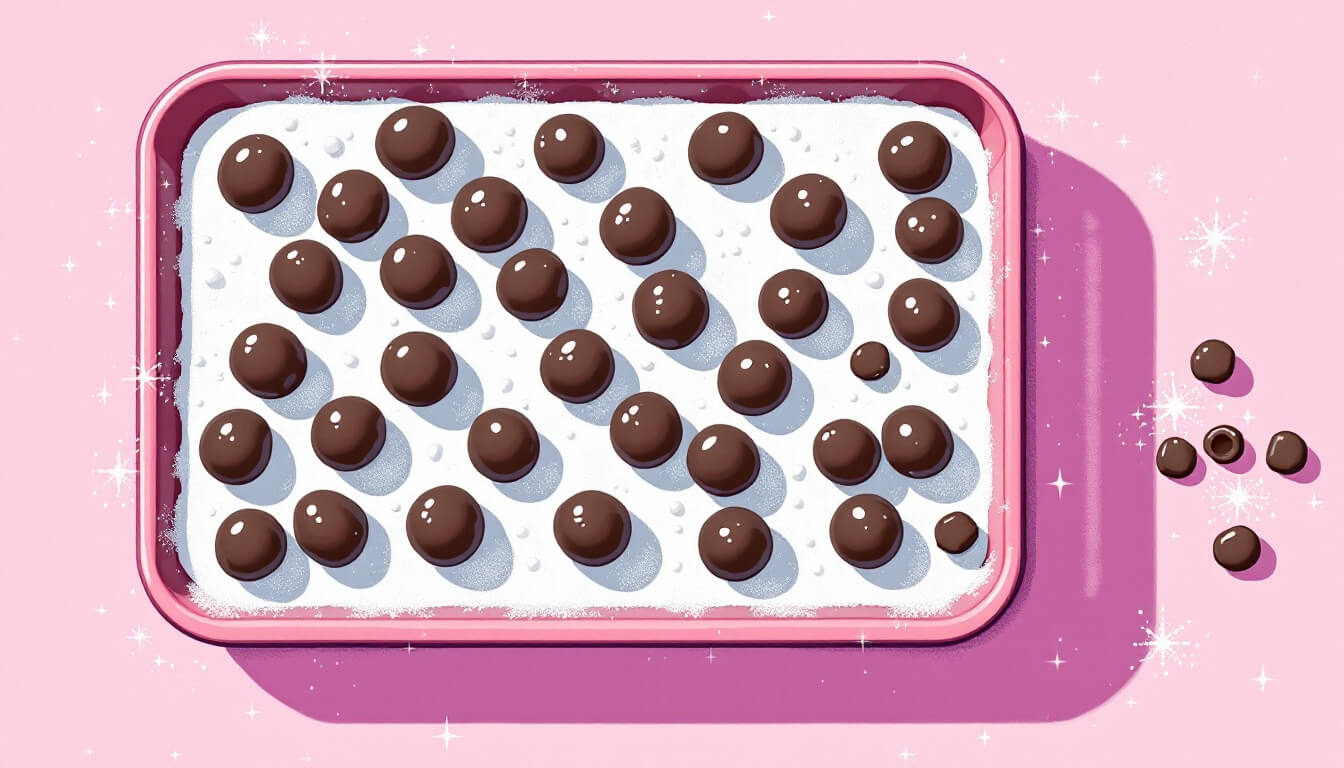
Roll a piece of dough into a rope about as thick as a pencil, cut it into small, equal squares with a bench scraper or knife, and roll each square between your palms into a ball. Toss the finished balls in a bowl of tapioca starch so they don’t stick together.
Two things matter more than speed here.
Make them smaller than you think
Pearls swell noticeably as they cook. A raw ball about the size of a chickpea becomes the medium “珍珠” size most shops serve. If you want true 波霸, go a little bigger, but big pearls need much longer to cook through, and they’re the ones most likely to stay chalky in the middle. For a first batch, medium is the safe choice.
Make them the same size
Every pearl in the pot cooks for the same amount of time. If half are pea-sized and half are marble-sized, you’ll get some mush and some chalk in the same cup. Cutting the rope into equal squares before you roll fixes this better than rolling free-hand. Uneven pearls are honestly the most common reason homemade boba feels inconsistent.
If you aren’t cooking right away, this is the point to stop and freeze. Spread the dusted, uncooked pearls on a tray so they don’t touch, freeze them solid, then bag them. Cook them straight from frozen with no thawing, which keeps them from going gummy, and expect a few extra minutes in the pot. Freezing the raw pearls is the only storage that really works. More on why below.
Cooking Your Pearls and the “Q” Test
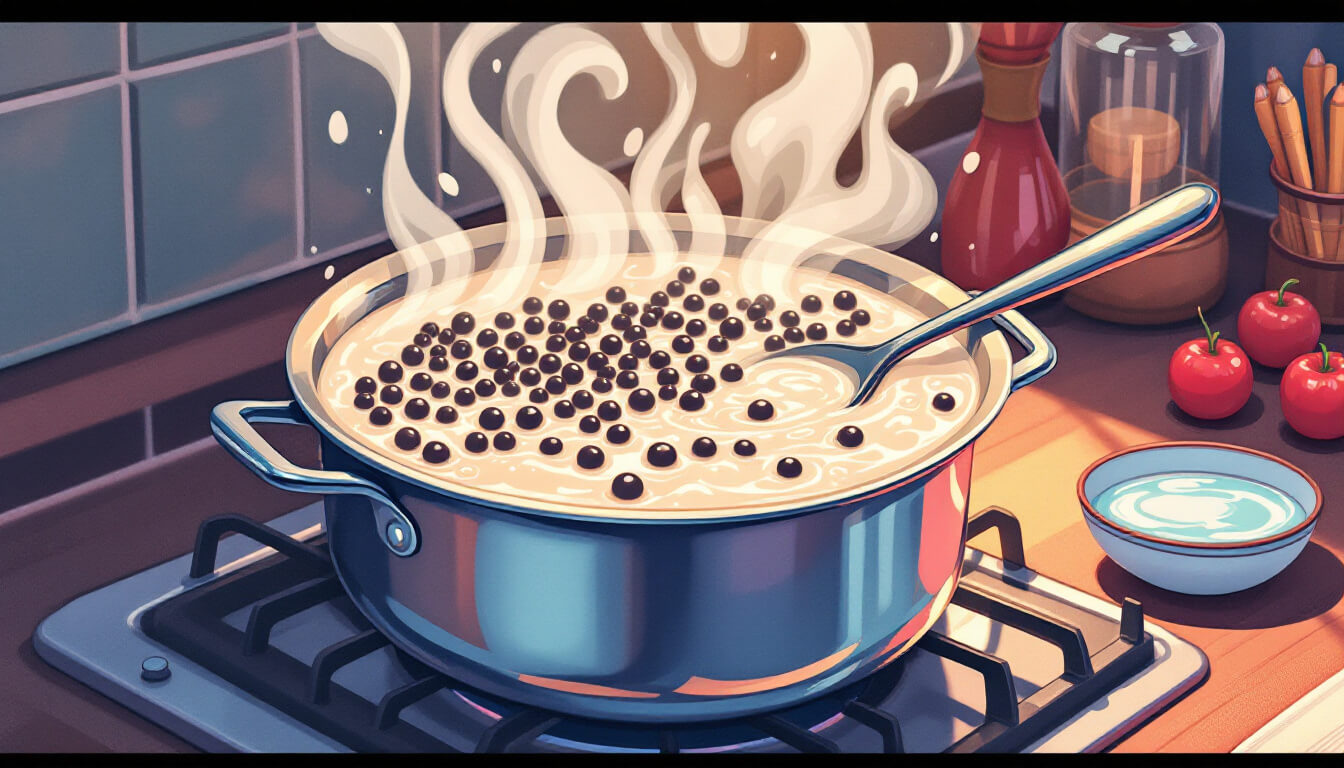
Bring a big pot of water to a rolling boil. Use far more water than seems necessary, roughly ten times the volume of the pearls, so the temperature doesn’t crash when they go in. Shake off the excess starch, drop the pearls in, and stir right away so none of them stick to the bottom.
When the pearls float, lower the heat to a steady simmer. Then comes the step most people skip: after simmering, turn off the heat, cover the pot and let the pearls sit in the hot water. The rest lets the center finish cooking gently while the outside stays intact.
Recipes disagree a lot on timing. Published recipes range from about 10 minutes of simmering for small pearls to 30 to 40 minutes for larger or dried ones. That’s not because anyone is wrong. Size and freshness change everything. For fresh, medium pearls from this recipe, a good starting point is about 15 to 20 minutes of simmering and 10 to 15 minutes of covered rest. Then stop watching the clock and taste.
What “Q” actually means
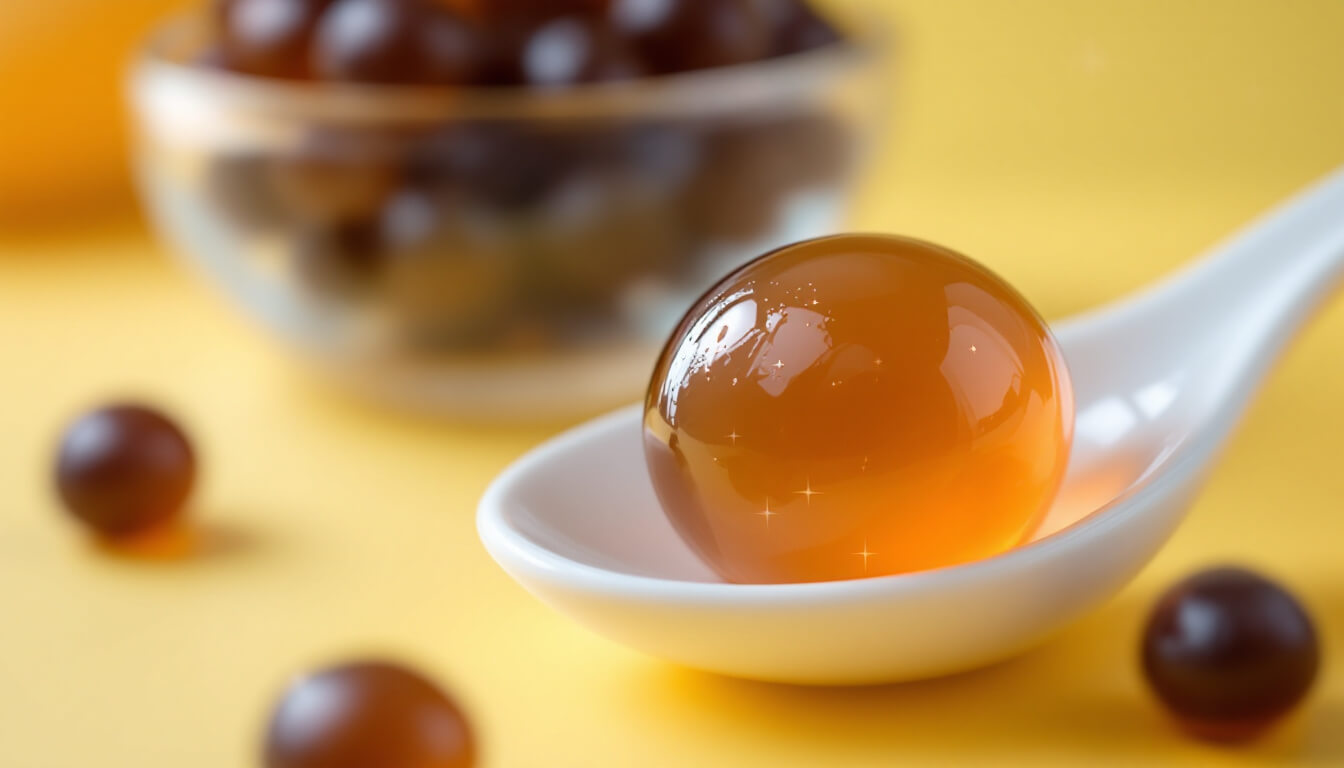
In Taiwan, the texture you’re testing for has a name. The Taiwanese (Hokkien) word is khiū, written 𩚨, and because it sounds like the English letter, it’s written everywhere as Q, or QQ for extra emphasis. Taiwan’s Ministry of Education Taiwanese Hokkien dictionary defines it as food that is soft but has elasticity and toughness. Its related entry khiū-teh-teh means soft and springy, with plenty of chew.
That combination is the whole point. Q isn’t “chewy” the way caramel is chewy, and it isn’t “soft.” It’s bounce: the pearl gives under your teeth, pushes back, and then breaks cleanly. Taiwanese people use the same word for good noodles, fish balls and mochi, so it really is the national texture standard. A pearl can be fully cooked and still not be Q.
How to test for Q
- Fish out one pearl and drop it in cold water for a few seconds so you can taste it safely.
- Cut it in half. A properly cooked pearl is evenly translucent all the way through. An opaque white dot in the center means it needs more time, either simmering or resting.
- Bite it. It should spring back. If it smears or feels pasty, it’s overcooked. If it fights back with a hard, floury center, it’s undercooked.
Once they pass, drain them and rinse briefly in cold water. This washes off the surface starch so they don’t glue together, and the quick temperature shock firms up the outer layer. Don’t leave them sitting in cold water, though. Move on to the syrup right away.
The Brown-Sugar Syrup and the Shop Clock
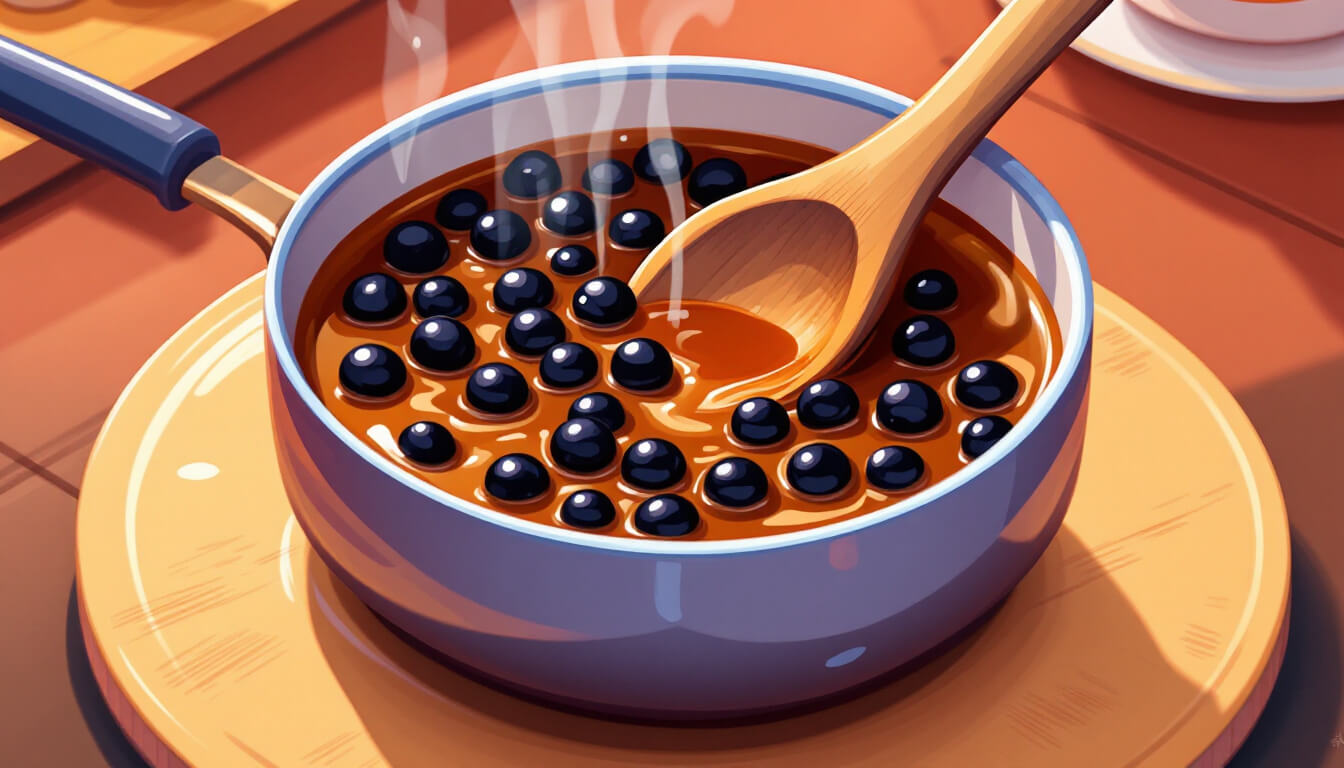
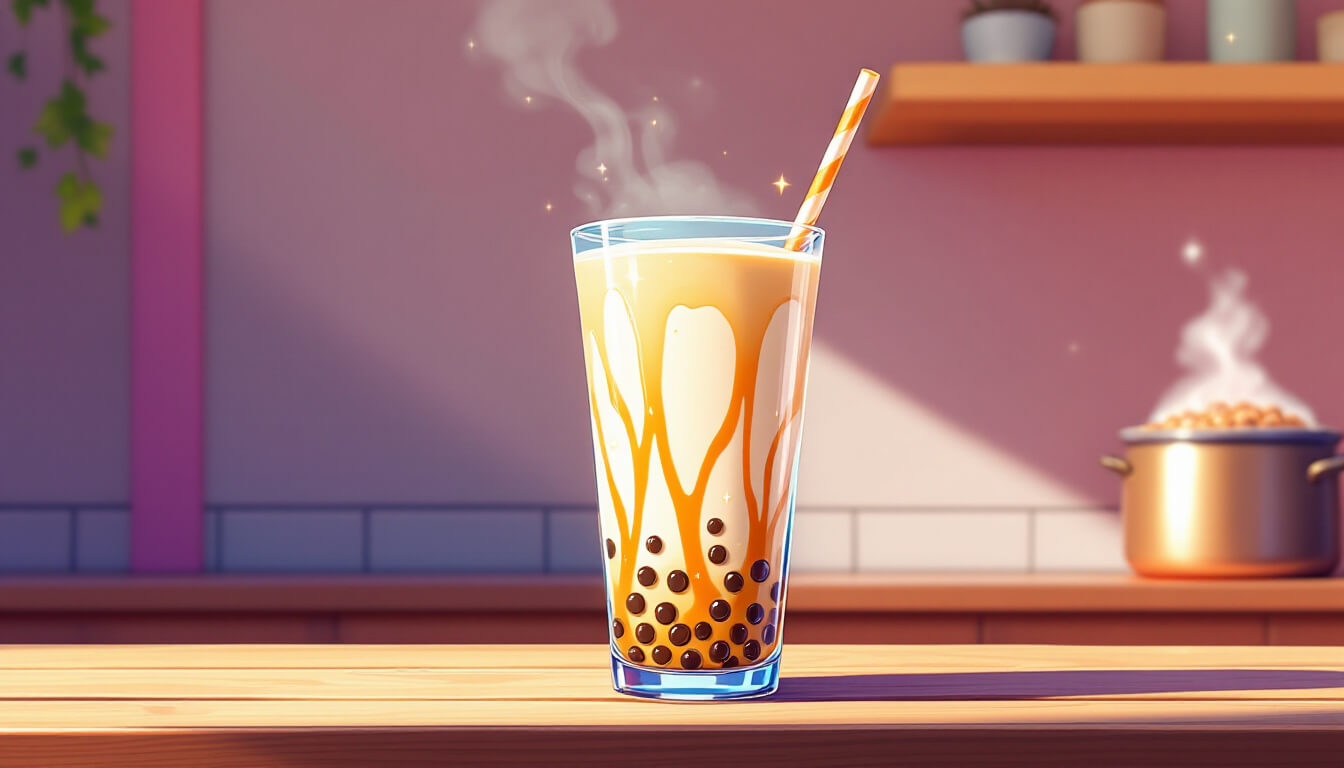
For the syrup, simmer equal weights of dark sugar and water (100 g each is plenty for this batch) for a few minutes, until it lightly coats a spoon. Stir the drained pearls into the warm syrup. The syrup sweetens and glosses the pearls and keeps them separate. If you’ve seen brown-sugar “tiger” drinks with dark streaks down the glass, that’s this same syrup, spooned against the inside of the cup before the milk goes in.
Keep the pearls warm in the syrup until you serve them. Warm pearls stay Q. Cool pearls start to firm up.
Why Taiwanese shops throw pearls away
Here’s what Taiwanese drink shops know that most home recipes skip: cooked pearls are on a timer. Shops cook in batches through the day and throw out whatever passes its window, even if the pot is half full.
How long is the window? It varies by shop, and nobody publishes one official number. A 2018 interview with an operations manager at the Taiwanese chain Maruzao (丸作食茶) in the industry outlet FoodNEXT said its pearls have holding times of about four to five hours, depending on the flavor. A staffer at 50 Lan, one of Taiwan’s biggest chains, said in a widely shared online thread that its pearls are kept for only about 90 minutes. That’s an employee’s comment rather than an official policy, but it shows how tight some shops run it. The details vary. The rule doesn’t: pearls are a same-day, same-session food.
At home, use that as your guide. Cook only what you’ll eat within a few hours, keep it warm in syrup, and treat anything left over as a bonus, not a plan.
Why you should never refrigerate cooked pearls
This is the one that ruins day-two boba. When cooked starch cools, its molecules slowly rearrange back into tighter, more crystalline structures. Food scientists call this retrogradation, and it’s the same reason day-old bread goes stale and cold rice turns hard. It happens fastest at fridge temperature. So a pearl that was perfectly Q at dinner comes out of the fridge firm and dense in the middle.
You can partly rescue refrigerated pearls by warming them in a little syrup and water until they soften, and some recipes suggest exactly that. But the texture never fully comes back. The real fix happens earlier: freeze the pearls raw, and cook small batches as you need them.
Speaking of pearls with personality, our Taiwan Boba Tea Cat T-Shirt is what you wear while you wait for the pot to boil. It’s a much better use of 20 minutes than staring at the timer.

Join the Pearl Gang 珍珠幫
You made your own boba. You’re officially in the gang. Our kawaii Pearl Gang tee celebrates the chewiest, most Q topping on the island, plus a whole shop of Taiwan-made-me-do-it designs.
Troubleshooting: Why Your Homemade Boba Pearls Went Wrong
When you are learning how to make boba pearls, nearly every failure traces back to one of a few causes. Find your symptom here:
- Dough crumbles and won’t hold together. The water wasn’t at a full boil, or the scald step got skipped, so not enough starch gelatinized to bind the dough. Start again with water straight off the boil.
- Pearls dissolve or fall apart in the pot. The same binding problem shows up later. The dough was too dry or under-kneaded, or the pot was too crowded and the water too cool, so the pearls sat in lukewarm water and broke down instead of setting. Use more water and keep it boiling.
- Chalky white center. Undercooked. Give them more simmer time or a longer covered rest. Big pearls need a lot more time than small ones.
- Mushy, smeary, no bounce. Overcooked, or left too long in hot water. Next time, test earlier and start rinsing as soon as the center goes translucent.
- Some perfect, some chalky, some mushy in the same batch. Uneven sizes. Cut the dough rope into equal squares before rolling.
- Hard and dense a few hours later. They cooled, or they went in the fridge. That’s retrogradation. Keep them warm in syrup and eat them the same day.
- Pearls taste bland. Not enough sugar in the dough, or they never sat in syrup. Even 10 minutes in warm syrup makes a big difference.
- Everything is stuck in one clump. Not enough starch dusting before cooking, or no stir in the first minute in the pot.
Here’s a pattern worth noticing: most of these get diagnosed by cutting one pearl open. Make that a habit and you’ll stop guessing.
Build the Drink: Pairing Your Pearls With a Taiwanese Tea Base

Your pearls are done. Now give them a drink that does them justice. Taiwanese shops build drinks from a strong tea base, because milk, ice and syrup all dilute the flavor.
- Classic pearl milk tea (珍珠奶茶): strong black tea, brewed at double strength and cooled, plus milk to taste. Pearls and syrup go in the bottom of the glass first.
- Brown-sugar pearl milk (黑糖珍珠鮮奶): no tea at all. Streak the syrup up the side of the glass, add the warm pearls, then cold fresh milk. It’s the most dessert-like option and the one that shows off the pearls best.
- Oolong with pearls: a roasted Taiwanese oolong makes a less sweet, more fragrant drink. Our guide to what Taiwan actually drinks covers the tea styles worth trying.
- Taro milk tea with pearls: the purple favorite. Here’s how Taiwan really makes taro bubble tea, including why the shop version usually isn’t bright purple.
Two ordering habits from Taiwan are worth copying at home. First, choose your sweetness (甜度) on purpose. Taiwanese shops let you pick levels like full, less, half or a little sugar, and with sweet pearls and syrup in the cup, half sweet usually tastes best. Second, choose your ice (冰塊) too. Pearls in an ice-packed drink cool fast, so less ice keeps them Q for longer. If you’re wondering how much of a kick your homemade cup carries, we dug into whether boba milk tea has caffeine and how Taiwan labels it.
Love Taiwan’s chewy textures? Try douhua, the silky tofu pudding that often comes topped with 粉圓. It’s the same pearl family in its dessert-shop form.
How to Make Boba Pearls: Frequently Asked Questions
Can I make boba pearls without tapioca starch?
Not really. Tapioca starch is what gives you the Q bounce. Potato starch or sweet potato starch can be blended in for a different bite, but on their own they won’t give you a proper pearl. Don’t use cassava flour or cornstarch as a substitute.
Why are my boba pearls white instead of black?
Tapioca starch is naturally white, and plain pearls cook up translucent. The dark color comes from dark sugar in the dough and syrup, or from caramel coloring in commercial pearls. For darker pearls, use a darker sugar like 黑糖 or muscovado. Some recipes add a little cocoa powder for color.
How long do homemade boba pearls last?
Once cooked, they’re best within a few hours. Taiwanese shops typically discard pearls after a holding window measured in hours, not days. Uncooked pearls freeze well. Cook them straight from frozen.
Can I refrigerate cooked boba pearls?
You can, but they’ll harden as the starch retrogrades. Warming them in syrup helps a bit, but the texture won’t fully recover. Freezing raw pearls works much better.
What does QQ mean in boba?
QQ comes from the Taiwanese Hokkien word khiū (𩚨), which describes food that is soft but springy and elastic. It’s the texture Taiwanese people expect from good pearls, noodles and fish balls.
What is the difference between 珍珠 and 波霸?
Both are tapioca pearls. At shops that sell both, 波霸 means the larger pearl and 珍珠 the smaller one. “Boba,” the word used in English, comes from 波霸.
Is boba a Taiwanese invention?
Pearl milk tea comes from Taiwan in the 1980s. Taichung’s Chun Shui Tang and Tainan’s Hanlin both claim to have invented it. See our guide to Taichung, the bubble-tea birthplace for more.
Final Thoughts: Make Them Small, Make Them Today
Learning how to make boba pearls isn’t about finding a secret ingredient. Starch, sugar and water are all there is. It’s about the Taiwanese habits around them: water at a real boil, pearls the same size, a covered rest, a Q test instead of a timer, warm syrup, and the discipline to cook only what you’ll drink today.
Get those right and your homemade boba will come out bouncy, glossy and Q, the texture you’d get from any Taipei corner shop. Then start experimenting with sweetness and ice levels until it’s exactly yours. For more Taiwanese food you can make at home, our Taiwan food recipe guide and our tea egg recipe are good places to go next.
A Postcard From Taiwan, Every Week
Recipes, food culture, travel tips and the stories behind the snacks, straight to your inbox. No spam, unsubscribe anytime.

Grab a Free Taiwan Sticker!
Drop your email and we’ll send you a limited-edition Taiwan sticker — plus insider access to new merch drops and island vibes.
No spam. Unsubscribe anytime.