Hualien City Taiwan: The 2026 Guide to the City Itself, Not Just Taroko
Most people arrive in Hualien City Taiwan with a plan that has nothing to do with the city itself. They get off the train, find a driver, and disappear north into Taroko Gorge for six hours. Then they come back, eat something near the station, and leave the next morning. The city was a parking lot with beds.
That was always a slightly silly way to treat the place. Since April 2024, when a major earthquake rearranged the gorge, it has become an actively bad plan — because the thing everyone was skipping the city for is now only partly open. What nobody updated was the advice. Search Hualien City Taiwan today and the top results are still cheerful listicles that open with “of course, start with Taroko,” written by people who visited years ago and have not been back since.
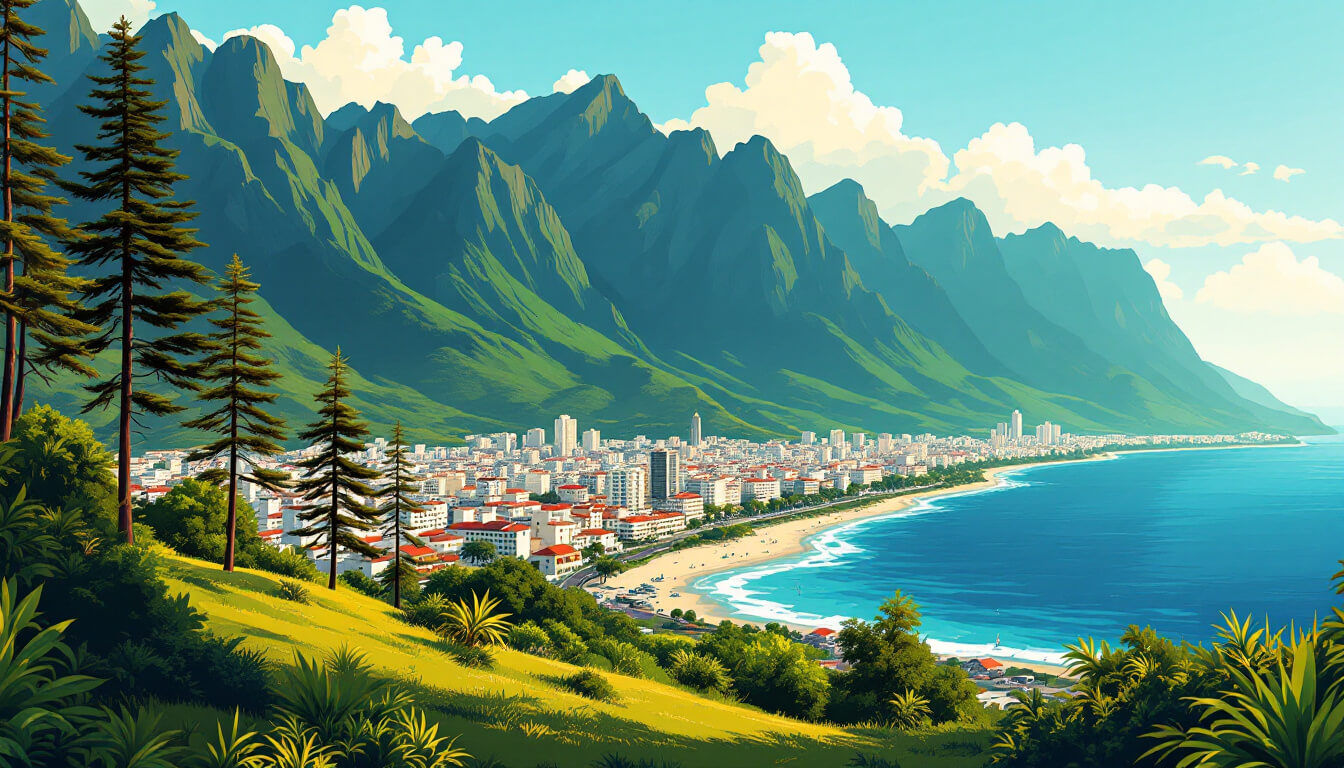
So here is the other version. This guide is about the city itself: a compact, walkable, seafront town of about 100,000 people wedged between the Pacific Ocean and the highest mountains in East Asia, with the best Indigenous food street in Taiwan, a mochi habit bordering on civic identity, and an origin story involving a Japanese governor who could not stand the sound of the town’s own name.
Hualien City Taiwan Is Not Hualien County (And That One Fact Fixes Your Itinerary)
This is the single most useful thing to understand before you book anything, and almost no travel guide says it out loud: Hualien City and Hualien County are wildly different sizes.
Hualien County is Taiwan’s largest county by area — 4,628 square kilometers, stretching roughly 137 kilometers down the east coast, ranked first out of all twenty-two of the island’s counties and cities. Hualien City, the county seat, is 29.41 square kilometers. That is about six-tenths of one percent of the county.
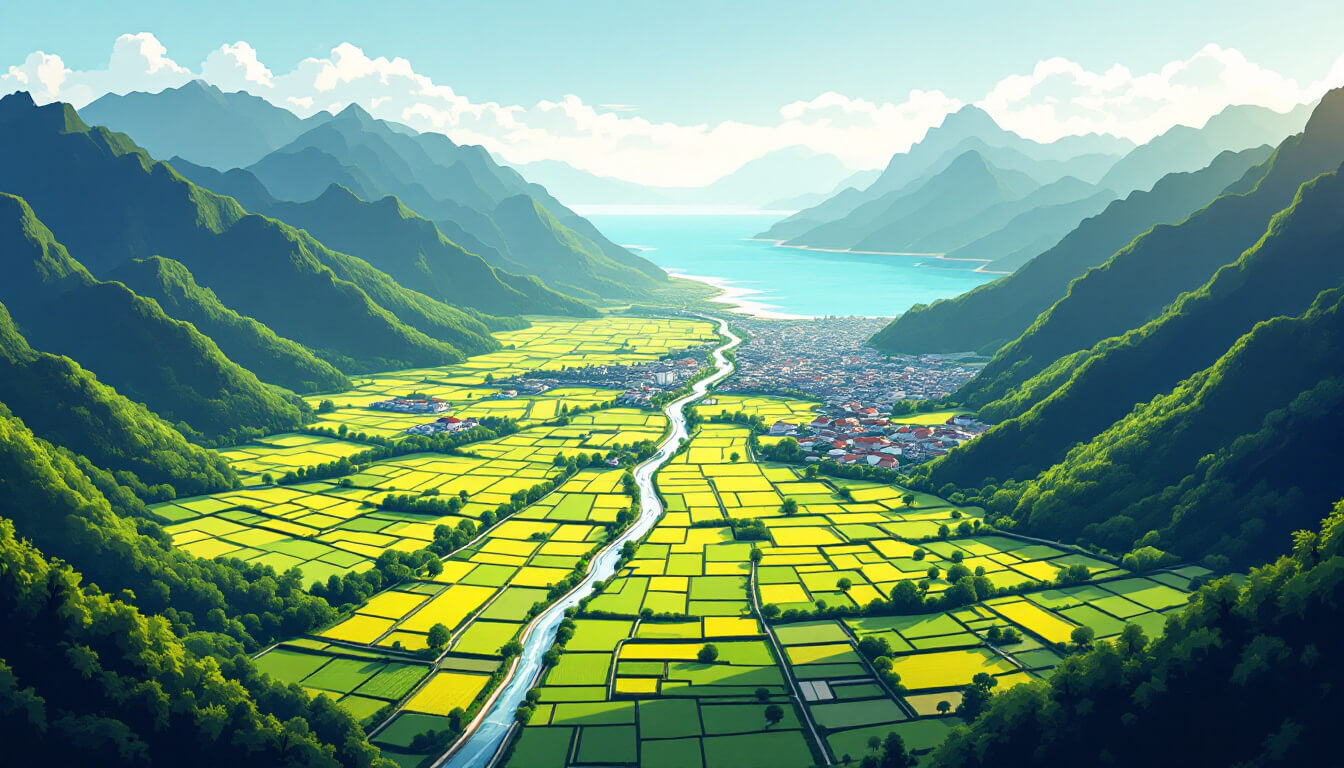
And yet the city holds about 99,000 of the county’s 319,000 residents. Roughly a third of everyone in Taiwan’s biggest county lives inside that one small rectangle on the coast, because the rest of the county is vertical. The Central Mountain Range takes up most of it, and people live where the land is flat: a thin coastal shelf and one long rift valley.
Here is why that matters to you. When a blog says “things to do in Hualien,” it is almost always listing the county — a waterfall three hours south, a tea plantation in the valley, a gorge forty minutes north, a whale-watching harbor, a hot spring in the mountains. Those are real, and some are wonderful. But they are separate day trips requiring a car, a scooter, or a tour, and lumping them under one heading makes the city look like it has thirty attractions when it actually has about eight, all of them within a twenty-minute bike ride of each other.
Treat those as two different trips and everything gets easier:
- Hualien City — one to two days, no vehicle needed. Night market, seafront parks, the Japanese-era pine bluff, coffee shops, the old rail yard, mochi shops. Walk or rent a bike.
- Hualien County — everything else. Taroko, Qingshui Cliffs, Liyu Lake, the rift valley, the southern coast. Each one is a half or full day out, and each one needs wheels.
The city is the base camp and the rest bolts on. If you only have two nights, spend them entirely in the city and pick exactly one county trip. You will have a far better time than the person sprinting between five of them.
The Name Nobody Explains: Kilai, Karenko, and Taiwan’s Indigenous Heartland

Before it was Hualien, the place was Kilai.
The county annals record that name as the one used into the early twentieth century, and it comes from the Sakizaya people who lived here — one of Taiwan’s Indigenous nations, and their settlement on this coast. Han Chinese farming settlements only arrived in numbers from 1851, when a group of about 2,200 farmers led by Huang A-fong came down from the Taipei area. That is remarkably late by Taiwanese standards, and it is the reason this coast still feels culturally distinct from the west.
Then came the part that always makes people laugh. After Taiwan came under Japanese rule in 1895, the colonial administration wanted the name changed — because “Kilai” sounds almost exactly like the Japanese word kirai, meaning “dislike” or “hate.” Imagine running a port town officially named Hate. The name was eventually changed to Karenko, written with the characters for flower, lotus and harbor, which the incoming Republic of China government shortened after 1945 to Hualien.
So the city’s pretty, floral-sounding name exists because a governor found the original one embarrassing to say. It is a small story, but it tells you the whole layered history of the place in one move: Indigenous first, renamed by Japan, re-romanized after the war, and quietly still Kilai underneath.
Why Hualien Feels Different From the Rest of Taiwan
Hualien County has the largest Indigenous population of any county in Taiwan — roughly 95,000 people, about 27.5% of the county. Nationally, Taiwan’s Indigenous population passed 620,000 in 2025, and the Amis are the largest nation among them, with over 170,000 people, more than a third of the total, concentrated in exactly this stretch of plains between Hualien and Taitung.
You feel it immediately. It is in the food at the night market, in the millet wine on shop shelves, in the place names on the bus routes, in the summer Amis Ilisin harvest festivals that fill village grounds up and down the valley from July into August. If you want the full picture of who was here first, our guide to Taiwan’s Indigenous peoples covers all sixteen officially recognized nations and where each one lives.
Most “things to do in Hualien” posts do not mention any of this. Not one of the two top-ranking guides we read while researching this article used the word “Indigenous” a single time. That is a strange thing to leave out of a guide to the most Indigenous county in the country.
Getting to Hualien City Taiwan from Taipei (And Getting Around Once You Land)

There is no high-speed rail on Taiwan’s east coast. The HSR line stops on the west side of the island, so getting to Hualien means the conventional railway — and honestly, that is the better ride anyway. The line clings to the coast through tunnels cut into sea cliffs, and the windows do a lot of the work.
The train
The fastest services from Taipei Main Station reach Hualien in a little over two hours. The express classes — Taroko Express, Puyuma Express, and the newer Tze-Chiang EMU3000 sets — all run the route in under three hours, and as of August 2026 an adult one-way ticket on any of them is about NT$583. A Chu-Kuang Express runs around NT$450 and a local train about NT$376, both slower.
Book ahead. Seriously. This is the single most common rookie mistake on this route. Tickets go on sale roughly two weeks out and the fast trains to Hualien sell out first, especially Friday evenings, Sunday afternoons, and any public holiday weekend. If you turn up at Taipei Main hoping to buy a same-day seat on a Saturday, you will be standing in a vestibule for two hours or waiting three hours for the next one. Our Taiwan train map guide breaks down the whole network and which train classes are worth paying for.
Once you arrive
Hualien Station sits a couple of kilometers northwest of the old downtown, which catches people out. Your options:
- Walk — realistic if you are staying near the station, ambitious if you are staying downtown. It is roughly 25 to 30 minutes.
- Bike — the city is flat, compact and has a genuinely good riverside and seafront bike path network. Rentals cluster around the station. This is the correct answer for most people.
- Scooter — the local default, and the only realistic way to do county day trips independently. Requires the right license; plenty of visitors get turned away, so check before you count on it.
- Taxi — cheap and plentiful downtown, worth it late at night.
Buses exist and go to the county attractions, but they run on a schedule built for residents rather than day-trippers, so always check the return time before you commit to an outbound one.
Dongdamen Night Market: 400 Stalls and the Best Indigenous Food Street in Taiwan

If you do one thing in Hualien City Taiwan, do this one.
Dongdamen opened in July 2015, and it is not an organic old market that grew over decades — it is a deliberate consolidation. Four separate night markets that used to be scattered around the city (Fuding, Ziqiang, Nanbin and Rainbow) were merged onto one enormous site near the seafront. The result is around 400 vendors in a single grid, which is a genuinely unusual scale for a city of 100,000 people.
What makes it worth the trip is not the size, though. It is the Indigenous food street. Dongdamen has the deepest Indigenous food section of any night market in Taiwan, which follows directly from the demographics in the section above. This is not a novelty corner with two stalls. Look for:
- Grilled mountain pork on skewers, salted and charred, often with wild ginger or maqaw pepper
- Cinavu / abai — millet or glutinous rice parcels steamed in shell ginger or betel leaves
- Millet wine, sold by the bottle and by the cup
- Wild mountain vegetables stir-fried hard with garlic — bitter, grassy, excellent
- Flying fish and other coastal catch, grilled whole
The Hualien Things You Should Eat Regardless
Bianshi. On this coast a wonton is a bianshi — a different word for a slightly different thing, hand-wrapped thin and served in clear broth rather than chili oil. The dedicated bianshi shops downtown are an institution and generally better than the night market versions.
Mochi. Hualien’s signature souvenir, to a degree that borders on obsession. Entire multi-story shops sell nothing else, in the soft pounded style rather than the ice-cream-filled style, in peanut, sesame, taro and red bean. Buy a box for the train.
Scallion pancake. Eastern Taiwan does a thicker, eggier, deep-fried version than you get in Taipei, and the famous ones in Hualien come off carts with a line in front of them. Follow the line.
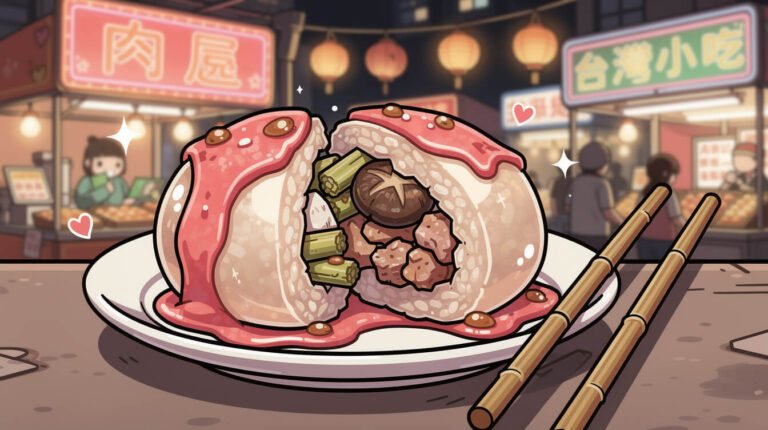
Steamed buns. The city’s best-known bun shop has been going for decades and sells cabbage-and-pork buns at a pace that means they are always fresh. Go early evening.
If night markets are your main reason for visiting Taiwan at all, our complete guide to Taiwan’s night market ecosystem maps how the roughly 300 markets across the island differ from each other, and our city-by-city street food guide covers what to order where.
And if you want to wear the whole menu rather than just eat it, our Taiwanese Street Food Guide T-Shirt lays out the island’s greatest hits as a vintage food poster — it makes a very good conversation starter in a night market queue.
What to Actually Do in Hualien City Taiwan: Pines, Pebbles, and an Old Rail Yard

Eight things, all reachable by bike. That is the honest inventory, and eight good things is plenty for two days.
Pine Garden
Built in 1943 as a residence and command post for Japanese military officers, Pine Garden sits on the highest point in the city, on a bluff under a stand of tall Ryukyu pines with the Pacific laid out below. It has been restored as a cultural venue with exhibition rooms and a cafe. It is the single most atmospheric spot in town, and it is the place to understand why the Japanese navy wanted this coast: from up there you can see everything coming.
Qixingtan Beach
A long crescent bay of smooth grey pebbles north of the city, with the mountains falling straight into the sea at the far end. It is the postcard shot. One critical warning: swimming is prohibited. This is not a soft suggestion or an over-cautious sign. The shelf drops away sharply and the currents are genuinely dangerous. Come for the sunrise, the stones and the view, and stay out of the water.
The seafront parks
Nanbin and Beibin parks run along the city’s Pacific edge with a paved bike path connecting them, plus the Meilun River path inland. Riding the seafront at dawn, with the sun coming up over the ocean and the mountains still dark behind you, is the most underrated hour in the city.
Hualien Railway Cultural Park
The old Japanese-era railway administration complex, preserved as a heritage site with wooden offices and rolling stock. Check before you go: a significant part of the site has been closed since the 2024 earthquake, with damaged sections taped off, though several shops and the small cinema on the grounds have continued to operate. It is still worth a wander if you are nearby; just do not build the day around it.
The rest
- Hualien Cultural and Creative Industries Park — a converted 1913 sake brewery, now galleries, studios and design shops.
- The Martyrs’ Shrine — on the hillside near Pine Garden, with the best free view over the city.
- Chung Hua Market — the daytime wet market, for anyone who likes seeing how a town actually feeds itself.
- The coffee scene — disproportionately good for the city’s size, concentrated in the old downtown lanes near Zhongshan and Bo’ai Roads.

Wear the Mountains Behind the City
A minimalist Formosan black bear on a ridge line, for the range that walls off Hualien from the rest of the island and makes this coast feel like its own country.
Taroko Gorge in 2026: The Honest Version

You can still visit Taroko Gorge. You cannot visit it the way the older blog posts describe, and the gap between those two statements is where people’s trips go wrong.
On the morning of April 3, 2024, a magnitude 7.4 earthquake struck about 18 kilometers from the city — the strongest quake to hit Taiwan since 1999. Eighteen people died and more than 1,100 were injured, and the gorge itself took catastrophic damage: buried trails, collapsed bridges, landslides across the main road. Typhoons in 2024 and 2025 added more.
What that means practically, as of this writing:
- Highway 8 through the gorge is open only in five short daily windows, not continuously. Travel guides claiming it is “open 6:30am to 5:30pm daily” are describing a single span that does not exist. It is five separate slots, two of which are five minutes long, and if you miss one you wait.
- Bus 310 from the city runs around ten times a day but only reaches the Visitor’s Center at the mouth of the gorge, where the Dekalun Trail is the one hike available.
- Open: the entrance arch, the Visitor’s Center, Dekalun Trail, most of the Tianxiang area at the top end, the Xiangde Temple walk, and the Chongde viewpoint over the Qingshui Cliffs, which reopened in July 2025.
- Closed: Shakadang Trail, Swallow’s Grotto, Zhuilu Old Road, Buluowan, the Tunnel of Nine Turns, Baiyang Trail. The Eternal Spring Shrine is closed but visible from the road, and is expected to be among the first to return.
Those access windows are revised by the park authority roughly once a month, and the official park website was offline for maintenance while we were checking it, so confirm the current times within a few days of your trip rather than trusting any article, including this one. We keep a dedicated, regularly updated breakdown in our Taroko Gorge 2026 guide — the five time slots, which trails are back, and how to plan a day around them.
The short version: the gorge is still spectacular, it is just a drive-through-and-stop experience right now rather than a hiking one. Give it half a day, not a whole one, and give the other half back to the city.
What Hualien City Taiwan Feels Like Now, After the Earthquake and the Flood

This section exists because it is the question people are too polite to ask: is it strange to go there as a tourist?
Short answer: no, and the city would very much like you to come.
Hualien City itself came through the 2024 earthquake far better than the gorge did. A small number of buildings were badly damaged and became international news images, but the city as a whole is intact and functioning normally — trains, hotels, the night market, the beach, the coffee shops, all open and busy. Walking around, you would not know unless someone told you.
The second disaster is more recent and worth understanding properly, because the geography gets flattened in the headlines. On September 23, 2025, a barrier lake on the Matai’an Creek — formed when an earlier typhoon dammed the river with a landslide — burst after heavy rain from Typhoon Ragasa. Roughly 60 million tons of water and debris went through Guangfu Township, killing 19 people, most of them elderly, and burying parts of several Indigenous villages under meters of mud.
Guangfu is in the rift valley about 40 kilometers south of the city. It is a separate township, and the flood did not touch Hualien City. A year on, recovery there is slow and real: Taiwan’s legislature approved a special reconstruction budget of NT$27 billion for the county, most of the destroyed farmland along the creek is being converted to flood-control land rather than replanted, and eight of the township’s twelve Indigenous Cultural Health Stations are running normally again, serving around 280 elders.
What this means for a visitor is simple and slightly counterintuitive: the most useful thing you can do for Hualien is show up and spend money in it. This is a county whose economy leans heavily on tourism, that has now absorbed two disasters in eighteen months, and whose biggest ongoing problem is people canceling trips out of a vague sense that the whole east coast is closed. It is not. The city is open, the trains run, and the night market is full.
Two practical notes. First, if you are traveling between roughly May and October, read up on Taiwan’s typhoon season before you book — the east coast takes the first hit and the rail line does close during major storms. Second, do not go sightseeing in Guangfu. It is a town of about 12,000 people rebuilding their homes, not an attraction.
Hualien City Taiwan: Frequently Asked Questions
How many days do you need in Hualien City?
Two nights is the sweet spot: one full day in the city itself and one day out to Taroko or the coast. One night works if you are efficient and skip the county entirely. Three or more makes sense if you want the rift valley, whale watching, or a hot spring as well.
Is Hualien City Taiwan safe to visit after the 2024 earthquake?
Yes. The city is fully operational — hotels, restaurants, transport and the night market are all running normally. Taiwan has some of the strictest seismic building codes in the world and the response infrastructure to match. The lasting damage is concentrated in Taroko Gorge, not in the city.
Can you visit Taroko Gorge from Hualien City Taiwan without a car?
Partly. Bus 310 runs about ten times daily to the Visitor’s Center at the gorge entrance, which gets you the Dekalun Trail and the exhibits but not the gorge interior. To go deeper you need a car, a scooter, or a seat on a tour that is timed around the five daily road windows.
What food is Hualien famous for?
Mochi above all — it is the city’s signature souvenir. Then bianshi (the local wontons), thick deep-fried scallion pancakes, steamed buns, and the Indigenous dishes at Dongdamen Night Market: grilled mountain pork, millet parcels, wild vegetables and millet wine.
Is Qixingtan Beach good for swimming?
No — swimming is prohibited. It is a pebble beach with a steep shelf and strong currents. It is superb for sunrise, photos and walking, and genuinely hazardous for anything else.
When is the best time to visit Hualien City Taiwan?
October to April is the reliable window: drier, cooler, and outside the main typhoon season. Spring and late autumn are the pick. July through September brings heat, humidity and the highest storm risk on this coast. Our Taiwan trip planner breaks down the seasons, costs and regional timing across the whole island.
Is Hualien City walkable?
Very. The built-up area is under 30 square kilometers and flat. Between walking and a rented bike you can reach the night market, the seafront, Pine Garden and the creative park without ever getting in a vehicle. The one gap is the train station, which sits a few kilometers out from downtown.
Final Thoughts: The City Was Never the Boring Part
The whole reason Hualien City Taiwan got written off as a waypoint is that it had the bad luck to sit next to something famous. For thirty years the gorge was so spectacular that nobody looked at the town, and the town — walkable, Indigenous, seafront, mochi-obsessed, wrapped in mountains on one side and the Pacific on the other — got filed under “where you sleep before Taroko.”
The last two years have forced the issue. With the gorge running on five daily time slots and half its trails closed, the city has had to be the destination, and it turns out it was always good enough to be one. A night market with 400 stalls and the deepest Indigenous food street in the country. A Japanese command post on a pine bluff over the ocean. A crescent of grey pebbles at sunrise with the mountains falling into the sea. A name that exists because a colonial governor could not bear to say the old one.
Go for two nights. Ride a bike along the seafront at dawn, eat too much at Dongdamen, buy a box of mochi for the train home, and take half a day in the gorge instead of the whole thing. You will come back with a better trip than the people who did it the other way around — and you will have spent your money somewhere that genuinely needs it.
A Postcard From Taiwan, Every Week
Culture stories, food deep-dives, travel tips, and first looks at new designs — straight to your inbox. No spam, just Taiwan.

Grab a Free Taiwan Sticker!
Drop your email and we’ll send you a limited-edition Taiwan sticker — plus insider access to new merch drops and island vibes.
No spam. Unsubscribe anytime.