Capital of Taiwan: Why Taipei Is the Answer (and Why the Real Story Is More Interesting)
The capital of Taiwan is Taipei — a fast, funny, food-drunk city in the north where politicians make speeches, Taipei 101 lords over the skyline, and every convenience store somehow feels like a home-cooked meal. That’s the two-second answer. But if you stop there, you miss the good stuff, because the story of Taiwan’s capital is actually a stack of surprising twists: a constitution that still names a city on the mainland, a former capital in the south that quietly runs on 400-year-old temple time, and a colonial pivot in 1885 that made Taipei the political center almost by accident.
This is the guide we wish existed when we started answering the “capital of Taiwan” question ourselves. We’ll go deeper than a Wikipedia intro, take you through the four cities that have all been called some version of “capital” at some point, and give you the context that actually makes Taipei feel like a capital when you visit — not just a dot on a map.
So, What Is the Capital of Taiwan? (The Quick Answer)
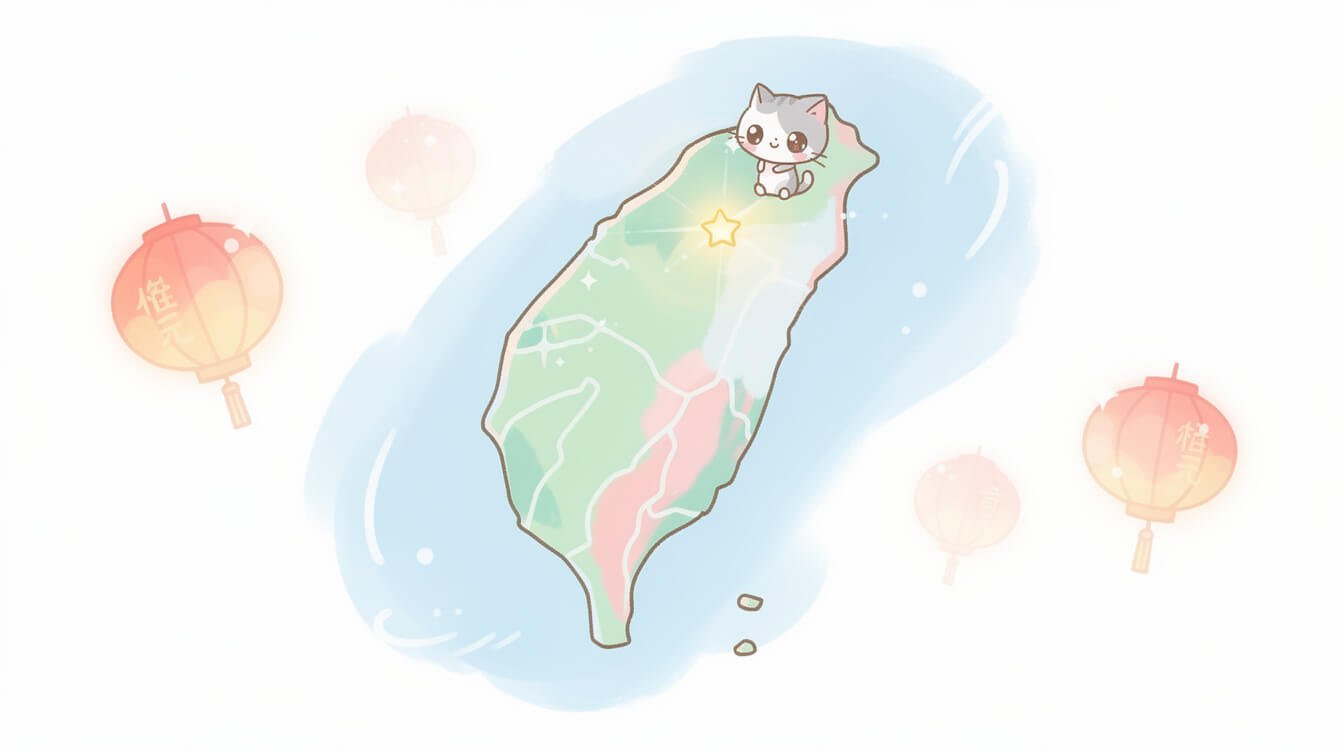
Short version: the capital of Taiwan is Taipei. It sits in a basin surrounded by mountains at the northern tip of the island, holds the Presidential Office, the Legislative Yuan, the Executive Yuan, and every foreign representative office that Taiwan hosts. If someone shows up on official business — a diplomat, a tech CEO signing a semiconductor deal, a K-pop group with a promo stop — they land at Taoyuan Airport, ride the airport MRT for 35 minutes, and end up in Taipei.
The longer version has three moving parts:
- The de facto capital: Taipei. This is where the government actually works, where the ministries sit, and where the country’s political life happens every single day.
- The de jure “provisional” capital: Also Taipei, since 1949. That word “provisional” is the interesting part — it’s still technically the legal status.
- The historical original capital: Tainan, from 1683 to 1885 under Qing rule, and even earlier under the Kingdom of Tungning. Which is why Tainan locals will politely correct you if you call Taipei “the real capital” over dinner.
So when you’re planning a trip, booking a flight, or filling out a visa form, the answer is Taipei. When you’re at a night market in Tainan and someone starts telling you about the city’s 400 temples, the answer gets more interesting.
Meet Taipei: The Capital You’ll Actually Visit
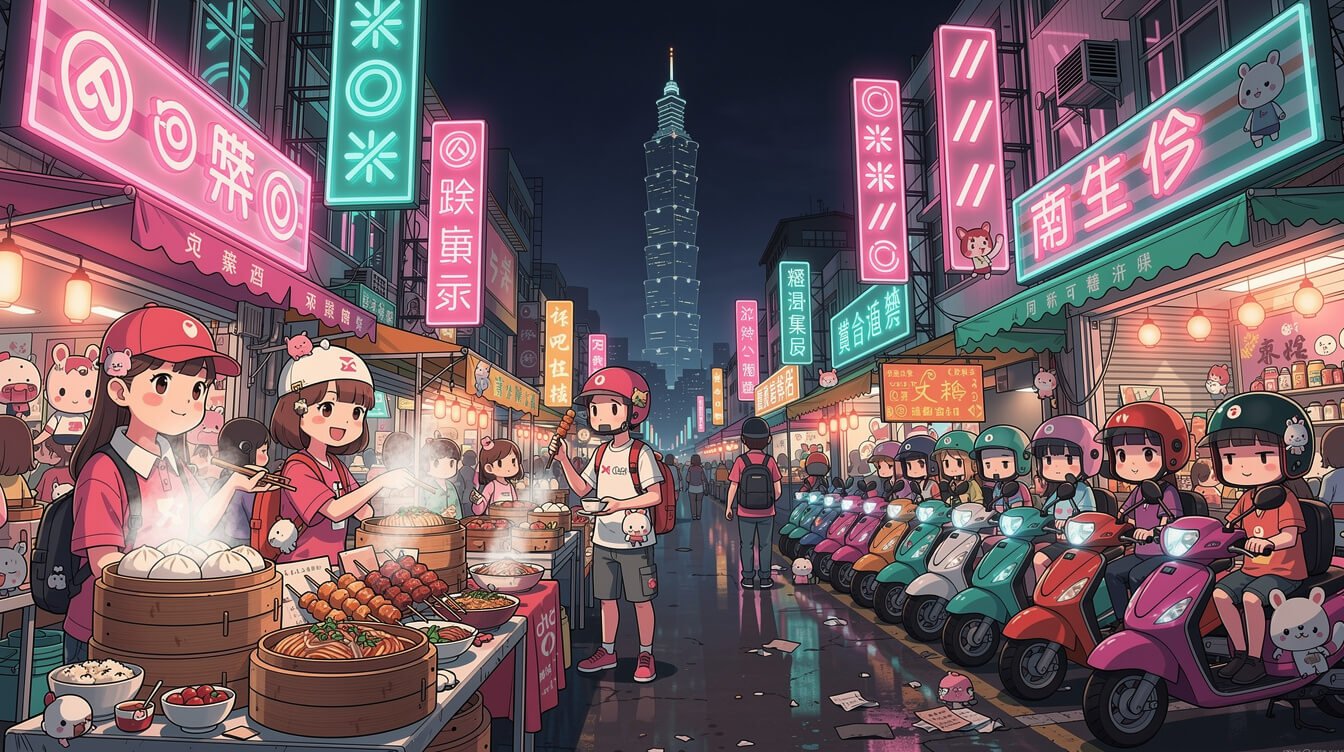
Taipei sits in the Taipei Basin, ringed by low green mountains that keep the city cool in summer and misty in winter. It’s home to around 2.5 million people in the city proper and closer to 7 million if you count New Taipei, the ring city that wraps around it like a donut. That makes the Taipei metro area one of the densest urban regions in East Asia — and yet, thanks to a spotless MRT system and a culture of quiet public behavior, it never feels overwhelming.
Politically, Taipei is where every branch of Taiwan’s government lives:
- The Presidential Office Building — a red-brick, Japanese-colonial-era palace on Ketagalan Boulevard, still the official workplace of the President of the Republic of China.
- The Legislative Yuan — Taiwan’s parliament, famous for occasionally breaking into internationally viral scuffles when a bill is contentious.
- The Executive Yuan — the cabinet’s home base, a block from the Legislative Yuan in Zhongzheng District.
- Judicial, Examination, and Control Yuans — Taiwan is one of the only democracies in the world with a five-branch government, and all five branches are headquartered in Taipei.
Culturally, Taipei is the country’s obvious center of gravity: the National Palace Museum, the biggest art scene, the loudest music scene, the most restaurants per square kilometer, and the most exportable Taiwanese pop culture. Almost every drama, boy band, indie rock scene, and hip-hop crew that leaves the island first grew up somewhere between Ximending and Taipei Main Station. Speaking of which, if you’re heading up Elephant Mountain for that classic 101-at-sunset shot, we wrote a full guide to the Elephant Mountain hike that saves you from doing the tourist stampede at the top.
Practically, Taipei is where about 90% of first-time Taiwan visitors spend most of their trip. It’s the capital in the way that Tokyo is the capital of Japan or Seoul is the capital of South Korea — a huge, humming primary city that owns the country’s daily story.
The Constitutional Curveball: Nanjing on Paper, Taipei in Practice
Here’s where the “capital of Taiwan” question gets weirdly historical. Taiwan is officially the Republic of China (ROC), and the ROC’s 1947 Constitution — written when the government still ruled mainland China — names Nanjing as the national capital. That constitution was never rewritten when the ROC government retreated to Taiwan in 1949 after losing the Chinese Civil War to the Communists.
So, technically, on paper, in the founding legal document of the country, the capital is a city that the ROC government hasn’t controlled in over 75 years. Taipei has been the government’s home since December 1949, but its legal designation has always been “provisional” or “temporary” — a linguistic ghost from the mid-20th-century assumption that the ROC would eventually retake the mainland.
Nobody in Taiwan pretends Nanjing is the real capital. But nobody has amended the constitution to update the designation either, partly because doing so would be politically explosive across the Taiwan Strait — a formal constitutional change of capital could be read by Beijing as a declaration of independence. So Taipei stays “provisional” in law, permanent in practice, and everyone in Taiwan just gets on with it.
This is one of those beautifully weird pieces of Taiwan trivia that helps explain the entire country: a state that operates like a fully functional democracy, has its own military, currency, passport, President, Olympic team, and diplomatic offices — but whose paperwork is still, in places, written like it’s 1946. If you love that kind of small-detail-that-explains-everything, you’re going to have a great time reading about Taiwan.
Tainan: Taiwan’s Original Capital (and Why It Still Matters)
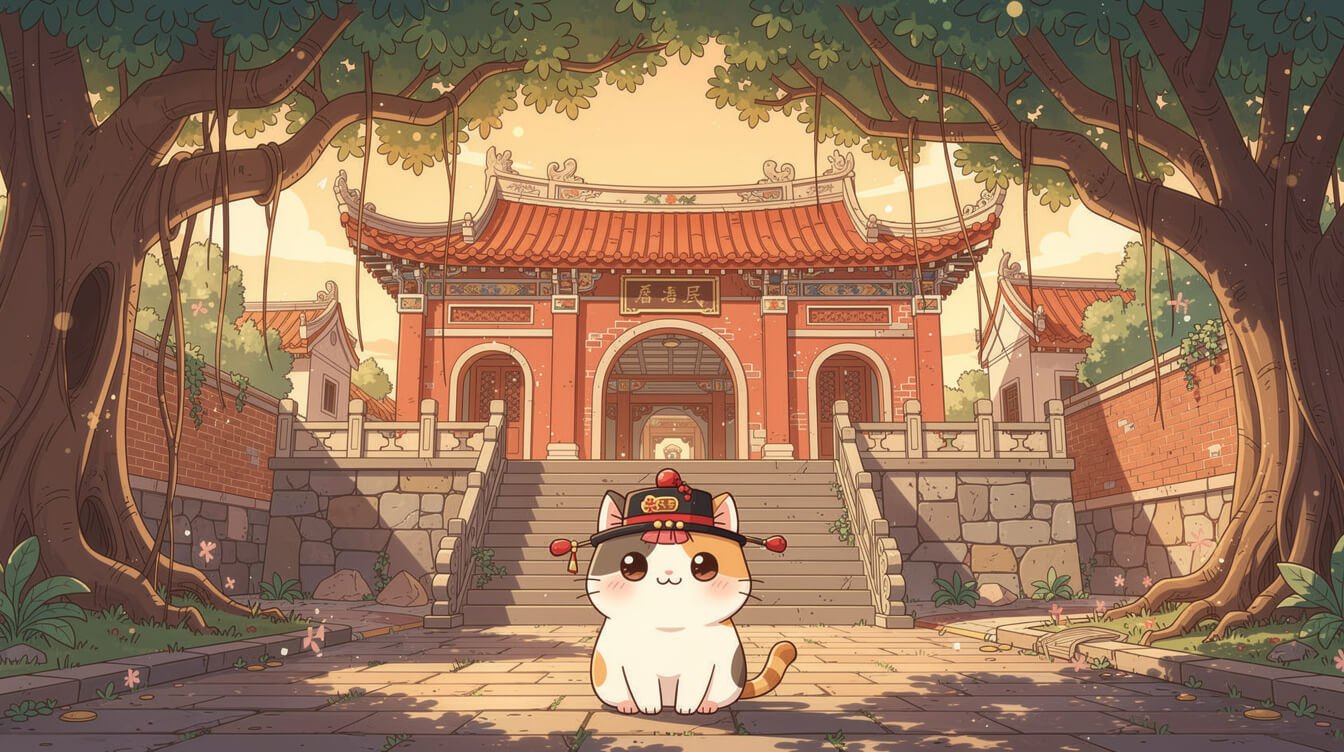
If you ask a Tainan grandmother what the real capital of Taiwan is, you might get a smile and a quiet “Tainan, of course.” She’s not entirely wrong. Long before Taipei was anything more than a swampy, flood-prone basin, Tainan was the political, military, and religious heart of the island.
The lineage runs deep:
- 1624–1662: The Dutch East India Company builds Fort Zeelandia in Anping (modern Tainan) as its administrative hub for Taiwan. This is arguably the island’s first “capital” in any European sense.
- 1662–1683: Ming loyalist admiral Koxinga boots the Dutch out and founds the Kingdom of Tungning, headquartered in Tainan. It’s Taiwan’s first ethnically Chinese state, and Tainan is its capital.
- 1683–1885: The Qing dynasty absorbs Taiwan into its empire and keeps Tainan (then called “Taiwan Prefecture”) as the capital of the whole island for over two centuries.
Tainan is the reason Taiwan has a “Confucius Temple older than most European countries” bragging point. It’s the reason for those beautifully weathered brick alleys around Chihkan Tower, the 1650s Dutch fort you can still walk into. It’s also the source of Taiwan’s densest concentration of temples, night markets that locals prefer to the Taipei ones, and food so specific — beef soup at 6 a.m., danzai noodles, shrimp rolls, guabao — that Tainan basically invented Taiwanese cuisine as we know it.
Modern Tainan is a city of about 1.9 million, with a laid-back southern rhythm that reminds visitors of Kyoto more than anywhere else in East Asia. It’s not the political capital anymore, but locals fiercely protect its identity as Taiwan’s cultural and culinary capital. If you want a wearable nod to that layered island identity — old capital energy, new island pride — our Taiwan Boba Tea Mecha Warrior tee is a favorite for anyone who loves how Taiwan mashes tradition with a very online sense of humor.
How Taipei Became the Capital: The Japanese Colonial Turn
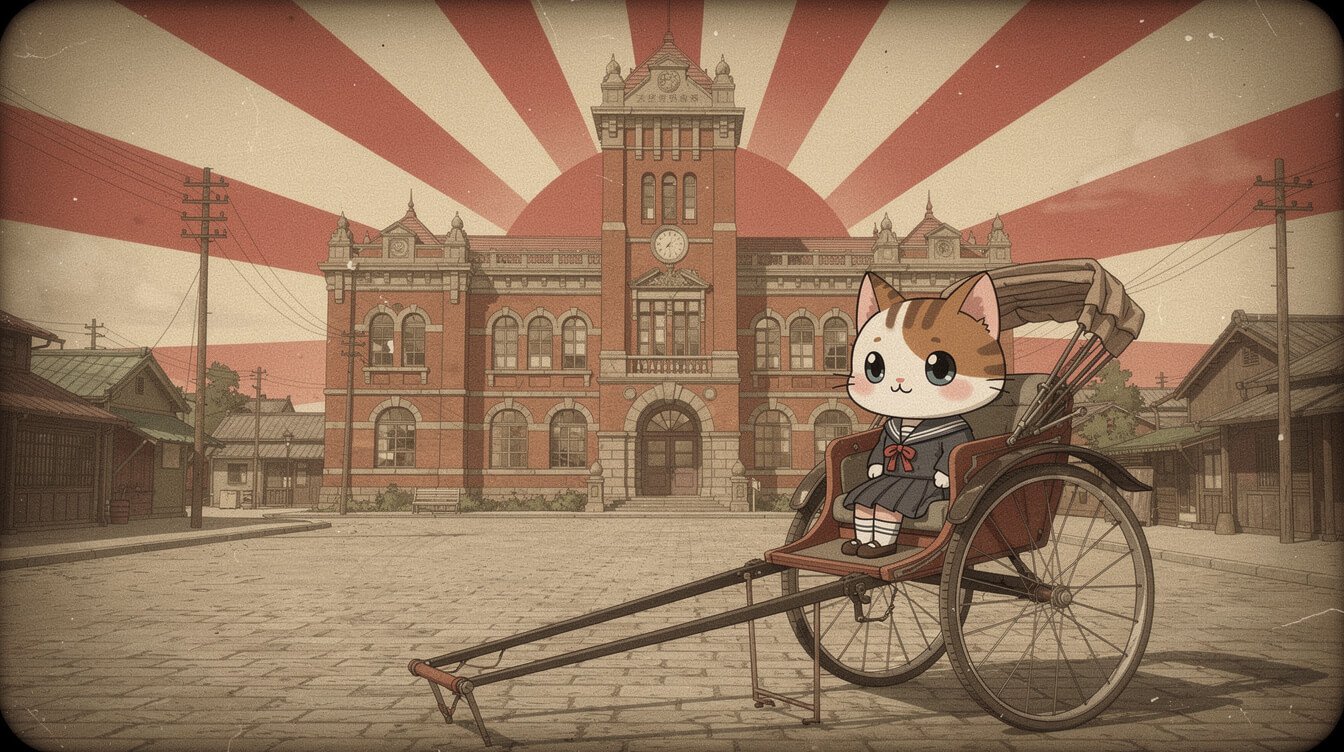
So how did Taipei — a marshy trading outpost known mostly for camphor, tea, and coal — leapfrog Tainan and end up as the country’s capital? The answer is a mix of Qing pragmatism, Japanese colonial planning, and a lot of good tea.
In 1885, as Taiwan was formally elevated from a prefecture of Fujian to a full province of the Qing Empire, Governor Liu Ming-chuan moved the provincial capital north — first to Taichung (briefly), then permanently to Taipei by 1894. His reasoning was economic: the north was where the money was. Tea from Wenshan, camphor from the hills, and coal from Keelung were making Taipei the island’s commercial center, and the northern ports of Keelung and Tamsui handled the bulk of Taiwan’s foreign trade with Europe and the United States.
Then, in 1895, the Qing lost the First Sino-Japanese War and ceded Taiwan to Japan under the Treaty of Shimonoseki. Japan spent 50 years (1895–1945) systematically building Taipei into a modern colonial capital — laying wide boulevards, building a functioning port at Keelung, running the trans-island railway from a Taipei hub, and constructing the red-brick Presidential Office Building that still houses Taiwan’s president today. When the Republic of China took over Taiwan in 1945, and then relocated its entire government here in 1949, they didn’t need to invent a capital — the Japanese had already built one, in Taipei, ready to move into.
So Taipei’s status as capital is only about 140 years old, and its status as the capital of a sovereign-in-practice state is only about 76 years old. In East Asian time, it’s a young capital. That’s part of what makes it feel so alive.
Kaohsiung, Taichung, and the “Second Capital” Debate
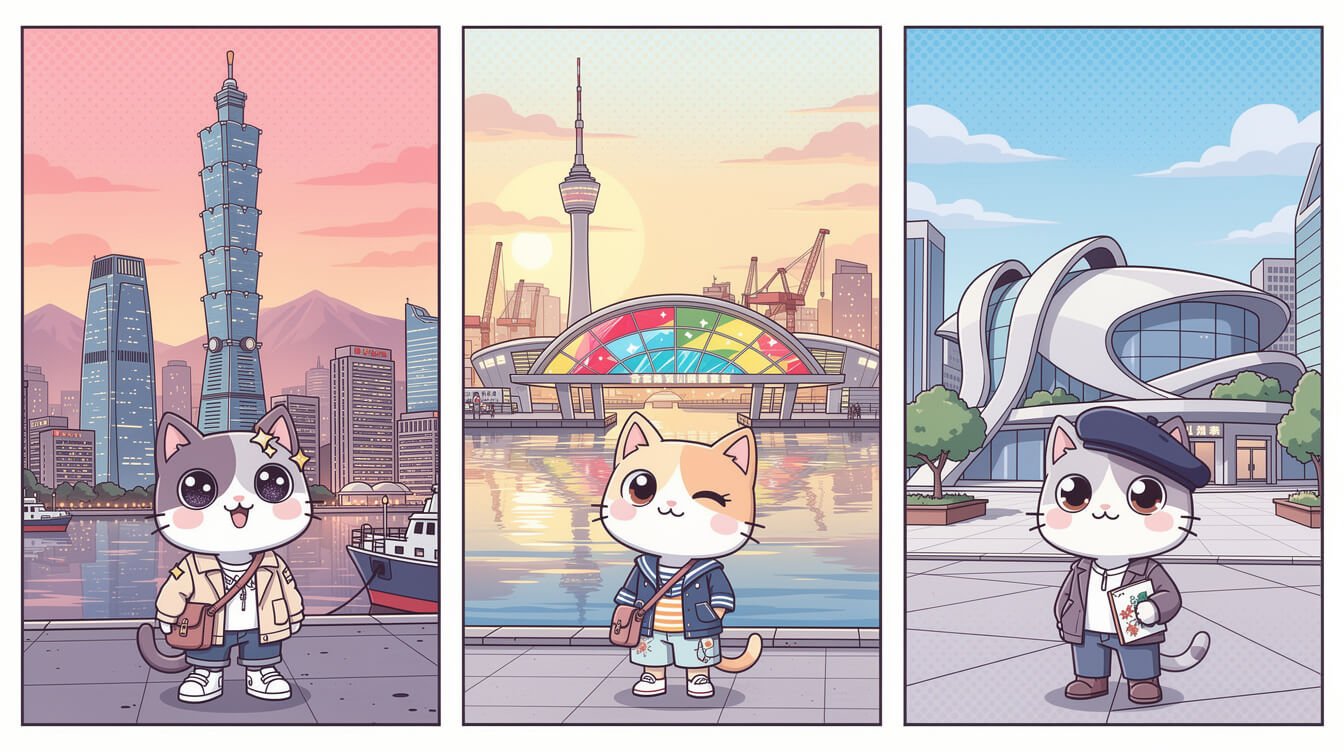
Every so often, someone in Taiwanese politics floats the idea of moving the capital, or at least designating a “second capital.” Two cities always get named: Kaohsiung and Taichung.
Kaohsiung is Taiwan’s largest port and its second most populous city. It’s the industrial and heavy-manufacturing heartland — where container ships come and go, where the petrochemical refineries hum, and where the country’s naval headquarters sits. In the 1970s and 1980s, when Taiwan was building itself into an export powerhouse, Kaohsiung basically funded the transformation. There’s a recurring political proposal — usually from parties whose voter base sits in the south — to move some ministries there to rebalance the country’s “everything is in Taipei” reality. We wrote a full guide to Kaohsiung if you want to see why locals genuinely call it Taiwan’s “southern capital.”
Taichung is the middle child: Taiwan’s third-largest city, geographically almost dead-center on the island, home to some of the country’s best universities and a booming creative scene. Taichung was actually the very first choice for the Qing provincial capital in 1885 (before the government thought better of it and moved to Taipei), and the “why not just move the capital here, geographically it makes so much sense” argument comes up in Taichung roughly every election cycle.
Neither city is going to become the capital any time soon — the political, infrastructural, and diplomatic weight of Taipei is enormous, and moving it would be a decade-long project. But the fact that the conversation keeps happening tells you something real: Taiwan’s identity is not a Taipei monoculture. It’s a chain of very different cities, each with a claim on the country’s story.

Wear the City. Own the Story.
Our full collection of Taiwan-themed tees, hoodies, and accessories celebrates every corner of the island — from Taipei’s neon streets to Tainan’s temple alleys. Original designs, print-on-demand, ships worldwide.
FAQ: Every Question People Google About Taiwan’s Capital
Is Taipei the capital of Taiwan?
Yes. Taipei is the working capital of Taiwan (officially the Republic of China). It’s where the Presidential Office, Legislative Yuan, and Executive Yuan are all located, and every diplomat and international visitor treats it as the country’s capital in every practical sense.
Why is Taiwan’s capital “provisional”?
Because the 1947 ROC Constitution names Nanjing as the national capital, and that constitution has never been amended. The ROC government relocated to Taipei in 1949 as a temporary wartime move and never formally reset the paperwork. Everyone in Taiwan treats Taipei as the capital regardless.
Was Tainan ever the capital of Taiwan?
Yes, from roughly 1662 to 1885. Tainan was the capital under the Kingdom of Tungning and then under Qing rule, until Qing governor Liu Ming-chuan moved the provincial capital to Taipei in 1885 for economic and strategic reasons.
Is Taipei the same as Taiwan?
No. Taipei is one city on the island; Taiwan is the entire country of 23 million people, which includes 21 other cities and counties. Kaohsiung, Taichung, Tainan, Hsinchu, Taoyuan, and dozens of other places all have their own distinct culture, food, dialects, and rhythms.
What’s the difference between Taipei and New Taipei?
Taipei (Taipei City) is the compact central city — home to the government and Taipei 101. New Taipei (Xinbei) is the much larger ring-city that wraps around Taipei on three sides, home to about 4 million people and popular districts like Danshui, Wulai, and Jiufen.
How do I get to Taipei from the airport?
Most international flights land at Taoyuan International Airport (TPE), about 40 km west of Taipei. The Taoyuan Airport MRT takes you to Taipei Main Station in 35 minutes for around NT$150. A smaller domestic and regional airport, Songshan (TSA), sits right inside Taipei City itself.
Is Taipei safe for tourists?
Extremely. Taipei consistently ranks among the safest large cities in the world for solo travelers, women, and families. Public transit is spotless, taxis are metered and honest, and low-level crime is rare.
What’s the best time of year to visit Taipei?
October through April is the sweet spot — cooler weather, less humidity, fewer typhoons. May and June are the rainy months; July through September are hot, humid, and typhoon-prone. We wrote a whole seasonal breakdown in our month-by-month guide to visiting Taiwan if you want the deeper dive.
Final Thoughts: The Capital Isn’t a Dot on a Map
The short answer to “what is the capital of Taiwan?” is Taipei, and that answer is good enough for a visa form, a trivia night, or a plane ticket. But the longer answer — Nanjing on paper, Taipei in practice, Tainan in the heart, Kaohsiung and Taichung waiting in the wings — is the answer that actually explains the country.
Taiwan is a place that has had multiple capitals under multiple governments in multiple languages in the span of 400 years. Every one of those layers is still visible if you know where to look: Dutch fort walls in Anping, Qing brick alleys in Tainan, Japanese-era red brick in Taipei, and a very online, very kawaii, very 21st-century pop culture on top of all of it. When you visit Taipei, you’re not just seeing “the capital” — you’re seeing the current chapter of a much longer story about who runs this island and how they got here.
Come for the answer. Stay for the layers. And when you’re ready to bring a little of that layered island identity home with you, our shop is waiting.
Get More Taiwan in Your Inbox
Culture drops, food deep dives, artisan spotlights, and first looks at new merch — sent when we have something actually worth reading. No spam, ever.

Grab a Free Taiwan Sticker!
Drop your email and we’ll send you a limited-edition Taiwan sticker — plus insider access to new merch drops and island vibes.
No spam. Unsubscribe anytime.