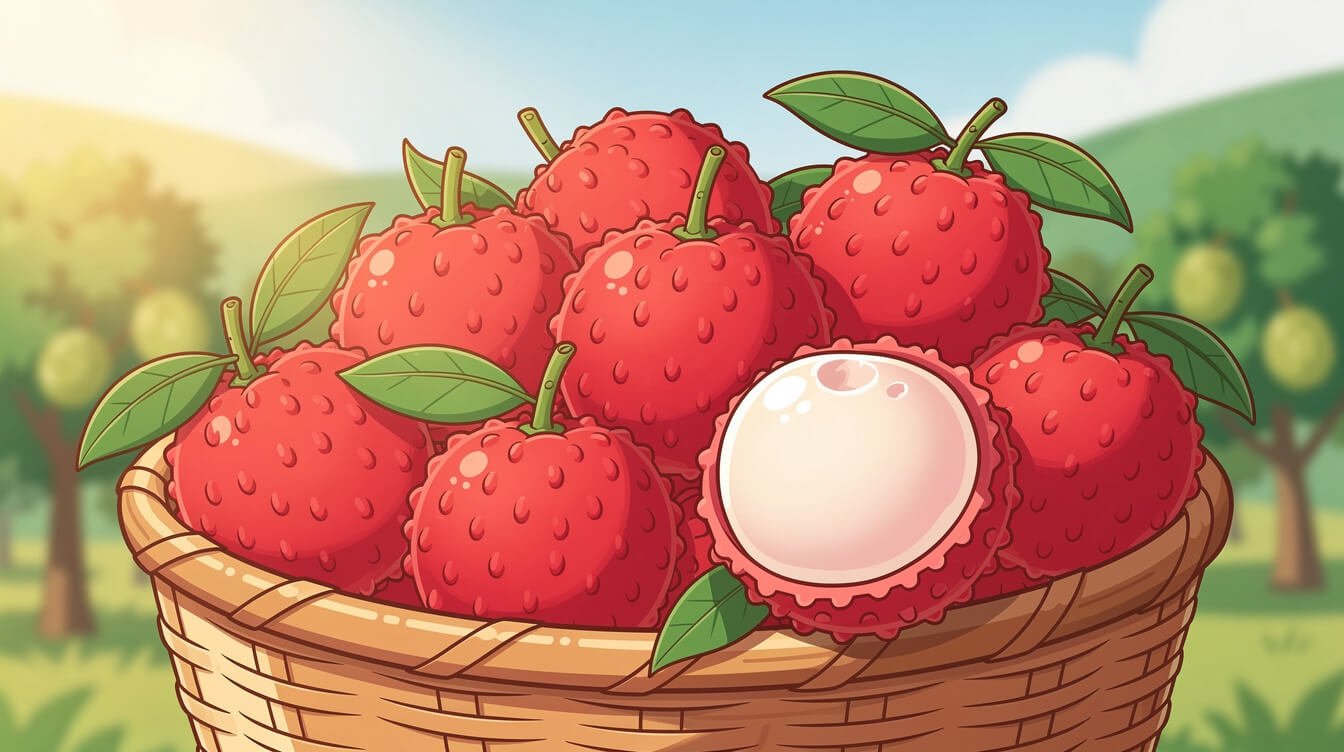
Taiwan Yu He Bao Lychee Season: Why the Jade Pouch Is Worth Its Weight in Gold (And Why You Have Two Weeks to Catch It)
If you happen to be in Taiwan during the first three weeks of June, do yourself a favor: walk into any traditional market — Dongmen in Taipei, Liuhe in Kaohsiung, Beitun in Taichung — and ask for yù hé bāo (玉荷包). You will pay more per kilo than for most cuts of meat. You will also taste why Taiwan’s lychee farmers consider them the closest thing the island grows to edible jade.
The Jade Pouch That Almost Disappeared
The name yu he bao literally means “jade pouch” — a poetic nod to the pale-green tint that lingers under the lychee’s bumpy crimson skin and the tiny, shriveled “chicken-tongue” seed (雞舌核) inside, which leaves almost the entire fruit as floral, juicy, snow-white flesh. Most other lychee varieties are 60–70% seed by volume. A good yu he bao is closer to 90% flesh.
The cultivar was first propagated in the early 1900s in Dashu District (大樹區), Kaohsiung, on the gravelly slopes above the Gaoping River. It nearly died out twice — once during the Japanese colonial era when farmers prioritized sugarcane, and again in the 1960s when bigger, easier-to-ship lychee varieties dominated the export market. A handful of Dashu families kept grafting it anyway, and today the district produces over 70% of Taiwan’s yu he bao on roughly 1,400 hectares.
Why the Season Is So Brutally Short
Yu he bao is one of the earliest-ripening lychees in the world — and one of the most fragile. The fruit needs a specific climate pattern to set: a cool, dry winter to trigger flowering, followed by warm spring nights with no late cold snaps. The plum rain season in May then provides the deep watering that swells the flesh in the final two weeks before harvest.
That delicate sequence gives the variety roughly a two- to three-week peak harvest window, typically running from late May through mid-June. In a hot year like 2026, the window can collapse to as little as 10 days. After picking, the skin starts browning within 48 hours at room temperature. There is no slow shipping season for this fruit — it lives fast, gets eaten fast, and disappears.
How to Spot a Good One
Walk through any Kaohsiung or Pingtung market in June and you will see vendors fanning their lychee piles obsessively. They are not showing off — they are cooling the surface heat that causes the skin to darken. Here is how locals pick the best:
- Color: Look for a rich red with a faint green shoulder near the stem. Pure red all over often means over-ripe; pure green means picked too early.
- Skin texture: The signature bumps (called 龜裂紋, “tortoise-crack pattern”) should feel sharp and dry, not soft. Soft bumps mean the fruit has been sitting too long.
- Weight: A premium yu he bao feels heavier than it looks — that is the flesh, not water weight from over-ripening.
- Sound: Some grandmothers shake them gently next to their ear. If you hear the seed rattle, the fruit has dried out inside.
Expect to pay around NT$200–400 per jīn (台斤, 600g) at peak season — roughly NT$330–660 per kilo. Imported lychees from Vietnam or Thailand sit at a third of that price and taste like a completely different fruit.
The Local Rituals Around the Season
For Taiwanese families with roots in the south, yu he bao season is the first real signal that summer has arrived — before the Dragon Boat Festival, before the typhoons, before the mango trucks roll out of Yujing. People send boxes to relatives in Taipei the way Americans send Christmas cards. Office colleagues split crates 10 ways. Grandmothers freeze the peeled flesh in single-layer trays to make summer shaved-ice toppings six months later.
Dashu itself throws a small Yu He Bao Cultural Festival at the local farmers’ association every June, usually the second weekend. There are lychee-picking tours, lychee-honey tastings (the bees that pollinate the orchards make a fragrant, slightly tart honey), and the obligatory lychee beer pop-up from a local Kaohsiung craft brewery.
One Local Tip Most Tourists Miss
If you find yourself with too many lychees and a heat wave coming, do what Kaohsiung aunties have been doing for a hundred years: peel them, drop the flesh into a glass jar, cover with rock sugar and a splash of high-mountain oolong tea, and refrigerate overnight. The next day you have a homemade lychee cold brew that tastes nothing like the bubble tea chains and exactly like a southern Taiwan summer.
Just don’t blame us if you start planning next June’s trip before you finish the jar.

Grab a Free Taiwan Sticker!
Drop your email and we’ll send you a limited-edition Taiwan sticker — plus insider access to new merch drops and island vibes.
No spam. Unsubscribe anytime.