Okinawa Milk Tea: The Japanese Sugar Behind a Boba Shop Staple (vs Brown Sugar and Hokkaido Milk Tea)
If you’ve ever stood in front of a boba shop menu in Los Angeles, Vancouver or Sydney, you’ve probably seen it sitting between Classic Pearl Milk Tea and Taro: Okinawa milk tea. The name is Japanese, but the drink usually reaches Western readers through Taiwanese-founded chains. And the main question people ask about it, which is how Okinawa milk tea differs from brown sugar milk tea, almost never gets a straight answer.
This guide gives you one. You’ll learn what it actually is, where its sugar comes from (eight tiny islands, not “Okinawa” in general), how it compares with brown sugar milk tea, Hokkaido milk tea and royal milk tea, how to order it at a boba chain, and how to make a good one at home.
What Is Okinawa Milk Tea?

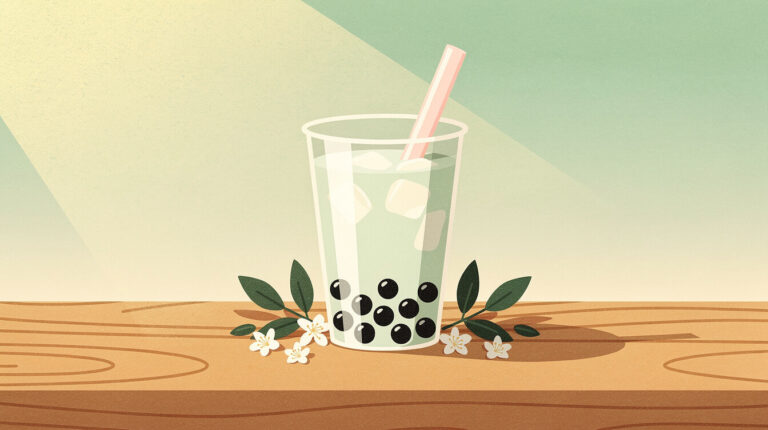
Okinawa milk tea is black milk tea sweetened with kokuto (黒糖), the dark, unrefined cane sugar made in Okinawa, Japan. The sugar is stirred into the tea, so the whole drink turns an even caramel-tan color and tastes of roasted molasses, toffee and a faint, almost salty mineral edge.
That’s the whole formula: black tea, milk and kokuto. Boba shops usually add tapioca pearls and sell it iced, and many shops make it with a ready-made Okinawa syrup or powder instead of block sugar. The name tells you about the sugar, not about where the drink was invented. We couldn’t find a reliable primary source for who first put “Okinawa” on a milk tea menu, so be skeptical of any page that confidently names an inventor.
What we can say is how most people outside Japan meet it. Sharetea, which founder Cheng Kai-Lung started as a tea stand in Taiwan in 1992, lists an “Okinawa Milk Tea” on its US allergen chart, and Okinawa pearl milk tea turns up on many of its franchise menus. So for a lot of drinkers, it is the Japanese-named drink you order at a Taiwanese chain.
Kokuto: The Okinawan Sugar Behind the Name

Kokuto (黒糖, literally “black sugar”) is made by boiling down fresh sugarcane juice and letting it set, with nothing taken out. Refined white sugar strips away the molasses, while kokuto keeps it, along with the cane’s minerals and a deep, slightly bitter roast.
Only eight islands make “Okinawa kokuto”
Most of Okinawa’s sugarcane doesn’t become kokuto at all. According to Japan’s Cabinet Office, sugarcane covers about half of Okinawa Prefecture’s farmland, but most of it goes into raw sugar for refining. Only about 5–6% becomes kokuto. Genuine Okinawa kokuto is produced on just eight small outer islands:
- Tarama (多良間)
- Hateruma (波照間)
- Iriomote (西表)
- Yonaguni (与那国), Japan’s westernmost island, roughly 110 km from Taiwan’s east coast
- Kohama (小浜)
- Ie (伊江)
- Iheya (伊平屋)
- Aguni (粟国)
Each island’s sugar tastes a little different. The Okinawa brown sugar cooperative describes Yonaguni’s kokuto as moist and slightly bitter and Aguni’s as so light it seems to dissolve on your tongue. The pressing season runs from about December to March.
Kokuto vs “processed kokuto” on the label
Japanese labeling separates pure kokuto, made only from sugarcane juice, from 加工黒糖 (processed kokuto), which blends kokuto with raw sugar or molasses. There’s also 加工糖, which contains no kokuto at all. The cooperative registered “沖縄黒糖” (Okinawa Kokuto) as a trademark to stand apart from these blends and from imported black sugar. If you’re buying kokuto for your own cup, turn the bag over: pure kokuto lists sugarcane (さとうきび) as its only ingredient.
The sugar-making tradition is old. The Cabinet Office dates it to 1623, when Gima Shinjō, an official of the Ryukyu Kingdom, sent an envoy to China to learn how to make sugar.
Taiwan has its own unrefined cane sugar, 黑糖 (hēitáng), and it’s a close cousin. We compare the two, along with muscovado and US brown sugar, in our guide to brown sugar milk tea, so we’ll keep the sugar science short here.
Okinawa Milk Tea vs Brown Sugar Milk Tea: What’s the Difference?
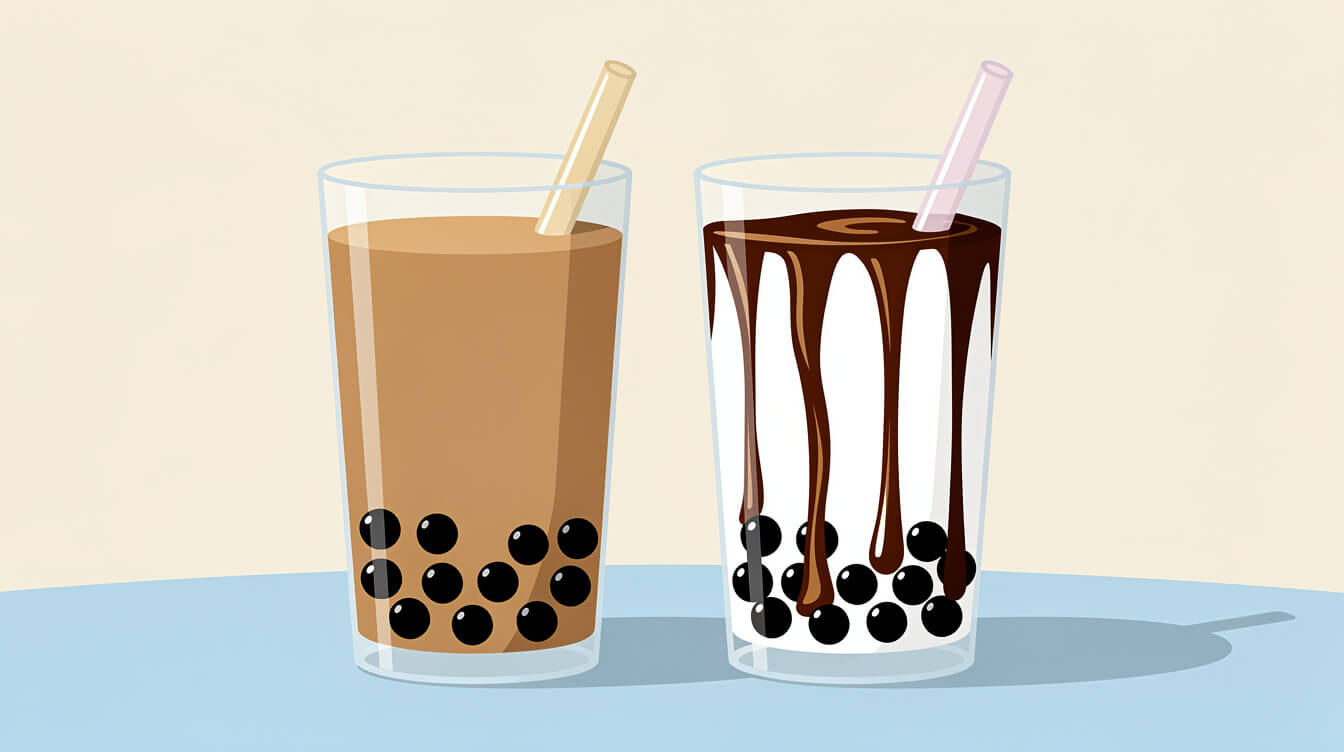
This is the question most people are really asking, and the confusion makes sense. Both drinks use dark, unrefined cane sugar, and plenty of menus write “Okinawa Brown Sugar Milk Tea.” But in a Taiwanese-style boba shop they’re usually two different drinks, and you can tell them apart by looking at the cup.
| Okinawa | Brown sugar milk tea (黑糖珍珠鮮奶 style) | |
|---|---|---|
| Sugar | Okinawan kokuto, or a kokuto-flavored syrup | Taiwanese 黑糖 cooked into a thick syrup |
| Where the sugar goes | Dissolved into the tea | Cooked with the pearls, then smeared down the inside of the cup |
| Looks like | Even caramel-tan all the way through | White milk with dark “tiger stripes” |
| Tea? | Yes, black tea is the base | Often none. The classic version is fresh milk with pearls |
| Pearls | Optional | The star of the drink, served warm |
| Popularized | On Taiwanese-founded chain menus abroad | By Tiger Sugar in Taichung from November 2017 |
The short version: Okinawa milk tea is a sweetened tea, and brown sugar milk tea is a sweetened milk. In the Okinawa drink, the kokuto is part of the tea. In a brown sugar drink, the syrup and the pearls are the show, and the milk is the canvas.
Brown sugar boba also has a Taiwanese backstory. Tiger Sugar opened in Taichung on November 11, 2017, and its striped cups went viral across Asia. It didn’t invent the idea, though. Gongguan’s Chen San Ding was serving brown sugar pearls in fresh milk years earlier. Our brown sugar milk tea guide tells that story in full.
Where the two overlap is flavor. If you like the toasty, molasses taste of a tiger-stripe drink but want something with real tea in it, Okinawa is the one to order.
Okinawa vs Hokkaido vs Royal Milk Tea
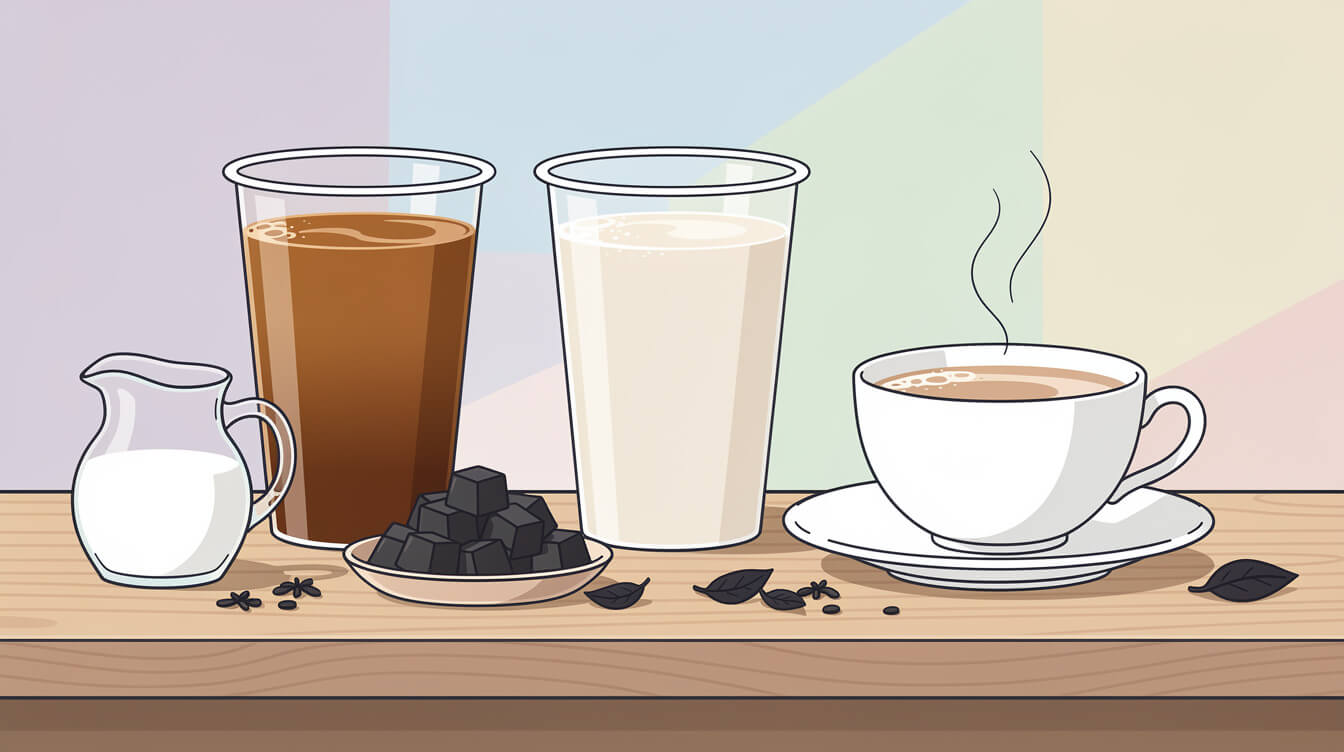
The Okinawa drink has two Japanese-named siblings on boba menus, and the naming logic is different for each one. Okinawa is named for its sugar, Hokkaido for its dairy, and royal milk tea for its method.
| Okinawa | Hokkaido milk tea | Royal milk tea | |
|---|---|---|---|
| Named for | Kokuto sugar from Okinawa’s islands | Hokkaido, Japan’s dairy region | A Japanese style of brewing |
| What stands out | Roasted molasses sweetness | Rich, creamy milk | Tea simmered directly in milk |
| Color | Caramel-tan | Pale cream | Light tan |
| Taste | Toffee, caramel, a little bitter | Milky, smooth, mild tea | Strong tea, very little water |
| Usually served | Iced with pearls at boba shops | Iced with pearls at boba shops | Hot in Japan, also bottled |
Recipes for Hokkaido milk tea vary a lot from shop to shop. Some lean on cream or milk powder, and some add caramel or a pinch of salt. Sharetea’s US nutrition chart, for example, lists a large Hokkaido Pearl Milk Tea at 314 mg of sodium, almost double its Classic Pearl Black Milk Tea at 166 mg. So if you want the creamiest cup, go Hokkaido. If you want the deepest sweetness, go Okinawa.
Which one should you order?
- You like caramel, toffee or dark chocolate: order the Okinawa one.
- You want something creamy and mild: go Hokkaido.
- You want to taste the tea itself: royal milk tea, or a plain black milk tea at a lower sugar level.
- You want the Instagram stripes and warm pearls: that’s a brown sugar boba milk, not any of these three.
If you’re torn, ask for a Hokkaido and an Okinawa at half sugar and taste them side by side with a friend. You’ll notice the difference in one sip: one tastes like milk, the other like burnt sugar in the best possible way.
If you’re into floral milk teas instead, Taiwan’s own favorite twist is a jasmine green base. Read our jasmine milk tea guide for that one.
How to Order Okinawa Milk Tea at a Taiwanese Boba Chain

Taiwanese-style chains let you set the sugar and ice for almost every drink, and this drink is no exception. Here’s how to get a good cup.
Pick your sugar level carefully
Here, the sugar is the flavor. At zero sugar, you’re mostly just drinking black milk tea. Many shops also premix their Okinawa syrup, which can limit how low you can go. Start at half sugar (半糖) or less (少糖), and adjust from there.
The sweetness scale isn’t as precise as it sounds. Figures cited by Taiwan’s diabetes education association put a typical cup at roughly 25 g of sugar for “light” (微糖), about 35 g for “half” (半糖) and more than 50 g for “full” (全糖). “Half” is not literally half. For context, Taiwan’s Health Promotion Administration suggests keeping added sugar under 50 g a day.
Choose less ice
Kokuto has a big flavor that holds up well, but a cup packed with ice dilutes it fast. Less ice (少冰) or light ice (微冰) keeps it rich. Some shops will also make it hot, which brings out the toffee notes.
Add the right toppings
Tapioca pearls are the classic pairing, which also answers a common question: what boba goes with milk tea? Chewy black pearls match the molasses flavor best. Grass jelly adds a cool, herbal bitterness, and pudding makes the drink taste like crème caramel. Fruit jellies tend to clash.
Ordering in Taiwan
Inside Taiwan, you won’t always see the Japanese name on a menu. Look for 黑糖奶茶 (hēitáng nǎichá, brown sugar milk tea), which sweetens black milk tea with Taiwanese 黑糖. It’s the local cousin of the Okinawa drink, and you’ll find it on many shop menus. One labeling note for 2026: since July 1, Taiwanese drink shops can only call a drink 鮮奶茶 (fresh milk tea) if it’s made with certified domestic fresh milk. Otherwise it gets a name like 牛乳茶. For everything else, from sweetness codes to the best chains, see our Taiwan boba tea guide.
If you’d rather wear your boba order than drink it, our Pearl Gang Boba Tapioca T-Shirt (珍珠幫) is made for anyone whose drink always comes with extra pearls.
For Taiwan’s Other Famous Canned Drink
Before boba went global, Taiwan’s convenience-store fridges were already full of Mr Brown canned coffee. Our vintage logo tee is a nostalgic nod to it, and it’s one of our best sellers with anyone who grew up grabbing a can on the way to class.
How to Make Okinawa Milk Tea at Home
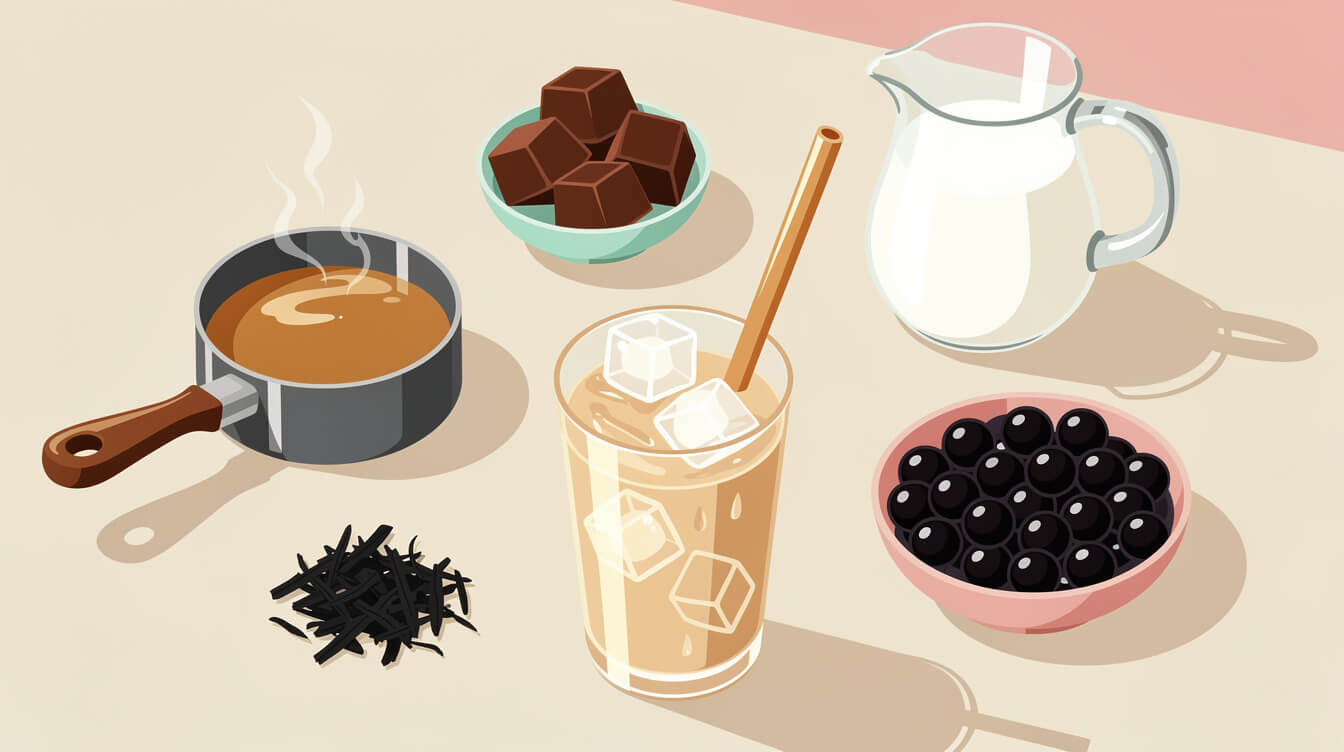
Making it at home is easy. The only hard part is finding real kokuto, and Japanese grocery stores and online shops usually carry it in blocks or powder. Taiwanese 黑糖 or dark muscovado will work as a backup, but each has a slightly different taste.
Ingredients (one large glass)
- 2 black tea bags, or 2 teaspoons loose Assam or Taiwanese black tea
- 120 ml (1/2 cup) boiling water
- 25–35 g (2–3 tablespoons) kokuto, crushed or powdered
- 2 tablespoons water, for the syrup
- 180 ml (3/4 cup) cold whole milk
- 50 g (about 1/3 cup) cooked tapioca pearls (optional)
- Ice
Method
- Brew a strong tea. Steep the tea in boiling water for 5–6 minutes. It should be stronger than you’d drink plain, because milk and ice will soften it. Strain and let it cool.
- Make a kokuto syrup. In a small pan, melt the kokuto with 2 tablespoons of water over low heat, stirring until smooth, about 2–3 minutes. Don’t let it boil hard or it’ll turn bitter.
- Coat the pearls. If you’re using pearls, stir them into the warm syrup for a minute so they soak up the flavor. Our guide to making boba pearls from scratch shows you how to make your own.
- Combine. Spoon the pearls and syrup into a tall glass. Add ice, then the cooled tea, then the milk. Stir well so the color turns an even caramel-tan. That even color is what sets the Okinawa style apart from a tiger-stripe brown sugar drink.
- Taste and adjust. Want it sweeter? Stir in a little more syrup. Want it creamier? Add more milk.
Tips for a shop-quality cup
- Want it hot? Simmer the tea leaves directly in the milk for 3–4 minutes, royal milk tea style, then stir in the kokuto syrup.
- Batch the syrup. A kokuto syrup made at a 1:1 ratio with water keeps for about a week in the fridge.
- Use a malty tea. Assam or Taiwan’s Sun Moon Lake black tea stands up to the molasses. Light teas get lost.
For the full shop technique, including the shaker and the right tea-to-milk ratio, see how to make boba milk tea at home the way Taiwan’s shops do.
Okinawa Milk Tea FAQ

What does Okinawa milk tea taste like?
It tastes like milk tea with a toffee and caramel sweetness, a roasted molasses depth and a faint mineral, slightly bitter finish from the kokuto. It’s richer and less sharp than milk tea made with white sugar.
Is it the same as brown sugar milk tea?
Not usually. The Okinawa version is black tea with kokuto mixed in, so it’s one even color. Taiwanese brown sugar milk tea is typically fresh milk with pearls cooked in 黑糖 syrup and dark stripes down the cup, often with no tea at all.
How many calories are in Okinawa milk tea?
It depends on the size, sugar level and toppings, and we couldn’t find a chain that publishes a figure for its its Okinawa drink. For comparison, Sharetea’s US nutrition chart lists a large Classic Pearl Black Milk Tea at 807 calories and a large Hokkaido Pearl Milk Tea at 758, both with pearls. Lowering the sugar level and skipping the pearls are the biggest cuts you can make.
Does it have caffeine?
Yes, because it’s made with black tea. The amount depends on the shop. Sharetea lists 120 mg for a large Classic Pearl Black Milk Tea and 230 mg for a large Hokkaido Pearl Milk Tea. For more, read does boba milk tea have caffeine?
Can I use Okinawa milk tea powder or syrup instead of block kokuto?
Yes, and many shops do. Just read the label. Some powders and syrups are made with real kokuto, while others use processed kokuto (加工黒糖), ordinary brown sugar or flavoring, plus creamer. If kokuto or sugarcane isn’t near the top of the ingredient list, expect a milder, sweeter cup.
Can I make it dairy-free?
Yes. Oat milk is the best swap because its natural sweetness and body suit the molasses flavor. Soy milk works too, and it’s a common non-dairy option at Taiwanese tea shops. Thin almond milk tends to let the tea taste watery.
Is it healthy?
It’s a treat, not a health drink. Kokuto keeps a little more of the cane’s minerals than white sugar, but it’s still sugar, and the amounts in a drink are too small to matter for nutrition. If you drink it often, order a lower sugar level and less ice and skip extra toppings.
Is Okinawa milk tea from Okinawa?
Its sugar is. The drink’s name refers to kokuto from Okinawa’s islands. As a boba shop drink, it’s best known on the menus of Taiwanese-style chains abroad.
What is a famous drink from Okinawa?
In Okinawa itself, the everyday tea is sanpin-cha, a jasmine tea, and the famous local spirit is awamori. Kokuto is also eaten on its own as a snack in small chunks, often with tea.
Final Thoughts: A Japanese Sugar, a Taiwanese Habit
Okinawa’s namesake milk tea is a good example of how boba culture travels. The sugar comes from eight small Japanese islands, some closer to Taiwan than to Tokyo. The format, with pearls, a sugar level and an ice level, comes straight from Taiwan’s tea shops. Then the whole thing gets a Japanese name on a menu in California.
Next time you order one, try it at half sugar with less ice so the kokuto can come through. If you like it, buy a bag of pure kokuto, check that the only ingredient is sugarcane, and make it at home. Then try a 黑糖 tiger-stripe drink right after it and taste the difference for yourself.
A Postcard From Taiwan, Every Week
Boba stories, street food, temple traditions and the little Taiwan traditions worth knowing, sent straight to your inbox. No spam, and you can unsubscribe anytime.
Grab a Free Taiwan Sticker!
Drop your email and we’ll send you a limited-edition Taiwan sticker — plus insider access to new merch drops and island vibes.
No spam. Unsubscribe anytime.